Best railing planters for apartment balconies — weight limits and no-drill installation

Finding the perfect railing planter for an apartment balcony involves balancing aesthetics with crucial practicalities like weight limits, no-drill installation, and landlord rules. The best options for 2026 offer secure, non-damaging attachment systems and sufficient capacity for healthy plant growth without compromising structural integrity or rental agreements. Prioritizing adjustable, sturdy designs made from lightweight yet durable materials like polypropylene or coated metal ensures a successful and compliant balcony garden.
Key Takeaways
- Weight Limits are Critical: Always consider the combined weight of the planter, soil, water, and mature plants relative to your balcony railing’s capacity, typically 20-50 lbs per linear foot.
- No-Drill Installation is Key for Renters: Look for adjustable hooks, tension brackets, or over-the-rail designs that require no tools or permanent modifications.
- Material Matters: Plastic (polypropylene) is lightweight and affordable, while coated metal offers greater durability and a more premium look.
- Choose the Right Size: Match planter dimensions to your railing width and balcony space; smaller, narrower options are generally safer and more compliant.
- Landlord Rules: Always review your lease or consult your landlord/HOA for specific guidelines on balcony decor, weight restrictions, and planter types.
- Wind Security: Employ secondary fasteners like zip ties or bungee cords, especially for larger planters or in windy locations, to prevent dislodgement.
- Drainage is Essential: Ensure planters have adequate drainage holes and consider drip trays to prevent water runoff onto lower balconies.
- Plant Selection: Opt for lightweight, shallow-rooted plants like herbs, lettuces, or annual flowers that thrive in confined spaces and don’t require excessive soil.
How Do No-Drill Railing Planters Actually Attach to Balconies?
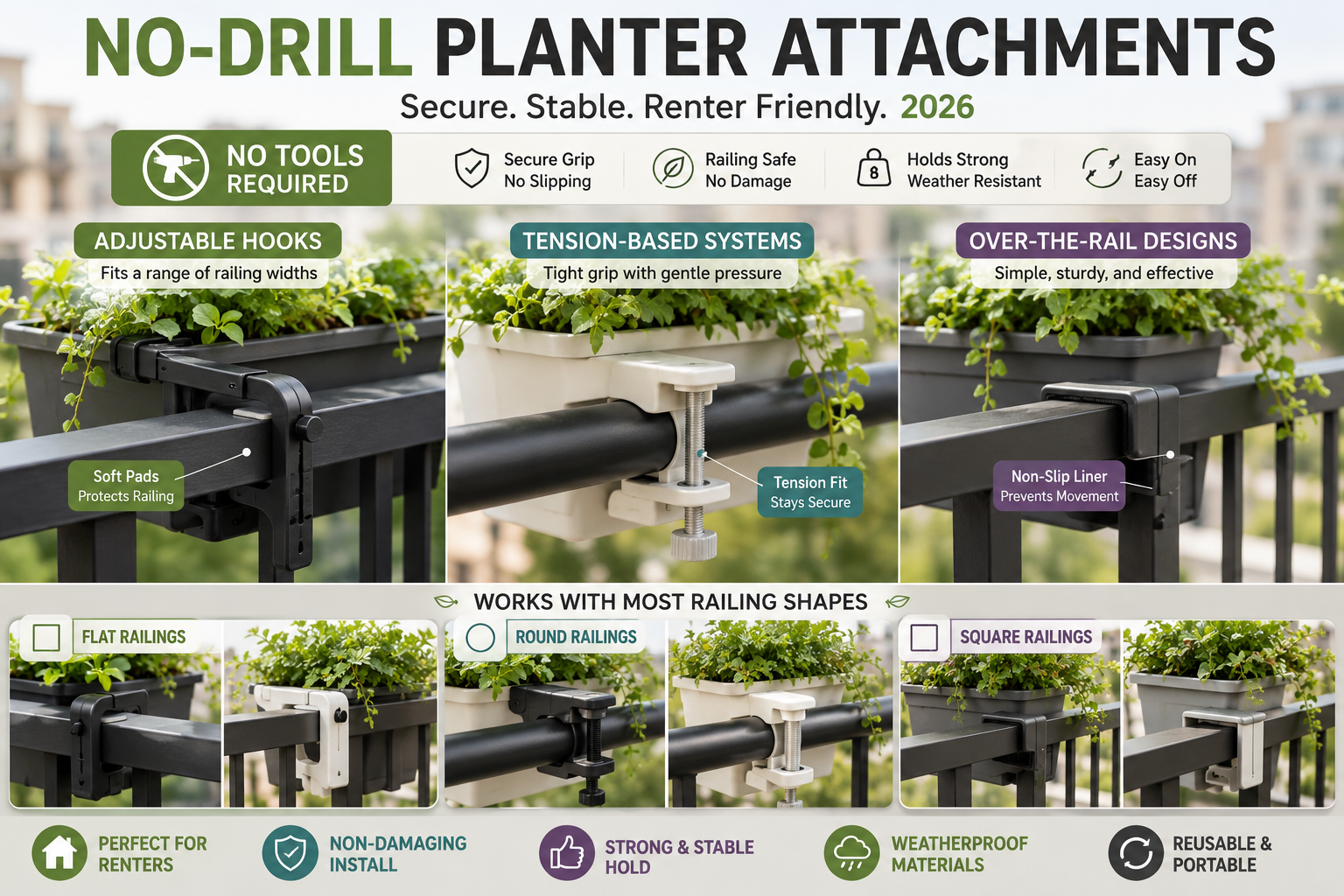
No-drill railing planters typically attach to balconies using adjustable hooks, tension-based brackets, or simple over-the-rail designs that eliminate the need for tools or permanent modifications. These methods are specifically designed to be rental-friendly and prevent damage to the balcony structure, making them ideal for apartment living.
Many popular no-drill railing planters feature robust, adjustable hooks that fit over various railing widths, from narrow metal spindles to wider concrete ledges. Some designs include a tightening mechanism or a screw-in knob that presses against the railing from below, creating a secure, stable fit without piercing or marring the surface. Another common type uses a built-in “saddle” design that simply rests over the railing, often with a weighted base or small clips on the underside to prevent tipping. For instance, brands like Bloem and Grosche offer planters with integrated, adjustable brackets that slide and lock into place, accommodating a range of railing thicknesses. When selecting one, ensure the adjustment range matches your railing’s dimensions. Always check that the planter sits level and does not wobble after installation, as instability can lead to accidents or plant damage, especially in windy conditions.

What Are the Weight Limits for Balcony Railing Planters?
The weight limits for balcony railing planters are primarily determined by the structural capacity of the balcony railing itself, the planter’s design, and the combined weight of the planter, soil, water, and mature plants. While specific limits can vary significantly by building code and construction, a general guideline for residential balcony railings suggests they can safely support 20-50 pounds per linear foot.
However, this is a broad estimate, and it is always prudent to err on the side of caution, especially in older buildings or for metal railings with thin spindles. A typical 24-inch railing planter filled with moist potting mix and plants can weigh between 15-30 pounds. If you have multiple planters, distribute the weight evenly along the railing rather than clustering them in one spot. Using lightweight potting mixes, which often contain perlite or vermiculite, can significantly reduce the overall weight compared to dense garden soil. Furthermore, consider the added weight after watering, as saturated soil can be substantially heavier. For example, a cubic foot of dry potting mix might weigh 20-30 lbs, but when wet, it could easily double to 40-60 lbs (USDA, 2018). Always prioritize safety; if in doubt, choose smaller, lighter planters or consult your landlord/HOA for precise weight restrictions.
How Much Weight Can Standard Apartment Balcony Railings Hold?
Standard apartment balcony railings are designed to withstand a certain amount of static and dynamic load, with typical residential railings able to support between 20 to 50 pounds per linear foot. This capacity is primarily for safety against falls, but it also dictates the practical limit for attached items like planters.
The actual load-bearing capacity depends on several factors: the material of the railing (e.g., wrought iron, aluminum, wood, concrete), its construction (e.g., solid panels, thin spindles, thick posts), and the age and maintenance of the building. For instance, a solid concrete railing will generally support more weight than a thin aluminum one. While some older, sturdier iron railings might handle more, modern lightweight aluminum or PVC railings might be on the lower end of the spectrum. It’s crucial not to confuse the weight capacity for preventing falls (which can be much higher, often 200 lbs or more for concentrated loads per building codes in places like the International Building Code) with the sustained load for decorative items like planters. The railing’s primary function is safety, and excessive weight can compromise its integrity over time. When in doubt, always choose the lightest possible setup and ensure the weight is distributed broadly. Consider using multiple smaller planters instead of one large, heavy one to mitigate risk.
Best Railing Planters That Won’t Damage Rental Apartment Walls
The best railing planters that won’t damage rental apartment walls are those featuring non-invasive, adjustable attachment mechanisms and smooth contact surfaces. These planters prioritize secure installation without drilling, scraping, or permanent modification, which is crucial for tenants seeking to avoid repair costs or security deposit deductions.
Look for planters that use soft, non-abrasive padding or rubberized coatings on their contact points to prevent scratches or marks on railings. Many modern designs incorporate felt or rubber washers where metal brackets meet the railing. Examples include saddle-style planters that hang directly over the railing, distributing weight evenly and avoiding direct pressure points on the wall. Brands like Mr. Stacky or Gronomics offer options with integrated, soft-touch clips or adjustable arms that secure the planter without marring surfaces. It’s also wise to select planters made from materials like high-quality plastic (e.g., polypropylene) or powder-coated metal, which resist rust and corrosion, preventing unsightly stains on walls or patios below. Always ensure the planter’s drainage system includes a saucer or drip tray, or direct runoff away from the building, to prevent water stains or mildew on the exterior walls, which can also be considered damage. For additional protection, you might place clear adhesive bumpers or furniture pads on any potential contact points between the planter and the wall.
Cheap Railing Planters That Look Good and Are Easy to Install
Affordable railing planters that combine aesthetic appeal with effortless installation typically utilize lightweight, durable plastics and simple hook or saddle designs. These options allow apartment dwellers to add greenery without significant financial investment or complex setup.
Many budget-friendly railing planters are crafted from UV-stabilized polypropylene, which is resilient, fade-resistant, and significantly lighter than ceramic or terracotta. Brands like Bloem, Keter, and various generic home improvement store brands offer attractive options in a range of colors and styles, from classic terracotta mimics to sleek modern designs. Installation is often as simple as placing the planter over the railing (saddle style) or hooking it on with pre-attached, adjustable brackets. These designs are ideal for those seeking quick, temporary, or seasonal decor. While inexpensive, focus on features like integrated drainage and sturdy, adjustable hanging mechanisms to ensure stability and plant health. Choosing a cohesive color palette or matching several identical planters can elevate the overall aesthetic, even with budget-conscious choices. For a guide to creating an inexpensive garden, check out our article on indoor gardening on a budget.
Which Railing Planters Work for Small vs. Large Balconies?
The choice of railing planter for small versus large balconies hinges on space optimization, visual balance, and railing capacity. For small balconies, compact, narrow, or tiered planters are ideal to maximize greenery without cluttering limited floor space, while larger balconies can accommodate longer, deeper, or more numerous planters for a grander display.
On small balconies, where every inch counts, opt for slim saddle planters that hug the railing or vertical tier planters that stack multiple pots. These solutions keep floor space clear and prevent the balcony from feeling cramped. For example, a 12-inch wide saddle planter might be perfect for a modest railing, allowing room for chairs or foot traffic. If you’re looking for best planters for small apartments, railing planters are often a top recommendation.
For larger balconies, you have more flexibility. Longer trough-style planters (36 inches or more) can create continuous green borders. You can also mix and match different planter styles and sizes, combining railing planters with freestanding pots or balcony vertical gardening systems. However, even on large balconies, still adhere to weight limits, especially when considering numerous or oversized planters. Consider the visual impact: a series of uniform planters can create a clean, elegant look, while varied sizes and shapes can add dynamic interest.
Are Metal or Plastic Railing Planters Better for Outdoor Use?
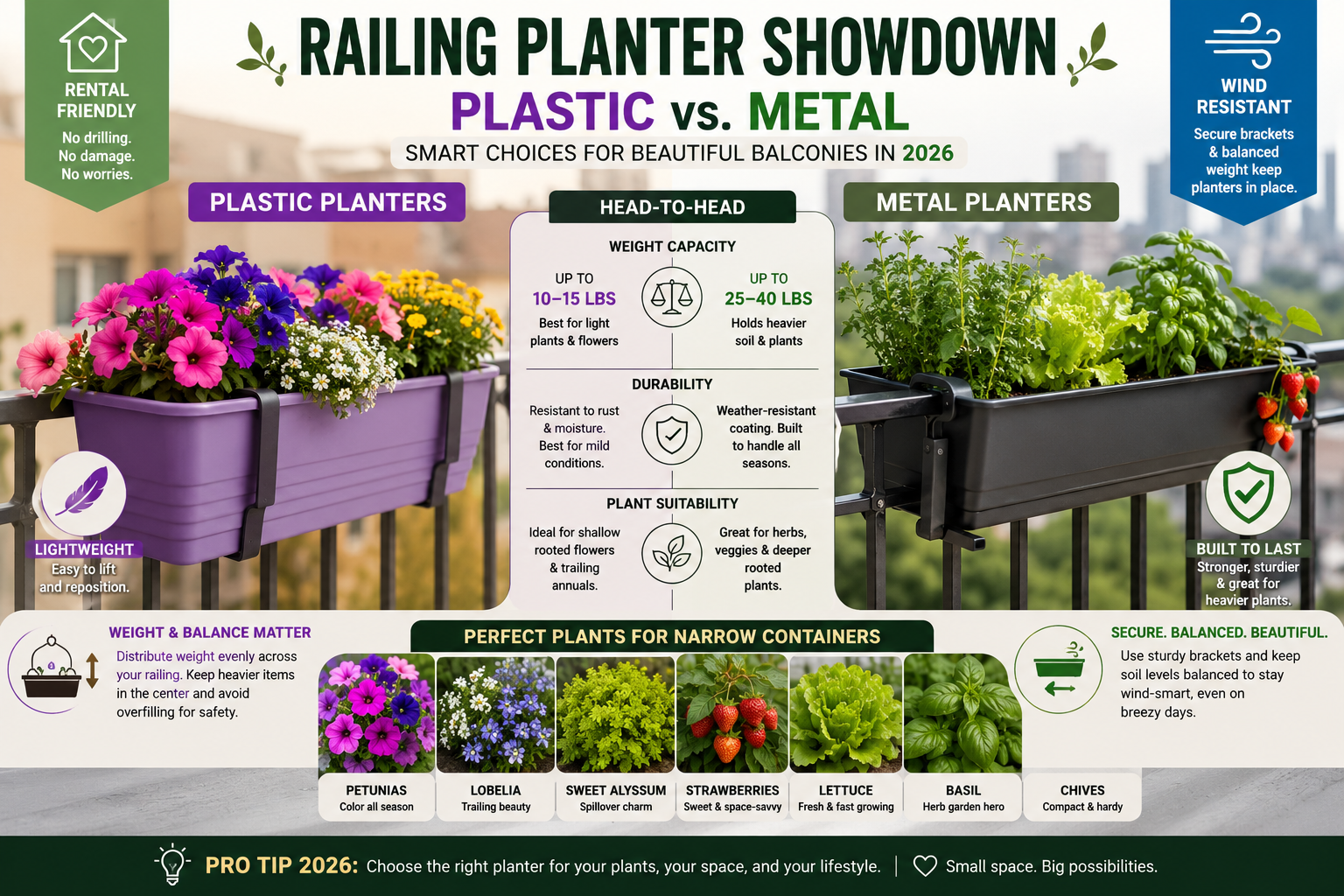
Both metal and plastic railing planters offer distinct advantages for outdoor use, with the “better” option depending on factors like durability, weight, aesthetic preference, and budget. Plastic planters (typically polypropylene) are generally lighter, more affordable, and offer a wider range of colors, while metal planters (often galvanized or powder-coated steel) provide superior durability, a more substantial feel, and a sleeker, modern aesthetic.
| Feature | Plastic Railing Planters (Polypropylene) | Metal Railing Planters (Coated Steel/Aluminum) |
|---|---|---|
| Weight | Very lightweight, ideal for strict weight limits or easy repositioning. | Heavier, more stable in wind, but adds to the total load. |
| Durability | Good UV resistance, can become brittle over many years of sun exposure. | Excellent durability, rust-resistant (if coated), long lifespan. |
| Cost | Generally more affordable, making them a budget-friendly choice. | Typically more expensive, a higher initial investment. |
| Aesthetics | Wide range of colors and finishes, can mimic other materials. | Modern, industrial, or classic look; often black, grey, or white. |
| Heat Retention | Less heat absorption than dark metal, keeping roots cooler. | Can absorb more heat, potentially warming soil and roots excessively in direct sun. |
| Maintenance | Easy to clean, resistant to mold and mildew. | Easy to clean, coatings prevent rust; check for chips over time. |
| Impact on Railing | Less likely to scratch railings due to softer material. | Can potentially scratch railings if not properly padded. |
Plastic planters are an excellent choice for renters due to their low weight and affordability, making them easy to install and move. However, they may degrade over many years in harsh sunlight. Metal planters, while heavier and pricier, offer robust longevity and resistance to impact. They can be a long-term investment for owners or for those seeking a more premium look. If choosing metal, ensure it’s galvanized or powder-coated to prevent rust.

What Plants Grow Best in Narrow Railing Planter Boxes?
Narrow railing planter boxes are best suited for shallow-rooted, compact, or trailing plants that can thrive in limited soil volume and do not require extensive root space. Choosing the right plants is crucial for successful growth in these constrained environments.
Excellent choices for narrow railing planters include:
- Herbs: Basil, mint (use a separate pot or variety that stays compact), chives, oregano, thyme, rosemary (dwarf varieties). These are easy to care for and provide fresh ingredients. Learn more about best herbs for small gardens.
- Leafy Greens: Lettuce (especially cut-and-come-again varieties), spinach, arugula, radishes. These grow quickly and don’t need deep roots.
- Small Flowers: Petunias, impatiens, lobelia, nasturtiums, pansies, violas. Trailing varieties like petunias can gracefully cascade over the sides.
- Strawberries: Alpine or everbearing strawberries can do very well, producing fruit over the growing season.
- Succulents/Cacti: Many varieties are shallow-rooted and low-maintenance, perfect for sunny, dry conditions.
- Microgreens: These can be grown densely for quick, nutritious harvests.
- Dwarf Vegetables: Certain compact pepper varieties or cherry tomatoes (bush types) might work, but they typically require more soil volume and watering.
When planting, ensure adequate drainage and use a high-quality, lightweight potting mix formulated for containers, such as the best soil mix for container gardening. Water frequently, as narrow planters dry out faster, and provide appropriate sunlight for your chosen plants.
Do Railing Planters Work on Curved or Irregular Balcony Railings?
Railing planters can work on curved or irregular balcony railings, but success largely depends on the planter’s design and the degree of irregularity of the railing. While most standard railing planters are designed for flat or uniformly round/square railings, specialized adjustable or flexible options exist for non-standard shapes.
For curved railings, look for planters with highly adjustable, flexible brackets that can pivot and conform to the curve. Some saddle-style planters, especially those made from slightly flexible plastic, can adapt to gentle curves. However, very tight curves or railings with ornate, inconsistent designs will pose a challenge. In such cases, a better alternative might be to use traditional freestanding pots placed behind the railing, balcony vertical gardening systems, or hanging baskets attached to an overhead support (if permitted). When evaluating planters for irregular railings, specifically seek out product descriptions that mention “universal fit” or “adjustable for various railing types,” and check customer reviews for experiences with non-standard railings. You might also consider planters that attach via tension rods or clamps that can grip various shapes. If direct railing attachment is not feasible, explore options that use the railing as a base for a separate planter box or shelf system.
Common Mistakes People Make When Buying Railing Planters
Several common mistakes can lead to disappointment or damage when buying railing planters, particularly for apartment balconies. These often relate to neglecting weight, ignoring installation constraints, and overlooking maintenance requirements.
Here are some frequent errors:
- Underestimating Weight: Failing to account for the combined weight of wet soil, plants, and the planter itself. A seemingly light planter can become very heavy after watering, potentially exceeding railing capacity.
- Ignoring Landlord Rules: Purchasing planters without checking lease agreements or HOA regulations regarding balcony alterations, planter types, or aesthetic guidelines.
- Not Measuring Railing Width: Buying a planter with hooks or a saddle design that doesn’t fit the specific width or shape of your balcony railing, leading to instability or inability to install.
- Poor Drainage: Selecting planters without adequate drainage holes, which can lead to waterlogged soil, root rot, and ultimately, dead plants.
- No Drip Trays: Forgetting that water will drain from the bottom, potentially dripping onto neighbors below, causing conflict or damage. Always consider integrated or separate drip trays.
- Choosing Fragile Materials: Opting for ceramic or terracotta planters that are heavy and prone to breaking, especially in windy conditions or during installation.
- Inadequate Stability: Selecting planters with flimsy attachment mechanisms that can wobble or detach, particularly in windy environments.
- Plant-Planter Mismatch: Choosing plants that are too large, too deep-rooted, or require more soil volume than the narrow railing planter can provide, leading to stunted growth.
- Overlooking Sun Exposure: Not considering how much direct sun the railing planter will receive and selecting plants that aren’t suited for those conditions. For instance, some plants thrive in heat, while others need shade. Explore heat resistant plants or shade loving plants based on your balcony’s exposure.
To avoid these, always measure your railing, research plant needs, and prioritize stability and compliance.
Railing Planters for Apartments with Strict Landlord Rules
For apartments with strict landlord rules, the best railing planters are those that are explicitly “no-drill,” non-damaging, and visually discreet, adhering closely to the original aesthetics of the building. Prioritizing removable, lightweight, and low-profile designs minimizes the risk of lease violations or property damage.
Here are key considerations and types:
- No-Drill Only: Absolutely avoid any planter that requires screws, nails, or permanent adhesive. Stick to saddle-style, adjustable hook, or tension-based planters.
- Non-Marking Materials: Choose planters made from materials less likely to scratch or stain railings, or ensure they come with protective rubber/felt pads. Plastic or powder-coated aluminum are often safer than raw metal.
- Neutral Colors: Opt for planters in neutral colors like black, dark grey, white, or terracotta to blend seamlessly with most building exteriors and avoid drawing undue attention.
- Integrated Drip Trays: Select planters with built-in saucers or separate drip trays to prevent water runoff onto lower balconies or the building facade, which is a common landlord concern.
- Compact Size: Smaller planters are generally less obtrusive and exert less weight, reducing potential issues. Avoid oversized or excessively long trough planters.
- Check Visual Guidelines: Some landlords have rules about “external visual uniformity.” This might mean specific colors, materials, or even no planters visible from the street. When in doubt, provide a photo of your intended planter to your landlord or HOA for approval.
- Secure Installation: Ensure the planter is extremely stable and securely attached, even in windy conditions, as detached items are a major liability concern for landlords.
Consider options like the “Gardener’s Best Railing Planter” or similar designs that offer secure, adjustable, non-damaging attachment and a subtle aesthetic.
How to Secure Railing Planters in Windy Conditions
Securing railing planters in windy conditions is critical to prevent them from becoming projectiles, which can cause significant damage or injury. The primary method involves ensuring the planter’s attachment mechanism is robust, supplemented by secondary fasteners for added stability.
Here are effective strategies:
- Choose Sturdy Attachment: Start with planters that have strong, adjustable brackets or a deep saddle design that firmly grips the railing. Avoid flimsy hooks.
- Tighten Adjustments: If your planter has screws or tension adjusters, ensure they are tightened completely to eliminate any wobble.
- Secondary Fasteners:
- Zip Ties: Heavy-duty, UV-resistant zip ties can be threaded through drainage holes or planter handles and secured around the railing. Use multiple zip ties for larger planters.
- Bungee Cords/Velcro Straps: These can provide extra bracing, wrapping around the planter and railing. Ensure they are taut.
- Wire/Twine: For a more discreet look, thin, strong wire or weather-resistant twine can be used to tie the planter firmly to the railing at multiple points.
- Weight the Planter: While mindful of railing weight limits, using denser soil or adding a layer of pebbles at the bottom (below the soil) can increase the planter’s base weight, making it less prone to lift.
- Choose Heavier Planters (where appropriate): Metal planters are inherently heavier than plastic ones and may offer more stability, provided your railing can support the added weight.
- Strategic Plant Selection: Opt for plants that are less top-heavy or have a more compact growth habit, reducing the “sail” effect of large, leafy foliage in the wind.
- Location: If possible, place planters on the least windy side of the balcony.
- Bring Indoors During Storms: For severe weather warnings, remove planters or bring them indoors if feasible.
Regularly check the security of your planters, especially after heavy winds, and re-tighten or re-secure as needed.
Recommended Railing Planter Brands for Renters
For renters, selecting railing planter brands that prioritize no-drill installation, non-damaging design, and reliability is essential. Several brands consistently offer products that meet these criteria, making them excellent choices for apartment balconies in 2026.
Here are some recommended brands:
- Bloem: Known for their wide range of durable plastic planters, Bloem offers various saddle-style and adjustable railing planters that are lightweight, colorful, and easy to install without tools. Their self-watering options are also a plus for busy renters.
- Mr. Stacky: While famous for vertical gardening, Mr. Stacky also offers railing planter solutions designed for stability and space efficiency. Their modular systems can often be adapted to railings without permanent fixtures.
- Gronomics: This brand provides well-built, often wooden or composite planters, including designs that can hook securely over railings. They tend to offer a more rustic or natural aesthetic, though check specific models for no-drill compatibility.
- Keter: Keter produces high-quality resin (plastic) outdoor products, including planters that often feature robust, adjustable railing hooks or saddle designs. Their products are known for durability and contemporary styling.
- Gardener’s Best: This brand often features planters specifically marketed as “rattan” or “wicker” style plastic, which come with adjustable brackets for secure, no-drill attachment to various railing types. They are designed to blend well with outdoor decor.
- Greenbo: Greenbo is famous for its unique, curved saddle planters that fit snugly over various railing shapes, including rounded ones. They are made from high-quality, weather-resistant plastic and are specifically designed to be stable and non-damaging.
When choosing, always verify the specific product’s attachment method, ensure it’s truly no-drill, and check for protective padding to safeguard your rental property’s railings.
Conclusion
Choosing the best railing planters for apartment balconies — weight limits and no-drill installation requires a thoughtful approach that balances your gardening aspirations with practical constraints and landlord regulations. By prioritizing planters with secure, non-damaging attachment mechanisms, understanding and adhering to weight limits, and selecting appropriate materials and plants, you can successfully transform your balcony into a vibrant, green oasis. Always measure your railing, review your lease, and opt for stability to ensure both plant health and property safety. With the right choices, even the smallest balcony can become a thriving garden space in 2026.
FAQ
Q: What is the average weight of a 24-inch railing planter?
A: A 24-inch railing planter, filled with moist potting mix and plants, typically weighs between 15-30 pounds, but can be heavier if dense soil is used.
Q: Can I use terracotta railing planters on my apartment balcony?
A: While aesthetically pleasing, terracotta planters are often heavy and fragile. It’s generally safer and more rental-friendly to use lighter, more durable materials like plastic or coated metal for railing planters.
Q: How do I ensure my railing planter doesn’t drip on my downstairs neighbors?
A: Use railing planters with integrated water reservoirs or attachable drip trays. You can also line the bottom of the planter with a plastic sheet before adding soil, making a few small holes in the sheet to direct drainage into a hidden tray.
Q: Are self-watering railing planters a good option for apartments?
A: Yes, self-watering railing planters are an excellent choice for apartment balconies as they reduce watering frequency, prevent overwatering, and minimize water runoff, making them convenient and landlord-friendly.
Q: What are the best plants for a sunny balcony railing planter?
A: For sunny balconies, consider heat-tolerant plants like petunias, geraniums, rosemary, lavender, marigolds, nasturtiums, or compact pepper plants. Ensure they are well-watered.
Q: Can I hang railing planters on a glass balcony railing?
A: Most traditional railing planters are not suitable for glass railings due to the risk of damage or insufficient grip. Consult a specialist for custom solutions or use freestanding planters.
Q: How often should I check the stability of my railing planters?
A: It is recommended to check the stability and security of your railing planters at least once a month, and always after strong winds or heavy rain, to ensure they remain safely attached.
Q: What is the ideal depth for a railing planter to support healthy plants?
A: A minimum depth of 6-8 inches is generally recommended for most herbs, annual flowers, and leafy greens to ensure adequate root growth. Deeper planters allow for a wider variety of plants.
Q: Do I need special soil for railing planters?
A: Yes, use a lightweight, high-quality potting mix specifically formulated for containers. This type of soil provides good drainage and aeration, and is lighter than garden soil, reducing the overall weight on your railing.
Q: Can I use railing planters year-round in all climates?
A: While planters can be used year-round, plant selection should match the climate. In colder climates, consider bringing planters indoors or planting cold-hardy varieties. Ensure materials can withstand winter conditions without cracking.
References
- USDA. (2018). Soil Health Training Manual. Natural Resources Conservation Service.