Fabric grow bag vs plastic pot vs terracotta — which actually grows better vegetables

In 2026, the question of which container truly outperforms the others for growing vegetables is critical for both novice and experienced gardeners aiming for bountiful harvests. While each material—fabric grow bag, plastic pot, and terracotta—has distinct characteristics, fabric grow bags generally offer superior conditions for root health, leading to better vegetable growth due to enhanced aeration and drainage. Plastic pots are affordable and retain moisture well, making them a practical choice for water-hungry plants, but can lead to root circling. Terracotta pots excel in breathability, preventing overwatering, but require more frequent watering, especially in hot climates.
Key Takeaways
- Fabric grow bags promote superior root health through air-pruning, preventing root circling and encouraging fibrous root development, which often leads to healthier, more productive vegetable plants.
- Plastic pots are the most economical and retain moisture efficiently, reducing watering frequency, but they lack aeration and can cause root binding.
- Terracotta pots offer excellent breathability and evaporative cooling, which helps prevent root rot, but their porous nature means they dry out quickly.
- Cost and lifespan vary significantly: plastic is cheap and moderately durable, terracotta is pricier but long-lasting if handled carefully, and fabric bags are mid-range in cost with a typical lifespan of 2-7 seasons.
- Root rot prevention is most effectively managed by fabric grow bags and terracotta due to their superior drainage and aeration compared to plastic.
- Tomatoes and peppers thrive particularly well in fabric grow bags due to their extensive root systems benefiting from air-pruning.
- Watering frequency is highest for terracotta, followed by fabric, with plastic pots requiring the least frequent watering.
- Sustainability favors terracotta and reusable fabric bags over single-use or less durable plastic options.
What Are the Pros and Cons of Fabric Grow Bags for Vegetable Gardening?
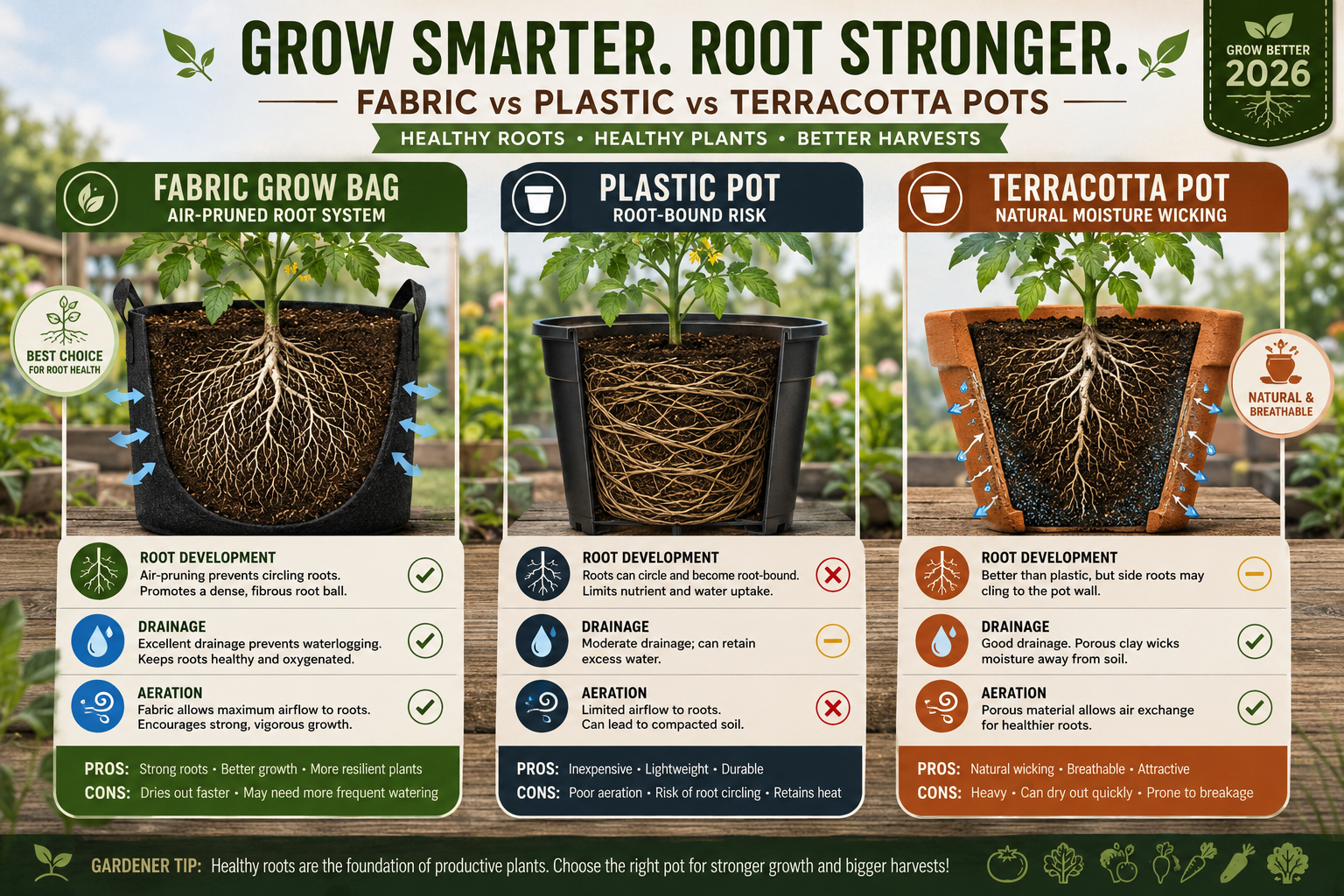
Fabric grow bags offer significant advantages for vegetable gardening, primarily through enhanced root health and drainage, though they do require more vigilant watering. The main pros include superior aeration, which air-prunes roots and prevents them from circling, leading to a more robust and efficient root system. This improved root structure often translates to healthier plants and better yields. However, their excellent drainage also means they dry out faster than plastic pots, necessitating more frequent watering, especially during hot, dry periods.
Pros of Fabric Grow Bags:
- Superior Aeration and Drainage: The breathable fabric allows for excellent airflow to the roots and prevents waterlogging. This environment is crucial for preventing root rot and other moisture-related issues.
- Air-Pruning: When roots reach the fabric wall, their tips are exposed to air, causing them to self-prune. This stimulates the growth of new, branching feeder roots further back in the root ball, creating a dense, fibrous root system that efficiently absorbs water and nutrients.
- Prevents Root Circling: Unlike solid-walled containers, fabric bags do not allow roots to circle endlessly, which can stifle plant growth and eventually kill the plant.
- Temperature Regulation: The porous material helps dissipate heat, keeping the root zone cooler in hot weather and warmer in cool weather, reducing thermal stress on plants.
- Lightweight and Portable: They are easy to move, even when filled with soil, making them ideal for gardeners who need to shift plants or reorganize their space. This is particularly useful for balcony vegetable garden guide 2026.
- Compact Storage: When not in use, fabric grow bags can be folded flat for easy storage.
Cons of Fabric Grow Bags:
- Increased Watering Needs: Due to excellent drainage and evaporation, fabric bags dry out faster than plastic pots, especially in full sun or windy conditions. This can be a significant drawback for busy gardeners or those in hot climates.
- Fertilization Requirements: Nutrients can leach out more quickly with frequent watering, potentially requiring more regular fertilization.
- Durability: While reusable, fabric bags generally have a shorter lifespan than well-maintained plastic or terracotta pots, typically lasting 2-7 seasons depending on quality and environmental factors.
- Aesthetics: Some gardeners find the appearance of fabric bags less traditional or decorative than other pot types.
For gardeners prioritizing robust root development and disease prevention, fabric grow bags are often the superior choice despite the increased watering demands.

Do Fabric Grow Bags Really Help Roots Grow Better Than Plastic Containers?
Yes, fabric grow bags genuinely promote healthier and more efficient root growth compared to plastic containers, primarily through a process called air-pruning. In plastic pots, roots hit the solid wall and continue growing in a circular pattern, leading to a “root-bound” plant with a dense, inefficient outer layer of roots. In contrast, fabric grow bags allow root tips to be exposed to air when they reach the bag’s perimeter, causing them to stop growing outwards and instead branch out further back into the soil, creating a denser, more fibrous root ball that is far more effective at absorbing water and nutrients. This distinction is crucial for understanding why your vegetables might be growing slowly but not dying.
The Mechanism of Air-Pruning
Air-pruning is a natural process that occurs when root tips are exposed to air, causing them to dehydrate and stop growing. This signals the plant to produce new feeder roots from the main root mass, leading to a highly branched and fibrous root system.
- Enhanced Nutrient Uptake: A fibrous root system has a larger surface area, allowing the plant to absorb more water and nutrients from the soil, directly translating to more vigorous top growth and higher yields.
- Prevention of Root Circling: Eliminating root circling reduces stress on the plant, as nutrients are distributed more evenly, and the plant isn’t expending energy trying to penetrate a solid barrier.
- Improved Plant Stability: A well-developed, branched root system anchors the plant more securely, making it less susceptible to wind damage or toppling over as it grows larger.
- Healthier Transplants: Plants grown in fabric bags transplant with minimal shock because their root systems are naturally prepared to expand into new soil rather than having to untangle from a constricted, circling pattern.
For plants with aggressive or extensive root systems, such as tomatoes, peppers, and most fruiting vegetables, the benefits of air-pruning in fabric grow bags are particularly pronounced.
How Much Do Different Types of Garden Containers Cost, and How Long Do They Last?
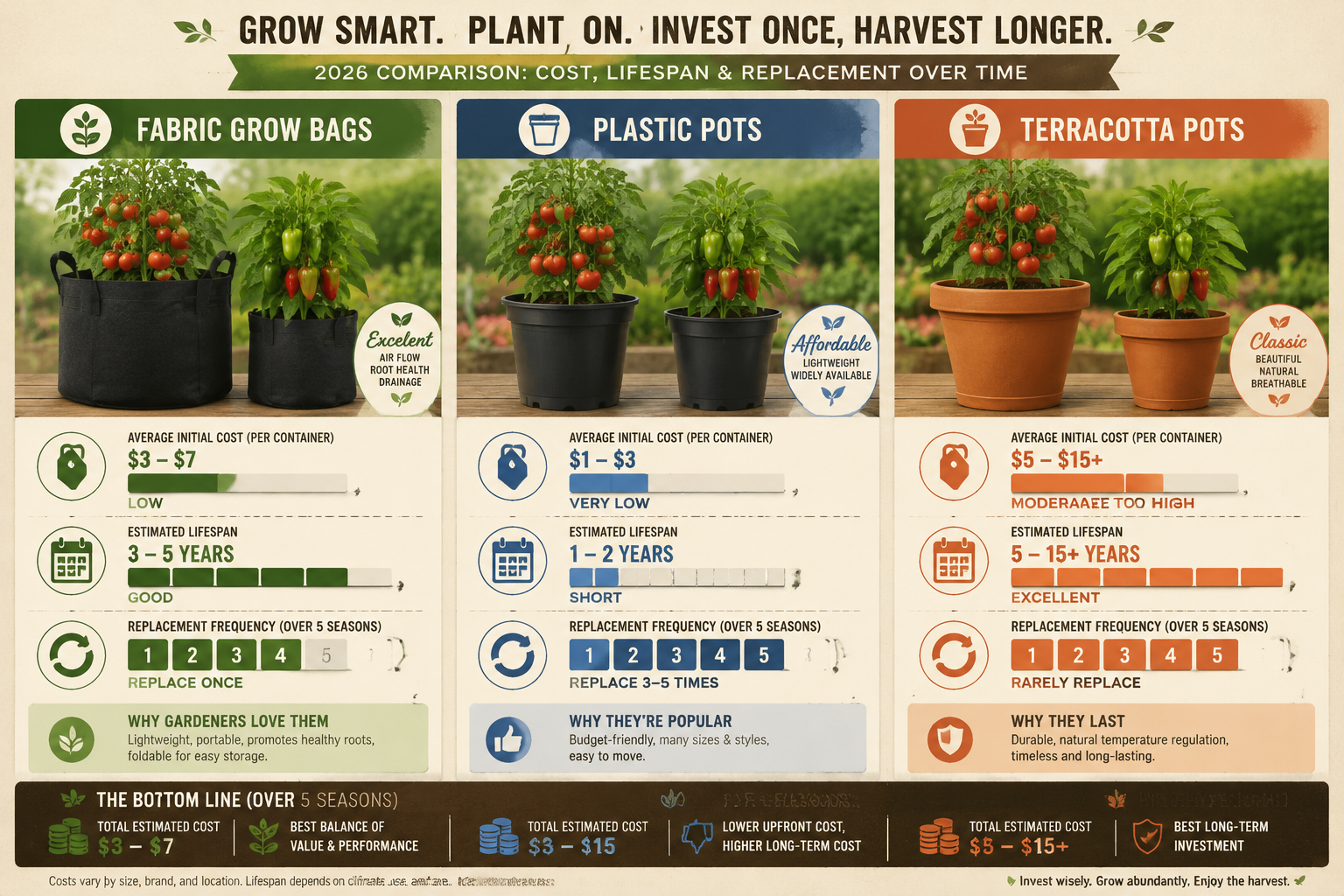
The cost and lifespan of garden containers vary significantly, with plastic pots generally being the cheapest upfront but having a moderate lifespan, terracotta pots offering a higher initial investment for long-term durability, and fabric grow bags falling in the mid-range with a lifespan dependent on quality and care. For a standard 5-gallon equivalent size (around 30-40 liters), you can expect the following in 2026:
| Container Type | Average Initial Cost (per 5-gal equivalent) | Typical Lifespan | Key Durability Factors |
|---|---|---|---|
| Plastic Pot | $2 – $10 | 3 – 7 seasons | UV degradation, brittleness in cold |
| Fabric Grow Bag | $3 – $15 | 2 – 7 seasons | UV degradation, material thickness, stitching quality |
| Terracotta Pot | $10 – $30 | 10+ seasons | Freezing and thawing cycles (cracking), impact damage |
Plastic Pot Costs and Lifespan
Plastic pots are often the most budget-friendly option, making them popular for new gardeners or those starting many seedlings. Their cost can range from very low for thin, nursery-style pots to slightly higher for more decorative, thick-walled options. However, prolonged exposure to UV radiation from the sun makes the plastic brittle over time, leading to cracking and disintegration. While some high-quality plastic pots can last longer, many will need replacing within 3-7 growing seasons, especially if left outdoors year-round.
Fabric Grow Bag Costs and Lifespan
Fabric grow bags represent a middle ground in terms of price. Their cost is primarily influenced by material quality (e.g., thickness of felt or non-woven fabric) and size. Cheaper, thinner bags might only last 2-3 seasons, particularly if exposed to harsh sun and frequent handling. Higher-quality, thicker bags with reinforced stitching can easily last 5-7 seasons, making them a worthwhile investment for serious gardeners. Proper cleaning and storage in the off-season can extend their life.
Terracotta Pot Costs and Lifespan
Terracotta pots are typically the most expensive upfront. Their artisanal nature and weight contribute to the higher price. However, they are also the most durable in terms of sheer longevity, often lasting a decade or more if cared for properly. The main threat to terracotta is cracking due to freezing and thawing cycles if left outdoors in winter with wet soil, and susceptibility to breakage from drops or impacts. With careful handling and proper winter storage, terracotta can be a one-time purchase for many years of gardening.
When assessing the long-term value, consider not just the initial purchase price but also how often you anticipate needing to replace the containers and the specific growing conditions they will face.
Which Container Type Prevents Root Rot Most Effectively?
Fabric grow bags and terracotta pots are both highly effective at preventing root rot due to their superior drainage and aeration capabilities, outperforming traditional plastic pots. Root rot is primarily caused by anaerobic conditions (lack of oxygen) in the soil, often a result of overwatering and poor drainage.
- Fabric Grow Bags: These containers are made from a breathable fabric that allows air to penetrate the soil from all sides, providing excellent oxygenation to the root zone. Crucially, excess water can drain freely through the fabric, preventing waterlogging. This combination of aeration and drainage creates an environment where the fungi responsible for root rot struggle to thrive.
- Terracotta Pots: Made from porous clay, terracotta pots allow both water and air to pass through their walls. This evaporative process not only helps to cool the soil but also ensures that the soil dries out more quickly, preventing the prolonged wet conditions that lead to root rot.
- Plastic Pots: While plastic pots are good at retaining moisture, their non-porous walls and reliance solely on drainage holes at the bottom can lead to poor aeration and standing water if not managed carefully. If the drainage holes become blocked or the soil mix is too dense, water can accumulate, starving roots of oxygen and creating ideal conditions for root rot. To mitigate this in plastic pots, using a well-draining potting mix and ensuring clear drainage holes is paramount. Our guide on best soil mix for vegetables offers more insights.
For gardeners frequently concerned about overwatering or those in humid climates, opting for fabric or terracotta can significantly reduce the risk of root rot, leading to healthier plants.
Are Fabric Grow Bags Good for Tomatoes and Peppers Specifically?
Yes, fabric grow bags are exceptionally good for growing tomatoes and peppers, often resulting in healthier, more productive plants compared to traditional plastic or terracotta containers. These two popular fruiting vegetables have extensive root systems that particularly benefit from the aeration and air-pruning unique to fabric grow bags.
- Tomatoes: Tomatoes are heavy feeders and require a robust root system to support their vigorous growth and fruit production. Fabric grow bags prevent the root circling common in plastic pots, allowing tomato plants to develop a highly branched, efficient root system capable of absorbing ample water and nutrients. This translates to stronger plants, fewer instances of blossom end rot (often linked to inconsistent watering and nutrient uptake), and a greater yield of tomatoes. They also thrive in conditions that allow soil temperatures to regulate, which fabric bags do well. For specific guidance, see our article on growing tomatoes in small spaces.
- Peppers: Similar to tomatoes, peppers benefit from the excellent drainage and aeration provided by fabric grow bags. Pepper plants are susceptible to root rot if their feet stay too wet, a risk significantly reduced by the breathability of fabric. The air-pruning effect encourages a stronger root system that can better anchor the plant and support the weight of numerous developing peppers, leading to higher yields and healthier foliage. Our guide on growing chili in pots further details optimal conditions for peppers.
For both tomatoes and peppers, choosing a fabric grow bag of appropriate size (at least 7-10 gallons for most varieties) is crucial to provide enough root space for mature plants.
What Vegetables Shouldn’t Be Grown in Fabric Grow Bags?
While fabric grow bags are versatile, certain vegetables that prefer consistently moist soil or have very shallow, spreading root systems might not perform optimally in them due to their rapid drying properties. Vegetables that require perpetually wet conditions, such as some aquatic or semi-aquatic plants, would struggle. Additionally, some very shallow-rooted greens might experience rapid moisture fluctuations.
Generally, vegetables that might be less ideal for fabric grow bags include:
- Water-intensive crops needing consistent saturation: While most vegetables need consistent moisture, plants that absolutely cannot tolerate any drying out of their topsoil layer might require more attention in fabric bags. However, with diligent watering, most crops can adapt.
- Very shallow-rooted greens in small bags: While leafy greens like lettuce and spinach can grow in fabric bags, very small fabric bags (1-3 gallons) can dry out extremely fast, requiring multiple waterings a day in hot weather. For these, a slightly larger bag or a plastic pot might offer more moisture retention. Our guide on growing spinach in containers provides more context.
- Root crops requiring highly stable conditions: While fabric grow bags are fine for many root crops, if they are constantly moved or the bag itself is very flexible, it can potentially disrupt the delicate formation of root vegetables like carrots or parsnips, leading to deformed growth. However, this is less about the fabric and more about the stability of the container.
For the vast majority of common garden vegetables, fabric grow bags are a suitable and often superior choice, provided gardeners are prepared for the increased watering frequency.
Do Terracotta Pots Dry Out Faster Than Plastic or Fabric Containers?
Yes, terracotta pots inherently dry out significantly faster than plastic pots and typically faster than fabric grow bags due to their porous nature. The unglazed clay material allows water to evaporate not only from the soil surface but also directly through the walls of the pot.
- Evaporative Cooling: This porosity leads to evaporative cooling, which can be beneficial in hot climates as it keeps the root zone cooler. However, it also means the soil loses moisture at a much quicker rate.
- Watering Frequency: Gardeners using terracotta pots, especially in sunny, windy, or hot conditions, will need to water their plants more frequently—sometimes daily or even twice daily for moisture-loving plants—to prevent the soil from completely drying out. This contrasts sharply with plastic pots, which are designed to retain moisture.
- Comparison to Fabric: While fabric grow bags also dry out faster than plastic due to their breathability, the rate of evaporation from terracotta is often higher because the entire pot surface is porous. Fabric bags allow air exchange and drainage, but the bulk of the fabric itself still holds some moisture compared to the constant wicking action of terracotta.
Terracotta’s rapid drying characteristic is a double-edged sword: it is excellent for preventing overwatering and root rot, but it demands more attention to watering schedules, especially for thirsty vegetables.
Can Fabric Grow Bags Be Reused for Multiple Growing Seasons?
Yes, fabric grow bags are designed to be reused for multiple growing seasons, making them a more sustainable option than disposable plastic containers. Their reusability significantly extends their value, though their lifespan varies based on material quality, environmental exposure, and how well they are maintained.
- Typical Lifespan: A good quality fabric grow bag (made from thicker, UV-resistant non-woven fabric) can last anywhere from 3 to 7 growing seasons. Cheaper, thinner bags might only last 1-2 seasons before showing signs of wear.
- Factors Affecting Durability:
- UV Exposure: Constant exposure to direct sunlight degrades the fabric over time, making it brittle and prone to tearing.
- Material Quality: Thicker, denser fabrics with reinforced stitching will naturally last longer.
- Handling: Rough handling, dragging, or overfilling with heavy soil can stress the seams and fabric.
- Cleaning and Storage: Proper cleaning after each season removes soil, salts, and potential pathogens, preventing degradation. Storing them in a dry, dark place away from extreme temperatures prolongs their life.
- Maintenance for Reuse:
- Empty and Clean: At the end of the growing season, empty the soil, shake out any debris, and rinse the bags thoroughly. Some gardeners even machine wash them on a gentle cycle.
- Inspect: Check for any tears, frayed seams, or weak spots. Minor damage can sometimes be patched.
- Store Properly: Once completely dry, fold them flat and store them in a shed, garage, or another protected area until the next planting season.
Reusing fabric grow bags not only saves money but also reduces waste, aligning with environmentally conscious gardening practices.
What Common Mistakes Do Gardeners Make When Choosing Plant Containers?
Gardeners often make several common mistakes when selecting plant containers, which can hinder vegetable growth and lead to frustration. These errors typically revolve around inadequate size, poor drainage, material choice mismatch for climate, and neglecting the long-term implications.
- Choosing the Wrong Size: One of the most frequent mistakes is selecting a container that is too small for the mature plant. Vegetables like tomatoes, squash, and many peppers require significant root space to thrive and produce well. A small pot will restrict root growth, leading to stunted plants, lower yields, and increased watering demands. Refer to our pot size guide for vegetables 2026 for specific recommendations.
- Ignoring Drainage: Containers without adequate drainage holes are a recipe for root rot. Even if a pot has holes, if they are too small or become blocked, water can sit and suffocate roots. Always ensure ample, unobstructed drainage.
- Mismatching Material to Climate/Watering Habits:
- Using terracotta pots in very hot, dry climates without being prepared for daily or twice-daily watering.
- Using plastic pots for plants susceptible to root rot or for gardeners prone to overwatering, as plastic retains moisture heavily.
- Using fabric grow bags in a location where daily watering isn’t feasible, leading to drought stress for plants.
- Overlooking Container Color: Dark-colored pots absorb more sunlight and can overheat the root zone, especially in hot climates. Lighter-colored pots reflect more light and keep roots cooler.
- Neglecting Long-Term Needs: Opting for the cheapest, least durable option without considering how long it will last or how it impacts sustainability and future costs. Reusing materials like those discussed in reuse vegetable garden soil in 2026 can also impact container choice.
- Prioritizing Aesthetics Over Function: While attractive pots are nice, they should never compromise the plant’s health. A beautiful pot with poor drainage or insufficient size will lead to a struggling plant.
Understanding these common pitfalls helps gardeners make informed decisions that support optimal vegetable growth.
Are Fabric Grow Bags Better for Small Urban Gardens or Large Farms?
Fabric grow bags offer significant benefits for both small urban gardens and large commercial farms, but their specific advantages and roles differ across these scales.
Small Urban Gardens (e.g., Balconies, Patios, Rooftops)
For small urban gardens, fabric grow bags are often a superior choice due to their versatility, portability, and space-saving attributes.
- Portability: Their lightweight nature makes them easy to move around a balcony or patio to optimize sun exposure or protect plants from harsh weather. This is ideal for grow vegetables in a 5×6 patio space.
- Space Efficiency: They can be placed in tight corners or against walls, and their soft sides can conform slightly to irregular spaces. Vertical grow bags are also available, maximizing vertical growing area, as explored in cheap vertical gardening ideas 2026.
- Root Health: The air-pruning benefits are just as crucial for urban gardeners, ensuring plants thrive even in limited soil volumes.
- Reduced Overwatering Risk: In urban environments where gardeners might be less experienced, the superior drainage helps prevent common mistakes.
Large Commercial Farms and Nurseries
On a larger scale, fabric grow bags (often referred to as ‘root control bags’ or ‘smart pots’) offer economic and horticultural advantages, particularly for specialty crops or tree nurseries.
- Improved Plant Health: Farms growing high-value crops can benefit from the healthier root systems and faster growth rates achieved in fabric bags, potentially leading to quicker crop cycles and higher yields.
- Reduced Transplant Shock: For plants grown in bags and later transplanted into the ground (e.g., fruit trees, shrubs, or large vegetable starts), the lack of root circling and the fibrous root ball significantly reduces transplant shock, improving establishment rates.
- Container Field Growing: Some farms use large fabric bags directly in fields for certain crops, allowing for easier harvesting or rotation.
- Pest and Disease Management: Growing in containers can sometimes offer better control over soil-borne pests and diseases than direct field planting.
In summary, fabric grow bags are excellent for urban gardeners seeking flexible, healthy plant solutions in limited spaces, and they provide valuable horticultural benefits for commercial operations looking to optimize plant health and efficiency.
What Soil Works Best in Fabric Grow Bags Versus Traditional Pots?
The best soil for fabric grow bags versus traditional plastic or terracotta pots emphasizes excellent drainage and aeration, often requiring a slightly different composition to account for the unique characteristics of each container.
For Fabric Grow Bags
In fabric grow bags, where drainage and aeration are naturally high, the soil mix should be formulated to retain moisture and nutrients more effectively without becoming waterlogged.
- Characteristics: A high-quality potting mix that is airy yet holds moisture well. The goal is to balance the bag’s rapid drainage with the plant’s need for consistent hydration.
- Composition:
- Base: A good quality, peat-based or coco coir-based potting mix provides structure and water retention.
- Aeration: While the bag provides aeration, adding perlite or pumice (10-20% by volume) further ensures lightness and prevents compaction over time.
- Moisture Retention: Incorporate vermiculite (10-15%) or compost (15-20%) to improve water and nutrient holding capacity. Compost also adds essential microbes and slow-release nutrients.
- Avoid: Heavy garden soil, which can compact too much and negate some of the fabric bag’s aeration benefits.
For Traditional Plastic and Terracotta Pots
For plastic pots, where moisture retention is high, the soil mix must prioritize drainage to prevent root rot. For terracotta, which drains rapidly, the mix can be a balance.
- Plastic Pots (High Moisture Retention):
- Characteristics: A very well-draining, coarser mix to counteract the pot’s tendency to hold water.
- Composition: A standard potting mix amended with a higher percentage of perlite, pumice, or coarse sand (20-30% by volume) to enhance drainage. Avoid adding too much vermiculite unless the plant has extremely high water needs, as it further increases moisture retention.
- Terracotta Pots (High Drainage):
- Characteristics: A balanced mix that drains well but still provides sufficient moisture retention, as the pot itself will wick away water.
- Composition: A good quality potting mix with moderate additions of perlite (10-15%) for aeration and compost or coco coir (10-20%) for moisture and nutrient retention.
Regardless of the container type, never use dense, unamended garden soil in pots, as it compacts easily and can lead to poor drainage and aeration, suffocating roots. Fresh, high-quality potting mix is crucial for successful container gardening. For more details on soil, see our best soil mix for vegetables guide.
How Long Do Fabric Grow Bags Typically Last Compared to Other Containers?
Fabric grow bags typically last 2 to 7 seasons, a duration that falls between the shorter lifespan of many plastic pots and the potentially multi-decade lifespan of well-maintained terracotta. Their longevity is highly dependent on manufacturing quality, the material’s UV resistance, and how they are handled and stored.
- Fabric Grow Bags (2-7 seasons): The primary failure mode for fabric bags is degradation from UV radiation, which causes the non-woven fabric to become brittle and eventually tear. Cheaper bags made from thinner materials will succumb faster, sometimes only lasting a single season in harsh sun. Higher-grade bags, often made from thicker, more robust fabrics with UV stabilizers, can easily last 5-7 seasons or even longer with proper care. Storing them out of direct sunlight during the off-season significantly extends their life.
- Plastic Pots (3-7 seasons): Most standard plastic pots degrade over time due to UV exposure, becoming brittle and cracking. This is particularly true for thinner, cheaper pots. More expensive, thicker-walled, or UV-stabilized plastic containers can last longer, sometimes comparable to higher-end fabric bags. Their lifespan is also affected by temperature extremes, as plastic can become more fragile in very cold weather.
- Terracotta Pots (10+ seasons): Terracotta pots are the most durable in terms of material longevity, easily lasting over a decade, and often much longer, provided they are not physically damaged. Their main vulnerabilities are cracking due to freezing water inside the pot (if left outdoors with wet soil in winter) and breakage from being dropped or knocked over. With careful handling and proper winter storage (empty and dry, protected from frost), terracotta can be a near-permanent garden fixture.
While fabric grow bags might not match the extreme longevity of terracotta, their benefits for root health and relatively lower environmental impact make their multi-season lifespan a compelling choice for many gardeners.

Conclusion
Choosing the right container is a pivotal decision for any gardener, directly impacting the health and productivity of vegetable plants. In the contest of fabric grow bag vs plastic pot vs terracotta for growing better vegetables in 2026, fabric grow bags generally emerge as the frontrunner due to their superior aeration and air-pruning capabilities, which cultivate robust, fibrous root systems. This leads to healthier plants and often higher yields, especially for heavy feeders like tomatoes and peppers.
While plastic pots offer affordability and moisture retention, they risk root circling and poor aeration. Terracotta pots excel in breathability and preventing root rot but demand more frequent watering. Ultimately, the “best” choice hinges on your specific gardening style, climate, budget, and the particular vegetables you aim to grow. For optimal results, consider matching the container type to your plant’s needs and your watering habits, and always prioritize good drainage and adequate pot size for thriving plants.
Related Reading
- Pot Size Guide For Vegetables 2026: Optimal Growth & Harvest
- Balcony Vegetable Garden Guide 2026: Grow Fresh Produce At Home
- Common Vegetable Growing Mistakes: Avoid Them In 2026
- Growing Tomatoes In Small Spaces: 2026 Expert Guide
- Best Soil Mix For Vegetables: 2026 Guide To Thriving Garden
FAQ
Do fabric grow bags make vegetables grow faster?
Fabric grow bags don’t inherently make vegetables grow “faster” in terms of days to maturity, but they can promote more vigorous and healthier growth due to superior root development, which often leads to larger plants and higher yields within the typical growing period.
Can I use regular garden soil in fabric grow bags?
No, it’s generally not recommended to use regular garden soil in fabric grow bags or any containers. Garden soil tends to be too heavy, compacts easily in pots, and lacks the necessary drainage and aeration for healthy container plant roots. Always use a high-quality potting mix.
Do fabric grow bags leak soil?
No, fabric grow bags do not leak soil. While they allow water to drain freely through the fabric, the weave is tight enough to retain potting mix particles, preventing soil loss.
Are plastic pots bad for plants?
Plastic pots are not inherently “bad,” but they do have drawbacks. They retain moisture well but can lead to root circling and poor aeration, which can stress plants if not managed with a proper soil mix and watering schedule.
Can I leave terracotta pots outside in winter?
It is not recommended to leave terracotta pots outside with soil in freezing conditions. The porous clay can absorb water, which then expands when frozen, causing the pot to crack or shatter. Empty and store them in a protected, dry area during winter.
How do I clean fabric grow bags for reuse?
To clean fabric grow bags for reuse, empty all soil, shake out debris, and rinse them thoroughly with water. You can scrub them with a brush and mild soap, or some can be machine washed on a gentle cycle. Ensure they are completely dry before storing to prevent mildew.
Are fabric grow bags more environmentally friendly?
Fabric grow bags can be more environmentally friendly than single-use plastic pots because they are reusable for multiple seasons. Many are made from recycled materials, and their benefits for plant health reduce the need for replanting due to root issues.
Do plants in fabric grow bags need more fertilizer?
Plants in fabric grow bags may need slightly more frequent fertilization than those in plastic pots because the excellent drainage and aeration can cause nutrients to leach out faster with regular watering.
Can roots grow through fabric grow bags?
Yes, roots can sometimes grow slightly through the fabric of grow bags. However, when they hit the air outside the bag, they undergo “air-pruning,” which stops their outward growth and encourages branching within the pot, a beneficial process for plant health.
What size fabric grow bag for tomatoes?
For most indeterminate tomato varieties, a fabric grow bag of at least 10-15 gallons (approximately 40-60 liters) is recommended. Determinate varieties can sometimes do well in 7-10 gallon (25-40 liter) bags.
Do black fabric grow bags get too hot?
Black fabric grow bags can absorb a significant amount of heat from the sun, potentially making the soil too hot for roots in extremely warm climates. Lighter-colored bags are generally preferred in hot, sunny regions to help keep the root zone cooler.
Can I place a fabric grow bag inside another container?
Yes, you can place a fabric grow bag inside a more decorative outer container or another pot. This can help to manage moisture, improve aesthetics, or provide additional insulation, just ensure there’s still good airflow around the fabric bag within the outer pot.
References
- University of Maryland Extension. (n.d.). Container Vegetable Gardening. Retrieved from https://extension.umd.edu/resource/container-vegetable-gardening/
- Penn State Extension. (n.d.). Container Gardening for Vegetables. Retrieved from https://extension.psu.edu/container-gardening-for-vegetables