Can you grow vegetables successfully in a 5×6 foot patio space?
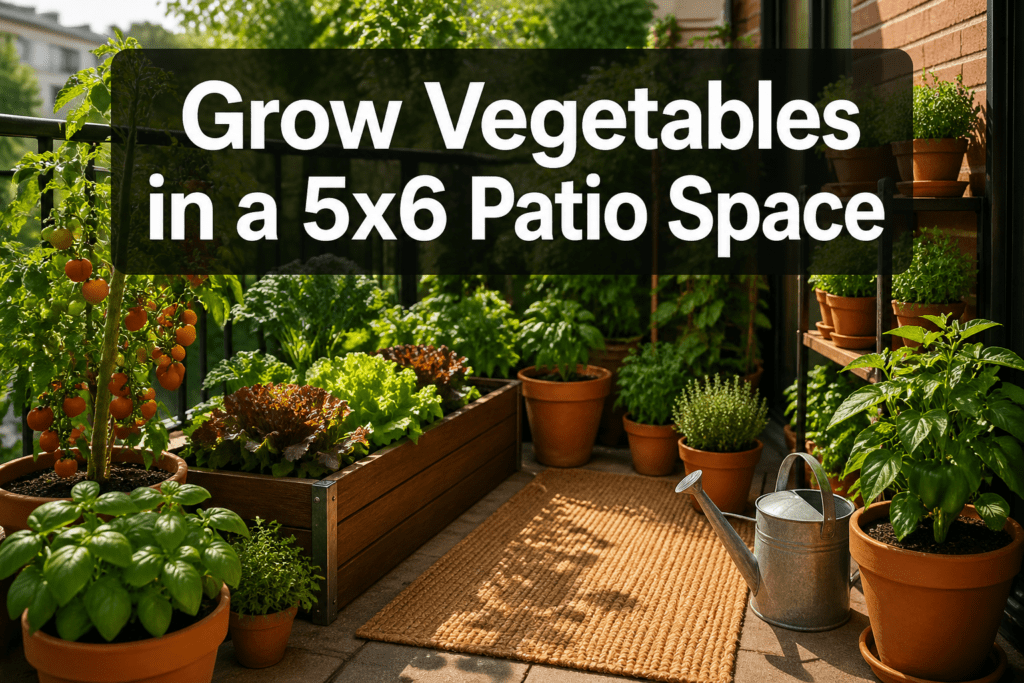
Quick Answer: Yes, you can grow vegetables successfully in a 5×6 foot patio space. Thirty square feet is enough to produce a meaningful harvest of tomatoes, greens, herbs, and more — as long as you choose compact varieties, use vertical space, and match plants to your light conditions. The key is strategic planning, not square footage.
Key Takeaways
- A 5×6 foot patio (30 sq ft) can realistically support 8–15 containers, depending on pot size and layout.
- Vertical growing (trellises, wall pockets, tiered stands) can effectively double your usable growing area.
- Compact and “patio” vegetable varieties are specifically bred for small-space success.
- Consistent watering and feeding matter more in containers than in ground beds.
- Leafy greens, radishes, herbs, cherry tomatoes, and bush beans are the highest-yield choices for this size.
- Poor sunlight is the most common reason small patio gardens underperform — assess your light before choosing plants.
- Succession planting (staggering crops every 2–3 weeks) keeps harvests coming all season.
- Container quality and soil mix directly affect yield — cheap potting mix limits results.
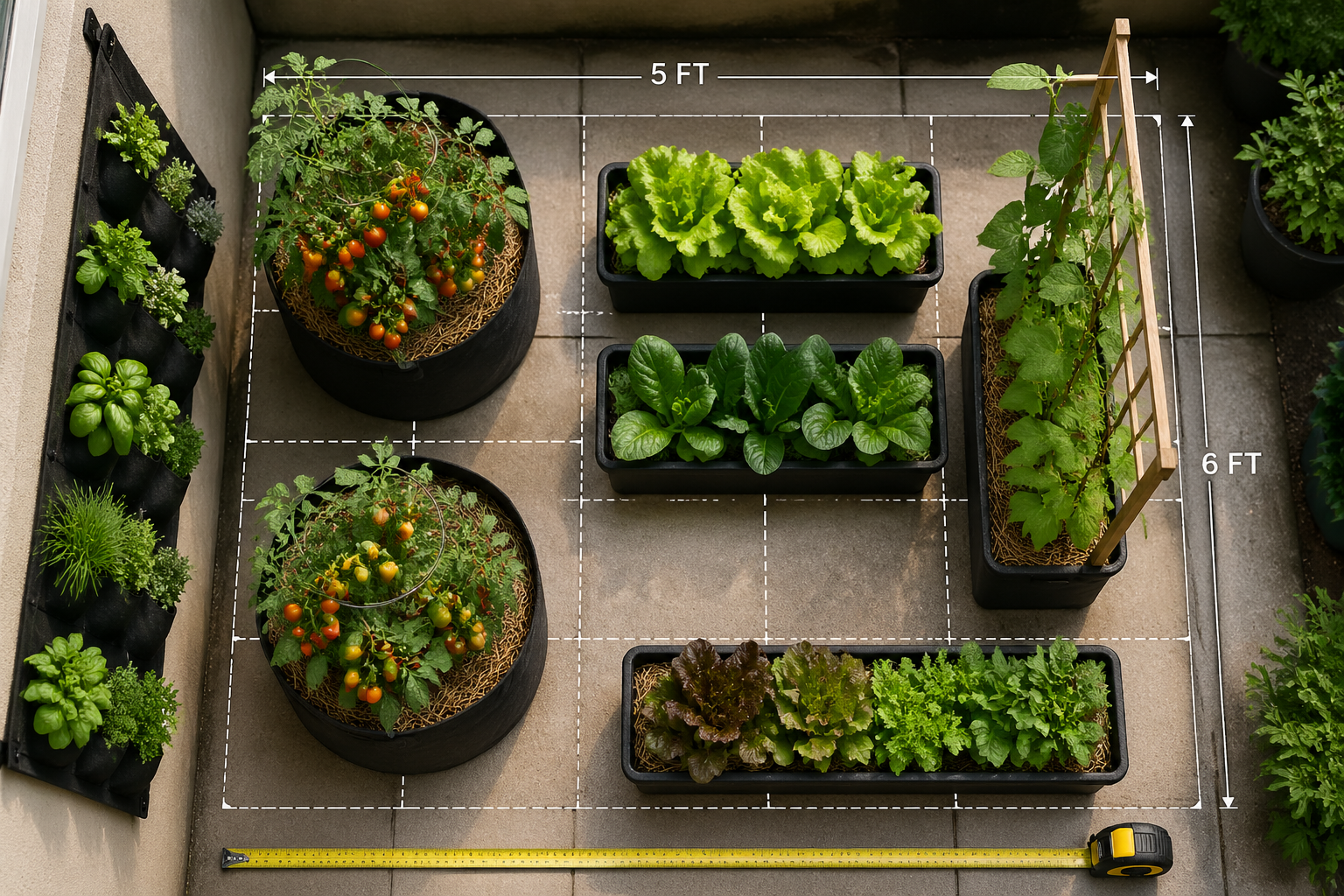
What Can You Realistically Grow in a 5×6 Foot Patio Space?
A 5×6 foot patio can support a genuine, productive vegetable garden — not just a few token herbs. The realistic yield depends on three factors: sunlight hours, container depth, and plant selection.
Here’s what fits comfortably in 30 square feet:
| Plant | Container Size | Expected Yield (per season) |
|---|---|---|
| Cherry tomatoes | 5-gallon bucket | 3–5 lbs (estimate) |
| Lettuce mix | 12-inch wide planter | Continuous cut-and-come-again |
| Radishes | Shallow tray (6″ deep) | 20–30 radishes per round |
| Bush beans | 12-inch pot | 1–2 lbs per plant |
| Basil / herbs | 6-inch pot | Ongoing harvest |
| Dwarf pepper | 3-gallon pot | 10–20 peppers |
| Spinach | Window box | Continuous harvest |
“Thirty square feet sounds small until you realize a single well-managed cherry tomato plant can outproduce a backyard row of the same variety.”
For a deeper look at which plants perform best in containers, see our guide to the best vegetables to grow in pots.
How Do You Plan a 5×6 Patio Garden Layout?
Start with a simple sketch before buying a single pot. Measure your patio, note which direction it faces, and count your daily sunlight hours. These three data points determine everything else.
Step-by-step layout process:
- Map your sunlight. Observe the space at 9 AM, 12 PM, and 4 PM. Full sun (6+ hours) unlocks the most options. Partial shade (4–6 hours) still works for greens and herbs.
- Identify your walls and railings. These are free vertical growing space. A wall-mounted pocket planter or a slim trellis adds growing area without using floor space.
- Choose your container mix. Aim for 2–3 large containers (5-gallon+) for fruiting plants, plus smaller pots and window boxes for greens and herbs.
- Leave a narrow path. Even in a small space, you need to reach every plant to water, harvest, and check for pests. A 12–18 inch clear path prevents damage.
- Group by water needs. Plants that need daily watering in summer should be clustered near your water source.
For creative layout ideas beyond the basics, our small space garden hacks guide covers clever arrangements that maximize every inch.
Can You Grow Vegetables Successfully in a 5×6 Foot Patio Space Without Full Sun?
Yes, but your crop list narrows. Fruiting vegetables (tomatoes, peppers, cucumbers) need 6–8 hours of direct sun. Leafy greens, herbs, and root vegetables tolerate 4–6 hours.
Choose plants based on your light:
- Full sun (6+ hrs): Tomatoes, peppers, cucumbers, beans, zucchini (dwarf), eggplant
- Partial shade (4–6 hrs): Lettuce, spinach, kale, chard, cilantro, parsley, radishes
- Low light (under 4 hrs): Mint, chives, microgreens (with grow light support)
If your patio gets less than 4 hours of sun, a small LED grow light can extend what’s possible. Our guide on what vegetables handle partial shade breaks this down by specific variety.
Common mistake: Buying tomato starts for a north-facing patio. Without 6+ hours of direct sun, they’ll grow slowly, produce little, and frustrate you. Match the plant to the reality of your space.
Which Vegetables Give the Best Yield in a Small Patio Container Garden?
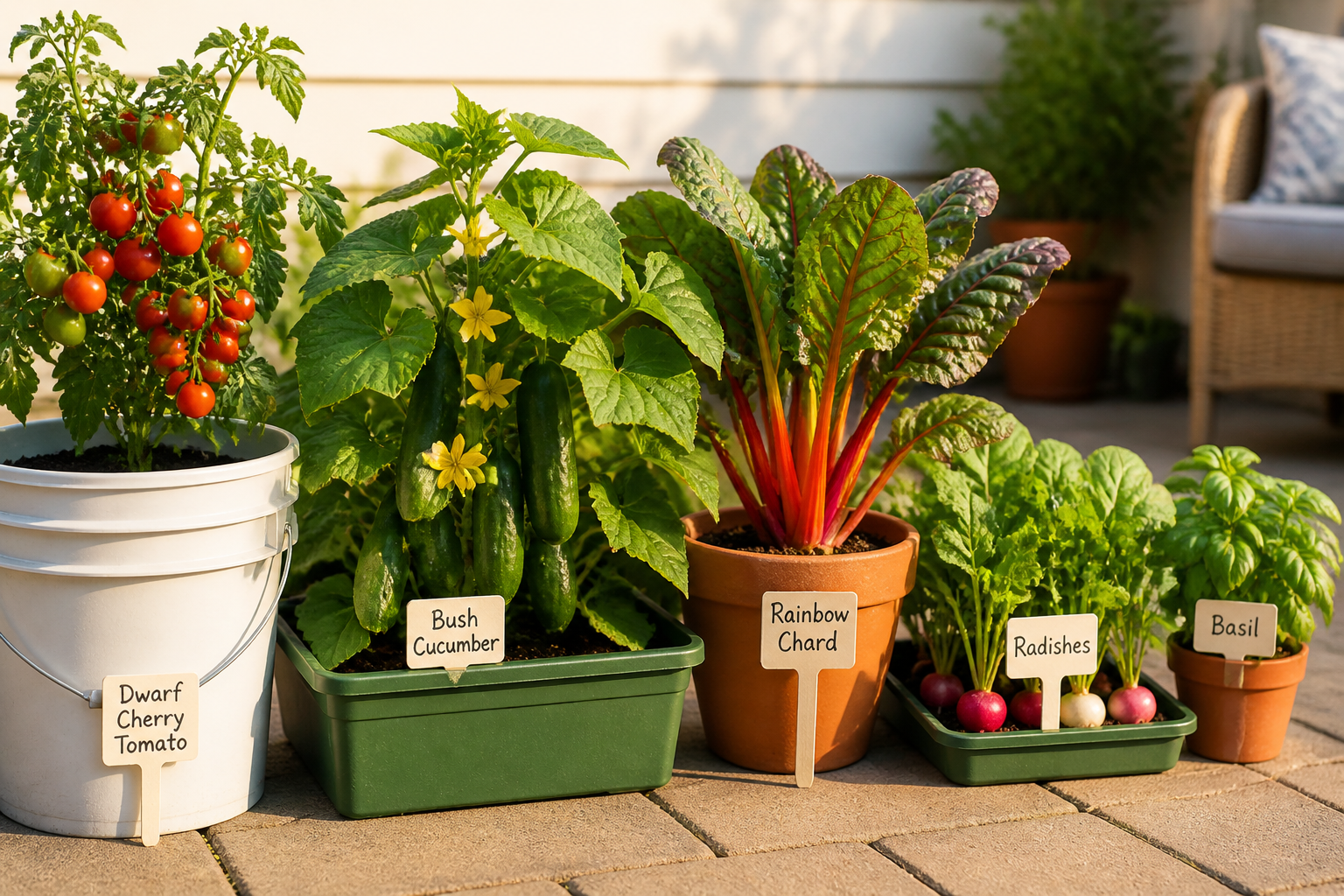
The highest-yield vegetables for a 5×6 patio are those that produce continuously, grow compactly, and don’t need deep soil. Prioritize these if your goal is actual food on the table.
Top performers for small patio gardens:
- 🍅 Cherry tomatoes (varieties: Tumbling Tom, Patio, Sun Gold) — continuous harvest for months
- 🥬 Cut-and-come-again lettuce — harvest outer leaves, plant keeps growing
- 🌿 Basil, chives, parsley — daily use, small footprint
- 🫑 Dwarf peppers (varieties: Lunchbox, Pot-a-Peno) — compact and productive
- 🫘 Bush beans — no trellis needed, fast-maturing
- 🌱 Radishes — ready in 25–30 days, great for filling gaps
For even faster results, our fast-growing vegetables guide lists crops you can harvest within 30 days of planting.
Avoid in a 5×6 space: Full-size pumpkins, sprawling zucchini (unless dwarf), corn, or any vine crop without a dedicated trellis. These take up too much space relative to their yield.
What Containers and Soil Work Best for a 5×6 Patio Vegetable Garden?
Container choice and soil quality are the two most overlooked factors in small-space vegetable gardening. The wrong combination limits yield regardless of how well you water and fertilize.
Container guidelines:
- Fruiting plants (tomatoes, peppers): Minimum 5-gallon container, 12 inches deep
- Leafy greens: 6–8 inches deep is enough
- Root vegetables (carrots, radishes): 10–12 inches deep
- Herbs: 6-inch pots work fine; group them in a window box to save space
Soil: Never use garden soil in containers — it compacts and drains poorly. Use a high-quality potting mix with added perlite (about 20% by volume) for drainage. For more on selecting the right containers, see our best containers for growing vegetables guide.
Fabric grow bags are worth considering for a 5×6 patio. They air-prune roots (which improves plant health), are lightweight, and fold flat for storage off-season.
How Do You Use Vertical Space to Maximize a 5×6 Patio Garden?
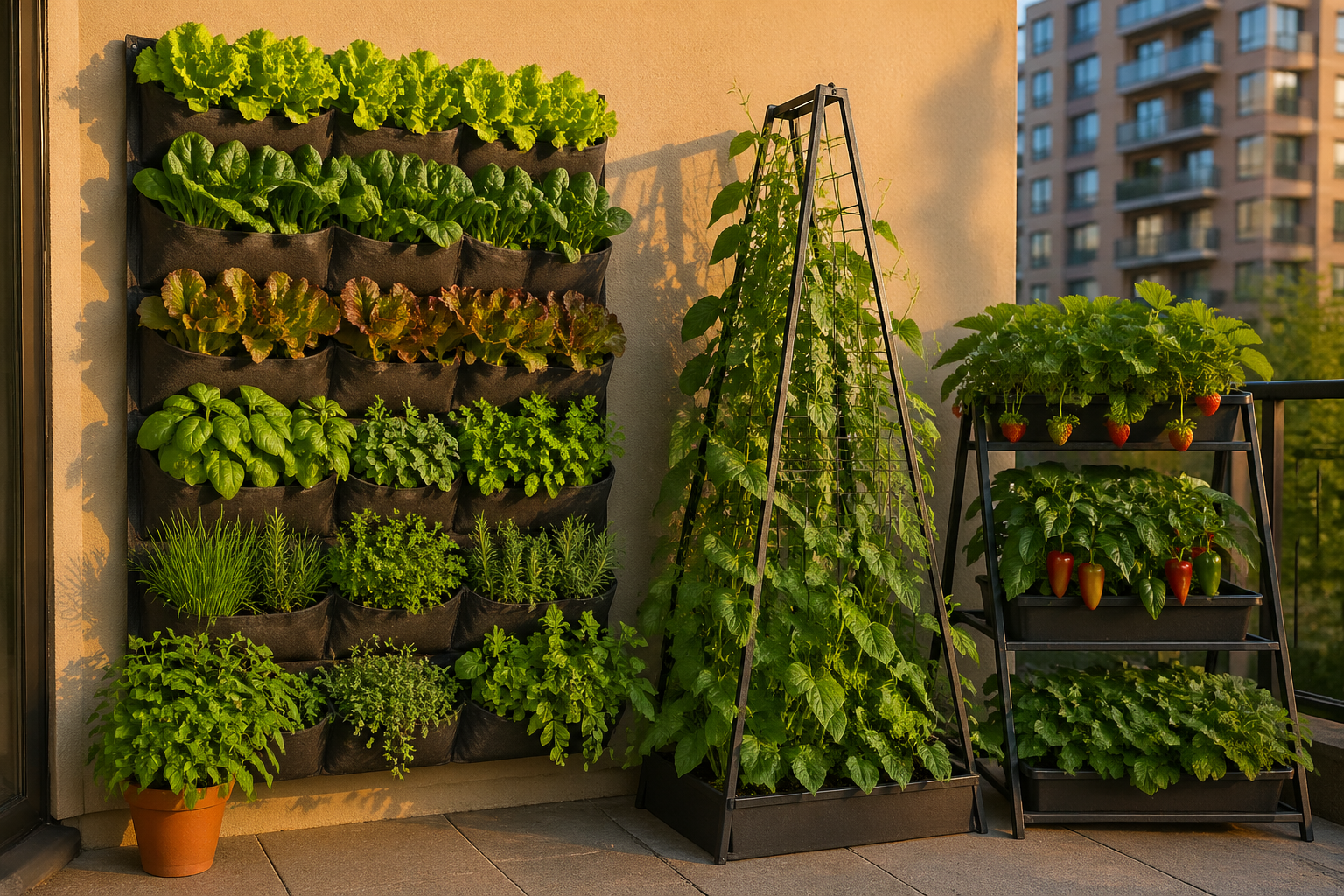
Vertical growing is the single most effective way to increase production in a 5×6 foot patio space. By growing up instead of out, you can effectively double or triple your planting area.
Vertical options that work in small patios:
- Wall-mounted pocket planters: Ideal for herbs, lettuce, and strawberries
- A-frame or lean-to trellis: Supports beans, peas, and small cucumbers
- Tiered plant stands: Stack 3–4 levels of smaller pots in 2 square feet of floor space
- Railing planters: Clip-on or hook-over planters use railing space that would otherwise go unused
- Hanging baskets: Cherry tomatoes and trailing herbs grow well overhead
Our cheap vertical gardening ideas guide shows how to build or buy vertical systems without a large budget.
Can You Grow Vegetables Successfully in a 5×6 Foot Patio Space Year-Round?
In most U.S. climate zones, yes — with seasonal crop rotation. The key is switching from warm-season crops (tomatoes, peppers, beans) in summer to cool-season crops (kale, spinach, lettuce, radishes) in spring and fall.
Seasonal rotation for a 5×6 patio:
- Spring (March–May): Lettuce, spinach, peas, radishes, cilantro
- Summer (June–August): Tomatoes, peppers, beans, basil, cucumbers
- Fall (September–November): Kale, chard, arugula, carrots, parsley
- Winter: Microgreens indoors, overwintered herbs, or a rest period
For guidance on what to plant after one crop finishes, see our article on what to plant after spring vegetables.
In USDA zones 9–11, outdoor growing continues nearly year-round. In zones 5–7, a simple cold frame or row cover extends the season by 4–6 weeks on each end.
What Are the Most Common Mistakes in a Small Patio Vegetable Garden?
Most small patio gardens underperform because of a handful of fixable problems — not because the space is too small.
Top mistakes and how to fix them:
- Overplanting. Crowding plants reduces airflow and yield. Follow spacing guidelines even in containers.
- Underwatering in summer. Containers dry out fast in heat. Check soil daily; water when the top inch is dry. Our guide on how often to water container vegetables in summer has a simple schedule.
- Skipping fertilizer. Potting mix nutrients deplete within 4–6 weeks. Use a balanced liquid fertilizer every 2 weeks during the growing season.
- Wrong variety. Standard-size tomato varieties in small pots struggle. Always choose “patio,” “dwarf,” or “bush” varieties for container growing.
- Ignoring pests until it’s too late. Check the undersides of leaves weekly. Catch aphids, spider mites, and whiteflies early.
FAQ: Growing Vegetables in a 5×6 Patio Space
Q: Is 30 square feet enough to grow food that actually makes a difference in my grocery bill?
A: Yes, especially for herbs, salad greens, and cherry tomatoes. A well-managed 5×6 patio can supply fresh greens and herbs for a household of 1–2 people throughout the growing season.
Q: Do I need a raised bed, or can I just use pots?
A: Pots work perfectly well for a 5×6 patio. Raised beds require more weight-bearing capacity and permanent setup. Containers are more flexible and easier to rearrange.
Q: How many pots can I fit in a 5×6 space?
A: Realistically, 8–12 containers of mixed sizes, plus wall-mounted planters. Exact count depends on pot sizes and whether you use vertical space.
Q: What’s the cheapest way to start a 5×6 patio vegetable garden?
A: Start with 2–3 large fabric grow bags (under $5 each), a bag of quality potting mix, and seeds rather than transplants. Total startup cost can be under $40.
Q: Can I grow tomatoes in a 5×6 patio space?
A: Yes. Choose compact varieties like Tumbling Tom, Tiny Tim, or Patio. Use a 5-gallon container minimum and place them in your sunniest spot.
Q: How do I keep soil from drying out too fast in containers?
A: Add water-retaining crystals to your potting mix, mulch the top of containers with straw or wood chips, and group pots together to reduce evaporation.
Q: Is a 5×6 patio garden worth the effort for beginners?
A: Absolutely. It’s a manageable size that teaches you the fundamentals without overwhelming you. Our beginner’s guide to vegetable gardening is a good starting point.
Q: What if my patio gets very hot in summer?
A: Choose heat-tolerant varieties, use light-colored containers to reflect heat, and water in the early morning. Move sensitive plants (like lettuce) to shadier spots during peak summer.
Conclusion: Your 5×6 Patio Is More Than Enough
A 5×6 foot patio space is a legitimate growing environment — not a compromise. The gardeners who struggle in small spaces usually do so because of poor plant selection or ignoring sunlight, not because of the square footage.
Your next steps:
- Assess your sunlight this week — count actual hours of direct sun on your patio.
- Pick 3–5 crops from the high-yield list above that match your light and cooking habits.
- Get your containers and soil before seeds or transplants — the right setup prevents the most common failures.
- Go vertical from day one. Add at least one wall planter or tiered stand to your setup.
- Plan for succession. As one crop finishes, have the next one ready to go in.
For a broader look at productive small-space growing, our complete guide to growing food in small spaces covers everything from balconies to windowsills.
References
- University of Maryland Extension. (2019). Container Vegetable Gardening. University of Maryland. https://extension.umd.edu/resource/container-vegetable-gardening
- Relf, D., & McDaniel, A. (2009). Vegetable Gardening in Containers. Virginia Cooperative Extension, Publication 426-336.
- National Gardening Association. (2014). Food Gardening in the U.S.. National Gardening Association.
- Oregon State University Extension Service. (2020). Growing Your Own: A Guide to Vegetable Gardening in the Pacific Northwest. OSU Extension.