
How can I compost on my apartment balcony without annoying neighbors?
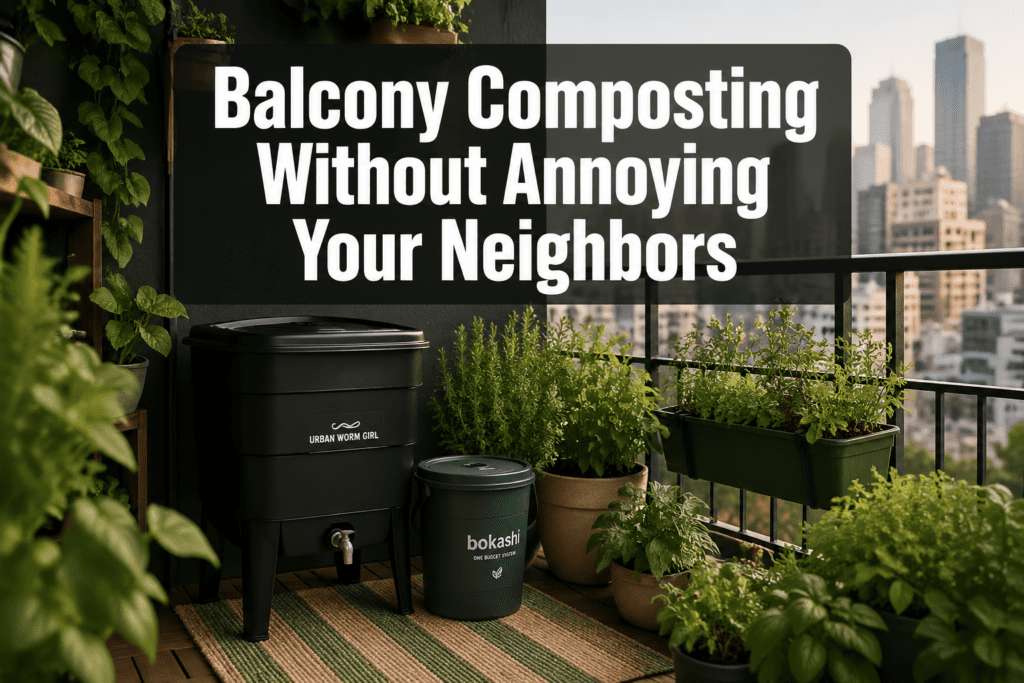
Quick Answer: You can compost on an apartment balcony without bothering neighbors by choosing a sealed, low-odor system like a worm bin (vermicomposter) or bokashi bucket, keeping it in a shaded corner, and avoiding problem inputs like meat, dairy, and cooked food. Done right, balcony composting is nearly odorless, compact, and produces rich fertilizer for your container plants within weeks.
Key Takeaways
- Worm bins and bokashi buckets are the two best options for balcony composting — both are sealed, compact, and low-odor.
- Never add meat, fish, dairy, or oily food — these are the primary cause of bad smells that upset neighbors.
- A properly maintained worm bin should smell like fresh soil, not garbage.
- Bokashi fermentation is faster (2–4 weeks) and handles a wider range of food scraps, including small amounts of cooked food.
- Location matters: place your bin in a shaded, ventilated corner away from shared walls or neighboring balconies.
- Check your lease agreement before starting — some buildings restrict composting on balconies.
- The finished compost feeds your balcony vegetable garden directly, closing the food-waste loop.
- Fruit flies are preventable with proper bin management — not an inevitable problem.
- Most neighbors won’t notice a well-managed system at all.
What Composting Methods Actually Work on a Balcony?
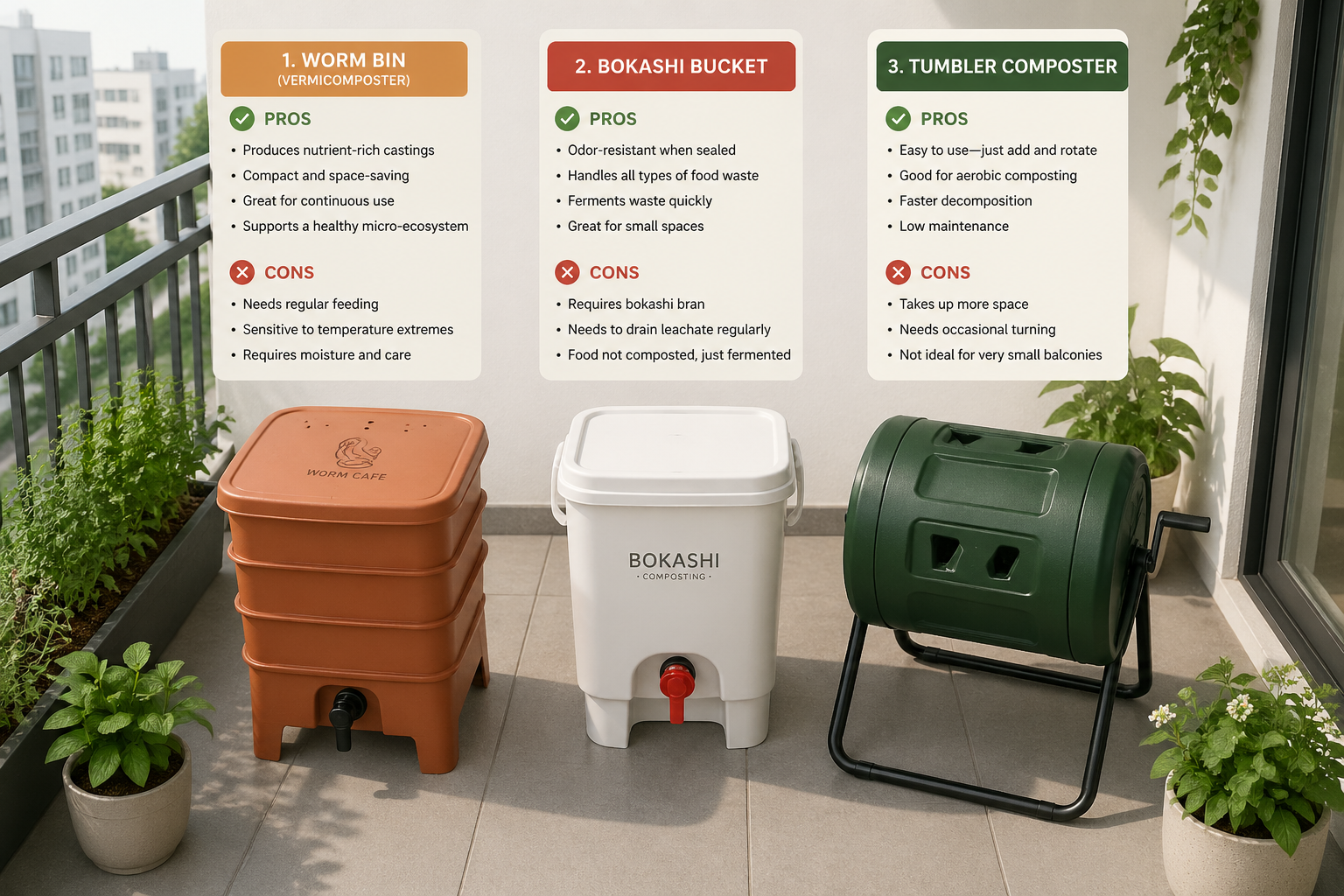
The three methods that work reliably in small outdoor spaces are vermicomposting (worm bins), bokashi fermentation, and small compost tumblers. Of these, worm bins and bokashi are the most neighbor-friendly because they’re fully enclosed and produce minimal odor when managed correctly.
Vermicomposting (Worm Bins)
A worm bin uses red wigglers (Eisenia fetida) to break down food scraps into rich castings. A standard 5-gallon or 10-gallon bin fits easily on most balconies and processes roughly 1–2 lbs of food waste per week.
Best for: People who generate mostly raw fruit and vegetable scraps, coffee grounds, and paper waste.
Choose this if: You want a nearly odorless system and don’t mind occasionally checking moisture levels.
Bokashi Fermentation
Bokashi uses beneficial microbes (bran inoculated with effective microorganisms) to ferment food scraps in an airtight bucket. It’s faster than worm composting and accepts cooked food, small amounts of meat, and dairy — inputs that would ruin a worm bin.
Best for: City dwellers with diverse food waste who want a fast, sealed system.
Choose this if: You have limited outdoor space and want to finish a batch in 2–4 weeks.
Small Compost Tumblers
Compact tumblers (under 20 gallons) can work on large balconies but are better suited to patios or ground-level spaces. They require more material volume to function well and can attract pests if not sealed tightly.
Common mistake: Buying a tumbler that’s too large for a balcony and then not filling it enough to generate the heat needed for decomposition.
How Can I Compost on My Apartment Balcony Without Annoying Neighbors? (The Setup Guide)
Setting up a neighbor-friendly balcony composting system comes down to four things: the right container, the right location, the right inputs, and consistent maintenance. Get all four right and your neighbors will likely never know the bin exists.
Step 1: Choose a Sealed Container
Open bins or DIY wooden boxes are not appropriate for balconies. Use a commercially made bin with a tight-fitting lid. Look for:
- Worm bins: Rubbermaid-style stacked tray systems or purpose-built units like the Worm Factory 360
- Bokashi buckets: Dual-bucket systems with an airtight lid and a spigot to drain bokashi liquid
Step 2: Pick the Right Spot
- Place the bin away from shared walls and neighboring balconies
- Choose a shaded corner — direct sun overheats worm bins and speeds up odor in bokashi systems
- Keep it off the floor drain path to avoid leachate runoff onto lower balconies (use a tray underneath)
Step 3: Control What Goes In
This is the single biggest factor in whether your system smells. Follow this simple rule:
| ✅ Add These | ❌ Never Add These |
|---|---|
| Raw fruit and vegetable scraps | Meat, fish, or seafood |
| Coffee grounds and filters | Dairy products |
| Tea bags (remove staples) | Oily or greasy food |
| Crushed eggshells | Pet waste |
| Cardboard/newspaper (worm bins) | Diseased plant material |
| Small amounts of cooked veg (bokashi only) | Citrus in large amounts (worm bins) |
Step 4: Maintain Weekly
- Worm bins: Check moisture (should feel like a wrung-out sponge), add bedding if too wet, harvest castings every 2–3 months
- Bokashi: Press scraps down firmly, keep lid sealed, drain liquid every few days
If you’re already growing food on your balcony, the finished compost feeds directly into your containers. See our guide on how to spot soil nutrient deficiencies to know exactly when your plants need a boost.
What Are the Most Common Odor Problems and How Do I Fix Them?
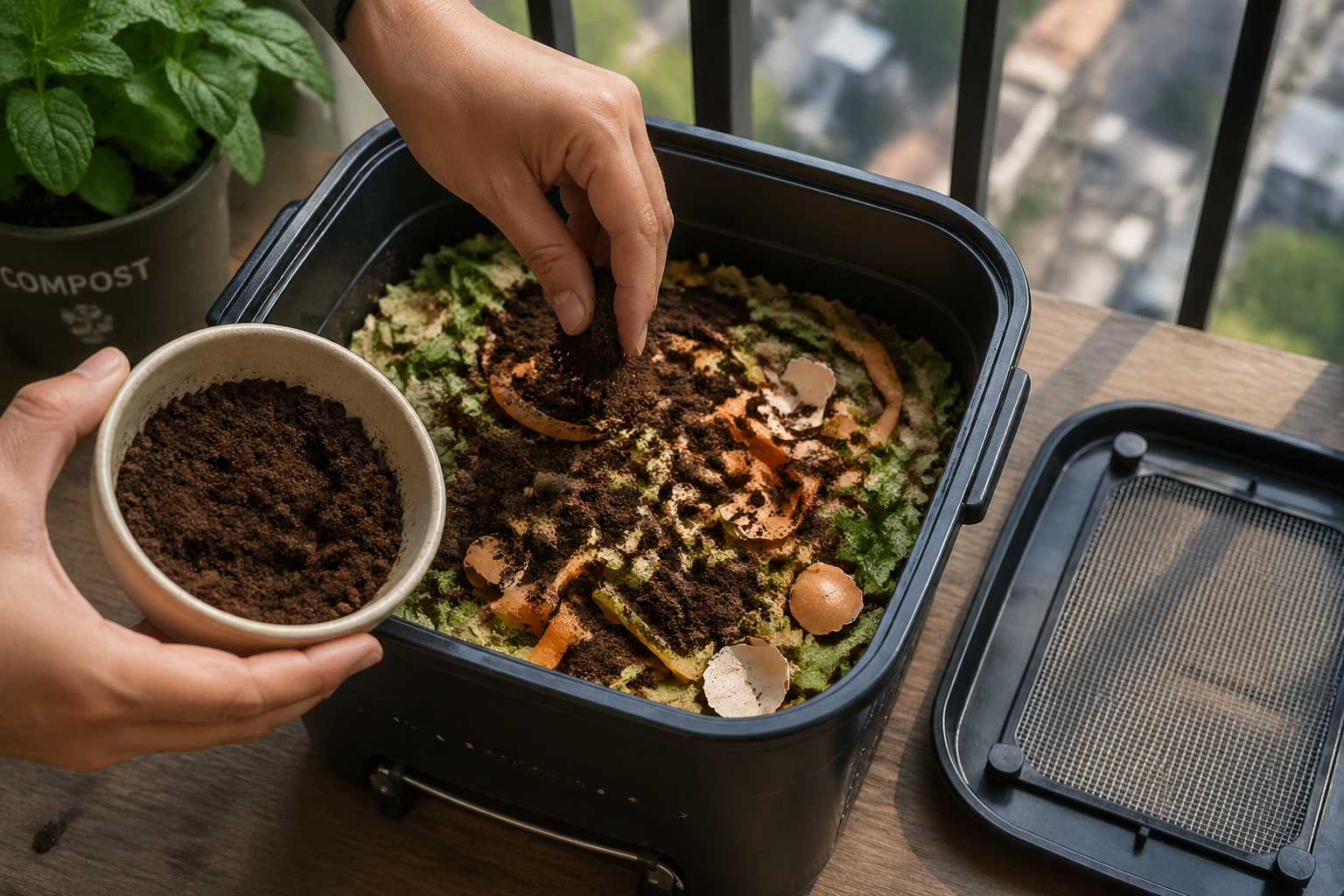
Most balcony composting odor problems have a direct cause and a quick fix. A healthy worm bin smells like forest soil. If it smells like ammonia or rotting garbage, something is off.
Troubleshooting Odor Issues
Ammonia smell (worm bin): Too much nitrogen-rich material (food scraps) and not enough carbon (cardboard, paper). Add torn newspaper or cardboard immediately.
Rotten egg smell (worm bin): The bin is too wet and anaerobic. Add dry bedding, mix gently, and improve airflow slightly by not sealing the lid as tightly.
Sour/vinegar smell (bokashi): This is actually normal and indicates active fermentation. If the smell escapes the bucket, check that the lid is fully sealed.
Fruit flies: Almost always caused by exposed food scraps. Bury all inputs under bedding in a worm bin, or ensure the bokashi lid is airtight. A layer of damp newspaper on top of the worm bin also deters flies.
Quick rule: If your bin smells bad enough that you notice it from two feet away, your neighbors definitely can. Fix the problem the same day, not next week.
How Can I Compost on My Apartment Balcony Without Annoying Neighbors? (Neighbor Relations)
Being proactive with neighbors goes further than any technical fix. Most complaints about composting come from surprise — a neighbor who suddenly smells something unusual and doesn’t know what it is.
A few practical steps:
- Tell your immediate neighbors what you’re doing before you start. A quick “I’m trying a small worm bin for my plants — let me know if you ever notice any smell” disarms most concerns before they become complaints.
- Keep the bin tidy. A clean, compact setup looks intentional, not neglectful.
- Check your lease. Some apartment buildings in the US restrict composting on balconies under general “no waste storage” clauses. Review your lease or ask your building manager before starting.
- Offer finished compost. Neighbors who garden are often happy to receive a cup of worm castings. It turns a potential complaint into goodwill.
If your balcony is small and privacy is already a concern, check out strategies for balcony privacy with plants — a living screen also helps contain any visual clutter from your composting setup.
How Do I Use Finished Compost on a Balcony Garden?
Finished worm castings and bokashi pre-compost feed directly into container plants, making balcony composting a closed loop — kitchen waste becomes plant food, which grows more food.
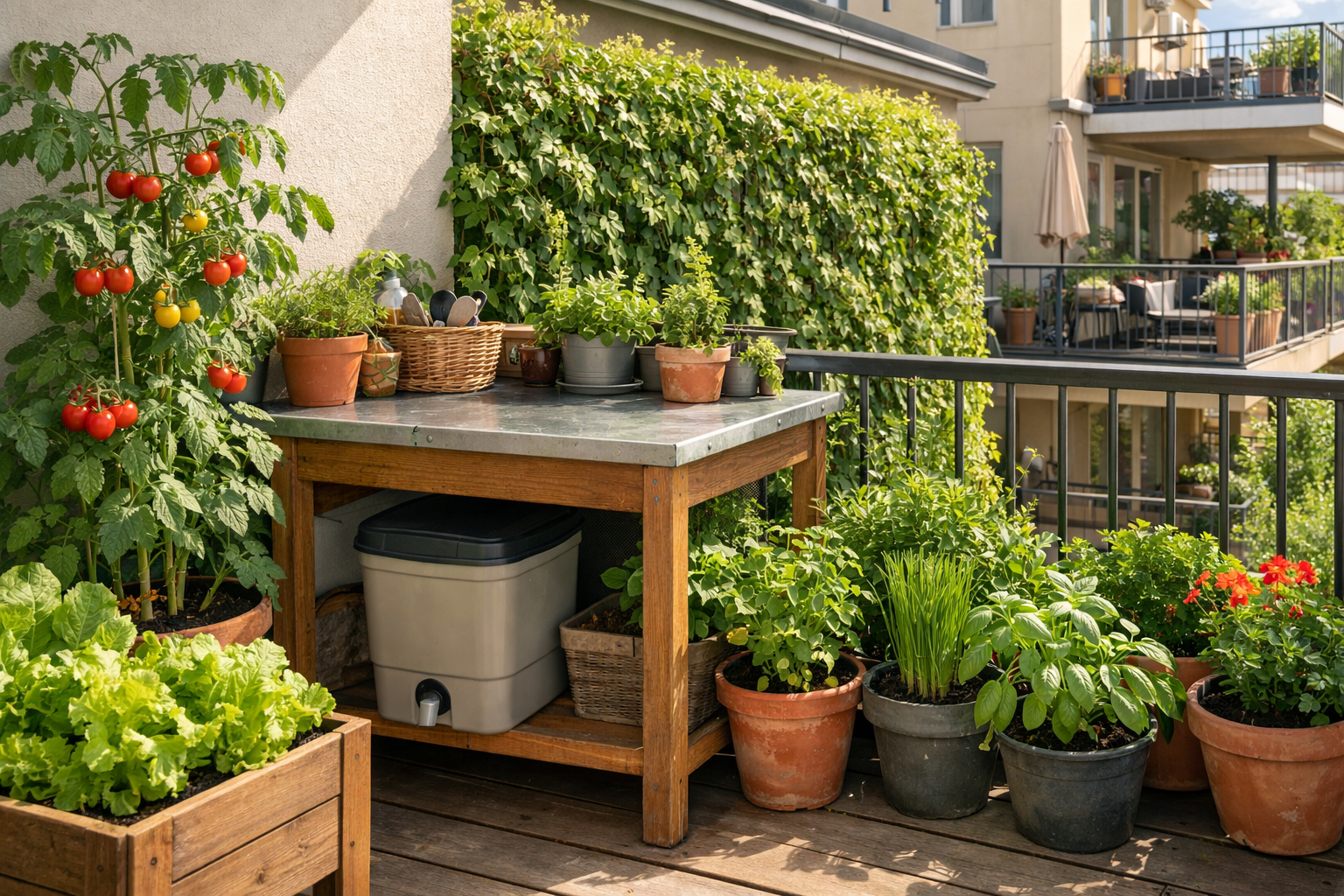
Worm castings: Mix 10–20% castings into potting mix when repotting, or top-dress containers with a thin layer (about 1/4 inch) monthly. Castings are gentle enough to use directly on seedlings without burning roots.
Bokashi pre-compost: Don’t apply directly to plants — it’s too acidic. Instead, bury it in a container of potting mix for 2 weeks to fully break down, then use that enriched soil in your planters.
Bokashi liquid (leachate): Dilute 1:100 with water and use as a liquid fertilizer. Undiluted, it can burn plant roots.
This compost pairs well with any apartment gardening setup. If you’re growing herbs or vegetables in containers, the nutrient boost from homemade compost reduces or eliminates the need for synthetic fertilizers. For more on feeding your plants well, see our guide to the best fertilizers for small gardens.
FAQ
Q: Will a worm bin attract rats or cockroaches on my balcony?
A: A sealed bin with no meat or dairy is unlikely to attract rodents or cockroaches. The risk increases significantly if you leave food scraps exposed or use an open-top container. Always use a lidded bin.
Q: How much does it cost to start balcony composting?
A: A basic worm bin setup costs $40–$80 for the bin plus $20–$40 for a starter worm culture (roughly 1 lb of red wigglers). A bokashi starter kit runs $30–$60. DIY options using Rubbermaid totes can bring costs below $30.
Q: How long does it take to get usable compost?
A: Bokashi fermentation takes 2–4 weeks. Worm castings take 2–3 months depending on feeding rate and temperature. Both timelines are faster than traditional outdoor composting.
Q: Can I compost in winter on a cold balcony?
A: Worm bins slow down significantly below 50°F (10°C) and worms can die below 40°F (4°C). In cold climates, move the bin indoors during winter or insulate it. Bokashi buckets are less temperature-sensitive and work well in cooler conditions.
Q: What’s the minimum balcony size needed for composting?
A: A worm bin or bokashi bucket needs roughly 1–2 square feet of floor space. Even a very small balcony (under 30 sq ft) can accommodate one.
Q: My landlord says I can’t compost. What are my options?
A: Consider indoor vermicomposting under the kitchen sink or in a closet — worm bins work indoors with proper management. Alternatively, many US cities have community composting drop-off sites or curbside food scrap pickup programs.
Q: Does bokashi smell bad?
A: A properly sealed bokashi bucket smells sour (like fermented food) when opened briefly, but should not smell when closed. If the lid is airtight, neighbors won’t detect it.
Q: Can I compost on a balcony that gets full sun all day?
A: Full sun is a problem for worm bins (overheating kills worms above 84°F/29°C) but less of an issue for bokashi. Use shade cloth, a reflective cover, or position the bin in the shadiest corner available. See our guide on best plants for full-sun apartment balconies for ideas on creating natural shade with plants.
Conclusion
Balcony composting is one of the most practical ways to reduce food waste in an apartment, and it doesn’t have to create friction with neighbors. The key is choosing the right system (worm bin or bokashi for most people), keeping inputs clean, and maintaining the bin consistently.
Your next steps:
- Check your lease for any restrictions on balcony storage or composting.
- Choose your method — worm bin for mostly raw scraps, bokashi if you have cooked food waste too.
- Order your supplies — a starter kit and worm culture can arrive within a few days.
- Tell your neighbors before you start, not after a complaint.
- Feed your plants with the finished compost and watch your balcony garden thrive.
A well-run balcony compost system is quiet, compact, and nearly invisible. Most neighbors won’t just tolerate it — they won’t even notice it’s there.
References
- US Environmental Protection Agency. “Composting At Home.” EPA.gov. (2023). https://www.epa.gov/recycle/composting-home
- Appelhof, Mary. Worms Eat My Garbage. Storey Publishing. (2017).
- Bokashi Living. “How Bokashi Composting Works.” BokashiLiving.com. (2022). https://www.bokashiliving.com/how-bokashi-works/