
Balcony Gardening During Monsoon Season
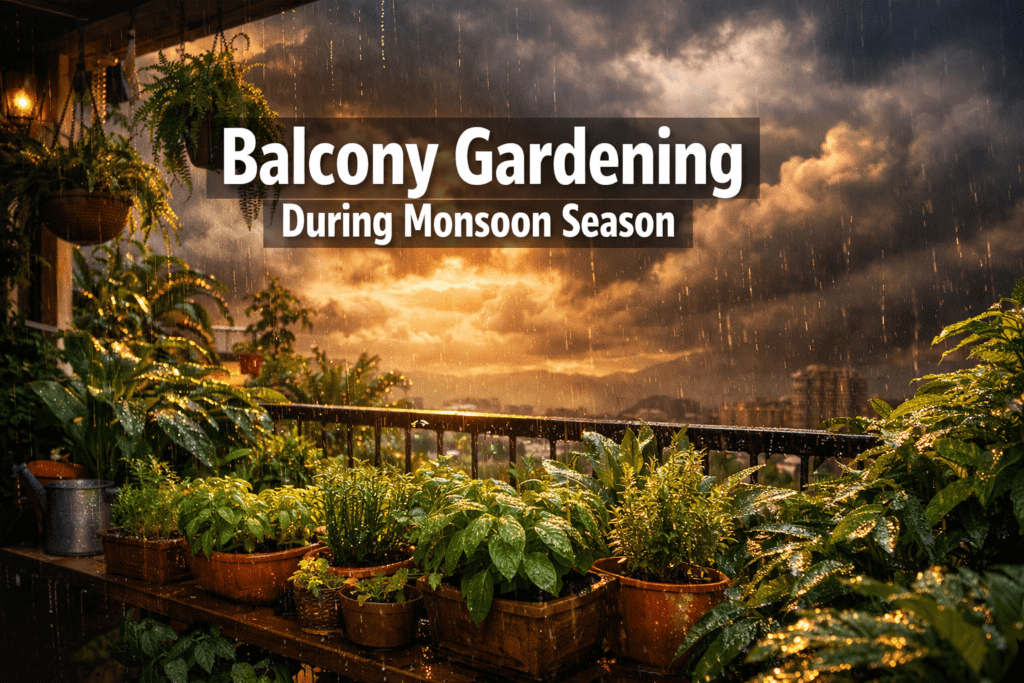
Quick Answer: Balcony gardening during monsoon season is entirely doable, but it requires adjusting your drainage, plant selection, and watering habits to match the heavy rainfall. The biggest risks are root rot, fungal disease, and waterlogged soil. Choose rain-tolerant plants, use containers with drainage holes, and add partial overhead cover to keep your balcony garden thriving through the wet months.
Key Takeaways
- 🌧️ Monsoon rains can deliver weeks of continuous moisture, making drainage the single most important factor in container gardening success.
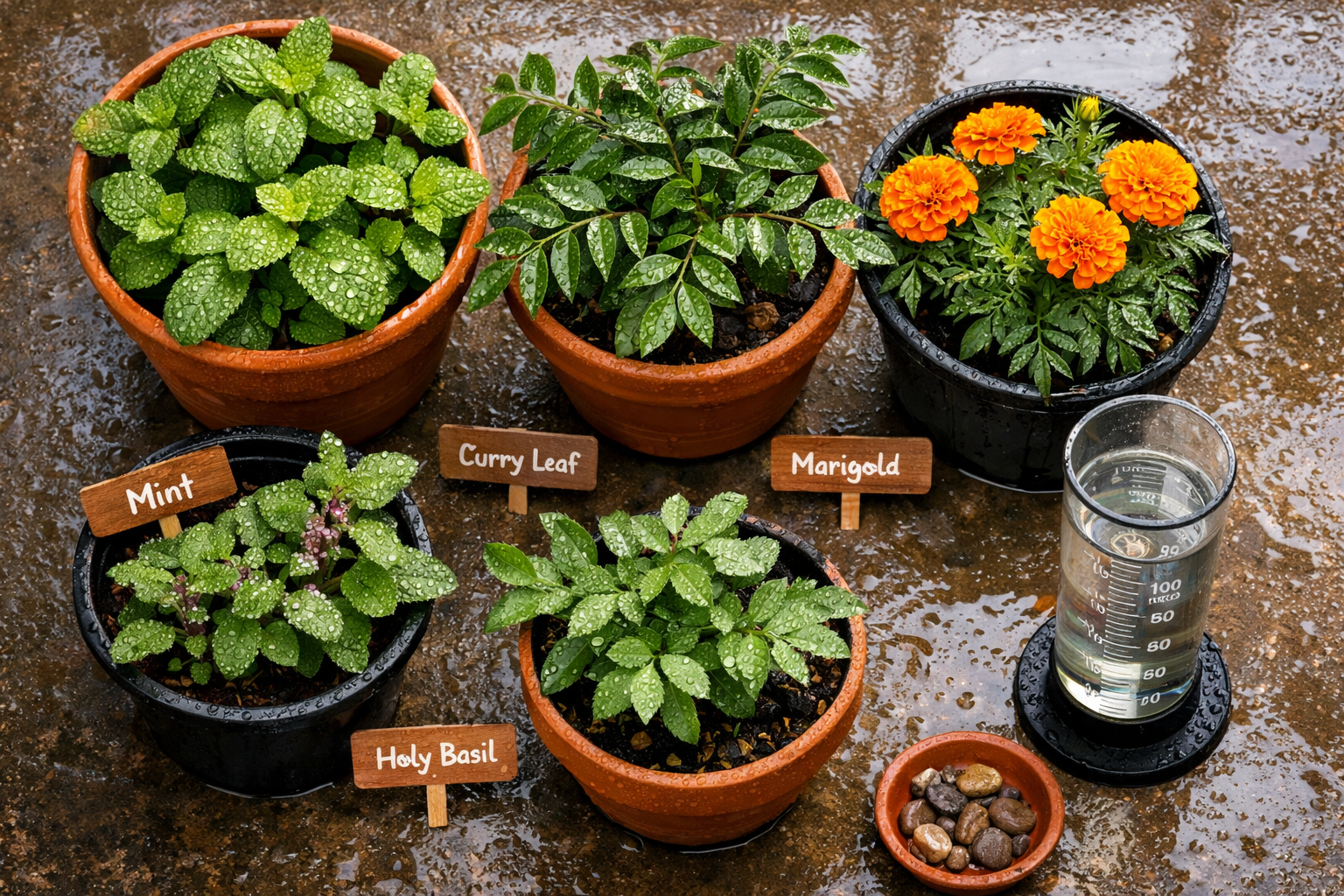
- Choose plants that tolerate high humidity and wet roots, such as mint, marigold, curry leaf, and ferns.
- Elevate pots on feet or bricks to prevent water from pooling under containers.
- Reduce or stop supplemental watering during heavy rain periods — overwatering is the top monsoon gardening mistake.
- A partial shade cloth or polycarbonate panel overhead protects plants from battering rain while still allowing airflow.
- Fungal diseases spread fast in humid conditions; improve air circulation by spacing pots further apart.
- Check soil moisture daily rather than watering on a fixed schedule.
- Fast-draining potting mix (not garden soil) is essential for balcony containers in the rainy season.
What Makes Balcony Gardening During Monsoon Season Different?
Monsoon gardening on a balcony is not simply “outdoor gardening with more rain.” The combination of intense, sustained rainfall, high humidity, reduced sunlight, and limited drainage space creates a completely different growing environment.
In a ground garden, excess water drains away through the soil. On a balcony, water has nowhere to go unless your containers and floor drainage are set up correctly. Roots sit in standing water, oxygen is cut off, and root rot sets in within days.
The core challenge: Balancing the abundance of natural water with the confined drainage capacity of containers and a sealed balcony floor.
How Do You Choose the Right Plants for Monsoon Balcony Gardening?
Pick plants that naturally thrive in high humidity and can handle intermittent waterlogging without dying. Avoid plants that need dry spells between waterings, such as succulents, lavender, or rosemary.
Best plants for monsoon balcony gardening:
| Plant | Why It Works | Container Size |
|---|---|---|
| Mint | Loves moisture, grows fast | 6–8 inch pot |
| Marigold | Repels pests, handles rain well | 8–10 inch pot |
| Curry leaf | Thrives in tropical humidity | 10–12 inch pot |
| Holy basil (Tulsi) | Rain-tolerant, aromatic | 6–8 inch pot |
| Ferns | Loves high humidity | Hanging basket |
| Spinach | Fast-growing, cool-season crop | 8–10 inch pot |
| Chili peppers | Handles wet weather if well-drained | 10–12 inch pot |
Avoid during monsoon: Succulents, cacti, lavender, rosemary, and any plant labeled “drought-tolerant.” These will rot quickly in sustained wet conditions.
Choose X if: You want edible plants — go with mint, spinach, or chili. If you want low-maintenance color, marigolds and ferns are your best bet.
For more plant ideas suited to small outdoor spaces, see our guide to small balcony vegetable garden ideas.
What Drainage Setup Works Best for Balcony Gardening During Monsoon Season?
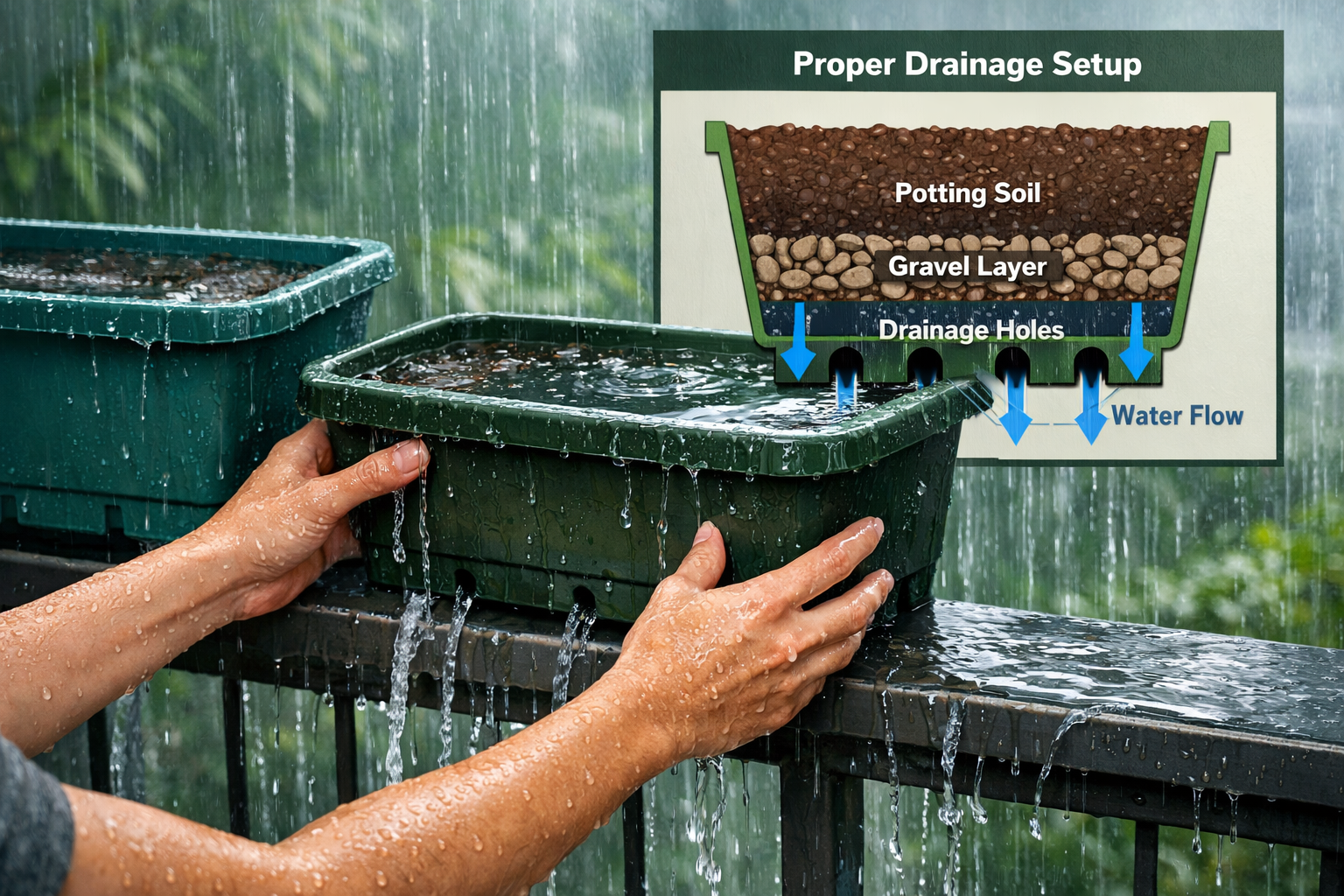
Good drainage is non-negotiable. Every container must have drainage holes, and those holes must stay unblocked throughout the season.
Step-by-step drainage setup:
- Check every pot for drainage holes. If a decorative pot lacks them, drill at least 2–3 holes in the base (minimum 1/2 inch diameter).
- Add a drainage layer. Place a 1–2 inch layer of coarse gravel or broken terracotta at the pot’s base before adding soil.
- Elevate your containers. Use pot feet, bricks, or a wooden pallet to lift pots at least 1–2 inches off the balcony floor. This prevents suction that blocks drainage.
- Use a fast-draining potting mix. A mix of 60% potting soil, 30% perlite, and 10% coarse sand drains well while retaining enough nutrients. Avoid using plain garden soil in containers — it compacts and blocks drainage fast.
- Check your balcony floor drain. Clear it of debris before monsoon season starts so water doesn’t pool under your pots.
Common mistake: Placing a saucer under every pot to “catch water.” During monsoon, saucers fill up and keep roots sitting in water. Remove saucers or empty them daily.
For help choosing the right soil, our best soil mix for container gardening guide covers the exact ratios that work in wet conditions.
How Do You Protect Your Balcony Garden from Heavy Rain Damage?
Heavy monsoon downpours can physically damage plants — snapping stems, stripping leaves, and compacting soil. A partial overhead cover solves most of these problems without blocking all light.
Protection options by budget:
- Low cost: A simple shade cloth (50% density) stretched across the balcony ceiling or railing provides rain deflection and still allows diffused light through.
- Mid-range: Polycarbonate panels mounted overhead let in light while blocking direct rain. These are durable and reusable season after season.
- DIY option: A repurposed bamboo frame with a waterproof tarp angled for runoff works well for smaller balconies.
Wind is also a factor. Monsoon storms bring strong gusts that can topple tall plants and hanging baskets. Move tall, top-heavy pots to sheltered corners. For balconies that already deal with wind, our windy balcony plants guide lists the most wind-resistant varieties.
💡 Quick tip: Group pots together during storms. Clustered containers support each other and reduce toppling risk.
How Should You Adjust Watering During Monsoon Season?
Stop watering on a fixed schedule. During monsoon season, the rain does most of the work, and adding more water on top of saturated soil is the fastest way to kill your plants.
How to water correctly during monsoon:
- Check soil moisture before every watering. Push your finger 1–2 inches into the soil. If it feels damp, skip watering entirely.
- Water only during dry spells. If there’s been no rain for 2–3 days and the soil feels dry at 2 inches depth, water lightly.
- Water in the morning if you do water, so excess moisture evaporates during the day rather than sitting overnight.
For a deeper look at how to avoid the most common watering errors in containers, see our guide on common watering mistakes in container gardening.
Edge case: If your balcony has a full overhead cover (like a closed veranda), your plants may receive no rain at all and still need regular watering. Always base decisions on actual soil moisture, not the weather outside.
How Do You Prevent Fungal Disease and Pests During Monsoon Balcony Gardening?
High humidity is the perfect breeding ground for fungal diseases like powdery mildew, leaf spot, and root rot. Pests such as fungus gnats also thrive in wet, warm conditions.
Prevention steps:
- Space pots further apart to improve airflow between plants. Crowded containers trap moisture and heat.
- Remove dead or yellowing leaves immediately. Decaying plant matter accelerates fungal spread.
- Avoid wetting foliage when you do water manually. Water at the base, not overhead.
- Use a neem oil spray (diluted: 5ml neem oil + 1 liter water + a few drops of dish soap) every 10–14 days as a preventive treatment.
- Check for fungus gnats by looking for tiny flies near soil. Let the top inch of soil dry out between waterings to break their breeding cycle.
If you notice yellowing leaves that aren’t related to overwatering, our guide on why plant leaves turn yellow covers the full range of causes and fixes.
What Are the Best Container Types for Monsoon Balcony Gardening?
Not all containers handle sustained rain equally. The material and size of your pot directly affect how fast water drains and how stable root temperatures stay.
Container comparison for monsoon conditions:
| Container Type | Drainage | Weight | Monsoon Suitability |
|---|---|---|---|
| Terracotta | Excellent (porous) | Heavy | ✅ Best choice |
| Plastic | Good (with holes) | Light | ✅ Good, but can tip |
| Glazed ceramic | Moderate | Very heavy | ⚠️ Adequate |
| Fabric grow bags | Excellent | Light | ✅ Great for drainage |
| Metal/tin | Poor (rusts) | Moderate | ❌ Avoid |
Choose terracotta or fabric grow bags if drainage is your top priority. Plastic pots work well but need extra drainage holes and elevation.
For a full breakdown of container options, our best containers for gardening guide covers sizes, materials, and costs in detail.
Can You Grow Vegetables During Monsoon Season on a Balcony?
Yes, several vegetables grow well during monsoon season on a balcony, especially leafy greens and fast-maturing crops that benefit from cooler, wetter conditions.
Best monsoon vegetables for balcony containers:
- Spinach — Fast-growing, loves moisture, ready in 3–4 weeks
- Fenugreek (methi) — Thrives in humid weather, sow directly in containers
- Chili peppers — Handles rain well with good drainage
- Bitter gourd — Grows vigorously in monsoon heat and humidity
- Beans — Quick to mature, manageable in large containers
Avoid during peak monsoon: Tomatoes and eggplants struggle with fungal disease in sustained humidity. If you grow them, ensure overhead cover and excellent drainage.
For beginners starting their first edible container garden, our container vegetable gardening guide walks through setup from scratch.
Balcony Gardening During Monsoon Season: A Pre-Season Checklist
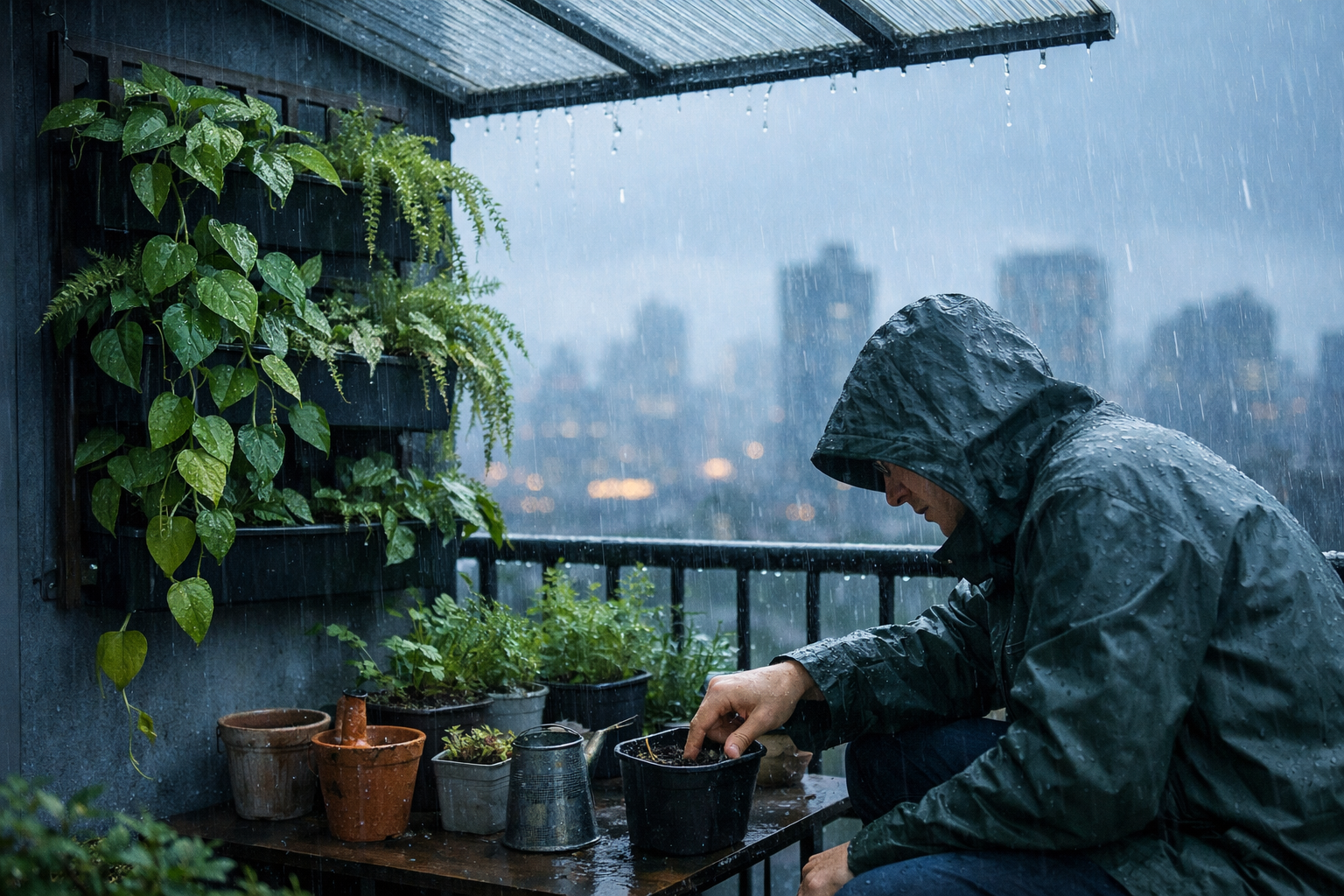
Before the first rains arrive, run through this checklist to prepare your balcony garden:
- Inspect all containers for drainage holes; drill new ones if needed
- Replace compacted or old potting soil with fresh, fast-draining mix
- Elevate all pots on feet or bricks
- Remove saucers or commit to emptying them daily
- Install overhead shade cloth or polycarbonate cover
- Secure hanging baskets with heavy-duty hooks rated for wind load
- Move wind-sensitive tall plants to sheltered corners
- Stock up on neem oil for preventive fungal/pest treatment
- Clear the balcony floor drain of debris
- Identify and remove any dead or diseased plant material
For a broader look at setting up your balcony garden from the ground up, our balcony garden setup guide covers the full process.
FAQ: Balcony Gardening During Monsoon Season
Q: Should I bring all my plants indoors during monsoon?
No. Most balcony plants handle rain well if drainage is set up correctly. Move only very delicate plants or succulents indoors. Tropical and moisture-loving plants can stay outside.
Q: How often should I fertilize during monsoon season?
Reduce fertilizing by half. Heavy rain leaches nutrients from soil faster, but roots also absorb less when waterlogged. Use a slow-release granular fertilizer once a month rather than liquid feeds.
Q: My balcony has no roof cover. Can I still garden during monsoon?
Yes, but focus on rain-tolerant plants and prioritize drainage. A portable shade cloth frame is an affordable fix for uncovered balconies.
Q: What’s the fastest sign that a plant has root rot?
Yellowing leaves combined with soft, mushy stems at the base. If you catch it early, remove the plant from its pot, trim rotted roots, let them air-dry for an hour, and repot in fresh dry soil.
Q: Can I use garden soil from the ground in my balcony pots during monsoon?
Avoid it. Garden soil compacts in containers and blocks drainage, which is especially dangerous during heavy rain. Use a commercial potting mix with added perlite.
Q: Do I need to worry about mosquitoes breeding in my balcony garden?
Yes. Stagnant water in saucers, pot feet trays, or any container is a breeding ground. Empty all standing water every 2–3 days.
Q: Are vertical gardens a good idea during monsoon season?
They can be, but choose wall planters with individual drainage rather than a single trough-style system. Our balcony vertical gardening guide covers monsoon-safe setups.
Q: How do I stop soil from washing out of pots during heavy rain?
Place a piece of mesh or a coffee filter over the drainage hole before adding soil. This keeps soil in while letting water flow freely.
Conclusion: Thrive Through the Rain
Balcony gardening during monsoon season rewards gardeners who prepare rather than react. The three things that matter most are drainage, plant selection, and restraint with watering. Get those right, and the monsoon becomes an asset — free water, cooler temperatures, and lush growth — rather than a threat.
Your next steps:
- Audit your current containers for drainage holes before the rains arrive.
- Pick 3–5 monsoon-friendly plants from the table above and set them up in elevated, well-draining pots.
- Install at least partial overhead cover to protect plants from battering rain.
- Bookmark the common watering mistakes in container gardening guide and check it when plants start showing stress.
- Do a weekly check for fungal signs and clear standing water every few days.
The monsoon doesn’t have to pause your balcony garden. With the right setup, it’s one of the most productive growing seasons of the year. 🌿
References
- University of Florida IFAS Extension. (2021). Container Gardening in Florida. https://edis.ifas.ufl.edu/
- Royal Horticultural Society. (2023). Drainage in containers. https://www.rhs.org.uk/
- Penn State Extension. (2022). Diagnosing Root Rot in Container Plants. https://extension.psu.edu/