Wabi-Sabi Balcony Garden: The Japanese Design Philosophy for Imperfect Small Gardens
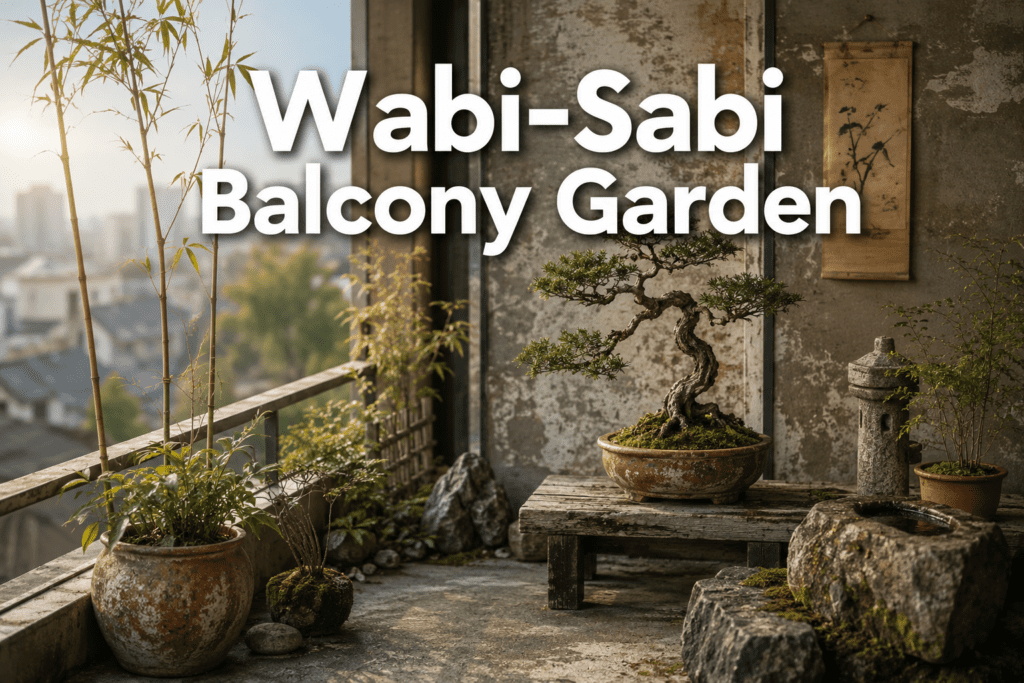
Quick Answer: A wabi-sabi balcony garden applies the Japanese philosophy of finding beauty in imperfection, impermanence, and simplicity to small outdoor spaces. It uses weathered materials, asymmetrical arrangements, and low-maintenance plants to create a calm, authentic garden that looks better with age, not despite it. It suits beginners and experienced gardeners equally, and a basic setup can cost as little as $50–$150.
Key Takeaways
- Wabi-sabi is a Japanese aesthetic philosophy centered on imperfection, transience, and natural simplicity, making it ideal for small, imperfect balcony spaces.
- You don’t need a perfect space, expensive plants, or matching containers. Mismatched, aged, and weathered elements are the point.
- Best plants include moss, ornamental grasses, ferns, bamboo, bonsai, and simple herbs like thyme or rosemary.
- Materials to prioritize: unglazed terracotta, aged wood, natural stone, bamboo, and rusted iron.
- A starter wabi-sabi balcony garden costs roughly $50–$200, depending on container quality and plant selection.
- Common mistakes include over-decorating, buying too many plants, and trying to make everything look “perfect.”
- This style works in cold climates and low-light conditions with the right plant choices.
- Maintenance is intentionally minimal. Letting plants age naturally is part of the design.
- Wabi-sabi gardening differs from Western garden design by rejecting symmetry, abundance, and manicured perfection.
- The philosophy encourages mindfulness, making the garden as much a mental practice as a physical one.
What Exactly Is Wabi-Sabi and How Does It Apply to Balcony Gardens?
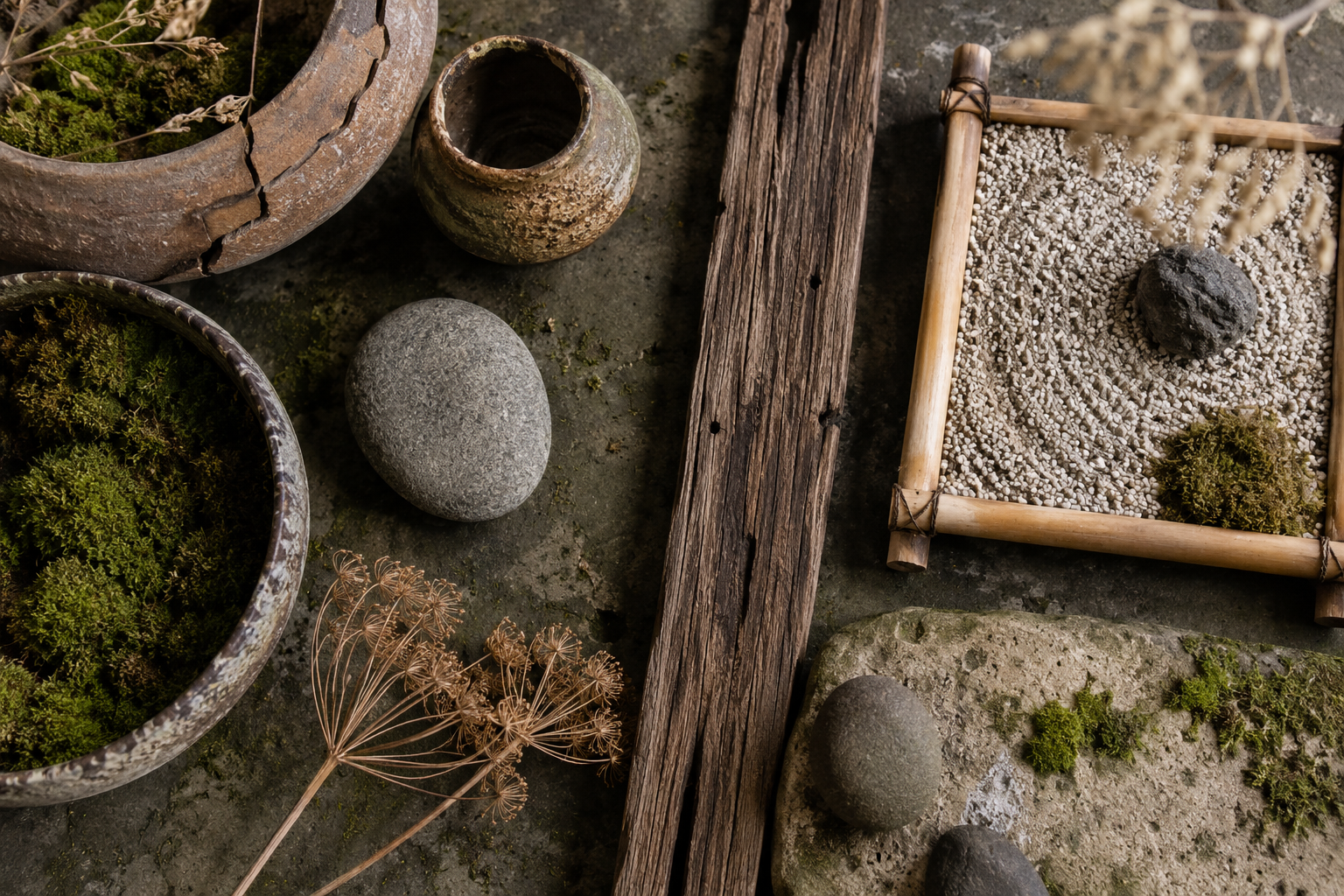
Wabi-sabi is a Japanese aesthetic philosophy rooted in Zen Buddhism that finds beauty in things that are imperfect, incomplete, and impermanent. Applied to a balcony garden, it means embracing cracked pots, asymmetrical plant arrangements, weathered wood, and the natural cycle of growth and decay rather than fighting against them.
The term combines two concepts: wabi, which refers to rustic simplicity and finding contentment in less, and sabi, which describes the beauty that comes with age and wear. Together, they form a worldview that is the opposite of the polished, symmetrical gardens common in Western design.
For small balcony spaces, this philosophy is genuinely freeing. A cracked terracotta pot becomes a feature, not a flaw. A single moss-covered stone holds more visual weight than a row of matching planters. The Wabi-Sabi Balcony Garden: The Japanese Design Philosophy for Imperfect Small Gardens is less about what you add and more about what you allow to exist naturally.
“The closer we look at nature, the more we see that nothing is perfectly symmetrical, and yet everything is beautiful.”
What Are the Philosophical Principles Behind Wabi-Sabi Gardening?
The core principles of wabi-sabi gardening are simplicity, irregularity, and acceptance of natural change. These principles guide every design decision, from which plants you choose to how you arrange them.
The seven key aesthetic qualities in wabi-sabi design:
| Principle | What It Means in the Garden |
|---|---|
| Kanso (simplicity) | Use fewer plants and objects, not more |
| Fukinsei (asymmetry) | Avoid even numbers and matched pairs |
| Shibui (subtle beauty) | Choose muted, natural colors over bright ones |
| Shizen (naturalness) | Let plants grow with minimal intervention |
| Yugen (mystery) | Leave some space undefined or partially hidden |
| Datsuzoku (freedom) | Break conventional rules of garden design |
| Seijaku (stillness) | Design for quiet, not stimulation |
These principles aren’t rules to follow rigidly. They’re a mindset. If you find yourself trying to make your balcony look “perfectly wabi-sabi,” you’ve missed the point.
How Do I Design a Small Balcony Garden Using Wabi-Sabi Principles?
Designing a wabi-sabi balcony garden starts with editing down, not adding more. The goal is a space that feels calm, intentional, and slightly imperfect in a way that looks natural rather than neglected.
Step-by-step design process:
- Clear the space completely. Start with an empty balcony and only bring back what genuinely earns its place.
- Choose one focal point. A single bonsai, a weathered stone, or a moss-covered container. One anchor, not five.
- Use odd numbers. Group plants in threes or fives, never pairs or even rows.
- Vary heights deliberately. Place one tall element (bamboo, ornamental grass), one mid-height plant, and one low ground-level element.
- Leave empty space. Negative space is not wasted space. A bare patch of decking or a single empty corner is intentional.
- Add one natural texture element. River stones, a bamboo tray, or a piece of driftwood.
- Let things age. Don’t repaint that weathered planter. Don’t replace the pot with a chip in it.
For layout inspiration that works within these principles, check out these small balcony garden ideas and balcony garden layout ideas to understand spatial arrangement before you start.
Common mistake: Buying a set of matching pots and calling it wabi-sabi. Uniformity is the opposite of this aesthetic.
What Plants Work Best for a Minimalist Japanese-Style Balcony Space?
The best plants for a wabi-sabi balcony garden are those that look beautiful in their natural, unmanaged state and improve with age. Think moss, grasses, ferns, and single-specimen trees rather than colorful annual flowers.
Top plant choices by category:
- Moss and ground covers: Japanese moss (Sagina subulata), mind-your-own-business (Soleirolia soleirolii). These spread naturally and soften hard edges.
- Ornamental grasses: Hakonechloa (Japanese forest grass), Carex species. They move in the wind and age gracefully.
- Ferns: Autumn fern, Japanese painted fern. Excellent for shaded balconies.
- Bonsai: Juniper, Japanese maple, or azalea bonsai. A single specimen is enough.
- Bamboo: Dwarf bamboo in a contained pot adds vertical structure without overwhelming a small space.
- Simple herbs: Thyme, rosemary, and sage have a naturally rugged, aged appearance and are practical too. See our guide to the best herbs for small gardens for varieties that thrive in containers.
- Sedums and succulents: Their sculptural forms and tolerance for neglect align perfectly with wabi-sabi values.
Choose X if: You have deep shade, go with ferns and moss. If you have full sun, ornamental grasses and sedums are more reliable. For cold climates, hardy ferns and dwarf conifers are your best options.
For a broader selection, the best plants for small gardens covers varieties suited to container life across different conditions.
What Materials and Containers Should I Use for a Wabi-Sabi Balcony Garden?
The right materials for a wabi-sabi garden are natural, aged, and imperfect. Avoid plastic, bright colors, and anything that looks brand new or mass-produced.
Best materials and containers:
- Unglazed terracotta: Absorbs water, develops natural mineral stains and moss over time. Gets better with age.
- Aged wood: Old wooden crates, reclaimed planks, or a simple cedar tray for grouping small pots.
- Natural stone: River stones for ground cover, a flat stone as a display platform, or a rough stone bowl as a water feature.
- Bamboo: Trays, screens, or simple stakes. Bamboo weathers beautifully.
- Rusted iron or cast iron: A lantern, a small bracket, or a container with natural oxidation adds sabi (aged beauty).
- Cracked or chipped ceramics: In Japanese culture, kintsugi (repairing cracks with gold) celebrates damage. A cracked pot is not a failure.
Avoid: Bright glazed ceramics, plastic planters, chrome or polished metal, and anything labeled “matching set.”
For container selection guidance, the best planters for small apartments includes options that work well with a natural, understated aesthetic.
How Much Does It Cost to Create a Wabi-Sabi Inspired Garden on My Balcony?
A basic wabi-sabi balcony garden costs between $50 and $200 for most people, making it one of the more affordable garden styles available. The philosophy actively discourages spending on new, expensive items.
Estimated cost breakdown:
| Item | Budget Option | Mid-Range |
|---|---|---|
| 2–3 terracotta pots | $10–$20 | $25–$50 |
| Plants (moss, fern, grass) | $15–$30 | $40–$80 |
| River stones / gravel | $5–$10 | $15–$25 |
| Bamboo tray or wood element | $0 (reclaimed) | $20–$40 |
| Bonsai specimen | $15–$30 | $50–$150 |
| Total estimate | $45–$90 | $150–$345 |
Budget tip: Thrift stores, estate sales, and online marketplaces are ideal sources for aged containers. A cracked pot from a garage sale is more authentically wabi-sabi than a new one from a garden center. For more cost-saving strategies, see indoor gardening on a budget.
How Is a Wabi-Sabi Balcony Garden Different from a Traditional Western Garden Design?
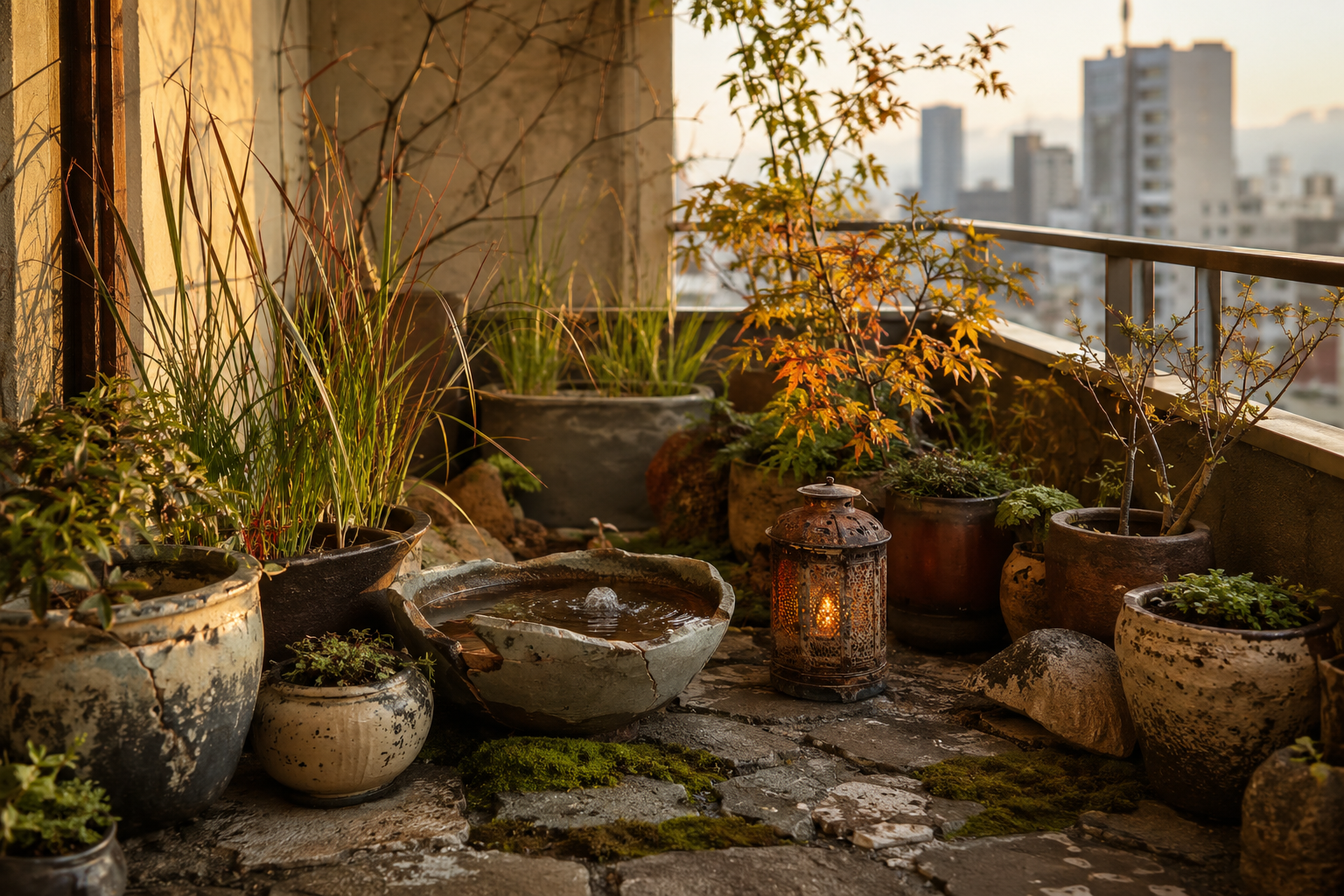
A wabi-sabi balcony garden deliberately rejects the core values of Western garden design: symmetry, abundance, bright color, and the appearance of control over nature. Western gardens typically aim for fullness, matched containers, and seasonal color rotations. Wabi-sabi aims for restraint, natural aging, and stillness.
| Feature | Western Garden Design | Wabi-Sabi Garden Design |
|---|---|---|
| Arrangement | Symmetrical, planned | Asymmetrical, intuitive |
| Plant density | Full, layered, abundant | Sparse, deliberate |
| Color palette | Bright, seasonal color | Muted, natural, earthy |
| Container style | Matching sets | Mismatched, aged |
| Maintenance goal | Controlled, manicured | Minimal, natural growth |
| Attitude to imperfection | Fix or replace | Embrace and celebrate |
For context on how modern design trends compare, modern balcony garden designs shows where contemporary Western aesthetics are heading in 2026.
Can I Do Wabi-Sabi Gardening in a Cold Climate or With Limited Sunlight?
Yes. Wabi-sabi gardening works well in cold climates and low-light conditions because the plant palette naturally includes many shade-tolerant and cold-hardy species. In fact, the quiet, muted quality of a shaded balcony often suits the aesthetic better than a sun-drenched one.
For cold climates (Zone 5 and below):
- Hardy ferns (Dryopteris species) survive frost and look beautiful through winter.
- Dwarf conifers develop character with age and handle cold well.
- Ornamental grasses like Carex can survive light freezes.
- Moss thrives in cool, damp conditions.
For low-light balconies:
- Japanese forest grass (Hakonechloa) is one of the best shade-tolerant ornamental grasses.
- Ferns and moss are natural low-light plants.
- Shade-loving sedums and some succulents can manage indirect light.
For specific shade plant guidance, the shade loving plants guide covers varieties suited to balconies with limited sun exposure.
Edge case: If your balcony gets fewer than two hours of light daily, focus on moss, ferns, and a single shade-tolerant specimen rather than trying to grow grasses or bonsai, which need more light to stay healthy.
Is Wabi-Sabi Gardening Good for Beginners or Only Experienced Gardeners?
Wabi-sabi gardening is genuinely well-suited to beginners. The philosophy’s emphasis on low intervention, natural growth, and acceptance of imperfection means beginners don’t need to master complex pruning, fertilizing schedules, or plant care routines to succeed.
Why it works for beginners:
- Fewer plants means fewer things to manage.
- Drought-tolerant plants like sedums and ornamental grasses forgive inconsistent watering.
- Aesthetic “mistakes” like uneven growth or browning edges are often features, not problems.
- There’s no pressure to achieve a specific look.
Where beginners should be careful:
- Bonsai requires some skill and patience. Start with a pre-trained specimen rather than growing from scratch.
- Moss needs consistent moisture. It’s forgiving but not drought-proof.
For a structured starting point, container gardening for beginners covers the fundamentals of keeping plants alive in pots before you layer in the wabi-sabi aesthetic.
What Are Common Mistakes People Make When Trying to Create a Wabi-Sabi Garden?
The most common mistake is trying too hard. Wabi-sabi is about restraint and acceptance, so over-decorating, over-planting, or obsessing over the “right” look defeats the entire purpose.
Mistakes to avoid:
- Buying too many plants. More is not more in wabi-sabi. Start with three plants maximum.
- Choosing bright colors. Hot pink petunias or vivid yellow marigolds clash with the muted, natural palette.
- Using plastic or synthetic materials. These don’t age naturally and break the aesthetic immediately.
- Trying to replicate a specific image. Copying a Pinterest board exactly produces a staged look, not an authentic one.
- Cleaning everything obsessively. Moss on a pot, mineral stains on terracotta, and weathered wood are assets.
- Ignoring negative space. Filling every inch of the balcony is a Western impulse. Leave room for stillness.
For a broader look at what goes wrong on small balconies, balcony gardening mistakes covers pitfalls that apply across garden styles.
How Do I Maintain a Low-Maintenance Wabi-Sabi Balcony Garden?
Maintenance for a wabi-sabi balcony garden is intentionally minimal. The goal is to support natural growth, not control it. Most of the work involves watering, occasional feeding, and removing dead material that has genuinely finished its life cycle.
Basic maintenance routine:
- Watering: Water when the top inch of soil is dry. Most wabi-sabi plants (grasses, sedums, herbs) prefer slightly dry conditions over wet ones.
- Feeding: A light application of slow-release organic fertilizer once in spring is usually enough.
- Pruning: Only remove dead or diseased growth. Don’t shape plants into unnatural forms.
- Seasonal changes: Allow plants to go dormant in winter. Dead seed heads and dried grasses are beautiful in the wabi-sabi aesthetic.
- Containers: Let terracotta age. Don’t scrub off mineral deposits or moss.
For a complete seasonal care framework, balcony garden maintenance tips covers watering, feeding, and seasonal prep in detail.
What Are Some Budget-Friendly Ways to Incorporate Wabi-Sabi Aesthetics Into My Small Outdoor Space?
Budget-friendly wabi-sabi is actually the most authentic version. The philosophy was never about spending money. It’s about finding beauty in what already exists.
Low-cost ideas:
- Collect river stones from a local creek or park for ground cover and arrangement.
- Repurpose old kitchen ceramics, cracked bowls, or worn wooden crates as planters.
- Grow moss from a small patch collected locally (check local regulations) or purchased cheaply online.
- Use dried seed heads and branches from existing plants as decorative elements.
- A single secondhand bonsai from a thrift store or estate sale can anchor the entire space.
- Rake a small patch of fine gravel in a shallow tray for a miniature dry garden (karesansui) element.
For more DIY container ideas on a budget, DIY container gardening ideas for small spaces offers practical, low-cost approaches that align naturally with wabi-sabi values.
FAQ
What does wabi-sabi mean in simple terms?
Wabi-sabi is a Japanese concept that means finding beauty in things that are imperfect, aged, and simple. In gardening, it means appreciating a mossy pot or an asymmetrical plant rather than trying to make everything look new and perfect.
Do I need Japanese plants for a wabi-sabi balcony garden?
No. While Japanese maples, bamboo, and moss are classic choices, the philosophy is about aesthetic values, not plant origin. A weathered terracotta pot with local herbs can be just as wabi-sabi as a formal bonsai.
How many plants should I have in a wabi-sabi balcony garden?
Three to five plants is a good starting point for most balconies. The emphasis is on quality and intentional placement, not quantity.
Can I use artificial plants in a wabi-sabi garden?
No. Artificial plants contradict the core principle of impermanence and natural change. The aging, dying, and regrowth of real plants is central to the aesthetic.
Is wabi-sabi the same as minimalism?
They overlap but aren’t identical. Minimalism is primarily about reducing quantity. Wabi-sabi is about the quality of imperfection and the beauty of natural aging. A wabi-sabi garden can have several elements; they just need to feel natural and unforced.
How long does it take for a wabi-sabi garden to look “right”?
Honestly, it looks right immediately if you resist the urge to over-decorate. The aged quality develops over months and years as terracotta weathers, moss spreads, and plants mature. The process is part of the point.
Can I grow vegetables in a wabi-sabi balcony garden?
Yes, though the aesthetic works better with herbs than with structured vegetable beds. Rosemary, thyme, and sage have a naturally rugged look that fits well. See our small balcony vegetable gardening guide for practical container growing tips.
What’s the best single plant to start a wabi-sabi balcony garden?
A pre-trained juniper bonsai or a clump of Japanese forest grass (Hakonechloa) makes the strongest single-plant statement. Both age beautifully and require minimal care once established.
Conclusion
The Wabi-Sabi Balcony Garden: The Japanese Design Philosophy for Imperfect Small Gardens is one of the most practical and genuinely accessible design approaches for urban outdoor spaces in 2026. It costs less, requires less maintenance, and produces less stress than most Western garden styles, because the philosophy itself asks you to let go of perfection.
Your next steps:
- Clear your balcony completely and assess what you actually have to work with.
- Choose one focal plant, one natural material element, and one container you love (imperfect ones preferred).
- Resist the urge to add more until what you have feels settled and intentional.
- Let time do the rest. A wabi-sabi garden gets better as it ages, and so does your relationship with it.
The best wabi-sabi balcony garden isn’t the one that looks most like a Japanese garden. It’s the one that feels most like yours.
References
- Koren, Leonard. Wabi-Sabi for Artists, Designers, Poets & Philosophers. Stone Bridge Press, 1994.
- Juniper, Andrew. Wabi Sabi: The Japanese Art of Impermanence. Tuttle Publishing, 2003.
- Powell, Richard R. Wabi Sabi Simple. Adams Media, 2004.