Japanese Balcony Garden Ideas: How to Apply Zen Design to Small Spaces
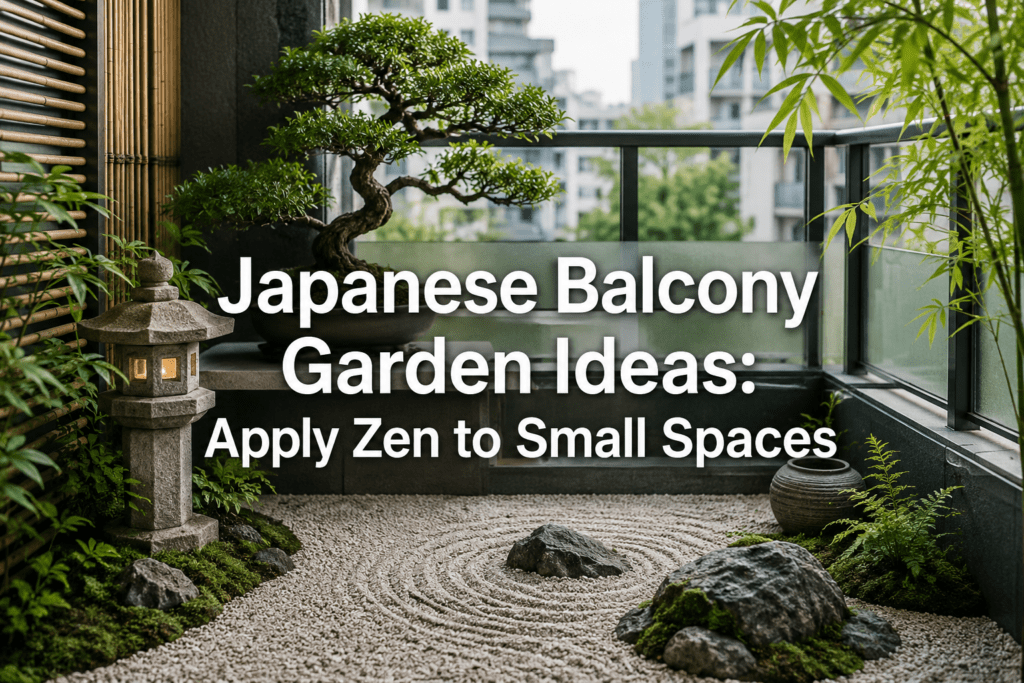
Quick Answer: Creating Japanese balcony garden ideas and applying Zen design principles to small spaces involves focusing on minimalism, natural elements, asymmetry, and symbolism to cultivate a sense of peace and contemplation. Even a compact balcony can become a serene retreat by carefully selecting plants, stones, water features, and decor that embody balance and tranquility. The key is intentional design that emphasizes empty space and thoughtful arrangement.
Key Takeaways:
- Zen design prioritizes minimalism, natural materials, and purposeful empty space.
- Even very small balconies (as little as 10-15 sq ft) can host a Japanese-inspired garden.
- Choose slow-growing, compact plants like bonsai, dwarf conifers, and moss.
- Costs can vary widely, but budget-friendly alternatives exist for traditional materials.
- Cold climate gardeners can use hardy evergreens and seasonal plant rotation.
- Avoid clutter and over-decoration, as this contradicts Zen principles.
- Maintenance is generally low, focusing on mindful care rather than intensive labor.
- Zen gardens are excellent for those seeking aesthetic appeal and tranquility, not necessarily a ‘green thumb’.
- Limited sunlight can be managed with shade-tolerant plants and light-colored elements.
What Are the Basic Principles of Zen Garden Design?
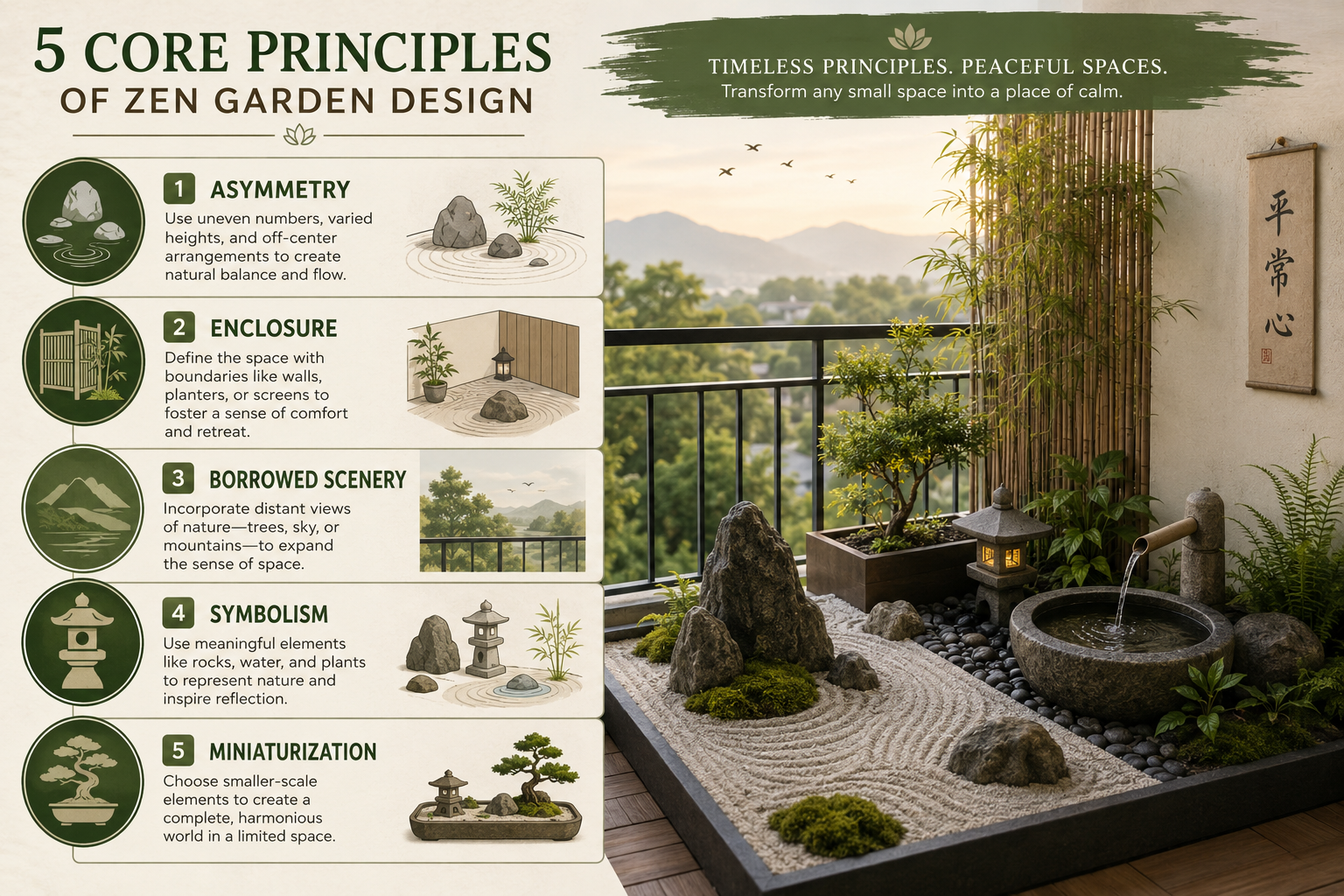
The basic principles of Zen garden design revolve around creating a miniature landscape that inspires meditation, tranquility, and appreciation for nature, even in a small space. These principles emphasize harmony, balance, and intentionality rather than clutter or excessive ornamentation. By adhering to these guidelines, you can transform your balcony into a peaceful sanctuary.
The core tenets include:
- Miniaturization (Mitate): Representing grand natural landscapes (mountains, rivers, islands) using scaled-down elements like rocks, sand, and small plants.
- Asymmetry (Fukinsei): Embracing natural irregularity and imbalance, which is seen as more dynamic and authentic than perfect symmetry.
- Enclosure (Kakure-zato): Defining the space to create a secluded, introspective atmosphere, often achieved with fences, walls, or strategic planting.
- Borrowed Scenery (Shakkei): Integrating existing elements outside the garden (like a distant cityscape or a neighbor’s tree) into the garden’s composition to expand its perceived size and depth.
- Symbolism: Using elements to represent natural phenomena, philosophical concepts, or virtues. For example, raked sand symbolizes water, large rocks represent mountains, and a single tree can signify life.
- Empty Space (Ma): Valuing negative space as much as positive space, allowing the eye and mind to rest, fostering contemplation. This is crucial for avoiding a cluttered look, especially in “Japanese Balcony Garden Ideas: How to Apply Zen Design to Small Spaces.”
- Natural Materials: Primarily using stone, sand/gravel, wood, and carefully selected plants.
For instance, when designing your balcony, you might use a single, striking rock (representing a mountain) surrounded by carefully raked gravel (representing a calm sea) to embody several of these principles.
How Much Space Do I Really Need for a Japanese Balcony Garden?
You can create a meaningful Japanese balcony garden even in very confined areas, with effective designs possible in spaces as small as 10-15 square feet. The essence of Zen design lies in intentionality and minimalism, not sheer size, making it perfectly suited for compact urban environments.
While a larger balcony offers more flexibility, the beauty of Zen principles is their adaptability. Here’s a breakdown:
- Tiny Balconies (10-20 sq ft): Focus on a single focal point, such as a well-chosen bonsai or a striking rock arrangement. Incorporate a small patch of raked sand or moss. A minimalist approach is essential.
- Small Balconies (20-50 sq ft): You can integrate a few more elements like a small water feature (a bamboo spout into a basin), a seating cushion, and a wider selection of plants. Consider a narrow path of stepping stones.
- Medium Balconies (50+ sq ft): These allow for more elaborate rock gardens, larger bonsai, small garden lanterns, and perhaps a low wooden bench. Even with more space, remember to maintain the principle of Ma (empty space) to avoid clutter.
Ultimately, the required space depends on your specific vision, but a successful Japanese balcony garden prioritizes quality and thoughtful arrangement over quantity. For additional guidance on maximizing green space, explore Vertical Balcony Garden Ideas: Maximize Your Green Space In Balcony.
What Plants Work Best in a Small Zen Garden?
The best plants for a small Zen garden are those that are slow-growing, compact, require minimal fuss, and contribute to a sense of tranquility and natural beauty. Focus on plants that offer texture, subtle color, and sculptural forms rather than large, flamboyant blooms.
Consider these categories:
- Bonsai: Miniature trees like Japanese maples (Acer palmatum), junipers, pines, or azaleas are quintessential Zen garden elements, symbolizing endurance and nature’s grandeur in miniature.
- Dwarf Conifers: Small, slow-growing conifers such as dwarf mugo pine (Pinus mugo ‘Mughus’), Hinoki cypress (Chamaecyparis obtusa ‘Nana Gracilis’), or various dwarf junipers offer evergreen structure and texture.
- Moss: Crucial for ground cover, creating a soft, ancient feel, and symbolizing natural landscapes. Sheet moss, cushion moss, or sphagnum moss can be excellent.
- Ferns: Delicate and shade-tolerant ferns like Japanese painted fern (Athyrium niponicum) or maidenhair fern (Adiantum venustum) add a lush, forest-like understory.
- Grasses: Small, ornamental grasses like Mondo grass (Ophiopogon japonicus) or black Mondo grass (Ophiopogon planiscapus ‘Nigrescens’) add texture and movement.
- Small Perennials (Sparsely Used): If color is desired, opt for understated choices like hostas (for shade), miniature azaleas, or small irises, used sparingly as accents.
When selecting plants, remember that the goal is not to fill every inch with greenery, but to choose a few key specimens that enhance the overall contemplative atmosphere. If you’re looking for more general plant ideas for small spaces, our guide to Best Plants For Small Gardens 2026: The Complete List offers diverse options.
How Expensive Are Japanese Garden Supplies?
The cost of Japanese garden supplies can range from very affordable, utilizing repurposed materials, to significantly expensive for authentic, high-quality traditional elements. A budget-conscious approach can still achieve a stunning Zen aesthetic without breaking the bank.
Here’s a general cost breakdown:
| Item Type | Low-Cost Alternatives ($-$$) | Mid-Range Options ($$-$$$) | High-End/Authentic ($$$-$$$$) |
|---|---|---|---|
| Plants | Small starter moss, dwarf succulents, locally sourced small shrubs | Young bonsai, established dwarf conifers, ornamental grasses | Mature, trained bonsai specimens, rare Japanese maples |
| Stones/Gravel | Local river rocks, pea gravel from hardware store, repurposed concrete | Decorative river stones, specific colored gravel, small landscape rocks | Hand-selected natural boulders, carved stone lanterns, imported gravel |
| Containers | Terracotta pots, plastic containers with natural paint, recycled bins | Glazed ceramic pots, lightweight fiberglass planters | Hand-thrown Japanese pottery, authentic bonsai pots |
| Water Feature | DIY bamboo spout with plastic basin, solar-powered pump | Small tabletop fountain, ceramic birdbath | Custom-made stone basin with high-quality pump, bronze spout |
| Decor | DIY wooden trellises, repurposed wood accents | Small wooden bridge, simple stone lantern, Buddha statue | Antique stone lanterns, traditional bamboo fences (shishi-odoshi) |
For those on a tight budget, consider foraging for interesting rocks (where permitted), using repurposed wooden crates as planters, or creating your own bamboo accents from readily available materials. Focusing on essential elements and quality over quantity can help manage costs when building your “Japanese Balcony Garden Ideas: How to Apply Zen Design to Small Spaces.”
Can I Create a Zen Garden If I Live in a Cold Climate?
Yes, you can absolutely create a Zen garden in a cold climate by carefully selecting cold-hardy plants and incorporating design elements that withstand freezing temperatures. The key is adapting traditional Japanese garden principles to your specific climate zone.
Here’s how to make it work:
- Choose Cold-Hardy Plants:
- Dwarf Conifers: Many varieties of juniper, spruce, and pine are extremely cold-tolerant. Look for species rated for your USDA Hardiness Zone or colder.
- Deciduous Shrubs: Consider miniature Japanese maples (some varieties are hardy to Zone 5 or 6), dwarf rhododendrons, or winterberry hollies for winter interest (though the berries might be less “Zen” than the evergreen form).
- Moss: Some moss species are surprisingly cold-tolerant and can go dormant in winter, bouncing back in spring.
- Perennials: Certain hostas and sedums can survive harsh winters, returning reliably.
- Container Selection: Use frost-proof containers made of thick ceramic, concrete, or fiberglass to prevent cracking. Ensure excellent drainage.
- Winter Protection:
- Bring Indoors: Small bonsai or less hardy plants may need to be brought indoors or into a garage for winter.
- Insulation: Insulate pots with burlap, bubble wrap, or place them in larger containers filled with leaves or straw.
- Mini Cold Frames: For very small plants, a simple DIY cold frame can offer extra protection.
- Focus on Hardscape: In cold climates, emphasize the non-living elements like rocks, gravel, and stone lanterns, as these provide year-round structure and beauty. Raked gravel and well-placed stones will always look serene, regardless of temperature.
- Snow as a Design Element: Embrace snow as a natural element that enhances the tranquility and sculptural forms of your garden.
It’s entirely possible to enjoy the serene beauty of a Zen garden even when temperatures drop, requiring thoughtful planning for “Japanese Balcony Garden Ideas: How to Apply Zen Design to Small Spaces.” 
What Are Common Mistakes People Make With Balcony Zen Gardens?
One of the most common mistakes people make with balcony Zen gardens is over-cluttering the space, which directly contradicts the core Zen principle of Ma (empty space and minimalism). A Zen garden thrives on thoughtful placement and simplicity, not an abundance of elements.
Here are other frequent pitfalls to avoid:
- Over-planting: Filling every pot and corner with plants defeats the minimalist aesthetic. Choose a few impactful plants and allow them room to breathe.
- Using too many different materials or colors: Stick to a limited palette of natural materials (stone, wood, specific plants) and muted, earthy tones to maintain harmony.
- Ignoring Scale: Placing oversized elements (large rocks, huge pots) in a small balcony space can make it feel cramped instead of expansive. Always consider proportionality.
- Lack of a Focal Point: A Zen garden usually has one or two primary focal points (a unique rock, a bonsai) that draw the eye and guide contemplation. Without one, the garden can feel aimless.
- Forgetting Drainage: Especially in container gardens, poor drainage leads to root rot and unhealthy plants. Ensure all pots and basins have adequate drainage holes.
- Neglecting Maintenance: While Zen gardens are generally low-maintenance, they still require occasional watering, pruning, and raking of gravel to keep them pristine and reflect the ideal of care and order.
- Trying to Replicate a Large Garden Exactly: Don’t attempt to miniaturize every element of a grand traditional Japanese garden. Select key symbolic components that fit your small scale.
- Using Artificial Materials (Excessively): While some modern interpretations use synthetic elements, an overuse of plastic plants or brightly colored artificial decor detracts from the natural, meditative quality.
By being mindful of these mistakes, you can ensure your “Japanese Balcony Garden Ideas: How to Apply Zen Design to Small Spaces” project results in a truly serene and authentic space. 
How Do I Maintain a Japanese Balcony Garden With Minimal Effort?
Maintaining a Japanese balcony garden with minimal effort focuses on mindful, routine care and a design that inherently reduces intensive labor. The philosophy promotes appreciation for nature’s subtle changes, not constant intervention.
Here’s a practical approach:
- Thoughtful Plant Selection: Choose drought-tolerant, slow-growing, and disease-resistant plants suited to your climate and light conditions. Bonsai requires specific care, but other choices like dwarf conifers or moss are generally low-maintenance.
- Appropriate Watering: Water deeply but infrequently, allowing the soil to dry slightly between waterings. Use self-watering pots if convenience is a priority. Check out our guide on Self-Watering Pots: Do They Work For Small Gardens? for more information.
- Strategic Pruning: Limit pruning to shaping and removing dead or diseased branches, typically once or twice a year. The goal is to maintain the plant’s natural form rather than extensive shaping.
- Weeding: Because balcony gardens are contained, weeding is usually minimal. A quick check once a week to remove any unwanted sprouts is sufficient.
- Gravel Raking: This is often seen as a meditative activity rather than a chore. Raking the gravel patterns once a week or as needed helps maintain the aesthetic and prevents leaf accumulation.
- Cleanliness: Regularly sweep or dust the surfaces of rocks and containers to keep them looking pristine. Remove fallen leaves promptly.
- Fertilizing (Sparingly): Most Zen garden plants benefit from slow-release fertilizer once or twice a year, reducing the need for frequent applications.
By establishing a few simple routines and selecting robust, appropriate plants, your Japanese balcony garden can be a source of calm without demanding extensive upkeep. 
Are Zen Gardens Good for People Who Don’t Have a Green Thumb?
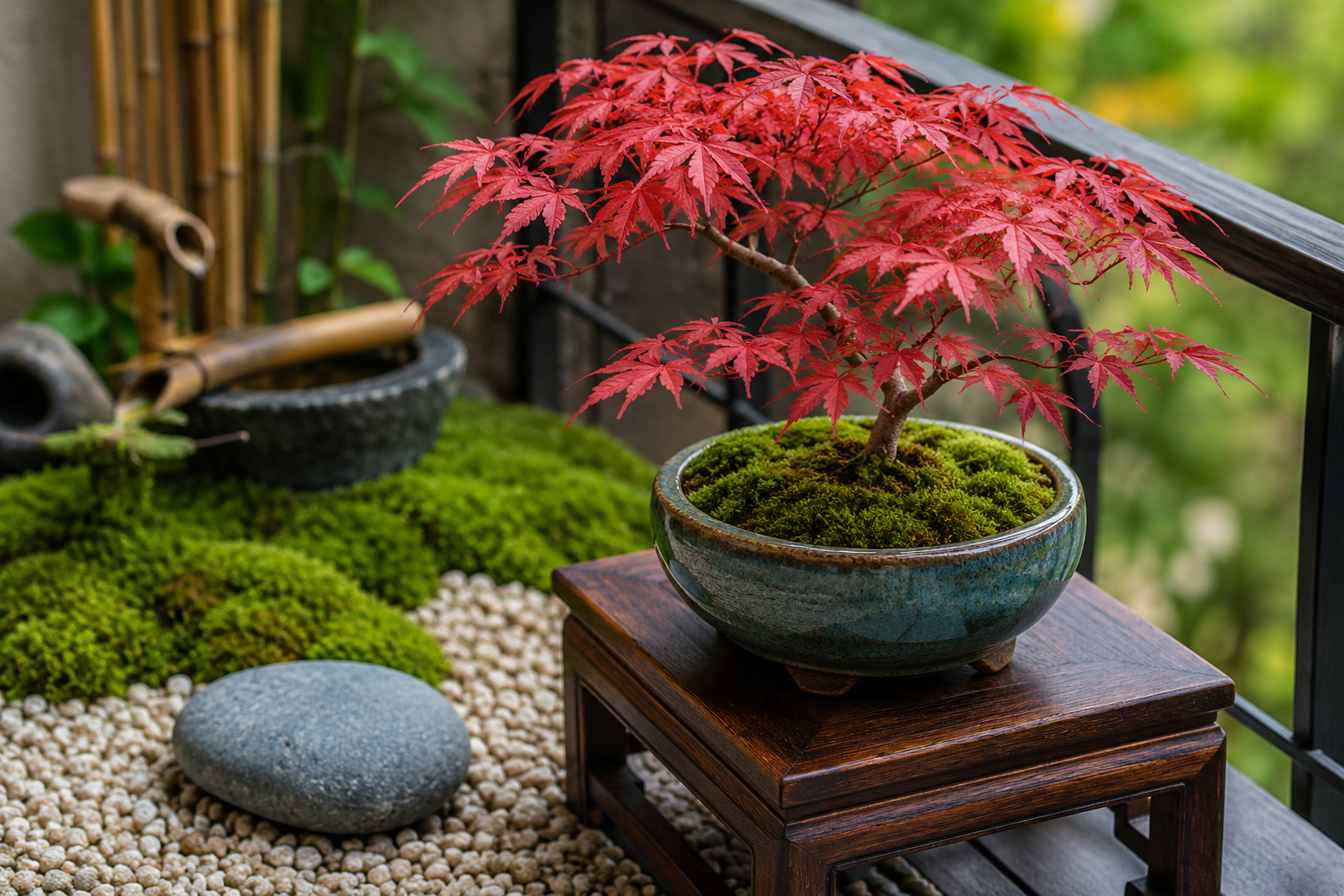
Yes, Zen gardens are surprisingly well-suited for individuals who don’t consider themselves to have a “green thumb,” especially when designed with minimal-care elements. The focus is often more on hardscape and thoughtful arrangement than on intensive plant cultivation.
Here’s why they can be ideal:
- Emphasis on Hardscape: Many Zen gardens rely heavily on non-living elements like rocks, gravel, and sand, which require no watering or pruning. This reduces the burden of plant care significantly.
- Low-Maintenance Plants: When plants are included, the emphasis is on slow-growing, resilient species like moss, dwarf conifers, and certain drought-tolerant succulents that don’t need constant attention.
- Minimalist Approach: Fewer plants mean less to care for. The design philosophy discourages overcrowding, simplifying maintenance.
- Mindful Engagement: While not demanding a “green thumb,” a Zen garden encourages mindful engagement through activities like raking gravel, which is a meditative practice rather than a gardening chore. This shifts the focus from intensive growth to contemplative arrangement.
- Focus on Aesthetics and Tranquility: The primary goal of a Zen garden is to create a peaceful, aesthetic space for reflection. This can be achieved even with very few or no living plants, making horticultural skill less critical.
For those hesitant about plant care, consider a “dry Zen garden” on your balcony with just raked gravel, carefully placed rocks, and perhaps a low-maintenance stone lantern. This allows you to enjoy the tranquility without the pressure of keeping many plants alive, aligning perfectly with “Japanese Balcony Garden Ideas: How to Apply Zen Design to Small Spaces.”
What’s the Difference Between a Japanese Garden and a Regular Container Garden?
The fundamental difference between a Japanese garden (even a balcony version) and a regular container garden lies in their underlying philosophy, aesthetic goals, and primary design elements. A Japanese garden seeks to evoke nature and foster contemplation through symbolism and minimalism, while a regular container garden typically prioritizes showcasing diverse plant varieties and color.
Here’s a comparison:
| Feature | Japanese Balcony Garden | Regular Container Garden |
|---|---|---|
| Philosophy | Zen Buddhism, Shintoism; seeks tranquility, contemplation, symbolism | Aesthetic appeal, showcasing plants, personal expression, edibles |
| Primary Focus | Hardscape (rocks, gravel, sand), negative space, natural cycles | Living plants (flowers, vegetables, herbs), plant health, growth |
| Aesthetic | Asymmetrical, minimalist, natural, understated, harmonious | Symmetrical or eclectic, colorful, lush, diverse |
| Plant Selection | Limited palette: bonsai, dwarf conifers, moss, ferns, grasses; subtle | Wide variety: annuals, perennials, herbs, vegetables; often bold |
| Materials | Natural: stone, wood, bamboo, raked gravel | Various: plastic, terracotta, ceramic, metal pots; diverse decor |
| Maintenance | Mindful, rhythmic (raking, light pruning); focus on observation | Regular (watering, fertilizing, deadheading, pest control); focus on yield/bloom |
| Purpose | Meditation, reflection, escape from urban chaos | Decoration, food production, hobby, beautification |
While both utilize containers, the Japanese balcony garden is less about gardening in the traditional sense and more about creating a carefully composed, living art piece that serves as a meditative space. 
Where Can I Buy Authentic Japanese Gardening Tools Online?
For authentic Japanese gardening tools online, consider specialized retailers that import directly from Japan or reputable garden suppliers known for high-quality, traditional tools. These tools are often handcrafted and designed for precision and durability.
Here are a few types of online sources:
- Specialty Bonsai and Zen Garden Retailers: Many stores that sell bonsai trees also stock authentic Japanese tools for pruning, shaping, and general care. These include tools like hasami (pruning shears), jin pliers, and soil scoops.
- Japanese Homeware and Craft Sites: Websites specializing in Japanese goods often carry a gardening section. Look for brands known for quality like Hori Hori knives, Okatsune, or Tobisho.
- High-End Garden Tool Suppliers: Some premium garden centers, even those not exclusively Japanese-focused, will carry a selection of imported Japanese tools due to their renowned quality.
- Online Marketplaces: While platforms like Amazon or eBay might have options, exercise caution and check seller reviews to ensure authenticity. Look for tools made with high-carbon steel and traditional handles.
When purchasing, prioritize quality over quantity. A few well-made, authentic tools will serve you better and longer than a collection of cheaper alternatives, aligning with the Zen principle of valuing craftsmanship and longevity.
How Do I Prevent My Balcony Zen Garden From Looking Cluttered?
To prevent your balcony Zen garden from looking cluttered, embrace the core principles of minimalism, empty space (Ma), and thoughtful selection. Every element should serve a purpose or contribute to the overall serene aesthetic.
Here’s a strategic approach:
- Strict Minimalism: Limit the number of elements. Instead of many small items, choose a few larger, impactful pieces. For example, one carefully selected bonsai is more effective than five small, mismatched plants.
- Embrace Negative Space: Allow significant portions of your balcony to remain empty, covered only by raked gravel or clean decking. This “empty space” is crucial for the eye to rest and for the mind to find peace.
- Choose a Limited Color Palette: Stick to natural, muted colors – greens, browns, grays, and whites. Avoid bright, jarring colors that can disrupt the tranquil atmosphere.
- Uniform Containers: If using multiple pots, choose containers that are similar in material, color, and style. This creates visual cohesion, even if the plants inside are different.
- Verticality (Used Sparingly): While vertical gardening can maximize space, use it cautiously in a Zen context. A simple, clean vertical planter for a few select mosses or ferns might work, but avoid overly busy vertical displays. For more ideas on using vertical space efficiently without clutter, check out Vertical Balcony Garden Ideas: Maximize Your Green Space In Balcony.
- Designated Storage: If you have gardening tools or other balcony essentials, ensure they have a dedicated, hidden storage spot to keep the main garden area clean and uncluttered.
- Consider a Focal Point: A strong focal point naturally organizes the space around it, making other elements feel less random.
Remember, the goal of “Japanese Balcony Garden Ideas: How to Apply Zen Design to Small Spaces” is to create a sense of calm and order, which is undermined by clutter. Less is truly more in this design philosophy.
What Are Some Low-Cost Alternatives to Traditional Zen Garden Materials?
Creating a beautiful Zen balcony garden doesn’t require expensive, traditional materials; many low-cost alternatives can achieve a similar aesthetic and spiritual effect. The ingenuity in selection can also align with Zen principles of resourcefulness.
Here are practical, budget-friendly substitutes:
- For Raked Gravel/Sand:
- Pea Gravel: Widely available at hardware stores and significantly cheaper than specialized garden gravel. Its small, smooth stones are perfect for raking patterns.
- Play Sand: For a finer texture, basic play sand (ensure it’s clean and coarse enough not to blow away easily) can mimic traditional white sand.
- Crushed Decomposed Granite: Another cost-effective option for a natural, earthy feel.
- For Large Stones/Rocks:
- Locally Sourced River Rocks: If permitted, collecting interesting rocks from local rivers or beaches can provide unique, natural elements for free.
- Retaining Wall Blocks: Smooth-faced concrete retaining wall blocks, often available cheaply, can be arranged to mimic natural stone formations.
- Broken Concrete Pieces (Urbanite): Reshaped and smoothed pieces of concrete can be a surprisingly effective and eco-friendly rock substitute.
- For Bonsai Pots/Containers:
- Terracotta Pots: Inexpensive and classic, they can be painted in muted tones to fit the Zen aesthetic.
- Recycled Plastic Containers: With a little sanding and spray paint (matte black, charcoal, or deep green), plastic pots can look surprisingly sophisticated.
- Wooden Crates/Boxes: Reclaimed wood crates can be lined and used as rustic planters, adding a natural, wabi-sabi touch.
- For Water Features:
- Bamboo Stakes & Buckets: A simple bamboo stick and a metal or ceramic bucket can create a rustic dripping sound.
- Pre-made Ceramic Basins: Inexpensive glazed ceramic basins or large bowls can serve as a pond or a base for a small fountain pump.
- For Pathways/Stepping Stones:
- Flat River Stones: If available, these are ideal.
- Paver Slabs: Basic concrete paver slabs from a hardware store can be arranged elegantly.
The key is to use imagination and prioritize the spirit of Zen design – simplicity, naturalness, and calm – over strict adherence to expensive, traditional materials. For other budget-friendly ideas, consider our guide on Budget Balcony Gardening Ideas. 
Do Zen Gardens Work in Apartments With Limited Sunlight?
Yes, Zen gardens can absolutely work in apartments with limited sunlight by emphasizing shade-tolerant plants and focusing more on the hardscape elements that don’t require light. The aesthetic and meditative qualities of a Zen garden are not dependent on abundant sunshine.
Here’s how to adapt for low-light conditions:
- Prioritize Hardscape: In limited sunlight, the non-living elements become even more crucial. Focus on a strong design with carefully placed rocks, beautifully raked gravel patterns, and perhaps a small stone lantern or a clean water basin. These elements don’t need light to thrive.
- Choose Shade-Tolerant Plants:
- Moss: Many moss varieties thrive in shade and humidity. They are excellent ground covers that create a lush, ancient feel.
- Ferns: Japanese painted fern, maidenhair fern, and other delicate ferns are perfect for low-light conditions, adding texture and a woodland aesthetic.
- Hostas: Dwarf hosta varieties with interesting foliage can add visual interest to shady corners.
- Mondo Grass: Both green and black Mondo grass are very tolerant of shade and provide a striking linear element.
- Low-Light Bonsai: Some bonsai species, like certain junipers or Ficus, can tolerate lower light, though they may grow slower.
- Light-Colored Elements: Use lighter-colored gravel or sand to brighten the space and reflect any available light. White or light grey stones can also enhance this effect.
- Strategic Placement: Place any light-loving plants closest to the available light source. Rotate plants periodically if possible to ensure even exposure.
- Reflective Surfaces: A small mirror or a polished metallic object can subtly reflect light into a dark corner, though use sparingly to maintain the natural aesthetic.
Even a balcony with only a few hours of indirect light can become a serene and contemplative Zen space by leveraging these “Japanese Balcony Garden Ideas: How to Apply Zen Design to Small Spaces.” For more insights on growing plants in challenging light conditions, explore Indoor Gardening Without Sunlight: Grow Plants Year-Round.
Conclusion
Creating a Japanese balcony garden is an accessible and profoundly rewarding endeavor, even for those with small spaces or limited gardening experience. By embracing the core Zen principles of minimalism, asymmetry, natural materials, and the mindful use of empty space, you can transform any compact balcony into a serene retreat. From selecting resilient, slow-growing plants to utilizing budget-friendly materials and adapting to various climates or light conditions, the essence lies in intentional design that fosters contemplation and peace. This isn’t just about planting; it’s about curating a miniature landscape that inspires quiet reflection in the heart of your urban environment.
Actionable Next Steps:
- Assess Your Space: Measure your balcony and observe its light conditions throughout the day.
- Define Your Focal Point: Choose one or two key elements (a unique rock, a bonsai) to build your design around.
- Sketch Your Layout: Plan the placement of rocks, gravel, plants, and any water features, emphasizing negative space.
- Source Materials: Prioritize local, natural, and (if needed) low-cost alternatives.
- Start Small: Begin with a few key elements and gradually add more if the space allows without becoming cluttered.
References:
- Miyake, A. (1998). Japanese Gardens: Design and Meaning. Shambhala Publications.
- Slawson, D.A. (1987). Secret Teachings in the Art of Japanese Gardens: Design Principles, Aesthetic Values. Kodansha International.
Related Reading:
- Balcony Garden Decor Ideas 2026: Transform Your Small Space
- Modern Balcony Garden Designs: 2026 Trends & Ideas
- DIY Container Gardening Ideas For Small Spaces: 2026 Guide
- Balcony Garden Maintenance Tips 2026: Ultimate Guide