How do I water containers when my apartment has no outdoor faucet?
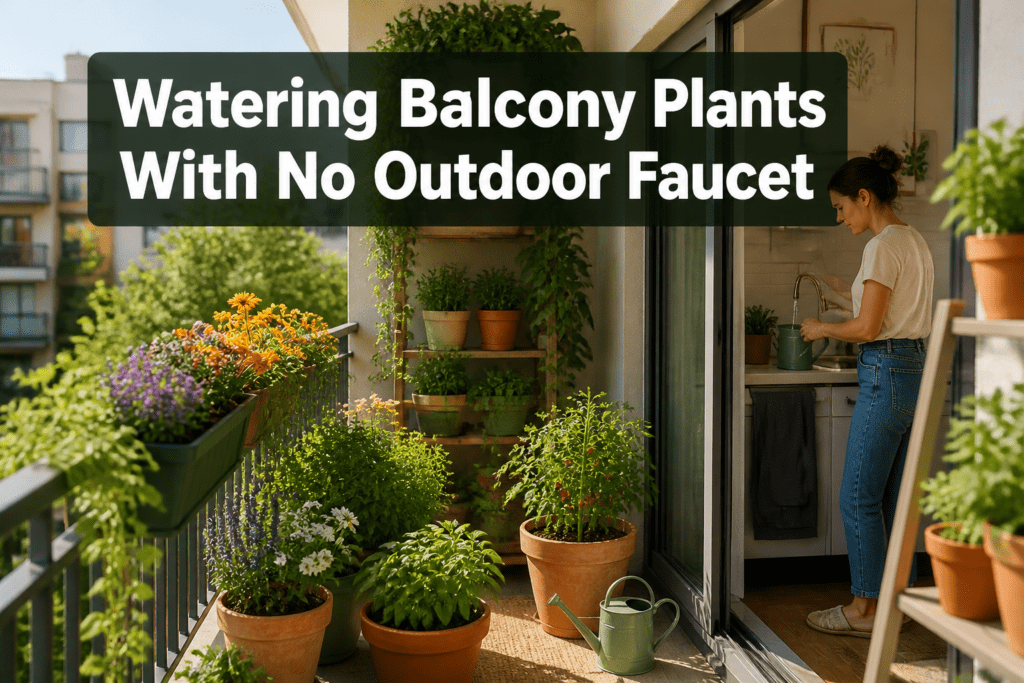
Quick Answer: If your apartment has no outdoor faucet, the most practical solution is to fill a watering can or portable water container from your kitchen or bathroom sink, then carry it to your balcony or patio. For larger setups, a hose-to-faucet adapter, a battery-powered drip irrigation kit, or self-watering containers can dramatically reduce the daily effort.
Key Takeaways
- Carry water from indoors using a watering can, collapsible jug, or large pitcher — this works for most small-to-medium container setups.
- Sink-to-hose adapters let you run a lightweight garden hose from a kitchen or bathroom faucet directly to your balcony.
- Battery-powered drip irrigation systems automate watering without any outdoor water source.
- Self-watering containers with built-in reservoirs can cut your watering trips by 50% or more.
- Water-retaining soil mixes reduce how often you need to water in the first place.
- Terracotta drip spikes and wicking systems are low-cost, passive options for short absences.
- Avoid overwatering by checking soil moisture before each session — see our guide on common watering mistakes in container gardening.
- Group containers together to reduce trips and slow moisture loss through shared humidity.
Why Watering Containers Without an Outdoor Faucet Is More Manageable Than You Think
No outdoor faucet doesn’t mean no garden. Millions of apartment renters across the U.S. grow thriving balcony and patio gardens using only their indoor plumbing. The key is choosing the right tools and containers for your situation, then building a simple routine that doesn’t feel like a chore.
If you’re just starting out, our apartment gardening for beginners guide covers the full picture of what’s possible in a rental space.
How Do I Water Containers When My Apartment Has No Outdoor Faucet? (The Core Methods)
The most reliable approach depends on how many containers you have, how far they are from your indoor water source, and how much time you want to spend each day. Here are the main methods, ranked from simplest to most automated.
1. The Watering Can Method (Best for Small Setups)
Best for: 1–10 containers, balconies within 20 feet of a kitchen or bathroom.
Fill a watering can at your kitchen or bathroom sink and carry it out. A standard 2-gallon watering can covers roughly 4–6 medium pots per trip. For most apartment gardeners with a compact balcony setup, this is all you need.
Tips to make it easier:
- Use a lightweight plastic can (not metal) to reduce arm fatigue.
- Fill it the night before so water reaches room temperature — cold tap water can stress some plants.
- Keep the can on the balcony and refill as needed rather than making multiple full trips.
💡 Quick tip: A 2-gallon can weighs about 16 pounds when full. If you have mobility concerns, use a 1-gallon can and make two trips instead.
2. Sink-to-Hose Faucet Adapters (Best for Medium Setups)
Best for: 10–25 containers, balconies with a sliding door near a kitchen or bathroom.
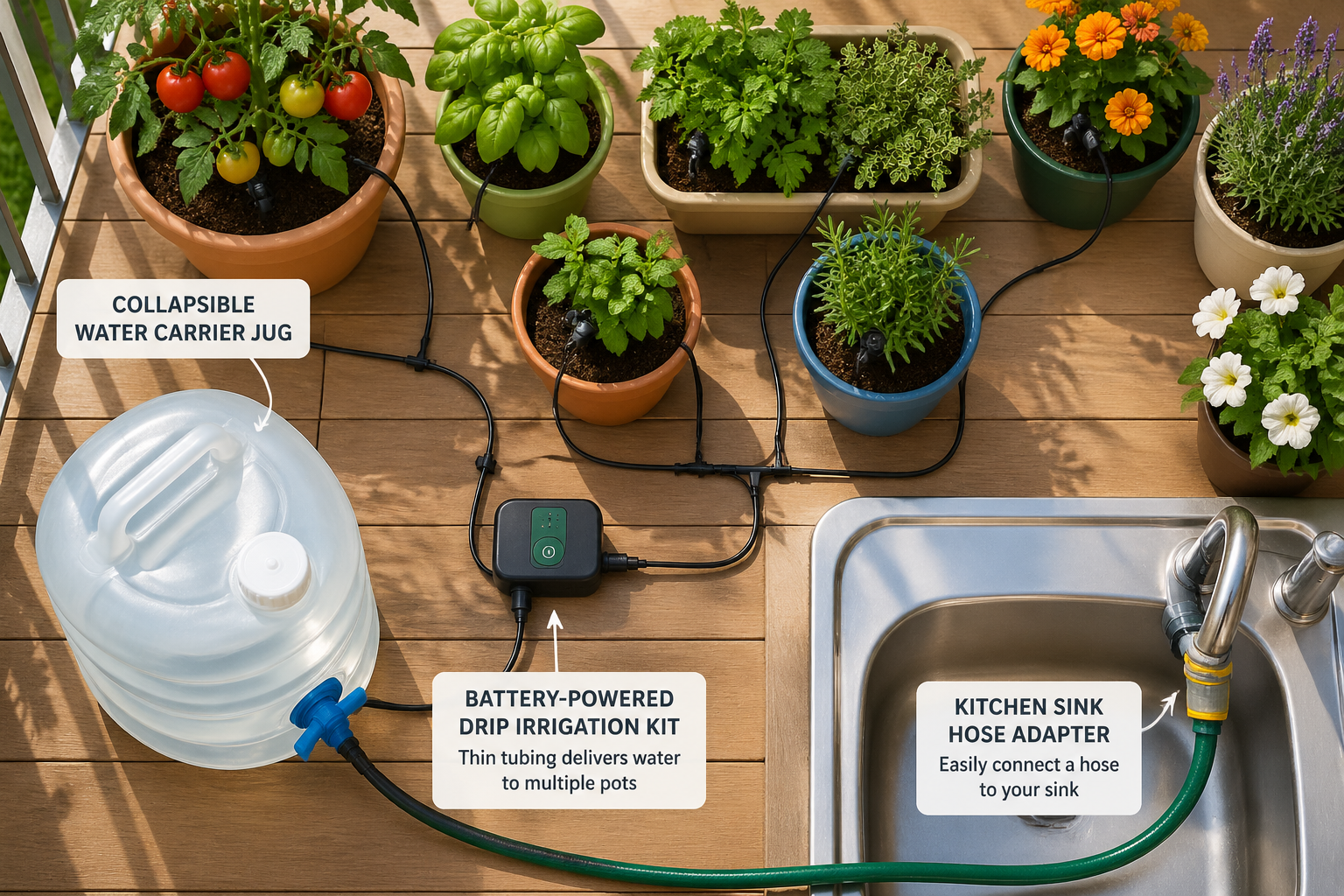
A faucet-to-hose adapter threads onto a standard kitchen or bathroom faucet and lets you connect a lightweight garden hose. Run the hose through a cracked door or window to reach your containers. Adapters are widely available at hardware stores for $10–$25, and a 25-foot soaker or spray hose is typically under $20.
What to check first:
- Confirm your faucet has a standard aerator thread (most U.S. kitchen faucets do).
- Measure the distance from your faucet to the farthest container.
- Check your lease — some landlords restrict hose use indoors.
Common mistake: Using a heavy rubber hose that kinks in doorways. Choose a lightweight expandable hose instead.
3. Battery-Powered Drip Irrigation (Best for Automation)
Best for: Gardeners who travel, work long hours, or have 15+ containers.
Battery-operated drip irrigation kits connect to a water reservoir (like a large bucket or collapsible jug) and deliver water on a timer. You fill the reservoir every few days rather than watering daily. Kits from brands like Raindrip or Claber typically cost $30–$80 and include tubing, drippers, and a programmable timer.
Setup steps:
- Fill a 5–10 gallon reservoir with tap water.
- Place it above the level of your containers (gravity helps flow).
- Run thin drip tubing to each pot.
- Set the timer for your preferred frequency and duration.
For summer heat, check our guide to watering container plants in hot weather to set the right timer intervals.
What Tools Make Carrying Water Easier?
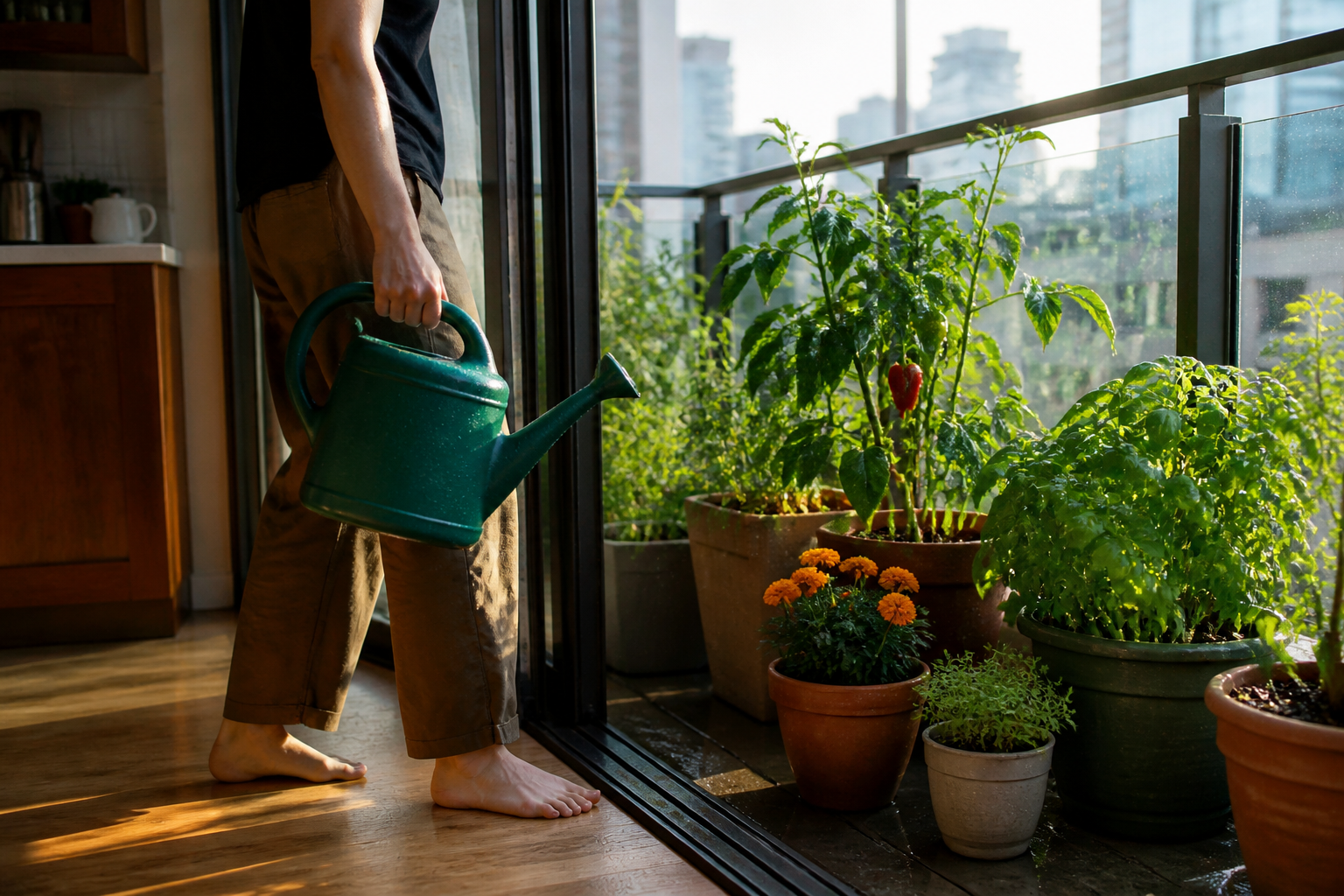
Carrying water from indoors is the most common answer to “how do I water containers when my apartment has no outdoor faucet?” — and the right gear makes it far less tedious.
| Tool | Capacity | Best For | Approx. Cost |
|---|---|---|---|
| Standard watering can | 1–2 gallons | Small balconies, 1–8 pots | $10–$30 |
| Collapsible water jug | 2–5 gallons | Medium setups, less frequent trips | $15–$35 |
| Rolling garden cart | 5–10 gallons | Large setups, limited mobility | $40–$80 |
| Backpack sprayer | 1–4 gallons | Overhead plants, hanging baskets | $25–$60 |
Choose a rolling cart if you have more than 15 containers or your balcony is far from your kitchen. Choose a collapsible jug if storage space is tight.
How Do I Reduce How Often I Need to Water?
Reducing watering frequency is just as important as finding a water source. The right container and soil choices can cut your watering needs significantly.
Self-watering containers have a built-in water reservoir at the base. Roots draw water up as needed, and you only refill the reservoir every 3–7 days depending on the plant and weather. These are especially useful for vegetables and herbs — see our container vegetable gardening guide for compatible plant choices.
Water-retaining soil mixes that include perlite, coco coir, or vermiculite hold moisture longer than standard potting soil. Our best soil mix for container gardening guide covers the best options for balcony use.
Other strategies:
- Mulch the soil surface with bark chips or straw to slow evaporation.
- Group containers together so they share humidity and dry out more slowly.
- Use larger pots — they hold more soil and moisture than small ones. See our pot size guide for details.
- Water in the morning or evening to reduce evaporation loss.
What Are Passive Watering Options for Short Trips Away?
When you’re away for a few days, passive watering systems keep plants alive without electricity or timers.
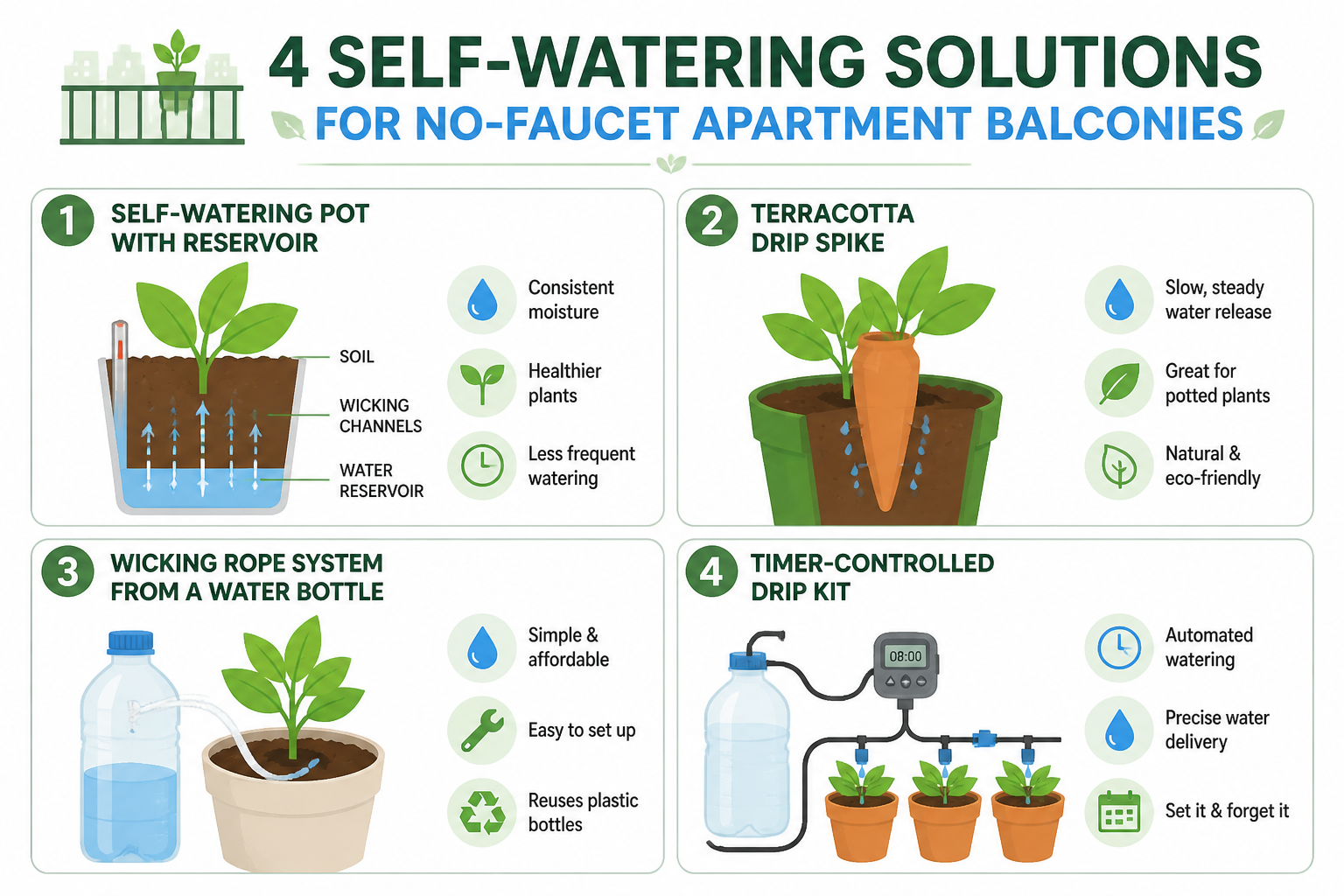
Terracotta drip spikes: Fill a wine bottle or plastic bottle with water, insert a terracotta spike into the soil, and attach the bottle. Water seeps slowly into the soil over 2–5 days.
Wicking systems: Run a cotton rope from a water-filled container into the pot’s soil. Capillary action draws water up as the soil dries. Works well for herbs and smaller pots.
Plastic bag greenhouse: Place a clear plastic bag over a plant and pot, trapping humidity. Not ideal for long periods but works for 2–3 days.
For more on keeping plants healthy between waterings, our how often should you water container plants guide explains the signs that tell you when to water and when to wait.
Common Mistakes to Avoid When Watering Without an Outdoor Faucet
Getting creative with water sources is smart — but a few habits can cause more harm than good.
- Overwatering to “save trips”: Dumping extra water to avoid another trip leads to root rot. Always check soil moisture first. Our fix overwatered plants guide can help if you’ve already gone too far.
- Using cold water directly from the tap: Let water sit for 30 minutes before using it on sensitive plants like tomatoes or basil.
- Ignoring drainage: Containers without drainage holes will waterlog quickly. Always use pots with holes, and empty saucers after watering.
- Inconsistent watering schedules: Irregular watering stresses plants more than slightly underwatering. A plant watering schedule tracker helps you stay consistent.
FAQ: Watering Apartment Containers Without an Outdoor Faucet
Q: Can I use a garden hose indoors connected to my kitchen faucet?
Yes. A standard faucet-to-hose adapter ($10–$25) fits most U.S. kitchen aerators. Use a lightweight hose and run it through a cracked door or window.
Q: How many containers can I realistically water by hand?
Most gardeners manage 10–20 containers comfortably with a 2-gallon watering can and 2–3 trips. Beyond 20 containers, a drip system or hose adapter saves significant time.
Q: Will my landlord have a problem with me running a hose through my apartment?
Check your lease. Most leases don’t explicitly prohibit it, but it’s worth asking. Using a mat under the hose and keeping the door mostly closed prevents water damage concerns.
Q: Are self-watering pots worth the extra cost?
For vegetables, herbs, and any plant you water more than 3 times per week, yes. The time savings and reduced plant stress typically justify the $15–$40 price difference over standard pots.
Q: What’s the cheapest way to automate watering without a faucet?
A gravity-fed drip kit connected to a 5-gallon bucket costs around $20–$40 and requires no electricity. You refill the bucket every few days.
Q: How do I water hanging baskets that are hard to reach?
A long-neck watering can or a backpack sprayer with an extension wand makes reaching overhead baskets much easier without spilling.
Q: Can I collect rainwater on my balcony to water plants?
In most U.S. states, yes — rainwater collection for personal garden use is legal. A small 15–30 gallon barrel under a balcony overhang can supplement your tap water significantly.
Q: Does water temperature matter for container plants?
For most plants, room-temperature water is best. Very cold tap water can temporarily shock roots, especially in warm-weather crops like tomatoes and peppers.
Conclusion: Building a Watering Routine That Works for Your Space
The answer to “how do I water containers when my apartment has no outdoor faucet?” isn’t one-size-fits-all — it depends on how many plants you have, how far your balcony is from your sink, and how much time you want to spend each day.
Here’s a simple decision path:
- 1–10 containers: A quality watering can and a consistent schedule is all you need.
- 10–25 containers: Add a faucet-to-hose adapter for faster coverage.
- 25+ containers or frequent travel: Invest in a battery-powered drip kit with a reservoir.
Pair any of these methods with self-watering pots, water-retaining soil, and morning watering habits, and you’ll have a thriving balcony garden regardless of your plumbing situation. For more inspiration on building your apartment garden from the ground up, explore our balcony garden ideas for apartments — the lack of an outdoor faucet is a minor obstacle, not a dealbreaker.
References
- Raindrip Inc. Product documentation for drip irrigation kits. raindrip.com (2023)
- Claber S.p.A. Oasis drip irrigation system user guide. claber.com (2022)
- University of Missouri Extension. “Watering Garden and Landscape Plants.” extension.missouri.edu (2021)
- Colorado State University Extension. “Container Gardens.” extension.colostate.edu (2022)