How to Compost in a Small Space or Apartment
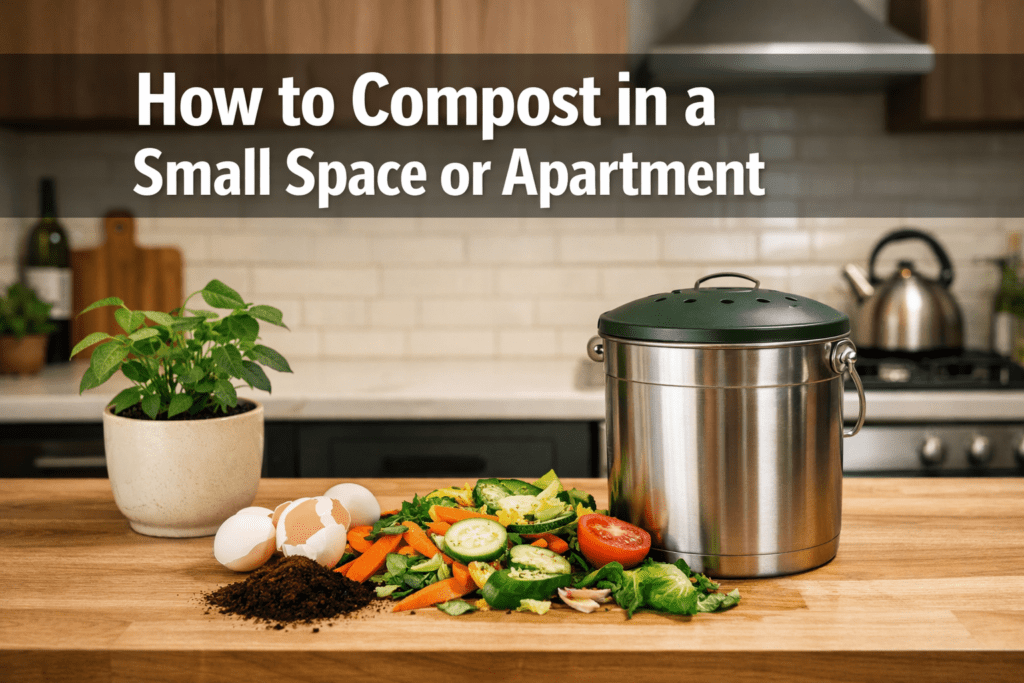
Quick Answer: You can compost in a small space or apartment by using a compact method suited to your living situation, such as a worm bin (vermicomposting), a Bokashi fermentation system, or a countertop electric composter. These systems handle food scraps without requiring outdoor space, produce little to no odor when managed correctly, and can generate usable compost or liquid fertilizer within weeks.
Key Takeaways
- Vermicomposting (worm bins) and Bokashi are the two most practical methods for apartment composting in 2026.
- A basic worm bin can fit under a kitchen sink or in a closet and processes scraps continuously.
- Bokashi ferments food waste (including meat and dairy) in a sealed bucket, making it odor-free for indoor use.
- Electric countertop composters speed up the process to 24–48 hours but cost more upfront (typically $300–$500).
- The “browns to greens” ratio still applies in small-space composting: roughly 2 parts carbon-rich material to 1 part food scraps.
- Finished compost from small-space systems is ideal for feeding container plants and balcony gardens.
- Common mistakes include adding too much wet material at once, neglecting aeration, and using the wrong bin size.
- Most small-space composting systems cost $30–$150 to set up, with ongoing costs close to zero.
Why Composting in a Small Space Is More Practical Than You Think
Small-space composting works well for most apartment dwellers. The key is choosing the right system for your square footage, lifestyle, and tolerance for maintenance.
Many people assume composting requires a backyard pile and a lot of effort. In reality, the methods designed for apartments are often cleaner and faster than traditional outdoor composting. A well-maintained worm bin, for example, produces no noticeable smell and fits in a cabinet. A Bokashi bucket sits on a countertop and handles scraps that outdoor piles cannot, including cooked food, fish, and dairy.
If you already grow herbs, vegetables, or container plants, the finished compost is a free, high-quality soil amendment. Check out our guide to apartment gardening ideas for small spaces to see exactly how homemade compost can improve your yields.
What Are the Best Methods for How to Compost in a Small Space or Apartment?
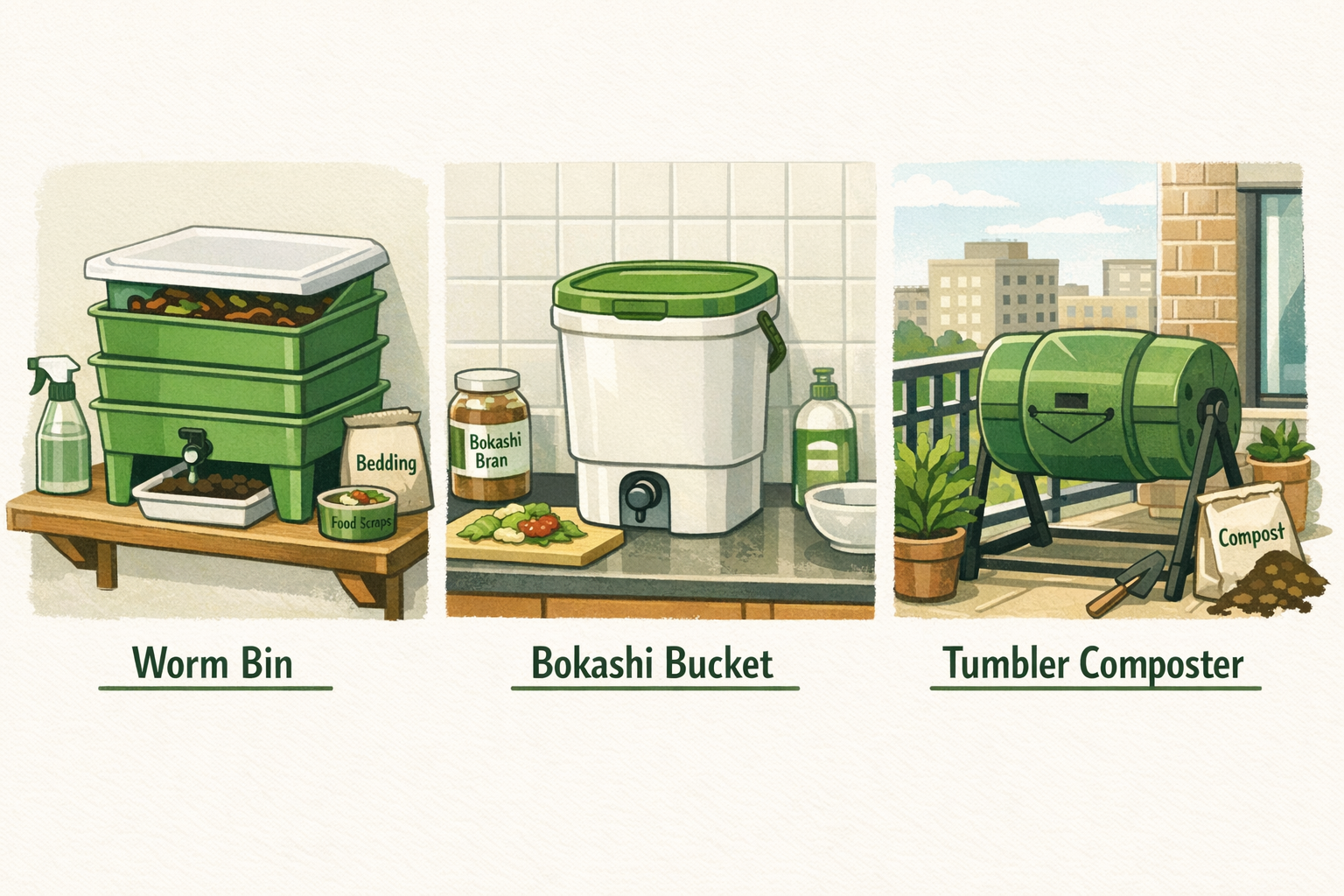
The best method depends on your space, budget, and what food scraps you generate most. Here are the four main options:
| Method | Space Needed | Cost (2026 est.) | Odor Risk | Accepts Meat/Dairy? | Time to Finish |
|---|---|---|---|---|---|
| Worm bin (vermicomposting) | Under-sink or closet | $30–$80 | Low (if managed) | No | 2–3 months |
| Bokashi bucket | Countertop | $30–$60 | Minimal (sealed) | Yes | 2–4 weeks (pre-compost) |
| Electric composter | Countertop | $300–$500 | Very low | Varies by model | 24–48 hours |
| Small tumbler | Balcony/patio | $50–$120 | Low | No | 4–8 weeks |
Choose vermicomposting if you generate mostly fruit and vegetable scraps, have a dark cabinet or closet to spare, and want a low-cost, ongoing system.
Choose Bokashi if you cook a variety of foods including meat, want a fully sealed system, or live in a studio with almost no extra space.
Choose an electric composter if speed matters most and budget is not a concern.
Choose a small tumbler if you have a balcony or patio and want a traditional composting feel without a full outdoor pile.
How to Set Up a Worm Bin for Apartment Composting
Setting up a worm bin is straightforward and takes about 30 minutes. You need a bin (plastic storage tote or a purpose-built worm bin), bedding material, and red wiggler worms (not standard earthworms).
Step-by-step setup:
- Choose your bin. A 10–14 gallon plastic tote works well for one to two people. Drill small holes in the lid and sides for airflow, and a few in the bottom for drainage. Place it over a tray to catch liquid (this liquid, diluted 10:1 with water, is an excellent plant fertilizer).
- Add bedding. Fill the bin halfway with moist, shredded cardboard or newspaper. It should feel like a wrung-out sponge, damp but not dripping.
- Add worms. Start with about 1 pound of red wigglers (Eisenia fetida). You can order these online for roughly $25–$40. They’ll process approximately half their body weight in food scraps per day.
- Add scraps gradually. Bury scraps under the bedding in different spots each time. Start small (a cup or two per feeding) and increase as the worms settle in.
- Maintain moisture and airflow. Check the bin weekly. If it smells, add more dry bedding. If it looks dry, mist lightly with water.
Common mistake: Overfeeding in the first two weeks. Worms need time to adjust. Adding too many scraps too fast creates odor and can harm the worm population.
How to Use the Bokashi Method in an Apartment
Bokashi is a fermentation process, not traditional composting. It uses a sealed bucket and a bran inoculated with beneficial microbes to ferment food scraps quickly.
How it works:
- Add food scraps to the bucket in layers.
- Sprinkle Bokashi bran over each layer (about a tablespoon per cup of scraps).
- Press scraps down to remove air pockets, then seal the lid tightly.
- Drain the liquid every few days from the spigot at the bottom.
- After 2 weeks, the fermented material (called “pre-compost”) is ready to bury in soil or add to a compost bin.
The pre-compost cannot go directly into a plant pot without further breakdown. If you don’t have outdoor soil access, mix it into a small tumbler or worm bin, or ask a neighbor or community garden if they’ll take it.
Pull quote: “Bokashi is the only indoor composting method that handles meat, fish, and dairy without odor complaints, making it ideal for apartment cooks who don’t want to limit what they compost.”
What Can (and Can’t) You Compost in a Small Space?
Knowing what to add keeps your system healthy and odor-free. This applies to all small-space composting methods except Bokashi, which is more flexible.
✅ Add freely:
- Fruit and vegetable scraps
- Coffee grounds and paper filters
- Tea bags (remove staples)
- Eggshells
- Shredded cardboard and paper
- Dry leaves (if you have access)
❌ Avoid (for worm bins and tumblers):
- Meat, fish, and bones
- Dairy products
- Oily or greasy food
- Citrus peels in large quantities (too acidic for worms)
- Onions and garlic (worms dislike them; use sparingly)
- Pet waste
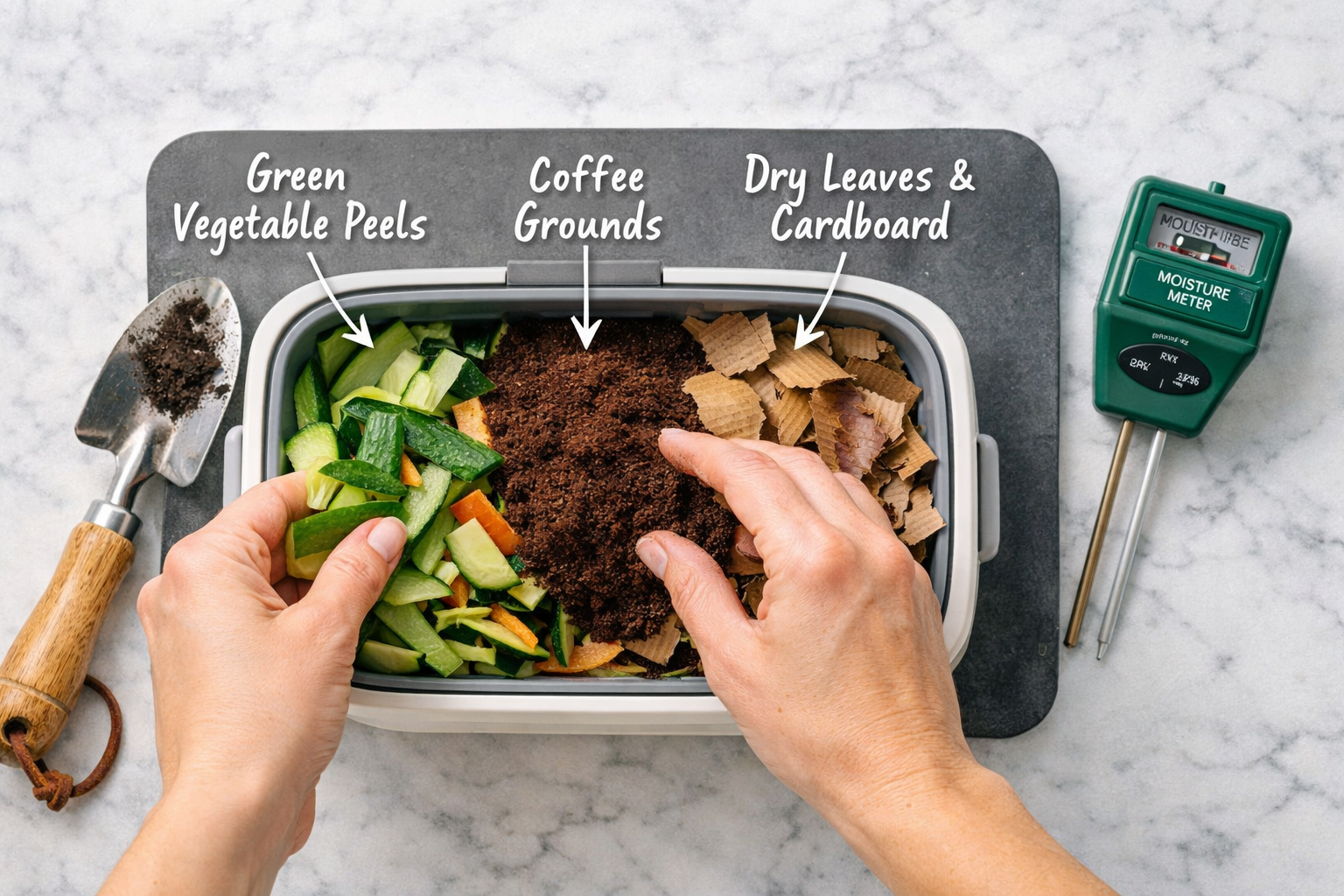
The 2:1 carbon-to-nitrogen ratio is a useful guideline. For every cup of food scraps (nitrogen/”greens”), add two cups of shredded cardboard or paper (carbon/”browns”). This balance prevents odor and keeps decomposition moving.
How to Compost in a Small Space or Apartment Without Odors
Odor is the number one concern for apartment composters, and it’s almost always preventable. A well-managed system should smell earthy at most, not unpleasant.
The main causes of odor and how to fix them:
- Too wet: Add dry cardboard or paper. Stir or aerate the bin.
- Too much nitrogen (food scraps): Add more browns. Reduce feeding frequency.
- Sealed with no airflow: Check drainage holes. Ensure the lid isn’t completely airtight on a worm bin.
- Wrong materials added: Remove any meat, dairy, or oily scraps immediately.
- Bin too full: Harvest compost more frequently or start a second bin.
If you’re using a Bokashi system and notice a foul smell (rather than a mild vinegary fermentation smell), the seal is likely broken or you’ve added too many scraps at once without enough bran.
For those growing herbs or vegetables indoors, finished compost from any of these systems pairs well with container soil mixes. See our guide to growing food in small spaces for tips on how to use your compost effectively.
How to Use Finished Compost from a Small-Space System
Finished compost from a worm bin looks like dark, crumbly soil and smells like fresh earth. It’s ready when you can no longer identify the original food scraps.
Ways to use it in an apartment or small space:
- Mix into potting soil at a ratio of 1 part compost to 3 parts potting mix for container plants.
- Top-dress existing pots by adding a thin layer (about 1 inch) on top of the soil and watering it in.
- Use worm liquid fertilizer (the liquid drained from the bin) diluted 10:1 with water for a quick nutrient boost.
- Share with neighbors or community gardens if you produce more than your plants need.
If you’re growing herbs indoors, finished compost can significantly improve flavor and growth. Our guide to the best herbs for small gardens covers which plants respond best to compost-enriched soil.
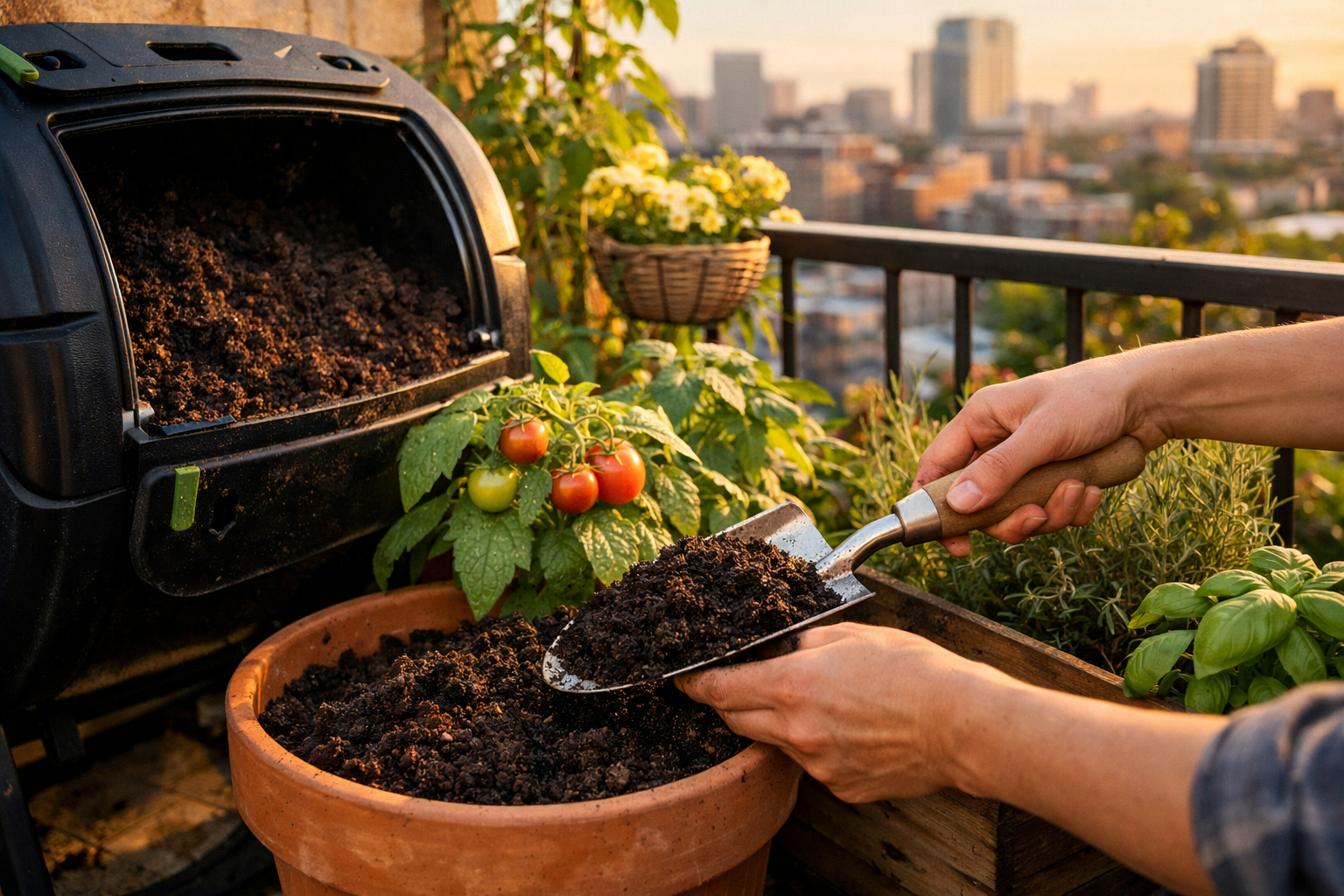
For balcony gardeners, compost works especially well in container setups. Pair it with good drainage and the right pot size for strong results, as covered in our DIY container gardening ideas guide.
Common Mistakes When Composting in a Small Space
Even experienced composters make these errors when switching to a small-space system.
- Starting too large. A 5-gallon bin is often enough for one person. Bigger isn’t better if you can’t maintain the right moisture and feeding balance.
- Ignoring the carbon-to-nitrogen ratio. Most people add too many food scraps and not enough dry material. Keep a bag of shredded paper next to your bin.
- Placing the bin in direct sunlight. Heat kills worms and speeds up odor in any system. Keep bins in a cool, shaded spot.
- Giving up after one bad week. A smelly or slow bin usually needs one small adjustment, not a complete restart.
- Not harvesting compost regularly. Worm bins need to be harvested every 2–3 months. Letting finished compost sit too long reduces bin performance.
For more on avoiding beginner errors in small-space growing, see our article on beginner mistakes in small space gardening.
FAQ: How to Compost in a Small Space or Apartment
Q: Can I compost in an apartment with no outdoor space at all?
Yes. Worm bins and Bokashi buckets are designed for fully indoor use. Both can sit in a kitchen, closet, or under a sink with no outdoor access needed.
Q: How long does apartment composting take?
Vermicomposting produces usable compost in 2–3 months. Bokashi ferments scraps in 2 weeks, but the pre-compost needs additional breakdown before use. Electric composters finish in 24–48 hours.
Q: Will my apartment smell like compost?
Not if the system is managed correctly. A healthy worm bin smells like soil. A sealed Bokashi bucket has a mild vinegar scent at most. Odor almost always signals a fixable imbalance, not an unavoidable problem.
Q: How many worms do I need to start?
Start with 1 pound of red wigglers for a single-person household. That’s roughly 800–1,000 worms. They reproduce on their own, so the population self-regulates over time.
Q: Can I compost in winter if my balcony gets cold?
Worm bins should be kept above 50°F (10°C). Move the bin indoors during cold months. Tumblers on a balcony slow down significantly below 55°F but don’t stop completely.
Q: Is apartment composting allowed by landlords?
Most landlords have no objection to indoor worm bins or Bokashi systems since they’re contained and odorless. Check your lease if you plan to use a balcony tumbler, as some buildings restrict items on balconies.
Q: What’s the cheapest way to start composting in an apartment?
A DIY worm bin made from a plastic storage tote costs around $10–$15 for the bin, plus $25–$40 for worms. Total startup cost is under $60, with no ongoing expenses beyond occasional bedding material.
Q: Can I compost coffee grounds in a worm bin?
Yes, in moderation. Coffee grounds are acidic, so limit them to about 20% of total food scraps by volume. Worms tolerate them well at that level.
Conclusion: Start Small, Stay Consistent
Learning how to compost in a small space or apartment is less about having the right setup and more about choosing one method and sticking with it. A worm bin under the kitchen sink or a Bokashi bucket on the counter can divert a significant portion of your household food waste from landfill, while producing a resource that directly benefits your indoor or balcony garden.
Your next steps:
- Decide which method fits your space and food habits (worm bin, Bokashi, or electric composter).
- Order your supplies or build a DIY bin this week.
- Start with small amounts of scraps and scale up as you get comfortable.
- Use your finished compost to feed container plants, herbs, or balcony vegetables.
If you’re ready to put that compost to work, explore our guides on small balcony vegetable garden ideas and indoor gardening for small homes and apartments to see exactly where homemade compost makes the biggest difference.
Composting in a small space isn’t a compromise. Done right, it’s one of the most efficient and satisfying things you can do for your plants and your household.
References
- U.S. Environmental Protection Agency. (2023). Composting at Home. EPA.gov. https://www.epa.gov/recycle/composting-home
- Cornell Waste Management Institute. (2011). Vermicomposting: Composting with Worms. Cornell University.
- Rynk, R. (Ed.). (1992). On-Farm Composting Handbook. Northeast Regional Agricultural Engineering Service.
- Teague, I. (2019). The Urban Farmer’s Handbook. Storey Publishing.