How to Start Seeds Indoors in Small Spaces
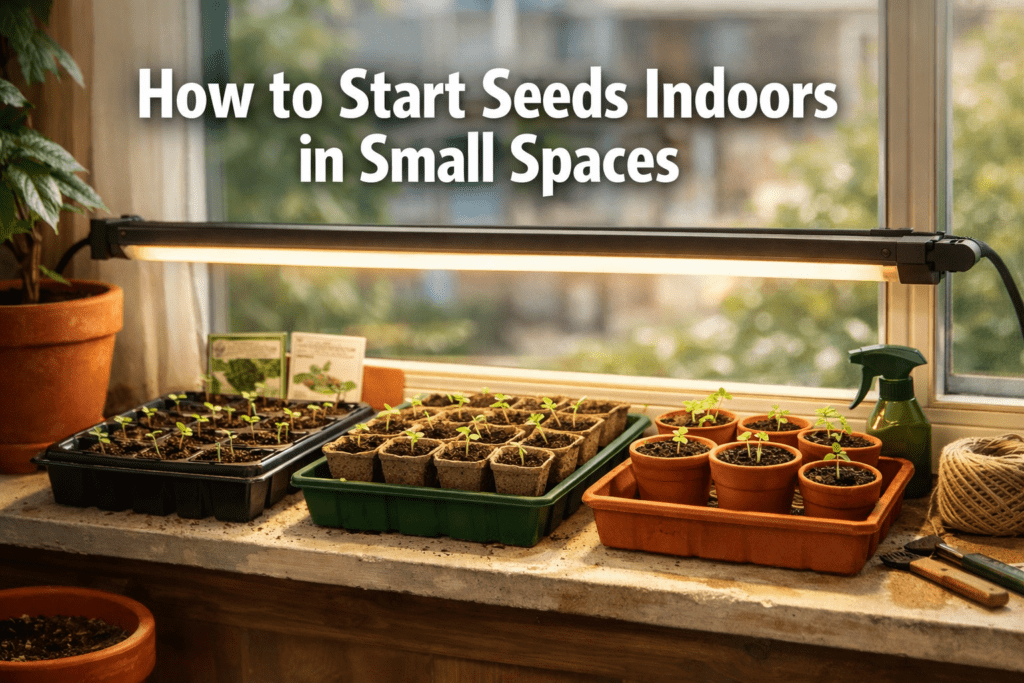
Quick Answer: You can start seeds indoors in small spaces using compact seed trays, a basic grow light, and a quality seed-starting mix — no garden or spare room required. A single shelf, a windowsill, or even a corner of a kitchen counter is enough space to grow dozens of seedlings successfully. The key is choosing the right containers, providing adequate light, and managing moisture carefully from day one.
Key Takeaways
- A 2-foot by 1-foot shelf space is enough to start 50+ seedlings using cell trays or recycled containers.
- Seed-starting mix (not regular potting soil) is essential for healthy germination.
- South-facing windows work in a pinch, but a grow light produces faster, stronger seedlings.
- Most vegetable and herb seeds germinate best between 65°F and 75°F (18°C–24°C).
- Overwatering is the most common beginner mistake — bottom watering prevents damping off.
- Seedlings need 14–16 hours of light per day under artificial lighting.
- Hardening off (gradually exposing seedlings to outdoor conditions) is a non-negotiable final step before transplanting.
- Starting seeds indoors saves money and gives you access to varieties not sold as transplants.
Why Small-Space Seed Starting Works Better Than Most People Think
Starting seeds indoors in a small space is genuinely practical — not just a workaround. You don’t need a greenhouse or a dedicated grow room. A single wire shelf with one grow light can produce enough tomato, pepper, herb, and flower seedlings for a full season of container or balcony gardening.
The biggest barrier for most beginners isn’t space — it’s not knowing what to prioritize. Once you understand the three non-negotiables (light, warmth, and moisture control), the rest is straightforward.
For more ideas on maximizing limited growing areas, our small space garden hacks guide covers creative setups that work in apartments and studios.
What Equipment Do You Actually Need to Start Seeds Indoors?
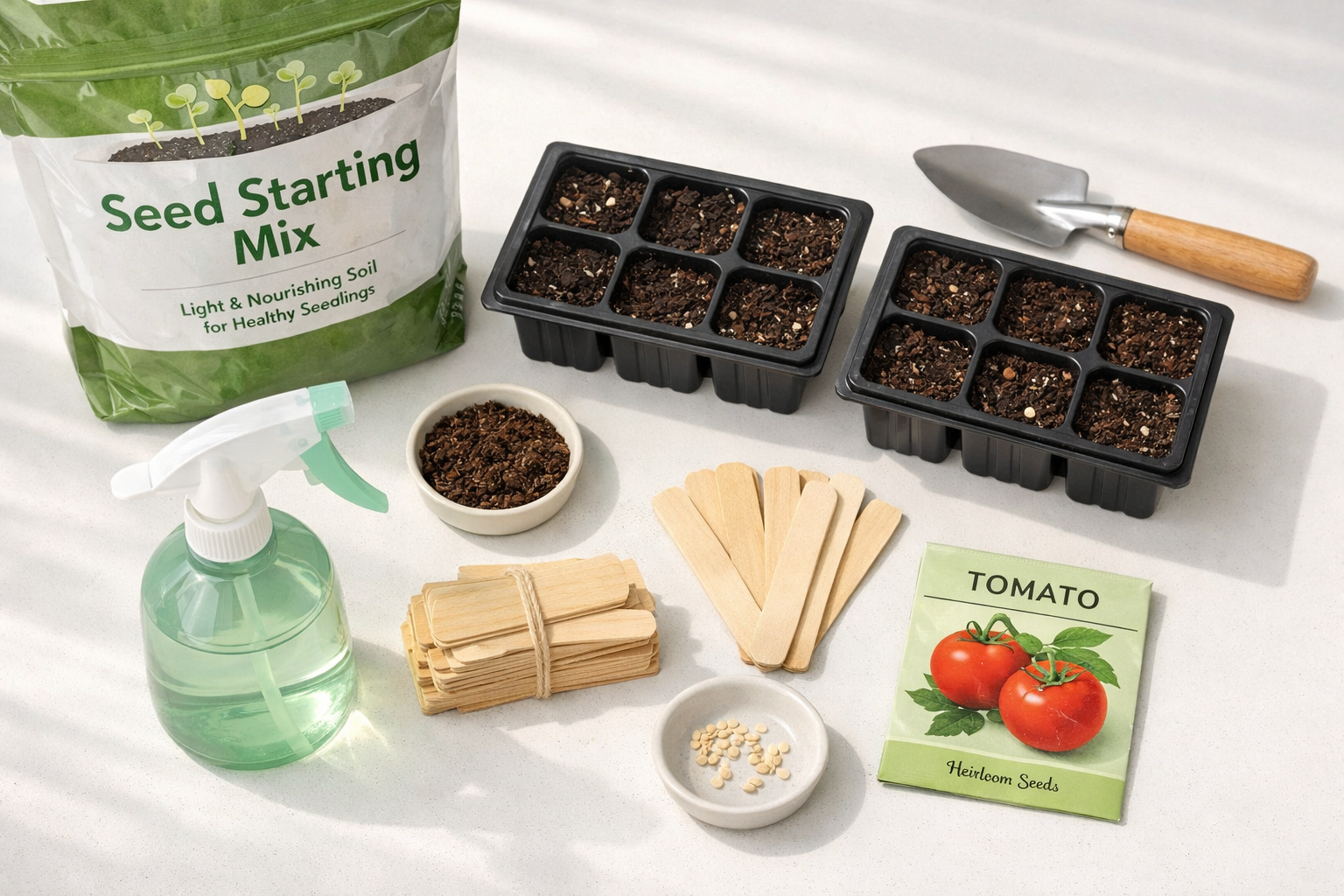
You need five core items: seed trays or small containers, seed-starting mix, a light source, a spray bottle or watering tray, and plant labels. Everything else is optional.
The essentials, broken down:
| Item | Budget Option | Better Option |
|---|---|---|
| Containers | Egg cartons, yogurt cups | 6-cell or 72-cell seed trays |
| Growing medium | Peat-based seed starter | Coco coir blend with perlite |
| Light | South-facing window | Full-spectrum LED grow light |
| Watering | Spray bottle | Shallow tray for bottom watering |
| Labels | Tape + marker | Wooden or plastic plant stakes |
Common mistake: Using regular potting soil for seeds. It’s too dense, holds too much water, and can introduce pathogens. Seed-starting mix is lighter and sterile — that matters a lot for germination rates.
For container selection help, see our guide on the best pots for indoor plants and what to look for in drainage and material.
How to Start Seeds Indoors in Small Spaces: Step-by-Step
This process works whether you have a windowsill, a single shelf, or a corner of a spare room.
Step 1: Choose your containers. Cell trays (6-cell or 72-cell) are the most space-efficient option. For a very tight setup, 72-cell trays let you start dozens of plants in a footprint smaller than a laptop.
Step 2: Fill with seed-starting mix. Moisten the mix before filling — it should feel like a wrung-out sponge. Fill cells to just below the rim.
Step 3: Sow seeds at the right depth. A general rule: plant seeds at a depth equal to twice their diameter. Tiny seeds like basil go on the surface; larger seeds like squash go about half an inch deep.
Step 4: Label everything immediately. Seedlings look identical for weeks. Label before you forget.
Step 5: Cover and create warmth. A humidity dome or a piece of plastic wrap holds moisture during germination. Place trays on top of the refrigerator or use a seedling heat mat to maintain 70°F–75°F.
Step 6: Move to light once sprouts appear. Remove the dome and get seedlings under light within 24 hours of germination. Delayed light causes leggy, weak stems.
Step 7: Water from the bottom. Set trays in a shallow dish of water for 20–30 minutes, then drain. This encourages roots to grow downward and prevents damping off (a fungal collapse at the soil line).
Step 8: Thin to one seedling per cell. Once seedlings have their first true leaves, snip (don’t pull) the weaker ones. Crowding causes poor airflow and disease.
Our beginner indoor gardening tips guide covers this full process in more detail, including timing charts by plant type.
How Much Light Do Indoor Seedlings Really Need?
Seedlings need 14–16 hours of light per day — more than most windows can provide, especially in winter or in north-facing apartments. A south-facing window in full sun might work for heat-tolerant herbs, but most vegetable seedlings will stretch and weaken without supplemental lighting.
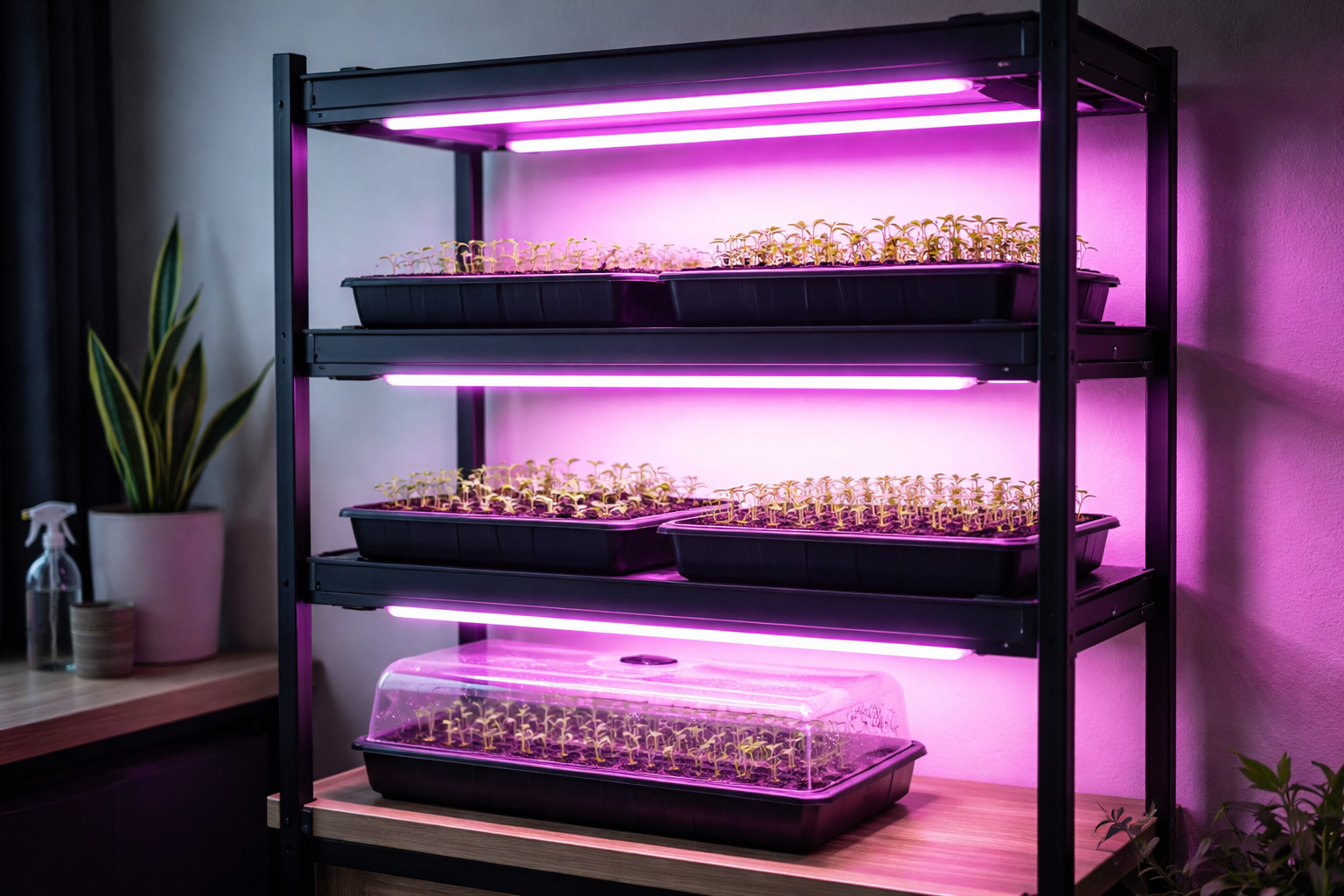
A full-spectrum LED grow light placed 2–4 inches above seedlings solves this completely. Modern LED panels run cool, use minimal electricity, and fit on a single shelf. Set them on a timer to run 15 hours per day and you’re done.
Choose a window if: You’re growing herbs like basil or cilantro, you have a bright south-facing window, and you’re in a southern US climate with strong winter sun.
Choose a grow light if: You’re growing tomatoes, peppers, or flowers; your windows face north or east; or you’re starting seeds in January through March when daylight hours are short.
For setups without natural light at all, our guide on indoor gardening without sunlight walks through grow light options and placement strategies.
Which Seeds Are Best for Small-Space Indoor Starting?
The best seeds to start indoors in small spaces are those with long growing seasons (tomatoes, peppers, eggplant), delicate transplant needs (basil, flowers), or high cost as nursery transplants. Fast-growing crops like radishes and lettuce are better sown directly outdoors.
Best candidates for indoor starting:
- Tomatoes — start 6–8 weeks before last frost
- Peppers — start 8–10 weeks before last frost (slow germinators)
- Basil and herbs — start 4–6 weeks before transplanting
- Flowers (marigolds, zinnias, petunias) — start 6–8 weeks out
- Brassicas (broccoli, cabbage, kale) — start 4–6 weeks before last frost
For herb-specific advice, the indoor herb garden setup guide covers which herbs thrive from seed versus cuttings.
How to Manage Space When Starting Seeds Indoors in Small Spaces
The key to managing space is vertical stacking and a strict succession schedule — not trying to grow everything at once. A two-tier wire shelf with one grow light per tier doubles your capacity without adding floor space.
Space-saving strategies that actually work:
- Stack trays vertically on wire shelving with grow lights mounted under each shelf.
- Use 72-cell trays instead of 4-inch pots for the first 4–6 weeks.
- Succession sow every 2–3 weeks so you’re not germinating everything simultaneously.
- Move seedlings to a windowsill once they’re established and free up the grow light shelf for new batches.
- Recycle household containers — yogurt cups, egg cartons, and takeout containers all work with drainage holes added.
Our space-saving garden ideas guide has more vertical and compact setups worth exploring.
Common Mistakes When Starting Seeds Indoors (And How to Fix Them)
Most seed-starting failures come from four problems: overwatering, insufficient light, sowing too early, and skipping hardening off. Each one is easy to fix once you know what to watch for.
- Overwatering: Seedlings wilt or collapse at the soil line (damping off). Fix: bottom water only, ensure good drainage, improve airflow with a small fan.
- Leggy seedlings: Stems are long and weak, leaves are small. Fix: move light source closer (2–4 inches above leaves) or increase daily light hours.
- Sowing too early: Seedlings outgrow their cells before outdoor conditions are safe. Fix: count back from your last frost date and start on schedule.
- Skipping hardening off: Transplants shock and die when moved directly outdoors. Fix: spend 7–10 days gradually exposing seedlings to outdoor sun, wind, and temperature before planting out.
For a broader look at what goes wrong in indoor growing, our indoor gardening mistakes guide covers these and a dozen more pitfalls.
Also worth reading: how long seedlings can stay in seed trays before they need to move up to larger containers.
How to Transition Seedlings Outdoors From a Small Indoor Setup
Hardening off is the process of gradually exposing indoor-grown seedlings to outdoor conditions over 7–14 days before transplanting. Skipping this step is one of the most common reasons healthy seedlings die after moving outside.
Basic hardening off schedule:
- Days 1–3: Place seedlings outside in a shaded, sheltered spot for 1–2 hours. Bring back inside.
- Days 4–6: Increase to 3–4 hours, introduce some indirect sun.
- Days 7–10: Leave outside for 6–8 hours in morning sun, bring in at night.
- Days 11–14: Leave outside overnight if temperatures stay above 50°F.
- Transplant day: Move to final containers or garden beds.
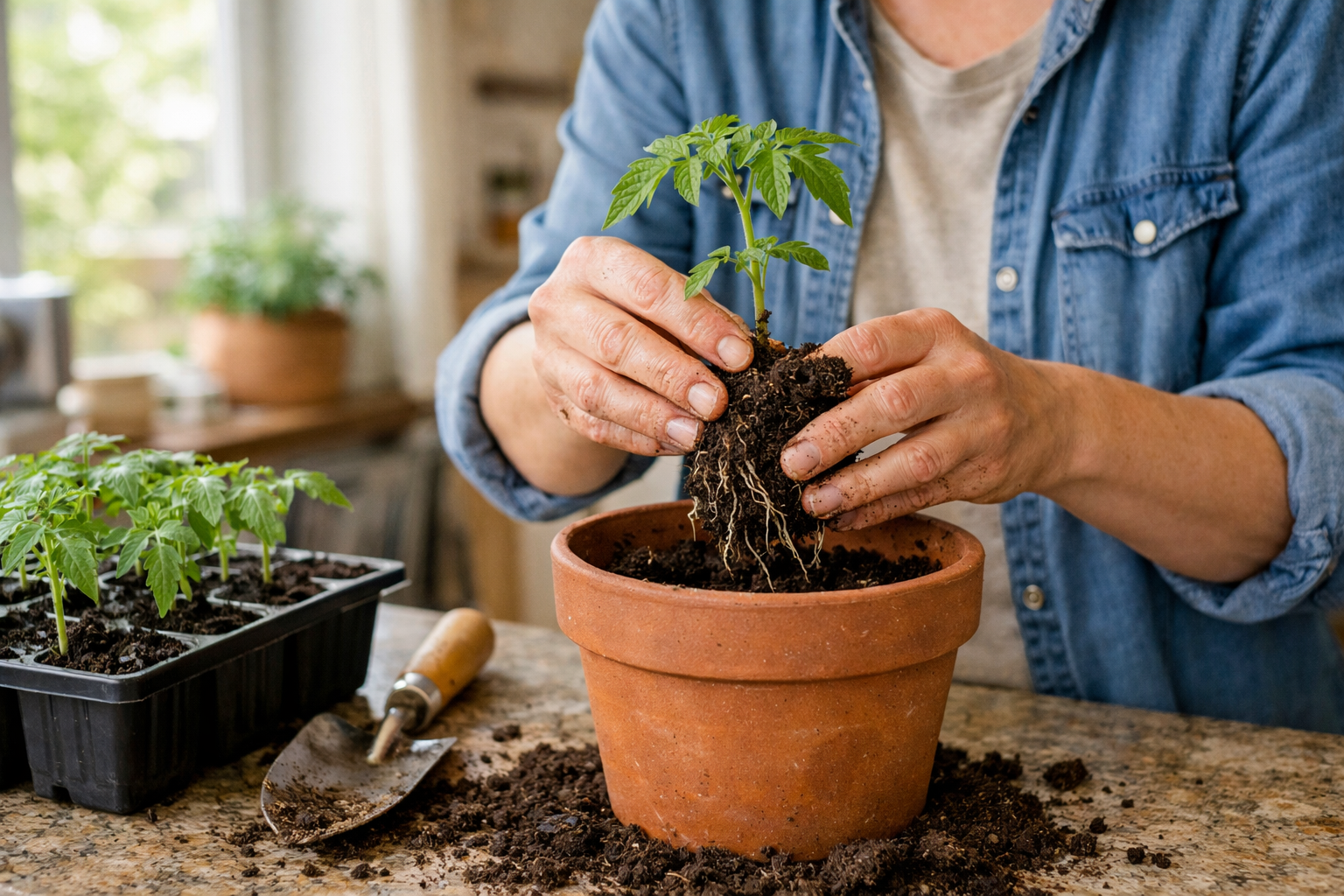
Once your seedlings are ready for outdoor containers, the DIY container gardening ideas guide has practical setup options for balconies and patios.
FAQ: How to Start Seeds Indoors in Small Spaces
Q: Can I start seeds indoors without a grow light?
Yes, but only reliably if you have a bright, south-facing window and you’re growing herbs or cool-season crops. For tomatoes and peppers, a grow light produces significantly stronger seedlings.
Q: What’s the minimum space needed to start seeds indoors?
A single shelf measuring roughly 2 feet wide by 1 foot deep is enough to hold two standard 10×20 seed trays — that’s space for 72–144 seedlings depending on cell size.
Q: How often should I water seedlings indoors?
Check moisture daily by pressing a finger into the top of the soil. Water when the top half-inch feels dry. Bottom watering every 2–3 days is usually sufficient for most setups.
Q: What temperature do seeds need to germinate?
Most vegetable seeds germinate best between 65°F and 75°F (18°C–24°C). Peppers prefer the higher end (75°F–85°F). A seedling heat mat helps if your space runs cool.
Q: Can I reuse seed trays from last year?
Yes — wash them with a diluted bleach solution (1 part bleach to 9 parts water), rinse well, and let them dry completely before reuse. This prevents disease carryover.
Q: Why are my seedlings falling over?
This is almost always damping off, a fungal disease caused by overwatering and poor airflow. Improve drainage, reduce watering frequency, and run a small fan near seedlings for 1–2 hours per day.
Q: When should I start seeds indoors?
Count back from your local last frost date. Most vegetables need 6–8 weeks indoors; peppers need 8–10 weeks. Your local cooperative extension office publishes frost dates for your area.
Q: Do I need to fertilize seedlings?
Not until the first true leaves appear (the second set of leaves). After that, use a diluted liquid fertilizer at half strength once a week. Seed-starting mix has little to no nutrients, so feeding matters once seedlings are established.
Conclusion: Your Next Steps for Small-Space Seed Starting
Starting seeds indoors in small spaces is one of the highest-return gardening skills you can develop. It costs far less than buying transplants, gives you access to a wider variety of plants, and lets you get a head start on the growing season regardless of where you live.
Here’s what to do next:
- Pick 2–3 crops to start with — tomatoes, basil, and one flower are a great first batch.
- Order a bag of seed-starting mix and a basic 72-cell tray.
- Set up your light source (even a single LED panel makes a big difference).
- Mark your last frost date on a calendar and count back to find your start date.
- Sow, label, and water from the bottom — then watch what happens.
Small spaces are not a limitation. They’re just a different kind of setup. With the right approach, a windowsill or a single shelf can produce more seedlings than most home gardeners need.
References
- University of Minnesota Extension. Starting Seeds Indoors. University of Minnesota. https://extension.umn.edu/vegetables/starting-seeds-indoors (2021)
- Clemson Cooperative Extension. Starting Seeds Indoors. Clemson University. https://hgic.clemson.edu/factsheet/starting-seeds-indoors/ (2020)
- Penn State Extension. Seed Starting Basics. Penn State University. https://extension.psu.edu/seed-starting-basics (2022)
- National Gardening Association. Seed Starting Guide. https://garden.org/learn/articles/view/3027/ (2019)