Square Foot Gardening Guide for Small Spaces
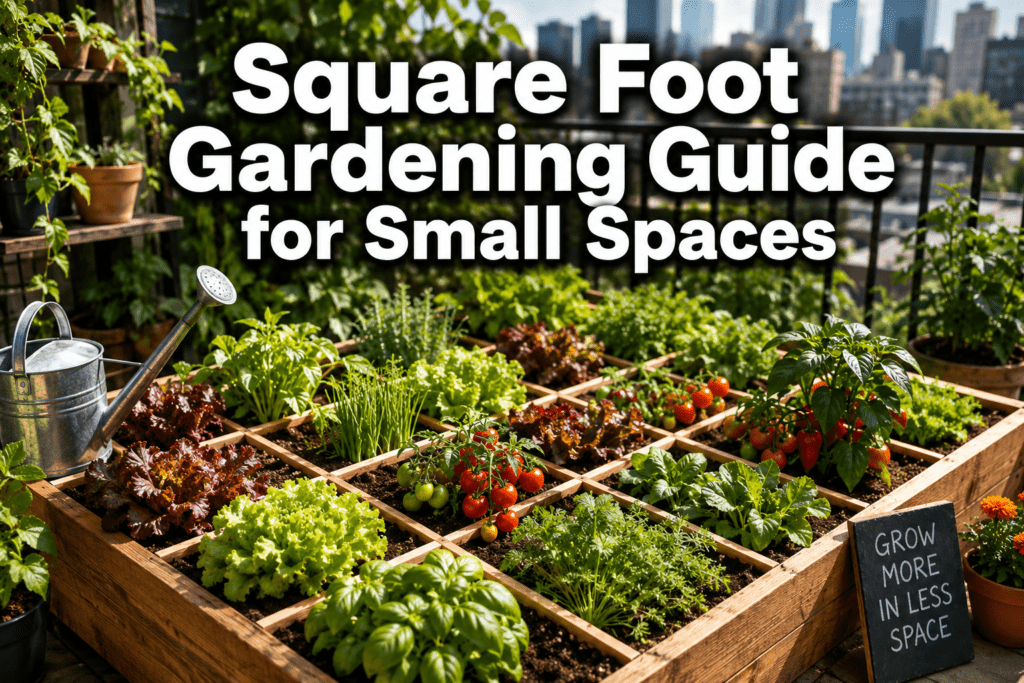
Quick Answer: Square foot gardening is a high-density planting method that divides a raised bed into one-foot grid squares, each planted with a specific number of crops based on their size. It produces significantly more food per square foot than traditional row gardening and works well on balconies, patios, rooftops, and small urban yards. A single 4×4-foot bed is enough to start growing fresh vegetables in 2026, even with no prior gardening experience.
Key Takeaways
- Square foot gardening divides growing space into a grid of one-foot squares, with each square holding a set number of plants based on crop size.
- A 4×4-foot raised bed (16 square feet) is the standard starter size and fits on most balconies or patios.
- The recommended soil mix is one-third compost, one-third peat moss or coconut coir, and one-third coarse vermiculite, known as “Mel’s Mix.”
- Startup costs for a basic square foot garden range from roughly $50 to $150, depending on materials and whether you build or buy a raised bed frame.
- Best beginner crops include lettuce, radishes, herbs, spinach, green onions, and cherry tomatoes.
- Square foot gardening uses less water, fewer weeds, and less physical effort than traditional row gardening.
- Apartments with limited sunlight can still grow shade-tolerant crops like lettuce, mint, and parsley.
- Common beginner mistakes include using regular garden soil, skipping the grid, and overcrowding plants.
What Exactly Is Square Foot Gardening and How Does It Work
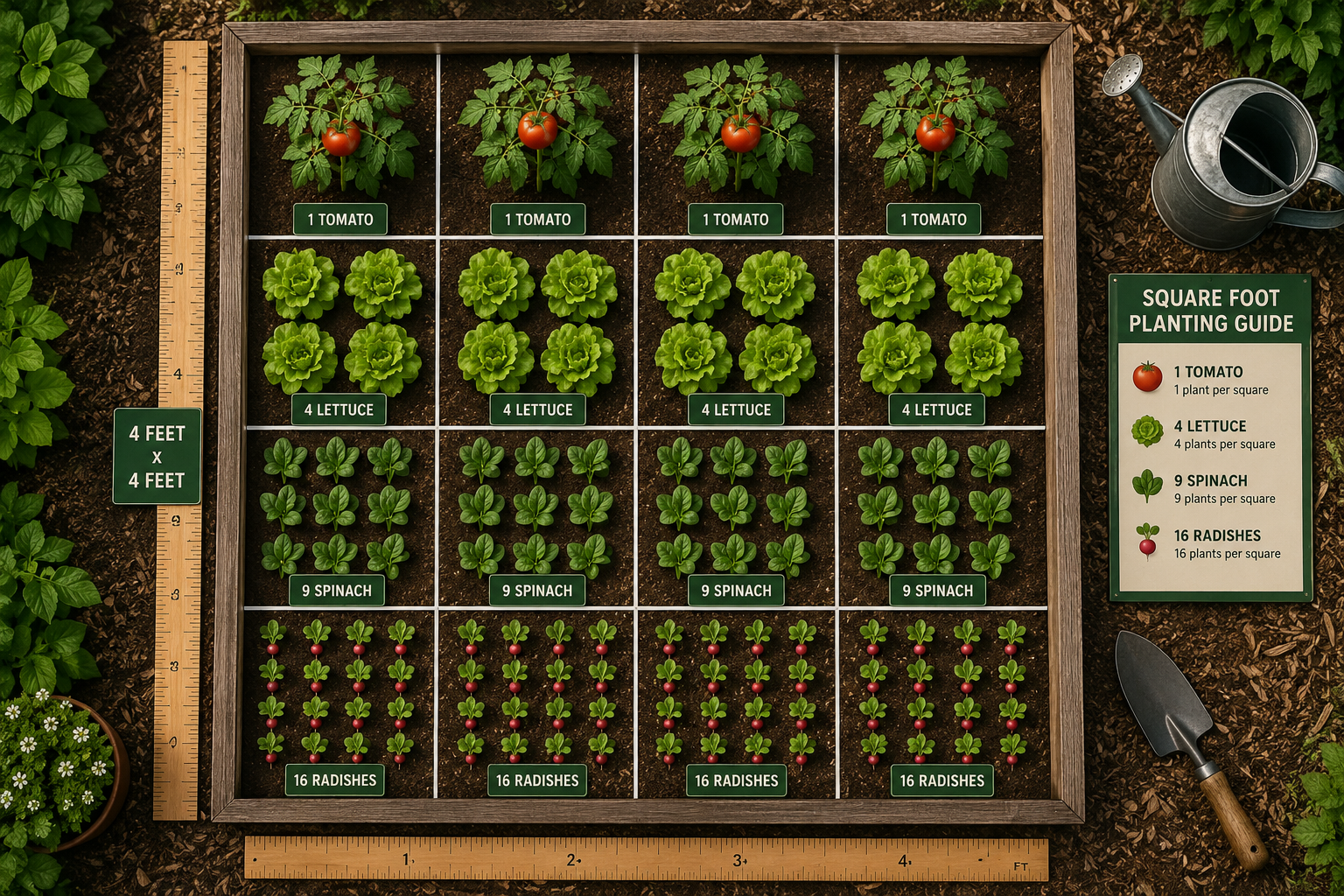
Square foot gardening is a compact planting system developed by Mel Bartholomew in the 1980s. The core idea is simple: divide a raised bed into a grid of one-foot squares, then plant each square with a specific number of plants based on how much space that crop naturally needs.
Here is how the spacing works in practice:
- 1 plant per square: large crops like tomatoes, peppers, broccoli, or cabbage
- 4 plants per square: medium crops like lettuce, Swiss chard, or basil
- 9 plants per square: smaller crops like spinach, beets, or bush beans
- 16 plants per square: tiny crops like radishes, carrots, or green onions
The grid is usually made from thin wooden strips, string, or plastic dividers laid across the top of the raised bed. Each square is treated as its own mini-garden. Once a crop is harvested, that square gets refreshed with a small amount of compost and replanted with something new, a practice called succession planting.
How Much Space Do You Really Need to Start a Square Foot Garden
The minimum viable size for a square foot garden is a single 4×4-foot raised bed, which gives you 16 planting squares. That is enough space to grow a meaningful variety of vegetables for one to two people.
For reference:
- 4×4 feet (16 squares): ideal for beginners, fits most balconies
- 4×8 feet (32 squares): good for a small family or more crop variety
- 4×12 feet (48 squares): suitable for a dedicated patio or backyard corner
Beds are kept to a maximum width of 4 feet so you can reach the center from either side without stepping into the soil. Stepping on the soil compacts it and damages the root structure of your plants, so this rule matters.
Choose a 4×4 bed if you are testing the method for the first time, have a balcony or small patio, or want a low-commitment starting point. Scale up once you know what grows well in your specific conditions.
What Are the Best Vegetables to Grow in a Small Square Foot Garden
The best crops for a small square foot garden are fast-growing, high-yield plants that do not take up much vertical or horizontal space. Leafy greens, herbs, and root vegetables are the top performers for beginners.
Top picks for small-space square foot gardening:
| Crop | Plants per Square | Days to Harvest |
|---|---|---|
| Radishes | 16 | 25-30 days |
| Lettuce (leaf) | 4 | 30-45 days |
| Spinach | 9 | 40-50 days |
| Green onions | 16 | 60-70 days |
| Basil | 4 | 60-70 days |
| Cherry tomatoes | 1 | 60-80 days |
| Dwarf kale | 1 | 55-65 days |
| Bush beans | 9 | 50-60 days |
Avoid sprawling plants like pumpkins, watermelons, or full-size zucchini unless you have vertical trellis support and at least 4-6 squares to dedicate to them.
How Much Does It Cost to Set Up a Square Foot Garden on a Balcony
A basic square foot garden setup costs between $50 and $150 for a 4×4-foot bed, depending on whether you build or buy the frame and how you source your soil components.
Estimated costs for a 4×4-foot starter setup (2026 estimates):
- Cedar raised bed frame (pre-built or DIY lumber): $30-$70
- Mel’s Mix soil components (compost, vermiculite, peat/coir): $30-$60
- Grid material (string, wood strips): $5-$10
- Seeds or starter plants: $10-$20
Total estimated range: $75-$160
You can reduce costs by sourcing free compost from a local municipality, using recycled wood for the frame, or buying vermiculite in bulk. Fabric grow bags are a cheaper alternative to wood frames and start around $15-$25 for a large size that approximates a 4×4 bed.
Can Square Foot Gardening Work in Apartments with Limited Sunlight
Yes, square foot gardening can work in low-light apartment settings, but crop selection is critical. Most vegetables need 6-8 hours of direct sun per day. If your balcony or windowsill gets only 3-5 hours, you need to focus on shade-tolerant plants.
Crops that grow reasonably well with 3-5 hours of sun:
- Lettuce and salad greens
- Spinach
- Mint, parsley, and chives
- Kale
- Green onions
Crops like tomatoes, peppers, cucumbers, and beans will underperform or fail without at least 6 hours of direct light. If your space gets less than 3 hours of direct sun, a supplemental grow light (full-spectrum LED, 2,000-4,000 lumens) placed 6-12 inches above the plants can bridge the gap for indoor setups.
What Materials Do You Need to Build Raised Beds for Square Foot Gardening
To build a basic square foot garden bed, you need a frame, a soil mix, a grid, and a few basic tools. The frame is the only component that requires some construction.
Frame options:
- Untreated cedar or redwood: naturally rot-resistant, the most recommended wood type
- Composite lumber: longer-lasting but more expensive
- Fabric grow bags: no construction needed, portable, budget-friendly
- Galvanized metal raised beds: durable and modern-looking
Avoid pressure-treated lumber made before 2004, as older formulations contained arsenic. Modern ACQ-treated lumber is considered safer, but many gardeners still prefer untreated cedar for food crops.
Basic tools needed:
- Drill or screwdriver (for wood frames)
- Measuring tape
- String or thin wood strips for the grid
- Trowel for planting
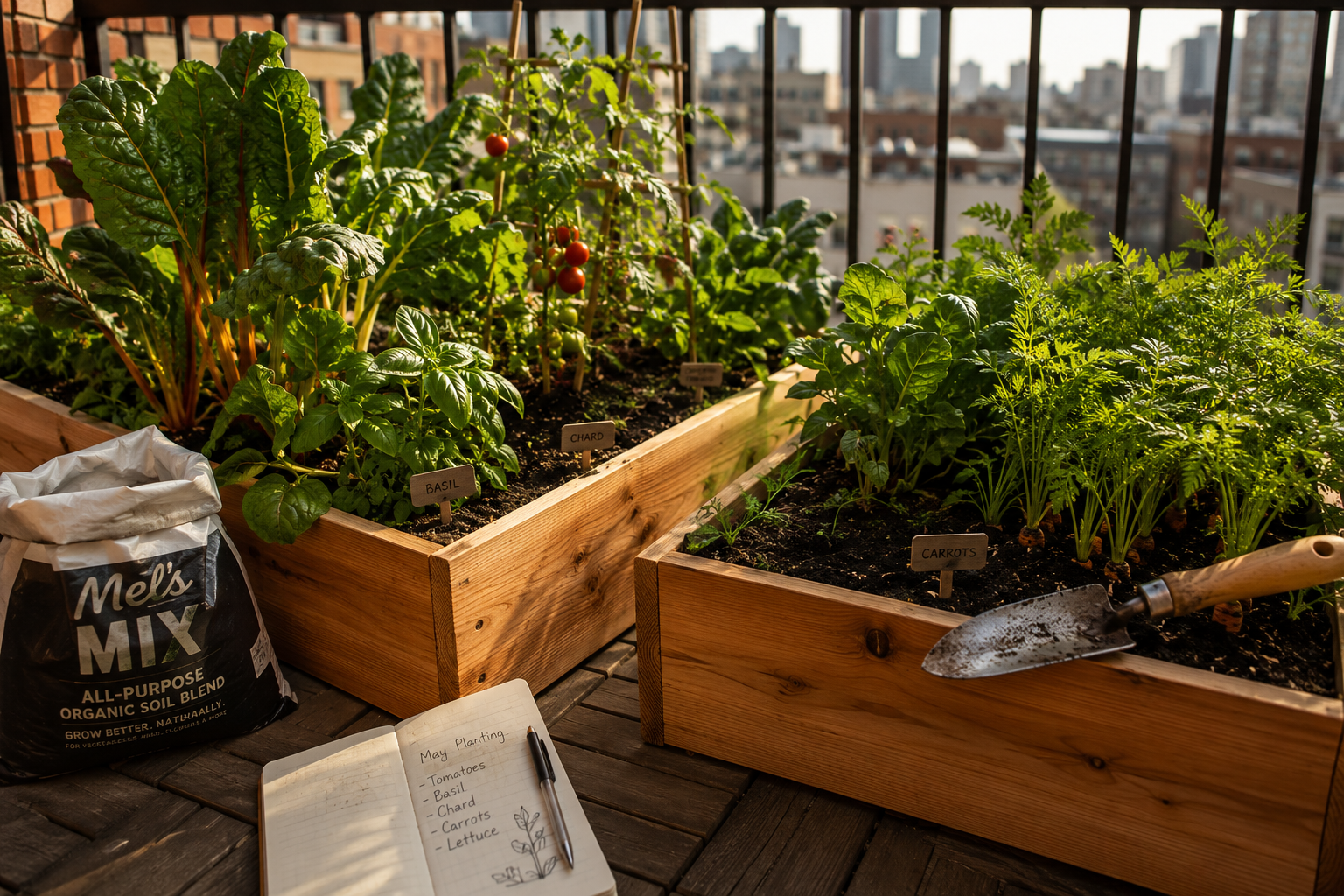
What Soil Mix Should You Use for Square Foot Garden Boxes
The standard mix for square foot gardening is “Mel’s Mix,” named after the method’s creator. It is made from equal parts coarse vermiculite, compost (from multiple sources if possible), and peat moss or coconut coir.
Do not use regular garden soil or potting mix in raised beds. Garden soil compacts heavily in a contained box, which suffocates roots and dramatically reduces yields. Mel’s Mix stays loose, drains well, and holds moisture without becoming waterlogged.
Mel’s Mix ratio:
- 1/3 coarse vermiculite (for drainage and aeration)
- 1/3 blended compost (for nutrients)
- 1/3 peat moss or coconut coir (for moisture retention)
For a 4×4-foot bed that is 6 inches deep, you need approximately 8 cubic feet of total mix. Coconut coir is the more sustainable choice over peat moss, as peat is a slow-renewing resource.
How Is Square Foot Gardening Different from Traditional Row Gardening
Square foot gardening uses roughly 20% of the space that traditional row gardening requires to produce a comparable amount of food, according to Mel Bartholomew’s original research published in his 1981 book. Traditional row gardening spaces plants far apart with wide walking paths between rows, which wastes both soil and water.
Key differences:
| Factor | Square Foot Gardening | Traditional Row Gardening |
|---|---|---|
| Space efficiency | High | Low |
| Water use | Lower | Higher |
| Weeding effort | Minimal | Significant |
| Soil compaction | None (no walking in bed) | Common |
| Best for | Small spaces, beginners | Large plots, farm-scale |
| Setup cost | Moderate (raised bed needed) | Low (open ground) |
Square foot gardening also makes crop rotation and succession planting easier because each square is managed independently.
Common Mistakes Beginners Make with Square Foot Gardening
The most common beginner mistake is using regular garden soil or cheap potting mix instead of Mel’s Mix. The second most common error is ignoring the grid and eyeballing plant spacing, which leads to overcrowding and poor yields.
Other frequent mistakes:
- Planting too many large crops: One tomato plant per square sounds like a lot, but it will fill the space. Planting two means neither thrives.
- Skipping succession planting: Once a crop finishes, replant that square immediately. Empty squares are wasted potential.
- Not accounting for height: Tall crops like tomatoes or trellised beans should go on the north side of the bed (in the Northern Hemisphere) so they do not shade shorter crops.
- Overwatering: Mel’s Mix drains well, but beginners often water on a schedule rather than checking soil moisture first. Stick a finger 2 inches into the soil; if it is dry, water. If it is damp, wait.
- Buying the wrong grid spacing: The grid must be exactly 1-foot squares. Eyeballing it leads to uneven planting density.
Is Square Foot Gardening Good for People with No Gardening Experience
Square foot gardening is one of the most beginner-friendly growing methods available. The grid system removes guesswork from spacing, the raised bed eliminates most weeding, and the small scale keeps the commitment manageable.
A first-time gardener can set up a 4×4 bed in a single afternoon and start seeing sprouts within a week if they plant fast-growing crops like radishes or lettuce. The method is also forgiving: if one square fails, you lose only a small portion of your garden, not an entire row.
The main learning curve is understanding which crops need full sun versus partial shade, and timing plantings around your local frost dates. Both are easy to research with a basic seed packet or a free planting calendar from your local cooperative extension office.
Pros and Cons of Square Foot Gardening Compared to Container Gardening
Square foot gardening and container gardening both work in small spaces, but they serve different needs. Square foot gardening in a raised bed gives plants more root room and retains moisture better. Container gardening is more flexible and portable but requires more frequent watering and fertilizing.
Pros of square foot gardening over containers:
- Larger soil volume means more stable moisture and temperature
- Easier to grow root vegetables like carrots and beets
- Lower long-term maintenance once the bed is established
- More cost-effective per plant when growing multiple crops
Cons compared to containers:
- Less portable (a filled raised bed is heavy)
- Higher upfront setup cost
- Requires more space than a single container
Choose square foot gardening if you have a fixed outdoor space and want to grow a variety of crops with minimal daily effort. Choose containers if you rent, move frequently, or need to bring plants indoors during cold snaps.
Conclusion
A square foot gardening guide for small spaces is not just theory. It is a proven, practical system that lets you grow real food in real constraints, whether that is a 40-square-foot balcony or a shaded apartment patio.
Your next steps:
- Measure your available outdoor space and decide on a 4×4 or 4×8-foot bed size.
- Source your materials: a cedar frame or fabric grow bag, plus the three components of Mel’s Mix.
- Choose 4-6 beginner-friendly crops suited to your light conditions.
- Build the grid before planting so spacing stays accurate from day one.
- Start a simple journal noting what you planted, when, and how it performed. That data will make your second season significantly more productive.
The barrier to entry is low. A 4×4 raised bed, the right soil mix, and a handful of seeds are genuinely all you need to start producing food in 2026, regardless of how small your space is.
Frequently Asked Questions
How deep should a square foot garden bed be?
A minimum depth of 6 inches works for most leafy greens and herbs. For root vegetables like carrots or beets, aim for 12 inches. Twelve inches is the standard recommendation for a versatile all-purpose bed.
Can I use a square foot garden on a rooftop?
Yes, but check the weight load capacity of your rooftop first. A filled 4×4-foot bed that is 6 inches deep weighs approximately 200-300 pounds. Fabric grow bags are lighter and spread weight more evenly.
How often do I need to water a square foot garden?
In warm weather, most square foot gardens need watering every 1-2 days. Check soil moisture 2 inches deep before watering. Mulching the surface with straw or shredded leaves significantly reduces watering frequency.
Do I need to fertilize a square foot garden?
If you start with a proper Mel’s Mix that includes rich compost, you typically do not need to fertilize in the first season. Add a small handful of fresh compost to each square after harvesting a crop to replenish nutrients.
Can I do square foot gardening indoors?
Yes, with a full-spectrum grow light providing at least 14-16 hours of light per day. Compact crops like lettuce, herbs, and microgreens work best indoors. Fruiting plants like tomatoes are difficult to grow indoors without strong supplemental lighting.
What is the best wood to use for a square foot garden frame?
Untreated cedar is the top choice because it resists rot naturally and is safe for food crops. Redwood is also excellent but harder to find in many regions. Avoid pine without treatment, as it degrades quickly in soil contact.
How many square foot garden beds do I need to feed a family of four?
As a rough estimate, a 4×8-foot bed (32 squares) planted with high-yield crops and succession-planted throughout the season can supplement, but not fully replace, grocery shopping for one person. A family of four would need approximately four to six 4×8-foot beds for a meaningful portion of their vegetable intake.
Do I need to replace the soil every year?
No. Top off each square with a small amount of fresh compost after each harvest. The full Mel’s Mix base can last several seasons before needing significant refreshing.
References
- Bartholomew, Mel. Square Foot Gardening. Rodale Press, 1981.
- Bartholomew, Mel. All New Square Foot Gardening. Cool Springs Press, 2013.
- University of Missouri Extension. “Raised Bed Gardening.” University of Missouri, 2020. https://extension.missouri.edu/publications/g6985