Container gardening on a weight-limited terrace or apartment floor
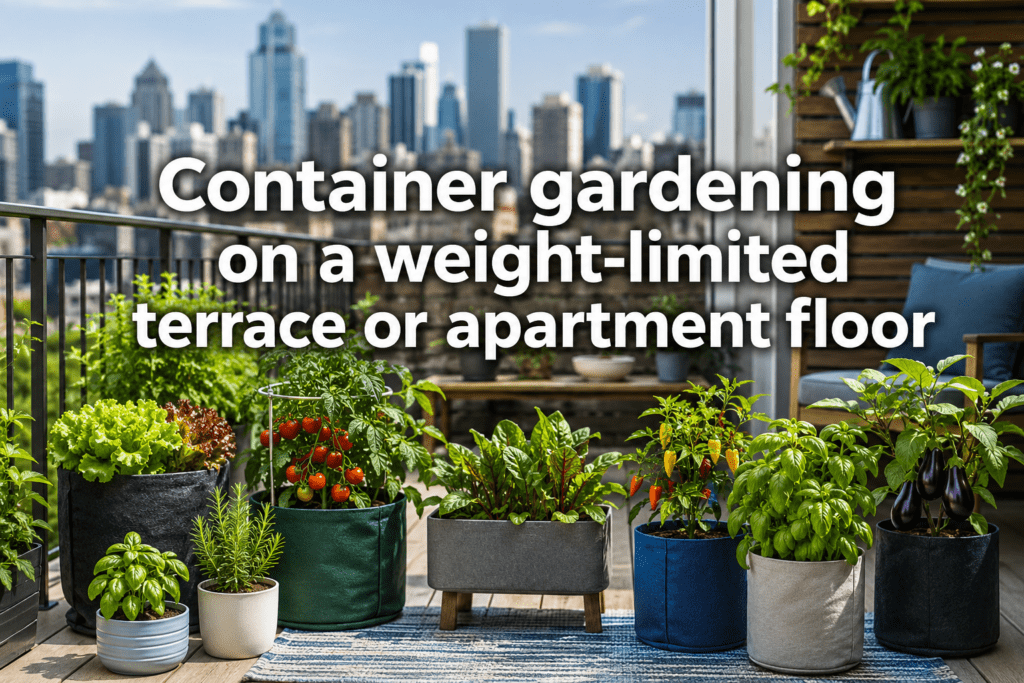
Many urban dwellers dream of fresh produce and vibrant greenery, but the challenge of container gardening on a weight-limited terrace or apartment floor often seems insurmountable. The good news is that with careful planning and smart material choices, a thriving container garden is absolutely achievable, even in spaces with strict weight restrictions. This guide provides practical strategies for selecting lightweight containers, appropriate soil, and suitable plants to ensure both structural integrity and gardening success.
Key Takeaways
- Always determine your balcony or terrace’s load capacity before planning your garden.
- Prioritize lightweight containers such as fabric grow bags, plastic, and fiberglass over heavy materials like terracotta or concrete.
- Use specialized lightweight potting mixes, often including coco coir or perlite, to significantly reduce total weight.
- Select compact, shallow-rooted vegetables and herbs that thrive in smaller pots and require less soil.
- Distribute weight evenly across the entire terrace or balcony surface, avoiding concentrated loads.
- Consider vertical gardening solutions to maximize growing space while minimizing floor load.
- Regularly monitor moisture levels, as lightweight soils can dry out faster.
- Avoid adding unnecessary decorative elements that contribute to overall weight.
- Start small and gradually expand your garden as you become more familiar with your space’s limitations.
How Much Weight Can My Apartment Balcony Actually Hold for Garden Containers?
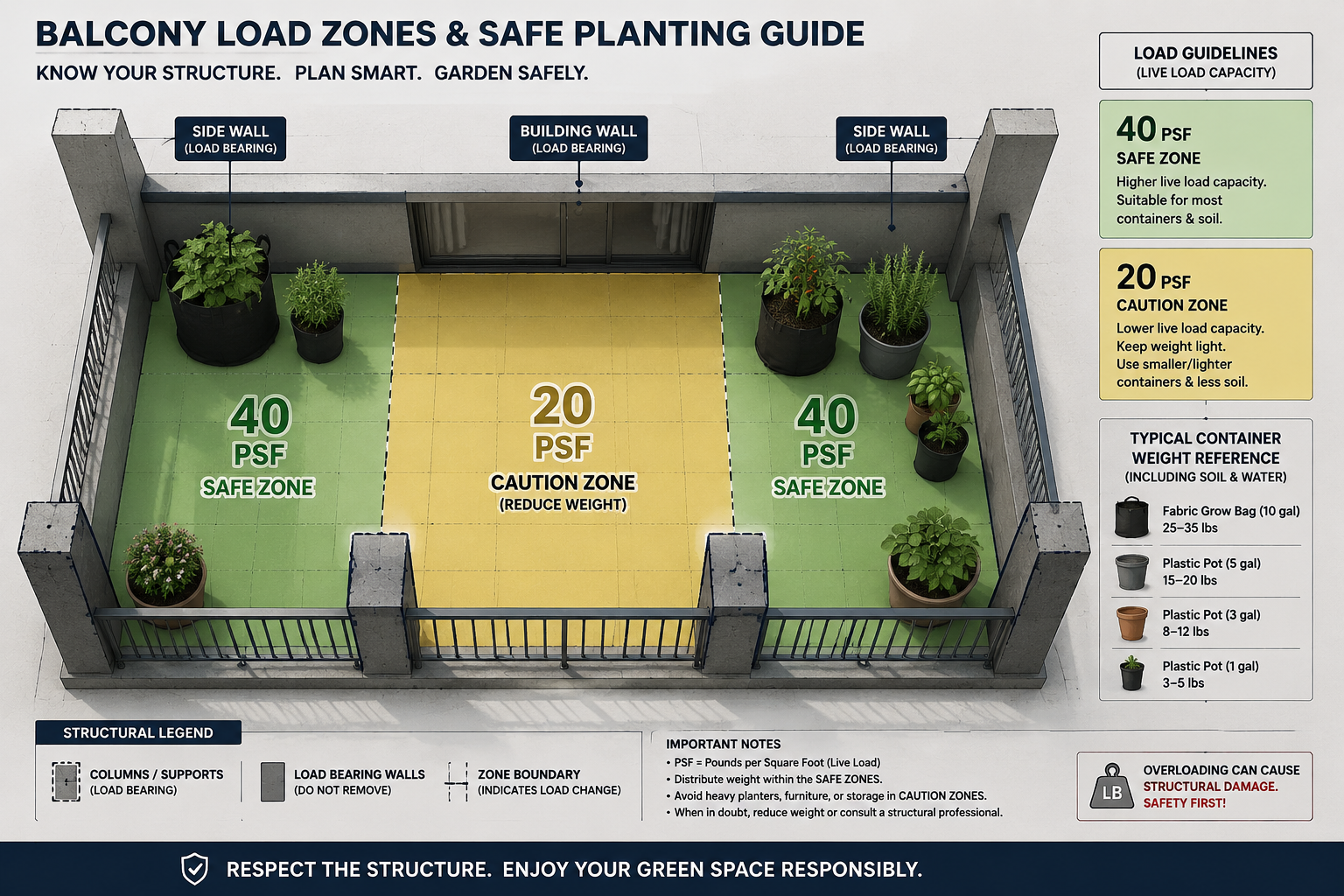
Your apartment balcony’s actual weight capacity for garden containers is typically determined by its design specifications and local building codes, usually expressed in pounds per square foot (PSF). Residential balconies in the United States are often designed to support a minimum live load of 40-60 PSF, but this can vary significantly based on the building’s age, construction, and specific engineering. It is crucial to consult your building management, landlord, or original construction plans for precise figures before setting up a garden.
The “live load” refers to the variable weight a structure can safely support, including people, furniture, and, critically, your garden containers filled with wet soil and plants. Exceeding this limit can compromise structural integrity and poses a significant safety risk. If specific documentation is unavailable, assume a conservative estimate or seek professional advice from a structural engineer, especially for older buildings. When planning for container gardening on a weight-limited terrace or apartment floor, understanding and respecting this maximum load is your first and most important step.
What Are the Lightest Types of Garden Containers for Small Spaces?
The lightest types of garden containers for small, weight-limited spaces are primarily those made from fabric, plastic, or fiberglass. These materials offer excellent drainage, durability, and most importantly, minimal inherent weight compared to traditional options like ceramic or concrete. Opting for these materials is essential for successful container gardening on a weight-limited terrace or apartment floor.
Here’s a breakdown of lightweight options:
- Fabric Grow Bags: These are arguably the lightest containers available, made from breathable, often recycled, geotextile fabric. They promote excellent air circulation to the roots (air-pruning), prevent root circling, and are incredibly flexible and easy to store when not in use. A 10-gallon fabric bag weighs mere ounces when empty.
- Plastic Pots (Polyethylene, Polypropylene): Lightweight, inexpensive, and available in a vast array of sizes, shapes, and colors. While some can degrade under intense UV exposure over many years, modern plastics are increasingly durable. Look for food-grade plastic if growing edibles.
- Fiberglass or Resin Planters: These offer the aesthetic appeal of heavier materials like terracotta or stone but are significantly lighter. They are durable, weather-resistant, and come in various styles, though they tend to be more expensive than plastic or fabric.
- Pressed Peat or Coir Pots: These biodegradable options are very light but have a shorter lifespan, often breaking down within a single growing season. They are great for starting seeds or plants that will eventually be transplanted directly into a larger, more permanent container.
- Self-watering planters: Many self-watering designs use lightweight plastic and can be an excellent choice for consistent moisture, reducing the need for frequent, heavy watering. Our guide on self-watering pots offers more insights.
When choosing, remember that the container’s weight is only part of the equation; the soil and water it will hold are often far heavier.
Which Vegetables Grow Best in Small Containers with Limited Weight?
Compact, shallow-rooted, and vertically growing vegetables thrive best in small containers with limited weight, making them ideal for container gardening on a weight-limited terrace or apartment floor. These plants require less soil volume, reducing the overall weight of each potted setup, and many also mature quickly or have a continuous harvest.
Consider these weight-friendly vegetable options:
- Leafy Greens: Lettuce (especially loose-leaf varieties), spinach, arugula, kale, and Swiss chard are excellent. They have shallow root systems and can be harvested repeatedly. Growing spinach in containers is a popular choice for small spaces.
- Radishes: These quick-growing root vegetables mature in as little as 3-4 weeks and require only shallow pots.
- Herbs: Almost all herbs (basil, mint, cilantro, parsley, thyme, rosemary, chives) are perfect for containers, needing minimal space and soil. An indoor herb garden setup can even extend your growing season.
- Bush Beans: Unlike pole beans, bush varieties don’t need tall trellises, remaining compact and productive.
- Carrots (Dwarf/Round Varieties): Varieties like ‘Paris Market’ or ‘Danvers Half Long’ are well-suited for shallower containers (6-8 inches deep).
- Cherry Tomatoes (Dwarf Varieties): Look for determinate, bush, or dwarf cherry tomato varieties that stay small and produce abundantly without extensive support.
- Peppers (Dwarf/Compact Varieties): Bell peppers, jalapeños, and other chili peppers can be productive in 2-3 gallon pots if you choose compact varieties. Growing chili in pots can yield a flavorful harvest.
- Strawberries: Alpine or everbearing strawberries do well in hanging baskets or smaller pots.
Avoid large, deep-rooted plants like full-size corn, pumpkins, or indeterminate tomatoes, as these demand large, heavy containers and extensive soil volumes. For more ideas on maximizing yields in small spaces, check out space-saving gardening techniques.
How Do I Calculate Soil Weight for Container Gardening?
Calculating soil weight for container gardening is essential for ensuring you stay within your terrace or apartment floor’s weight limits, as wet potting mix can be surprisingly heavy. A general rule of thumb is that dry potting mix weighs approximately 8-12 pounds per cubic foot, but this weight can nearly double to 15-20 pounds per cubic foot (or even more) when fully saturated with water.
To estimate:
- Determine Container Volume: Measure your pot’s capacity in cubic feet. For cylindrical pots, calculate volume using
π * radius² * height. For rectangular pots, uselength * width * height. If your pot’s capacity is in gallons, convert it (1 cubic foot ≈ 7.48 gallons). - Estimate Dry Soil Weight: Multiply the container’s volume (in cubic feet) by the dry potting mix density (e.g., 10 lbs/cubic foot).
- Estimate Wet Soil Weight: Multiply the container’s volume (in cubic feet) by the wet potting mix density (e.g., 18 lbs/cubic foot). This is your critical number, as soil is heaviest when fully watered.
- Add Container and Plant Weight: Don’t forget to factor in the weight of the empty container itself and the mature plant. While plants are relatively light, their combined mass can add up.
Example: A 5-gallon pot is roughly 0.67 cubic feet.
- Dry soil: 0.67 cu ft * 10 lbs/cu ft = 6.7 lbs
- Wet soil: 0.67 cu ft * 18 lbs/cu ft = 12.06 lbs
- Add ~1-2 lbs for a plastic pot and a small plant. Total: ~14-15 lbs.
For a comprehensive guide on soil, see our article on the best soil mix for container gardening.
Are Fabric Grow Bags Lighter Than Ceramic Pots?
Yes, fabric grow bags are significantly lighter than ceramic pots, both when empty and when filled, making them a superior choice for container gardening on a weight-limited terrace or apartment floor. An empty fabric grow bag typically weighs only a few ounces, whereas a ceramic pot of the same volume can weigh several pounds, sometimes even tens of pounds.
The material difference is stark: ceramic (terracotta, glazed pottery) is a dense, heavy material, while fabric grow bags are made from lightweight, breathable geotextile. When filled with soil and water, the inherent weight of the container itself adds directly to the total load. By choosing fabric, you drastically reduce this base weight, allowing you to maximize the number of plants you can grow or allocate more of your weight budget to soil and water. Furthermore, fabric bags offer excellent drainage and air pruning benefits, contributing to healthier root systems and plants.
Can I Do Container Gardening If I Live in an Upstairs Apartment?
Absolutely, you can do container gardening if you live in an upstairs apartment, provided you adhere to the weight limitations of your balcony or floor, prioritize lightweight materials, and select appropriate plants. The primary concern for upstairs apartment gardening is ensuring the structural integrity of your space.
Key considerations for upstairs apartment gardening:
- Understand Weight Limits: This is paramount. Consult your landlord or building management for specific load capacities.
- Choose Light Containers: Opt for fabric grow bags, plastic, or fiberglass.
- Select Lightweight Potting Mix: Use soilless mixes containing coco coir, perlite, and vermiculite to reduce density.
- Distribute Weight: Spread out your containers rather than clustering heavy pots in one spot. Use a dolly or hand truck to move heavy bags of soil.
- Vertical Gardening: Employ vertical planters, hanging baskets, or railing planters to keep weight off the main floor and utilize vertical space. See cheap vertical gardening ideas for inspiration.
- Water Management: Overwatering can significantly increase weight. Ensure good drainage and water efficiently. Consider self-watering planters.
- Choose Small Plants: Focus on herbs, leafy greens, radishes, and dwarf varieties of vegetables.
With careful planning, an upstairs apartment can host a beautiful and productive container garden.
What Mistakes Do Beginners Make with Balcony Container Gardens?
Beginners often make several common mistakes with balcony container gardens, particularly regarding weight and suitability for small spaces. These missteps can lead to structural concerns, plant health issues, or a quickly abandoned gardening project, making careful planning vital for container gardening on a weight-limited terrace or apartment floor.
Common beginner mistakes include:
- Underestimating Weight: Failing to calculate the combined weight of wet soil, heavy pots, and mature plants, potentially exceeding balcony load limits.
- Choosing Heavy Containers: Opting for ceramic, terracotta, or concrete pots without considering their substantial inherent weight.
- Using Garden Soil: Filling containers with dense, heavy garden soil instead of lightweight, well-draining potting mix, which can also lead to compaction and poor drainage.
- Overwatering (and Excess Weight): Consistently saturating pots beyond what’s necessary, adding significant temporary weight and potentially causing root rot.
- Improper Drainage: Using pots without drainage holes or blocking existing ones, leading to waterlogged soil and heavier containers.
- Ignoring Sun Exposure: Planting sun-loving vegetables in shady spots or vice versa, resulting in stunted growth or burnt leaves.
- Overcrowding: Planting too many plants in one container, leading to competition for nutrients and water, and often requiring larger, heavier pots.
- Lack of Maintenance: Neglecting regular watering, fertilizing, or pest checks, which is especially critical in the confined environment of a container. Our balcony garden maintenance tips can help.
- Poor Plant Choices: Selecting large, vining plants (like full-size pumpkins or watermelons) that require huge containers and extensive support structures, which add to the overall weight.
Avoiding these pitfalls will pave the way for a more successful and sustainable balcony garden.
How Much Does a Fully Planted Vegetable Container Weigh?
The weight of a fully planted vegetable container varies widely but can range from under 10 pounds for a small herb pot to over 100 pounds for a large, water-saturated container growing a bigger vegetable. This substantial variability underscores why careful calculation is crucial for container gardening on a weight-limited terrace or apartment floor.
Factors influencing total weight:
- Container Material: A 5-gallon plastic pot weighs significantly less than a 5-gallon ceramic pot.
- Soil Type: Standard potting mix is lighter than garden soil. Adding amendments like perlite or coco coir reduces weight further.
- Water Content: Saturated soil can be almost twice as heavy as dry soil. This is the biggest variable.
- Plant Size: While plants themselves are relatively light, a large plant might require a larger pot and thus more soil.
- Drainage Layers: Adding gravel or rocks for “drainage” actually increases weight without improving drainage. Avoid this practice.
Rough Estimates for a Fully Watered Container:
- Small (1-2 gallon, herbs/radishes): 5-10 lbs
- Medium (3-5 gallon, leafy greens/bush beans): 12-25 lbs
- Large (7-10 gallon, dwarf tomatoes/peppers): 30-50 lbs
- Extra Large (15+ gallon, larger determinate tomatoes): 60-100+ lbs
Always factor in the wet weight of your soil when calculating the total load on your balcony or terrace.
Alternatives to Heavy Clay Pots for Apartment Gardening
For apartment gardening, especially on weight-limited balconies or floors, excellent alternatives to heavy clay pots include fabric grow bags, plastic containers, and fiberglass or resin planters. These options significantly reduce the overall load while still providing suitable growing environments for your plants. Moving away from traditional, dense materials like terracotta or glazed ceramic is a fundamental step in making container gardening on a weight-limited terrace or apartment floor safe and enjoyable.
- Fabric Grow Bags: As discussed, these are the lightest and offer superior aeration and drainage. They come in various sizes and are easily moved and stored.
- Lightweight Plastic Pots: Modern plastic containers are durable, UV-resistant, and come in countless designs, many mimicking the look of traditional materials without the weight. They are also typically very affordable. For ideas, check out best planters for small apartments.
- Fiberglass or Resin Planters: These are more expensive but offer a premium look with significantly less weight than concrete or ceramic. They are robust and weather-resistant.
- Wood Planters (Cedar or Redwood): While wood itself has some weight, it’s generally lighter than clay and offers good insulation. Use lighter woods and consider raised beds on legs to distribute weight. Ensure they are lined to prevent rot and excessive moisture retention in the wood itself.
- Metal Containers (Galvanized Steel): These can be lightweight, especially thinner gauge options. Be mindful of heat absorption in direct sun and ensure proper drainage.
When selecting, prioritize drainage, material durability, and how well the container complements your chosen plants and aesthetic while keeping weight minimal.
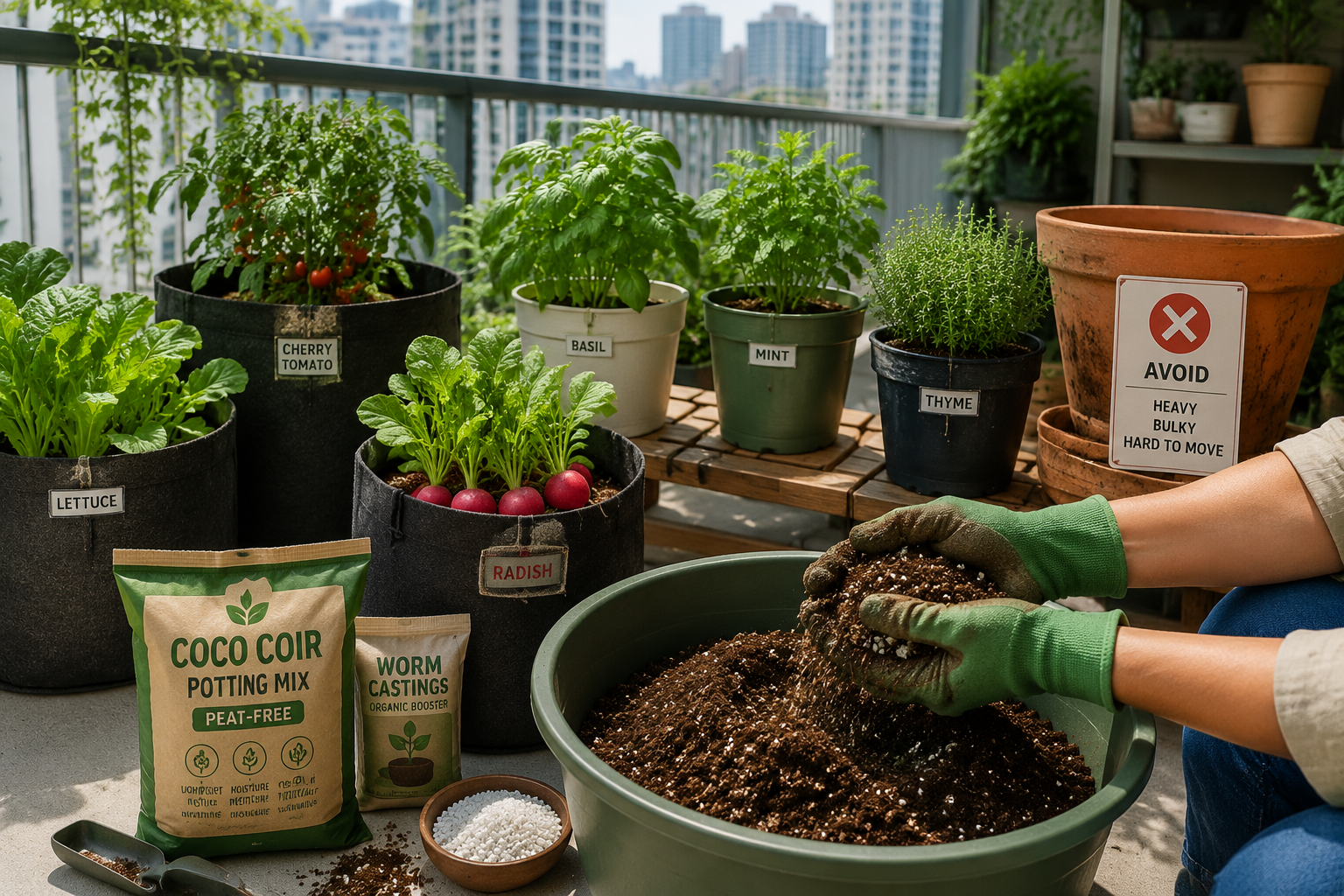
What Plants Should I Avoid If My Terrace Has Strict Weight Limits?
If your terrace has strict weight limits, you should avoid plants that require very large containers, deep root systems, or significant amounts of dense, heavy soil and water. These plants will quickly push you over your load capacity, making container gardening on a weight-limited terrace or apartment floor challenging.
Plants to avoid or use with extreme caution:
- Large, Indeterminate Tomatoes: Varieties that grow into massive vines (e.g., ‘Beefsteak’) require very large pots (15-20 gallons or more), extensive soil, sturdy cages or trellises, and frequent watering, accumulating substantial weight.
- Squash and Pumpkins (most varieties): These are prolific growers that need vast amounts of soil (20+ gallons per plant) to support their large root systems and heavy fruit. They also often require robust trellising.
- Watermelons and Cantaloupes: Similar to squash, these vining fruits need very large containers and considerable soil volume.
- Fruit Trees (even dwarf varieties): While dwarf fruit trees can be grown in containers, they typically demand large, stable pots (20+ gallons) and can become very heavy with wet soil, the tree’s own woody mass, and fruit.
- Large Shrubs and Bushes: Anything that grows into a substantial, woody plant will require a big, heavy pot and a lot of soil.
- Potatoes and Sweet Potatoes: These require deep containers to develop tubers, often 15-25 gallons, which quickly adds significant weight when filled with soil.
Focus instead on the compact, shallow-rooted, and vertically growing vegetables and herbs mentioned earlier in this article to stay within safe weight limits.
Tips for Reducing Soil Weight in Container Gardens
Reducing soil weight is one of the most effective strategies for successful container gardening on a weight-limited terrace or apartment floor. Since wet soil is often the heaviest component, optimizing your potting mix can significantly increase the number or size of containers you can safely use.
Here are key tips for reducing soil weight:
- Use Lightweight Potting Mix: Always choose a “soilless” potting mix. These typically contain a blend of peat moss or coco coir, perlite, vermiculite, and compost. Avoid heavy garden soil or topsoil, which compacts easily and retains too much water. For guidance, see our article on best potting mix for container gardens.
- Incorporate More Perlite or Vermiculite: These lightweight amendments improve drainage and aeration while dramatically reducing the overall density of your mix. Aim for 25-50% perlite/vermiculite in your custom blend.
- Utilize Coco Coir: Coco coir is a fibrous material derived from coconut husks. It’s incredibly light, holds moisture well, and provides excellent aeration. It’s a fantastic, sustainable alternative to peat moss.
- Avoid Drainage Layers: Do not add gravel, rocks, or broken pot shards to the bottom of your containers. This common misconception actually hinders drainage and adds unnecessary weight. Potting mix alone with proper drainage holes is sufficient.
- Practice Efficient Watering: Water thoroughly but only when the top inch or two of soil is dry. Overwatering not only harms plants but also keeps your containers heavier than necessary. Our guide on watering container plants with no outdoor faucet offers useful tips.
- Consider Hydroponics or Semi-Hydroponics: For some plants, growing in inert, lightweight media like coco coir or clay pebbles (LECA) with nutrient solutions can drastically reduce weight compared to traditional soil setups.
By actively managing your soil’s composition and moisture, you can maintain a thriving garden without overloading your terrace.
How to Reinforce a Balcony for Gardening Without Structural Damage
Reinforcing a balcony for gardening without structural damage is a complex task that should never be attempted without professional guidance and approval from your landlord or building management. Improper reinforcement can lead to severe structural damage, injury, or legal issues. Your primary goal in container gardening on a weight-limited terrace or apartment floor should be to work within existing limits rather than modifying the structure.
If you believe your balcony absolutely requires reinforcement for your gardening plans, here’s the proper, professional approach:
- Consult Building Management/Landlord: This is the absolute first step. They own the structure and must approve any modifications. They may also have records of the balcony’s weight capacity.
- Hire a Licensed Structural Engineer: If modifications are deemed possible and permissible, a qualified structural engineer must assess the current structure, calculate existing loads, and design any reinforcement. This is not a DIY project.
- Obtain Necessary Permits: Any structural modification will likely require building permits from local authorities. The structural engineer can guide you through this process.
- Engage Certified Contractors: The actual reinforcement work must be carried out by licensed and insured contractors following the engineer’s specifications and local building codes.
Remember, the safest and most responsible approach for apartment or terrace gardening is to plan your garden strictly within the established weight limits of your existing structure, focusing on lightweight materials and careful weight distribution. Balcony gardening for renters provides further insights into working within tenancy agreements.
Best Lightweight Potting Mix for Container Gardens
The best lightweight potting mix for container gardens, especially for container gardening on a weight-limited terrace or apartment floor, is a soilless blend rich in components like coco coir, peat moss, perlite, and vermiculite. These ingredients provide excellent drainage, aeration, and nutrient retention without the bulk and density of traditional garden soil.
A high-quality lightweight mix will typically include:
- Coco Coir (or Peat Moss): Forms the base, providing moisture retention and a fibrous structure. Coco coir is often preferred for its sustainability and neutral pH.
- Perlite: White, porous volcanic rock that significantly improves drainage and aeration, making the mix much lighter. It prevents compaction.
- Vermiculite: A mineral that expands when heated, improving aeration, retaining moisture, and holding onto nutrients. It’s slightly heavier than perlite but offers more water retention.
- Compost or Worm Castings: Added in smaller amounts (10-20%) for slow-release nutrients, improving microbial activity, and providing essential organic matter. This adds some weight but is crucial for plant health.
- Optional Amendments: Slow-release granular fertilizer, calcitic lime (if using peat-heavy mixes), or mycorrhizal fungi for enhanced root growth.
When purchasing, look for bags labeled “potting mix” or “container mix,” and check the ingredient list for the lightweight components mentioned. Avoid anything labeled “topsoil,” “garden soil,” or “planting mix for in-ground use,” as these will be too heavy and dense for containers. You can also create your own custom blend for ultimate control over weight and composition.
Conclusion
Creating a thriving container garden on a weight-limited terrace or apartment floor is not only possible but can be a deeply rewarding endeavor. The key lies in informed decision-making: accurately assessing your space’s weight capacity, diligently choosing lightweight containers, selecting appropriate, low-weight potting mixes, and opting for plants that thrive in these specific conditions. By prioritizing safety and smart material choices, you can transform a restrictive urban space into a vibrant, productive oasis without compromising structural integrity. Start small, experiment with different lightweight solutions, and enjoy the fresh flavors and beauty your urban garden brings in 2026.