
How do I clean my balcony after container gardening without damaging my vacuum?
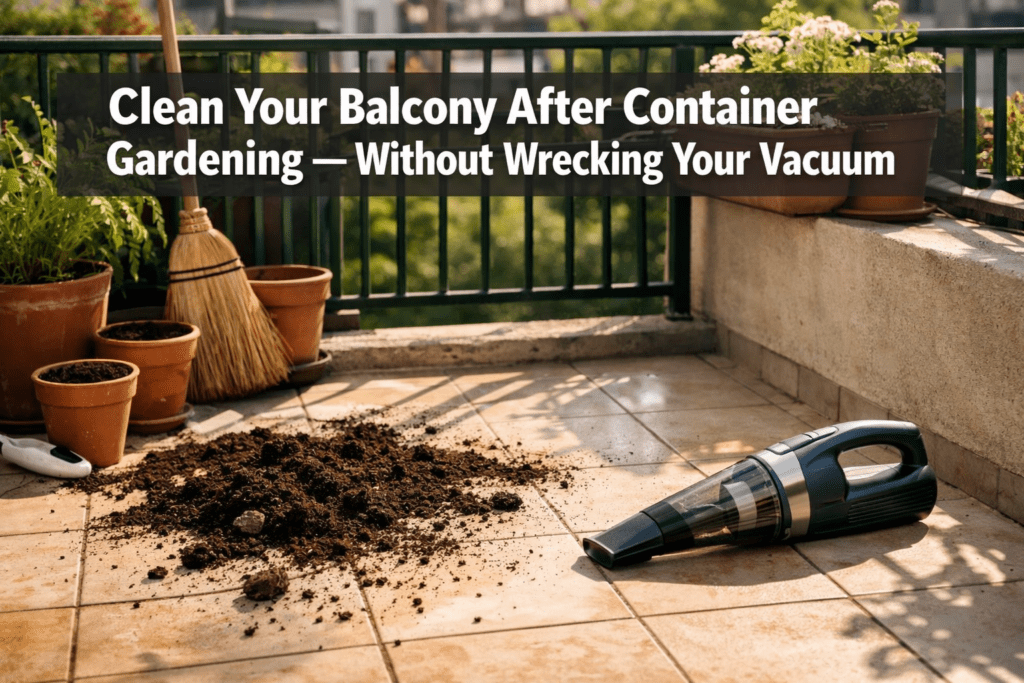
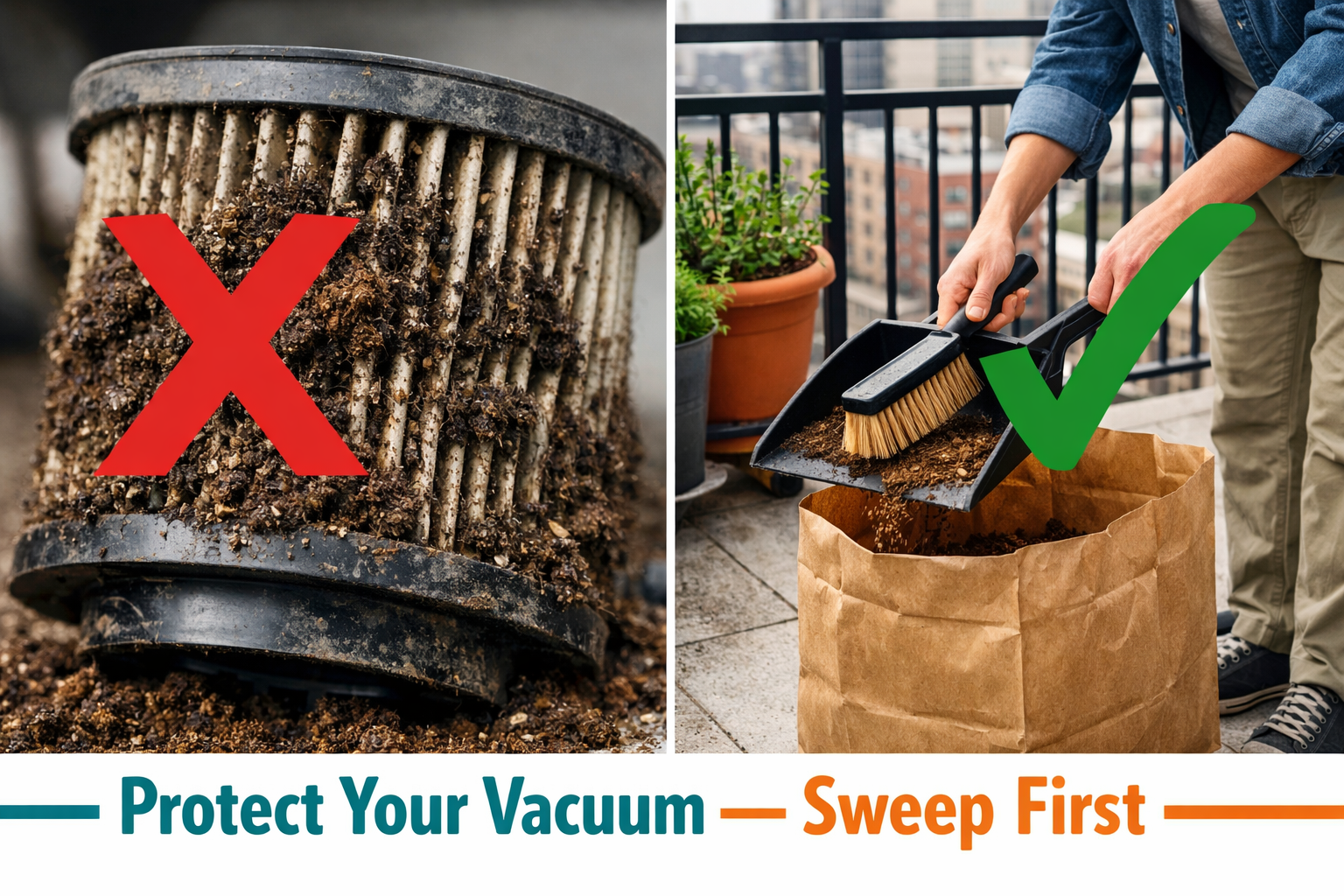
Quick Answer: After container gardening, clean your balcony by sweeping loose soil and debris with a stiff-bristle broom first, then letting any damp spots dry completely before using a vacuum. Most standard vacuums — including shop vacs — can clog or burn out their motors when they pull in wet soil, perlite, or fine potting mix. The safest rule: sweep 90% of the mess manually, then vacuum only the dry, fine dust that remains.
Key Takeaways
- 🧹 Always sweep first. A broom and dustpan remove the bulk of soil and debris without any risk to your vacuum.
- 💧 Never vacuum wet or damp soil. Moisture clogs filters, corrodes motors, and can cause mold inside the vacuum.
- 🌱 Perlite and fine potting mix are vacuum killers. These particles bypass filters and settle in the motor housing.
- ✅ A wet/dry shop vac is your safest vacuum option for balcony gardening cleanup — but only after sweeping first.
- 🪣 Collect swept soil in a compostable bag or reuse it if it’s uncontaminated (see our guide on whether you can reuse vegetable garden soil).
- 🚿 A low-pressure rinse works well for sealed tile or concrete balconies after the dry debris is removed.
- 🔍 Check your vacuum’s filter type before using it on any garden debris — HEPA filters clog fastest with fine soil particles.
- 🪴 Prevention is easier than cleanup — use saucers under pots and lay down a rubber mat to catch spills at the source.
Why Does Container Gardening Leave Such a Mess on Your Balcony?
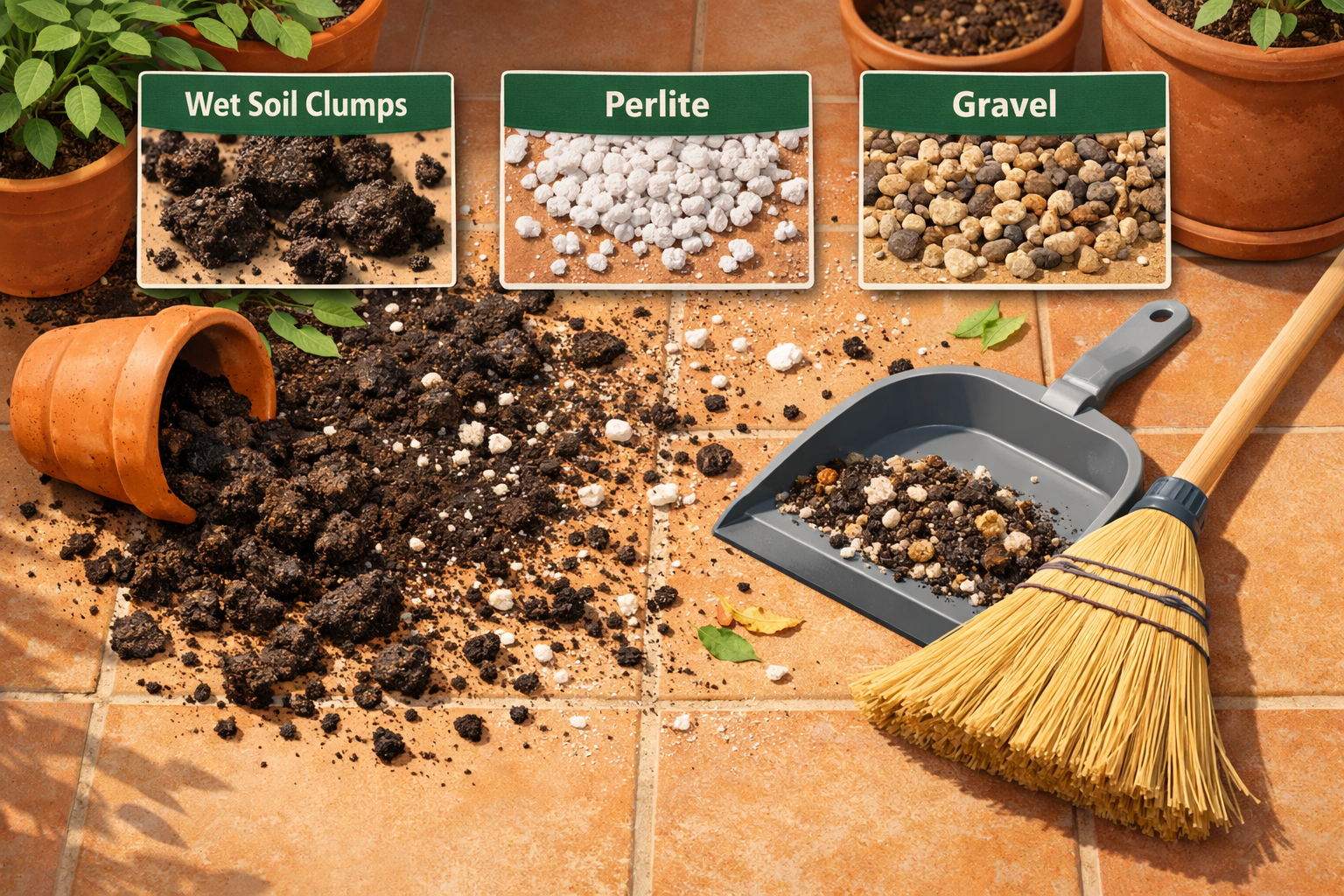
Container gardening is one of the most rewarding ways to grow food and flowers in a small space, but it’s also one of the messiest. Every time you water, repot, or harvest, potting mix, perlite, bark chips, and fine soil particles end up on your balcony floor.
The mess is worse than it looks because:
- Potting soil is light and fluffy — it scatters easily when watered or handled.
- Perlite (the white beads in most potting mixes) is extremely fine and floats into corners.
- Drainage water carries fine particles out of pot drainage holes and across the floor.
- Wind on open balconies spreads dry soil further than you’d expect.
If you’re using a quality soil mix for container gardening, it’s likely airy and lightweight — which is great for plant roots but terrible for keeping your balcony clean.
How Do I Clean My Balcony After Container Gardening Without Damaging My Vacuum? (The Core Method)
The answer is simple: use your vacuum last, not first. Most balcony gardening messes don’t need a vacuum at all. Here’s the full process:
Step-by-Step Balcony Cleanup After Container Gardening
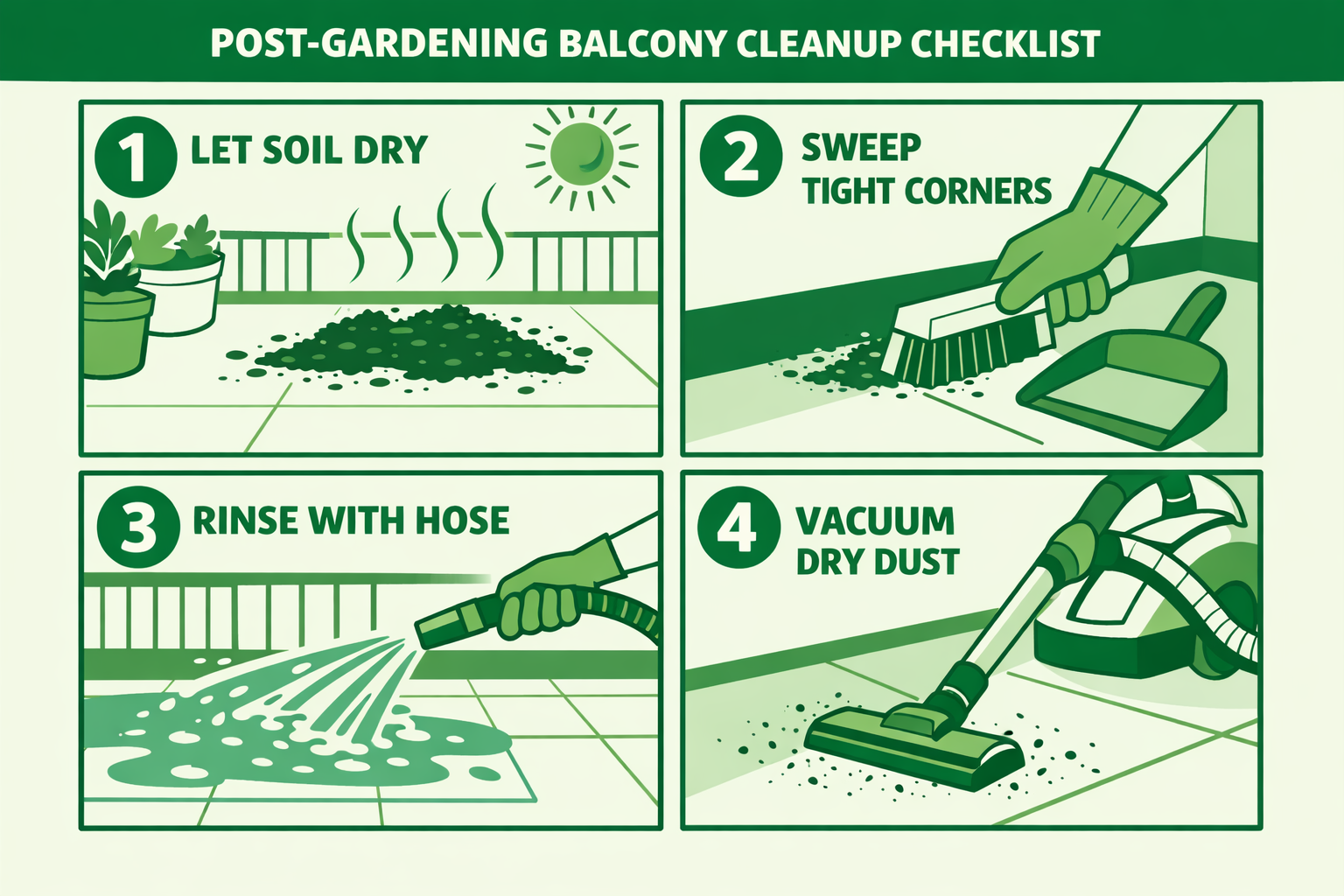
- Let wet soil dry. If you’ve just watered or it rained, wait at least 2–4 hours before cleaning. Dry soil sweeps cleanly; wet soil smears and clogs everything.
- Remove large debris by hand. Pick up fallen leaves, broken stems, and large soil clumps. Drop them into a compost bin or bag.
- Sweep with a stiff-bristle outdoor broom. Work from the back of the balcony toward the drain or door. Use short, controlled strokes to avoid scattering fine particles into the air.
- Use a dustpan and brush for corners. A small hand brush gets into tight spots around pot bases and railings.
- Collect swept material in a bag. Uncontaminated potting mix can be refreshed and reused — don’t throw it all away.
- Rinse the floor (if applicable). For sealed tile or concrete, a low-pressure hose or a bucket of water washes away the fine residue. Avoid high pressure, which can force debris into drains.
- Vacuum only the dry, fine dust that remains. If you must vacuum, use a wet/dry shop vac or an outdoor vacuum with a washable filter. Run it over the floor in slow, overlapping passes.
💡 Key rule: If you can sweep it, sweep it. Reserve the vacuum for the final 10% of fine dust that a broom can’t catch.
What Types of Vacuums Are Safe for Balcony Garden Cleanup?
Not all vacuums handle garden debris equally. Using the wrong one can mean a burned-out motor, a ruined filter, or a very expensive repair.
Choose a wet/dry shop vac if you regularly clean up after container gardening. They’re affordable (most quality models run $40–$80 at hardware stores), and their filters are washable and replaceable.
Avoid using a standard household vacuum on anything from your balcony garden. Even “dry” potting mix contains fine particles that pass through most household filters and coat the motor.
How Do I Clean My Balcony After Container Gardening Without Damaging My Vacuum? (Specific Problem Scenarios)
Different situations call for different approaches. Here are the most common post-gardening messes and how to handle each one safely.
Scenario 1: Scattered Perlite
Perlite is the hardest to clean because it’s so light it bounces and floats. Don’t vacuum it directly — the particles are small enough to pass through most filters.
- Dampen the perlite slightly with a spray bottle so it sticks together.
- Sweep it into a pile and collect with a dustpan.
- Dispose of or return it to your potting mix.
Scenario 2: Wet Soil Smears
If soil got wet and smeared across the floor, don’t try to sweep or vacuum it — you’ll spread it further.
- Let it dry completely (usually 2–4 hours in sun, longer in shade).
- Once dry, it will crack and lift easily with a stiff brush.
- Sweep, then rinse.
Scenario 3: Fine Dust Coating the Floor
After sweeping, a thin layer of brown dust often remains. This is where a vacuum can actually help — but only if the surface is completely dry.
- Use a shop vac with a floor attachment.
- Move slowly to give the suction time to work.
- Clean or replace the filter immediately after.
Scenario 4: Debris in Balcony Drain
Soil and plant matter in the drain is a common problem, especially if you’re growing in containers without saucers. Check our tips on choosing the right pot size and using saucers to prevent drainage runoff.
- Use a gloved hand or a drain brush to clear the drain opening.
- Never use a vacuum near a drain — water damage risk is high.
- Flush with a small amount of water after clearing.
How Do You Prevent Balcony Mess from Container Gardening in the First Place?
Prevention cuts your cleanup time dramatically. These habits take about two minutes to set up but save 20 minutes of scrubbing later.
- Use saucers under every pot. They catch drainage water and the soil particles it carries.
- Lay a rubber or coir mat under your container cluster. It traps spilled soil and is easy to shake out over a trash bag.
- Use a potting tray when repotting. A large plastic tray contains the mess at the source. See our guide on repotting indoor plants without killing them for technique tips.
- Water slowly. Fast watering causes splashing that carries soil out of the pot.
- Choose the right containers. Pots with built-in water reservoirs reduce drainage overflow. Browse the best containers for gardening for options that minimize mess.
- Trim plants regularly so dead leaves don’t accumulate on the floor. If you’re growing vertically, check out balcony vertical gardening tips for setup ideas that keep debris contained.
What Should You Do with the Soil You Sweep Up?
Don’t throw swept soil straight into the trash. Depending on its condition, it has real value.
- Uncontaminated, dry potting mix can be returned to your containers or stored for next season.
- Soil mixed with perlite and bark can go into a compost bin if it’s free of disease or pests.
- Soil from plants that had fungal disease or pests should go into the trash, not compost, to avoid spreading problems.
For more on getting the most from your potting medium, see our guide on the best potting soil for container gardening.
Conclusion: Clean Smart, Protect Your Vacuum, and Keep Gardening
Cleaning your balcony after container gardening doesn’t have to mean risking your vacuum or spending an hour scrubbing. The method is straightforward: sweep first, let things dry, rinse if needed, and vacuum only as a final step — with the right vacuum.
Your actionable next steps:
- Pick up a stiff-bristle outdoor broom and a dustpan if you don’t have one already.
- If you vacuum regularly, invest in a small wet/dry shop vac and keep it on the balcony.
- Set up saucers and a floor mat under your containers before your next planting session.
- After each watering or repotting, do a 2-minute sweep rather than letting debris build up.
The less debris you let accumulate, the easier every cleanup becomes. And the more time you save cleaning, the more time you have to actually enjoy your balcony garden.
FAQ
Q: Can I use a regular household vacuum on dry potting soil? A: It’s risky. Fine potting mix particles can pass through standard filters and coat the motor. If you must use a household vacuum, only run it over completely dry, coarse debris and clean the filter immediately afterward.
Q: How long should I wait after watering before sweeping the balcony? A: Wait at least 2–4 hours in direct sun, or up to 6–8 hours in shade. Soil should be dry enough to crumble, not smear, when you touch it.
Q: Is perlite safe to vacuum? A: Not with most vacuums. Perlite particles are fine enough to bypass filters. Dampen them slightly, then sweep and collect with a dustpan instead.
Q: Can I hose down my balcony after container gardening? A: Yes, if your balcony has a floor drain and a sealed surface (tile or concrete). Use low pressure and sweep first to avoid pushing large debris into the drain.
Q: What’s the best vacuum for balcony garden cleanup? A: A wet/dry shop vac is the most reliable choice. It handles dry soil and debris without the filter damage risk that comes with standard household vacuums.
Q: Can I compost the soil I sweep off my balcony? A: Yes, if the plants it came from were healthy. Avoid composting soil from diseased plants or those that had pest infestations.
Q: How do I stop soil from washing out of my pots onto the balcony floor? A: Use saucers under every pot, water slowly, and place a mesh screen or coffee filter over the drainage hole inside the pot to slow soil loss.
Q: Will a robot vacuum work for balcony cleanup? A: No. Robot vacuums are not designed for outdoor use, and soil particles will jam the brushroll, clog sensors, and void the warranty.
References
- Dyson. (2023). Filter care and maintenance guide. Dyson Support. https://www.dyson.com/support
- University of Illinois Extension. (2021). Container gardening. University of Illinois Extension. https://extension.illinois.edu/blogs/good-growing/2021-04-08-container-gardening-basics
- OSHA. (2020). Silica dust hazards in general industry. U.S. Department of Labor. https://www.osha.gov/silica-general