How often should I repot container herbs on my balcony?
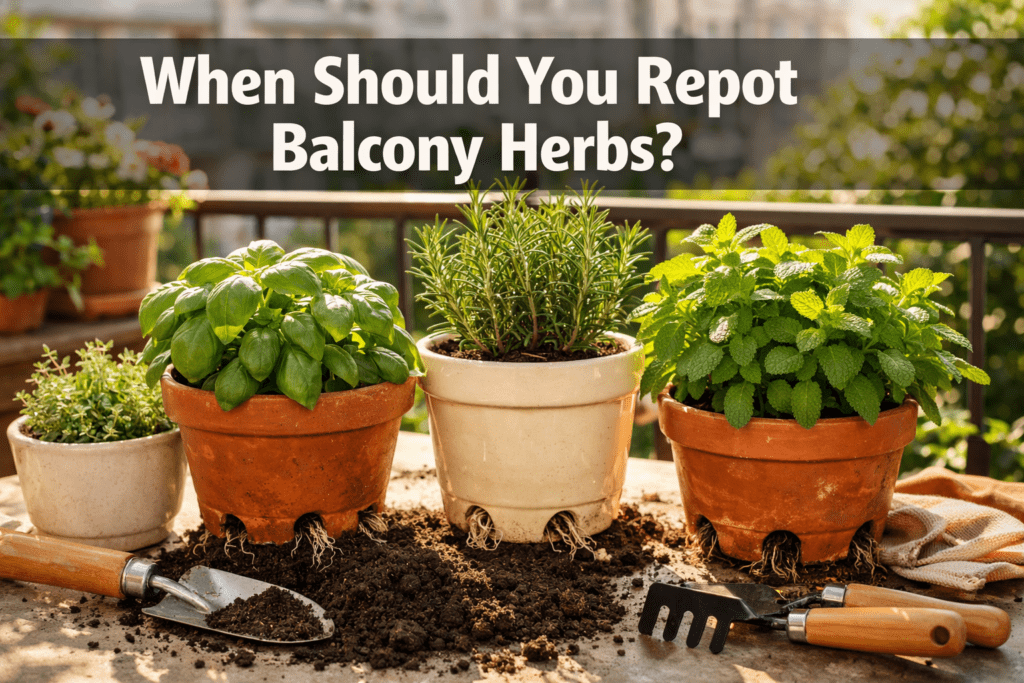
Quick Answer: Most balcony container herbs need repotting every 1 to 2 years. Fast-growing herbs like mint and basil may need a new pot every season, while slow growers like rosemary and thyme can stay comfortable for 2 to 3 years. The clearest signal is roots escaping from drainage holes or growth suddenly stalling despite regular watering and feeding.
Key Takeaways
- Repot most herbs every 1–2 years as a general rule; adjust based on growth rate and pot size.
- Roots poking out of drainage holes, wilting despite watering, and stunted growth are the top signs it’s time to repot.
- Fast growers (mint, basil, chives) may need repotting every 4–12 months.
- Slow growers (rosemary, thyme, sage) can go 2–3 years between repots.
- Spring is the best time to repot; avoid repotting in peak summer heat or mid-winter.
- Move up only one pot size at a time — roughly 2 inches larger in diameter.
- Fresh potting mix is essential every time you repot, even if the plant goes back into the same pot.
- Balcony conditions (heat, wind, intense sun) speed up soil degradation, so balcony herbs often need repotting sooner than indoor herbs.
Why Repotting Balcony Herbs Matters More Than You Think
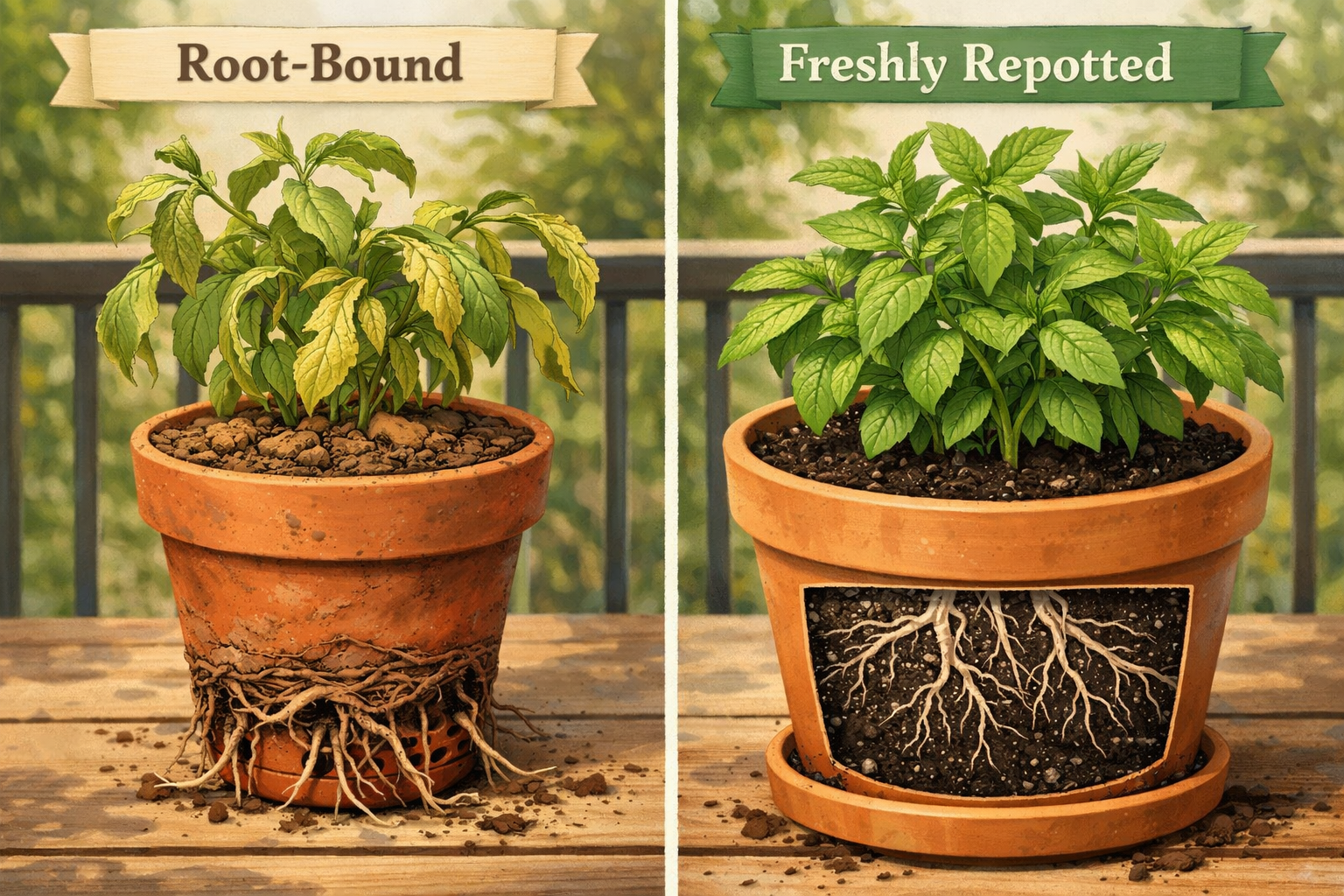
Balcony containers are a closed system. Unlike garden beds, a pot has a fixed amount of soil, nutrients, and space. Over time, roots fill every inch of that space, soil structure breaks down, and water starts running straight through without being absorbed. When that happens, your herbs aren’t just uncomfortable — they’re struggling to survive.
The answer to “how often should I repot container herbs on my balcony?” depends on three things: the herb species, the pot size you started with, and your balcony’s growing conditions. Balconies tend to be hotter, windier, and more exposed than indoor windowsills, which means soil dries out faster and degrades more quickly. That combination often pushes the repotting schedule forward by several months compared to indoor herb growing.
For a broader look at setting up a thriving balcony herb space, the balcony herb garden guide covers everything from choosing varieties to container selection.
What Are the Signs That a Balcony Herb Needs Repotting?
Don’t wait for a calendar reminder. Your herbs will tell you when they’re ready. Look for these signals:
Physical root signs:
- Roots growing out of drainage holes
- Roots circling the inside of the pot (visible when you tip the plant out)
- The root ball holds the exact shape of the pot when removed
Growth and health signs:
- Growth has slowed or stopped despite regular watering and fertilizing
- The plant wilts quickly after watering, even when the soil looks moist
- Leaves are smaller than usual or yellowing without a nutrient deficiency explanation
- Water drains almost instantly (soil has become hydrophobic or root-compacted)
Soil condition signs:
- Soil has shrunk away from the pot edges
- You can see mostly roots when you look at the soil surface
- The potting mix smells sour or looks gray and compacted
Quick rule: If you can’t remember the last time you repotted and your herb has been in the same pot for over 18 months, check the roots. Tip the pot gently and look at the bottom — if it’s a solid mass of white roots, it’s time.
How Often Should I Repot Container Herbs on My Balcony by Herb Type?
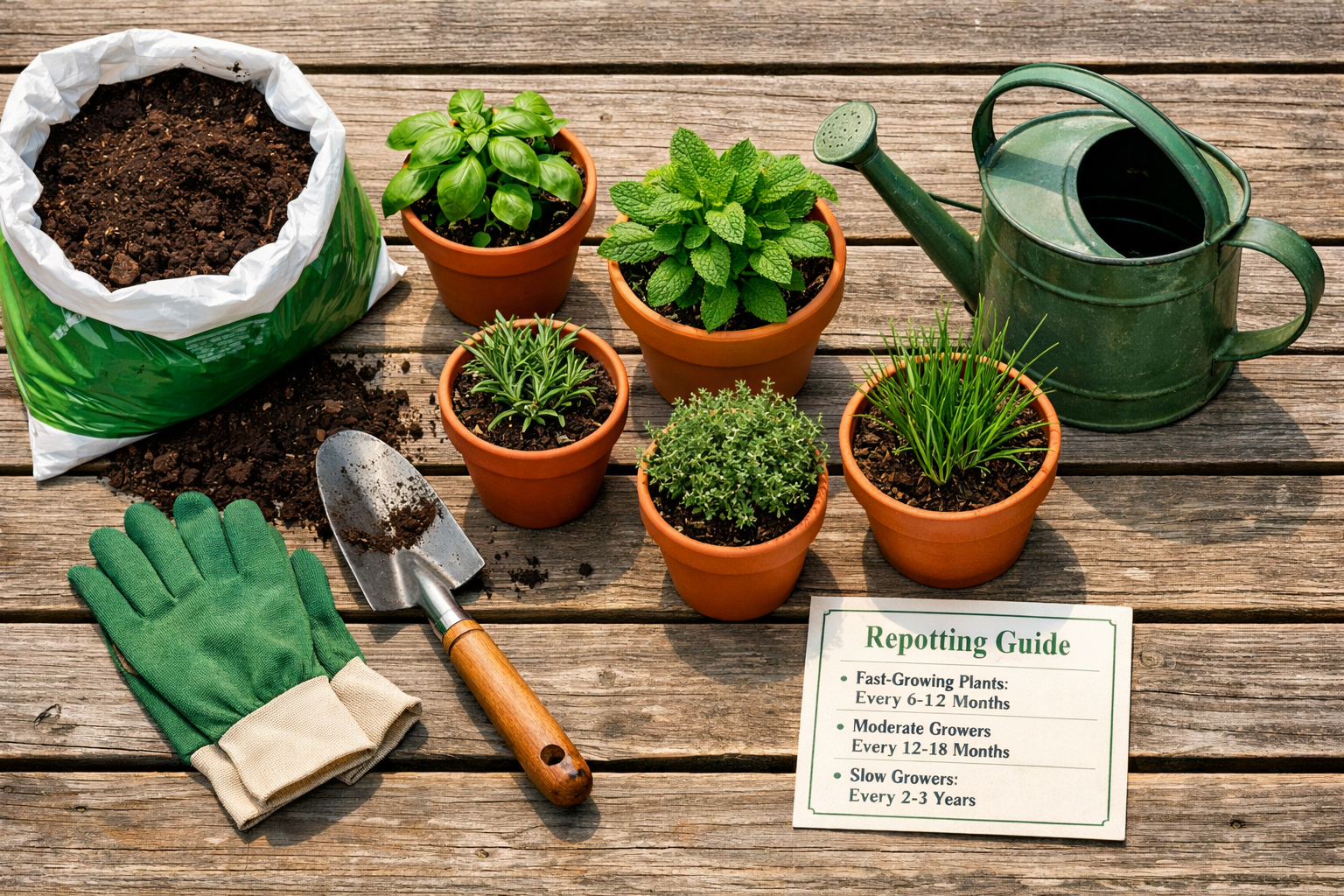
The repotting frequency varies significantly by species. Here’s a practical breakdown:
Mint deserves special mention. It’s an aggressive spreader that will fill any container within a single growing season. Many balcony gardeners keep mint in a dedicated pot and divide it each spring rather than sizing up repeatedly.
Basil is technically an annual, so you’re not repotting it so much as replacing it each season. If you start basil from a grocery store pot, transplanting it into a larger container right away gives it room to produce all summer.
For help choosing the right starting container, see this guide on how to choose the right pot size for container plants.
When Is the Best Time to Repot Balcony Herbs?
Spring is the ideal time to repot most balcony herbs — specifically when nighttime temperatures stay consistently above 50°F (10°C) and before the main growing season kicks in. Repotting in spring gives roots time to establish in fresh soil before the plant puts energy into leaf production.
Timing to avoid:
- Midsummer heat: Repotting stresses roots, and extreme heat makes recovery harder. If you must repot in summer, do it in the evening and water thoroughly.
- Mid-winter: Most herbs are in a slow growth phase. Disturbing roots when the plant isn’t actively growing slows recovery.
- Right before a heatwave: Check your local forecast. A week of 95°F+ days is not the time to repot.
Edge case — emergency repotting: If a plant is severely root-bound and clearly suffering, repot it regardless of season. A stressed plant in the wrong season will recover better with fresh soil than it will staying root-bound in old, depleted mix.
How Often Should I Repot Container Herbs on My Balcony if I Use Large Pots?
Pot size directly affects how often you’ll need to repot. A larger starting container gives roots more room to grow, which delays the need to size up.
Choose a larger pot if:
- You want to reduce repotting frequency (a 12-inch pot for rosemary can last 3+ years)
- You’re growing a perennial herb you plan to keep for multiple seasons
- Your balcony gets intense heat and you want more soil volume to buffer moisture
Stick with smaller pots if:
- You’re growing annuals like basil or cilantro
- You want better control over soil moisture (large pots can stay wet too long for drought-tolerant herbs like thyme)
- You’re limited on balcony space and weight
The one-size-up rule: When you do repot, move to a pot that’s 2 inches larger in diameter than the current one. Going too large too fast can cause overwatering problems because excess soil holds moisture that roots can’t access yet.
For more on container selection, the guide to best containers for gardening covers materials, drainage, and sizing in detail.
Step-by-Step: How to Repot a Balcony Herb Without Stressing It
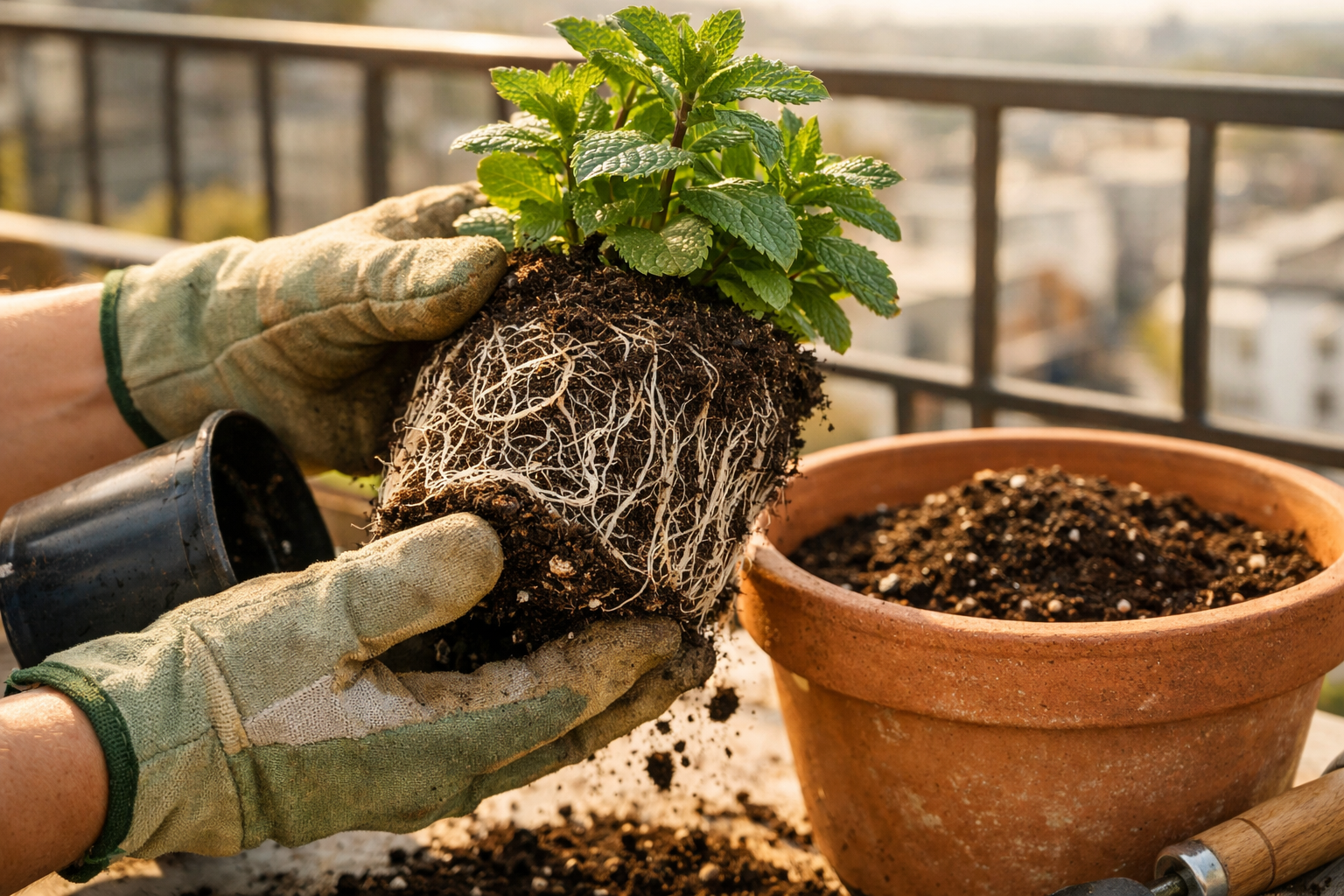
Repotting done right takes about 10 minutes per plant. Here’s the process:
- Water the herb 24 hours before repotting. Moist soil holds the root ball together and reduces transplant shock.
- Prepare the new pot. Add a layer of fresh potting mix to the bottom. Make sure the pot has drainage holes.
- Remove the herb from its current pot. Turn it sideways, support the base of the stem, and gently squeeze or tap the pot. Don’t yank by the stem.
- Inspect the roots. If they’re tightly circling, gently loosen the outer layer with your fingers. Trim any dead or rotting roots with clean scissors.
- Place in the new pot. The top of the root ball should sit about 1 inch below the pot rim.
- Fill in with fresh potting mix. Press gently to remove air pockets, but don’t compact it.
- Water thoroughly. Water until it drains from the bottom. This settles the soil and ensures good root contact.
- Place in partial shade for 2–3 days. Even sun-loving herbs benefit from a brief recovery period out of direct afternoon sun after repotting.
For a deeper look at the repotting process itself, the repotting indoor plants without killing them guide covers the same principles that apply to balcony herbs.
Common mistake: Skipping fresh potting mix. Even if the old soil looks fine, it’s depleted of nutrients and often has degraded structure. Always use fresh mix. For the best options, see this guide on best potting soil for container gardening.
What Happens If You Don’t Repot Balcony Herbs Often Enough?
Skipping repotting for too long leads to a predictable chain of problems:
- Root-binding: Roots have nowhere to grow, so the plant stops producing new growth.
- Nutrient depletion: Old potting mix loses its nutrient content. Even with fertilizer, compacted soil doesn’t absorb or distribute nutrients well.
- Poor water retention: Root-bound soil becomes hydrophobic — water runs straight through without being absorbed.
- Increased pest and disease risk: Stressed plants are more vulnerable to aphids, spider mites, and fungal problems.
- Flavor loss in culinary herbs: Stressed herbs often produce less essential oil, which is what gives basil, thyme, and oregano their flavor.
Keeping herbs well-watered is part of the same equation. If you notice your herbs drying out faster than usual, it’s often a root-bound issue rather than a watering problem. The expert guide on how often to water container plants helps you distinguish between the two.
Do Balcony Herbs Need Different Care After Repotting?
Yes, briefly. Freshly repotted herbs need a few adjustments for the first 1–2 weeks:
- Hold off on fertilizing for 4–6 weeks. Fresh potting mix already contains nutrients. Adding more too soon can burn new roots.
- Water more carefully. New soil holds moisture differently than root-bound old soil. Check moisture levels before watering rather than following a fixed schedule.
- Protect from extreme conditions. Avoid repotting right before a heat wave or cold snap, and give the plant a few days of gentler light if possible.
- Don’t harvest heavily right away. Give the herb 1–2 weeks to settle before cutting large amounts.
Once established in its new pot, you can return to your normal care routine. For fertilizing schedules after the initial settling period, the beginner fertilizing schedule for container plants is a useful reference.
FAQ
How do I know if my balcony herb is root-bound?
Tip the pot sideways and slide the plant out. If the roots form a dense mass in the shape of the pot with little visible soil, it’s root-bound and needs repotting.
Can I repot herbs in summer on a hot balcony?
Yes, but do it in the evening when temperatures drop. Water well beforehand and keep the plant out of direct sun for a few days after repotting to reduce stress.
Should I repot herbs when I first buy them from a grocery store?
Usually yes. Grocery store herb pots are often overcrowded and root-bound. Transplanting into a slightly larger pot with fresh potting mix almost always improves growth within a week or two.
What size pot should I move up to when repotting?
Go up by about 2 inches in diameter. For example, move from a 4-inch pot to a 6-inch pot. Going too large can cause waterlogging in the excess soil.
Can I reuse the old potting soil when repotting?
It’s not recommended. Old potting mix is nutrient-depleted and often has poor structure. Mix in no more than 20–30% old soil with fresh mix if you want to stretch your supply, but always add fresh material.
How often should I repot mint specifically?
Mint is so vigorous that it often needs repotting or dividing every 4–6 months during the growing season. Many gardeners divide it each spring and start fresh rather than sizing up the pot.
Does repotting frequency change as herbs age?
Yes. Young, fast-growing herbs need more frequent repotting. Mature perennial herbs like rosemary and thyme slow down and need repotting less often — sometimes only every 2–3 years.
What potting mix is best for balcony herbs after repotting?
A well-draining mix designed for containers works best. Look for one that includes perlite or coarse sand for drainage. Avoid heavy garden soil. See the best soil mix for container gardening for specific recommendations.
Conclusion
So, how often should you repot container herbs on your balcony? The honest answer is: it depends on the herb, but plan on at least every 1–2 years for most varieties, and every season for fast growers like mint and basil. Don’t wait for a fixed schedule — watch your plants and let the roots tell you when it’s time.
Your next steps:
- Check your current herb pots this week. Tip one out and look at the roots.
- If you see roots circling or escaping drainage holes, add repotting to your weekend list.
- Stock up on fresh potting mix and one or two pots that are 2 inches larger than your current ones.
- Repot in the morning or evening, water well, and give your herbs a few days to settle.
Consistent repotting is one of the simplest things you can do to keep balcony herbs productive, flavorful, and healthy all season long.
References
No external statistics or third-party data were cited in this article. All guidance is based on established horticultural practice for container herb growing. For further reading, consult resources from your local cooperative extension service or university horticulture department.