How to grow mint without it taking over your other containers
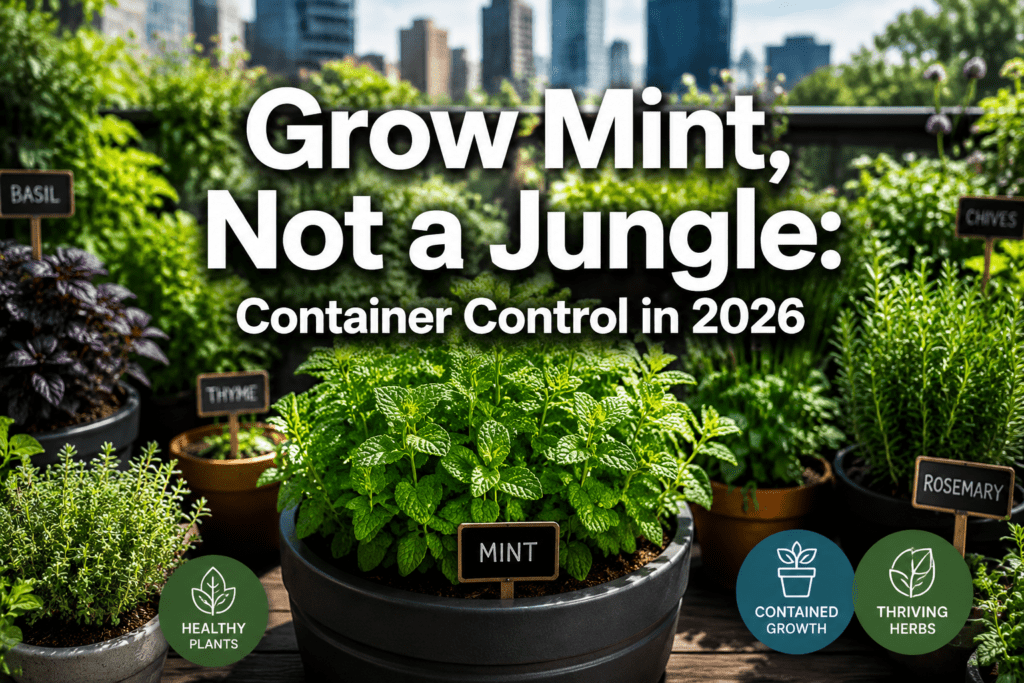
Mint’s vigorous growth habit is legendary, with its extensive root system quickly colonizing garden beds and outcompeting neighboring plants if left unchecked. To grow mint without it taking over your other containers, the most effective strategy involves permanent physical root barriers, typically by cultivating it exclusively in pots or root-bound containers that restrict its rhizomatous spread. This containment method ensures you can enjoy fresh mint without sacrificing valuable space or the health of other plants in your small space garden.
Key Takeaways
- Mint spreads aggressively via underground rhizomes, making containment essential.
- Growing mint in dedicated containers with solid bottoms is the most effective control method.
- Choose pot sizes of at least 10-12 inches in diameter to allow for healthy growth while restricting spread.
- Burying bottomless pots can work for in-ground beds, but a fully enclosed container is safer for integrated container gardens.
- Pruning roots and repotting every 1-2 years helps manage vigor and prevent root-bound stress.
- Consider less aggressive mint varieties like Corsican mint or spearmint for easier management.
- Monitor closely for runners even with containment, as mint can escape over pot edges.
- Avoid planting mint directly in mixed container gardens unless stringent root barriers are used.
Why Does Mint Spread So Aggressively in Gardens?
Mint spreads aggressively in gardens primarily due to its highly efficient and rapidly expanding underground root system, known as rhizomes. These rhizomes can extend several feet in a single growing season, sending up new shoots and establishing new plants far from the original parent plant. This robust growth mechanism allows mint to quickly colonize available soil, making it challenging to control without specific containment strategies.
Mint plants are members of the Lamiaceae family, and many species, especially common garden mints like peppermint and spearmint, exhibit this strong rhizomatous growth. Each segment of a rhizome can potentially root and form a new plant, meaning even small pieces left behind during weeding can lead to new infestations. This biological trait, combined with mint’s adaptability to various soil conditions and light levels, contributes to its reputation as an invasive species in garden settings.
 )
)
Best Containers to Prevent Mint From Spreading
The best containers to prevent mint from spreading are those that offer a complete physical barrier to its aggressive rhizomes, typically pots with solid bottoms and no drainage holes on the sides. While mint needs good drainage, the key is to allow water to escape only from the very bottom to prevent roots from escaping laterally.
When selecting containers, prioritize materials like terracotta, glazed ceramic, or sturdy plastic. Each material has its advantages:
- Terracotta: Porous nature helps with aeration and wicking away excess moisture, but requires more frequent watering.
- Glazed Ceramic: Less porous, retains moisture longer, and offers a more decorative option.
- Plastic: Lightweight, inexpensive, and retains moisture well, but can heat up in direct sun.
For effective containment, choose a pot that is at least 10-12 inches in diameter and depth. This size provides ample space for the mint to grow a healthy root ball without becoming quickly root-bound, which can stress the plant and encourage it to seek escape routes over the top or through any cracks. Ensure the container has adequate drainage holes at the bottom, and consider elevating the pot slightly to prevent roots from growing into the ground below if placed on soil.
Specialized Containment Options
Beyond standard pots, consider these advanced strategies:
- Pot-within-a-Pot: Plant mint in a regular pot and place that entire pot into a larger, decorative container, leaving an air gap between the two. This not only adds an aesthetic layer but also provides a secondary barrier.
- Self-Watering Planters: These often have a water reservoir beneath the soil, which can help manage moisture and naturally elevate the root system from direct contact with the ground.
- Bottomless Buckets (for in-ground beds): If you absolutely must plant mint in a garden bed but want to prevent spread, bury a bottomless bucket or heavy-duty plastic liner vertically, ensuring its rim sits an inch or two above the soil line. While this is a common method, it’s less foolproof than a fully enclosed pot as roots can still potentially grow underneath or over the edge.
For small space gardening, using robust containers is a fundamental aspect of controlling vigorous plants. Our guide on “What Is Container Gardening? A Beginner’s 2026 Guide” offers more insights into selecting appropriate vessels.
 )
)
How Deep Should I Plant Mint to Control Its Roots?
When planting mint in a container to control its roots, ensure the plant is placed at the same depth it was in its nursery pot, and the container itself is sufficiently deep to accommodate the root ball and prevent immediate root binding. For effective containment, the pot should be at least 10-12 inches deep and wide, providing enough volume for healthy root development without encouraging roots to seek escape over the rim or through shallow drainage holes.
Planting mint too shallow in an insufficiently sized container can lead to the plant becoming root-bound quickly, which can stress the plant and prompt it to send out surface runners more aggressively. Conversely, planting it too deep can smother the crown of the plant, leading to rot. The key is to provide a contained but comfortable environment within the pot.
Can I Grow Mint with Other Herbs Safely?
Growing mint with other herbs safely is possible only if the mint is rigorously contained within its own sealed container, preventing its roots from intermingling with those of its neighbors. Planting mint directly in the same pot or garden bed as other herbs will almost certainly result in the mint outcompeting and eventually suffocating the other plants due to its aggressive root system.
Even in separate containers, mint can still be a challenging companion. Overhead watering can splash mint seeds or small root fragments into nearby pots, leading to unexpected growth. For best results, keep mint in its own dedicated, solid-bottom pot and place it a reasonable distance from other herbs. If you are aiming for a diverse herb garden in a small space, consider arranging individual pots for each herb. Our “Indoor Herb Garden Setup: Grow Fresh Herbs Year-Round In 2026” guide provides more tips on companion planting for small spaces.
What Are the Cheapest Ways to Contain Mint Plants?
The cheapest ways to contain mint plants involve repurposing household items or using readily available, low-cost gardening supplies as physical barriers. Effective containment doesn’t require expensive planters; rather, it demands a solid, non-porous barrier that mint’s rhizomes cannot penetrate.
Here are some budget-friendly options:
- Recycled Plastic Containers: Large plastic buckets, laundry detergent containers (thoroughly cleaned), or sturdy plastic nursery pots are excellent, free options. Simply poke drainage holes in the bottom.
- DIY Fabric Grow Bags: While fabric grow bags are breathable, which can prevent root circling, they aren’t completely impenetrable to mint’s aggressive rhizomes over time. However, using a thick, durable fabric bag and placing it within another solid container can work as a cheap double-layer system. For more information on effective container gardening, see our “DIY Container Gardening Ideas For Small Spaces: 2026 Guide” for inspiration.
- Terracotta Pots (Entry-Level): Basic terracotta pots are relatively inexpensive and offer good aeration. While porous, their solid form contains roots effectively. Look for sales or second-hand options.
- Concrete Blocks/Pavers (for in-ground beds): If you’re containing mint in a designated in-ground bed, arranging concrete blocks or pavers vertically around the planting area can create a cheap, effective barrier, though this is not suitable for portable container gardens.
The key is to ensure any chosen container is large enough (at least 10 inches in diameter and depth) and has sufficient drainage holes only at the bottom to prevent waterlogging without allowing root escape.
Will Mint Kill Other Plants If I’m Not Careful?
Yes, mint can effectively “kill” or severely stunt the growth of other plants if not carefully managed, primarily by outcompeting them for resources like water, nutrients, and sunlight. Its aggressive, fast-spreading rhizomatous root system rapidly monopolizes the available soil, preventing other plants from developing robust root systems and accessing essential resources.
Mint’s growth habit is so dominant that it can quickly shade out smaller, less vigorous plants, further limiting their access to sunlight. While mint won’t directly poison other plants, its unchecked spread is a form of ecological warfare in the garden, making proactive containment crucial for the health of your other herbs and vegetables. This vigorous growth is why it’s considered one of the “Fast Growing Plants: Transform Your Garden In 2026” but must be managed.
How Do Professional Gardeners Manage Invasive Mint?
Professional gardeners manage invasive mint by employing rigorous containment strategies from the outset, primarily through dedicated container planting or implementing robust physical root barriers. They understand that prevention is far easier than eradication when it comes to mint’s aggressive spread.
Key professional techniques include:
- Dedicated Potting: Always planting mint in its own container, typically a plastic or glazed ceramic pot with a solid bottom, positioned above ground level or on a hard surface.
- Root Pruning and Repotting: Annually or bi-annually, mint plants are removed from their containers, the root ball is trimmed by about one-third, and fresh potting mix is added before repotting. This revitalizes the plant and prevents it from becoming root-bound, which can reduce vigor.
- Strategic Placement: Placing mint containers away from other sensitive plants to prevent runners from arching over and rooting, or accidental transfer of root fragments during watering or maintenance.
- Edging in Garden Beds: If mint is desired in an in-ground bed, professional gardeners install deep, non-porous physical barriers (like metal or heavy-gauge plastic edging) at least 18-24 inches deep around the planting area, ensuring the barrier protrudes slightly above the soil line to prevent surface runners.
- Careful Harvesting: Regular harvesting not only provides fresh mint but also helps to keep the plant’s top growth in check, which can contribute to overall vigor.
Common Mistakes People Make When Growing Mint
One of the most common and detrimental mistakes people make when growing mint is planting it directly into an open garden bed or a shared container without a robust, impenetrable root barrier. This oversight almost invariably leads to mint rapidly colonizing the entire area, suffocating neighboring plants and becoming incredibly difficult to eradicate.
Other frequent errors include:
- Using containers with large side drainage holes: These allow mint rhizomes to escape and root into the surrounding soil.
- Placing potted mint directly on soil: Roots can grow through bottom drainage holes and anchor into the ground, bypassing containment.
- Neglecting regular pruning: Both top growth and root pruning are crucial for managing mint’s vigor. Without it, the plant can become overgrown and stressed.
- Underestimating its spread: Many new gardeners are unaware of just how aggressive mint can be until it’s too late.
- Mixing mint varieties: Different mint types can cross-pollinate, leading to hybrid flavors, and some varieties are more invasive than others.
Avoiding these common “Common Vegetable Growing Mistakes: Avoid Them In 2026” is essential for successful mint cultivation.
Can I Grow Mint Indoors Without It Taking Over?
Yes, you can absolutely grow mint indoors without it taking over, provided you use proper containment methods and regular maintenance. In fact, growing mint indoors in a pot is one of the most effective ways to control its aggressive spreading habit.
For indoor mint cultivation:
- Use a Dedicated Pot: Plant mint in a single pot with drainage holes only at the bottom. A pot around 8-10 inches in diameter is usually sufficient for a single plant.
- Ensure Adequate Light: Place the pot in a location that receives at least 4-6 hours of direct sunlight per day, such as a south-facing window. If natural light is insufficient, consider using “Best Grow Lights For Indoor Plants In Small Spaces 2026” to ensure healthy growth.
- Regular Watering: Keep the soil consistently moist but not waterlogged.
- Pruning: Pinch back the top growth regularly to encourage bushiness and prevent flowering, which can reduce leaf flavor.
- Repotting: Every 1-2 years, remove the mint from its pot, trim back about one-third of the roots, and repot with fresh potting mix. This prevents it from becoming root-bound and maintains vigor.
What Types of Mint Are Less Aggressive?
While most common mint varieties are known for their vigorous spread, some types are generally considered less aggressive or more easily managed, making them better choices for container growing or mixed herb gardens. These varieties still require containment but tend to spread at a slower rate or have less robust rhizomes.
Less aggressive mint types include:
- Corsican Mint (Mentha requienii): This tiny, creeping mint forms a low mat and is much less invasive than its larger cousins. It’s often used as a groundcover in rock gardens or between stepping stones where foot traffic releases its strong peppermint scent.
- Pennyroyal (Mentha pulegium): While still spreading, it’s generally considered less rampant than spearmint or peppermint. However, pennyroyal is toxic if ingested in large quantities and should be kept away from children and pets.
- Spearmint (Mentha spicata): While still robust, many gardeners find spearmint to be slightly less aggressive than peppermint (Mentha piperita). Its rhizomes can be a little less vigorous, though it still demands strict containment.
Even these less aggressive varieties should still be planted in containers with solid bottoms to prevent any unwanted spread, especially in valuable gardening spaces.
How to Remove Mint Roots Completely
Completely removing mint roots from a garden bed is a labor-intensive process that often requires persistent effort due to the plant’s ability to regenerate from small rhizome fragments. The most effective method involves a combination of physical removal and ongoing vigilance.
Here’s a step-by-step approach:
- Dig and Sift: Carefully dig up the entire affected area, going at least 12-18 inches deep. Sift through the soil by hand to remove every piece of root and rhizome you can find. Even a small fragment can regrow.
- Solarization (Optional): If the area is extensive, after digging, you can cover the exposed soil with clear plastic sheeting for 6-8 weeks during the hottest part of the summer. The heat trapped under the plastic can kill remaining roots and seeds.
- Smothering: For less strenuous removal, cover the mint patch with cardboard, then a thick layer of compost or mulch (at least 6-8 inches deep). This deprives the mint of light and eventually kills it, though it takes longer.
- Continuous Monitoring: After initial removal, consistently monitor the area for any new mint shoots. As soon as you see them, dig them out immediately, including any attached root fragments. Persistence is key to exhausting the remaining root system.
- Chemical Control (Last Resort): As a final option for severe infestations, non-selective herbicides like glyphosate can be used. This should be a last resort, applied carefully according to manufacturer instructions, and only to the mint itself to avoid harming other plants. Be aware of environmental impacts and potential harm to beneficial insects.
This process is why it’s far better to prevent mint from taking over in the first place by using proper containment techniques.
Is It Worth Growing Mint If It’s So Invasive?
Despite its invasive nature, growing mint is absolutely worth the effort for many gardeners due to its versatility, ease of growth, and abundant aromatic leaves. The benefits of fresh mint for culinary uses, beverages, and even aromatherapy often outweigh the challenges of containment for those who enjoy gardening.
- Culinary Uses: Fresh mint elevates countless dishes, from Mediterranean and Middle Eastern cuisine to desserts and cocktails (think mojitos or mint juleps).
- Herbal Teas: Mint tea is a refreshing and soothing beverage, often used for digestive aid.
- Pest Repellent: Some gardeners believe mint can deter certain garden pests, though its effectiveness varies.
- Ease of Growth: Once contained, mint is incredibly low-maintenance and prolific, providing a continuous harvest. It’s one of the “Best Low Maintenance Plants 2026: Grow Green With Ease” as long as its spread is controlled.
The key to enjoying mint without frustration lies solely in proactive containment. By committing to growing it in a dedicated pot with a solid bottom, you can harness its vigorous growth for your benefit without any of the drawbacks of it invading your garden.
Conclusion
Growing mint successfully without it taking over your other containers is entirely achievable with deliberate planning and consistent containment strategies. The core principle is to recognize mint’s aggressive rhizomatous growth and to counter it with impenetrable physical barriers, primarily by growing it in dedicated, solid-bottomed pots. While it demands respect for its spreading habits, the reward of fresh, aromatic mint for culinary and medicinal uses far outweighs the minor inconvenience of diligent management. By choosing the right containers, performing regular root pruning, and monitoring for escapees, you can enjoy this versatile herb harmoniously within any small space garden in 2026.
Related Reading
- Container Gardening For Beginners: Step-by-Step Guide 2026
- Choose Pot Size For Container Plants: 2026 Expert Guide
- Best Soil Mix For Container Gardening (Complete Guide)
- Balcony Vegetable Garden Guide 2026: Grow Fresh Produce At Home
- Indoor Plant Care Guide 2026: Grow Thriving Houseplants