How to grow strawberries in hanging baskets or small containers
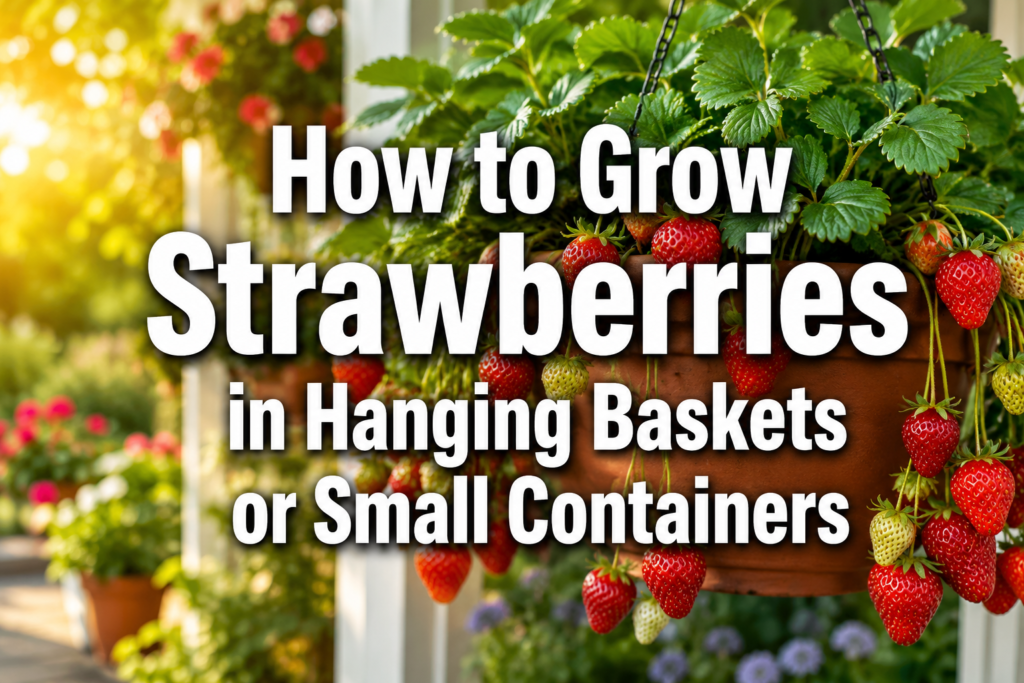
You can absolutely grow delicious strawberries in hanging baskets or small containers, even with limited space. The key is selecting the right varieties, providing ample sunlight, using a well-draining soil mix, and consistent watering to ensure a bountiful harvest of fresh fruit right on your patio or balcony. This method is particularly effective for urban gardeners and those with compact outdoor areas.
Key Takeaways
- Choose everbearing or day-neutral strawberry varieties for continuous fruiting in containers.
- Ensure your containers or hanging baskets have excellent drainage to prevent root rot.
- Provide at least 6-8 hours of direct sunlight daily for optimal fruit production.
- Use a high-quality, well-draining potting mix rich in organic matter, avoiding dense garden soil.
- Water container strawberries frequently, often daily in hot weather, to keep the soil consistently moist but not waterlogged.
- Fertilize regularly with a balanced, slow-release or liquid feed to support continuous growth and fruiting.
- Pinch off runners from younger plants to encourage fruit production rather than vegetative growth.
- Hanging baskets provide excellent air circulation and protect fruit from ground pests.
- Growing strawberries in containers is suitable for beginners due to manageable size and relative ease of care.
What Kind of Strawberries Work Best in Hanging Baskets?
The best strawberries for hanging baskets and small containers are typically everbearing or day-neutral varieties because they produce fruit throughout the growing season, unlike June-bearing types that yield a single, large crop. These varieties are also often more compact, making them ideal for confined spaces.
For container gardening, look for varieties known for their smaller stature and continuous fruiting. Everbearing strawberries, such as ‘Ozark Beauty’ or ‘Quinault’, and day-neutral types like ‘Seascape’ or ‘Mara des Bois’ (an alpine variety known for intense flavor) are excellent choices. Alpine strawberries are particularly well-suited due to their naturally compact, runner-less habit and tolerance for partial shade, though fruit yield is smaller.
Recommended Varieties for Containers
- Everbearing: These varieties produce two to three harvests per year, usually in spring, summer, and fall.
- ‘Ozark Beauty’: A classic, reliable everbearing strawberry known for its sweet, medium-sized fruit and good disease resistance.
- ‘Quinault’: Produces large, juicy berries from early summer until frost, known for its vigorous growth.
- ‘Eversweet’: Offers consistent fruit production and good flavor, performing well in various climates.
- Day-Neutral: These types produce fruit continuously as long as temperatures are between 35°F and 85°F (1°C and 29°C), independent of day length.
- ‘Seascape’: A popular choice for commercial growers and home gardeners alike, offering large, firm, and flavorful berries throughout the season.
- ‘Albion’: Known for its glossy, firm fruit with excellent flavor and good disease resistance.
- ‘Tribute’: Produces medium-sized, sweet berries consistently.
- Alpine Strawberries: Small, often runner-less plants with tiny, intensely flavorful berries.
- ‘Mara des Bois’: French gourmet variety with an exquisite aroma and flavor, resembling wild strawberries.
- ‘Mignonette’: Produces small, sweet, red berries and no runners, making it very tidy for containers.
- ‘Alexandria’: Known for its abundant, aromatic red fruit.
When choosing plants, consider your local climate and how much sun exposure your chosen spot receives. Alpine varieties are more tolerant of partial shade, making them versatile for different balcony or patio orientations.
 )
)
How Much Sunlight Do Container Strawberries Need?
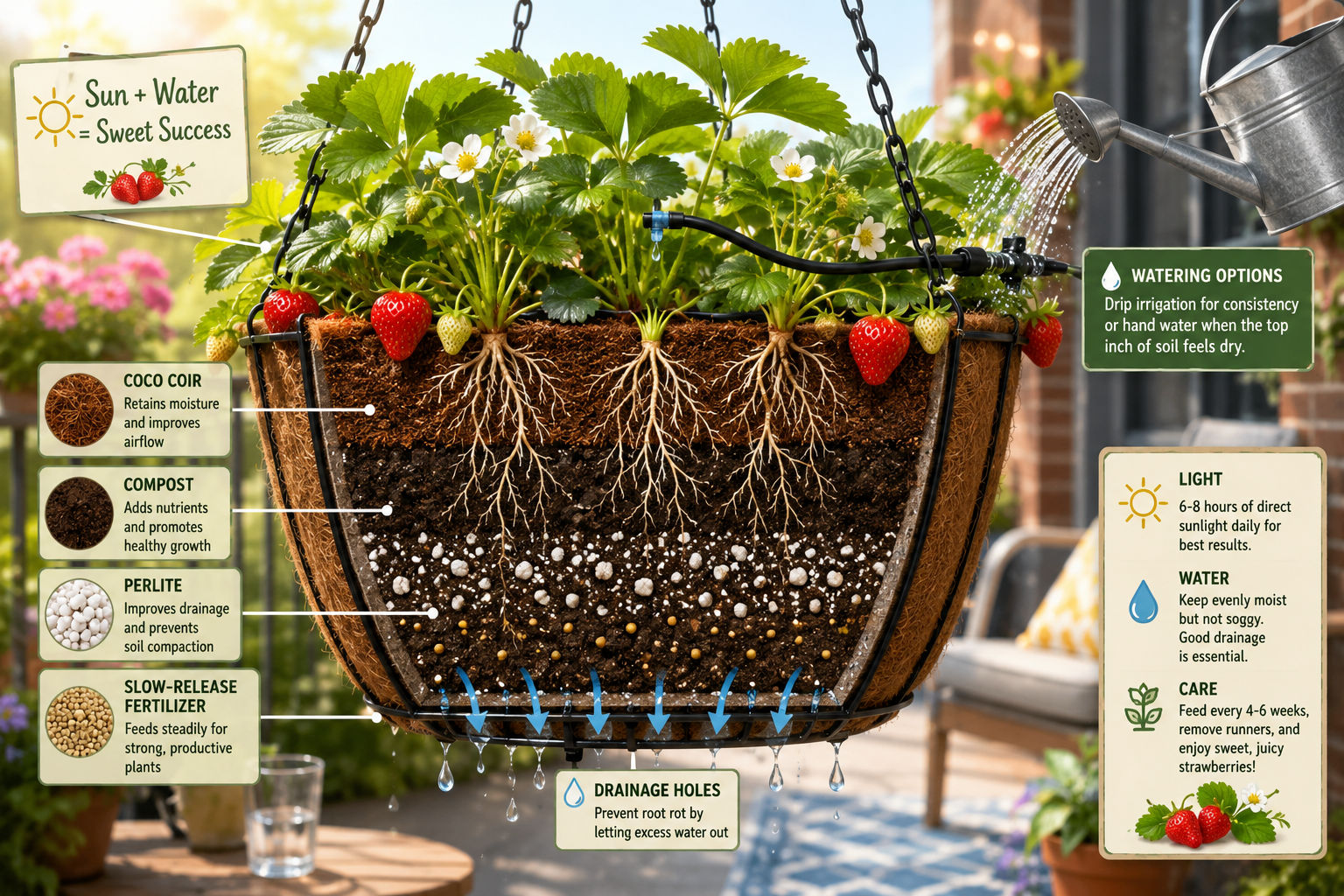
Container strawberries require a minimum of 6-8 hours of direct sunlight daily to produce a healthy and abundant crop. Insufficient light will result in fewer flowers, smaller fruit, and overall weaker plants.
Placing your hanging baskets or containers in a location that receives full sun for the majority of the day is crucial. South-facing balconies, patios, or decks are often ideal. If direct sun is limited to 4-5 hours, you might still get some fruit, especially with alpine varieties, but the yield will be significantly reduced. For urban gardeners with limited direct sun exposure, consider using supplemental grow lights, especially if attempting to grow indoors. Our guide on Best Grow Lights For Indoor Plants In Small Spaces 2026 can offer more insights.
How Often Should I Water Strawberries in a Hanging Basket?
Strawberries in hanging baskets or small containers typically need to be watered daily, and sometimes twice a day during hot, dry, or windy weather. Their shallower root systems and the increased exposure of container soil to air mean they dry out much faster than plants in the ground.
The key is to keep the soil consistently moist but never waterlogged. Check the soil moisture by sticking your finger about an inch into the soil. If it feels dry, it’s time to water. Ensure water drains freely from the bottom of the container. Wilting leaves are a clear sign of underwatering, but prolonged wilting can stress the plant and affect fruit quality. Using self-watering pots can help maintain consistent moisture levels, as explored in our article Self-Watering Pots: Do They Work For Small Gardens?.
What Type of Soil Mix Is Best for Strawberry Containers?
The best soil mix for strawberry containers is a high-quality, well-draining potting mix rich in organic matter, designed specifically for containers. It should provide good aeration, retain moisture, and offer adequate nutrients without becoming waterlogged or compacted.
Avoid using heavy garden soil, which can compact in containers and suffocate roots. A suitable mix typically includes components like:
- Peat moss or coco coir: For moisture retention and aeration.
- Compost or well-rotted manure: To provide essential nutrients and improve soil structure.
- Perlite or vermiculite: For drainage and aeration.
- Sand (coarse horticultural grade): Can further improve drainage.
A good recipe for a DIY mix might be 1 part compost, 1 part peat moss/coco coir, and 1 part perlite/vermiculite. You can also add a slow-release granular fertilizer at planting to provide a steady supply of nutrients. Our Best Soil Mix For Container Gardening (Complete Guide) offers more detailed guidance on creating optimal growing mediums.
Can I Grow Strawberries on a Small Apartment Balcony?
Yes, absolutely, you can successfully grow strawberries on a small apartment balcony. Their compact size and suitability for containers, especially hanging baskets, make them an excellent choice for urban gardeners with limited space.
The primary considerations for growing strawberries on a balcony are sufficient sunlight (6-8 hours daily), access to water, and choosing appropriate containers. Hanging baskets, railing planters, or stacked vertical planters are all effective ways to maximize space on a small balcony. For more ideas on maximizing space, check out our guide on Small Balcony Vegetable Gardening: Your 2026 Urban Guide. Ensure your balcony can support the weight of multiple filled containers, especially after watering.
How Many Strawberry Plants Fit in a Typical Hanging Basket?
In a typical 10-12 inch diameter hanging basket, you can comfortably fit 3-5 strawberry plants. The exact number depends on the size of the basket and the specific variety’s growth habit.
Overcrowding can lead to reduced air circulation, increased risk of disease, and competition for nutrients, ultimately resulting in smaller yields. For a 14-inch basket, you might be able to accommodate up to 7 plants. When planting, space them evenly around the basket, ensuring the crown (where the leaves emerge from the roots) is just above the soil line.
What Are Common Mistakes People Make Growing Strawberries in Containers?
Common mistakes when growing strawberries in containers include underwatering, using unsuitable soil, insufficient sunlight, and not managing runners properly. These issues often lead to poor plant health and reduced fruit production.
Here’s a breakdown of common errors:
- Inadequate Drainage: Using pots without drainage holes or a heavy, compacted soil mix can lead to root rot. Always ensure containers have ample drainage.
- Inconsistent Watering: Container plants dry out quickly. Forgetting to water, or not watering deeply enough, stresses plants.
- Not Enough Sun: Less than 6 hours of direct sunlight significantly reduces fruit yield and flavor.
- Using Garden Soil: Garden soil is too dense for containers and can introduce pests and diseases.
- Over-fertilizing or Under-fertilizing: Too much fertilizer can burn plants; too little results in nutrient deficiencies. A balanced, slow-release option is usually best.
- Allowing Too Many Runners: While runners can create new plants, they divert energy from fruit production, especially in young plants. Pinch them off to encourage fruiting.
- Ignoring Pests and Diseases: Container plants are still susceptible. Regular inspection helps catch problems early. Our guide on Pest Control For Small Gardens: 2026 Expert Guide offers solutions.
- Overcrowding: Planting too many strawberries in one container can lead to competition for resources and poor air circulation.
How Do Hanging Basket Strawberries Compare to Garden Grown Strawberries?
Hanging basket strawberries offer distinct advantages and disadvantages compared to garden-grown strawberries, primarily concerning space efficiency, pest protection, and watering frequency.
| Feature | Hanging Basket Strawberries | Garden-Grown Strawberries |
|---|---|---|
| Space Requirement | Minimal; ideal for balconies, patios, small yards. | Requires dedicated garden bed space. |
| Pest Protection | Elevated position deters slugs, snails, and some ground pests; less soil-borne disease. | More susceptible to ground pests and soil-borne diseases. |
| Watering Needs | High; often daily or twice daily due to quick drying. | Moderate; soil retains moisture longer. |
| Nutrient Management | Requires regular feeding as nutrients leach out faster. | Benefits from soil amendments and less frequent feeding. |
| Weed Control | Virtually weed-free. | Requires regular weeding. |
| Yield | Good for fresh, personal consumption; can be lower per plant if not managed. | Potentially higher overall yield for larger plantings. |
| Winter Protection | Easier to move indoors or to a sheltered location. | Requires mulching or other outdoor protection. |
| Accessibility | Easy to harvest without bending, appealing for those with mobility issues. | Requires bending to harvest. |
While garden-grown strawberries can often yield more fruit per plant due to unrestricted root growth, container strawberries provide fresh, convenient produce in spaces where traditional gardening isn’t possible. They also offer better aesthetics and easier access for harvesting.
How Much Do Starter Strawberry Plants and Hanging Baskets Cost?
The cost of starter strawberry plants and hanging baskets can vary, but generally, a starter plant costs $3-$8 each, and a suitable hanging basket ranges from $15-$40.
- Strawberry Plants: Bare-root plants are often more economical, costing around $15-$30 for a bundle of 10-25. Potted nursery starts typically cost $3-$8 per plant. Purchasing plants in bundles can reduce the per-plant cost.
- Hanging Baskets:
- Basic Plastic/Terracotta: $15-$25 for a 10-12 inch basket.
- Coir-Lined Wire Baskets: $20-$40, often preferred for aesthetics and drainage.
- Self-Watering Baskets: Can be $30-$60, offering convenience.
- Soil and Fertilizer: Expect to spend an additional $10-$20 on a good quality potting mix and a suitable slow-release fertilizer.
Overall, you can expect an initial investment of roughly $50-$100 for a couple of hanging baskets with plants, soil, and fertilizer, with ongoing costs mainly for water and occasional feeding.
Are Hanging Basket Strawberries Good for Beginners?
Yes, growing strawberries in hanging baskets or small containers is an excellent gardening project for beginners. Their manageable size, relatively quick growth, and visually rewarding fruit make them a satisfying entry point into edible gardening.
The confined environment of containers simplifies many aspects of gardening:
- Weed Control: Virtually nonexistent.
- Pest Identification: Easier to spot pests on isolated plants.
- Disease Management: Better air circulation in hanging baskets can reduce fungal issues.
- Space: No need for a large garden plot.
- Visibility: You can easily monitor plant health and fruit development.
As long as beginners pay attention to consistent watering, adequate sunlight, and proper soil, they are likely to succeed. This experience can build confidence for more complex gardening endeavors. Our Container Gardening For Beginners: Step-by-Step Guide 2026 provides a comprehensive starting point.
What Pests Attack Strawberry Plants in Containers?
Strawberry plants in containers can be attacked by several common pests, including aphids, spider mites, slugs, and birds. While container gardening can reduce some ground-dwelling pests, airborne and climbing pests remain a concern.
- Aphids: Small, soft-bodied insects that cluster on new growth and suck sap, causing distorted leaves.
- Spider Mites: Tiny arachnids that cause stippling on leaves and fine webbing, especially in hot, dry conditions.
- Slugs and Snails: Although less prevalent in elevated hanging baskets, they can still climb. They chew holes in leaves and fruit.
- Birds: A major predator of ripening strawberries. They will peck at or entirely consume berries.
- Root Weevils: Larvae can damage roots, while adults chew notches in leaves.
- Thrips: Tiny, slender insects that feed on flowers and young fruit, causing distortion and scarring.
Management Strategies:
- Regular Inspection: Check plants daily for signs of pests.
- Manual Removal: Handpick larger pests like slugs or wash off aphids with a strong stream of water.
- Insecticidal Soap/Neem Oil: Effective against soft-bodied insects like aphids and spider mites.
- Physical Barriers: Netting can protect fruit from birds. Copper tape around baskets can deter slugs.
- Beneficial Insects: Encourage natural predators like ladybugs.
How Long Before Hanging Basket Strawberries Produce Fruit?
Hanging basket strawberries typically begin to produce fruit within 8-12 weeks of planting if you start with established plants (like bare-root or potted starts). If growing from seed, it can take much longer, often 4-6 months, or even into the second year for a significant harvest.
Everbearing and day-neutral varieties are designed for quicker and more continuous fruiting, making them the best choice for container growing when you desire a speedy harvest. The first flush of berries usually appears in late spring or early summer, with subsequent harvests throughout the warmer months. Optimal sunlight, consistent watering, and proper fertilization will accelerate fruit production.
Can I Grow Strawberries Indoors with Grow Lights?
Yes, you can absolutely grow strawberries indoors using grow lights, especially if you select day-neutral or everbearing varieties. This allows you to extend your growing season and harvest fresh berries year-round, regardless of outdoor conditions.
For successful indoor growth:
- Lighting: Provide 12-16 hours of strong artificial light daily using full-spectrum LED grow lights. The intensity and duration are crucial for fruiting. Refer to Best Grow Lights For Indoor Plants In Small Spaces 2026 for specific recommendations.
- Temperature: Maintain a consistent room temperature between 60-75°F (15-24°C).
- Pollination: Indoors, you may need to hand-pollinate the flowers using a small paintbrush to transfer pollen between blossoms.
- Humidity: Strawberries prefer moderate humidity. A humidifier can be beneficial in dry indoor environments.
- Air Circulation: Good air circulation prevents fungal diseases. A small fan can help.
- Pest Monitoring: Indoor plants are still susceptible to pests like spider mites; regular checks are essential.
Growing strawberries indoors with grow lights is a great option for those with limited outdoor space or challenging climates, enabling a continuous supply of fresh fruit. Our Indoor Gardening Without Sunlight: Grow Plants Year-Round guide provides further insights.
Conclusion
Growing strawberries in hanging baskets or small containers is a highly rewarding endeavor for any gardener, especially those with limited space. By choosing the right everbearing or day-neutral varieties, providing ample sunlight, utilizing a premium well-draining potting mix, and maintaining consistent watering and feeding routines, you can enjoy a season-long harvest of sweet, fresh berries. This method not only beautifies your outdoor living areas but also offers a practical and accessible way to engage in edible gardening. For more diverse container gardening inspiration, explore DIY Container Gardening Ideas For Small Spaces: 2026 Guide.
FAQ
Q: Can I use regular garden soil for strawberries in containers?
A: No, regular garden soil is generally too heavy and compacts easily in containers, which can lead to poor drainage and root rot. Use a light, well-draining potting mix.
Q: Do I need to fertilize strawberries in hanging baskets?
A: Yes, strawberries in containers need regular fertilization as nutrients leach out quickly. Use a balanced liquid fertilizer every 2-4 weeks or incorporate a slow-release granular fertilizer at planting.
Q: How often should I replace my strawberry plants in containers?
A: Strawberry plants are most productive for 2-3 years. After this, their yield typically declines, and it’s best to replace them with new plants.
Q: Will birds eat my hanging basket strawberries?
A: Yes, birds are very fond of ripening strawberries. Consider covering your baskets with netting to protect your harvest.
Q: What is the best pot size for a single strawberry plant?
A: For a single strawberry plant, a pot that is at least 6-8 inches in diameter and depth is suitable, though larger is always better for more vigorous growth.
Q: Can I grow different types of strawberries in the same hanging basket?
A: Yes, you can grow different compatible varieties (e.g., all everbearing or all day-neutral) in the same basket, but ensure they have similar growth habits and care requirements.
Q: How do I overwinter hanging basket strawberries?
A: In colder climates, move hanging baskets indoors to an unheated garage, shed, or basement where temperatures stay just above freezing. Water sparingly during dormancy.
Q: Do I need to remove runners from strawberry plants?
A: For young container plants, it’s generally best to pinch off runners to direct the plant’s energy into fruit production rather than growing new plants.
References
- University of California Agriculture and Natural Resources. (2007). Growing Strawberries in the Home Garden.
- Purdue University Extension. (2018). Growing Strawberries in the Home Garden.
- Oregon State University Extension. (2020). Growing Strawberries in Your Home Garden.