What’s more nutritious for apartments: microgreens or sprouts?
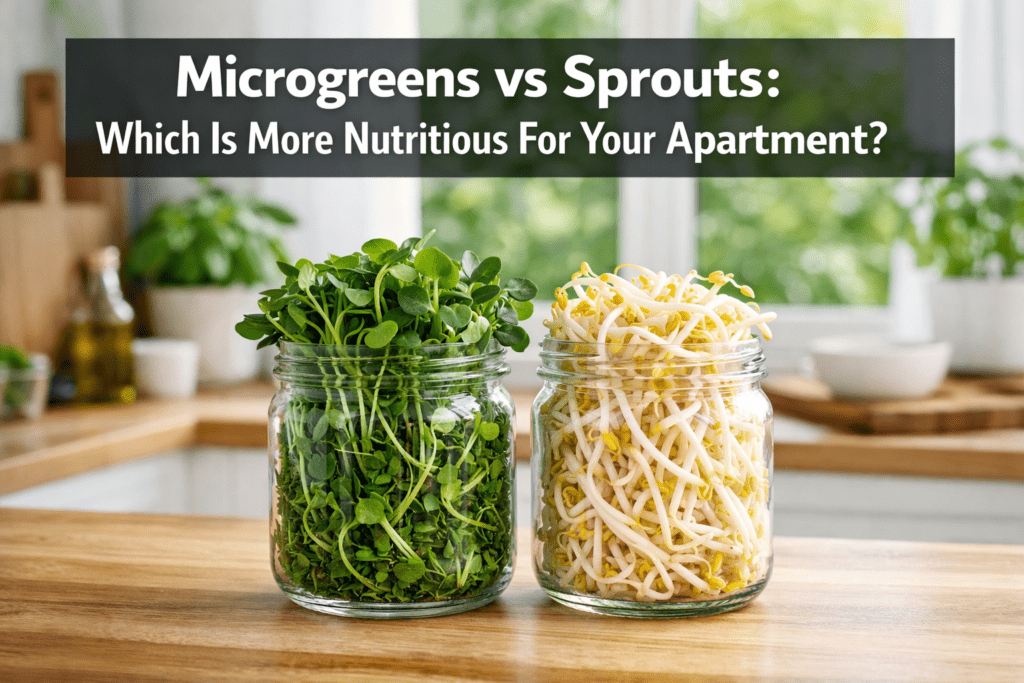
Quick Answer: Microgreens are generally more nutrient-dense than sprouts, with studies showing they can contain 4 to 40 times more vitamins and antioxidants than their mature plant counterparts. However, sprouts are faster to grow, require zero soil, and still deliver solid nutritional value. For apartment growers, the best choice depends on your space, time, and health goals.
Key Takeaways
- 🌱 Microgreens are harvested after the first true leaves appear (7–14 days); sprouts are eaten root, seed, and all after just 3–5 days.
- Microgreens typically offer higher concentrations of vitamins C, E, K, and beta-carotene than sprouts or mature vegetables.
- Sprouts require no soil, no grow lights, and minimal counter space — ideal for the smallest apartments.
- Both can be grown year-round indoors without a balcony or outdoor access.
- Sprouts carry a slightly higher food-safety risk due to warm, moist growing conditions; microgreens grown in soil have a lower contamination risk.
- Cost to start: sprouts run about $5–10 for a basic jar setup; microgreens need trays, a growing medium, and possibly a grow light ($20–50 to start).
- For maximum nutrition per square inch of apartment space, microgreens win — but sprouts win on simplicity and speed.
- Both are excellent additions to a broader apartment gardening strategy.
What Are Microgreens and Sprouts, Exactly?
Microgreens are seedlings harvested just after the first true leaves emerge, typically 7 to 14 days after planting. They grow in soil or a growing medium and are cut at the stem. Sprouts are germinated seeds eaten whole — root, seed coat, and shoot included — harvested in 3 to 5 days from a jar or tray with water alone.
Key differences at a glance:
| Feature | Microgreens | Sprouts |
|---|---|---|
| Growing time | 7–14 days | 3–5 days |
| Growing medium | Soil or coco coir | Water only |
| Light needed | Yes (natural or LED) | No |
| What you eat | Stem and leaves | Entire seedling |
| Space required | Shallow tray | Mason jar |
| Typical cost to start | $20–50 | $5–10 |
| Nutritional density | Very high | High |
| Food safety risk | Low | Moderate |
Both are considered functional foods — meaning they offer health benefits beyond basic nutrition. But the question of what’s more nutritious for apartments: microgreens or sprouts? comes down to how they’re grown and what nutrients they develop.
Which Is More Nutritious: Microgreens or Sprouts?
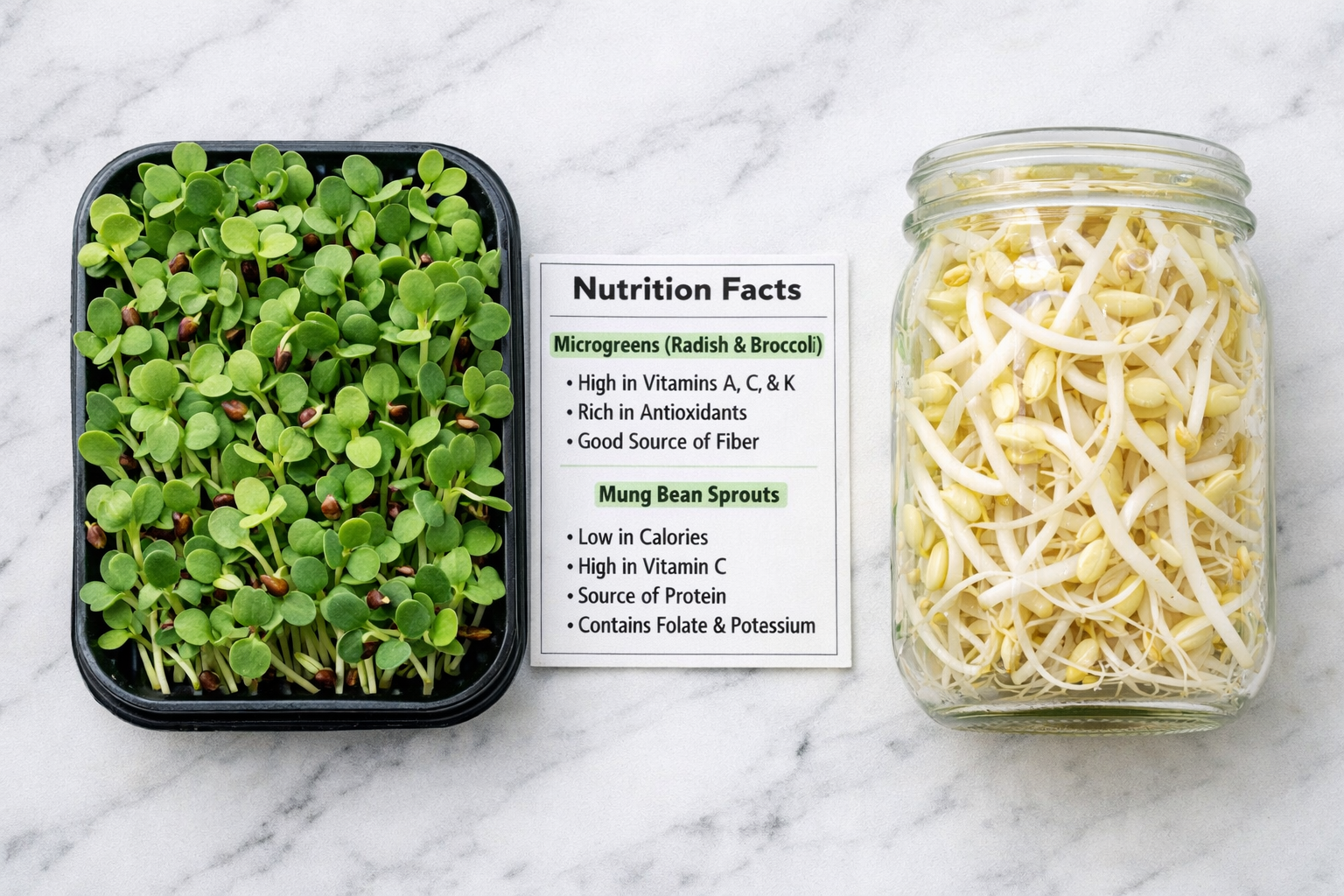
Microgreens generally win on nutrient density. A widely cited 2012 study published in the Journal of Agricultural and Food Chemistry (USDA/University of Maryland) analyzed 25 commercially available microgreens and found that most contained significantly higher levels of vitamins C, E, K, and beta-carotene compared to mature leaves of the same plant. Red cabbage microgreens, for example, had about 40 times more vitamin E and 6 times more vitamin C than mature red cabbage.
Sprouts aren’t nutritional slouches, though. They’re rich in:
- Enzymes that support digestion
- Folate (especially lentil and chickpea sprouts)
- Vitamin C (especially broccoli and mung bean sprouts)
- Protein relative to their size
The reason microgreens tend to pull ahead nutritionally is photosynthesis. Once a seedling is exposed to light and begins producing chlorophyll, it synthesizes a wider range of phytonutrients and antioxidants. Sprouts, grown in the dark in water, skip this phase entirely.
Choose microgreens if you want maximum vitamins and antioxidants per serving.
Choose sprouts if you want fast, easy nutrition with minimal setup.
How to Grow Sprouts in an Apartment (No Soil, No Light Needed)
Sprouts are the easiest edible plant you can grow in an apartment. You need a mason jar, a mesh lid or cheesecloth, seeds, and water — nothing else.
Basic sprout-growing steps:
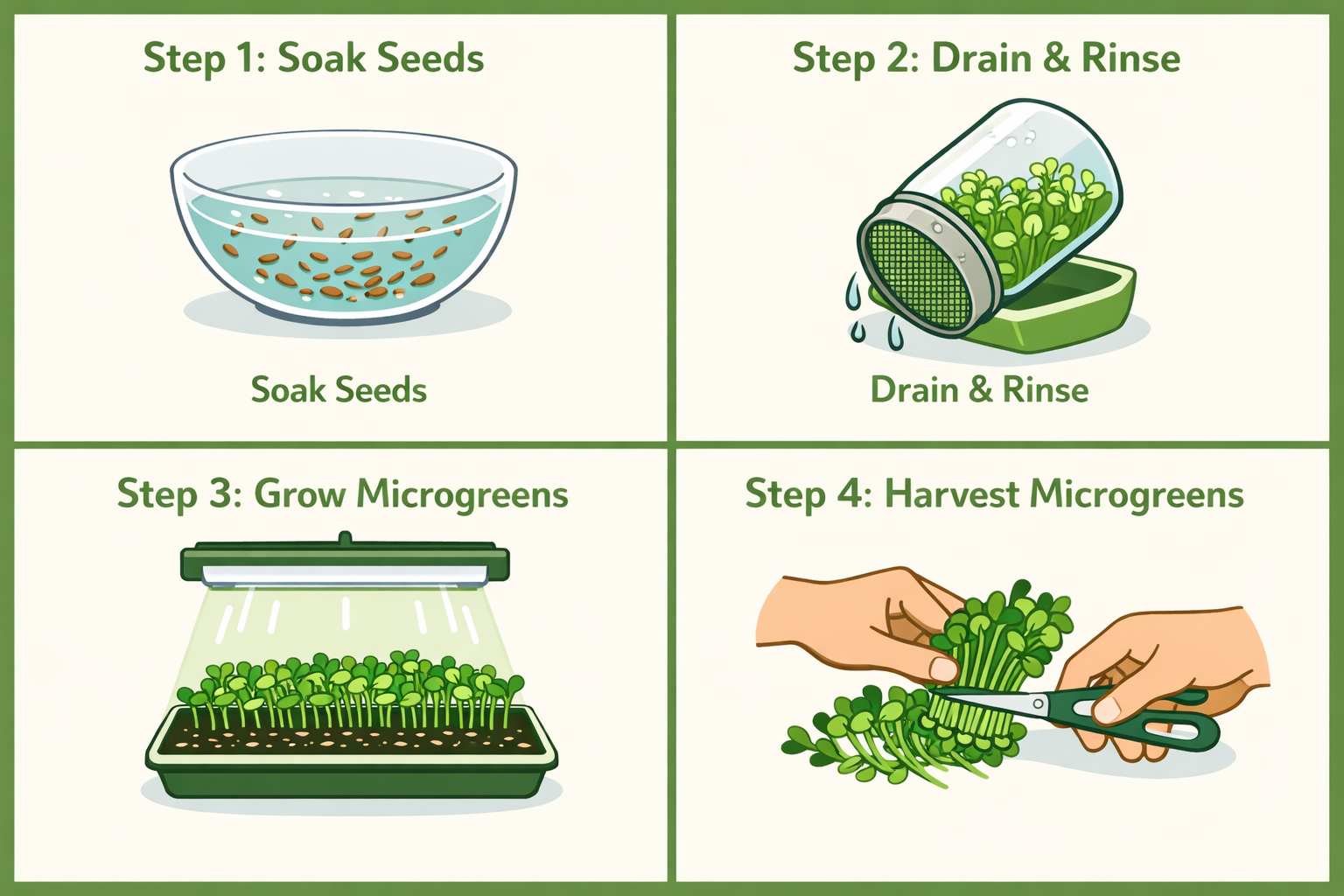
- Rinse 2 tablespoons of seeds (mung beans, lentils, broccoli, or radish work well).
- Soak in water for 8–12 hours.
- Drain and rinse twice daily.
- Keep the jar tilted at an angle so air circulates and water drains.
- Harvest at day 3–5 when sprouts are 1–2 inches long.
Sprouts thrive at room temperature (65–75°F), which most apartments maintain naturally. No grow light, no balcony, no soil. If you’re just starting out with indoor growing, sprouts are the logical first step. For more beginner-friendly indoor growing ideas, see our indoor gardening for small homes guide.
Common mistake: Skipping the twice-daily rinse. This leads to mold and the food-safety issues sprouts are sometimes associated with. Rinse consistently and you’ll have no problems.
How to Grow Microgreens in an Apartment
Microgreens need a bit more setup but are still very manageable in a small apartment. A sunny windowsill or a basic LED grow light, a shallow tray, and a growing medium (potting mix, coco coir, or a grow mat) are the main requirements.
Basic microgreen-growing steps:
- Fill a shallow tray (10″x20″ is standard) with 1–1.5 inches of moist growing medium.
- Scatter seeds densely across the surface.
- Cover with a second tray or dome for 2–3 days (blackout period).
- Move to light once sprouts emerge.
- Water from the bottom to keep leaves dry.
- Harvest with scissors at soil level when the first true leaves appear (day 7–14).
For apartment growers without a south-facing window, a small LED grow light makes a big difference. You can find compact options that sit on a countertop. For more ideas on making the most of limited indoor space, our indoor vertical gardening guide covers creative setups that work in tight apartments.
What’s More Nutritious for Apartments: Microgreens or Sprouts — A Practical Comparison
When answering what’s more nutritious for apartments: microgreens or sprouts? from a practical standpoint, you need to factor in not just raw nutrition but also what you’ll actually grow consistently.
Practical nutrition comparison:
- Broccoli microgreens are one of the most studied varieties. They contain sulforaphane, a compound linked to cellular health, in concentrations that are higher in the microgreen stage than in mature broccoli (per gram of fresh weight), according to research from Johns Hopkins University.
- Mung bean sprouts are a great source of folate and vitamin K, and they’re one of the safest sprout varieties to grow at home.
- Sunflower microgreens are high in protein and zinc — useful for plant-based diets.
- Radish sprouts deliver a spicy punch and contain glucosinolates, which are associated with antioxidant activity.
Bottom line for apartment growers:
| Goal | Best Choice |
|---|---|
| Maximum vitamins per serving | Microgreens |
| Fastest harvest | Sprouts (3–5 days) |
| Smallest space needed | Sprouts |
| Lowest startup cost | Sprouts |
| Year-round growing without grow light | Sprouts |
| Best for salads and garnishes | Microgreens |
| Best for smoothies and wraps | Either |
If you have a windowsill with decent light, start with microgreens. If you have a kitchen counter and a jar, start with sprouts. Many apartment growers end up doing both — sprouts for quick daily nutrition, microgreens for a more substantial weekly harvest.
For more ways to maximize your growing space, check out these small space garden hacks that work just as well indoors as on a balcony.
Are Sprouts Safe to Eat? Understanding the Food Safety Question
Sprouts have a real (not overstated) food-safety consideration. The warm, moist conditions that germinate seeds are also ideal for bacterial growth, including Salmonella and E. coli. The FDA has issued advisories about raw sprout consumption, particularly for people who are pregnant, elderly, or immunocompromised.
How to reduce sprout risk at home:
- Buy seeds labeled specifically for sprouting (they’re tested for pathogens).
- Rinse thoroughly at least twice per day.
- Keep your jar and equipment clean.
- Eat sprouts fresh or lightly cooked.
- Store finished sprouts in the refrigerator and use within 3–4 days.
Microgreens, grown in soil and harvested above the soil line, have a significantly lower contamination risk. Their leaves and stems don’t sit in standing water, which is the main risk factor for sprouts.
Edge case: If you’re growing for young children or someone with a compromised immune system, microgreens are the safer option.
Which Option Fits Better in a Small Apartment?
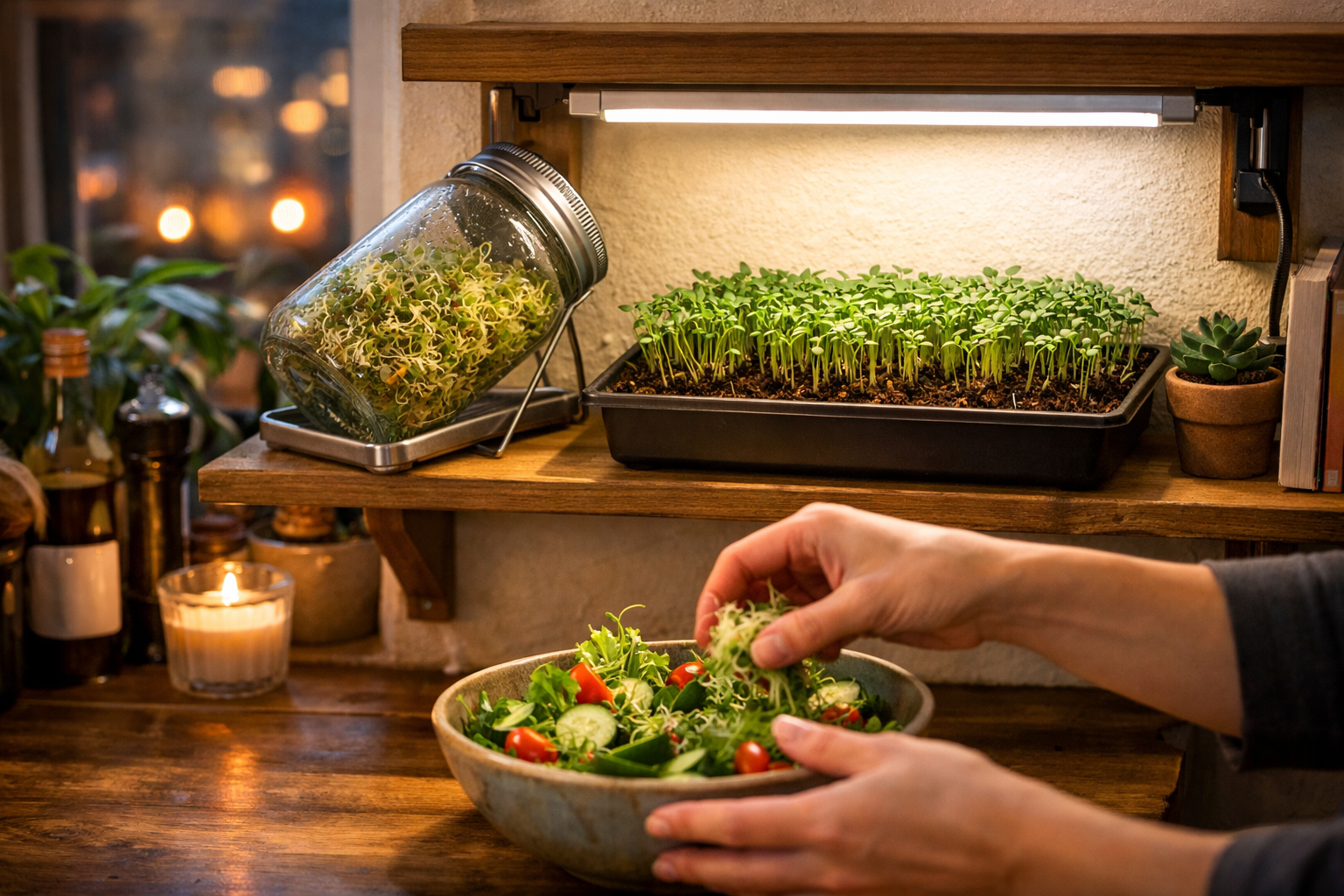
Both fit well in apartments, but they fit differently. Sprouts need almost nothing — a jar on any counter or shelf works. Microgreens need a tray, a light source, and a bit more attention to watering.
If you’re already exploring apartment gardening for beginners, microgreens are a natural next step after sprouts. They introduce you to growing with soil and light without the complexity of larger container plants.
For apartments with very limited counter space, consider stacking microgreen trays vertically. A small wire rack with an LED strip light on each shelf can produce multiple varieties in the footprint of a single tray. This is essentially a mini version of the indoor vertical gardening approach applied to food production.
FAQ: Microgreens vs. Sprouts for Apartment Growing
Q: Can I grow microgreens without a grow light?
Yes, if you have a south- or east-facing window with at least 4 hours of direct light. Without adequate light, microgreens become leggy and lose some nutritional value. A basic LED grow light ($15–30) solves this reliably.
Q: How much do microgreens cost to grow per week?
Once you have trays and a light, seeds are the main ongoing cost. A 1-pound bag of sunflower seeds (enough for several trays) typically costs $5–10. Per tray, most growers spend under $2 in seeds.
Q: Which sprout variety is most nutritious?
Broccoli sprouts are frequently cited for their high sulforaphane content. Mung bean sprouts are the most widely consumed globally and offer a solid mix of folate, vitamin C, and protein.
Q: Do microgreens regrow after cutting?
Most varieties do not regrow after the first cut. You’ll need to reseed the tray. Some growers use a succession planting approach — starting a new tray every 5–7 days — to maintain a continuous harvest. See our succession planting for beginners guide for a simple schedule.
Q: Are sprouts or microgreens better for weight loss?
Both are low-calorie and high in fiber and micronutrients, making them good additions to a weight-conscious diet. Neither is a magic solution, but both add nutritional density to meals without adding significant calories.
Q: Can I grow both microgreens and sprouts at the same time in a small apartment?
Absolutely. They use different equipment and don’t compete for space. Many apartment growers run a jar of sprouts on the counter while a tray of microgreens grows under a light on a shelf.
Q: Which is better for smoothies?
Sprouts blend more smoothly due to their softer texture. Microgreens can be blended but have a stronger flavor. Both work well — it comes down to taste preference.
Q: What seeds should a beginner start with?
For sprouts: mung beans or lentils (forgiving and fast). For microgreens: sunflower or pea shoots (large seeds, easy to handle, mild flavor).
Q: Do microgreens need fertilizer?
No. The seed itself contains enough stored energy to fuel the microgreen through its short growing cycle. Adding fertilizer isn’t necessary and can sometimes cause issues.
Q: Is it cheaper to buy or grow microgreens?
Growing is significantly cheaper over time. Store-bought microgreens often cost $4–8 per small clamshell. A full 10″x20″ tray grown at home produces far more for under $2 in seeds.
Conclusion: Which Should You Grow in Your Apartment?
The answer to what’s more nutritious for apartments: microgreens or sprouts? is clear on paper — microgreens deliver more vitamins, antioxidants, and phytonutrients per serving. But the best choice for your apartment is the one you’ll actually grow and eat consistently.
Actionable next steps:
- Start with sprouts this week. Buy a bag of mung beans or lentils, grab a mason jar, and have your first harvest in 4 days. Zero investment in equipment needed.
- Add microgreens once you’re comfortable. Pick up a shallow tray, a bag of sunflower or pea shoot seeds, and a basic grow light if your windows are limited.
- Grow both in rotation. Sprouts for daily nutrition, microgreens for weekly harvests and variety.
- Explore more apartment growing options. Once you’re comfortable with microgreens and sprouts, our apartment gardening ideas guide covers herbs, compact vegetables, and more.
The gap between “wanting to eat healthier” and “actually doing it” closes fast when your food is growing on your own counter.
References
- Xiao, Z., Lester, G. E., Luo, Y., & Wang, Q. (2012). Assessment of vitamin and carotenoid concentrations of emerging food products: Edible microgreens. Journal of Agricultural and Food Chemistry, 60(31), 7644–7651. https://doi.org/10.1021/jf300459b
- U.S. Food and Drug Administration. (2020). Sprouts: What you should know. https://www.fda.gov/food/consumers/sprouts-what-you-should-know
- Fahey, J. W., Zhang, Y., & Talalay, P. (1997). Broccoli sprouts: An exceptionally rich source of inducers of enzymes that protect against chemical carcinogens. Proceedings of the National Academy of Sciences, 94(19), 10367–10372.
- Turner, E. R., Luo, Y., & Buchanan, R. L. (2020). Microgreen nutrition, food safety, and shelf life: A review. Journal of Food Science, 85(4), 870–882.