Patio Border Planting Ideas: Design & Low-Maintenance Tips 2026
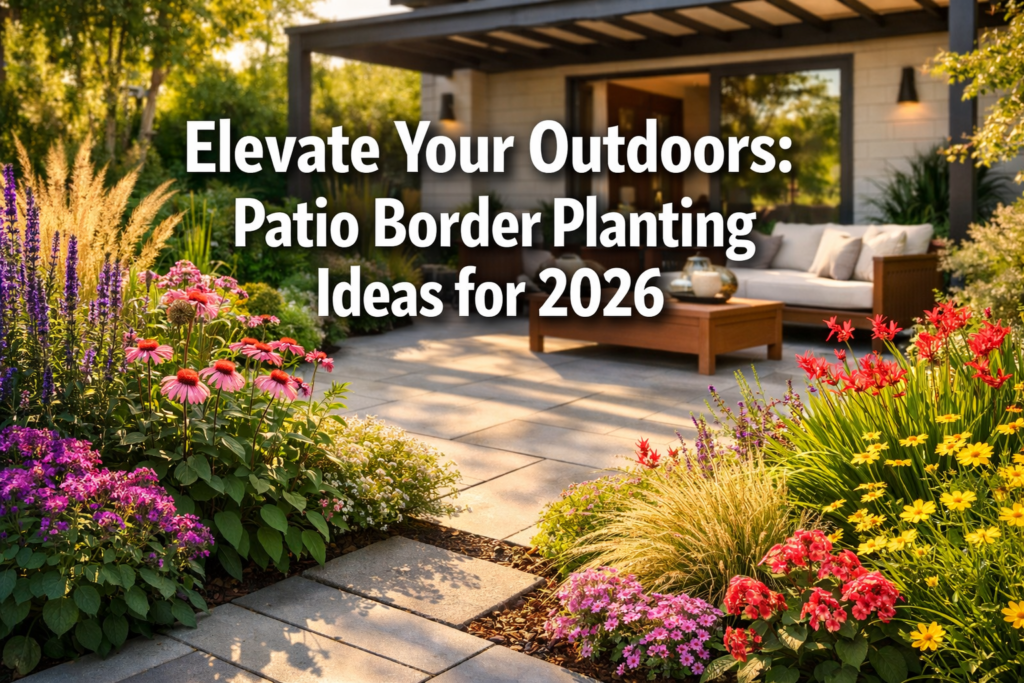
Quick Answer: Enhancing your patio border with strategically chosen plants creates a visually appealing transition from hardscape to garden, boosts curb appeal, and provides privacy or fragrance. Successful patio border planting ideas focus on selecting plants that thrive in your specific climate and light conditions, offer varied textures and heights, and require manageable maintenance.
Key Takeaways:
- Patio borders define outdoor spaces and integrate them with the surrounding landscape.
- Consider sunlight exposure, soil type, and climate zone when selecting plants.
- Layering plants by height creates depth and visual interest in border designs.
- Low-maintenance options like succulents, ornamental grasses, and certain perennials simplify care.
- Container planting offers flexibility and can augment in-ground borders.
- Incorporate edible plants or fragrant varieties for multi-sensory appeal.
- Design for year-round interest by including evergreens and sequential bloomers.
- Ensure plant choices complement your patio’s style and overall home aesthetic.
Why Patio Border Planting Ideas Are Crucial for Outdoor Aesthetics
Patio border planting ideas are crucial for outdoor aesthetics because they transform a functional paved area into a cohesive, inviting extension of your home, blurring the lines between built structure and natural environment. Without plants, a patio can feel stark and disconnected; with thoughtful borders, it becomes an integral part of your garden’s design. These planted edges define boundaries, create visual interest, and can even contribute to the microclimate around your patio by providing shade or windbreaks.
Defining Your Outdoor Oasis
A well-designed patio border acts as a visual frame, drawing the eye and guiding movement within your outdoor space. It offers an opportunity to introduce color, texture, and scent, making the patio a more enjoyable place to relax and entertain.
- Creates a Sense of Enclosure: Low hedges or dense plantings can provide a gentle sense of privacy and coziness without fully walling off the area.
- Softens Hard Edges: Plants naturally soften the harsh lines of concrete, pavers, or stone, making the patio feel more integrated with the landscape.
- Enhances Visual Flow: By extending garden beds to meet the patio, you create a seamless transition from one area to the next, improving overall garden design.
- Boosts Curb Appeal: An attractive patio border instantly elevates the perceived value and beauty of your property, an important consideration for any homeowner in 2026.
Planning for Success: Key Considerations
Before selecting plants, evaluate your specific patio environment. This critical step ensures your chosen plants will thrive and your design efforts will yield lasting beauty.
- Sunlight Exposure: Observe how much sun your patio receives throughout the day. Full sun (6+ hours), partial sun (3-6 hours), or shade (<3 hours) will dictate plant selection.
- Soil Type and Drainage: Most border plants prefer well-draining soil. If your patio border is directly adjacent to a paved area, drainage might be an issue that requires soil amendment or raised beds.
- Climate Zone: Know your USDA Plant Hardiness Zone to select plants that can withstand your region’s winter temperatures.
- Maintenance Level: Consider how much time you are willing to dedicate to watering, pruning, and general care. Opt for low-maintenance plants if your schedule is busy. For tips on managing your indoor plants, which often share care principles, check out “Indoor Plant Care Guide 2026: Grow Thriving Houseplants” (https://minispacegarden.com/indoor-plant-care-guide/).
- Desired Aesthetic: Do you prefer a formal, symmetrical look, or a wild, naturalistic feel? Your style will influence plant choices and arrangement.
Consider the example of a patio facing south, receiving full sun for most of the day. Choosing shade-loving hostas here would lead to plant stress and failure. Instead, sun-loving lavender, sedum, or coneflowers would thrive, providing vibrant color and texture. Conversely, a north-facing patio might benefit from impatiens or ferns.
Low-Maintenance Patio Border Planting Ideas for 2026
For those seeking beautiful patio borders without a significant time commitment, low-maintenance patio border planting ideas often center on resilient perennials, drought-tolerant succulents, and easy-care ornamental grasses. These plant selections minimize the need for frequent watering, pruning, and pest management, making them ideal for busy gardeners in 2026. Prioritizing plants that naturally thrive in your local climate further reduces maintenance.
Resilient Perennials & Groundcovers
Perennials return year after year, establishing strong root systems that often make them more resilient once established. Groundcovers are excellent for filling space and suppressing weeds.
- Lavender (Lavandula): 💜 Drought-tolerant, fragrant, and deer-resistant. Thrives in full sun and well-drained soil. Varieties like ‘Munstead’ or ‘Hidcote’ are compact and ideal for borders.
- Sedum (Stonecrop): 🌸 Known for their succulent leaves and late-season blooms, sedums are incredibly hardy and drought-tolerant. ‘Autumn Joy’ offers striking fall color, while creeping varieties spill beautifully over edges.
- Hostas (Hosta): 🌿 Perfect for shady borders, offering a wide array of leaf colors, sizes, and textures. While not entirely drought-tolerant, they are generally low-maintenance once established. However, be aware they can be attractive to slugs and deer in some regions.
- Creeping Thyme (Thymus serpyllum): 💚 A fragrant, low-growing groundcover that tolerates light foot traffic and thrives in sunny, well-drained spots. Excellent for softening patio edges or filling in gaps between pavers.
Drought-Tolerant Succulents & Cacti
For arid climates or gardeners who prefer minimal watering, succulents and cold-hardy cacti offer unique textures and forms.
- Hens and Chicks (Sempervivum): 💚 These charming rosettes are extremely cold-hardy and require very little water. They produce offsets (chicks) that spread to fill in spaces.
- Ice Plant (Delosperma): 💖 Known for its vibrant, daisy-like flowers and succulent foliage, ice plant creates a colorful, low-growing mat that tolerates heat and drought.
- Agave (Agave): 🌵 While some varieties are large, smaller species like Agave parryi or Agave victoriae-reginae can provide architectural interest in sunny, dry borders. Ensure your zone supports them if leaving outdoors year-round.
Ornamental Grasses
Ornamental grasses provide texture, movement, and often year-round interest with their varied forms and seed heads. They are generally tough and require little care.
- Fescue (Festuca glauca): 💙 Blue fescue forms neat, compact mounds of steel-blue foliage. It’s drought-tolerant and provides excellent contrast in a border.
- Liriope (Liriope muscari): 🌿 Also known as Lilyturf, this grass-like perennial is very versatile, tolerating sun or shade and a range of soil conditions. It offers strap-like foliage and spikes of purple flowers.
- Mondo Grass (Ophiopogon japonicus): 🖤 A fine-textured, dark green, or black grass-like plant that forms dense clumps. Ideal for creating a sophisticated, low border in partial to full shade.
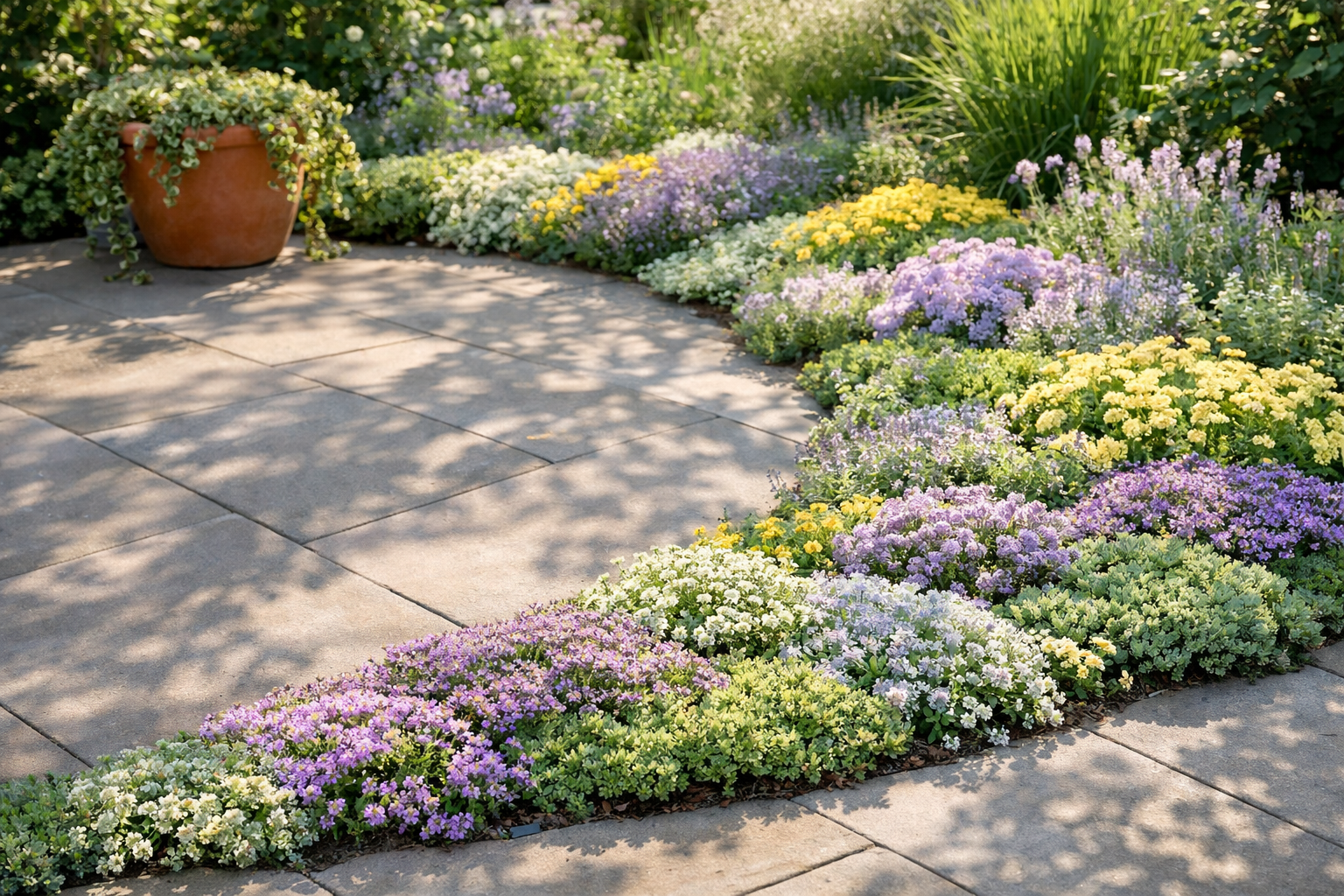
Quick Tip: When designing with low-maintenance patio border planting ideas, group plants with similar water and light needs together. This simplifies care, especially for watering schedules. For general plant care, consider revisiting the “Beginner-Friendly Plants: Your Easy Guide To Thriving Greenery In” (https://minispacegarden.com/beginner-friendly-plants/) article.
Creating Visual Interest with Layered Patio Border Planting Ideas
Creating visual interest with layered patio border planting ideas involves arranging plants by height, texture, and color to produce depth and dynamic appeal, moving the eye from the patio outward. This technique ensures that shorter plants aren’t obscured by taller ones and that the border maintains interest throughout the seasons. A well-layered border adds a professional, sophisticated touch to any outdoor space.
The Art of Layering: Front, Middle, and Back
Layering typically involves three main tiers:
Front Layer (Edging):
- Height: 6-12 inches (15-30 cm)
- Purpose: Softens the patio edge, provides continuous low-lying color or texture.
- Plant Examples:
- Creeping Phlox (Phlox subulata): Brilliant spring color, low mat.
- Sweet Alyssum (Lobularia maritima): Fragrant, cascading annual for continuous bloom.
- Dwarf Mondo Grass (Ophiopogon japonicus ‘Nana’): Tiny, dark green clumps, very neat.
- Lamb’s Ear (Stachys byzantina): Soft, silvery foliage adds texture.
Middle Layer (Body):
- Height: 1-2 feet (30-60 cm)
- Purpose: Adds primary color and form, bridges the front and back layers.
- Plant Examples:
- Coneflower (Echinacea purpurea): Daisy-like flowers, attracts pollinators.
- Salvia (Salvia nemorosa): Spikes of blue or purple, long bloom time.
- Daylily (Hemerocallis): Arching foliage, a wide range of flower colors.
- Coral Bells (Heuchera): Colorful foliage in shades of purple, green, or amber, also has delicate flowers.
Back Layer (Background/Height):
- Height: 2-4 feet+ (60-120 cm+)
- Purpose: Provides a backdrop, adds vertical interest, or screens views.
- Plant Examples:
- Ornamental Grasses (e.g., Karl Foerster Feather Reed Grass): Upright, feathery plumes, year-round interest.
- Compact Shrubs (e.g., Dwarf Spiraea, Hydrangea ‘Little Lime’): Structure and seasonal blooms.
- Tall Salvia (e.g., ‘May Night’): Extended purple flower spikes.
- Delphinium (Delphinium): Stunning blue spires, requires staking in some cases.
Incorporating Texture and Color
Beyond height, varying texture and color are crucial for a dynamic patio border.
- Texture Contrast:
- Combine fine-textured plants (e.g., ferns, ornamental grasses) with coarse-textured plants (e.g., hostas, broad-leaved sedums).
- Use spiky forms (e.g., Yucca) alongside mounding or cascading plants (e.g., petunias).
- Color Schemes:
- Monochromatic: Using different shades of one color (e.g., various blues and purples) creates a serene, harmonious look.
- Complementary: Pairing colors opposite on the color wheel (e.g., purple and yellow, blue and orange) creates vibrant contrast.
- Analogous: Using colors adjacent on the color wheel (e.g., yellow, orange, red) creates a smooth, flowing transition.
- Seasonal Interest: Choose plants that bloom at different times to ensure continuous color from spring through fall. Include evergreens for winter structure.
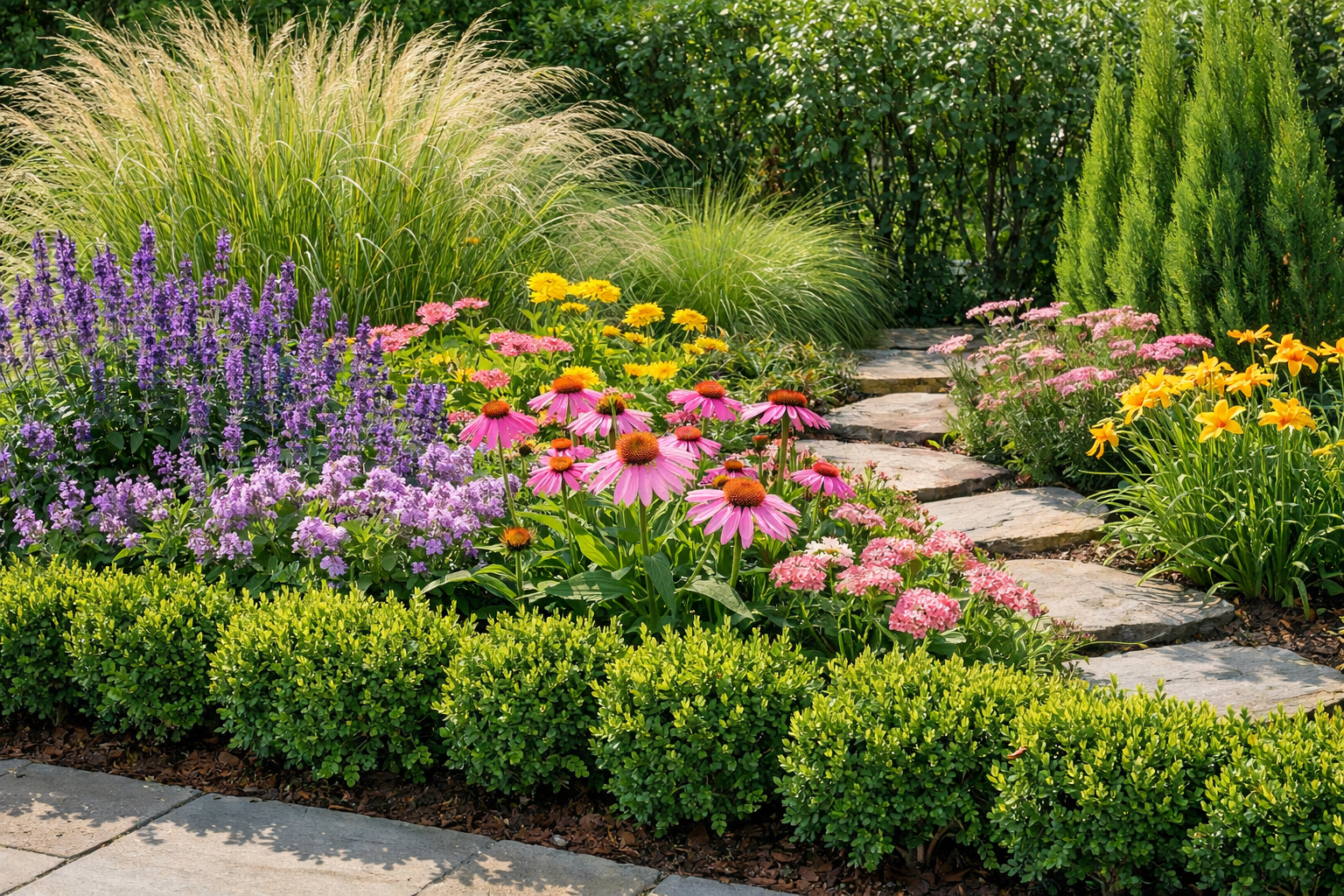
Decision Rule: Choose a layering strategy that aligns with your patio’s scale. A small patio might benefit from just two layers (front and middle), while a larger space can accommodate three or more for grander effect. For guidance on maximizing smaller spaces, consider “2026 Space Saving Garden Ideas: Maximize Your Small Space” (https://minispacegarden.com/space-saving-garden-ideas/).
Functional & Themed Patio Border Planting Ideas
Functional and themed patio border planting ideas go beyond aesthetics by integrating plants that serve a specific purpose—like providing fragrance, attracting pollinators, or offering edible harvests—or by aligning with a particular design style. This approach transforms the border into a multi-sensory experience or a cohesive extension of a broader garden theme.
Edible Borders: Beauty You Can Eat
Integrating edible plants into your patio border provides fresh ingredients steps away from your kitchen or grill, blending utility with beauty. This approach is gaining popularity for its sustainability and convenience in 2026.
- Herbs: Many herbs are attractive and thrive in full sun with good drainage.
- Rosemary (Rosmarinus officinalis): 🌿 A woody evergreen that can be pruned into a low hedge, offering fragrant foliage.
- Thyme (Thymus vulgaris): 💚 Spreading varieties can be used as groundcover, while upright types offer delicate flowers.
- Chives (Allium schoenoprasum): 🌸 Grass-like foliage with cheerful purple flowers in spring.
- Basil (Ocimum basilicum): 🍃 Bushy annuals that need warmth and consistent moisture, providing fresh leaves for cooking.
- Fruiting Plants: Select compact varieties suitable for small spaces.
- Strawberries (Fragaria x ananassa): 🍓 Low-growing, produce sweet fruit, and can trail beautifully over edges.
- Bush Tomatoes (Solanum lycopersicum): 🍅 Dwarf determinate varieties stay compact and produce abundant fruit.
- Compact Peppers (Capsicum annuum): 🌶️ Offer colorful fruit and attractive foliage.
- Edible Flowers:
- Nasturtiums (Tropaeolum majus): 🌼 Bright, peppery flowers and leaves.
- Pansies (Viola x wittrockiana): 💜 Delicate, sweet flowers perfect for garnishes.
For more inspiration on growing edibles in limited areas, explore “DIY Container Gardening Ideas For Small Spaces: 2026 Guide” (https://minispacegarden.com/diy-container-gardening-ideas/).
Fragrant Borders: A Sensory Delight
Adding fragrant plants significantly enhances the patio experience, providing delightful scents that can be calming or invigorating.
- Lavender (Lavandula): 💜 Already mentioned for low-maintenance, its iconic scent is a garden classic.
- Scented Geraniums (Pelargonium): 🌿 Varieties like ‘Citronella’ (lemon scent) or ‘Rose’ offer unique fragrances when leaves are brushed.
- Jasmine (Jasminum): 🌸 Climbing varieties can be trained on a small trellis behind the border, releasing intense sweet scents, especially in the evening.
- Nicotiana (Flowering Tobacco): 🌼 Some varieties have trumpet-shaped flowers that release a potent, sweet fragrance at night.
Pollinator-Friendly Borders: Supporting Local Ecosystems
Designing a border that attracts bees, butterflies, and hummingbirds not only supports local ecosystems but also adds dynamic movement and life to your patio.
- Coneflower (Echinacea): 🌸 Attracts bees and butterflies with its prominent central cones.
- Bee Balm (Monarda): 💖 Irregular, tufted flowers are a magnet for bees and hummingbirds.
- Salvia (Salvia): 🦋 Many varieties, from annuals to perennials, offer nectar-rich flowers.
- Milkweed (Asclepias): 🧡 Essential host plant for Monarch butterfly caterpillars.
- Butterfly Bush (Buddleja): 🦋 A shrub that produces long, conical flower clusters irresistible to butterflies. Choose sterile varieties to prevent invasiveness in some regions.
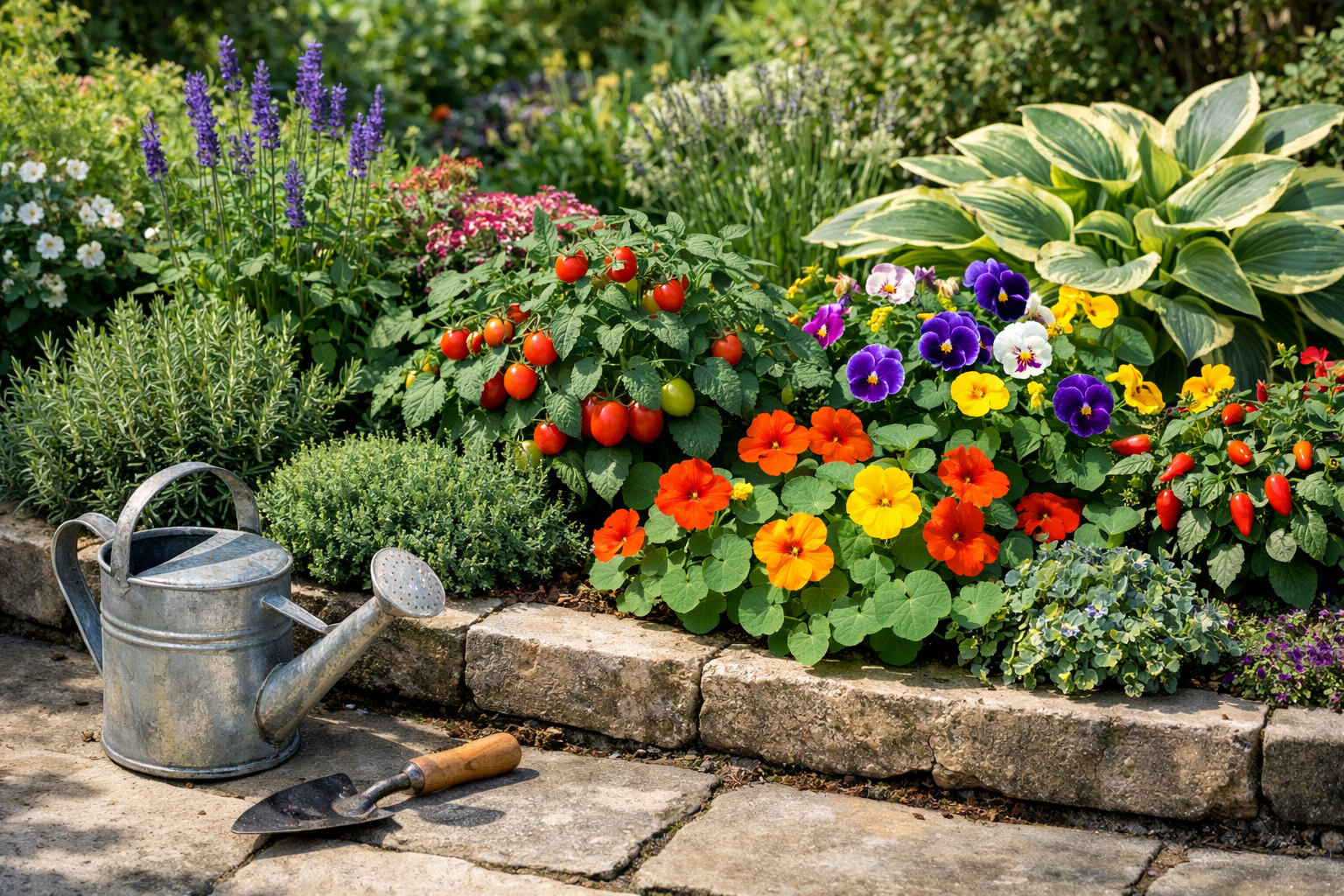
Common Mistake: Overlooking a plant’s mature size when planning a functional or themed border can lead to overcrowding. Always check the expected height and spread to ensure adequate space for growth and air circulation.
Container Planting for Patio Borders: Flexibility and Flair
Container planting offers unparalleled flexibility and flair for patio borders, allowing you to introduce plants where in-ground planting is impractical or to easily change your design with the seasons. They are perfect for rental properties, urban environments, or simply adding a dynamic element to existing borders in 2026. Containers also provide excellent drainage and allow for precise control over soil conditions.
Benefits of Container Gardening for Borders
- Mobility: Easily rearrange plants to change the look, move them to optimize sun exposure, or bring tender plants indoors for winter. This makes containers a top choice for apartment and small space gardening.
- Versatility: Grow plants that wouldn’t thrive in your native soil or climate, like acid-loving blueberries in alkaline soil.
- Design Flexibility: Create temporary themes, add pops of seasonal color, or build vertical interest. For innovative uses of containers, see “DIY Container Gardening Ideas For Small Spaces: 2026 Guide” (https://minispacegarden.com/diy-container-gardening-ideas/).
- Accessibility: Raised containers make gardening more accessible for individuals with mobility challenges.
Choosing the Right Containers and Plants
Selecting appropriate containers and plants is key to successful patio container borders.
- Container Size: Larger containers hold more soil, dry out slower, and provide more room for root growth, leading to healthier plants. Aim for pots at least 12-18 inches in diameter for most border plants.
- Drainage: Crucial for plant health. Ensure all containers have drainage holes. Use pot feet to elevate pots and prevent waterlogging.
- Material:
- Terracotta: Classic look, breathable, but dries out quickly.
- Plastic/Resin: Lightweight, retains moisture well, wide range of colors/styles, but can look less natural.
- Glazed Ceramic: Retains moisture, often decorative, but heavy.
- Wood: Natural look, provides good insulation, but can rot over time.
- Plant Selection (Thriller, Filler, Spiller): A popular design approach for containers.
- Thriller: A tall, upright plant for dramatic height (e.g., Canna Lily, tall ornamental grass, Dwarf Delphinium).
- Filler: Mounding plants that fill the middle space (e.g., Petunia, Coleus, Salvia, Begonia).
- Spiller: Trailing plants that cascade over the edge of the container (e.g., Sweet Potato Vine, Creeping Jenny, Lobelia).
Practical Tips for Container Borders
- Watering: Containers dry out faster than in-ground plantings. Check moisture daily, especially during hot, dry spells.
- Fertilizing: Container plants need more frequent feeding as nutrients leach out with watering. Use a slow-release granular fertilizer or a diluted liquid feed regularly.
- Grouping: Cluster containers of varying heights and sizes for a more cohesive and visually appealing display.
- Winterizing: Move tender perennials or annuals to a sheltered spot or indoors during colder months.
Designing for All Seasons: Year-Round Patio Border Planting Ideas
Designing for all seasons with year-round patio border planting ideas ensures your outdoor space remains attractive and inviting regardless of the time of year. This involves selecting a diverse palette of plants, including evergreens for winter structure, spring bloomers for early color, summer perennials for sustained vibrancy, and fall foliage or late-season flowers for autumnal interest. The goal is to create a dynamic display that evolves beautifully throughout the calendar year.
The Foundation: Evergreens for Winter Structure
Evergreens are the backbone of a four-season border, providing consistent color and form when deciduous plants have shed their leaves.
- Dwarf Conifers: Varieties like dwarf pines (e.g., ‘Mugo Pine’), dwarf spruces, or junipers offer varied textures and shapes, from mounding to upright, and remain green year-round.
- Broadleaf Evergreens:
- Boxwood (Buxus): Classic choice for formal, clipped hedges, providing dense green foliage.
- Dwarf Holly (Ilex crenata ‘Soft Touch’): Small, spineless leaves and a compact habit, offering a softer alternative to boxwood.
- Rhododendron/Azalea (Rhododendron spp.): Evergreen varieties provide beautiful spring blooms and lush foliage throughout the year in appropriate climates.
Seasonal Highlights: Bloom and Foliage
- Spring Awakening:
- Bulbs: Plant daffodils, tulips, and hyacinths in layers for a burst of early spring color.
- Perennials: Bleeding Heart (Dicentra spectabilis), Primrose (Primula), and early-blooming Hellebores provide gentle color and texture.
- Small Shrubs: Forsythia (though deciduous) can offer an early splash of yellow behind evergreens.
- Summer Vibrancy:
- Continuous Bloomers: Salvia, Coneflower (Echinacea), Daylily (Hemerocallis), and Phlox offer extended color.
- Annuals: Integrate petunias, impatiens (for shade), or marigolds for consistent, bright color that lasts until frost.
- Foliage: Coleus (for color in shade/part sun) or ornamental sweet potato vine adds non-flowering visual appeal.
- Autumn Richness:
- Late Bloomers: Sedum ‘Autumn Joy’, Aster, and Chrysanthemum provide color as other plants fade.
- Foliage: Plants with attractive fall foliage, such as some dwarf maples (e.g., ‘Bloodgood’ Japanese Maple if space allows), certain Fothergilla varieties, or even the subtle bronze of some ornamental grasses like Little Bluestem.
- Berries: Plants like Winterberry Holly (Ilex verticillata) (deciduous but berries persist) or Pyracantha offer bright berries for late-season interest.
Table: Year-Round Interest in a Patio Border
| Season | Plant Type/Characteristic | Example Plants | Design Contribution |
|---|---|---|---|
| Winter | Evergreens (Foliage) | Dwarf Conifers, Boxwood, Mondo Grass | Structure, constant green, texture |
| Spring | Early Bloomers, Bulbs | Daffodils, Tulips, Bleeding Heart | First burst of color, anticipation |
| Summer | Continuous Perennials, Annuals | Salvia, Echinacea, Petunia, Daylily | Peak color, vibrancy, attracting pollinators |
| Autumn | Late Bloomers, Fall Foliage | Sedum ‘Autumn Joy’, Aster, Dwarf Japanese Maple | Rich colors, texture, transition |
Edge Case: If you live in a climate with very harsh winters, consider using a higher proportion of evergreen shrubs and cold-hardy ornamental grasses, supplemented by robust annuals in containers that can be removed or composted before the severe cold. This strategy minimizes winter die-back issues.
Common Mistakes to Avoid in Patio Border Planting Ideas
When implementing patio border planting ideas, avoiding common mistakes can save time, effort, and money, ensuring your border thrives and looks its best. These errors often stem from overlooking fundamental gardening principles or neglecting specific site conditions. Being mindful of these pitfalls will lead to a more successful and aesthetically pleasing outcome in 2026.
Neglecting Site Conditions
- Ignoring Sun Exposure: Planting sun-loving plants in deep shade or vice-versa is a primary reason for plant failure.
- Solution: Observe your patio’s sun patterns for at least one full day, noting areas of full sun, partial sun, and full shade before purchasing plants.
- Poor Soil Preparation: Compacted, nutrient-poor soil or soil with inadequate drainage will stress plants.
- Solution: Amend soil with organic matter like compost before planting. For heavy clay, add grit or sand; for sandy soil, add more compost to improve water retention.
- Incorrect Hardiness Zone: Selecting plants not suited for your local climate will result in plants that won’t survive winter or thrive in summer.
- Solution: Always check your USDA Plant Hardiness Zone and cross-reference it with the plant’s requirements.
Overcrowding and Under-planting
- Planting Too Closely: This common mistake leads to poor air circulation, increased disease risk, stunted growth, and plants competing for resources.
- Solution: Always check the mature size of plants (height and spread) and space them according to recommendations. It’s better to leave some space initially than to deal with overcrowding later.
- Under-planting (Too Sparse): While less common, under-planting can leave large gaps, making the border look unfinished and allowing weeds to establish.
- Solution: Use temporary annuals to fill in gaps while slower-growing perennials establish, or plan for plants that will grow to fill the space within a year or two.
Lack of Design Cohesion
- Haphazard Plant Selection: Choosing plants solely based on individual appeal without considering how they work together can result in a chaotic, disjointed look.
- Solution: Develop a color scheme and consider plant textures and forms. Create a planting plan on paper first, even a simple sketch, to visualize the arrangement.
- Ignoring Seasonal Interest: A border full of spring bloomers will be dull by summer.
- Solution: Include plants with staggered bloom times, interesting foliage, and evergreens to ensure year-round appeal.
- Improper Edging: A poorly defined border can look messy and allow grass or weeds to invade.
- Solution: Install a crisp, clean edge using materials like metal, plastic, brick, or stone to clearly separate the patio from the planting area.
Example Scenario: A common mistake is buying a small, blooming petunia for its instant color and planting it directly against a large, slow-growing conifer without considering the conifer’s mature width. Within a few seasons, the petunia would be smothered, and the conifer would appear choked. A better approach would be to select a petunia that trails from a container placed near the conifer, or to plant a low-growing, spreading perennial like creeping sedum that will eventually form a complementary groundcover around the conifer’s base, respecting its mature size.
Maintenance Schedule for Thriving Patio Borders in 2026
A consistent maintenance schedule is essential for thriving patio borders, ensuring plants remain healthy, diseases are minimized, and the aesthetic appeal is sustained throughout the growing season and beyond. Establishing a routine in 2026 for watering, feeding, pruning, and weeding will make tasks manageable and prevent minor issues from becoming major problems.
Spring: Waking Up the Border
- Clean-up (Early Spring): Remove any lingering winter debris, dead foliage, or spent stalks from last year. This prevents diseases and makes way for new growth.
- Soil Amendment: Lightly top-dress with a layer of compost (1-2 inches) to replenish nutrients and improve soil structure.
- Fertilizing: Apply a slow-release granular fertilizer or a balanced organic feed as new growth emerges, especially for heavy feeders.
- Pruning: Cut back any dormant perennial stems. Prune flowering shrubs after they finish blooming.
- Dividing Perennials: If perennials are overcrowded or less vigorous, divide them and replant or share the divisions.
- Planting: This is the ideal time to plant new perennials, shrubs, and cool-season annuals.
Summer: Peak Performance
- Watering: This is often the most critical task. Water deeply and consistently, especially during dry spells. Group plants with similar water needs. Consider “Indoor Plant Watering Schedule Trackers: Methods Compared (2026)” (https://minispacegarden.com/indoor-plant-watering-schedule-trackers/) for inspiration on tracking moisture levels.
- Deadheading: Remove spent flowers from annuals and many perennials to encourage continuous blooming.
- Weeding: Regularly remove weeds by hand. Weeds compete with your plants for water and nutrients. A layer of mulch can help suppress them.
- Pest and Disease Check: Inspect plants regularly for signs of pests or diseases. Address issues early with appropriate organic or chemical controls.
- Support: Provide stakes or cages for taller plants like delphiniums or lilies to prevent them from flopping over.
Fall: Preparing for Dormancy
- Cutting Back: Once perennials have faded and died back, cut their stems to a few inches above the ground. Some prefer to leave seed heads for winter interest and bird food.
- Winter Protection: Apply a layer of mulch (2-4 inches) over the border to insulate roots from extreme cold and temperature fluctuations.
- Planting: Fall is an excellent time to plant new trees, shrubs, and spring-flowering bulbs.
- Watering: Continue to water evergreens and new plantings until the ground freezes solid.
Winter: Resting and Planning
- Observation: Even in winter, take time to observe the structure of your border, especially evergreens and hardscaping. This is a good time to reflect on what worked and what didn’t in the past season.
- Planning: Use this dormant period to plan for the next growing season, researching new plants, designing changes, and ordering seeds.
- Tool Maintenance: Clean and sharpen gardening tools, ensuring they are ready for spring.
Troubleshooting Tip: If plants in your patio border are suddenly wilting despite adequate watering, check for drainage issues. Soggy roots can lead to root rot, which mimics drought symptoms. Dig a small test hole near the affected plant; if water pools, improve drainage by adding more organic matter or creating a slightly raised bed.
Conclusion
Designing and maintaining appealing patio border planting ideas is an investment that profoundly enhances your outdoor living experience, transforming a simple paved area into a vibrant, integrated extension of your home. By carefully considering factors such as sunlight, climate, desired maintenance level, and aesthetic goals, you can select a diverse palette of plants that not only thrive but also provide continuous visual interest throughout the year. From the structural elegance of evergreens to the dynamic burst of seasonal blooms and the practical charm of edible plants, a well-planned patio border elevates both the beauty and functionality of your outdoor space.
Actionable Next Steps:
- Assess Your Space: Spend a week observing your patio’s sunlight patterns and identifying your USDA Plant Hardiness Zone.
- Define Your Style: Decide whether you prefer low-maintenance, fragrant, edible, or a layered design for your border.
- Create a Plan: Sketch out your border design, noting plant heights, textures, and color schemes.
- Source Wisely: Choose plants appropriate for your conditions, consulting local nurseries for expert advice.
- Start Small: Begin with a manageable section of your border if you’re new to gardening, gradually expanding as you gain confidence.
FAQ
Q1: What are the best low-maintenance plants for a patio border?
A1: Excellent low-maintenance options include Lavender, Sedum, Hostas (for shade), Creeping Thyme, ornamental grasses like Blue Fescue, and drought-tolerant succulents such as Hens and Chicks.
Q2: How do I choose plants that will thrive in my patio border?
A2: To ensure plants thrive, assess your patio’s sunlight exposure (full sun, partial, shade), know your USDA Plant Hardiness Zone, and consider your soil type and drainage. Select plants whose needs match these conditions.
Q3: Can I use containers for patio border planting ideas?
A3: Yes, container planting offers great flexibility, allowing you to easily rearrange plants, move tender varieties indoors, and grow plants that might not suit your in-ground soil. Use the “thriller, filler, spiller” method for dynamic arrangements.
Q4: How can I create year-round interest in my patio border?
A4: Design for year-round appeal by incorporating evergreens for winter structure, spring-flowering bulbs, summer perennials for continuous blooms, and plants with attractive fall foliage or berries for autumn interest.
Q5: What’s the “layering” technique in patio border planting?
A5: Layering involves arranging plants by height: shorter plants in the front (edging), medium-height plants in the middle, and taller plants in the back. This creates depth and ensures all plants are visible.
Q6: What are common mistakes to avoid in patio border planting?
A6: Avoid neglecting sun exposure and soil conditions, overcrowding plants, planting too sparsely, and a lack of overall design cohesion. Always research a plant’s mature size before planting.
Q7: How often should I water my patio border plants?
A7: Watering frequency depends on plant type, soil, and weather. Generally, water deeply when the top inch or two of soil feels dry, especially for container plants and during hot, dry periods.
Q8: Can I grow edible plants in my patio border?
A8: Absolutely. Herbs like rosemary and thyme, compact fruiting plants such as strawberries and dwarf tomatoes, and edible flowers like nasturtiums can create a beautiful and functional edible border.
Q9: What is the ideal soil for patio border plants?
A9: Most patio border plants prefer well-draining, fertile soil. Amend existing soil with plenty of organic matter (compost) to improve structure, fertility, and drainage.
Q10: How do I maintain my patio border throughout the year?
A10: Follow a seasonal schedule: spring clean-up and fertilizing; summer deadheading, watering, and weeding; fall cutting back and mulching; and winter planning and tool maintenance.
References
- The Old Farmer’s Almanac. (2024). USDA Plant Hardiness Zone Map. Retrieved from https://www.almanac.com/gardening/planting-calendar/hardiness-zones
- University of California Agriculture and Natural Resources. (2023). Gardening in Containers. Retrieved from https://ucanr.edu/sites/sacmg/Growing_Plants/Container_Gardening/
- Missouri Botanical Garden. (2024). Plant Finder. Retrieved from https://www.missouribotanicalgarden.org/plantfinder/plantfindersearch.aspx