Is it realistic to eat 80% homegrown food from a small apartment garden?
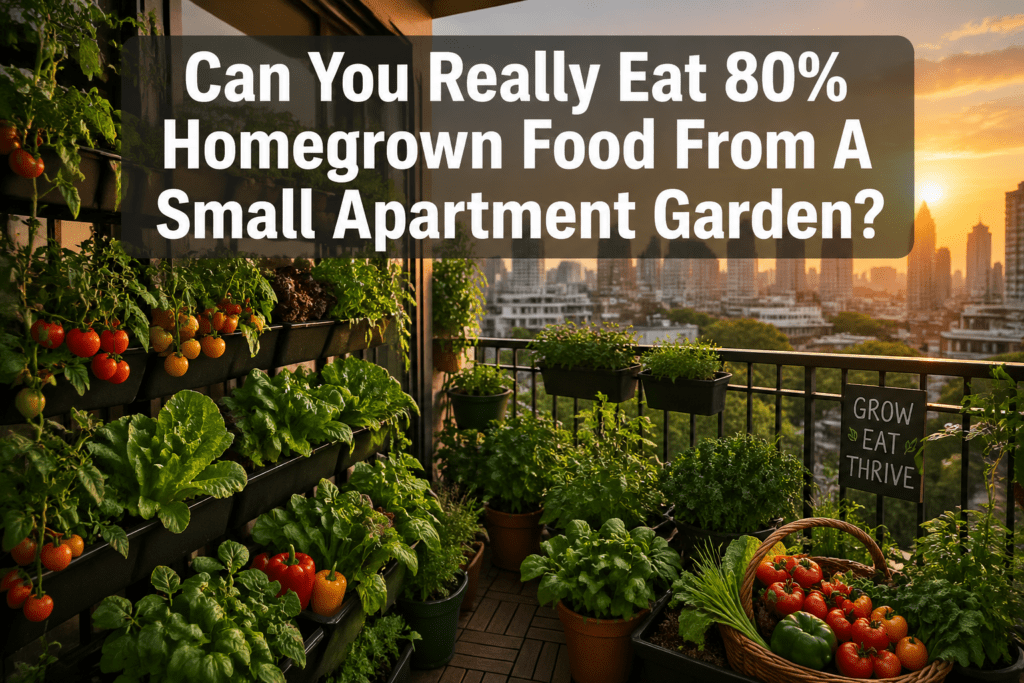
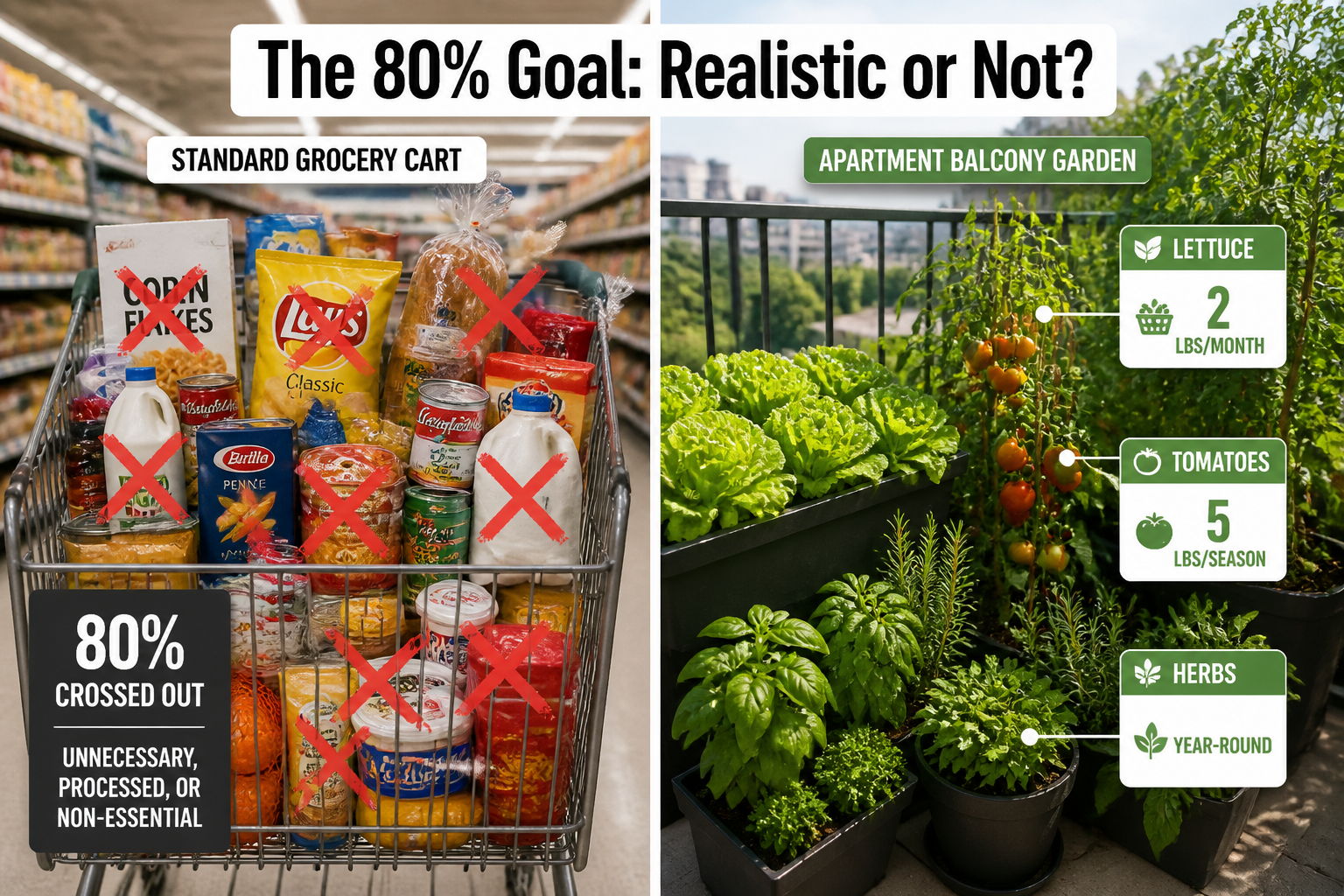
Quick Answer: For most apartment dwellers, growing 80% of their food from a small indoor or balcony garden is not realistic as a consistent, year-round goal. However, it’s entirely possible to grow 20–40% of your fresh produce, and in some high-output setups with strong light and vertical space, dedicated growers have pushed closer to 50–60% of their vegetable and herb intake. The 80% figure is achievable only under very specific conditions, and understanding those conditions is what matters most.
Key Takeaways
- 80% food self-sufficiency from a small apartment garden is not realistic for most people, but 20–50% is achievable with the right crops and setup.
- Caloric staples (grains, legumes, proteins) are nearly impossible to grow in apartment-scale spaces, which alone caps the realistic percentage well below 80%.
- High-value crops like herbs, leafy greens, cherry tomatoes, and peppers give the best return per square foot.
- Vertical growing, grow lights, and succession planting can significantly increase yield from limited space.
- The “80% goal” works better as a fresh produce target rather than a total diet target.
- Your apartment’s light conditions, balcony size, and climate zone are the three biggest variables.
- Starting small and scaling up is more sustainable than trying to replace grocery shopping overnight.
What Does “80% Homegrown Food” Actually Mean?
The phrase “80% homegrown food” means different things depending on how you measure it. Is it 80% of calories? 80% of grocery spending? 80% of the variety of foods you eat?
This distinction matters a lot. If you measure by caloric intake, 80% homegrown is nearly impossible from an apartment garden because most calories come from grains, oils, meat, and legumes — none of which grow efficiently in containers. If you measure by number of ingredients or fresh produce consumed, the number becomes far more achievable.
Three common ways people measure food self-sufficiency:
| Measurement Method | Realistic % from Apartment Garden |
|---|---|
| % of total calories | 5–15% (very hard to exceed) |
| % of fresh produce consumed | 30–60% (achievable with effort) |
| % of grocery bill | 10–25% (herbs and greens help most) |
| % of meals with at least one homegrown ingredient | 60–80% (very achievable) |
The most honest framing: You can realistically have a homegrown ingredient in 80% of your meals. But replacing 80% of your total food intake from a small apartment garden is a different claim entirely.
Is It Realistic to Eat 80% Homegrown Food from a Small Apartment Garden? (The Hard Numbers)
No, for most apartment setups, 80% total food self-sufficiency is not realistic. Here’s why the math works against it.
The average adult needs roughly 2,000 calories per day, or about 730,000 calories per year. Growing that much food requires significant land. According to estimates from urban agriculture researchers, producing a full diet for one person requires approximately 4,000–6,000 square feet of growing space using traditional methods. Even intensive methods like biointensive gardening require around 1,000 square feet per person for a complete diet.
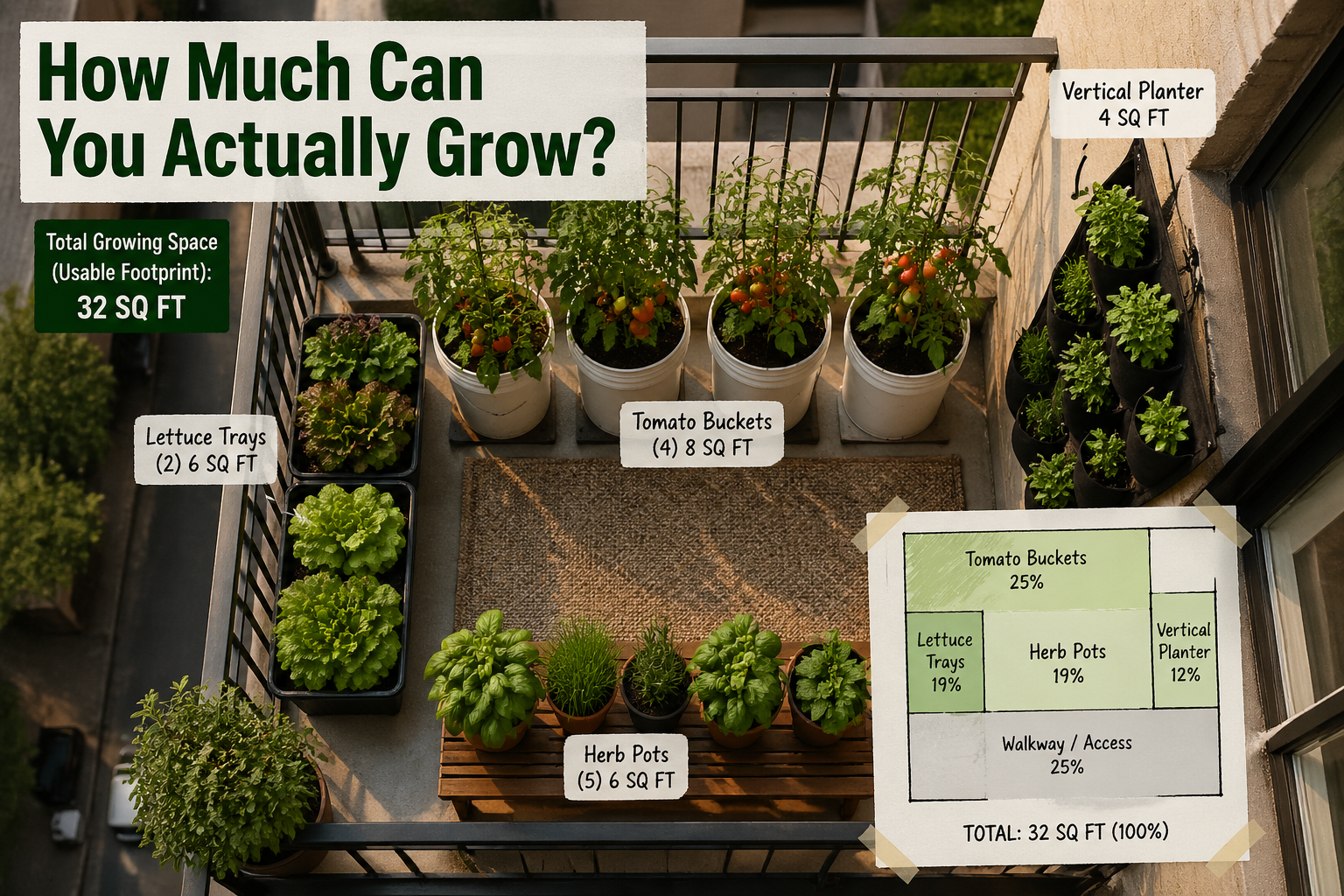
A typical apartment balcony offers 40–100 square feet. An indoor setup might add another 20–50 square feet under grow lights. That’s a gap of roughly 10:1 or more.
What a 100 sq ft apartment garden can realistically produce (estimated annually):
- Leafy greens (lettuce, spinach, kale): 15–30 lbs
- Herbs (basil, mint, parsley, cilantro): 5–10 lbs
- Cherry tomatoes: 10–20 lbs
- Peppers: 5–10 lbs
- Radishes/green onions: 5–8 lbs
That’s a meaningful contribution to your diet, but it represents a small fraction of total caloric needs. For practical strategies to maximize what that space can do, the focus should be on high-yield, nutrient-dense crops rather than caloric staples.
Which Crops Give the Best Return in a Small Apartment Garden?
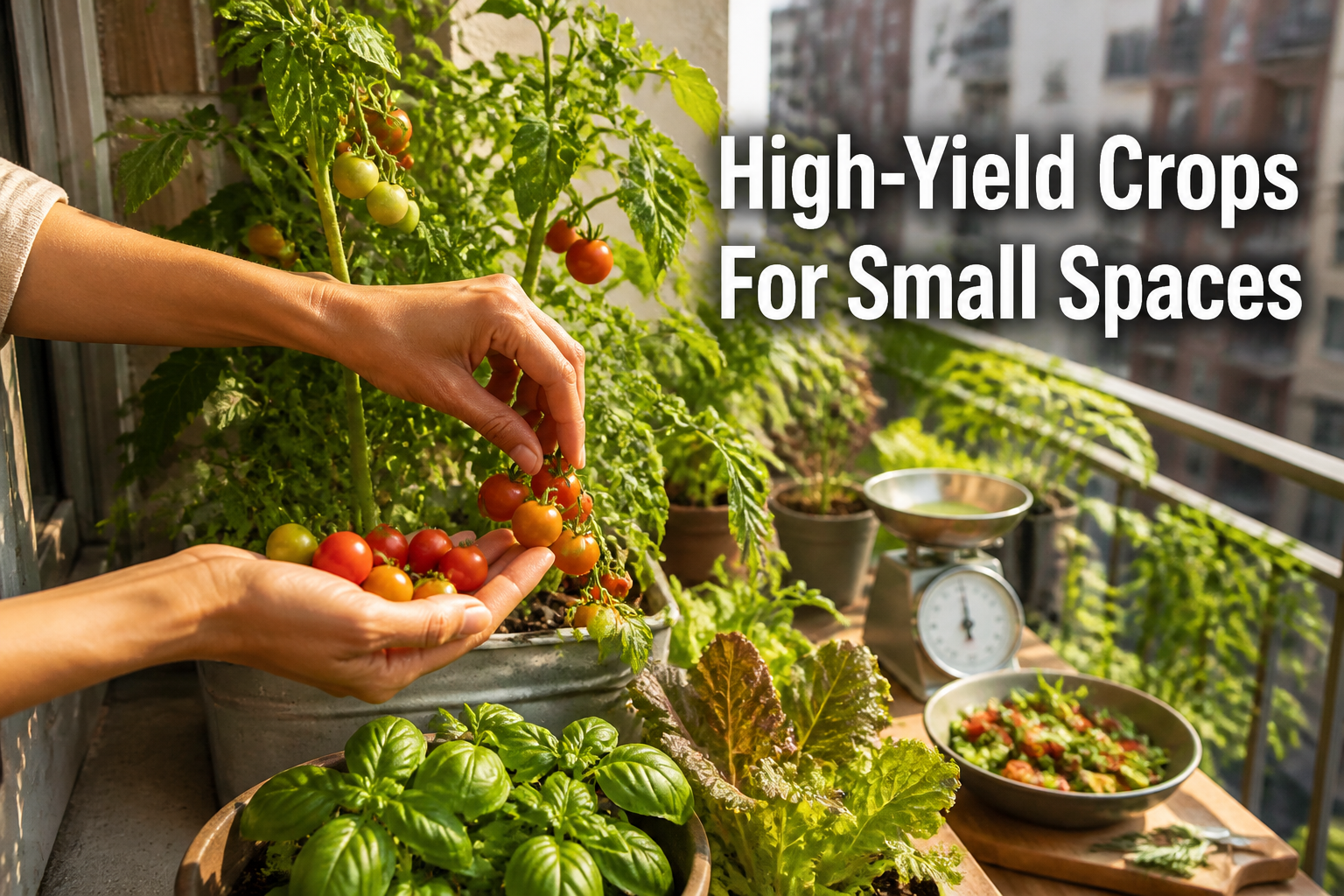
High-yield crops that grow well in containers and small spaces are your best bet for pushing your homegrown percentage as high as possible.
Best crops for apartment food production:
- 🌿 Herbs (basil, mint, chives, parsley): Grow year-round indoors, replace expensive store-bought herbs, and add flavor to nearly every meal. See our guide to growing the best herbs for small gardens for variety-specific tips.
- 🥬 Leafy greens (lettuce, spinach, arugula, kale): Fast-growing, cut-and-come-again, and high in nutrition per square foot.
- 🍅 Cherry tomatoes: Prolific producers in 5-gallon containers with good sun.
- 🌶️ Peppers: Compact, productive, and well-suited to container growing.
- 🌱 Microgreens and sprouts: Extremely high yield per square inch, ready in 7–14 days.
- 🥕 Radishes and green onions: Fast turnaround, low space requirements.
Crops to avoid if space is your main constraint:
- Corn, squash, melons, potatoes, and most root vegetables take too much space for too little return in containers.
For a deeper look at which vegetables thrive in pots, check out what vegetables grow well in shallow containers.
What Factors Determine How Much You Can Grow?
Three variables determine your apartment garden’s output ceiling more than anything else: light, space, and growing season.
1. Light availability
South-facing windows and balconies with 6+ hours of direct sun are ideal. North-facing apartments with limited natural light will need grow lights to produce food year-round. Supplemental lighting can extend your growing season and crop variety significantly.
2. Usable growing space
Vertical growing is the most effective way to multiply your output without needing more floor space. Wall-mounted planters, tiered shelving, and hanging pots can triple your growing capacity. Explore cheap vertical gardening ideas to see how this works in practice.
3. Climate and growing season
If you’re in a warm climate (USDA zones 9–12), outdoor balcony growing is possible 10–12 months per year. In colder zones, indoor growing and grow lights become essential for year-round production.
Choose this setup if…
- You have a south-facing balcony with 6+ hours of sun: focus on tomatoes, peppers, and greens outdoors.
- You have limited natural light: invest in full-spectrum LED grow lights and focus on herbs, microgreens, and lettuce.
- You have a small indoor space only: microgreens, sprouts, and herbs are your highest-return options.
Is It Realistic to Eat 80% Homegrown Food from a Small Apartment Garden? Who Actually Gets Close?
A small group of highly dedicated urban growers do get close to 50–60% fresh produce self-sufficiency, and in rare cases approach higher numbers. These growers share specific characteristics.
Characteristics of high-output apartment growers:
- They use every available surface, including windowsills, walls, ceilings, and balcony railings.
- They grow year-round using supplemental lighting.
- They practice succession planting to keep beds productive continuously.
- They focus almost entirely on high-value fresh produce (herbs, greens, tomatoes) rather than caloric staples.
- They supplement their garden with preserved or fermented homegrown produce.
- They often reduce their total food variety to align with what they can grow.
Common mistake: Trying to grow everything at once. New apartment gardeners often spread their space across too many crop types and end up with low yields across the board. Specializing in 4–6 crops you eat regularly produces far better results.
For beginners, apartment gardening for beginners is a good starting point before scaling up.
How Can You Maximize Your Homegrown Food Percentage?
You can push your homegrown percentage higher with a few systematic strategies. None of them require a larger apartment — they require smarter use of the space you have.
Step-by-step approach to increasing your homegrown food percentage:
- Audit your current diet. List the fresh ingredients you use most often. These are your highest-priority crops.
- Map your growing space. Measure every usable surface: windowsills, balcony floor, wall space, ceiling hooks.
- Start with herbs and greens. These give the fastest return and replace the most expensive grocery items.
- Add vertical layers. Install wall planters or tiered shelving to multiply your growing area.
- Use succession planting. Sow new seeds every 2–3 weeks so you always have something ready to harvest.
- Add grow lights if needed. Even a single full-spectrum LED panel can make a significant difference in a low-light apartment.
- Track your harvests. Weigh what you grow each week. This keeps you motivated and shows you where to focus.
For more ideas on making the most of limited space, see small space garden hacks and apartment gardening ideas.
What Are the Honest Pros and Cons of Trying to Grow Most of Your Own Food?
Pros:
- Significant savings on herbs, greens, and specialty produce
- Fresher, more nutritious food with no supply chain delays
- Reduced grocery trips for specific items
- Mental health and wellbeing benefits from growing plants
- Greater awareness of what you eat and where food comes from
Cons:
- Time investment is real: watering, pruning, replanting, and pest management add up
- Setup costs (containers, soil, lights, seeds) can take 1–2 years to recoup
- Crop failures happen, especially for beginners
- Caloric self-sufficiency remains out of reach for apartment-scale growing
- Seasonal gaps require planning and preservation skills
Conclusion: Set a Smarter Goal Than 80%
The direct answer to “is it realistic to eat 80% homegrown food from a small apartment garden?” is: not if you’re measuring total food intake, but yes if you’re measuring fresh produce or the presence of homegrown ingredients in your meals.
A more achievable and motivating goal for most apartment growers is to produce 50–70% of the fresh herbs and greens they consume, and to include at least one homegrown ingredient in the majority of their meals. That’s a target that’s within reach for anyone with a balcony or a sunny windowsill, and it delivers real savings, better nutrition, and genuine satisfaction.
Actionable next steps:
- Start with three crops you already eat often — herbs are the easiest first win.
- Assess your light situation and decide whether grow lights are worth the investment for your setup.
- Add one vertical growing element (a wall planter or tiered rack) to multiply your space.
- Track your harvests for 90 days to see your real output and adjust your crop mix.
- Scale gradually — add new crops only after your current ones are producing consistently.
The 80% dream is a useful motivator. Just make sure the goal you’re chasing is one you can actually measure and reach.
Frequently Asked Questions
Q: Can you really grow enough food in an apartment to make a difference?
Yes. Even a modest apartment garden can supply most of your fresh herbs and a significant portion of your salad greens year-round, which reduces grocery spending and improves diet quality.
Q: How much space do you need to grow a meaningful amount of food?
As little as 20–30 square feet of growing space, used efficiently with vertical planters and succession planting, can produce a consistent supply of herbs, greens, and some vegetables.
Q: What is the easiest food to grow in an apartment?
Herbs (basil, mint, chives), microgreens, lettuce, and green onions are the easiest and fastest-producing crops for apartment conditions.
Q: Do you need a balcony to grow food in an apartment?
No. A sunny south-facing windowsill or grow lights can support herbs, microgreens, and leafy greens indoors without any outdoor space.
Q: How much money can apartment gardening save?
Estimates vary widely by location and crop mix, but growing your own herbs alone can save $10–$30 per month for frequent cooks. Greens and tomatoes add further savings during peak season.
Q: Is vertical gardening worth it for food production?
Yes. Vertical setups can double or triple your growing capacity without using more floor space, making them one of the highest-return investments for apartment growers.
Q: What’s the biggest mistake apartment food growers make?
Trying to grow too many different crops at once. Focusing on 4–6 crops you eat regularly produces far better results than spreading limited space across 15 different plants.
Q: Can you grow food year-round in an apartment?
Yes, with grow lights and cold-tolerant crops like kale, spinach, and herbs. In warm climates with a south-facing balcony, outdoor growing is possible 10–12 months per year.
Q: Is 80% food self-sufficiency possible for anyone?
It’s been documented in cases where growers have large outdoor spaces, greenhouse access, or dedicate significant time and infrastructure to food production. For a standard small apartment, it remains an aspirational rather than practical target.
Q: What’s a realistic first-year goal for an apartment food garden?
Aim to grow 100% of the fresh herbs you use and 20–30% of your leafy greens. That’s achievable, measurable, and a strong foundation to build on.
References
- Jeavons, J. (2012). How to Grow More Vegetables. Ten Speed Press. (Biointensive growing space estimates)
- Despommier, D. (2010). The Vertical Farm: Feeding the World in the 21st Century. Thomas Dunne Books.
- USDA Agricultural Research Service. (2022). Urban Agriculture Research Program Overview. https://www.ars.usda.gov/
- FAO. (2020). City Region Food Systems and Food Waste Management. Food and Agriculture Organization of the United Nations.