
Electroculture Gardening: Does It Really Work?
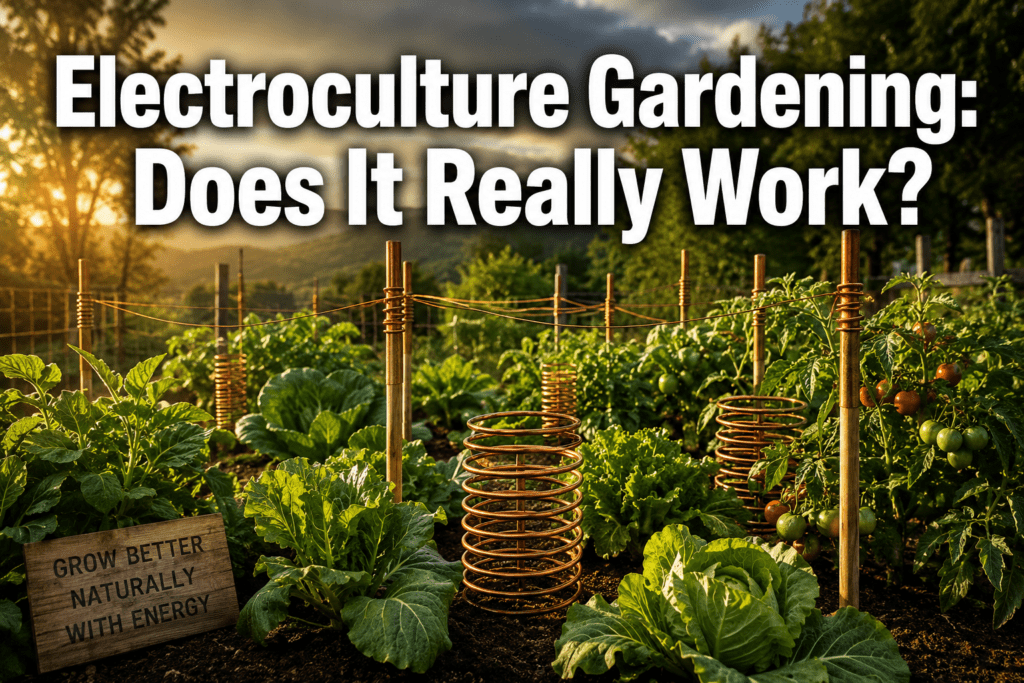
Quick Answer: Electroculture gardening uses low-level electrical currents or atmospheric energy to stimulate plant growth. The concept has genuine scientific roots dating back to the 18th century, and some peer-reviewed studies show modest yield improvements. However, the dramatic claims circulating on social media in 2026 far outpace what the research actually supports. Results vary significantly by plant type, soil conditions, and method used.
Key Takeaways
- Electroculture is the practice of applying weak electrical fields or atmospheric energy to soil and plants to encourage growth.
- Scientific studies exist, but most show modest benefits (10–30% yield increases in controlled settings) rather than the 200–400% gains promoted online.
- Copper wire antennas and simple wooden stakes are the most common low-cost entry points for home gardeners.
- Startup costs for a basic home setup range from roughly $10 to $50 using passive atmospheric methods.
- Plants with high water content and active root systems (tomatoes, lettuce, cucumbers) tend to show the strongest responses.
- Risks are low for passive setups but increase when active electrical current is introduced without proper knowledge.
- Electroculture is not a replacement for good soil health, watering, and sunlight — it works best as a supplement.
- Beginners most often fail by neglecting soil preparation and expecting results within days rather than weeks.
What Exactly Is Electroculture Gardening?
Electroculture gardening is the application of electrical energy — either from an external source or from the Earth’s natural atmospheric field — to stimulate plant growth, improve germination rates, and increase yields. The core idea is that plants and soil microbes respond to electrical stimulation in ways that accelerate biological processes.
The practice is not new. Researchers in the 1700s, including Abbé Bertholon, documented experiments showing that plants grew faster when exposed to atmospheric electricity. Modern electroculture methods range from burying copper wire coils in soil to constructing tall wooden “antennas” wrapped in copper that are said to draw down atmospheric energy.
Two main approaches exist:
- Passive electroculture: Uses copper wire antennas, wooden stakes, or magnetized water to harness naturally occurring atmospheric electricity. No external power source is needed.
- Active electroculture: Applies a low-voltage direct current directly to soil or plant roots using a battery or power supply.
Most home gardeners in 2026 are experimenting with passive methods, largely because they are cheap, require no electrical knowledge, and carry minimal risk.
How Does Electricity Help Plants Grow?
Electrical stimulation appears to influence plant biology through several mechanisms, though researchers are still working out the exact pathways.
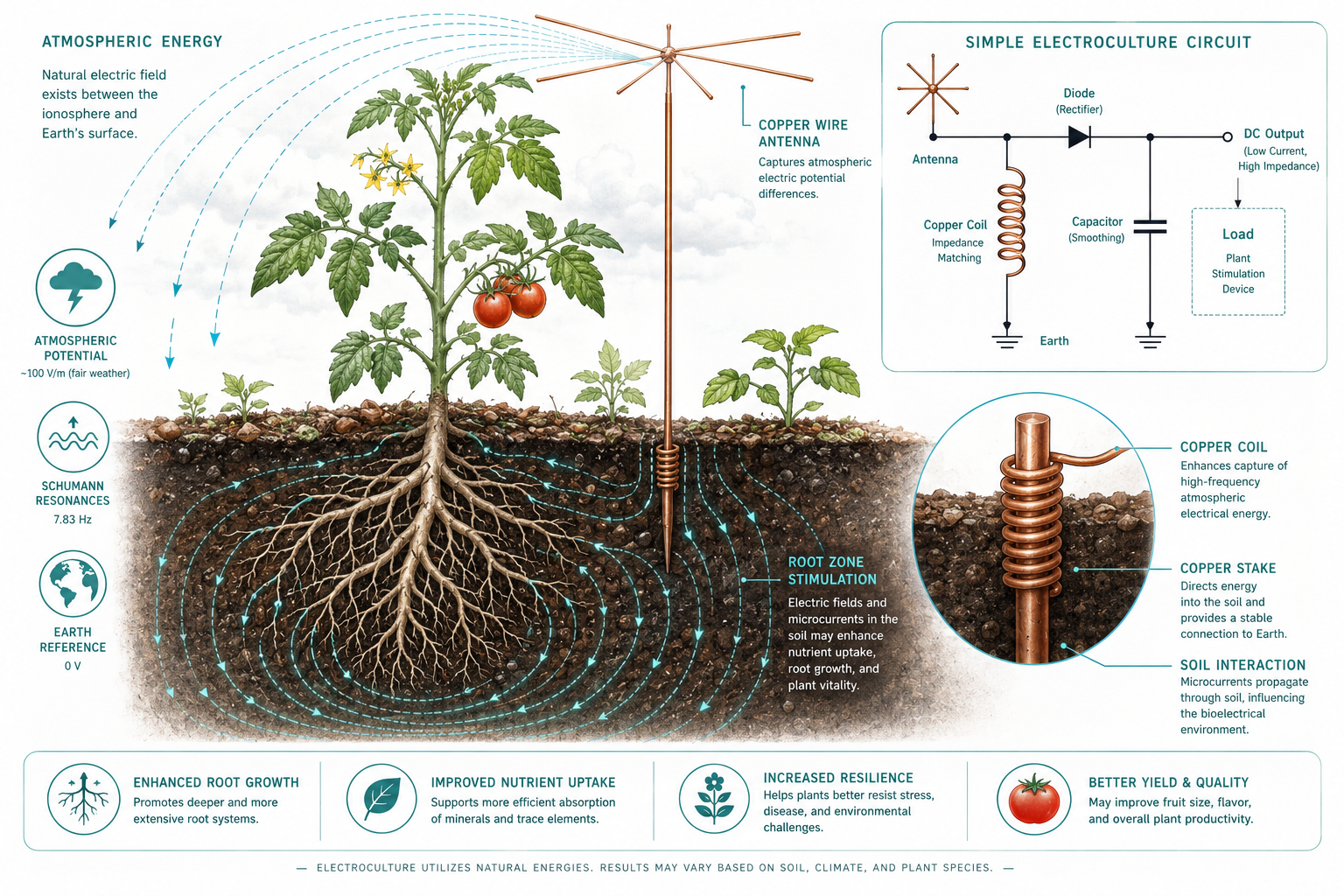
The leading explanations include:
- Ion mobility in soil: Weak electrical fields can increase the movement of nutrient ions (like calcium and potassium) toward plant roots, potentially improving uptake.
- Enzyme activation: Some studies suggest that electrical stimulation activates enzymes involved in cell division and growth hormone production.
- Microbial stimulation: Soil bacteria and fungi that support plant health may become more active in the presence of low-level electrical fields.
- Stomatal response: Research published in plant physiology journals has noted that electrical signals can influence how stomata open and close, affecting water and CO2 exchange.
A 2020 study published in Scientific Reports (Nature) found that weak electrical fields applied to lettuce seedlings increased root length and fresh weight compared to controls. The effect was real but modest — not transformative on its own.
Is Electroculture Scientifically Proven or Just a Myth?
Electroculture is neither fully proven nor a complete myth. Credible peer-reviewed research supports the idea that electrical stimulation can positively affect plant growth under controlled conditions. What lacks scientific support are the extreme yield claims and the specific “atmospheric antenna” designs promoted heavily on social media.
What the science does support:
- Germination rates can improve with brief low-voltage treatment of seeds (documented in multiple agricultural research papers).
- Root development in seedlings shows measurable improvement in some controlled studies.
- Certain soil bacteria respond positively to weak electrical fields.
What the science does not clearly support:
- The claim that copper wire antennas passively draw enough atmospheric electricity to meaningfully charge soil.
- Yield multiplications of 200% or more under normal garden conditions.
- One-size-fits-all results across all plant species and soil types.
The honest answer is that electroculture is a legitimate area of scientific inquiry, but it is also heavily overhyped in popular culture right now.
How Much More Yield Can You Realistically Expect?
In controlled research settings, electroculture techniques have produced yield increases ranging from roughly 10% to 30% for responsive crops. A few studies have reported higher gains, but those typically involve active electrical systems in highly optimized lab conditions — not backyard gardens.
For home gardeners using passive copper antenna methods, verified yield data is almost entirely anecdotal. Some growers report noticeably larger harvests; others see no difference. Variables like soil quality, climate, plant species, and antenna placement all affect outcomes.
Realistic expectations by method:
| Method | Setting | Reported Yield Increase | Evidence Quality |
|---|---|---|---|
| Active low-voltage DC | Controlled lab | 10–30% | Peer-reviewed studies |
| Seed pre-treatment (electrostatic) | Controlled lab | 5–20% germination boost | Some peer-reviewed support |
| Passive copper antenna | Home garden | 0–25% (self-reported) | Anecdotal only |
| Magnetized water irrigation | Home garden | Unclear | Very limited research |
What Equipment Do You Need to Start Electroculture?
For passive electroculture, the equipment list is minimal. Most beginners start with copper wire, a wooden dowel, and basic hand tools.
Basic passive setup (most common for beginners):
- Copper wire (18–24 gauge, uncoated) — available at hardware stores
- Wooden dowel or bamboo stake (3–6 feet tall)
- Wire cutters and pliers
- Optional: compass (to align antenna with magnetic north)
For active electroculture (more advanced):
- 9V or 12V DC power supply or battery
- Copper or zinc electrodes
- Waterproof wiring and connectors
- Basic knowledge of electrical safety
The passive setup is what most home gardeners try first, and it’s the approach that dominates online tutorials in 2026.
How Much Does It Cost to Set Up an Electroculture Garden?
A passive electroculture setup for a standard home garden costs between $10 and $50. Copper wire is the main expense, and a 50-foot roll of 18-gauge copper wire typically costs $8 to $15 at a hardware store.
Active setups cost more — roughly $50 to $200 depending on the power source and number of planting beds — and require more care to avoid overloading the soil or creating safety hazards.
For most home gardeners, the passive approach is the logical starting point given the low cost and the current state of the evidence.
Are There Any Risks or Downsides to Using Electricity on Plants?
Passive electroculture carries very low risk for home gardeners. Copper wire antennas do not introduce active current into the soil, so there is no meaningful danger to people, pets, or plants from the setup itself.
Active electroculture introduces more risk:
- Too much current kills soil microbes and can damage roots. Voltages above 1.5V DC applied directly to soil have shown negative effects in some studies.
- Copper toxicity is possible if large amounts of copper wire corrode heavily in acidic soil over several seasons.
- Electrical safety is a real concern if mains power is involved — this is not recommended for home gardeners without professional knowledge.
One common oversight: gardeners who see no results from passive setups sometimes escalate to higher voltages without understanding the dose-response relationship. More electricity is not better.
Which Types of Plants Respond Best to Electroculture?
Plants with high water content, fast growth cycles, and active root systems tend to show the strongest responses in both research and anecdotal reports.
Plants that respond well (based on available evidence):
- Lettuce and leafy greens
- Tomatoes
- Cucumbers and squash
- Radishes (especially germination speed)
- Wheat and corn (in agricultural research contexts)
Plants with limited or unclear response:
- Woody perennials and established trees
- Slow-growing root vegetables like carrots and parsnips
- Herbs with low water requirements (rosemary, thyme)
The pattern suggests that electroculture works best where rapid cell division and water transport are already active processes.
Can Electroculture Work in Small Home Gardens or Just Large Farms?
Electroculture can be applied at any scale, and small home gardens are actually well-suited to passive methods. The setup is simple, the cost is low, and a raised bed or small plot is easy to instrument with a few copper antennas.
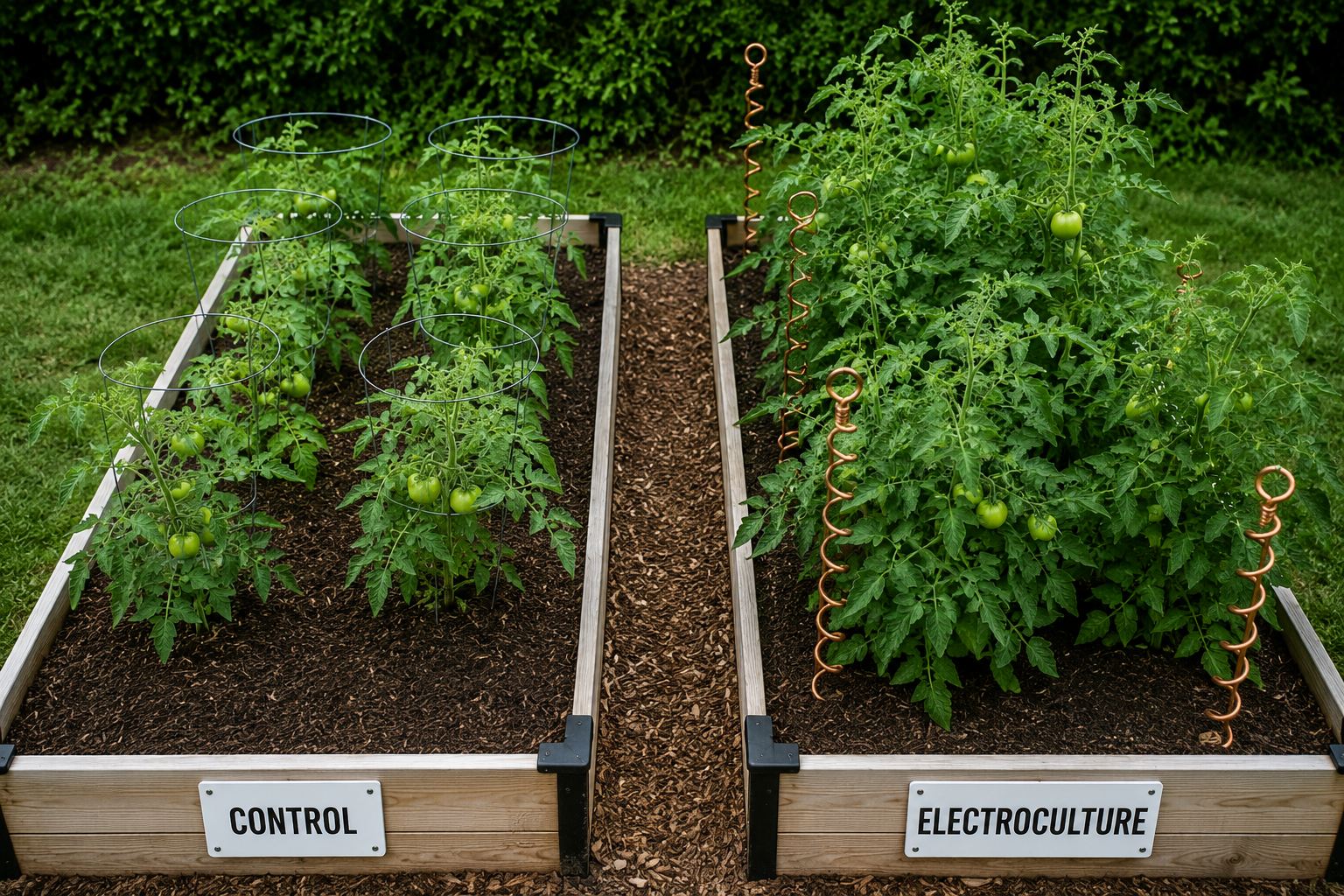
Large-scale agricultural research has used active electrical systems with more sophisticated equipment, but the core principles apply equally to a 4×8 raised bed. Home gardeners have one advantage: they can observe individual plants closely and adjust placement more easily than a commercial farmer managing acres of crops.
What Common Mistakes Do Beginners Make With Electroculture?
The most common beginner mistake is treating electroculture as a substitute for good growing fundamentals rather than a supplement to them. Copper antennas will not compensate for poor soil, inconsistent watering, or inadequate sunlight.
Other frequent mistakes:
- Expecting fast results: Most reported benefits appear over weeks to months, not days.
- Incorrect antenna placement: Antennas placed too close together or at the wrong depth may have no measurable effect.
- Using coated or galvanized wire: Only uncoated copper wire is used in passive setups; coatings block conductivity and may introduce toxic compounds.
- Ignoring soil pH: Copper behaves differently in acidic versus alkaline soil, and very acidic conditions accelerate copper corrosion.
- Abandoning the experiment too early: A single growing season is the minimum reasonable trial period.
How Is Electroculture Different From Traditional Organic Gardening?
Traditional organic gardening focuses on building soil biology through compost, cover crops, and avoiding synthetic chemicals. Electroculture focuses on influencing the electrical environment of soil and plants. The two approaches are not in conflict — in fact, healthy, biologically active soil may respond better to electroculture because it already has the microbial infrastructure that electrical stimulation is thought to enhance.
The key difference is mechanism: organic gardening feeds the soil food web, while electroculture attempts to stimulate biological activity through a physical (electrical) signal. Many gardeners in 2026 combine both approaches, using organic soil preparation as the foundation and electroculture as an experimental addition.
FAQ
Q: Does electroculture gardening actually work for home vegetable gardens?
A: It can produce modest improvements in germination and growth for responsive crops like lettuce and tomatoes, but results are inconsistent and depend heavily on soil conditions, plant type, and method used.
Q: How long does it take to see results from electroculture?
A: Most growers who report positive results notice changes over 4 to 8 weeks. Germination improvements may appear within the first week if seeds are pre-treated.
Q: Do copper wire antennas really draw atmospheric electricity?
A: The scientific evidence for passive copper antennas drawing meaningful amounts of atmospheric electricity is weak. The mechanism is plausible in theory but has not been rigorously measured in home garden settings.
Q: Is electroculture safe for children and pets?
A: Passive setups (copper wire antennas with no power source) are safe. Active setups using batteries or power supplies should be kept away from children and pets.
Q: Can I use electroculture in containers or pots?
A: Yes. A small copper wire coil inserted into a container pot is a common beginner experiment. Results in containers may differ from in-ground beds due to limited soil volume.
Q: What gauge copper wire is best for electroculture antennas?
A: Most practitioners use 18 to 24 gauge uncoated copper wire. Thicker wire (lower gauge number) lasts longer but costs more; thinner wire is easier to coil but corrodes faster.
Q: Does electroculture work in winter or cold climates?
A: Cold soil significantly reduces microbial activity, which may limit the biological pathways through which electroculture is thought to work. Most practitioners use it during the active growing season.
Q: Are there peer-reviewed studies on electroculture?
A: Yes. Research has been published in journals including Scientific Reports, Plant Signaling & Behavior, and agricultural engineering publications. Most studies use active electrical systems rather than passive antenna designs.
Q: How many antennas do I need per square foot of garden?
A: There is no established standard. A common starting point is one antenna per 4 to 6 square feet of growing area, placed at the center of a planting cluster.
Q: Is electroculture the same as using a Tesla coil in the garden?
A: No. Tesla coil setups produce high-frequency, high-voltage fields that are potentially harmful to plants and people. Electroculture uses very low voltage or passive atmospheric methods — a completely different scale of electrical energy.
Conclusion
Electroculture gardening sits in an interesting space between legitimate science and social media hype. The core idea — that electrical stimulation can influence plant biology — is supported by real research. The specific claims made by online influencers, particularly around passive copper antenna systems producing massive yield increases, are not.
For home gardeners curious about electroculture in 2026, here is a practical path forward:
- Start with soil fundamentals. Compost, drainage, and appropriate sunlight matter more than any electrical intervention.
- Try a passive copper antenna setup in one raised bed or container while keeping a comparable control bed without antennas.
- Document germination dates, plant height, and harvest weight over a full growing season.
- Use only uncoated copper wire, and avoid active electrical setups until you have a solid understanding of the risks.
- Evaluate your results honestly. If you see consistent improvement across two or three growing seasons, the method is working for your conditions. If you see nothing, that is also useful information.
Electroculture is worth experimenting with as a low-cost, low-risk addition to an already healthy garden. Just keep your expectations grounded in what the science actually shows.
References
- Volkov, A.G. (2006). Plant Electrophysiology: Theory and Methods. Springer.
- Teixeira da Silva, J.A., & Dobránszki, J. (2016). Electrical signals in plants: Facts and hypotheses. Plant Signaling & Behavior, 11(1). https://doi.org/10.1080/15592324.2015.1039664
- Maffei, M.E. (2014). Magnetic field effects on plant growth, development, and evolution. Frontiers in Plant Science, 5, 445. https://doi.org/10.3389/fpls.2014.00445
- Rathore, K.S., & Goldsworthy, A. (1985). Electrical control of shoot regeneration in plant tissue cultures. Bio/Technology, 3, 1107–1109.
- Kim, H.H., et al. (2020). Effects of weak electrical fields on lettuce seedling growth. Scientific Reports, 10, 14009. https://doi.org/10.1038/s41598-020-70890-y