How to Design a Small Garden Space: 2026 Expert Guide
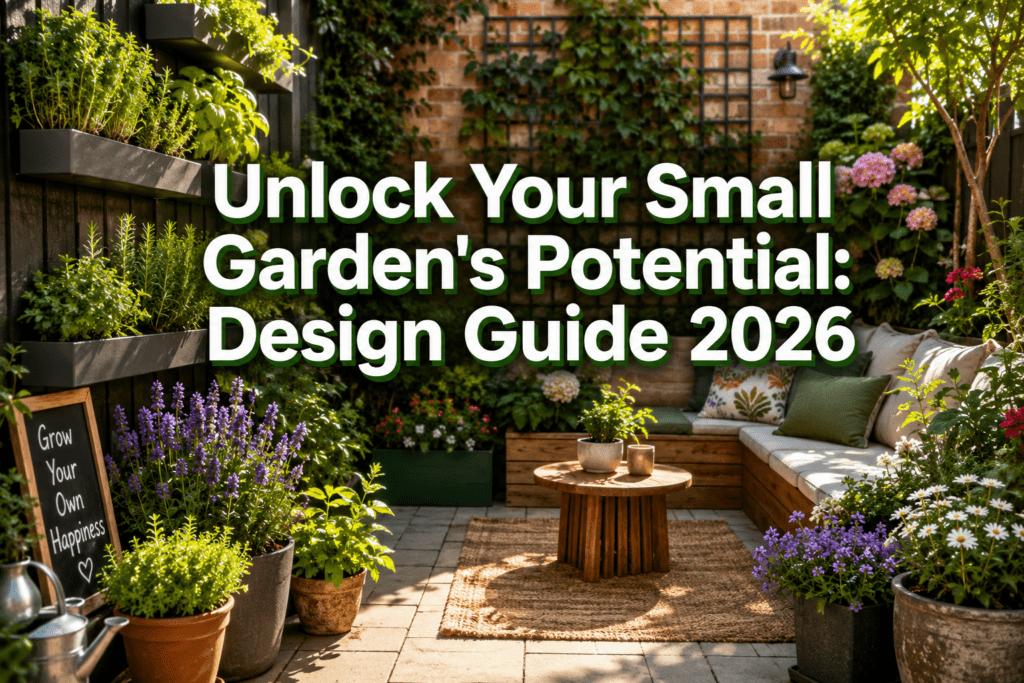
Achieving a vibrant, productive, and aesthetically pleasing garden in a limited area is entirely possible with thoughtful planning and strategic design. The key to successfully designing a small garden space lies in maximizing every square inch through vertical solutions, multi-functional elements, and careful plant selection, rather than trying to fit large-scale landscaping ideas into a compact footprint. This approach allows even the tiniest plots, balconies, or patios to become lush, inviting outdoor sanctuaries.
Key Takeaways
- Verticality is Crucial: Utilize walls, fences, and trellises for planting to free up floor space.
- Multi-functional Elements: Choose planters with integrated seating or storage, or benches that double as plant stands.
- Strategic Plant Selection: Opt for compact, dwarf, or columnar varieties, and consider plants with long blooming seasons or attractive foliage.
- Container Gardening: This is a versatile solution for small spaces, offering flexibility and control over growing conditions.
- Layering and Zoning: Create visual interest and define different “rooms” or areas within your small garden.
- Lighting and Mirrors: Use these to expand the perceived size and extend garden enjoyment into evenings.
- Raised Beds: Ideal for improving soil conditions and providing accessible gardening in tight spots.
- Simplicity and Focus: Avoid clutter; choose a few focal points and a cohesive design theme.
How to Design Small Garden Space Effectively
Effectively designing a small garden space involves strategic planning to maximize perceived size and actual utility, focusing on vertical growth, multi-functional elements, and careful plant selection to create an inviting and efficient outdoor area. This means prioritizing smart solutions like container gardening, tiered planters, and built-in storage over expansive ground plots.
To begin, assess your space’s sunlight exposure, drainage, and existing features. Consider what you want your garden to achieve: a place for relaxation, growing vegetables, or simply a burst of color. Once you understand the fundamentals of your space, you can start to implement design principles that create a sense of spaciousness and purpose. For renters, it’s particularly important to choose mobile solutions like containers that can move with you.
Small Garden Design Tips for Beginners
For beginners looking to design a small garden space, start with a clear vision, understand your microclimate, and begin with low-maintenance plants. Begin by sketching out a simple plan, even if it’s just on paper, to visualize where pathways, seating, and planting areas will go.
- Start Small: Don’t try to implement too many ideas at once. Begin with a few key features or plants and expand as you gain confidence.
- Know Your Sun: Observe how sunlight moves across your space throughout the day. This dictates which plants will thrive where.
- Containerize: Containers offer flexibility and control, making them perfect for beginners. You can easily move plants if they’re not happy. See our guide to container gardening for beginners.
- Choose Easy Plants: Select resilient, low-maintenance varieties that are forgiving of beginner mistakes. Herbs, certain succulents, and marigolds are excellent choices.
- Think Vertical Early: Incorporate a simple trellis or wall planter from the outset to make the most of limited ground space.
- Keep Tools Simple: You don’t need a huge array of tools for a small garden. Focus on essentials like a hand trowel, pruning shears, and a small watering can.
What Garden Layout Works Best for Limited Square Footage?
For limited square footage, the best garden layout prioritizes verticality, clear pathways, and distinct zones or “rooms” to create a sense of order and spaciousness. Rather than sprawling beds, focus on a design that draws the eye upwards and defines areas for different functions.
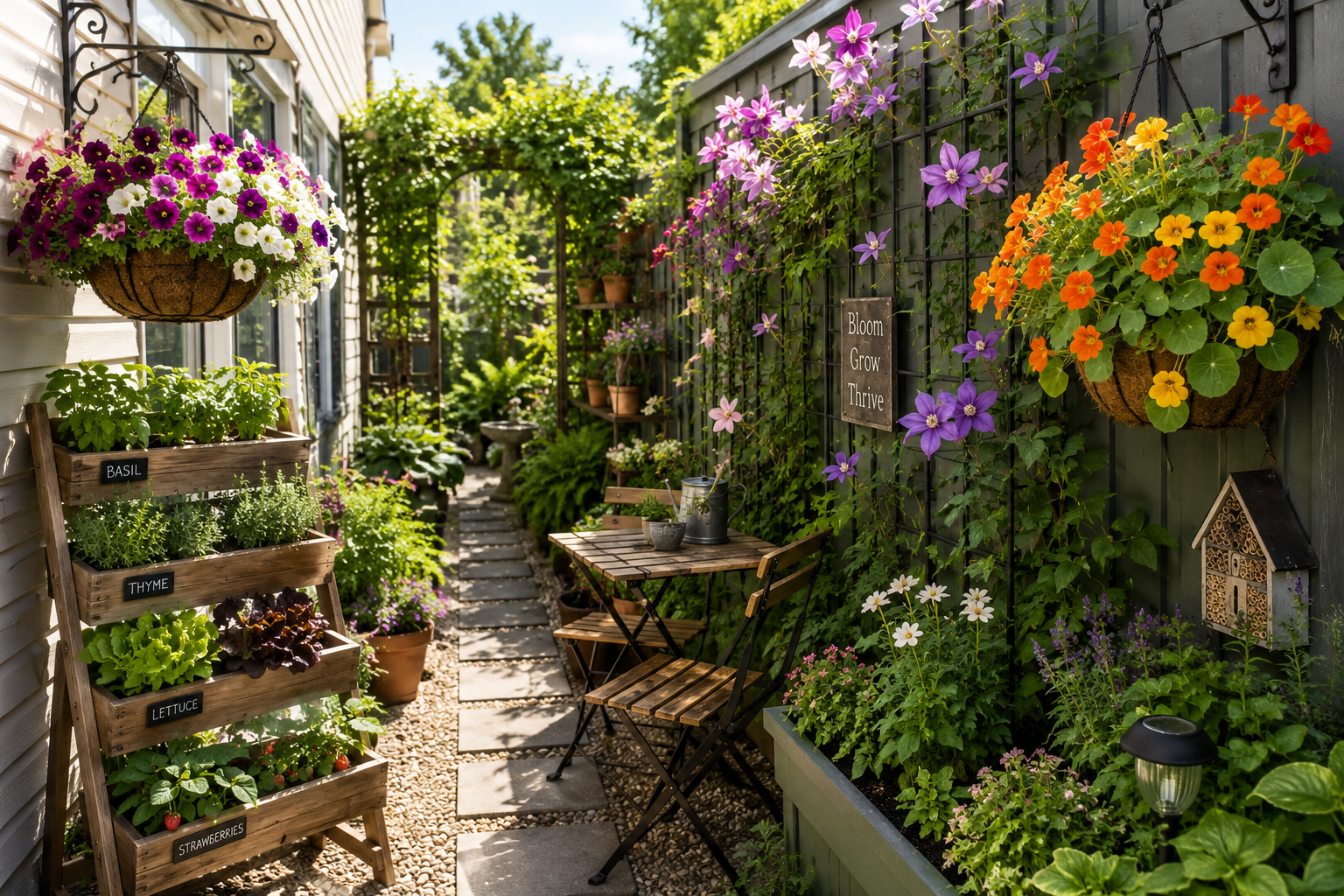
- Vertical Layers: Use shelving units, wall planters, hanging baskets, and trellises to create multiple layers of planting. This visually expands the garden upwards.
- Defined Zones: Even in a tiny space, you can create distinct areas. For example, a small bistro table and chairs can define a seating zone, while a collection of potted herbs marks a culinary zone. Using different paving materials or a small rug can also delineate areas.
- Curved Lines vs. Straight: While straight lines can make a space feel organized, gentle curves can trick the eye into perceiving more depth and length. However, too many curves can make a tiny space feel chaotic.
- Diagonal Placement: Orienting elements like a small patio or a raised bed diagonally across the space can make the area feel wider than it actually is.
- Clear Pathways: Even if it’s just a narrow strip of stepping stones, a defined path makes the garden feel navigable and less cluttered.
- Focal Points: Direct the eye to one or two interesting features, such as a sculptural plant, a small water feature, or a piece of garden art. This creates depth and interest.
How to Design a Garden That Looks Bigger Than It Is
To design a garden that looks bigger than it is, employ optical illusions and smart design choices such as using mirrors, light colors, varying plant heights, and creating strong focal points. These techniques manipulate perspective and light to give the impression of greater depth and space.
- Strategic Mirrors: Placing a weather-resistant mirror on a wall or fence can create the illusion of another “room” or extend a planting bed, doubling your perceived space. Ensure it’s positioned to reflect attractive parts of your garden, not clutter.
- Cool Colors in the Distance: Plants with cool-colored flowers (blues, purples, whites) or silvery foliage tend to recede, making them appear further away. Place these at the “back” of your small garden.
- Varying Plant Heights: Create a sense of depth by planting taller elements at the back or sides and progressively shorter plants towards the front.
- Small-Scale Furnishings: Oversized furniture can overwhelm a small space. Opt for compact, foldable, or transparent furniture that doesn’t visually block the area.
- Pathways to Nowhere: A path that disappears around a corner or behind a screen can suggest that there’s more garden beyond what’s visible, adding mystery and perceived depth.
- Strategic Lighting: Well-placed lighting can highlight key features, create ambiance, and draw the eye further into the garden at night, making it feel more expansive.
- Decluttering: A tidy, organized space always feels larger. Minimize unnecessary accessories and choose items that serve a purpose or act as a clear focal point.
What Are the Best Plants for a Tiny Backyard Garden?
The best plants for a tiny backyard garden are compact, multi-seasonal, and offer vertical growth opportunities, prioritizing varieties that do not outgrow their space quickly or demand excessive maintenance. Focus on dwarf cultivars, columnar forms, and those suitable for container or vertical gardening.
- Dwarf Shrubs and Trees: Look for miniature versions of popular plants. For example, dwarf conifers, compact hydrangeas, or columnar fruit trees like ‘North Pole’ apple.
- Herbs: Many herbs thrive in pots and can be grown vertically. Rosemary, thyme, mint, basil, and chives are excellent choices for culinary gardens. Find out the best herbs for small gardens here.
- Annuals and Perennials for Containers: Petunias, impatiens, marigolds, lobelia, and begonia provide continuous color. Hostas, ferns, and sedum are good perennial options for shady spots. For more ideas, explore our list of the best flowers for small spaces.
- Climbing Plants: Clematis, jasmine, passionflower, and certain rose varieties can be trained up a trellis or wall, adding vertical interest without consuming much ground space.
- Edibles: Compact tomato varieties, bush beans, strawberries, and various lettuces and greens are well-suited for small edible gardens. Our guide to growing tomatoes in small spaces offers more specific tips.
Can I Grow Vegetables in a Small Urban Garden Space?
Yes, you can absolutely grow vegetables in a small urban garden space by focusing on compact varieties, utilizing vertical growing techniques, and embracing container gardening. Many vegetables thrive in pots and limited footprints, making fresh produce accessible even in the smallest city environments.
- Choose the Right Varieties: Opt for “bush” varieties instead of “vining” (e.g., bush beans over pole beans), or dwarf cultivars (e.g., patio tomatoes, compact cucumbers).
- Vertical Vegetables: Many vegetables can be grown vertically. Trellis cucumbers, peas, pole beans, and some squash varieties. Strawberries can be grown in vertical planters.
- Container Champions: Lettuce, spinach, radishes, carrots (short varieties), herbs, peppers, and cherry tomatoes are all excellent candidates for container growing. Ensure your pots are appropriately sized; our pot size guide for vegetables can help.
- Succession Planting: To maximize yield, plant small batches of quick-growing vegetables every few weeks. This ensures a continuous harvest rather than one large crop all at once.
- Grow Bag Advantages: Fabric grow bags are lightweight, breathable, and easy to move, making them perfect for urban balconies or patios.
- Balcony Gardening: For those with balconies, our small balcony vegetable gardening guide provides tailored advice.
Vertical Gardening Ideas for Small Spaces
Vertical gardening is an indispensable technique for small spaces, transforming walls, fences, and railings into productive and decorative green areas. Ideas range from simple hanging planters to elaborate living walls, all designed to maximize growing potential without occupying valuable floor space.
- Wall-Mounted Planters: These come in various forms, from simple pockets to modular systems. They are perfect for herbs, succulents, and annual flowers.
- Tiered Planters/Shelving Units: A multi-tiered planter allows you to grow several plants in a small footprint. Standard shelving units can also be repurposed for potted plants.
- Trellises and Arbors: Install a trellis against a wall or fence for climbing plants like clematis, sweet peas, morning glories, or even vining vegetables such as cucumbers and peas.
- Hanging Baskets: Ideal for trailing plants like petunias, nasturtiums, or strawberries, hanging baskets add color and greenery at eye level.
- Pallet Gardens: Upcycle old wooden pallets into vertical planters. This is a cost-effective and charming way to grow herbs or small annuals.
- Rain Gutter Gardens: Attach sections of old rain gutters to a fence or wall, fill with soil, and plant shallow-rooted crops like lettuce, spinach, or radishes.
- For more inspiration, check out our article on vertical gardening ideas for small spaces.
How Do Container Gardens Compare to Ground Planting?
Container gardens offer superior flexibility, portability, and control over soil conditions compared to ground planting, making them exceptionally well-suited for small garden spaces where in-ground options are limited or nonexistent. While ground planting offers a more natural ecosystem and less frequent watering, containers are often the only viable solution for urban gardeners.
| Feature | Container Gardening | Ground Planting |
|---|---|---|
| Space Efficiency | Excellent for small spaces, verticality, balconies. | Requires dedicated ground space. |
| Portability | Plants can be moved easily to optimize sun/shade. | Fixed location, difficult to move. |
| Soil Control | Complete control over soil mix, pH, and nutrients. | Dependent on existing soil, often requires amendments. |
| Drainage | Easy to ensure good drainage with proper potting mix. | Can be problematic in heavy clay or waterlogged areas. |
| Watering | Requires more frequent watering, especially in heat. | Less frequent watering, soil retains moisture better. |
| Pest/Disease | Easier to isolate and treat individual plants. | Pests/diseases can spread more easily. |
| Weed Control | Minimal weeding required. | Weeding can be a significant chore. |
| Cost | Initial cost for pots and potting mix. | Can be cheaper initially, but soil amendments add up. |
For urban settings or areas with poor native soil, containers are often the clear winner. They allow for diverse plantings in a tiny footprint. We have a comprehensive guide on DIY container gardening ideas that might be useful.
What Soil and Drainage Solutions Work for Tight Garden Spaces?
For tight garden spaces, the best soil and drainage solutions involve using high-quality potting mixes, implementing raised beds or containers, and ensuring adequate drainage holes to prevent waterlogging. Good drainage is paramount as small spaces often limit natural runoff.
- Quality Potting Mix: For containers and raised beds, do not use garden soil. Instead, opt for a light, well-draining potting mix specifically designed for containers. This provides the necessary aeration and moisture retention. Our guide to the best soil mix for container gardening offers detailed advice.
- Drainage Holes: Every container must have drainage holes at the bottom. Without them, roots will sit in stagnant water, leading to rot. If a decorative pot lacks holes, use it as a cachepot and place a plant in a smaller, drilled pot inside it.
- Raised Beds: Raised beds are an excellent solution for improving drainage and soil quality in small ground plots. They allow you to bring in ideal soil mixes and prevent compaction.
- Gravel Layer (Limited Use): While often recommended, adding a layer of gravel at the bottom of pots above the drainage holes can sometimes create a perched water table, making drainage worse. It’s generally better to use a quality potting mix all the way down.
- Watering Wisely: Even with good drainage, overwatering can be an issue. Check soil moisture before watering.
- Self-Watering Pots: These can be very effective in small spaces, reducing the frequency of watering and ensuring consistent moisture without waterlogging. Learn more about self-watering pots here.
What Gardening Tools Do I Actually Need for a Small Space?
For a small garden space, you primarily need a concise set of essential, multi-purpose hand tools rather than a full shed of large equipment. Focus on items that are durable, comfortable to use, and suited for close-quarter work.
- Hand Trowel: Essential for digging small holes, planting, and scooping soil.
- Pruning Shears (Secateurs): For trimming, deadheading, and light pruning. Choose a sharp, comfortable pair.
- Small Watering Can: For precise watering of individual plants, especially in containers or delicate seedlings.
- Gardening Gloves: Protect your hands from thorns, dirt, and plant sap.
- Hand Cultivator/Weeder: Useful for aerating soil in pots and removing small weeds.
- Small Spade or Fork: If you have a small raised bed or a compact ground plot, a small digging spade or fork can be invaluable.
- Spray Bottle: For misting humidity-loving plants or applying organic pest control solutions.
- Kneeling Pad: Protects your knees while working on the ground or with low containers.
Which Plants Thrive in Shady Small Garden Areas?
Plants that thrive in shady small garden areas are typically those adapted to filtered light or indirect sun, often featuring lush foliage and delicate flowers. Prioritize plants like hostas, ferns, impatiens, and certain heucheras that can bring life and color to dimmer spots.
- Hostas: Known for their diverse foliage in shades of green, blue, and variegated patterns. They are excellent for ground cover or containers in shade.
- Ferns: Many fern varieties, such as maidenhair, Japanese painted, and autumn ferns, thrive in moist, shady conditions, offering beautiful textural contrast.
- Impatiens: A classic choice for shady spots, providing vibrant, continuous color throughout the growing season.
- Heuchera (Coral Bells): Grown for their striking foliage in colors ranging from lime green to deep purple and orange. They also produce delicate flower spikes.
- Astilbe: Offers feathery plumes of flowers in pink, red, and white, alongside attractive, fern-like foliage.
- Hydrangeas (certain types): Some varieties, particularly bigleaf hydrangeas, tolerate partial shade and produce large, showy blooms.
- Begonia: Tuberous and wax begonias are excellent for adding color to shady containers or garden beds.
- For more specific recommendations, explore our guide to shade loving plants.
What Are Common Mistakes People Make with Small Garden Design?
Common mistakes people make with small garden design include overplanting, choosing plants too large for the space, neglecting vertical potential, and failing to plan for drainage, all of which lead to a cluttered, overgrown, and unhealthy environment.
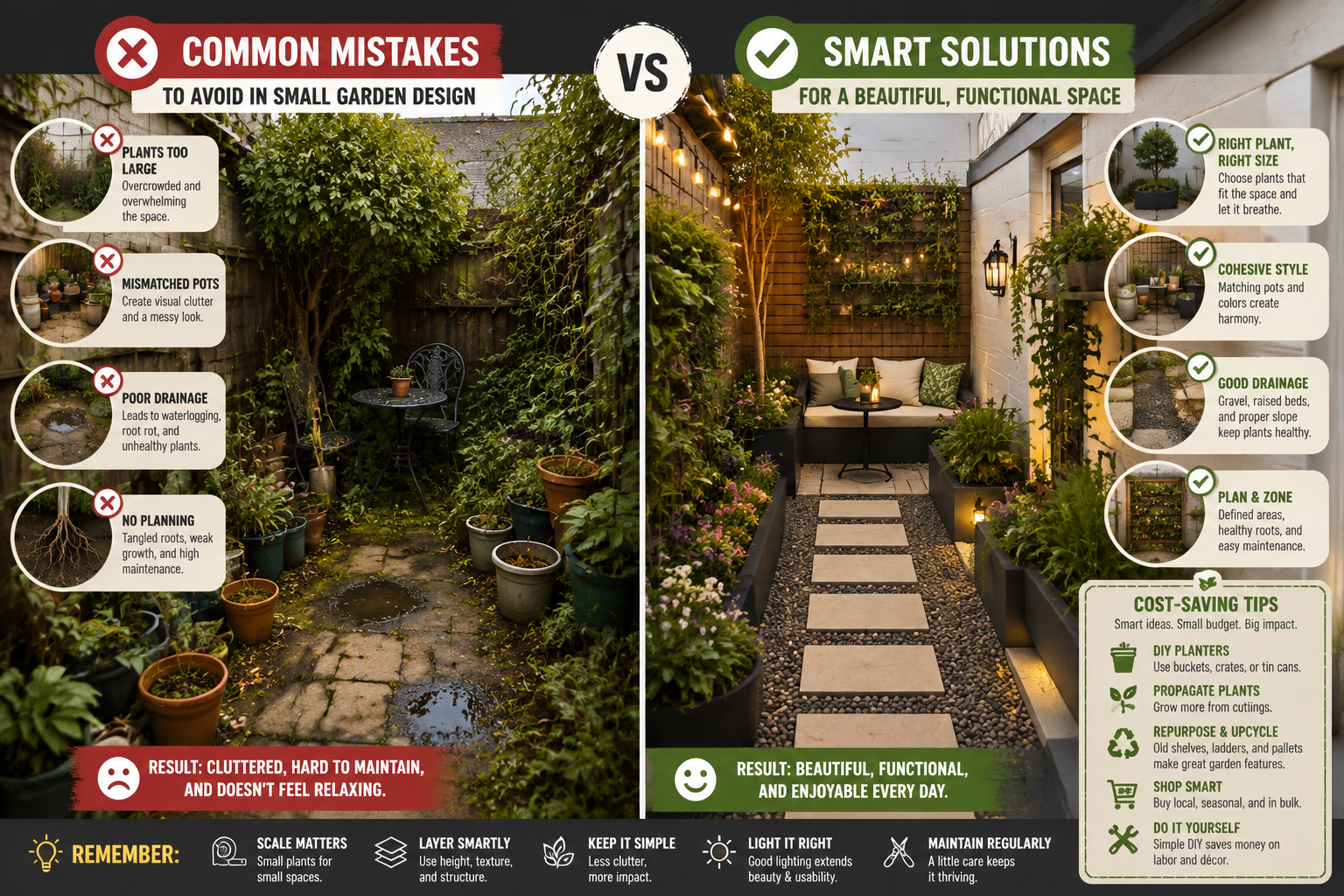
- Overplanting: Trying to fit too many plants into a small area makes it look chaotic and prevents plants from thriving due to competition for resources. Focus on quality over quantity.
- Ignoring Scale: Selecting plants or garden features that are too large for the space. A towering tree in a tiny yard will overwhelm it. Opt for dwarf varieties or plants with a narrow growth habit.
- Poor Drainage: Without proper drainage in containers or raised beds, roots rot, and plants die. Always ensure adequate drainage holes and use appropriate potting mix.
- Underutilizing Vertical Space: Neglecting walls, fences, and overhead space means missing out on significant planting opportunities. Vertical gardening is a game-changer for small spaces.
- Lack of Focal Points: A small garden needs clear points of interest to draw the eye and create a sense of purpose. Without them, it can feel undefined.
- Blocking Pathways: Even a narrow pathway should remain clear. Obstructing it with plants or furniture makes the space feel cramped and difficult to navigate.
- Inconsistent Watering: Container plants, in particular, dry out quickly and require consistent moisture. Inconsistent watering is a common cause of plant stress.
- No Design Plan: Jumping straight into buying plants without a basic plan often results in a haphazard, inefficient, and visually unappealing garden. A little planning goes a long way.
Are Raised Beds Worth It for a Compact Garden?
Yes, raised beds are highly worth it for a compact garden because they offer superior control over soil quality and drainage, extend the growing season, reduce bending, and create clearly defined planting areas, which is beneficial for organizing limited space. They are particularly advantageous where native soil is poor or inaccessible.
- Improved Soil Conditions: You can fill raised beds with an ideal soil mix tailored to your plants’ needs, avoiding issues with compaction or poor native soil.
- Better Drainage: The elevated structure of a raised bed naturally promotes excellent drainage, preventing root rot, especially important for plants that dislike wet feet.
- Extended Growing Season: The soil in raised beds warms up faster in spring and stays warmer longer in fall, allowing for an earlier start and later finish to your gardening year.
- Reduced Pests and Weeds: The height of raised beds can deter some ground-dwelling pests and makes weeding much easier to manage.
- Ergonomics: Gardening in a raised bed reduces the need for bending and kneeling, making it more accessible and comfortable.
- Defined Aesthetics: Raised beds provide a clean, organized look, helping to delineate planting areas and paths in a small garden, contributing to a well-designed space.
- Variety of Materials: They can be constructed from various materials like wood, stone, or corrugated metal, allowing for design flexibility to match your aesthetic.
How Much Does It Cost to Landscape a Small Garden?
The cost to landscape a small garden in 2026 can range widely from a few hundred dollars for a DIY container setup to several thousand dollars for a professionally designed and installed hardscape-heavy project. Factors like materials, plant choices, and labor costs significantly influence the final price.
- DIY Container Garden (Few Hundred Dollars):
- Pots/Containers: $50 – $200 (depending on size and material).
- Potting Mix: $30 – $100.
- Plants/Seeds: $50 – $150.
- Basic Tools: $20 – $50.
- Total Estimate: $150 – $500.
- Basic Raised Bed Garden (Moderate DIY – $500 – $1,500):
- Raised Bed Kits/Lumber: $100 – $500 per bed.
- Soil for Beds: $100 – $300.
- Plants/Seeds: $100 – $300.
- Basic Tools: $50 – $100.
- Total Estimate: $500 – $1,500.
- Professional Design & Installation (High-End – $2,000 – $10,000+):
- Design Fees: $300 – $1,500 (for small projects).
- Hardscaping (Paving, Walls, Features): $1,000 – $5,000+.
- Plants (Mature, Unique): $500 – $2,000+.
- Labor: $500 – $2,000+.
- Lighting/Irrigation: $300 – $1,500.
- Total Estimate: $2,000 – $10,000+.
These are rough estimates for 2026 and can vary significantly based on local market rates, material quality, and the complexity of the design. Choosing budget-friendly options, upcycling materials, and doing much of the labor yourself can drastically reduce costs.
Conclusion
Designing a small garden space is an exciting opportunity to cultivate a beautiful and functional outdoor area, regardless of its size. By adopting smart strategies like vertical gardening, meticulous plant selection, and thoughtful layout, you can transform even the most compact corner into a personal oasis. The key is to see limitations as creative challenges, focusing on maximizing every inch and creating a garden that feels larger, more abundant, and perfectly tailored to your needs. Start with a plan, embrace containers, and don’t be afraid to experiment to discover what truly thrives in your unique microclimate. With these principles, your small garden will not just grow plants, but also your joy and connection to nature.
Related Reading
- Best Plants For Small Gardens 2026: The Complete List
- 2026 Wall Garden Ideas: Maximize Green Space & Design
- DIY Container Gardening Ideas For Small Spaces: 2026 Guide
- Best Flowers For Small Spaces: Your 2026 Guide
- Best Herbs For Small Gardens 2026: Grow Fresh Flavor Easily
FAQ
How do I start designing a small garden space?
Start by assessing your space’s sunlight, wind, and drainage. Then, define your garden’s purpose (e.g., relaxation, edibles, aesthetics) and sketch a simple layout focusing on vertical elements and multi-functional features.
What is the most important rule for small garden design?
The most important rule is to think vertically. Utilize walls, fences, and hanging space to maximize planting areas without consuming valuable ground footprint.
How can I make a tiny garden look bigger?
Use mirrors, cool-colored plants at the back, varied plant heights, small-scale furnishings, and clear pathways that draw the eye through the space.
Are grow bags good for small gardens?
Yes, grow bags are excellent for small gardens, offering portability, good drainage, and aeration. They are ideal for growing vegetables and herbs in limited spaces like balconies or patios.
What plants should I avoid in a small garden?
Avoid large, sprawling plants that quickly outgrow their space, invasive species, and plants with aggressive root systems, unless they are dwarf varieties specifically bred for compact growth.
How do I ensure proper drainage in small garden containers?
Always use containers with drainage holes. Fill them with a high-quality potting mix (not garden soil) that is formulated for good drainage and aeration.
Can I have a water feature in a small garden?
Yes, small, self-contained water features like tabletop fountains or birdbaths can add a calming element without taking up much space.
Is it expensive to design a small garden?
The cost varies greatly. A DIY container garden can be inexpensive, while a professionally designed garden with hardscaping can be several thousand dollars. Budget-friendly options are abundant.
How do I incorporate seating into a tiny garden?
Choose compact, foldable bistro sets, built-in benches that double as storage, or small garden stools that can be easily moved or tucked away.
What’s the best way to utilize a small balcony for gardening?
Focus on vertical planters, hanging baskets, railings-mounted pots, and compact container plants. Consider foldable furniture and plants that provide privacy.
Should I use raised beds or containers for edibles in a small space?
Both work well. Raised beds offer more volume for root growth and better soil consistency, while containers provide ultimate flexibility and portability. Choose based on your specific space and needs.
How do I keep my small garden from looking cluttered?
Focus on clean lines, a limited color palette, strategic focal points, and regular maintenance. Avoid overplanting and choose multi-functional elements.