Rooftop Gardening: Complete Beginner Guide
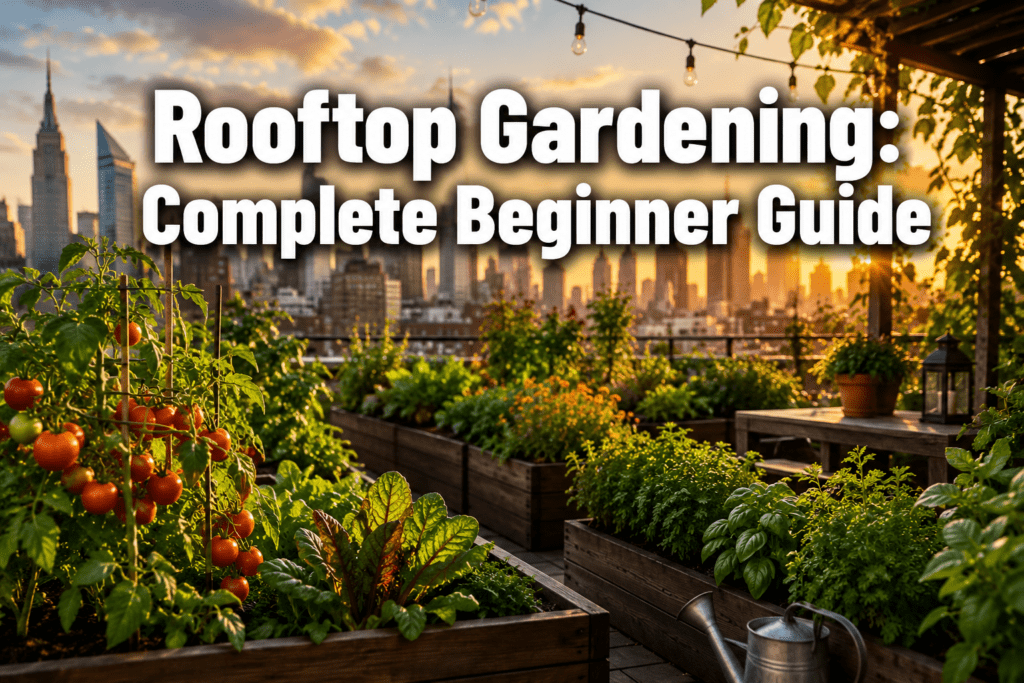
Quick Answer: Rooftop gardening means growing plants in containers or raised beds on a building’s roof, rather than in the ground. Beginners can start with as little as $200 to $500 in basic supplies, focusing on lightweight containers, quality potting mix, and sun-tolerant crops. The key steps are checking your roof’s weight capacity, getting permission from your landlord or building manager, and choosing the right plants for your climate and sun exposure.
Key Takeaways
- Rooftop gardens use containers and raised beds instead of ground soil, making them accessible to apartment dwellers with no yard.
- Always verify your roof’s structural load capacity before adding any weight — most flat roofs handle 25 to 50 pounds per square foot, but a structural engineer should confirm this.
- Get written permission from your landlord or building management before you spend a single dollar on supplies.
- Lightweight materials (fabric grow bags, perlite-amended soil, self-watering containers) are the safest choice for most rooftop setups.
- Vegetables like cherry tomatoes, lettuce, kale, herbs, and peppers perform well in rooftop containers.
- Rooftop environments are windier and drier than ground-level gardens, so watering frequency and wind protection matter more than most beginners expect.
- A drip irrigation system or self-watering containers significantly reduce daily maintenance and water waste.
- Rooftop gardening can supplement your diet meaningfully, but feeding yourself entirely from a rooftop garden requires a very large, well-managed space.
What Exactly Is Rooftop Gardening and How Is It Different from Regular Gardening
Rooftop gardening is the practice of growing plants on the roof of a building using containers, raised beds, or modular planting systems rather than planting directly into the ground. Unlike ground-level gardening, rooftop gardens must account for structural weight limits, wind exposure, waterproofing, and restricted access to natural water sources.
The core differences from traditional gardening come down to three factors:
- Substrate: You use potting mix, not native soil. Native soil is too heavy and compacts badly in containers.
- Environment: Rooftops are hotter, windier, and drier. Plants dry out faster and may need wind barriers.
- Infrastructure: Drainage, waterproofing, and load distribution require planning that ground gardens simply don’t need.
Rooftop gardening suits apartment residents, urban dwellers, and anyone who lacks outdoor ground space. It’s not a replacement for a full kitchen garden in terms of scale, but it’s a genuinely productive and rewarding option for the right setup.
How Much Does It Cost to Start a Rooftop Garden in an Apartment
A basic rooftop garden for a beginner costs between $200 and $600 for initial setup, depending on the number of containers, irrigation choices, and whether you need to buy tools. Ongoing costs are lower, mostly covering seeds, potting mix top-ups, and water.
Here’s a realistic cost breakdown for a starter setup (6 to 10 containers):
| Item | Estimated Cost (USD) |
|---|---|
| Fabric grow bags (5-gallon, set of 10) | $25 – $50 |
| Quality potting mix (3-4 cubic feet) | $40 – $80 |
| Seedlings or seed packets | $20 – $40 |
| Basic hand tools (trowel, pruners, gloves) | $30 – $60 |
| Drip irrigation starter kit | $40 – $100 |
| Waterproof tray liners or saucers | $20 – $40 |
| Wind barrier netting or trellis | $20 – $50 |
| Total estimate | $195 – $420 |
You can reduce costs by starting with seeds instead of seedlings, using repurposed food-grade buckets, and skipping irrigation in favor of hand watering at first. Costs rise quickly if you add grow lights, automatic timers, or a larger number of containers.
What Are the Best Vegetables and Plants That Grow Well in Rooftop Containers
The best rooftop crops are those that tolerate heat, wind, and container growing without needing deep soil. Compact, fast-maturing varieties outperform large, sprawling plants in most rooftop setups.
Top performers for rooftop containers:
- Herbs: Basil, mint, thyme, rosemary, chives (small containers, high yield)
- Leafy greens: Lettuce, spinach, kale, Swiss chard (shallow roots, fast harvest)
- Fruiting vegetables: Cherry tomatoes, peppers, eggplant (need 5-gallon or larger containers)
- Root vegetables: Radishes, green onions, small beets (work well in deeper containers)
- Edible flowers: Nasturtiums, marigolds (attract pollinators, edible)
Avoid large sprawling plants like pumpkins, full-size watermelons, or corn. These need too much space, weight, and root depth to be practical on a rooftop.
Choose dwarf or compact cultivars when available. For example, “Tumbling Tom” cherry tomatoes or “Patio” pepper varieties are bred specifically for container growing.
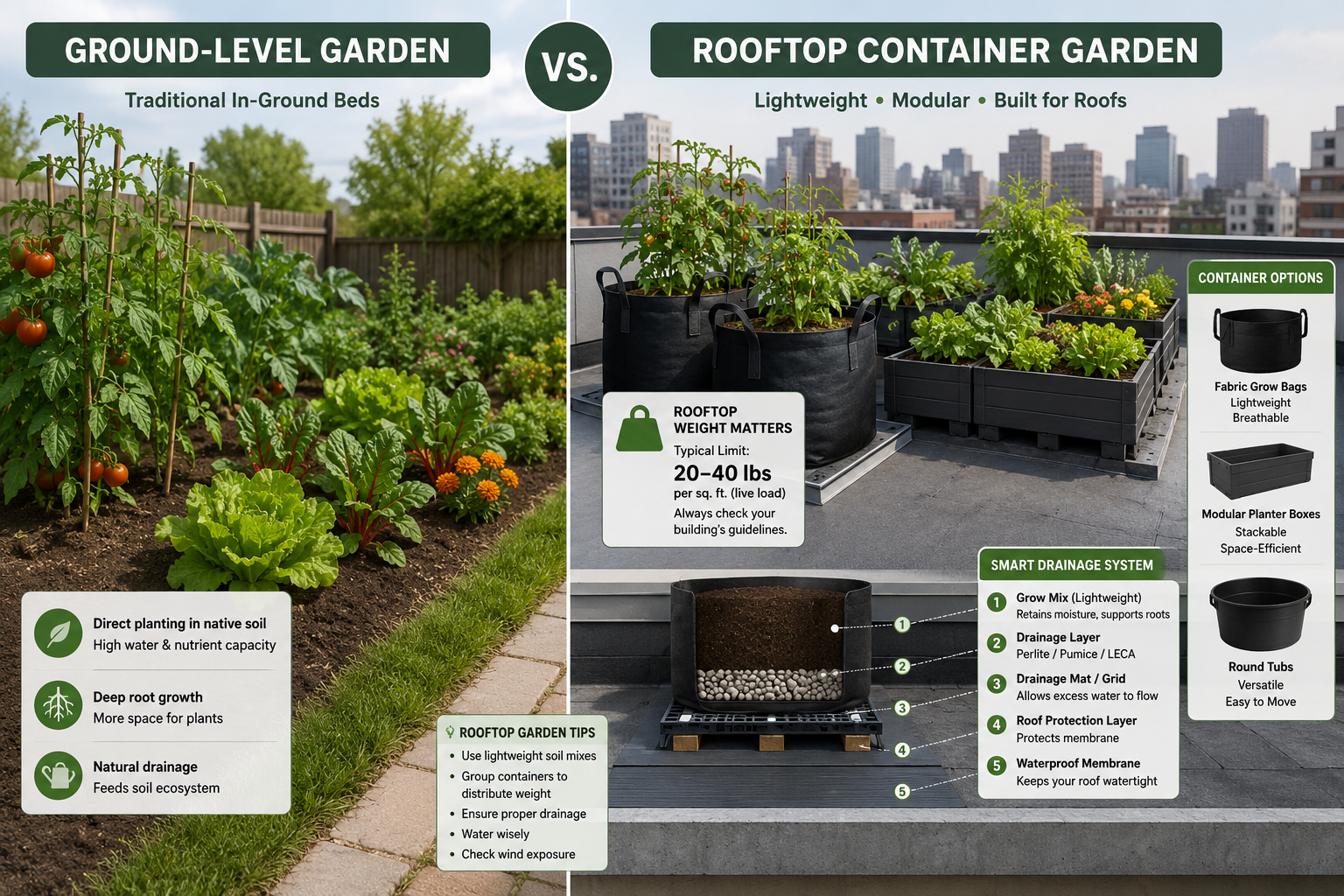
What Kind of Weight Can My Roof Safely Handle for a Garden
Most flat commercial or residential rooftops are engineered to handle a live load of 25 to 50 pounds per square foot (psf), but this varies significantly by building age, construction type, and local building codes. You should never assume a safe load limit — always consult a structural engineer or your building’s facilities manager before adding any garden weight.
A 5-gallon container filled with wet potting mix weighs roughly 40 to 50 pounds. Ten containers concentrated in one area can easily exceed safe limits if you haven’t verified the load capacity.
Practical weight-reduction strategies:
- Use fabric grow bags instead of ceramic or terracotta pots (fabric bags are 80 to 90% lighter when empty).
- Mix perlite or vermiculite into your potting soil (reduces weight by 20 to 30% compared to standard mix).
- Spread containers across the roof rather than clustering them in one spot.
- Use lightweight composite or foam planter boxes instead of concrete or stone.
- Avoid using gravel or heavy decorative stones as mulch.
If your building manager cannot provide load documentation, hire a structural engineer for a one-time assessment. This typically costs $300 to $600 and is worth every dollar.
Do I Need Special Permission from My Landlord or Building Management to Start a Rooftop Garden
Yes, in almost every case you need written permission before starting a rooftop garden. Rooftop access is typically controlled by the building owner or management company, and unauthorized use can result in removal of your garden, lease violations, or liability issues if damage occurs.
Before you buy anything, take these steps:
- Review your lease for any clauses about roof access or modifications.
- Submit a written request to your landlord or building manager outlining your plan, the containers you’ll use, and how you’ll protect the roof surface.
- Offer a waterproofing and liability plan — this increases approval odds significantly.
- Check local zoning rules — some cities require permits for rooftop structures or commercial food growing.
In 2026, many urban municipalities have introduced rooftop garden incentive programs that can actually help you get approval faster. Check with your local planning or sustainability office.
How to Waterproof and Protect Your Roof While Gardening
Waterproofing is non-negotiable for rooftop gardening. Water damage to a roof membrane can cost thousands of dollars to repair and will almost certainly end your gardening privileges.
Key protective measures:
- Place all containers on rubber or foam pads to prevent abrasion of the roof membrane.
- Use saucers or drip trays under every container to catch overflow.
- Never drill into the roof surface for any reason without professional guidance.
- Inspect the roof membrane regularly for cracks, pooling water, or damage near container edges.
- Use a root barrier fabric if you’re building any raised bed that sits directly on the roof surface.
A waterproof liner or EPDM rubber mat placed under your entire garden area adds an extra protective layer and is a reasonable investment for any setup larger than a few pots.
What Gardening Tools and Supplies Do I Need Specifically for a Rooftop Setup
Rooftop gardening requires a slightly different toolkit than ground gardening. The emphasis is on lightweight, compact tools and supplies that are easy to carry up stairs or through access hatches.
Essential rooftop gardening supplies:
- Lightweight hand trowel and cultivator
- Pruning shears or scissors
- Watering can or hose with a gentle nozzle (or a drip irrigation kit)
- Potting mix (not garden soil)
- Slow-release granular fertilizer or liquid fertilizer
- Fabric grow bags or lightweight containers
- Rubber or foam pads for under containers
- Zip ties or soft plant ties for staking in wind
Optional but useful:
- A small folding cart or dolly for moving heavy bags of soil up to the roof
- A soil moisture meter (prevents overwatering, which is a common beginner mistake)
- Shade cloth (for extreme summer heat)
- Wind netting or a trellis system for wind protection
Is Rooftop Gardening Good for People Who Live in Hot or Cold Climates
Rooftop gardening works in both hot and cold climates, but the strategies differ. Rooftops amplify temperature extremes — they’re hotter in summer and colder in winter than ground level — so climate adaptation is more important than it is for ground gardens.
In hot climates:
- Use light-colored containers to reflect heat and keep roots cooler.
- Water more frequently (containers dry out 30 to 50% faster on hot rooftops).
- Use shade cloth during peak summer to prevent heat stress.
- Focus on heat-tolerant crops: peppers, eggplant, sweet potatoes, basil.
In cold climates:
- Move containers indoors or to a sheltered area before frost.
- Use insulating container wraps to extend the growing season.
- Focus on cool-season crops in spring and fall: kale, spinach, lettuce, radishes.
- Consider a small cold frame or row cover to extend harvests.
Rooftop gardens in temperate climates with mild summers and winters are the easiest to manage and tend to produce the most consistent yields.
How Much Sunlight Do I Need for a Successful Rooftop Garden
Most food-producing plants need a minimum of 6 hours of direct sunlight per day. Rooftops are often excellent for this — they’re typically unobstructed by trees or neighboring buildings, which is one of the biggest advantages over ground-level urban gardening.
- Full sun (6+ hours): Required for tomatoes, peppers, eggplant, cucumbers, and most fruiting crops.
- Partial sun (3 to 6 hours): Sufficient for leafy greens, herbs, and root vegetables.
- Low light (under 3 hours): Very few edible plants thrive; stick to shade-tolerant herbs like mint or chives.
Before planting, observe your rooftop at different times of day to map out sun and shade zones. Taller buildings or mechanical equipment on the roof can create unexpected shade patches.
What Are the Pros and Cons of Rooftop Gardening Compared to Ground-Level Gardening
Rooftop gardening has real advantages over ground-level gardening for urban residents, but it also comes with trade-offs that beginners should understand before committing.
Pros:
- Better sun exposure in dense urban areas
- No soil-borne pests or weeds
- Productive use of otherwise unused space
- Potential to reduce building cooling costs (green roofs provide insulation)
- Community-building potential in shared building spaces
Cons:
- Weight and structural constraints limit scale
- Higher wind and heat stress on plants
- More frequent watering required
- Requires permission and sometimes permits
- Carrying supplies up to the roof is physically demanding
- Waterproofing risks if not managed carefully
For most beginners, the pros outweigh the cons if you start small, get proper permissions, and choose the right containers and crops.
Can I Grow Enough Food on a Rooftop to Actually Feed Myself
Realistically, a small rooftop garden can meaningfully supplement your diet but is unlikely to feed you entirely. A well-managed 200 to 400 square foot rooftop garden could provide a significant portion of your fresh herbs, salad greens, and some vegetables throughout the growing season, but full food self-sufficiency requires much more space and a much more intensive system.
For context, research from urban agriculture programs suggests that a person needs roughly 4,000 square feet of productive growing space to meet basic caloric needs from vegetables alone — far beyond what most rooftops offer.
What a rooftop garden can realistically provide:
- Fresh herbs year-round (in mild climates)
- Salad greens for several meals per week during the growing season
- Cherry tomatoes, peppers, and other vegetables as a supplement
- Meaningful savings on grocery bills for high-cost items like fresh herbs and specialty greens
What Kind of Drainage and Irrigation Systems Work Best for Rooftop Gardens
Good drainage and consistent irrigation are the two most critical infrastructure decisions in any rooftop garden. Without proper drainage, containers become waterlogged and roots rot. Without consistent watering, rooftop plants dry out faster than ground-level plants because containers lose moisture quickly in wind and heat.
Drainage best practices:
- Every container must have drainage holes — no exceptions.
- Use a layer of perlite or coarse gravel at the bottom of containers to improve drainage flow.
- Place containers on raised feet or pads so water drains freely from the bottom.
- Ensure roof drainage channels are never blocked by containers or trays.
Irrigation options:
| System | Best For | Cost Range |
|---|---|---|
| Hand watering (can or hose) | Small setups (under 10 containers) | $0 – $30 |
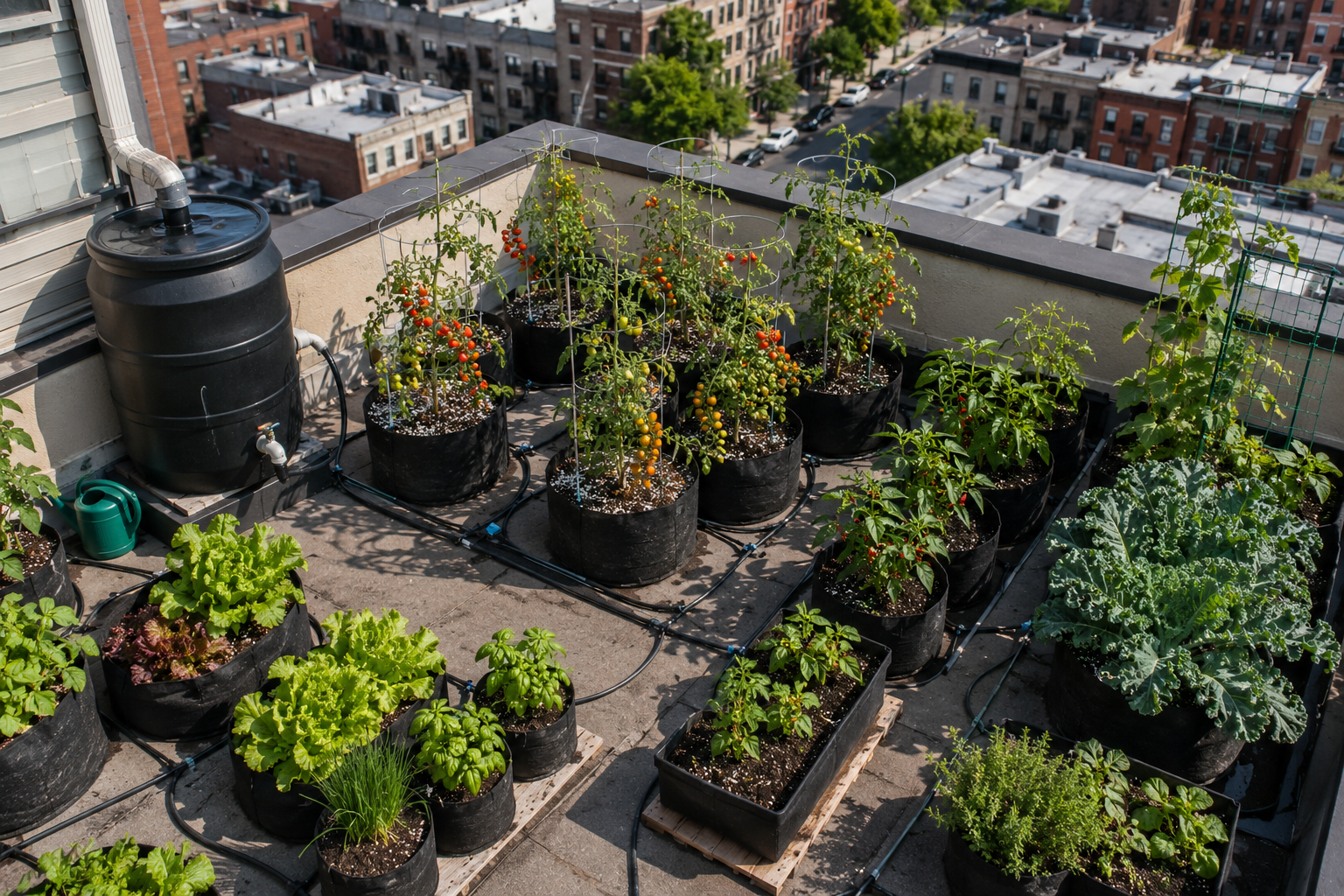
| Drip irrigation with timer | Medium setups (10 to 30 containers) | $60 – $200 |
| Self-watering containers | Any size, low-maintenance preference | $15 – $50 per container |
| Rain barrel collection | Supplemental water source | $80 – $150 |
A drip irrigation system with a simple timer is the single best investment for anyone with more than 10 containers. It reduces water waste, prevents under- and over-watering, and saves significant time over a growing season.
Common Mistakes Beginners Make When Starting a Rooftop Garden
Most rooftop gardening failures come from a handful of predictable errors. Knowing these in advance saves money and frustration.
- Skipping the weight check: Adding too much weight too fast is the most dangerous and costly mistake.
- Using garden soil instead of potting mix: Garden soil compacts in containers, suffocates roots, and is far too heavy.
- Underestimating wind: Wind desiccates plants and can knock over containers. Always use wind barriers or stake plants securely.
- Overwatering or underwatering: Rooftop containers need more frequent watering than ground beds, but soggy soil kills roots. Use a moisture meter.
- Planting too much too soon: Start with 5 to 10 containers in your first season. Learn your rooftop’s microclimate before scaling up.
- Neglecting sun mapping: Assuming the whole roof gets equal sun leads to poor plant placement and weak yields.
Frequently Asked Questions
What is the easiest plant to grow on a rooftop for a complete beginner?
Herbs like basil, chives, and mint are the easiest starting point. They grow quickly, tolerate container conditions well, and are useful in the kitchen. Start with a 6-inch pot and a basic potting mix.
Do I need a green roof membrane to start rooftop gardening?
No. A full engineered green roof membrane is for permanent, large-scale installations. Beginners can use rubber or foam pads under containers and waterproof saucers to protect the existing roof surface.
How often should I water my rooftop garden?
Most rooftop containers need watering every 1 to 2 days in warm weather, and every 3 to 4 days in cooler seasons. Check soil moisture 2 inches below the surface — if it’s dry, water thoroughly.
Can I use rainwater for my rooftop garden?
Yes, and it’s encouraged. A simple rain barrel connected to a downspout collects free water and reduces your reliance on tap water. Check local regulations, as some areas restrict rainwater collection.
What is the minimum container size for growing tomatoes on a rooftop?
Cherry tomato varieties need at least a 5-gallon container. Full-size tomatoes need 10 gallons or more. Smaller containers restrict root growth and reduce yield significantly.
Is rooftop gardening legal in most cities?
Generally yes, but regulations vary. Most cities allow container gardening on private rooftops without a permit. Structural modifications, commercial food production, or permanent structures may require permits. Always check with your local planning department.
How do I deal with pests on a rooftop garden?
Rooftop gardens have fewer soil-borne pests than ground gardens, but aphids, whiteflies, and spider mites are common. Use neem oil spray or insecticidal soap as a first response. Introduce companion plants like marigolds to deter pests naturally.
Can I compost on a rooftop?
Yes, using a small worm bin (vermicomposting) or a compact tumbler composter. Traditional open compost piles are impractical and may violate building rules. Worm bins are odorless when managed correctly and produce excellent fertilizer.
What happens to my rooftop garden in winter?
In cold climates, move frost-sensitive containers indoors or to a sheltered area. Hardy greens like kale can survive light frosts. Use insulating wraps on containers to extend the season by a few weeks.
How do I know if my roof gets enough sun for a garden?
Observe the roof at 9 a.m., noon, and 3 p.m. on a clear day. If you get direct sun for 6 or more hours, you can grow most vegetables. Under 6 hours, focus on leafy greens and herbs.
Conclusion
This rooftop gardening complete beginner guide covers the essentials you need to get started safely and successfully. The most important first steps are checking your roof’s weight capacity, securing written permission from your landlord or building management, and starting small with 5 to 10 lightweight containers.
Actionable next steps for 2026:
- Visit your rooftop and map sun exposure at different times of day.
- Contact your building manager and request written permission with a simple one-page garden plan.
- Purchase 5 fabric grow bags, a bag of quality potting mix, and a seed packet of herbs or leafy greens.
- Set up a basic watering routine and track how quickly your containers dry out in your specific climate.
- Expand your setup in your second season once you understand your rooftop’s microclimate.
Rooftop gardening rewards patience and planning. Start with the basics, learn your space, and scale up from there.
References
- Despommier, D. (2010). The Vertical Farm: Feeding the World in the 21st Century. St. Martin’s Press.
- Whittinghill, L. J., & Rowe, D. B. (2012). The role of green roof technology in urban agriculture. Renewable Agriculture and Food Systems, 27(4), 314-322. https://doi.org/10.1017/S1742170511000550
- USDA Urban Agriculture Toolkit. (2016). United States Department of Agriculture. https://www.usda.gov/sites/default/files/documents/urban-agriculture-toolkit.pdf
- Orsini, F., Gasperi, D., Marchetti, L., Piovene, C., Draghetti, S., Ramazzotti, S., & Gianquinto, G. (2014). Exploring the production capacity of rooftop gardens in urban agriculture: The potential impact on food and nutrition security, biodiversity and other ecosystem services in the city of Bologna. Food Security, 6(6), 781-792.