What Is Urban Gardening? Beginner’s Guide
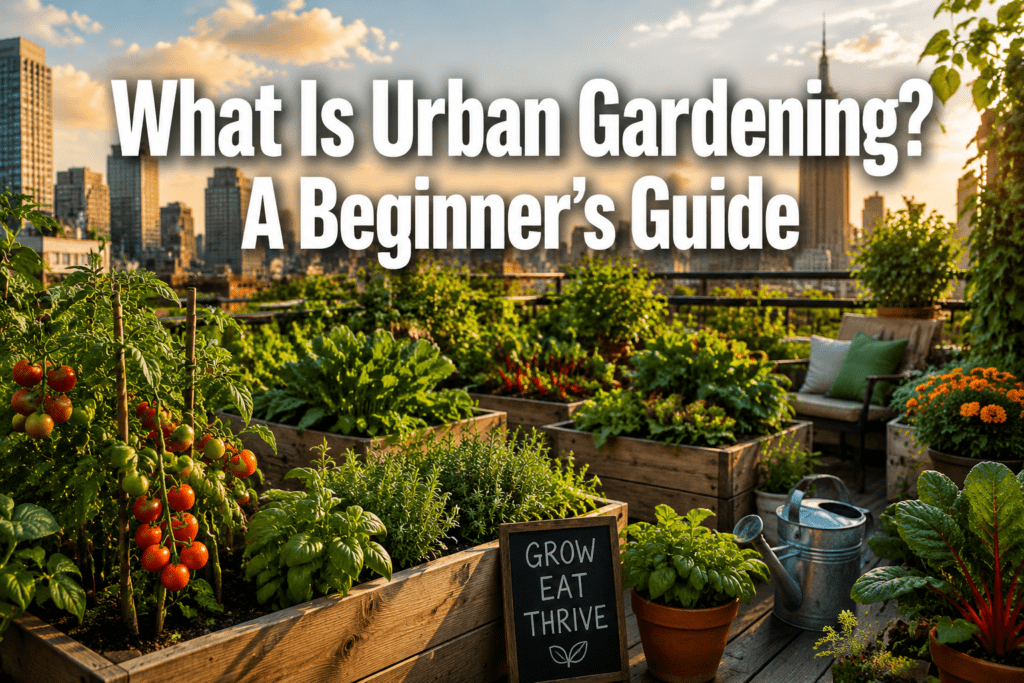
Quick Answer: Urban gardening is the practice of growing food, herbs, or plants within a city or densely populated area, using spaces like balconies, rooftops, windowsills, or indoor setups. It works for nearly any living situation, from a studio apartment to a townhouse with a small yard. You don’t need a lot of space, money, or prior experience to start.
Key Takeaways
- Urban gardening means growing plants in city environments using small or unconventional spaces
- Balconies, windowsills, rooftops, and indoor shelves all qualify as viable growing areas
- Beginners can start for as little as $20 to $50 using containers, potting mix, and seeds
- Vegetables like lettuce, radishes, cherry tomatoes, and herbs thrive in small urban spaces
- Common beginner mistakes include overwatering, choosing the wrong containers, and underestimating light needs
- Vertical gardening and hydroponics are strong options when floor space is extremely limited
- Urban gardens can save a household an estimated $500 or more per year on fresh produce, depending on what is grown
- Cold climates and low-light apartments are workable with grow lights and cold-hardy plant varieties
What Exactly Is Urban Gardening and How Is It Different from Regular Gardening
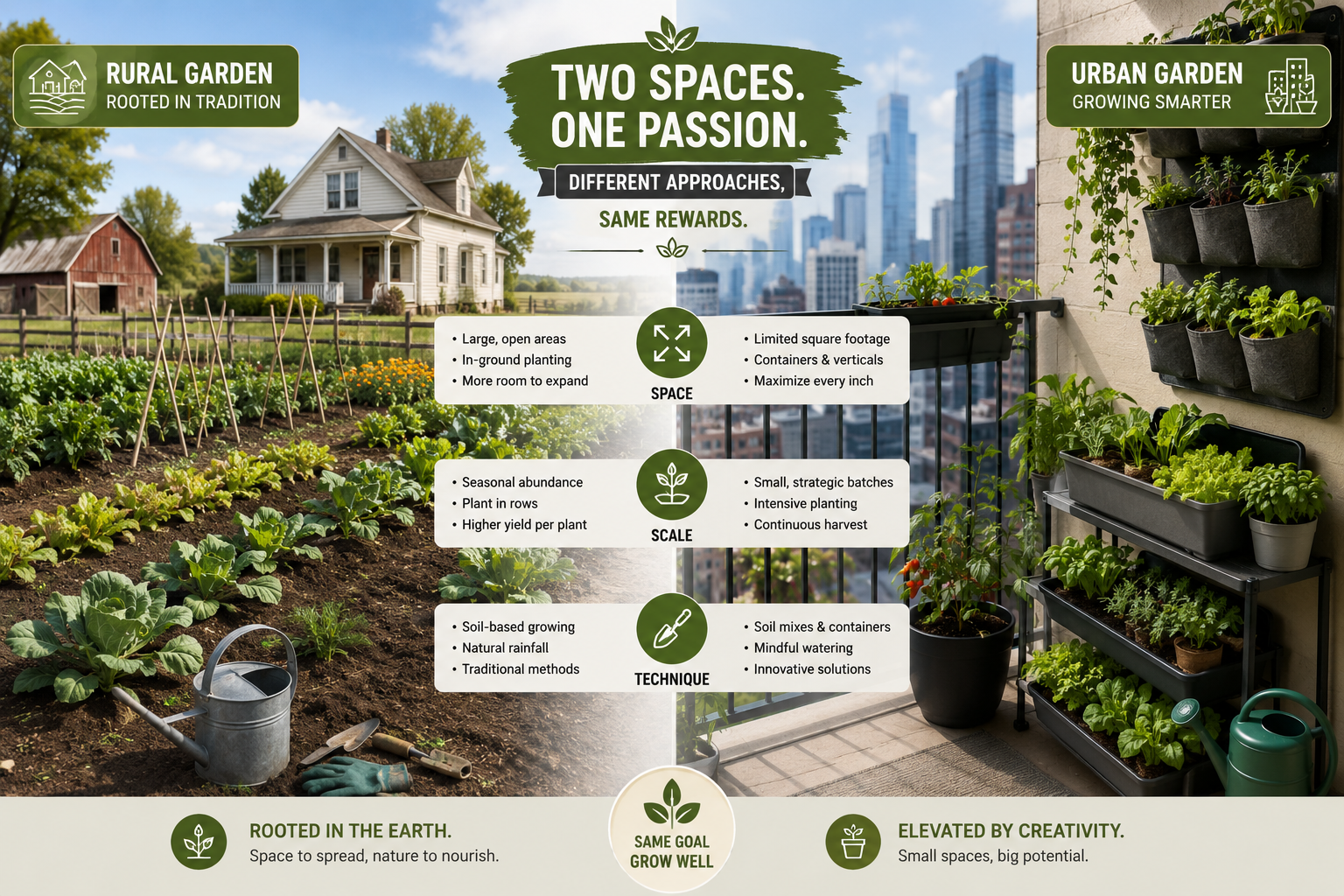
Urban gardening is growing plants, food, or herbs in a city or suburban environment where space is limited. Unlike traditional rural or suburban gardening, which typically uses large in-ground plots, urban gardening relies on containers, raised beds, vertical structures, or indoor systems to make the most of tight spaces.
The core difference is scale and method, not intent. Both approaches aim to grow healthy plants, but urban gardening demands more creativity about where and how plants are placed.
Key distinctions at a glance:
| Feature | Traditional Gardening | Urban Gardening |
|---|---|---|
| Space required | Large outdoor plot | Balcony, windowsill, rooftop, or indoors |
| Soil type | In-ground native soil | Potting mix, grow media, or hydroponic solution |
| Watering method | Hose or rain | Manual watering, drip systems, or self-watering pots |
| Common techniques | Row planting | Container, vertical, or hydroponic growing |
| Startup cost | Moderate to high | Low to moderate |
Urban gardening also tends to serve a dual purpose: producing food and improving mental well-being in dense, high-stress city environments.
How Much Space Do I Need to Start an Urban Garden in My Apartment
You can start an urban garden with as little as a single sunny windowsill. A south-facing window with four to six hours of direct light per day is enough to grow herbs like basil, chives, or mint in small pots.
For a more productive setup, a balcony or patio of even 20 to 30 square feet can support several containers of vegetables, herbs, and leafy greens. The key is using vertical space and choosing compact plant varieties.
Space planning by situation:
- Windowsill only: Herbs, microgreens, small pepper plants
- Balcony under 50 sq ft: 4 to 8 containers, lettuce, cherry tomatoes, radishes, herbs
- Rooftop or shared courtyard: Raised beds, larger fruiting plants, even dwarf fruit trees
- No outdoor access: Indoor grow shelves with artificial lighting
Choose compact or “patio” varieties of vegetables. A cherry tomato plant in a five-gallon bucket takes up roughly one square foot of floor space and can produce several pounds of fruit per season.
What Are the Cheapest Ways to Set Up an Urban Garden on a Budget
A functional urban garden can be started for $20 to $50. The biggest cost savings come from starting plants from seed rather than buying transplants, and repurposing containers instead of buying new ones.
Budget-friendly setup options:
- Use food-grade buckets, old colanders, wooden crates, or fabric grow bags instead of store-bought pots
- Buy a small bag of quality potting mix (avoid garden soil, which compacts in containers)
- Start from seed packets, which cost $1 to $4 each and contain dozens of plants worth of potential
- Collect rainwater or use tap water that has sat overnight to reduce chemical buildup on sensitive plants
- Look for community seed swaps, local gardening groups, or library seed libraries for free seeds
One common budget mistake: buying cheap potting soil. Low-quality mixes drain poorly and lead to root rot, which kills plants and wastes money. Spend a little more on a well-draining mix with perlite or coco coir.
What Vegetables Grow Best in Small Urban Spaces Like Balconies
Leafy greens, herbs, radishes, cherry tomatoes, and peppers are the best performers in small urban spaces. These crops produce well in containers, grow relatively quickly, and don’t need deep soil.
Top picks for balcony and container growing:
- Lettuce and spinach: Shallow roots, harvest in 30 to 45 days, grow well in window boxes
- Radishes: Ready in as little as 25 days, great for beginners
- Cherry tomatoes: High yield in 5-gallon containers, need a stake or cage
- Basil, chives, mint, parsley: Thrive in small pots, useful in cooking daily
- Bush beans: Compact, no staking needed, productive in 8-inch pots
- Kale and Swiss chard: Hardy, cut-and-come-again crops that last months
Avoid large vining crops like pumpkins, watermelons, or full-size corn in small spaces. They need too much room and produce poor yields in containers.
What Common Mistakes Do Beginners Make When Starting Urban Gardening
The most common beginner mistake is overwatering. Container plants need consistent moisture but not soggy soil. Stick a finger two inches into the soil before watering; if it still feels damp, wait another day.
Other frequent mistakes:
- Choosing containers without drainage holes: Roots drown in standing water
- Underestimating light requirements: Most fruiting vegetables need at least six hours of direct sun
- Starting too many plants at once: Begin with three to five varieties and expand once you have a feel for the routine
- Using garden soil in containers: It compacts and suffocates roots; always use potting mix
- Skipping fertilizer: Container plants exhaust nutrients faster than in-ground plants; feed with a balanced liquid fertilizer every two to three weeks during the growing season
Edge case: If your balcony gets afternoon shade from a neighboring building, stick to shade-tolerant crops like lettuce and herbs rather than forcing tomatoes that will produce poorly.
Is Urban Gardening Worth It If I Live in a City with Limited Sunlight
Yes, urban gardening is still worth it in low-light conditions, but you need to adjust your plant selection and possibly add artificial lighting. North-facing apartments or balconies shaded by taller buildings can still support herbs, microgreens, lettuce, and spinach, all of which tolerate partial shade.
For spaces with fewer than four hours of natural light, a basic LED grow light ($30 to $80) placed 6 to 12 inches above plants for 12 to 16 hours per day effectively replaces sunlight. Modern full-spectrum LEDs are energy-efficient and work well for leafy greens and herbs year-round.
How Much Money Can I Save by Growing My Own Food in an Urban Garden
A well-maintained urban garden can save a household between $300 and $600 per year, according to estimates from the National Gardening Association (2014), which found that the average American food garden produces roughly $600 worth of produce annually. Herb gardens offer some of the best return on investment because fresh herbs are expensive at grocery stores and easy to grow in small containers.
Best crops for financial return:
- Fresh herbs (basil, cilantro, rosemary): $3 to $5 per bunch at stores, nearly free to grow
- Salad greens: A cut-and-come-again lettuce mix can replace weekly grocery purchases for months
- Cherry tomatoes: High yield per square foot relative to store price
Savings vary based on how much you grow, your local grocery prices, and how much you spend on supplies. In year one, costs may offset savings. By year two, when you reuse containers and save seeds, the return improves significantly.
What Equipment Do I Need to Start Urban Gardening for the First Time
To start urban gardening, you need containers, potting mix, seeds or seedlings, and a watering method. Everything else is optional.
Starter equipment list:
- Containers with drainage holes (any size appropriate for your plants)
- Quality potting mix (not garden soil)
- Seeds or transplants of your chosen crops
- A small watering can or spray bottle for seedlings
- Basic fertilizer (slow-release granules or liquid concentrate)
- Trowel or large spoon for transplanting
- Optional: grow light, plant stakes, self-watering inserts, drip tray
You do not need raised beds, expensive grow tents, or specialized tools to begin. Start minimal and add equipment as you identify specific needs.
Are There Urban Gardening Techniques for People with No Outdoor Space
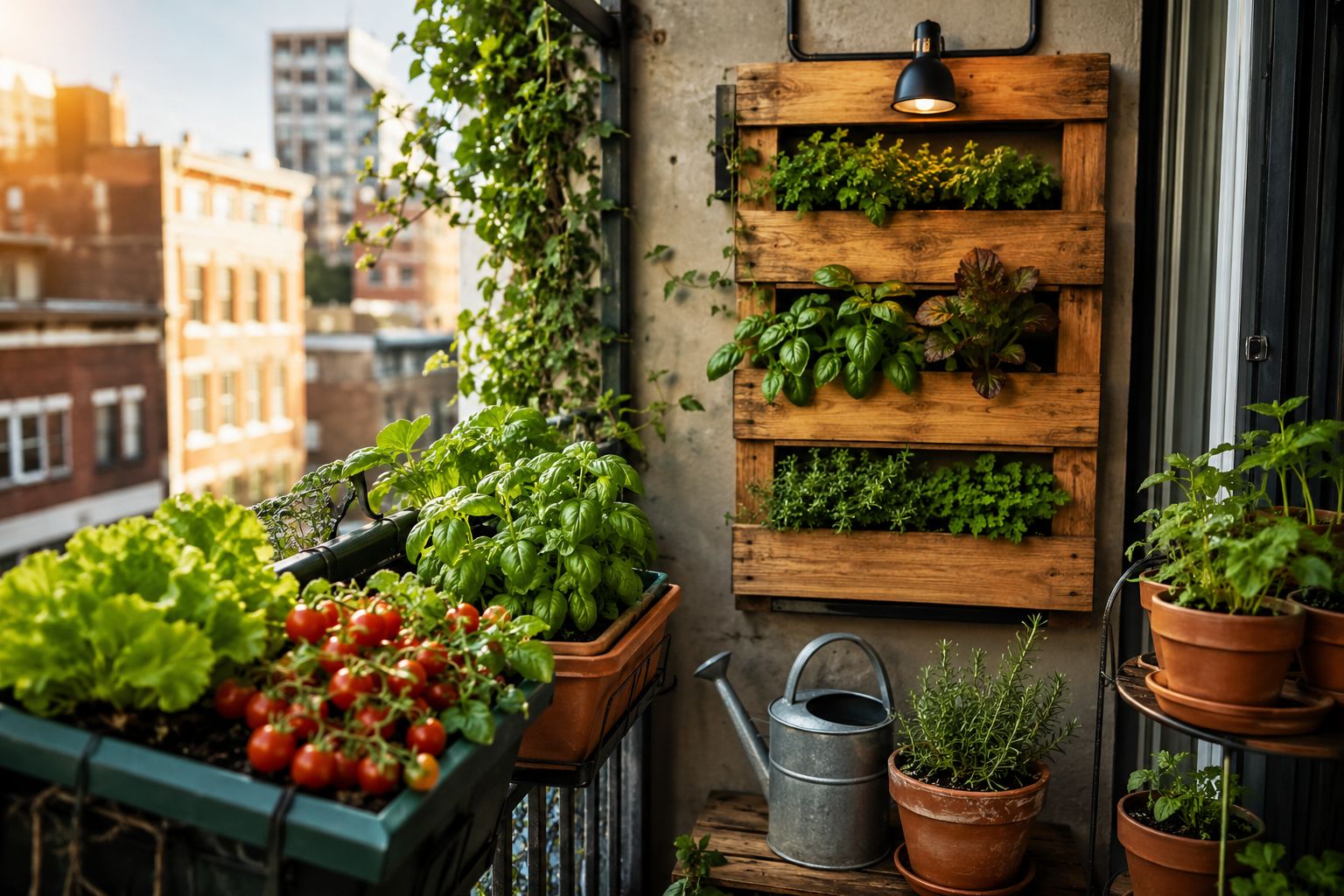
Yes. Indoor gardening techniques, including hydroponics, grow shelves with LED lighting, and windowsill container gardens, work well for people with zero outdoor access.
Indoor-only options:
- Windowsill herb gardens: Requires only a south or west-facing window
- Grow shelf systems: Stackable shelves with LED strip lights can produce lettuce, herbs, and microgreens year-round
- Countertop hydroponic units: Products like the AeroGarden style systems grow herbs and greens in water without soil
- Microgreens trays: Grow on any flat surface near light; ready to harvest in 7 to 14 days
Microgreens are especially practical for no-outdoor-space situations. They require minimal equipment, produce fast, and are nutritionally dense.
What Are the Pros and Cons of Vertical Gardening in Small Apartments
Vertical gardening maximizes growing area by stacking or mounting plants on walls, fences, or shelving units rather than spreading across floor space. It’s one of the most effective strategies for small apartments.
Pros:
- Dramatically increases growing capacity without using floor space
- Improves air circulation around plants
- Creates a visually appealing green wall effect
- Works indoors and outdoors
Cons:
- Wall-mounted systems can be heavy; check structural load limits before installing
- Plants dry out faster in vertical pockets because of increased air exposure
- Bottom rows may receive less light than top rows in wall-mounted setups
- Initial setup cost for quality vertical systems runs $40 to $150
Choose vertical gardening if you have wall space but little floor space. Avoid it if your rental agreement prohibits wall mounting or if you can’t commit to more frequent watering.
How Do Hydroponic Systems Work for Urban Gardening
Hydroponics grows plants in a nutrient-rich water solution instead of soil. Roots sit in or are misted with water that contains all the minerals a plant needs. Because plants don’t spend energy searching for nutrients in soil, they often grow 30 to 50 percent faster than soil-grown counterparts, according to the University of Arizona’s Controlled Environment Agriculture Center.
Common hydroponic methods for urban beginners:
- Deep Water Culture (DWC): Roots suspended in oxygenated nutrient solution; simple and low-cost
- Kratky method: A passive DWC variant with no pump; ideal for beginners growing lettuce or herbs
- Nutrient Film Technique (NFT): Thin film of nutrient solution flows over roots; good for leafy greens
- Wick systems: Nutrient solution wicked up to roots; very low-tech, works for herbs
A basic Kratky setup for lettuce can be built for under $30 using a lidded container, net pots, growing medium (like clay pebbles), and nutrient solution.
Can Urban Gardening Be Done in Cold Climates or Small Indoor Spaces
Urban gardening works in cold climates and small indoor spaces, but it requires choosing the right plants and methods. Outdoors in cold climates, cold-hardy crops like kale, spinach, arugula, and certain herbs can survive light frosts and extend the season into late autumn.
Cold-climate strategies:
- Use cold frames or mini hoop covers over containers to extend the outdoor growing season by four to six weeks
- Bring containers indoors before hard frost; most herbs and greens survive well inside near a window
- Grow indoors year-round using LED grow lights set to 14 to 16 hours per day
Indoor growing is not limited by climate at all. With a grow light and a consistent watering routine, you can produce fresh herbs and greens in January in Minnesota just as effectively as in July in California.
FAQ
What is the easiest vegetable to grow for a complete beginner?
Radishes and lettuce are the easiest. Radishes germinate in three to five days and are ready to harvest in about 25 days. Lettuce is forgiving of inconsistent watering and grows well in almost any container.
Do I need special soil for container gardening?
Yes. Use potting mix, not garden soil. Garden soil compacts in containers and blocks drainage, which suffocates roots. Look for a mix that contains perlite or coco coir for good drainage.
How often should I water my urban garden?
Most container plants need watering every one to two days in warm weather, less in cool weather. Check the top two inches of soil; water when it feels dry. Overwatering is more common and more damaging than underwatering.
Can I grow food on a north-facing balcony?
Yes, but your options are limited. Stick to shade-tolerant crops: lettuce, spinach, mint, chives, and parsley. Avoid fruiting plants like tomatoes or peppers, which need at least six hours of direct sun.
Is hydroponics expensive to set up?
It doesn’t have to be. A basic Kratky hydroponic setup for lettuce costs under $30. More advanced systems with pumps and timers range from $100 to $300, but they’re not necessary for beginners.
How long before I see food from my urban garden?
Microgreens are ready in 7 to 14 days. Radishes take about 25 days. Lettuce and herbs are harvestable in 30 to 45 days. Cherry tomatoes take 60 to 80 days from transplant to first harvest.
Do I need to fertilize container plants?
Yes. Potting mix nutrients deplete within four to six weeks. Use a balanced liquid fertilizer (such as a 10-10-10 formula) every two to three weeks during the active growing season.
Can urban gardening be done year-round?
Indoors, yes, with grow lights. Outdoors in temperate climates, you can extend the season with cold frames but will likely have a winter gap. In warm climates like USDA zones 9 to 11, outdoor growing is possible year-round.
Conclusion
Urban gardening is one of the most accessible ways to grow your own food, regardless of where you live or how much space you have. The core of this beginner’s guide to urban gardening comes down to three principles: start small, choose the right plants for your conditions, and learn from what doesn’t work.
Actionable next steps:
- Assess your space: count your daily hours of sunlight and measure your available growing area
- Choose two or three beginner-friendly crops suited to your light conditions
- Buy a bag of quality potting mix, a few containers with drainage holes, and seed packets
- Set a simple watering reminder and check plants daily for the first two weeks
- Once you’re comfortable, add a grow light, try a hydroponic setup, or experiment with vertical planters
The investment is low, the learning curve is short, and the payoff, fresh food grown by your own hands in the middle of a city, is genuinely satisfying.
References
- National Gardening Association. (2014). Garden to Table: A 5-Year Look at Food Gardening in America. https://garden.org
- University of Arizona Controlled Environment Agriculture Center. (2016). Hydroponic Lettuce Handbook. https://ceac.arizona.edu