
Are 25-gallon grow bags too big for apartment patios?
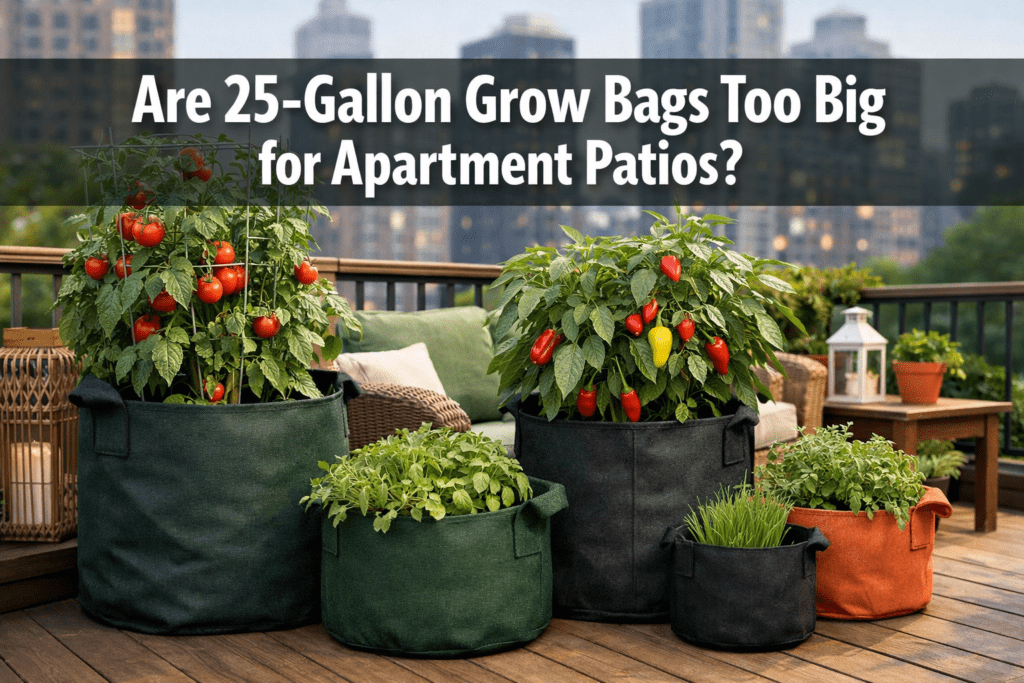
Quick Answer: For most apartment patios, 25-gallon grow bags are genuinely too large. A single 25-gallon bag measures roughly 20–22 inches in diameter and can weigh 100–150 pounds when filled with wet soil, which exceeds safe weight limits on many balconies and leaves little room for anything else. Smaller bags in the 5- to 15-gallon range grow the same vegetables with far fewer trade-offs.
Key Takeaways
- A 25-gallon grow bag typically measures 20–22 inches across and stands 15–18 inches tall when full.
- Most apartment balconies have a weight limit of 40–60 pounds per square foot (check your lease or building specs before loading heavy containers).
- Wet soil in a 25-gallon bag can weigh 100–150 pounds, a serious structural and safety concern.
- For most vegetables, 10- to 15-gallon bags deliver comparable yields with half the footprint.
- 25-gallon bags work well for large fruiting plants like indeterminate tomatoes, squash, or dwarf fruit trees — but only if your patio has the space and load capacity.
- Weight, floor space, and drainage management are the three biggest practical challenges.
- Fabric grow bags dry out faster than plastic pots, so larger bags need more frequent watering.
- Grouping smaller bags gives you more planting flexibility and is easier to rearrange or store.
What Size Is a 25-Gallon Grow Bag, Really?
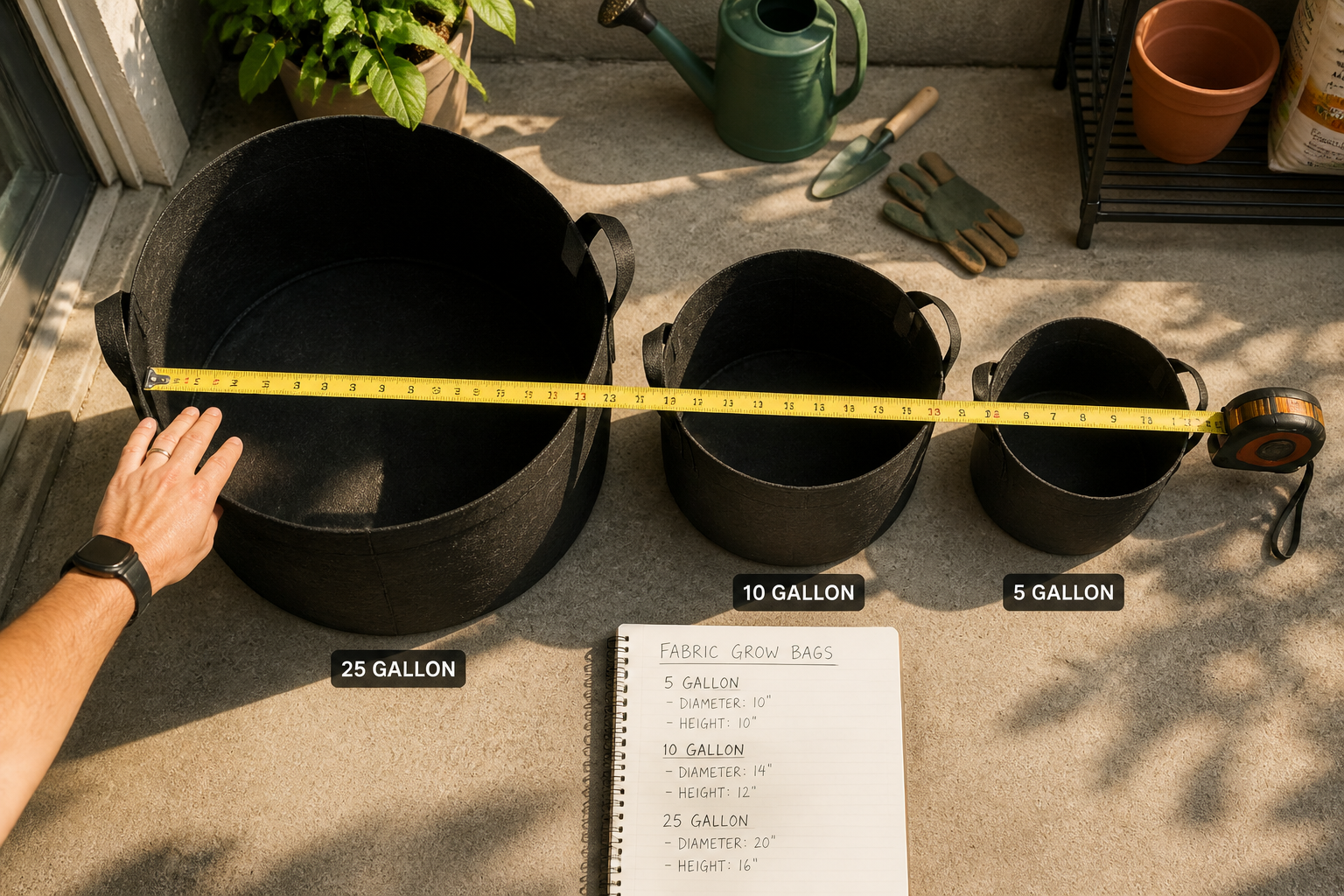
A 25-gallon grow bag is bigger than most people expect. When filled, it typically measures 20–22 inches in diameter and 15–18 inches tall. That’s roughly the footprint of a large bucket seat.
For context, here’s how it compares to common grow bag sizes:
The key takeaway: A 25-gallon bag takes up nearly 2.5 square feet of floor space and adds significant weight. On a 40–60 square foot patio, that’s a meaningful chunk of your usable area.
Are 25-Gallon Grow Bags Too Big for Apartment Patios? The Honest Answer
Yes, in most cases, 25-gallon grow bags are too big for a standard apartment patio — but the answer depends on three specific factors: your patio’s floor space, its weight capacity, and your drainage setup.
Here’s the breakdown:
- Floor space: A typical U.S. apartment balcony runs 40–80 square feet. One 25-gallon bag uses about 2.5 square feet. That sounds small, but once you add a chair, a small table, and two or three more containers, space disappears fast.
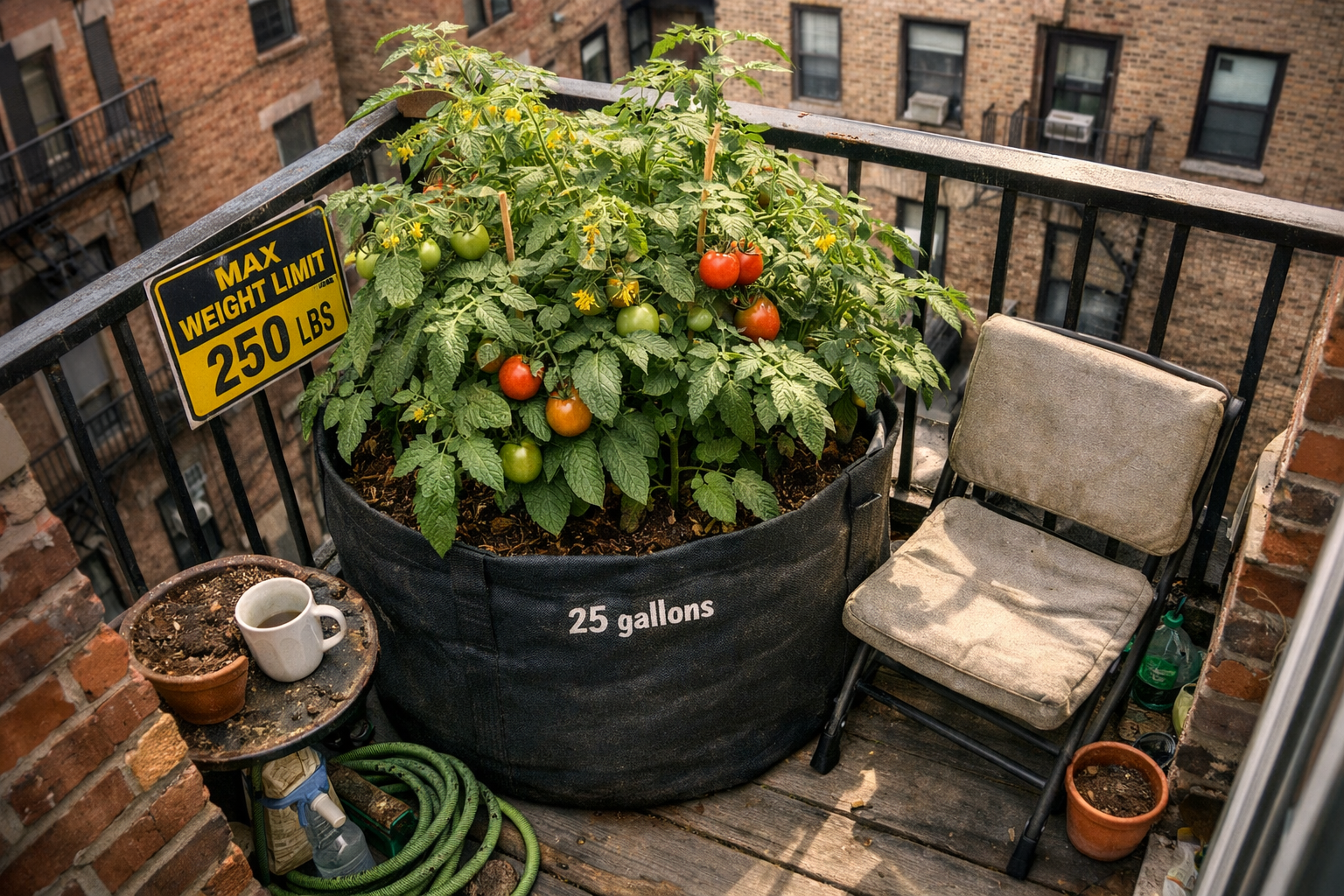
- Weight capacity: Many apartment balconies are rated for 40–60 pounds per square foot. A single 25-gallon bag filled with wet potting mix can hit 100–150 pounds. Always check your building’s structural specs or ask your property manager before placing heavy containers.
- Drainage: Fabric grow bags drain well, but that water has to go somewhere. On a patio above another unit, excess drainage can cause damage and neighbor complaints.
“The biggest mistake apartment gardeners make isn’t choosing the wrong plant — it’s choosing a container their balcony can’t safely hold.”
Choose a 25-gallon bag if: You have a ground-floor patio, confirmed weight capacity, and you’re growing a large plant like an indeterminate tomato or a dwarf citrus tree that genuinely needs the root space.
Stick with smaller bags if: You’re on an upper floor, have limited space, or want to grow multiple plant varieties side by side.
For more ideas on making the most of a small outdoor space, see our guide to balcony garden ideas for apartment dwellers.
What Plants Actually Need a 25-Gallon Grow Bag?
Most vegetables don’t need 25 gallons of soil. A 25-gallon bag is genuinely useful for a narrow list of plants.
Plants that benefit from 25-gallon bags:
- Indeterminate (vining) tomatoes 🍅
- Zucchini and summer squash
- Watermelon (compact varieties)
- Dwarf fruit trees (lemon, fig, dwarf apple)
- Sweet corn (planted in groups)
Plants that do just fine in 5- to 15-gallon bags:
- Peppers and chili plants
- Eggplant
- Bush tomatoes and determinate varieties
- Kale, chard, and leafy greens
- Herbs (basil, parsley, mint)
- Lettuce and spinach
If you’re growing tomatoes in a tight space, a 15-gallon bag is usually enough for a determinate variety. Check out our tips on growing tomatoes in small spaces for variety-specific guidance.
For herbs specifically, a 5-gallon bag is plenty. See our best herbs for small gardens guide for compact options that thrive in limited space.
Are 25-Gallon Grow Bags Too Big for Apartment Patios When Weight Is a Factor?
Weight is the most overlooked problem with large grow bags on apartment balconies. A 25-gallon bag filled with wet potting mix is not something most balconies handle safely without verification.
How to estimate the weight load:
- Find your building’s balcony weight rating (check your lease, ask the building manager, or look at the original construction specs).
- Calculate the total weight: grow bag + wet soil + plant + water reservoir if applicable.
- Spread the load — place bags near structural walls or columns rather than in the center of the balcony floor.
- Use lightweight potting mixes (perlite-heavy blends weigh less than standard garden soil).
Common mistake: Using regular garden soil instead of a lightweight potting mix. Garden soil in a 25-gallon bag can weigh 200+ pounds when wet — well beyond what most balconies tolerate.
Lightweight mixes made with perlite, coco coir, or vermiculite can cut bag weight by 30–40% compared to dense soil blends. This is one of the most practical adjustments you can make if you’re committed to using a larger bag.
Better Alternatives to 25-Gallon Grow Bags for Small Patios
If your patio can’t safely support a 25-gallon bag, you have several practical alternatives that still let you grow productive plants.
Top alternatives:
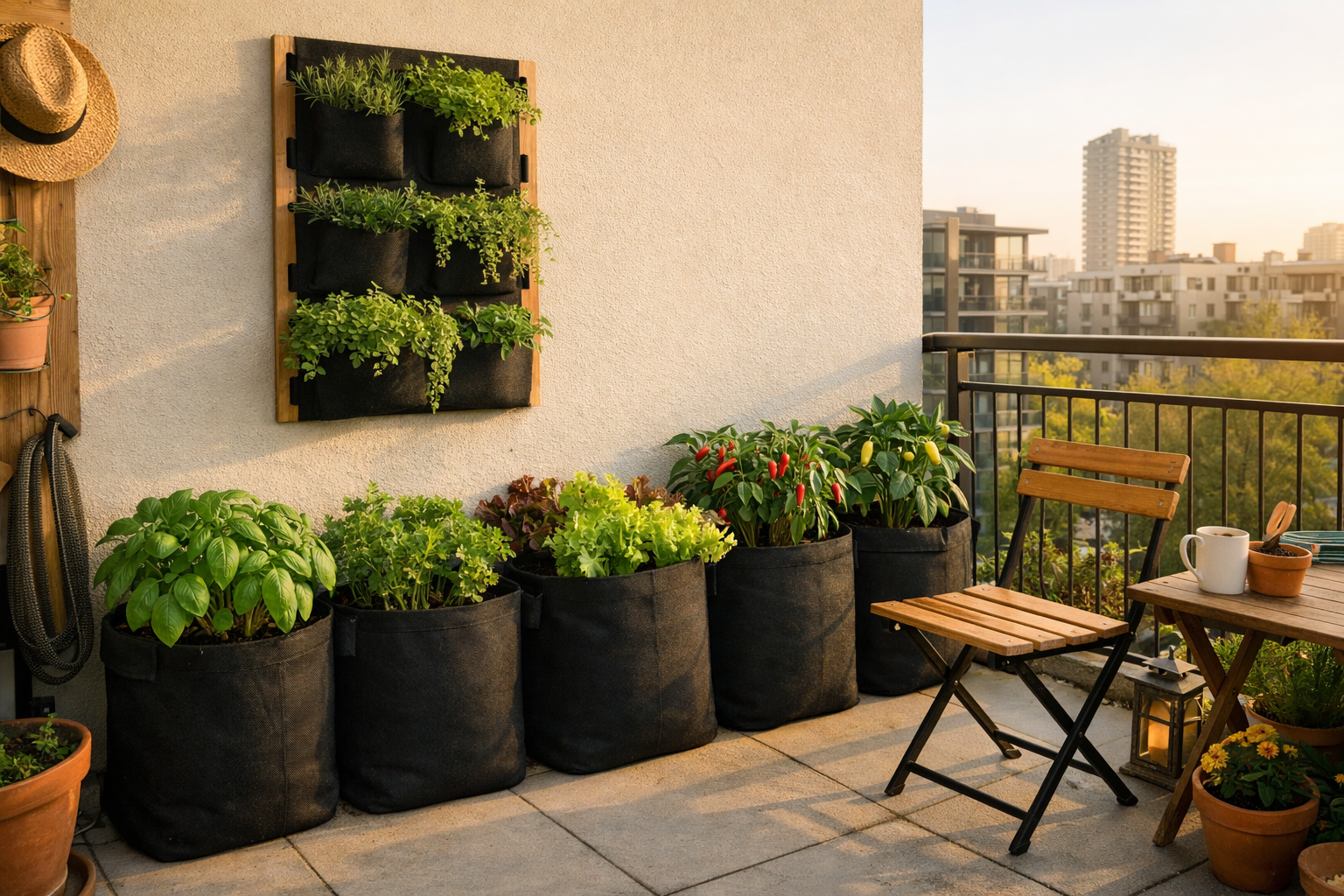
- 10- to 15-gallon fabric bags: Enough root space for tomatoes, peppers, and eggplant. Much lighter and easier to move.
- Vertical wall planters: Mount on railings or walls to grow herbs and greens without using floor space. See our indoor vertical gardening guide for setup ideas.
- Window boxes and railing planters: Great for herbs, lettuce, and compact flowers.
- Self-watering containers: Reduce watering frequency and control drainage better than standard bags.
- Multiple smaller bags: Three 7-gallon bags give you more total growing volume than one 25-gallon bag, with better flexibility and lower individual weight.
For a full breakdown of which containers work best for different vegetables, our best containers for growing vegetables guide covers materials, sizes, and drainage options in detail.
How to Make a 25-Gallon Grow Bag Work on a Patio (If You’re Set on It)
If you’ve confirmed your patio can handle the weight and you have the space, here’s how to set up a 25-gallon bag successfully.
Step-by-step setup:
- Confirm weight capacity with your building manager before buying soil or plants.
- Choose a lightweight potting mix (perlite + coco coir blend) to reduce total bag weight.
- Place a saucer or tray under the bag to catch drainage and protect the floor below.
- Position near a structural wall or corner for maximum load support.
- Install a drip irrigation line or self-watering spike — large fabric bags dry out quickly in summer heat.
- Use a plant cage or trellis anchored to the wall, not the bag, for tall plants like tomatoes.
- Monitor soil moisture daily in hot weather; 25-gallon bags can need watering every 1–2 days in summer.
Edge case: If you’re on a rooftop terrace with a concrete slab (common in urban townhouses), weight limits are often much higher than a standard suspended balcony. In that case, a 25-gallon bag becomes much more practical.
For more strategies on maximizing a compact outdoor garden, see our small garden ideas for apartments resource.
FAQ: 25-Gallon Grow Bags on Apartment Patios
Q: How heavy is a 25-gallon grow bag when full?
A: A 25-gallon bag filled with wet potting mix typically weighs 100–150 pounds. Using a lightweight perlite-heavy mix can bring this closer to 80–100 pounds.
Q: What is the minimum patio size for a 25-gallon grow bag?
A: You need at least 60–80 square feet of patio space to use a 25-gallon bag comfortably alongside basic furniture. Smaller patios quickly feel overcrowded.
Q: Can I use a 25-gallon grow bag indoors?
A: It’s not practical. The drainage, size, and weight make 25-gallon bags unsuitable for indoor use. Stick to 1- to 5-gallon containers indoors.
Q: Do fabric grow bags dry out faster than plastic pots?
A: Yes. Fabric bags allow air pruning and breathability, which means they lose moisture faster. In summer, a 25-gallon fabric bag may need watering every day or two.
Q: What’s the best grow bag size for tomatoes on a balcony?
A: A 15-gallon bag works well for most determinate tomato varieties. Indeterminate (vining) types benefit from 20–25 gallons if your balcony can handle the weight.
Q: Are grow bags better than plastic pots for apartment patios?
A: Fabric grow bags promote healthier root systems through air pruning, but they’re heavier when wet and dry out faster. For apartment patios, self-watering plastic containers often offer a better balance of weight, water retention, and ease.
Q: Can I grow multiple plants in one 25-gallon bag?
A: Yes, for compatible smaller plants. Two pepper plants or a mix of herbs can share a 25-gallon bag comfortably. Avoid pairing large fruiting plants together — they’ll compete for nutrients.
Q: How do I stop a 25-gallon grow bag from tipping over on a windy balcony?
A: Place the bag in a corner or against a wall. You can also use a grow bag stand or place it inside a decorative pot holder for stability.
Q: Are 25-gallon grow bags too big for apartment patios if I only have one?
A: One bag is manageable if your patio is at least 60 square feet and the weight capacity is confirmed. The problem usually comes when gardeners add multiple large bags without checking structural limits.
Q: What vegetables grow best in smaller bags on a patio?
A: Lettuce, spinach, herbs, radishes, and bush beans all thrive in 5- to 10-gallon bags. See our guide to what vegetables thrive in shallow containers for more options.
Conclusion
So, are 25-gallon grow bags too big for apartment patios? For most renters, yes — the combination of weight, floor space, and drainage challenges makes them impractical on a standard suspended balcony. But “too big” isn’t absolute. If you have a ground-floor patio, a confirmed high weight capacity, and you’re growing a large plant that genuinely needs the root space, a 25-gallon bag can work well.
Actionable next steps:
- Check your balcony’s weight rating before buying any large container.
- Start with 10- to 15-gallon bags for most vegetables — they’re lighter, easier to manage, and still highly productive.
- Use vertical space with wall planters and railing boxes to grow more without adding floor weight.
- Choose lightweight potting mixes if you do use a larger bag.
- Visit our apartment gardening ideas guide for a full plan tailored to small urban spaces.
The best container garden is one your patio can safely hold and you can actually maintain. Bigger isn’t always better — productive and sustainable is.
References
- Purdue University Extension. (2018). Container Vegetable Gardening. Purdue University Cooperative Extension Service. https://www.extension.purdue.edu
- University of Florida IFAS Extension. (2020). Vegetable Gardening in Containers. UF/IFAS. https://edis.ifas.ufl.edu
- International Code Council. (2021). International Building Code: Live Load Requirements for Balconies and Decks. ICC. https://www.iccsafe.org
- Oregon State University Extension. (2019). Fabric Containers for Vegetable Production. OSU Extension Service. https://extension.oregonstate.edu