What’s the best container size for cherry tomatoes in small spaces?
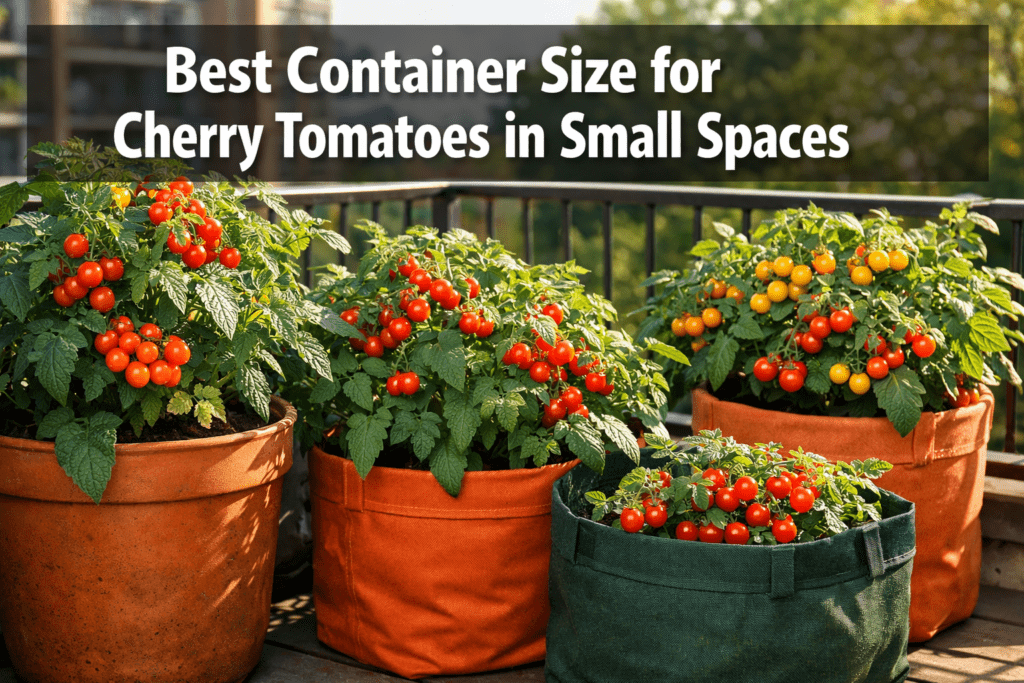
Quick Answer: For most cherry tomato varieties grown in small spaces, a 5-gallon container (roughly 12 inches wide and 12 inches deep) is the sweet spot. Compact or dwarf varieties like Tumbling Tom or Tiny Tim can manage in a 3-gallon pot, while larger indeterminate cherry tomatoes such as Sweet 100 perform best in 7 to 10 gallons. Anything smaller than 3 gallons will almost always lead to stunted growth and poor fruit production.
Key Takeaways 🍅
- 5 gallons is the most practical minimum for standard cherry tomato varieties in containers.
- Compact/dwarf varieties can work in 3-gallon pots; indeterminate types need 7–10 gallons.
- Container depth matters as much as width — aim for at least 12 inches deep.
- Fabric grow bags outperform plastic pots for root health and drainage in tight spaces.
- Undersized containers cause root binding, rapid moisture loss, and reduced yields.
- One plant per 5-gallon container is the rule; don’t crowd two plants into one pot.
- Watering frequency doubles (or more) in small containers during summer heat.
- Self-watering containers can reduce watering stress in very small setups.
- The right soil mix for container gardening is just as critical as container size.
- Vertical support structures let you grow more in less floor space.
Why Container Size Matters More Than Most Gardeners Realize
The right container size directly determines whether your cherry tomatoes thrive or struggle. Cherry tomato roots need adequate space to anchor the plant, access water, and absorb nutrients. When roots run out of room, the plant stresses, flower drop increases, and fruit production drops sharply.
A common mistake is choosing a container based on what looks proportional to a small seedling. That 4-inch transplant will become a plant 3 to 4 feet tall with a root system that needs real volume to support it. Starting in the correct size from day one avoids the stress of repotting mid-season.
For a deeper look at how container dimensions affect different vegetable crops, see this guide on what vegetables thrive in shallow containers.
What’s the Best Container Size for Cherry Tomatoes in Small Spaces? (The Core Answer)
The best container size for cherry tomatoes in small spaces is a 5-gallon pot or grow bag, at least 12 inches deep. This size supports most standard cherry tomato varieties through a full growing season without constant repotting or extreme watering demands.
Here’s a practical size guide by variety type:
Choose 3 gallons if: you’re growing a true dwarf variety, space is extremely limited (think a windowsill or tiny balcony ledge), and you can water daily.
Choose 5 gallons if: you’re growing a standard cherry tomato on a balcony or patio and want a manageable watering schedule.
Choose 7–10 gallons if: you’re growing an indeterminate variety and want maximum yield from one plant.

Does Container Depth Matter as Much as Width?
Yes — depth is often the overlooked dimension. Cherry tomato roots grow down before they spread out. A wide but shallow container (like a standard window box under 8 inches deep) will restrict root development even if the surface area looks generous.
Minimum depth recommendation: 12 inches. A 12-inch depth allows the main taproot and feeder roots to establish properly and gives the soil mass needed to retain moisture between waterings.
Window boxes can work for dwarf varieties only if they are at least 10–12 inches deep. Standard decorative window boxes are often only 6–8 inches deep — too shallow for even compact cherry tomatoes.
Which Container Material Works Best in Small Spaces?
Fabric grow bags are the top choice for small-space cherry tomato growing in 2026. They air-prune roots (preventing root circling), drain well, and fold flat for storage in the off-season. They’re also lighter than ceramic or terracotta, which matters on balconies with weight limits.
Here’s a quick comparison:
For more detail on container options, the best containers for growing vegetables guide covers materials, drainage, and sizing in depth.
What’s the Best Container Size for Cherry Tomatoes in Small Spaces When You Have Almost No Room?
When floor space is extremely limited — a narrow balcony, a fire escape ledge, or a single sunny windowsill — the answer shifts slightly. A 3-gallon fabric grow bag with a dwarf variety is the smallest practical setup that can still produce real fruit.
Strategies for ultra-small spaces:
- Go vertical: A 5-gallon container with a wall-mounted trellis takes up less floor space than a wide pot. See our vertical gardening basics guide for setup ideas.
- Use hanging baskets: Tumbling Tom was bred specifically for hanging baskets. A 12-inch (roughly 2.5–3 gallon) hanging basket works well for this variety.
- Stack vertically, not horizontally: One taller 5-gallon grow bag takes less floor footprint than two smaller pots trying to do the same job.
- Self-watering containers: In very small setups where you can’t water twice daily in summer, a self-watering 5-gallon pot is worth the extra cost.
For more creative approaches, browse these DIY container gardening ideas for small spaces.

How Many Cherry Tomato Plants Per Container?
One plant per 5-gallon container. This is the standard rule, and it holds for good reason. Two plants in one 5-gallon pot compete for water, nutrients, and root space. The result is usually two weak plants instead of one productive one.
The only exception: dwarf varieties in a large (15-gallon+) planter box, where two plants spaced 12 inches apart can coexist. Even then, expect to water and fertilize more aggressively.
Common Mistakes When Choosing Container Size
Even experienced gardeners make these errors:
- Starting too small and not repotting. A seedling in a 1-gallon pot looks fine for weeks, then stalls. If you see roots coming out of drainage holes, the plant is already stressed.
- Ignoring depth for width. A wide, shallow decorative pot is worse than a narrower, deeper one for tomatoes.
- Putting indeterminate varieties in 5-gallon pots. Sweet 100 and Sungold are vigorous growers. They’ll survive in 5 gallons but won’t reach their potential. Use 7–10 gallons for these.
- No drainage holes. No matter the size, a container without drainage will waterlog roots. Always confirm drainage before planting.
- Forgetting about watering frequency. Smaller containers dry out faster. A 3-gallon pot in full summer sun may need watering twice a day. If that’s not realistic for your schedule, size up.
For watering guidance specific to containers, see how often to water container vegetables in summer.
What Soil Should You Use in Cherry Tomato Containers?
Use a high-quality potting mix, never garden soil. Garden soil compacts in containers, restricts drainage, and can introduce pests and disease. A good potting mix stays loose, drains well, and holds just enough moisture.
For cherry tomatoes, look for a mix that includes:
- Perlite or vermiculite (for drainage and aeration)
- Compost (for nutrients)
- Coir or peat (for moisture retention)
A slow-release granular fertilizer mixed in at planting time reduces the need for frequent liquid feeding early in the season. The best soil mix for container gardening covers ratios and product recommendations in detail.

FAQ: Container Size for Cherry Tomatoes in Small Spaces
Q: Can cherry tomatoes grow in a 2-gallon pot?
Only true dwarf varieties like Tiny Tim can manage in 2 gallons, and even then, expect reduced yield and daily watering. Most cherry tomatoes need at least 3–5 gallons.
Q: Is a 5-gallon bucket the same as a 5-gallon grow bag?
Volume-wise, yes. But a 5-gallon bucket needs drainage holes drilled in the bottom. A fabric grow bag drains and air-prunes roots naturally, making it the better choice.
Q: Can I use a window box for cherry tomatoes?
Only if it’s at least 12 inches deep and you’re growing a compact dwarf variety. Most standard window boxes are too shallow for productive cherry tomato growth.
Q: How deep should a container be for cherry tomatoes?
At least 12 inches. Deeper is better for indeterminate varieties — 14 to 16 inches is ideal for vigorous types like Sweet 100.
Q: Do larger containers mean more tomatoes?
Generally yes, up to a point. A 10-gallon container will outperform a 5-gallon for indeterminate varieties. But going from 10 to 20 gallons shows diminishing returns for most cherry tomato plants.
Q: What’s the lightest container option for a weight-restricted balcony?
Fabric grow bags are the lightest option. A 5-gallon fabric bag filled with potting mix weighs roughly 15–20 lbs when moist — significantly less than the same volume in terracotta.
Q: Can I grow cherry tomatoes indoors in containers?
Yes, with sufficient light (at least 8 hours of direct sun or a strong grow light). Dwarf varieties in 3–5 gallon pots work best indoors. See this guide on growing tomatoes in small spaces for indoor-specific tips.
Q: How often do I need to fertilize cherry tomatoes in containers?
Every 1–2 weeks with a balanced liquid fertilizer once the plant starts flowering. Container soil loses nutrients faster than garden beds because frequent watering flushes them out.
Q: Should I use a saucer under my container?
A saucer helps protect surfaces and retains a little moisture, but don’t let water pool in it for more than an hour — standing water causes root rot.
Q: What’s the best container for a beginner growing cherry tomatoes on a balcony?
A 5-gallon black fabric grow bag with a standard determinate cherry tomato variety (like Patio or Bush Early Girl). It’s forgiving, affordable, and produces well without needing a trellis.
Conclusion: Actionable Next Steps
The answer to what’s the best container size for cherry tomatoes in small spaces comes down to three factors: the variety you’re growing, the space you have, and how often you can water.
Here’s your action plan for 2026:
- Identify your variety type (dwarf, determinate, or indeterminate) before buying a container.
- Choose a 5-gallon fabric grow bag as your default starting point for most cherry tomato varieties.
- Confirm your container is at least 12 inches deep — check the product specs, not just the gallon size.
- Fill with quality potting mix, not garden soil, and add slow-release fertilizer at planting.
- Plan your watering schedule — smaller containers need more frequent attention, especially in summer heat.
- Add vertical support to maximize your small space and keep plants productive.
For more small-space growing strategies, explore these small space garden hacks and the container gardening for beginners guide to build a productive setup no matter how limited your space.
References
- University of Maryland Extension. (2019). Growing Tomatoes in Containers. University of Maryland Extension Home & Garden Information Center. https://extension.umd.edu
- Clemson Cooperative Extension. (2020). Tomatoes. Clemson University Home & Garden Information Center. https://hgic.clemson.edu
- NC State Extension. (2021). Container Vegetable Gardening. NC State University. https://content.ces.ncsu.edu