
Is fish fertilizer actually better than Miracle-Gro for small gardens?
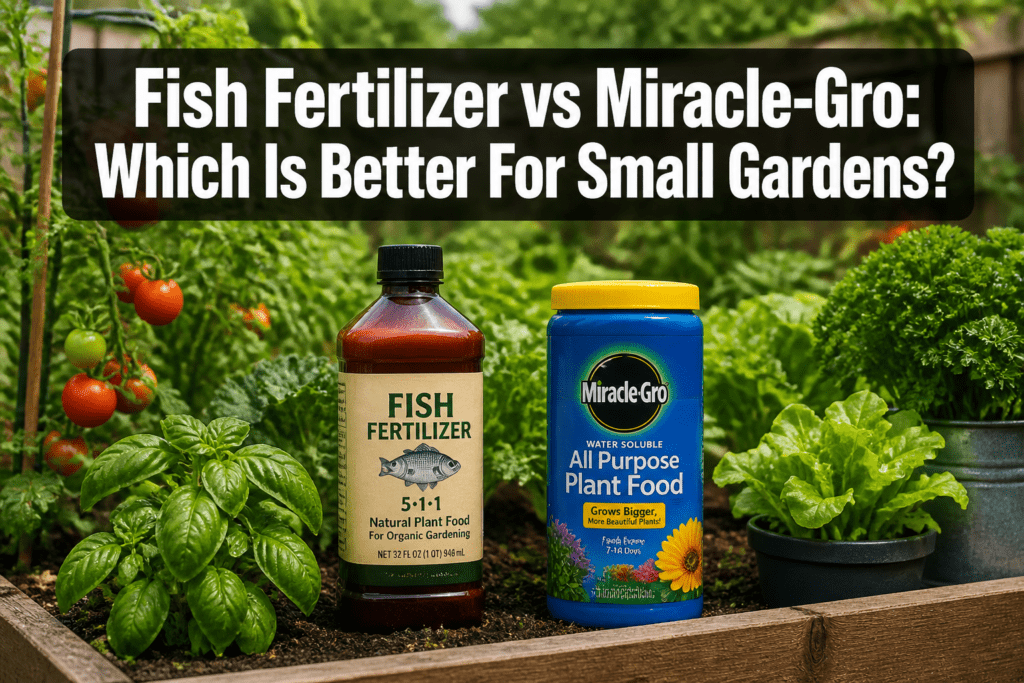
Quick Answer: Fish fertilizer is not universally better than Miracle-Gro for small gardens — it depends on your goals. Fish fertilizer builds long-term soil health and is safer for edible plants, while Miracle-Gro delivers faster, more predictable nutrient boosts. For most small food gardens, fish fertilizer wins on soil biology; for ornamentals or speed, Miracle-Gro often edges ahead.
Key Takeaways
- 🐟 Fish fertilizer feeds soil microbes and improves soil structure over time; Miracle-Gro feeds plants directly and fast.
- 🌿 Fish emulsion is generally safer for edible crops because it’s organic and less likely to cause fertilizer burn.
- ⚡ Miracle-Gro (synthetic) delivers nutrients within 24–48 hours; fish fertilizer works more slowly, over days to weeks.
- 💰 Fish fertilizer typically costs more per application than Miracle-Gro granules, but it can reduce the need for soil amendments over time.
- 🪴 Small container gardens often benefit from Miracle-Gro’s precision dosing; in-ground or raised-bed gardens tend to respond better to fish fertilizer.
- ⚠️ Overusing Miracle-Gro in small, enclosed containers can cause salt buildup in soil; fish fertilizer carries lower risk of this.
- 🦠 Fish fertilizer supports beneficial bacteria and mycorrhizal fungi; synthetic fertilizers can suppress microbial activity with repeated use.
- Both products work — the “better” choice depends on your plants, your soil, and how quickly you need results.
What Actually Is Fish Fertilizer (and How Is It Different from Miracle-Gro)?
Fish fertilizer is an organic liquid or powder made from processed fish byproducts — whole fish, fish meal, or fish emulsion. It contains nitrogen, phosphorus, potassium, and a wide range of trace minerals. Miracle-Gro is a synthetic, water-soluble fertilizer made from concentrated mineral salts, formulated for fast nutrient delivery.
The core difference: Fish fertilizer feeds the soil ecosystem, while Miracle-Gro feeds the plant directly. One builds a foundation; the other delivers a quick result.
Is Fish Fertilizer Actually Better Than Miracle-Gro for Small Gardens When It Comes to Soil Health?
Yes — for soil health specifically, fish fertilizer is the stronger choice for small gardens. It introduces organic matter and feeds the microbial communities that make nutrients available to plant roots naturally.
Miracle-Gro bypasses this process entirely. Plants get nutrients directly from dissolved mineral salts, which is efficient but doesn’t build anything in the soil. In a small raised bed or container you plan to reuse season after season, that distinction matters a lot.
Why this matters in small spaces:
- Small garden beds have limited soil volume. Degraded soil biology in a 4×4 raised bed affects every plant you grow there.
- Repeated synthetic fertilizer use can increase soil salinity over time, which stresses roots and reduces water uptake.
- Fish fertilizer, used consistently, can improve soil texture and water retention — a real benefit in containers that dry out quickly.
“Healthy soil grows healthy plants. In a small garden, you can’t afford to ignore what’s happening below the surface.”
For more on reading your soil’s health without lab equipment, see Spot Soil Nutrients Without A Test: Garden Guide 2026.
Which Fertilizer Works Faster for Small Garden Plants?
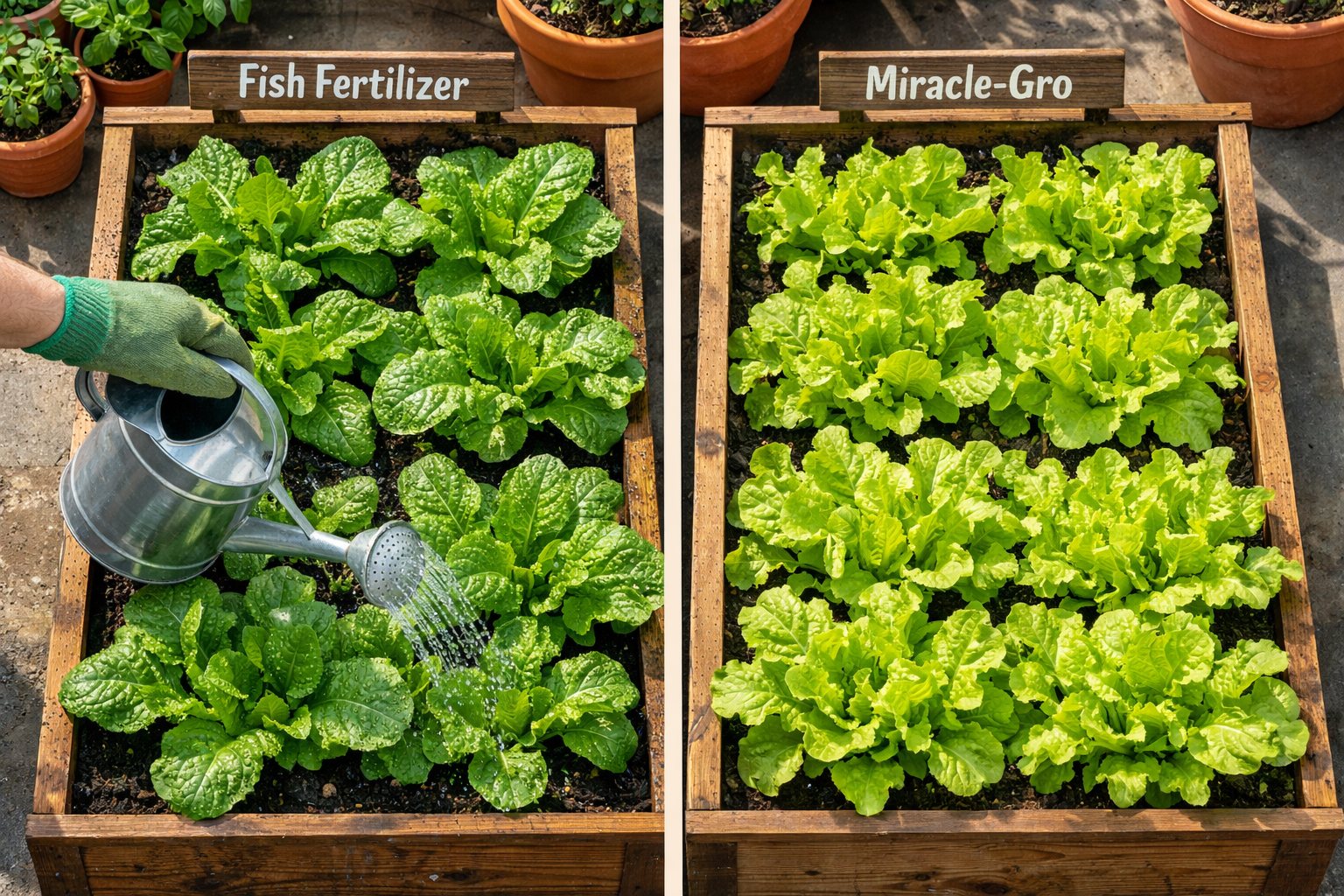
Miracle-Gro works significantly faster. Dissolved in water, its nutrients are immediately available to plant roots — most gardeners see visible growth response within a few days. Fish fertilizer releases nutrients more gradually as soil microbes break it down.
Choose Miracle-Gro if:
- You’re trying to rescue a nutrient-deficient plant quickly.
- You’re growing fast-cycle crops like lettuce or radishes where timing is tight.
- You’re fertilizing ornamental plants in containers where soil biology is less of a priority.
Choose fish fertilizer if:
- You’re growing tomatoes, herbs, or root vegetables over a full season.
- You want to build soil quality for future plantings.
- You’re working with children or pets nearby and want a lower-risk product.
For timing guidance on feeding young plants, the When To Fertilize Vegetable Seedlings? Expert 2026 Guide covers this in detail.
Is Fish Fertilizer Actually Better Than Miracle-Gro for Small Gardens Growing Edible Crops?
For edible crops — vegetables, herbs, fruit — fish fertilizer is the safer and often more effective long-term choice. It’s certified organic, carries no synthetic chemical residue risk, and is less likely to cause the kind of lush but hollow growth (lots of leaves, little flavor) that high-nitrogen synthetic fertilizers can produce.
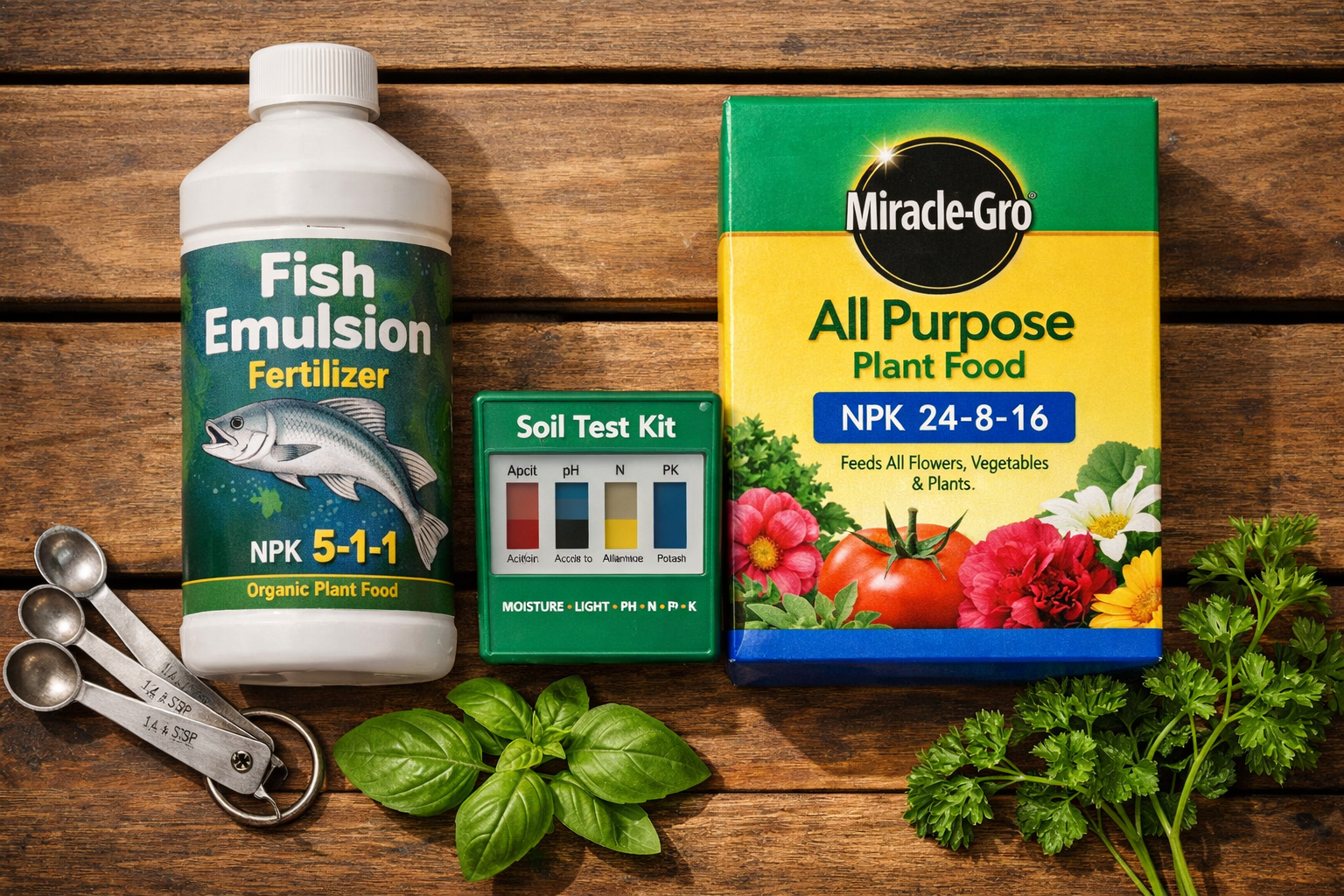
Miracle-Gro is not unsafe for edibles when used as directed, but its very high nitrogen content (24% in the All Purpose formula) can push leafy growth at the expense of fruit development or root flavor.
Common mistake: Using Miracle-Gro All Purpose on tomatoes or peppers throughout the season. The high nitrogen encourages foliage but can reduce fruit set. A lower-nitrogen fertilizer — or fish emulsion — is better once plants start flowering.
If you’re growing herbs in a small space, check out Best Herbs For Small Gardens 2026: Grow Fresh Flavor Easily for plant-specific feeding tips.
What Are the Real Costs of Each Fertilizer for a Small Garden?
For a small garden (one to four raised beds or 10–15 containers), here’s a practical cost comparison:
- Fish emulsion (e.g., Neptune’s Harvest 5-1-1): A 1-gallon bottle typically costs $20–$30 and, diluted at 1 tablespoon per gallon of water, covers a small garden for an entire season.
- Miracle-Gro All Purpose Water Soluble (1.5 lb box): Costs roughly $10–$15 and makes approximately 25 gallons of solution, enough for a small garden for several months.
Miracle-Gro is cheaper upfront. But if fish fertilizer reduces the need for compost purchases or soil amendments over multiple seasons, the gap narrows.
Edge case: In container gardens on balconies or apartments, where you’re replacing potting mix annually anyway, Miracle-Gro’s lower cost and ease of use often make more practical sense. See Small Balcony Vegetable Garden Ideas USA: 2026 Urban Guide for container-specific strategies.
Can You Use Fish Fertilizer and Miracle-Gro Together?
You can, but it’s rarely necessary and can complicate your feeding schedule. Mixing them in the same solution is not recommended — the organic compounds in fish fertilizer can interact unpredictably with synthetic mineral salts.
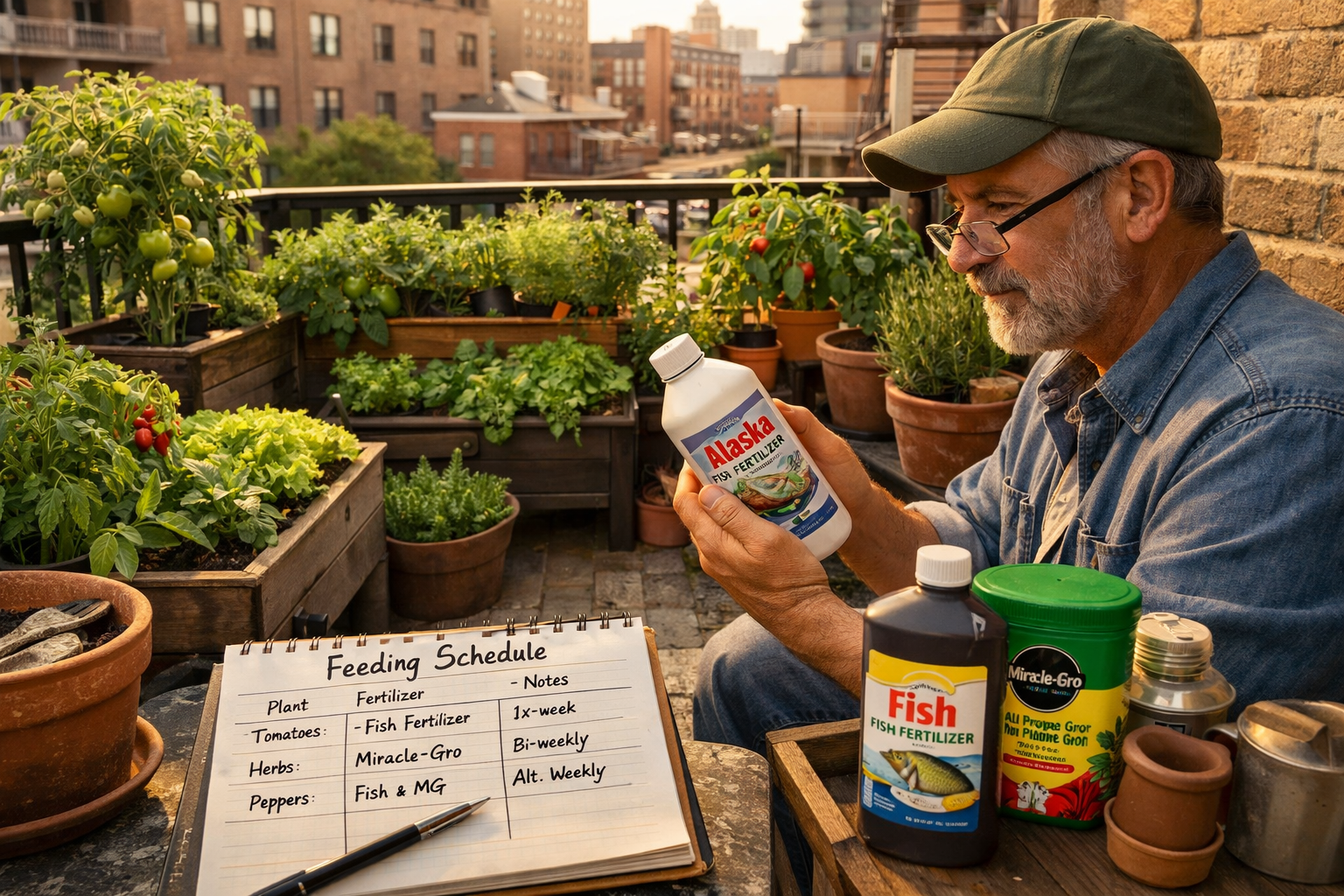
A practical approach some gardeners use:
- Apply fish fertilizer at the start of the season to build soil biology.
- Use a diluted Miracle-Gro application mid-season if plants show signs of deficiency and need a quick fix.
- Return to fish fertilizer for the final feeding to support root development and soil recovery.
For a complete fertilizing schedule, How To Fertilize Plants Correctly USA: Your 2026 Expert Guide walks through timing and dosing step by step.
What Are the Biggest Mistakes Small Gardeners Make with Both Products?
With Miracle-Gro:
- Over-fertilizing, especially in containers. Salt buildup is the most common result, and it’s hard to reverse without flushing the soil repeatedly.
- Using All Purpose formula on fruiting plants all season (see above).
- Applying to dry soil, which concentrates salts at the root zone and causes burn.
With fish fertilizer:
- Applying too close to harvest on root vegetables — the smell can transfer slightly to produce if used within two weeks of harvest.
- Under-diluting. Fish emulsion is concentrated; always follow label ratios.
- Expecting fast results. If a plant is severely deficient, fish fertilizer alone won’t fix it quickly enough.
For broader fertilizing mistakes and how to avoid them, see How Often To Fertilize Indoor Plants: 2026 Beginner Schedule — many of the same principles apply outdoors.
FAQ: Fish Fertilizer vs. Miracle-Gro for Small Gardens
Q: Does fish fertilizer smell bad in a small garden? Yes, fish emulsion has a noticeable odor for 24–48 hours after application. It fades quickly outdoors. In enclosed balcony spaces, apply in the morning so the smell dissipates by evening.
Q: Is Miracle-Gro harmful to earthworms? Repeated synthetic fertilizer use can reduce earthworm populations over time by lowering organic matter and altering soil pH. Fish fertilizer is generally earthworm-friendly.
Q: Can I use fish fertilizer on indoor plants? Yes, but the smell makes it less practical indoors. Use a highly diluted solution and apply it sparingly. Odor-reduced fish fertilizer products are available.
Q: Which is better for tomatoes in a small garden? Fish fertilizer is generally better for tomatoes over a full season. Use it through the vegetative stage, then switch to a low-nitrogen, higher-phosphorus option at flowering.
Q: Will Miracle-Gro ruin my soil over time? Not ruin it, but heavy long-term use can reduce microbial diversity and increase salt levels. Rotating with organic options like fish fertilizer helps maintain balance.
Q: Is fish fertilizer safe around children and pets? Yes, fish fertilizer is considered low-risk around children and pets once it has dried or been watered in. Miracle-Gro should be kept away from children and pets until fully dissolved and absorbed.
Q: How often should I apply fish fertilizer to a small garden? Every two to three weeks during the growing season is a common schedule. Always follow the product label, as concentrations vary by brand.
Q: Does fish fertilizer work in containers? Yes, but results are slower than in raised beds because container soil has fewer microbes to activate. Combining fish fertilizer with quality potting mix gives better results.
Q: Which fertilizer is better for beginners? Miracle-Gro is easier to measure and apply with predictable results, making it more beginner-friendly. Fish fertilizer requires a bit more patience but is more forgiving if you slightly over-apply.
Q: Can fish fertilizer replace compost? No. Fish fertilizer adds nutrients but doesn’t add the organic matter and structure that compost provides. Use both for best results in a small garden.
Conclusion: Which Should You Choose for Your Small Garden?
The answer to whether fish fertilizer is actually better than Miracle-Gro for small gardens comes down to what you’re growing and what you want from your soil.
Choose fish fertilizer if you’re growing edibles, you plan to garden in the same beds for multiple seasons, and you want to build a healthier soil ecosystem over time. It’s the better long-term investment for raised beds and in-ground small gardens.
Choose Miracle-Gro if you need fast results, you’re growing ornamentals, or you’re working with containers you replace annually. It’s practical, affordable, and effective when used correctly.
Actionable next steps:
- Test your current soil before choosing — see Spot Soil Nutrients Without A Test to identify what your garden actually needs.
- If you’re growing vegetables or herbs, start with fish fertilizer this season and note the results.
- Keep Miracle-Gro on hand for mid-season deficiency fixes, but don’t rely on it as your primary fertilizer.
- For a broader look at fertilizer options, our Best Fertilizers For Small Gardens in 2026 guide covers additional products and comparisons.
Small gardens reward smart, consistent care. The fertilizer you choose is one piece of that — but knowing why you’re choosing it makes all the difference.
References
- Chalker-Scott, L. (2004). The Myth of Synthetic Fertilizers. Washington State University Extension. https://pubs.extension.wsu.edu
- Parnes, R. (1990). Fertile Soil: A Grower’s Guide to Organic and Inorganic Fertilizers. agAccess.
- Organic Materials Review Institute (OMRI). Fish Fertilizer Product Listings. https://www.omri.org
- University of Minnesota Extension. (2022). Fertilizing the Vegetable Garden. https://extension.umn.edu/vegetables/fertilizing-vegetable-garden
- Miracle-Gro All Purpose Plant Food Product Label. Scotts Miracle-Gro Company. https://www.scotts.com