Why Urban Apartment Dwellers Are Turning to Japanese Garden Philosophy Right Now
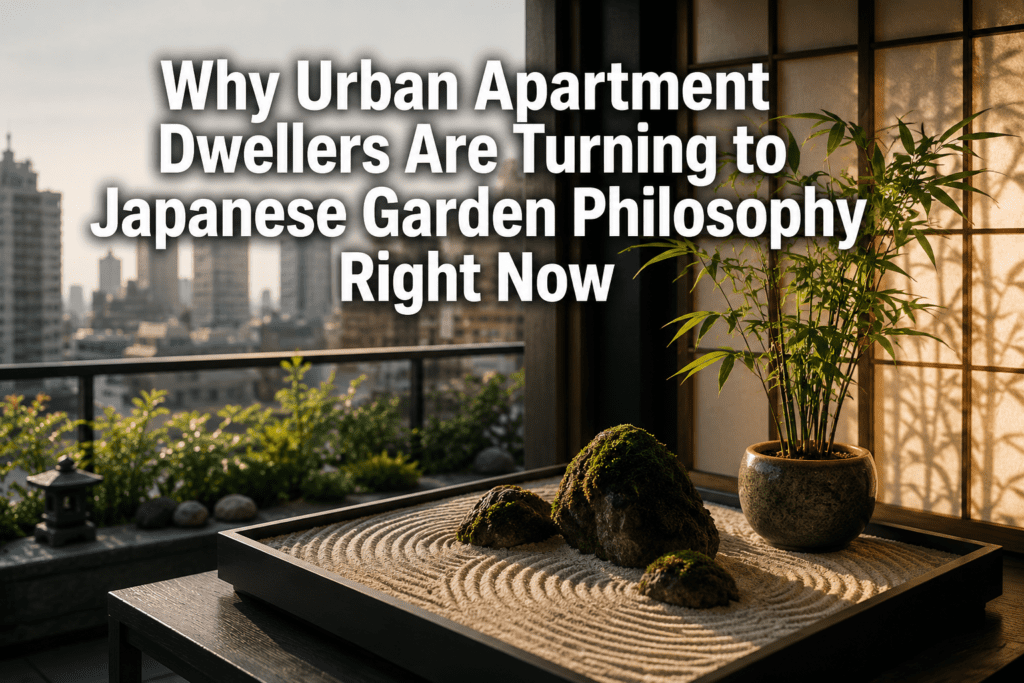
Quick Answer: Urban apartment dwellers are turning to Japanese garden philosophy because it offers a proven, low-cost framework for creating calm, intentional spaces inside cramped city homes. Rooted in principles like wabi-sabi (beauty in imperfection), ma (meaningful empty space), and mindful simplicity, this approach works in as little as a few square feet and costs anywhere from $20 to a few hundred dollars to implement. It’s gaining momentum in 2026 because stress levels in major cities remain high and small-space living shows no signs of reversing.
Key Takeaways
- Japanese garden philosophy is not about replicating a full garden — it’s a design mindset that fits any apartment size.
- Core principles like wabi-sabi, ma, and shizen (naturalness) translate directly to indoor and balcony spaces.
- Research links exposure to natural elements and intentional green spaces to reduced cortisol and improved mood.
- A starter Japanese-inspired corner can cost as little as $20–$50 using a sand tray, a few stones, and one plant.
- Renters can apply these techniques without drilling, painting, or violating lease agreements.
- Lucky bamboo, peace lilies, moss, Japanese ferns, and bonsai are the best plants for small urban setups.
- The biggest mistake beginners make is over-decorating — Japanese minimalism means less, not more.
- South- or east-facing apartments with natural light are best suited for this style, but low-light workarounds exist.
What Exactly Is Japanese Garden Philosophy?
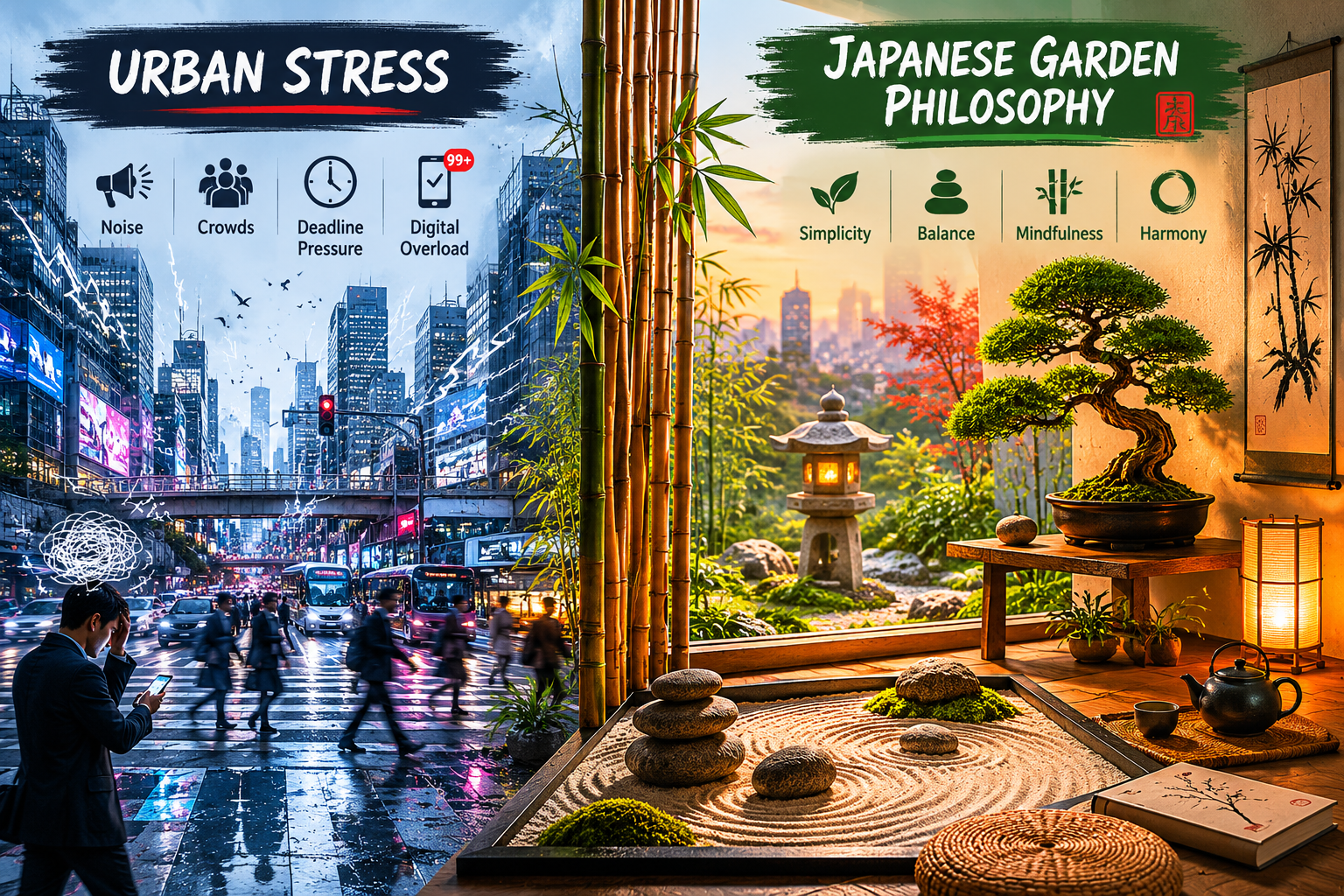
Japanese garden philosophy is a centuries-old design tradition centered on harmony, restraint, and a deep respect for nature. It is not simply about plants or aesthetics — it’s a way of relating to space itself.
Three core concepts define it:
- Wabi-sabi — finding beauty in imperfection and impermanence. A moss-covered stone or a slightly asymmetrical arrangement is more authentic than anything perfectly symmetrical.
- Ma (間) — the deliberate use of empty space. What you don’t place in a room matters as much as what you do.
- Shizen — naturalness. Elements should feel organic, not forced or overly manicured.
Traditional Japanese gardens (like the famous karesansui, or dry rock gardens) use raked gravel, stones, and minimal plantings to evoke landscapes. The apartment version translates these same ideas into trays, containers, and carefully chosen plants.
Why urban apartment dwellers are turning to Japanese garden philosophy right now makes sense when you consider that these principles were originally developed for small, enclosed spaces — temple courtyards, not sprawling estates.
How Japanese Gardens Help With Stress in Big City Living
Japanese garden design reduces stress by giving city dwellers a visual and tactile “off switch” from urban overstimulation. The effect is both psychological and physiological.
A 2019 study published in Frontiers in Psychology found that even brief exposure to natural elements — including indoor plants and nature-inspired arrangements — significantly reduced self-reported stress and lowered heart rate in participants (Bratman et al., 2019). Japanese garden design amplifies this effect by removing visual clutter at the same time it introduces natural elements.
Here’s why it works specifically for city living:
- Noise contrast: A quiet, ordered corner creates a perceptual refuge even when street noise continues outside.
- Attention restoration: The soft, non-demanding visual complexity of stones, moss, and sand allows the brain to recover from directed attention fatigue — a common result of screen-heavy urban work.
- Ritual engagement: Raking a sand garden or tending a bonsai creates a short mindfulness practice without requiring meditation training.
For renters dealing with small, often cluttered apartments, the philosophy’s emphasis on ma (empty space) also reduces the cognitive load of living in a packed environment.
Are Japanese Gardens Good for Mental Health, Including Depression and Anxiety?
Yes — and the evidence is stronger than most people realize. Interaction with natural elements, even indoors, is associated with reduced symptoms of anxiety and mild depression.
The concept of Shinrin-yoku (forest bathing), developed in Japan in the 1980s, has been studied extensively. A 2010 review in Environmental Health and Preventive Medicine by Li et al. found that exposure to natural environments lowered cortisol, blood pressure, and pulse rate compared to urban environments. While that research focused on forests, subsequent work has shown that indoor plant exposure and nature-inspired spaces produce measurable, if smaller, versions of the same effects.
Important caveat: Japanese garden design is a complementary wellness tool, not a clinical treatment. If you’re managing depression or an anxiety disorder, it works best alongside — not instead of — professional support.
That said, for people experiencing everyday urban burnout, the combination of intentional design, plant care routines, and visual calm makes Japanese garden philosophy one of the more practical and accessible mental health tools available in 2026.
Japanese Garden Philosophy vs. Traditional Western Garden Design
The difference between Japanese and Western garden design comes down to philosophy, not just aesthetics. Western gardens typically celebrate abundance, symmetry, and seasonal color. Japanese gardens celebrate restraint, asymmetry, and timelessness.
| Feature | Japanese Garden Design | Western Garden Design |
|---|---|---|
| Core value | Harmony with nature | Control over nature |
| Symmetry | Avoided intentionally | Often preferred |
| Plant variety | Minimal, purposeful | Varied, abundant |
| Empty space | Central design element | Usually filled |
| Seasonal change | Embraced (wabi-sabi) | Often resisted |
| Maintenance style | Meditative, ritual | Task-oriented |
| Small space suitability | Excellent | Challenging |
For apartment dwellers, the Japanese approach wins on practicality alone. A Western cottage garden needs room. A Japanese-inspired corner needs only intention.
What Plants Work Best for Small Urban Japanese Garden Styles?
The best plants for a Japanese-inspired apartment garden are low-maintenance, visually calm, and suited to indoor conditions. You don’t need rare or expensive species.
Top choices:
- Lucky bamboo (Dracaena sanderiana) — grows in water or soil, tolerates low light, symbolizes good fortune in Japanese and Chinese traditions.
- Peace lily (Spathiphyllum) — elegant white blooms, air-purifying, thrives in indirect light.
- Japanese forest fern (Athyrium niponicum) — silvery fronds, loves humidity, works well in bathrooms.
- Moss — the defining plant of Japanese aesthetics. Sheet moss or cushion moss can be grown in small trays with minimal water.
- Bonsai — the most iconic choice, but requires more attention. Start with a juniper or ficus bonsai if you’re a beginner.
- Mondo grass (Ophiopogon japonicus) — compact, dark green, nearly indestructible indoors.
For low-light apartments, peace lilies and lucky bamboo are your most reliable options. You can also explore our guide to indoor plants for small homes for compatible species that suit Japanese aesthetics.
If you want to add herbs with a Japanese culinary angle, shiso (perilla) and green onions grow well in small containers — see our indoor herb garden setup guide for practical tips.
How Can I Create a Zen Garden in a Tiny Apartment?
You can create a functional zen garden in a tiny apartment using a shallow tray, fine sand or gravel, a few smooth stones, and one or two plants. The entire setup can fit on a windowsill or coffee table.
Step-by-step starter setup:
- Choose a tray — a wooden or ceramic rectangular tray, 12–18 inches long, works well. Avoid plastic if you want the aesthetic to hold.
- Add sand or fine gravel — white or grey sand is traditional. Fill the tray 1–2 inches deep.
- Place stones — use 3 or 5 stones (odd numbers are preferred in Japanese design). Arrange them asymmetrically.
- Add a mini rake — small wooden rakes are sold at most garden centers for $5–$10. Raking is the meditative practice.
- Include one plant — a small bonsai, a sprig of moss, or lucky bamboo placed beside (not inside) the tray completes the scene.
- Clear the surrounding area — ma requires empty space around the garden. Remove anything decorative nearby.
For renters looking for container options that don’t damage surfaces, our best planters for small apartments guide covers renter-safe choices that work beautifully in this style.
Can Renters Apply Japanese Garden Techniques Without Damaging Apartments?
Renters can absolutely apply Japanese garden philosophy without violating lease agreements. Almost every technique in this tradition is non-invasive by nature.
Renter-safe approaches:
- Tabletop and floor arrangements — sand trays, stone groupings, and potted plants require no drilling or mounting.
- Freestanding bamboo screens — create visual separation and a sense of enclosure without wall damage.
- Removable shoji-style window film — rice paper-look window films apply with static cling and remove cleanly.
- Lightweight shelving — use freestanding ladder shelves to display plants vertically without wall anchors.
For balcony renters specifically, our balcony gardening for renters guide covers which containers, structures, and arrangements are lease-compliant in most standard rental agreements.
The one area to check: if you want a water feature, make sure it’s self-contained and doesn’t risk moisture damage to floors or walls.
How Much Does It Cost to Design a Minimalist Japanese Garden Space?
A basic Japanese-inspired apartment garden costs between $20 and $150 for most people. A more developed setup with a quality bonsai and ceramic containers can reach $300–$500, but that’s the high end.
Cost breakdown:
| Item | Budget Option | Mid-Range |
|---|---|---|
| Sand tray | $10–$20 (DIY wooden box) | $30–$50 (ceramic) |
| Sand or gravel | $5–$10 | $10–$15 |
| Stones | Free (collected) | $5–$15 |
| Mini rake | $5–$8 | $10–$15 |
| Starter plant (moss/bamboo) | $5–$10 | $15–$30 |
| Bonsai (optional) | $15–$30 (starter) | $50–$150+ |
| Total | $20–$50 | $80–$260 |
The philosophy itself costs nothing. Most of the value comes from removing things, not buying them. If you’re working with a tight budget, our indoor gardening on a budget guide has practical sourcing tips that apply directly to this style.
What Tools Do I Need to Start a Japanese Garden in My Apartment?
You need very few tools — and that’s the point. Japanese garden philosophy is deliberately low-tech.
Essential tools:
- A small rake (5–7 tines, wooden handle)
- A soft brush for clearing sand
- Small pruning scissors for bonsai or moss trimming
- A spray bottle for misting moss and humidity-loving plants
- A shallow watering can with a fine rose head
Optional but useful:
- A moisture meter (prevents overwatering, the most common plant killer)
- A small LED grow light for low-light apartments
That’s genuinely all you need. Resist the urge to buy more. Accumulating tools contradicts the philosophy you’re trying to practice.
Which Urban Apartments Are Best Suited for Zen Garden Techniques?
South- or east-facing apartments with natural light are best suited for Japanese garden design because most recommended plants need at least indirect sunlight. That said, north-facing apartments are workable with the right plant choices.
Best conditions:
- Natural light (any direction, but south/east preferred)
- At least one quiet corner or surface free from foot traffic
- A balcony or windowsill of any size
Lower-ideal but workable:
- North-facing apartments: use peace lilies, lucky bamboo, and moss — all tolerate low light. Our guide on indoor gardening without sunlight covers supplemental lighting options that maintain the aesthetic.
- Studio apartments: use a single corner, not a whole room. Constraint is an asset in Japanese design.
- High-humidity apartments: great for ferns and moss, which thrive in moisture.
The honest answer is that almost any apartment can support some version of this philosophy. The scale adjusts; the principles don’t.
Common Mistakes People Make When Trying Japanese Garden Minimalism

The most common mistake is treating Japanese garden design as a decorating trend rather than a philosophy — which leads to over-buying and under-editing.
Mistakes to avoid:
- Adding too many elements. Three stones is better than fifteen. One plant is often better than five.
- Choosing the wrong plants. Tropical flowering plants, succulents, or cacti don’t align with the aesthetic or the philosophy’s emphasis on quietness.
- Ignoring ma. Filling every surface defeats the purpose. Leave deliberate empty space around your garden.
- Buying “Japanese-themed” decor. Pagoda figurines, plastic torii gates, and mass-produced “zen” kits are cultural shortcuts that miss the point entirely.
- Skipping maintenance rituals. The raking, misting, and pruning are the practice. Neglecting them turns the garden into a dust collector.
- Expecting instant calm. The mental health benefits build over weeks of consistent engagement, not overnight.
For more on avoiding indoor plant and garden setup errors, see our indoor gardening mistakes guide — several of the pitfalls there apply directly to Japanese-style setups.
FAQ
Q: Do I need a balcony to practice Japanese garden philosophy in an apartment?
No. A tabletop sand garden, a single bonsai on a windowsill, or a moss arrangement on a shelf are all valid expressions of the philosophy. Balcony space helps but is not required.
Q: Is bonsai hard to maintain for beginners?
Bonsai requires more attention than most houseplants — regular watering, pruning, and some sunlight. Start with a juniper or ficus bonsai, which are more forgiving. Avoid tropical bonsai species as a first tree.
Q: Can Japanese garden philosophy work in a shared apartment?
Yes. You only need one dedicated corner or surface. The philosophy is about creating a personal anchor point, not transforming an entire shared space.
Q: How long does it take to feel the mental health benefits?
Most people report a noticeable shift in mood and calm within two to four weeks of daily engagement — raking the sand, tending plants, and sitting near the space for a few minutes each day.
Q: Is this appropriate for children’s rooms?
Yes, with supervision. Sand trays and smooth stones are engaging for children and can introduce mindfulness concepts early. Avoid bonsai in children’s rooms due to the pruning tools required.
Q: What’s the difference between a zen garden and a Japanese garden?
A zen garden (karesansui) is a specific type of Japanese garden — typically a dry landscape of raked gravel and stones used for meditation in Zen Buddhist temples. “Japanese garden” is the broader category, which also includes water gardens, moss gardens, and tea gardens.
Q: Can I use colored sand?
Technically yes, but white or grey sand is traditional and more visually calming. Colored sand tends to read as decorative rather than meditative.
Q: Do Japanese garden principles apply to balcony vegetable gardens?
They can. Applying ma and intentional arrangement to a small balcony vegetable garden — rather than cramming in as many plants as possible — often produces a more enjoyable and manageable setup.
Q: Is this trend specific to any city or culture?
No. The trend is documented across major cities in North America, Europe, Southeast Asia, and Australia. It correlates with high population density and small average apartment sizes, not any specific cultural background.
Q: What if I kill my first plant?
That’s wabi-sabi in practice. Start over. The philosophy explicitly embraces impermanence and imperfection.
Conclusion: Your Next Steps
Why urban apartment dwellers are turning to Japanese garden philosophy right now comes down to a simple equation: city life is loud, dense, and relentless, and this philosophy offers a quiet, practical counterweight that fits inside even the smallest apartment.
You don’t need a garden. You don’t need a large budget. You need a tray, a handful of sand, three stones, and the willingness to leave some space empty.
Your actionable next steps:
- Clear one surface in your apartment — a windowsill, a coffee table corner, or a small shelf.
- Buy or repurpose a shallow tray and add fine sand or gravel.
- Collect or purchase three smooth stones and arrange them asymmetrically.
- Add one plant — moss, lucky bamboo, or a peace lily based on your light conditions.
- Spend five minutes with the space each morning: rake the sand, mist the plant, sit quietly.
That’s the entire practice. Everything else — the deeper reading, the more refined plants, the ceramic containers — comes naturally if you stay with it.
The philosophy has survived centuries because it works. In 2026, with urban density and screen fatigue at record levels, it works better than ever.
References
- Bratman, G. N., et al. (2019). “Nature and mental health: An ecosystem service perspective.” Science Advances, 5(7). https://www.science.org/doi/10.1126/sciadv.aax0903
- Li, Q., et al. (2010). “A forest bathing trip increases human natural killer activity and expression of anti-cancer proteins in female subjects.” Environmental Health and Preventive Medicine, 15(1), 1–8. https://doi.org/10.1007/s12199-009-0098-3
- Kaplan, R., & Kaplan, S. (1989). The Experience of Nature: A Psychological Perspective. Cambridge University Press.