How do I prevent pests in an overcrowded container garden?
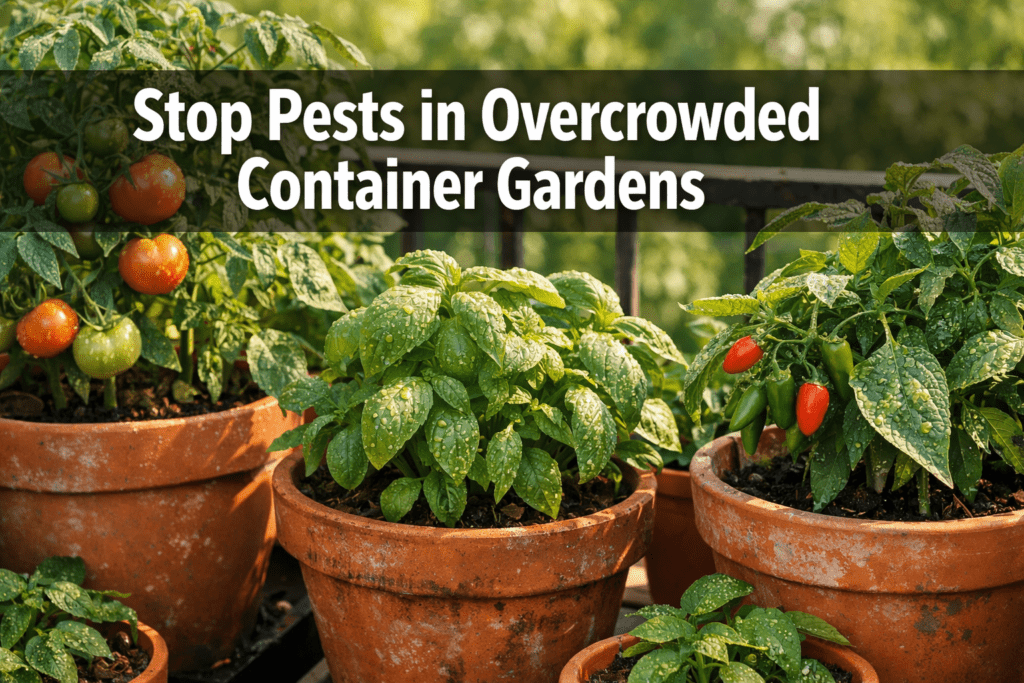
Quick Answer: To prevent pests in an overcrowded container garden, start by thinning plants to improve airflow, use well-draining soil, inspect leaves weekly, and apply targeted treatments like neem oil or insecticidal soap at the first sign of trouble. Overcrowding creates the warm, humid, sheltered conditions that pests love most, so spacing is your first line of defense.
Key Takeaways
- Overcrowding traps moisture and blocks airflow, creating ideal conditions for aphids, fungus gnats, spider mites, and whiteflies
- Thinning containers and repotting into correctly sized pots is the single most effective prevention step
- Inspect plants at least once a week, focusing on leaf undersides where pests hide
- Companion planting (marigolds, basil, nasturtiums) naturally deters many common container pests
- Sticky yellow traps catch flying pests early before populations explode
- Neem oil and insecticidal soap are effective, low-toxicity treatments safe for most edible container gardens
- Watering correctly (avoiding wet foliage, not overwatering) removes a key pest attractant
- Rotating plant types between seasons reduces pest buildup in the same container
Why Overcrowding Makes Container Gardens a Pest Magnet
Overcrowded container gardens are pest magnets because dense foliage traps humidity, blocks airflow, and gives insects sheltered spots to breed without disturbance. When plants compete for the same root space and nutrients, they also grow weaker, and stressed plants are far more vulnerable to infestation.
Common pests that thrive in crowded conditions include:
- Aphids — cluster on new growth and leaf undersides
- Fungus gnats — breed in consistently moist, poorly ventilated soil
- Spider mites — love hot, dry, stagnant air between dense leaves
- Whiteflies — spread rapidly when plants touch each other
- Mealybugs — hide in tight leaf joints and crowded stems
If you’re new to container growing, our beginner’s guide to container gardening explains how pot size and plant density affect overall plant health from day one.

How Do I Prevent Pests in an Overcrowded Container Garden Before They Arrive?
Prevention is always easier than treatment. The most effective pest prevention strategy for container gardens combines proper spacing, good soil, and consistent monitoring before any pest takes hold.
Step 1: Right-size your containers
Each plant needs enough root space to stay healthy and resist stress. As a general rule:
Cramming a tomato into a 6-inch pot doesn’t just stunt growth — it creates the exact stress conditions that attract pests. See our pot size guide for vegetables for a full breakdown.
Step 2: Thin aggressively and early
When seedlings emerge, thin them to the recommended spacing on the seed packet. Most gardeners thin too little, too late. If leaves are touching between separate pots, move the containers apart by at least 2–3 inches to restore airflow.
Step 3: Use quality, well-draining potting mix
Soggy soil breeds fungus gnats and root rot, both of which weaken plants and invite secondary pest problems. Never use garden soil in containers — it compacts and holds too much water. Our guide to the best potting soil for container gardening covers what to look for on the label.
Step 4: Water at the base, not overhead
Wet foliage is an open invitation for fungal disease and soft-bodied pests like aphids and spider mites. Water at soil level, ideally in the morning, so any splashed leaves dry quickly. For more on this, check our article on common watering mistakes in container gardening.
What Are the Best Monitoring Habits to Catch Pests Early?
Catching pests early is the difference between a quick fix and losing an entire container. Check plants at least once a week, and after any period of hot, humid weather.
Where to look:
- Undersides of leaves (aphids, spider mites, whitefly eggs)
- Soil surface (fungus gnat larvae, visible as tiny white worms)
- Stem joints and tight leaf clusters (mealybugs)
- New growth tips (aphids and thrips prefer tender tissue)
Early warning signs:
- Sticky residue (honeydew) on leaves or nearby surfaces
- Yellowing or distorted new leaves
- Tiny white flies lifting off when you brush the plant
- Fine webbing between leaves or stems
- Wilting despite adequate watering
Tool: Place yellow sticky traps just above soil level in each container. They catch fungus gnats and whiteflies before populations build. Replace every 2–3 weeks or when full.
How Do I Prevent Pests in an Overcrowded Container Garden Using Companion Planting?
Companion planting works by placing pest-repelling plants near vulnerable ones. In a container garden, this means dedicating one or two pots to natural deterrents placed strategically among your edibles.
Top companion plants for container pest control:
- Marigolds — repel aphids, whiteflies, and nematodes; place near tomatoes and peppers
- Basil — deters aphids and spider mites; pairs well with tomatoes
- Nasturtiums — act as a trap crop, drawing aphids away from vegetables
- Chives or garlic — repel aphids and Japanese beetles
- Lavender — deters whiteflies and moths
💡 Quick tip: Nasturtiums are especially useful in tight spaces. Let them trail over the edge of a pot placed between your vegetables. Aphids flock to them instead of your crops, and you can simply remove and dispose of the nasturtium pot if it gets heavily infested.
For more on pairing plants effectively, the companion planting guide is a helpful visual reference.

Which Treatments Work Best When Pests Do Appear?
Even with good prevention, pests sometimes appear. The goal is to treat early, use the least aggressive option that works, and avoid harming beneficial insects.
Treatment ladder (start at the bottom, escalate only if needed):
- Physical removal — blast aphids off with a strong stream of water; hand-pick caterpillars or larger insects
- Insecticidal soap spray — effective against soft-bodied pests (aphids, mites, whiteflies); spray directly on pests, repeat every 5–7 days for 2–3 weeks
- Neem oil — works as both a repellent and a mild insecticide; apply in the evening to avoid leaf burn and protect bees
- Diatomaceous earth — sprinkle on soil surface to deter crawling pests and fungus gnat larvae
- Pyrethrin-based sprays — stronger option for severe infestations; use sparingly and only as a last resort on edibles
Common mistake: Treating only once and assuming the problem is solved. Most pest eggs survive the first treatment. Repeat applications every 5–7 days for at least two to three cycles to break the breeding cycle.
How Does Soil Health Affect Pest Pressure in Container Gardens?
Healthy soil grows healthy plants, and healthy plants resist pests far better than stressed ones. In container gardens, soil degrades faster than in the ground because nutrients leach out with every watering.
Key soil practices that reduce pest vulnerability:
- Refresh potting mix each season — old, compacted soil harbors pest eggs and disease spores. See our guide on reusing vegetable garden soil for when it’s safe to reuse versus replace.
- Add compost — improves drainage, feeds beneficial microbes, and supports stronger root systems
- Avoid over-fertilizing with nitrogen — excess nitrogen produces lush, soft growth that aphids and mites find irresistible
- Ensure drainage holes are clear — waterlogged soil is the primary cause of fungus gnat infestations
Should I Rotate Plants Between Containers Each Season?
Yes, rotating plant families between containers each season reduces the buildup of pest eggs and larvae that overwinter in soil. This is especially important for tomatoes, peppers, and brassicas, which attract specific pests that can persist in potting mix.
Simple rotation rule: Don’t grow the same plant family in the same container two seasons in a row. If tomatoes were in a pot last season, use that pot for herbs or lettuce next season.
Our guide on when to rotate crops in small vegetable gardens explains how to apply this principle even when you only have a few containers.

FAQ: Preventing Pests in Container Gardens
Q: What is the most common pest in overcrowded container gardens? Aphids are the most common. They reproduce fast, spread to neighboring plants through contact, and thrive in the humid, sheltered conditions that overcrowding creates.
Q: Can I use dish soap as an insecticidal spray? A small amount of pure liquid dish soap (not detergent) diluted in water can work in a pinch, but commercial insecticidal soap is formulated to be safer for plants and more effective. Dish soap can strip protective coatings from leaves if overused.
Q: How often should I inspect my container plants for pests? Once a week is the minimum. During hot, humid summer weather, check every 3–4 days, since pest populations can double within a week under ideal conditions.
Q: Do indoor container gardens get pests too? Yes. Fungus gnats, spider mites, and mealybugs are especially common indoors. The beginner indoor gardening tips guide covers indoor-specific pest prevention.
Q: Is neem oil safe for edible container gardens? Yes, when used as directed. Apply in the evening, avoid spraying open flowers, and don’t harvest leaves for 24–48 hours after application. Neem oil breaks down quickly and doesn’t leave harmful residues.
Q: Can overcrowding cause pest problems even if I water correctly? Yes. Even with perfect watering, overcrowding blocks airflow and creates microclimates between leaves that stay warm and humid — ideal for spider mites and fungal issues that attract secondary pests.
Q: What’s the fastest way to fix an overcrowded container? Thin or transplant immediately. Remove the weakest seedlings, repot larger plants into correctly sized containers, and space remaining pots so leaves don’t touch. Results show within one to two weeks as plants recover.
Q: Do yellow sticky traps harm beneficial insects? They can catch some beneficial insects, so position them at soil level rather than at flower height. This targets soil-dwelling pests like fungus gnats while reducing the risk to pollinators.
Conclusion: Actionable Next Steps for a Pest-Free Container Garden
Preventing pests in an overcrowded container garden comes down to a few consistent habits: give plants enough space, use quality soil, water at the base, monitor weekly, and act fast at the first sign of trouble.
Your action plan for 2026:
- This week: Audit every container. If plants are touching, thin or repot immediately.
- This month: Add yellow sticky traps to each pot and set a weekly inspection reminder.
- Each season: Rotate plant families between containers and refresh potting mix.
- Ongoing: Keep one or two companion plant pots (marigolds, basil) among your edibles year-round.
A crowded garden doesn’t have to be a pest-ridden one. With the right spacing, soil, and monitoring routine, you can grow a productive container garden with far fewer pest problems than most gardeners experience. For more on building a strong foundation, our container vegetable gardening guide is a great next read.
References
- University of California Statewide IPM Program. (2021). Pests in Gardens and Landscapes: Aphids. UC ANR. https://ipm.ucanr.edu/PMG/PESTNOTES/pn7404.html
- Cranshaw, W. (2008). Garden Insects of North America. Princeton University Press.
- Royal Horticultural Society. (2023). Container Gardening: Pests and Diseases. RHS. https://www.rhs.org.uk/containers/pests-diseases
- Oregon State University Extension Service. (2020). Fungus Gnats as Houseplant and Indoor Pests. OSU Extension. https://extension.oregonstate.edu/pests-diseases/fungus-gnats-houseplant-indoor-pests
- National Gardening Association. (2022). Companion Planting Guide. https://garden.org/learn/articles/view/3137/