The best plants for small spaces: what actually thrives in apartments and tiny homes
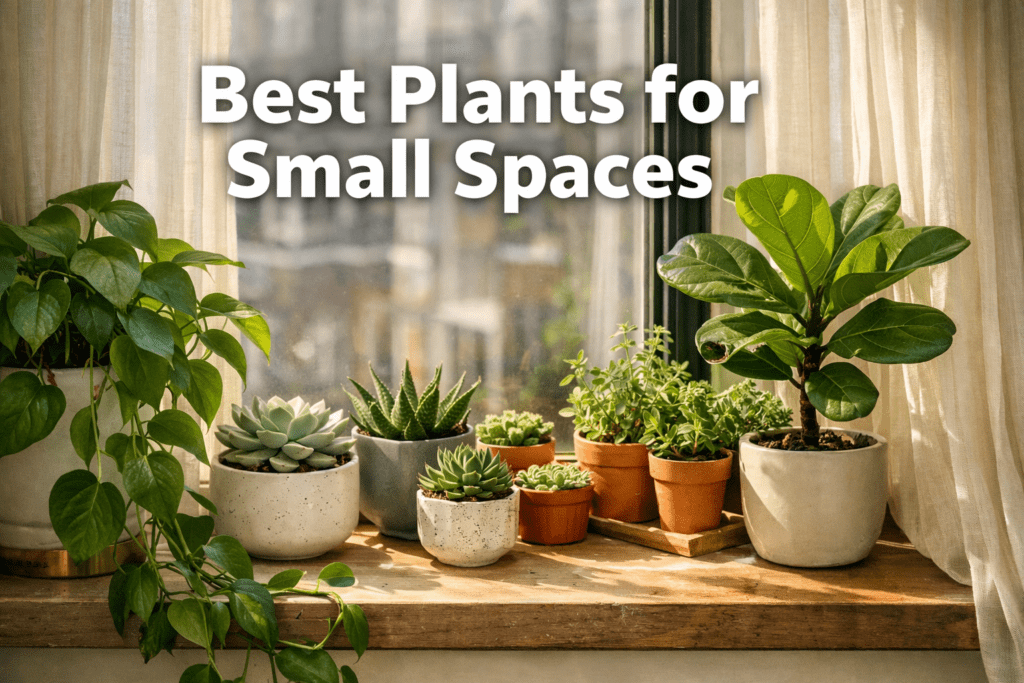
Quick Answer: The best plants for small spaces are those that stay compact, tolerate indoor conditions, and thrive in containers. Top choices include pothos, snake plants, ZZ plants, spider plants, peace lilies, and succulents. These plants deliver visual impact without taking over your floor plan, and most need minimal care. These compact plants are ideal for apartments, studios, and small balconies where space is genuinely limited.
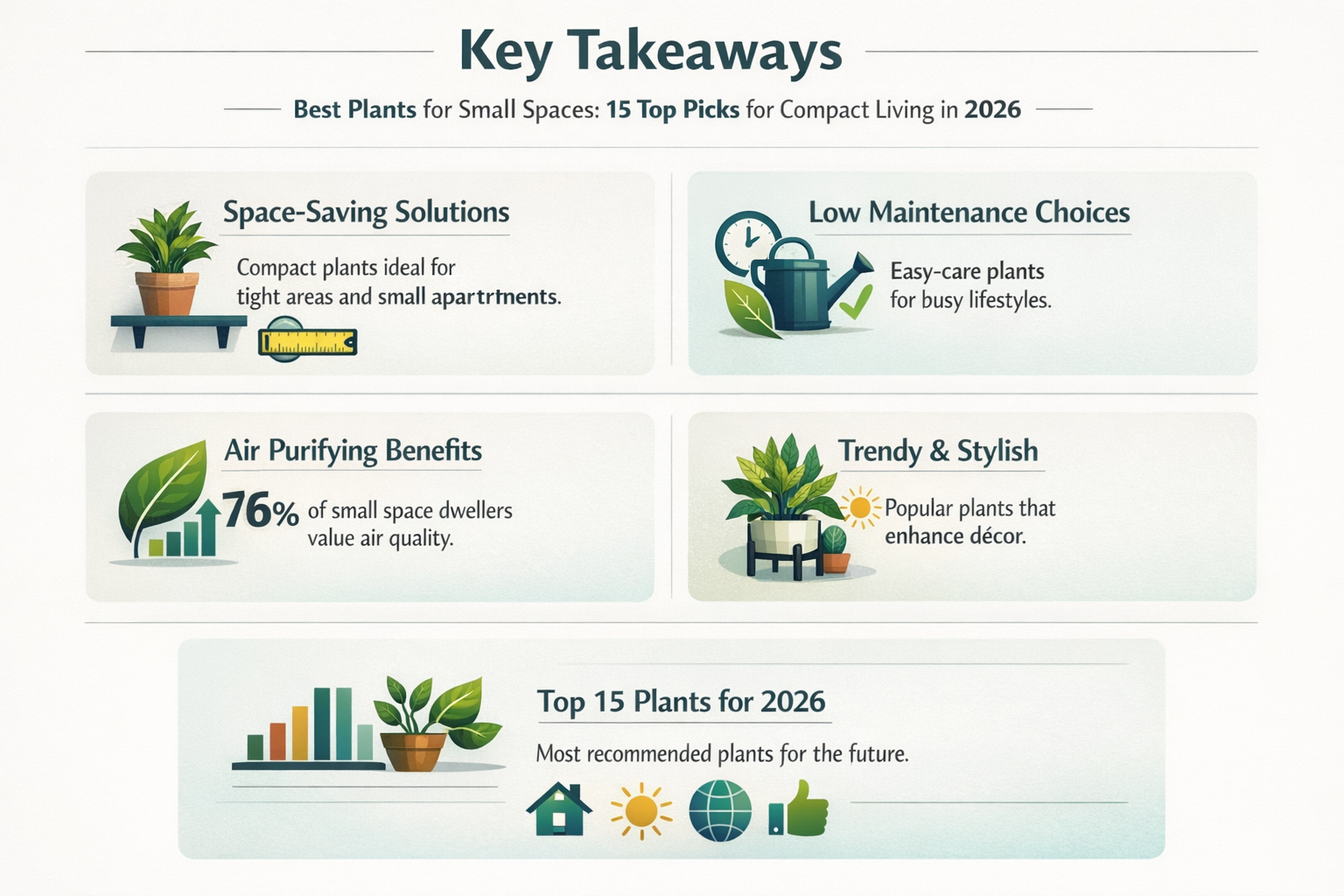
Key Takeaways
- Vertical growers and trailing plants are ideal for small spaces because they use wall and shelf space instead of floor area.
- Snake plants, ZZ plants, and pothos are the most forgiving choices for beginners in compact homes.
- Light matters most: match your plant to your window exposure before buying anything.
- Container size controls growth: keeping compact plants slightly root-bound slows spreading naturally and stops them outgrowing a small space.
- Herbs like basil, mint, and chives pull double duty as décor and fresh ingredients.
- Succulents and cacti are the lowest-maintenance option for sun-drenched windowsills.
- Air-purifying plants such as peace lily and spider plant add function alongside aesthetics.
- Vertical planters and wall pockets can triple your growing capacity without using floor space.
- Overwatering is the top killer of small-space indoor plants — always check soil before watering.
- A single well-chosen plant in the right spot outperforms five struggling ones crammed together.
Why Choosing the Right Plant for a Small Space Is Different
Picking plants for a compact apartment, studio, or small balcony isn’t just about what looks nice. After years of growing in tight spaces — windowsills, one-shelf kitchens, north-facing flats — I’ve found it comes down to three things: choosing species that won’t outgrow their spot in six months, matching them to the light you actually have (not the light you wish you had), and fitting them into containers that don’t eat up every square foot. Get those three right and small spaces become genuinely easy to garden.
The best plants for small spaces share three traits: controlled size, adaptability to indoor light, and container-friendliness. Get those three right, and you’ll have a thriving green corner instead of a crowded, dying mess.
Best plants for small spaces — our top picks at a glance
The top performers for compact living are pothos, snake plants, ZZ plants, spider plants, peace lilies, and succulents. These six cover almost every light condition and skill level.
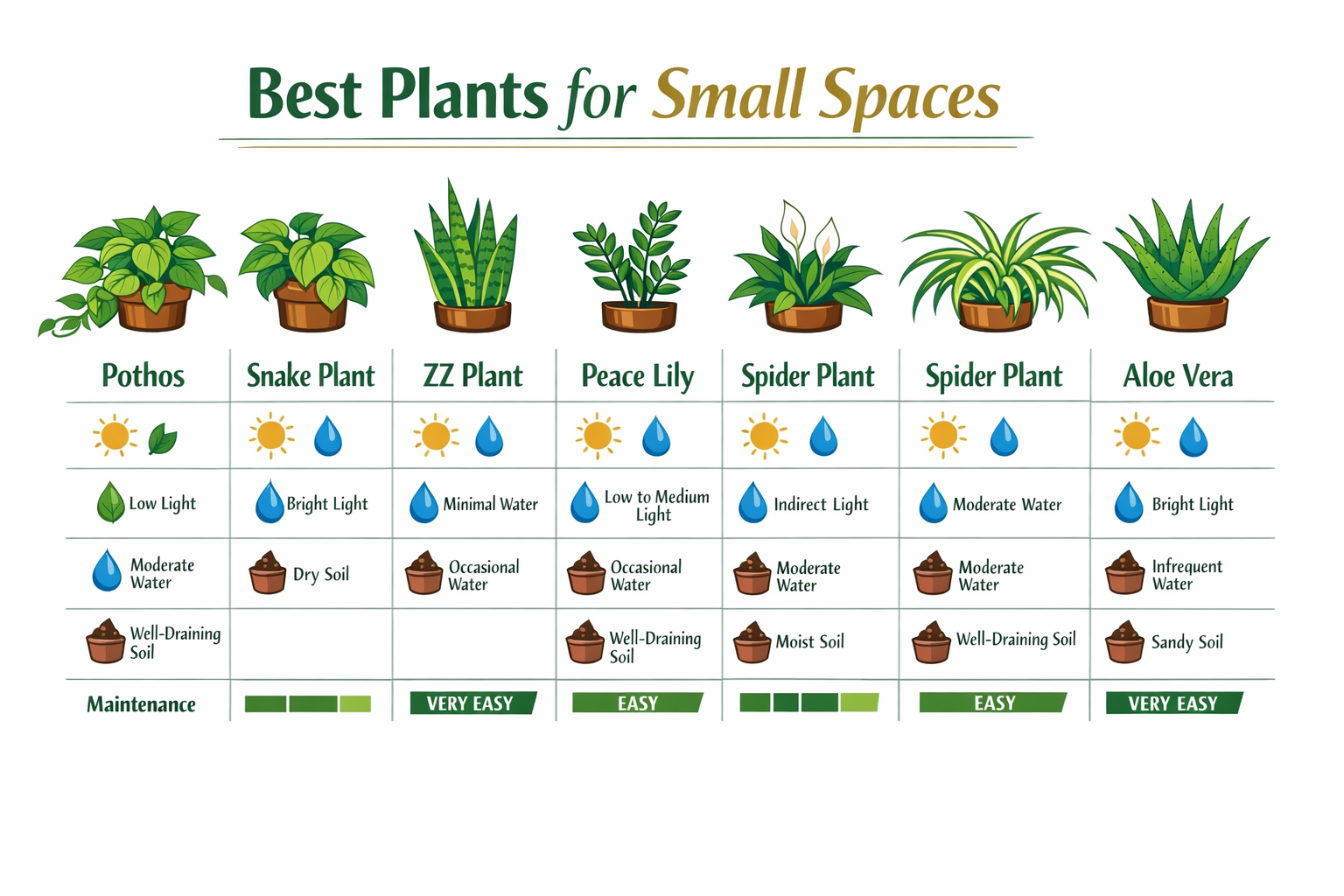
Here’s a quick comparison to help you choose:
| Plant | Light Needed | Watering | Max Height | Best For |
|---|---|---|---|---|
| Pothos | Low to bright indirect | Every 1–2 weeks | Trailing (6+ ft) | Shelves, hanging baskets |
| Snake Plant | Low to bright indirect | Every 2–6 weeks | 2–4 ft | Floor corners, desks |
| ZZ Plant | Low to moderate | Every 2–3 weeks | 2–3 ft | Dark rooms, offices |
| Spider Plant | Moderate indirect | Every 1–2 weeks | 1–2 ft | Hanging, shelves |
| Peace Lily | Low to moderate | Weekly | 1–3 ft | Bathrooms, bedrooms |
| Succulents | Bright direct | Every 2–4 weeks | 2–12 inches | Windowsills, desks |
| Aloe Vera | Bright indirect | Every 3 weeks | 1–2 ft | Sunny windowsills |
| Herbs (basil, mint) | 6+ hours sun | Every 2–3 days | 6–24 inches | Kitchen windowsills |
Choose pothos if you have a shelf or hanging spot and want fast, lush growth with almost zero effort. Choose a snake plant if you have a dim corner and want something sculptural that practically takes care of itself.
Best indoor plants for small spaces (low light)
Low-light small spaces are actually easier to plant than most people think. Several species genuinely prefer indirect or filtered light, which means they’re built for interior rooms.
Top low-light picks:
- ZZ Plant (Zamioculcas zamiifolia): Stores water in its roots, tolerates neglect, and thrives in offices or hallways with no direct sun. See our low light indoor plants guide for more options.
- Peace Lily: Blooms in low light and signals when it needs water by drooping slightly — a helpful built-in reminder.
- Pothos: Survives in surprisingly dim conditions, though growth slows. Ideal for bookshelves away from windows.
- Cast Iron Plant (Aspidistra elatior): Lives up to its name. Nearly indestructible in low light.
- Snake Plant: Handles low light but grows faster with moderate indirect light.
Common mistake: Assuming “low light” means no light. Even the toughest low-light plants need some ambient natural light. If a room feels dark to you during the day, add a simple grow light to keep plants healthy. Learn more about whether plants can survive with only ceiling fluorescent lights.
Best compact plants for bright apartment windows
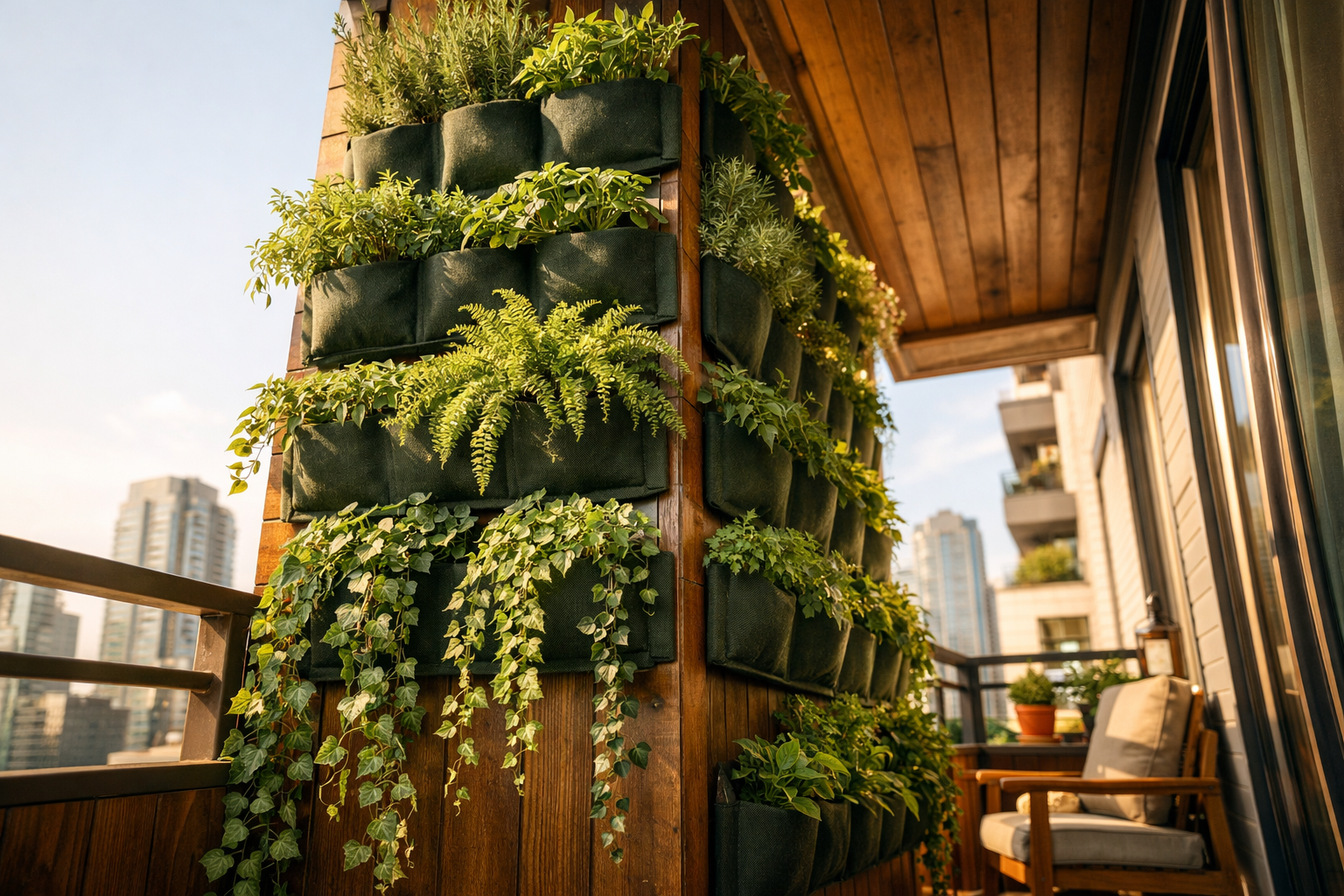
The answer is to go vertical. Floor space is limited, but walls, shelves, and railings are often unused.
Practical strategies:
- Wall-mounted pocket planters hold herbs, succulents, or trailing plants without touching the floor.
- Tiered plant stands stack three to five pots in the footprint of one.
- Hanging planters suspended from ceiling hooks work well for pothos, spider plants, and string of pearls.
- Window boxes mounted on railings or windowsills add growing space without entering the room.
- Magnetic or suction-cup planters attach to refrigerators or tiled walls for small herb pots.
For balcony gardeners, our guide to best plants for apartment balconies in full sun covers species that handle direct outdoor exposure. If you want a full system, check out the best plants for vertical gardens for wall-growing setups that scale up easily.
Best low-maintenance plants for small spaces
For anyone who travels frequently, works long hours, or is new to plant care, the goal is plants that tolerate irregular watering and variable conditions.
The most forgiving options:
- Succulents and cacti: Water once every two to four weeks. Thrive on neglect. Perfect for sunny windowsills.
- ZZ Plant: Can go three to four weeks without water. Handles dry indoor air from heating systems well. (See our guide on indoor plants that tolerate dry winter air.)
- Snake Plant: Stores water in its leaves. Overwatering is a bigger risk than underwatering.
- Aloe Vera: Needs bright light but almost no attention. Also useful for minor burns and skin irritation.
- Pothos: Wilts visibly when thirsty, then bounces back quickly after watering.
For a broader list, our best low maintenance plants guide covers 20+ species ranked by care demand.
Edge case: If you have pets or young children, check toxicity before buying. Pothos and peace lily are toxic to cats and dogs. Spider plants, Boston ferns, and certain succulents are safer alternatives. Our pet and kid-safe indoor plants list is a good starting point.
Best herbs for small indoor spaces
Herbs are among the best plants for small spaces because they’re compact, useful, and grow well in containers on a kitchen windowsill.
Best herbs for small indoor gardens:
- Basil: Needs 6+ hours of direct sun. Grows fast in a 6-inch pot. Pinch flowers to extend harvest.
- Chives: Tolerates partial shade. Regrows after cutting. Very compact.
- Mint: Grows aggressively, so keep it in its own container to prevent it from crowding others.
- Parsley: Slower growing, but thrives in moderate light and stays tidy.
- Thyme: Drought-tolerant, loves sun, and stays small. Ideal for a sunny windowsill.
For a full herb setup, our best herbs for small gardens guide covers soil, pot size, and harvesting tips to keep plants productive all year.
Decision rule: Choose basil and chives if you cook frequently and want the fastest return. Choose thyme and rosemary if you travel often and need drought-tolerant options.
Best plants for a small garden or outdoor space
Not everyone is gardening indoors. If you have a small backyard, patio, or ground-floor outdoor space, the same principles apply — compact size, container-friendliness, and manageable care — but the plant options open up considerably.
Best plants for a small backyard or yard
For a small garden bed or border, these stay compact and won’t take over neighbouring plants:
- Lavender — low spreading, drought-tolerant once established, attracts pollinators
- Dwarf ornamental grasses — add texture and movement without spreading aggressively
- Salvia — upright, compact, long-flowering, comes in many heights
- Sedums — ground-covering succulents that handle dry spells well
- Japanese maples (dwarf varieties) — slow-growing, stunning autumn colour, stay under 2m
Best plants for a small balcony garden
For container growing on a balcony or patio:
- Cherry tomatoes, dwarf chillies, and bush beans for edibles
- Trailing petunias or calibrachoa for colour in railing planters
- Herbs (basil, thyme, chives) in a tiered stand or window box
- Dwarf lavender or compact rosemary for fragrance
Compact plants for small garden beds
When choosing for a small border or raised bed, look for plants labelled “dwarf”, “compact”, or “patio” varieties — these are bred specifically to stay small. Avoid anything described as “vigorous” or “spreading” unless you’re using it as deliberate ground cover.
Best flowering plants for small spaces
Flowering plants add color and life to compact rooms, but you need species that bloom reliably indoors and stay within a manageable size.
Top flowering picks for small spaces:
- Peace Lily: White blooms in low to moderate light. One of the few flowering plants that tolerates dim conditions.
- African Violet: Compact rosette shape, fits on a windowsill, blooms repeatedly with minimal care.
- Kalanchoe: Succulent with long-lasting clusters of small flowers. Needs bright light.
- Orchids (Phalaenopsis): Elegant, long-blooming, and narrower than most people expect. A single 4-inch pot fits almost anywhere.
- Begonias: Colorful, compact, and happy in partial shade.
For more color ideas, our best flowers for small spaces guide covers both indoor and balcony-friendly flowering plants with care details.
How to care for plants in small spaces
The most common care mistakes in small-space gardening are overwatering, choosing the wrong pot size, and ignoring light requirements.
Quick care checklist:
- ✅ Check soil moisture before every watering (stick your finger 1–2 inches into the soil)
- ✅ Use pots with drainage holes to prevent root rot
- ✅ Match pot size to plant size — oversized pots hold excess moisture and cause root rot
- ✅ Rotate pots a quarter turn weekly so all sides get equal light
- ✅ Wipe leaves with a damp cloth monthly to remove dust and improve photosynthesis
- ✅ Fertilize during the growing season (spring and summer) every 4–6 weeks
- ✅ Repot only when roots start circling the bottom or growing out of drainage holes
For soil selection, our best soil for indoor plants guide explains which mixes work for different plant types. And if something goes wrong, our fix overwatered plants guide walks through recovery steps.
Plants that stay small — what to look for
One of the most common frustrations in small-space gardening is buying a plant that looks perfect in a 4-inch pot, then watching it double in size within a year. Here’s how to avoid it.
How to choose plants that won’t outgrow your space
- Check the mature size on the label, not the current size in the shop. “Max height: 30cm” is very different from “Max height: 2m”.
- Look for words like “dwarf”, “compact”, “miniature”, or “patio” — these are bred-down varieties of larger species.
- Slow-growing species stay manageable longer — ZZ plants, snake plants, and most succulents grow inches per year, not feet.
- Keep plants slightly root-bound — don’t rush to repot. A plant in a container slightly too small for it grows more slowly and stays compact longer.
Best compact houseplants that stay small
These species reliably stay under 60cm (2ft) indoors with normal care:
- African violet — 15–30cm, blooms repeatedly
- Aloe vera — 30–60cm depending on pot size
- ZZ plant — 60cm max indoors with infrequent repotting
- Haworthia — under 20cm, perfect for a desk or windowsill
- Mini orchids (Phalaenopsis) — 20–30cm, very long-lasting blooms
- String of pearls — trails rather than grows upward, fits a small hanging pot
Best plants for small spaces: a room-by-room breakdown
Different rooms have different light levels and humidity, so the best plant varies by location.
Kitchen: Herbs (basil, chives, mint), aloe vera, pothos on a high shelf.
Bedroom: Snake plant, peace lily, spider plant. All tolerate low light and are associated with air-filtering properties. See our bedroom plants guide for sleep-friendly options.
Bathroom: Peace lily, Boston fern, ZZ plant. These tolerate humidity and low light well. Our indoor plants for bathrooms with no windows guide covers the toughest conditions.
Living room: Fiddle-leaf fig (if you have bright indirect light), pothos on a bookshelf, or a snake plant in a corner.
Home office/desk: Succulents, ZZ plant, or a small pothos in a 4-inch pot. Our office desk plants guide has compact picks that won’t distract.
Balcony: Herbs, trailing petunias, dwarf tomatoes, or ornamental grasses depending on sun exposure.
FAQ: Best Plants for Small Spaces
Q: What is the single best plant for a very small apartment?
A: Pothos. It tolerates low light, irregular watering, and grows in almost any container. It trails beautifully from shelves without taking floor space.
Q: Can I grow vegetables in a small space?
A: Yes. Lettuce, radishes, cherry tomatoes, and chili peppers all grow well in containers. Our best vegetables to grow in pots guide covers what works and what container size you need.
Q: How many plants can I fit in a small apartment?
A: There’s no fixed number, but a good rule is one medium plant per 10–15 square feet of floor space, supplemented by wall or shelf plants. Crowding plants reduces airflow and increases pest risk.
Q: Do small-space plants need special soil?
A: Most indoor plants do best in a well-draining potting mix rather than garden soil. Succulents need a sandy, fast-draining mix. Herbs prefer a nutrient-rich, slightly moist mix.
Q: What plants are safe for cats and dogs in small apartments?
A: Spider plants, Boston ferns, calathea, and most orchids are generally considered pet-safe. Always verify with the ASPCA toxic plant database before buying.
Q: How do I stop plants from getting too big for my space?
A: Keep them slightly root-bound (don’t repot until necessary), prune regularly, and avoid heavy fertilizing. Choosing naturally compact varieties also helps from the start.
Q: What’s the easiest flowering plant for a windowsill?
A: African violet. It blooms repeatedly, stays small, and needs only moderate indirect light and consistent moisture.
Q: Can plants survive in a north-facing room?
A: Yes, with the right species. ZZ plants, pothos, peace lilies, and cast iron plants handle north-facing light. A small grow light helps during winter months.
Q: How often should I water small-space plants?
A: It depends on the plant and pot size, but a general rule is to check soil every 5–7 days and water only when the top inch is dry. Smaller pots dry out faster than large ones.
Q: Are hanging plants good for small spaces?
A: They’re one of the best solutions. Hanging pothos, spider plants, or string of pearls uses ceiling space that would otherwise be empty.
Conclusion: Start Small, Think Vertical, Choose Smart
The best plants for small spaces aren’t necessarily the most exotic or the most popular on social media. They’re the ones that fit your light, your schedule, and your square footage.
Your actionable next steps for 2026:
- Assess your light first. Stand in each room at noon and note whether you have direct sun, bright indirect light, or low ambient light. That determines everything.
- Start with one or two plants. A snake plant for a dim corner and a pothos for a shelf covers most bases without overwhelming you.
- Go vertical immediately. Install one floating shelf or a hanging hook before you buy your third plant.
- Match soil and pot to plant type. Don’t skip this — it’s the difference between thriving and struggling.
- Add herbs to your kitchen windowsill. They’re practical, compact, and rewarding even for beginners.
Small spaces don’t limit your garden — they focus it. A few well-chosen plants in the right spots create more impact than a crowded collection of struggling ones. Pick one plant this week, get it settled, and build from there.
For a deeper dive into compact gardening setups, our complete guide to easy plants to grow in small spaces and small space garden hacks are good next reads.
References
- Wolverton, B.C., Johnson, A., & Bounds, K. (1989). Interior Landscape Plants for Indoor Air Pollution Abatement. NASA Technical Report. NASA.
- ASPCA Animal Poison Control Center. (2023). Toxic and Non-Toxic Plants List. https://www.aspca.org/pet-care/animal-poison-control/toxic-and-non-toxic-plants
- University of Vermont Extension. (2021). Growing Herbs Indoors. UVM Extension Department of Plant and Soil Science.
- Royal Horticultural Society. (2022). Plants for Small Gardens. RHS Gardening Advice. https://www.rhs.org.uk