Seed Saving for Apartment Gardeners
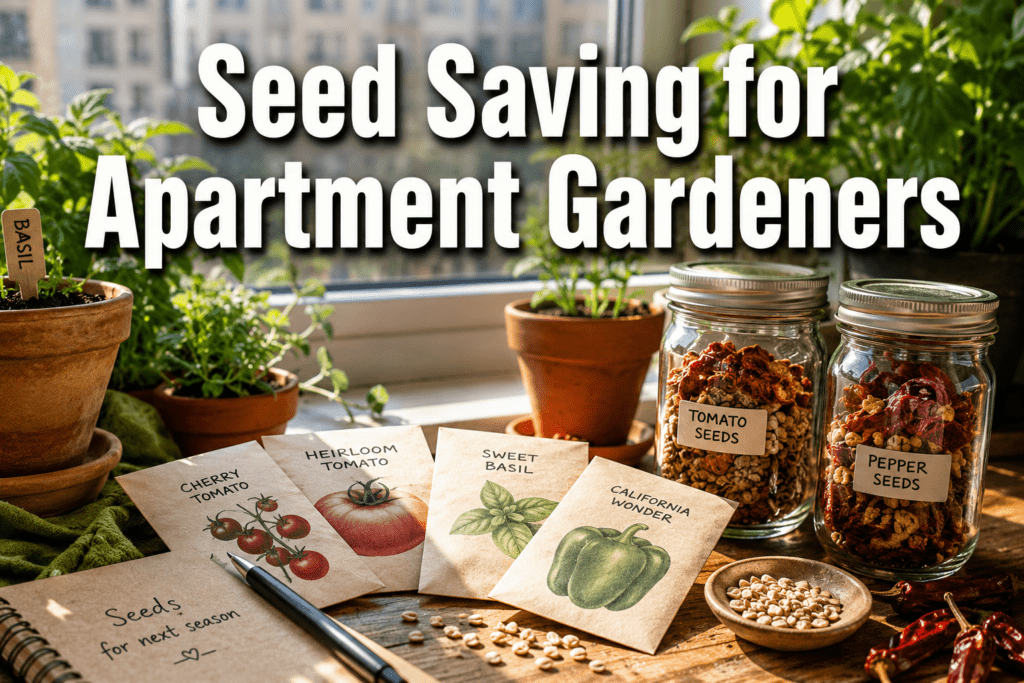
Quick Answer: Seed saving for apartment gardeners means collecting, drying, and storing seeds from plants you grow indoors or on a balcony, so you can replant them next season without buying new packets. It works best with open-pollinated or heirloom varieties, requires minimal space, and can cut your annual seed spending significantly. Most beginners can start with just a few paper envelopes, a mesh strainer, and a cool, dry storage spot.
Key Takeaways
- Seed saving works in apartments: you don’t need a yard, just a windowsill, a few containers, and the right plant varieties.
- Stick to open-pollinated or heirloom seeds for saving; hybrid seeds (labeled F1) won’t reliably reproduce true to the parent plant.
- The easiest seeds for beginners are tomatoes, peppers, beans, lettuce, and basil.
- Proper drying and cool, dark storage are the two most critical steps for keeping seeds viable.
- Seeds saved from store-bought produce can work, but only if the produce came from an open-pollinated variety.
- Most vegetable seeds stay viable for two to five years when stored correctly.
- You can save seeds legally in most cases, but some patented hybrid varieties are legally protected against saving and replanting.
- Basic equipment costs almost nothing: paper envelopes, glass jars, silica gel packets, and a marker are all you need.
What Exactly Is Seed Saving and How Does It Work
Seed saving is the practice of collecting mature seeds from plants, drying them thoroughly, and storing them for future planting. It’s one of the oldest agricultural practices in human history, predating commercial seed production by thousands of years.
The process follows a simple cycle:
- Allow a fruit, pod, or flower head to fully mature on the plant (beyond the point you’d normally harvest for eating).
- Extract the seeds from the plant material.
- Clean and dry the seeds completely, which prevents mold during storage.
- Store them in a cool, dark, dry location until the next planting season.
The key biological principle is this: seeds only reproduce true to type if the parent plant was open-pollinated, meaning it was fertilized by the same variety. Cross-pollination from a different variety can produce unpredictable offspring.
Can I Save Seeds in a Small Apartment Without a Lot of Space
Yes, seed saving for apartment gardeners is entirely practical in a small space. The actual seed collection and drying process takes up very little room, and long-term storage requires nothing larger than a shoebox.
Here’s what a realistic apartment seed-saving setup looks like:
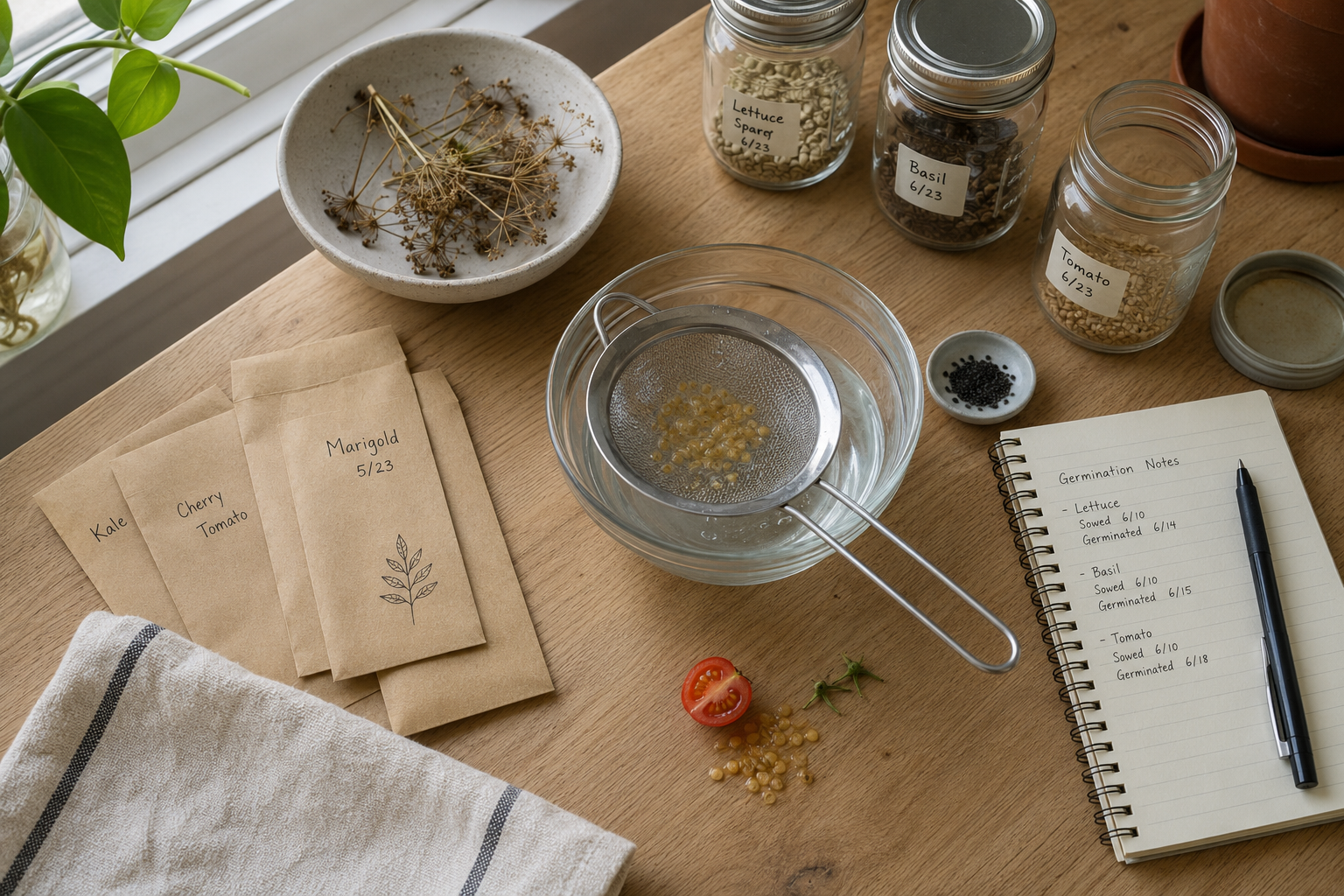
- Drying area: A single plate or sheet of parchment paper on a countertop handles most seeds. Tomato seeds need a small bowl of water for fermentation (more on that below), but the bowl is coffee-cup sized.
- Storage: A small shoebox or a single drawer holds dozens of labeled seed envelopes or small glass jars for an entire season’s worth of seeds.
- No special lighting or climate control needed for storage, as long as you avoid humid spots like above the stove or near a bathroom.
The plants themselves are the space constraint, not the seed saving. If you’re already growing tomatoes, peppers, or herbs in containers on a windowsill or balcony, you’re already set up to save seeds from them.
Which Vegetable and Herb Seeds Are Easiest to Save for Beginners
The easiest seeds for apartment gardeners to save are those that self-pollinate, produce seeds that are simple to extract, and don’t require complex processing.
Best beginner choices:
| Plant | Difficulty | Notes |
|---|---|---|
| Tomatoes | Easy | Fermentation method removes gel coating |
| Peppers | Very Easy | Dry seeds directly from ripe fruit |
| Beans / Peas | Very Easy | Let pods dry on the plant, then shell |
| Lettuce | Easy | Let a few plants bolt and collect seed heads |
| Basil | Easy | Let flower spikes dry, shake out seeds |
| Cilantro | Easy | Seeds are the spice coriander; easy to collect |
Avoid for now: Squash, cucumbers, and melons cross-pollinate easily with other varieties, making true-to-type saving tricky in a dense urban environment where neighbors may grow similar plants nearby.
How Much Money Can I Actually Save by Collecting My Own Seeds
A single packet of quality heirloom seeds typically costs between $3 and $6 in 2026. One well-saved tomato plant can yield hundreds of seeds, enough to last several seasons. For a gardener growing five to ten varieties per year, seed saving can realistically eliminate $30 to $60 or more in annual seed purchases.
The savings compound over time. Once you have a reliable seed stock, you rarely need to buy seeds for established varieties. The only ongoing cost is storage materials (paper envelopes and silica gel packets cost a few dollars total per year).
The honest caveat: The first year, you’ll likely still buy seeds to establish open-pollinated varieties. The financial payoff is strongest from year two onward.
What Equipment Do I Need to Start Saving Seeds at Home
The equipment list for seed saving for apartment gardeners is short and inexpensive. You likely already own most of it.
Essential supplies:
- Paper envelopes or small paper bags for storing dry seeds (avoid plastic, which traps moisture)
- A fine mesh strainer for rinsing wet seeds (tomatoes, squash)
- Glass jars with lids for longer-term bulk storage
- Silica gel desiccant packets to absorb moisture in storage containers
- A permanent marker for labeling with plant name, variety, and harvest date
- Paper towels or parchment paper for the drying surface
Optional but useful:
- A small food dehydrator set to the lowest temperature (under 95°F / 35°C) for faster drying in humid climates
- A notebook or simple spreadsheet to track germination rates year over year
Total startup cost: roughly $10 to $20 if you need to buy everything new.
Are There Any Seeds That Don’t Work Well for Apartment Gardeners
Some seeds are genuinely poor candidates for apartment seed saving, either because of cross-pollination risk or because the plants need more space than a typical apartment garden allows.
Seeds to skip or approach carefully:
- Corn: Requires large populations for proper pollination. A single balcony plant won’t produce viable seed reliably.
- Brassicas (broccoli, cabbage, kale): Cross-pollinate aggressively with other brassicas and need two-year cycles to produce seed.
- Cucumbers, squash, melons: Highly prone to cross-pollination from neighboring gardens in urban settings. Saved seeds may produce unexpected hybrids.
- Carrots and beets: Biennial plants that need two growing seasons to produce seed, which is impractical in most container setups.
The rule of thumb: If the plant self-pollinates (tomatoes, peppers, beans) and produces seed in its first year, it’s a strong candidate. If it relies on insects for cross-pollination and you’re surrounded by other urban gardens, results will be unpredictable.
What Common Mistakes Do Newbies Make When Trying to Save Seeds
The most frequent beginner errors in seed saving fall into three categories: harvesting too early, drying inadequately, and storing in the wrong conditions.
Common mistakes and how to avoid them:
- Harvesting immature seeds: Seeds must be fully mature before saving. For tomatoes, this means letting the fruit go past peak eating ripeness. For beans, let the pods turn brown and papery on the plant.
- Insufficient drying: Seeds that feel dry to the touch may still contain internal moisture. Spread seeds on paper for at least one to two weeks in a well-ventilated spot before storing.
- Storing in plastic bags: Plastic traps residual moisture and promotes mold. Always use paper envelopes for short-term storage, or glass jars with desiccant for long-term.
- Skipping labels: After three months, unlabeled seeds are nearly impossible to identify. Label everything immediately with the variety name and harvest date.
- Saving from hybrid plants: Seeds from F1 hybrid plants won’t grow true to type. Check your seed packet before saving.
How Do I Know If My Saved Seeds Are Still Good to Plant
The most reliable method is a simple germination test. Place 10 seeds between two damp paper towels, seal them in a plastic bag, and keep them at room temperature. Check after the number of days listed as the germination period for that plant (usually 5 to 14 days). Count how many sprout.
Interpreting results:
- 8 to 10 out of 10 germinate: Excellent viability, plant at normal spacing.
- 5 to 7 out of 10: Acceptable, but sow more densely to compensate.
- Fewer than 5 out of 10: Seeds are declining; use them up this season and collect fresh ones.
Visual checks also help. Discard seeds that are shriveled, discolored, or smell musty. Healthy seeds are firm, plump, and have a neutral or slightly nutty smell.
Can I Save Seeds from Store-Bought Produce
You can save seeds from store-bought produce, but with an important condition: the produce must have come from an open-pollinated variety, not a hybrid. Most supermarket tomatoes, peppers, and squash are hybrid varieties bred for shelf life and uniformity, so their seeds won’t reliably reproduce the same fruit.
Better sources for saveable seeds:
- Farmers’ market vendors who grow heirloom varieties (ask them directly)
- Specialty grocery stores that stock heirloom or heritage produce
- Community seed swaps, which have grown significantly in urban areas through 2026
If you’re buying seeds specifically to save, purchase from reputable seed companies that label varieties as “open-pollinated” or “heirloom.”
What’s the Difference Between Hybrid and Heirloom Seeds for Saving
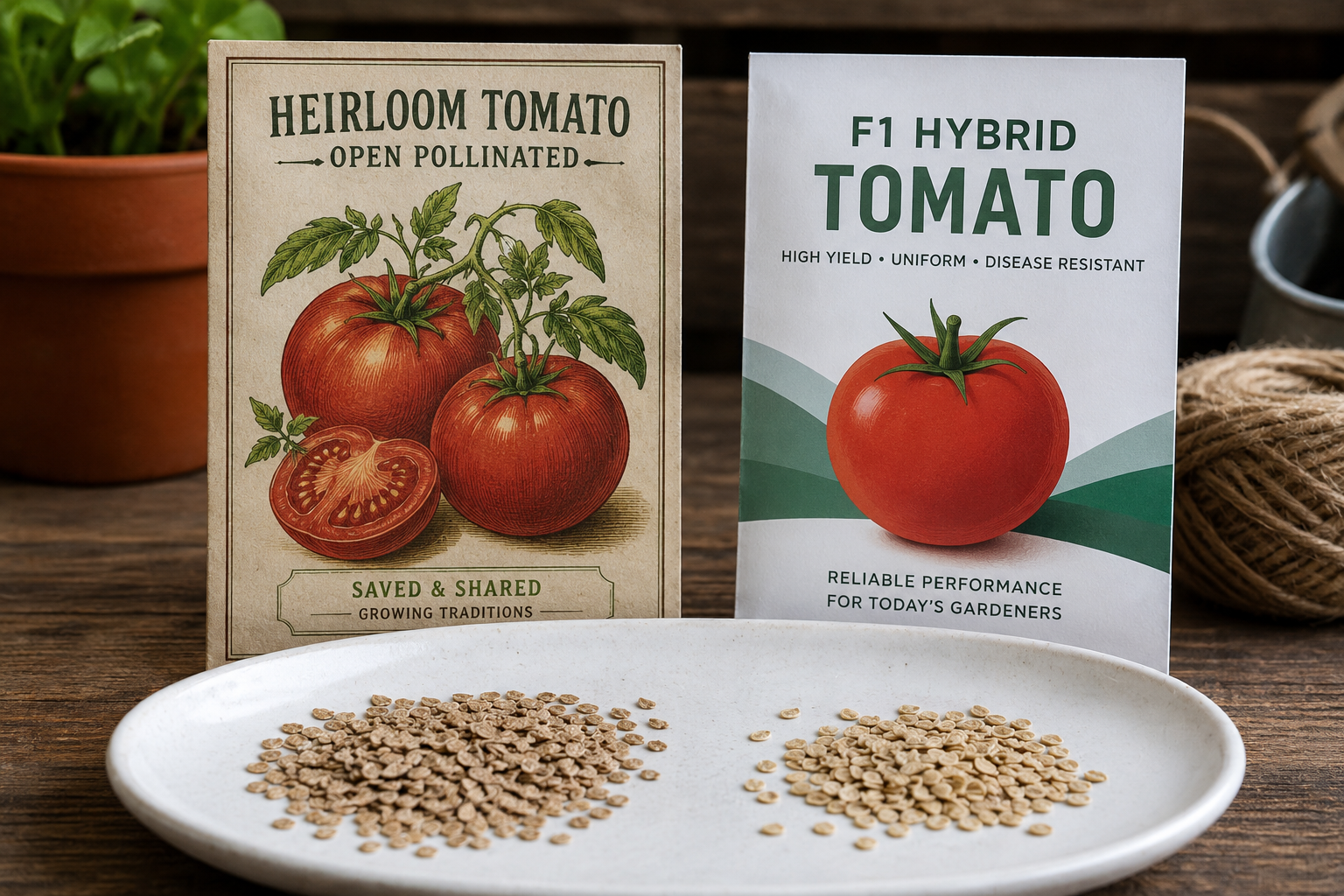
This distinction is the single most important concept in seed saving for apartment gardeners. Understanding it prevents wasted effort.
Heirloom / Open-Pollinated seeds:
- Bred through natural pollination over many generations
- Seeds saved from the plant will grow into a plant nearly identical to the parent
- Labeled “OP” (open-pollinated) or “heirloom” on seed packets
- Best choice for seed saving
Hybrid seeds (F1):
- Created by crossing two distinct parent lines to produce specific traits (disease resistance, uniform size, high yield)
- Seeds saved from F1 plants will revert to unpredictable characteristics in the next generation
- Labeled “F1” or “hybrid” on seed packets
- Not suitable for seed saving
The practical rule: If your seed packet says F1 or hybrid anywhere, don’t save those seeds. Buy open-pollinated varieties from the start if seed saving is your goal.
How Long Can I Store Saved Seeds Before They Won’t Germinate
Most vegetable and herb seeds remain viable for two to five years under proper storage conditions. Some seeds, like onions and parsnips, decline quickly (one to two years). Others, like tomatoes and cucumbers, can last five or more years.
General viability guide:
| Seed Type | Average Viability |
|---|---|
| Onions, leeks | 1-2 years |
| Parsley, parsnip | 1-2 years |
| Peppers, tomatoes | 3-5 years |
| Beans, peas | 3-4 years |
| Lettuce, basil | 3-4 years |
| Cucumbers | 5+ years |
Storage conditions matter as much as seed type. The ideal environment is cool (below 50°F / 10°C), dark, and dry. A refrigerator works well for apartment gardeners who lack a cool basement. Keep seeds in sealed glass jars with a silica gel packet inside.
Are There Any Risks or Legal Issues with Saving Certain Types of Seeds
For most home gardeners, seed saving is completely legal and carries no practical risk. However, there are two areas worth knowing about.
Patent protection on hybrid varieties: Some commercial seed companies hold utility patents on specific hybrid varieties. Saving and replanting patented seeds for commercial production is illegal in the United States and several other countries. For home gardeners growing for personal use, enforcement against individuals is essentially nonexistent, but the legal exposure technically exists with patented varieties.
Practical risk: The main real-world risk for apartment gardeners is cross-pollination producing off-type plants. This isn’t harmful, just disappointing if you expected a specific variety.
The safe approach: Grow and save only open-pollinated or heirloom varieties. These are never patented, and saving them is not only legal but actively encouraged by seed preservation organizations.
Frequently Asked Questions
Do I need any gardening experience to start saving seeds?
No. Seed saving for apartment gardeners is beginner-friendly. Start with peppers or beans, which require nothing more than letting the fruit dry and collecting the seeds inside.
Can I save seeds from a single plant, or do I need multiple plants?
Self-pollinating plants like tomatoes and peppers produce viable seeds from a single plant. Cross-pollinating plants like squash need at least two plants of the same variety nearby.
How do I process tomato seeds specifically?
Scoop seeds and gel into a small jar with water. Let the mixture ferment at room temperature for two to three days, stirring daily. Viable seeds sink; mold and debris float. Rinse the sunken seeds, then dry them on parchment paper for one to two weeks.
Should I refrigerate my saved seeds?
Refrigeration extends viability significantly, especially for seeds you plan to store for more than two years. Use a sealed glass jar with a silica gel packet to prevent condensation when you open the jar.
What if my saved seeds don’t germinate?
Run a germination test before the planting season. If viability is low, use the seeds as a backup and purchase fresh open-pollinated seeds for your main planting.
Are seed swaps a good resource for apartment gardeners?
Yes. Seed swaps, both in-person and online, are excellent sources of open-pollinated varieties and let you trade seeds you’ve saved for varieties you haven’t grown yet. Many cities have active seed library programs through public libraries.
Can I save seeds from herbs like basil and cilantro?
Yes, and they’re among the easiest. Let a few plants bolt (go to flower and then seed), then cut the dry seed heads into a paper bag and shake out the seeds.
Do saved seeds need to be treated or sterilized before storage?
No treatment is needed for most home-saved seeds. Just ensure they are completely dry before sealing them in envelopes or jars.
Conclusion
Seed saving for apartment gardeners is one of the most practical skills a container gardener can develop. It costs almost nothing to start, requires no special equipment beyond what most kitchens already have, and pays dividends every season. The core habit is simple: grow open-pollinated varieties, let a portion of your harvest fully mature for seed, dry thoroughly, label clearly, and store cool and dry.
Your actionable next steps for 2026:
- Check your current seed packets. If any say “heirloom” or “OP,” you’re already ready to save from those plants this season.
- Buy at least one open-pollinated tomato or pepper variety if you don’t have one already.
- Set up a basic storage system now: a small glass jar, a few paper envelopes, a silica gel packet, and a marker.
- Run a germination test on any seeds older than two years before committing them to your main planting.
- Find a local or online seed swap to expand your variety collection without spending money.
The goal isn’t perfection in year one. It’s building a seed stock, season by season, that makes you less dependent on commercial suppliers and more connected to what you grow.
Sources:
- Ashworth, S. (2002). Seed to Seed: Seed Saving and Growing Techniques for Vegetable Gardeners. Seed Savers Exchange. https://www.seedsavers.org
- Seed Savers Exchange. (2023). Seed Saving Guide. https://www.seedsavers.org/learn/seed-saving
- University of Minnesota Extension. (2021). Saving vegetable seeds. https://extension.umn.edu/vegetables/saving-vegetable-seeds