No-Dig Gardening for Balcony and Container Gardens
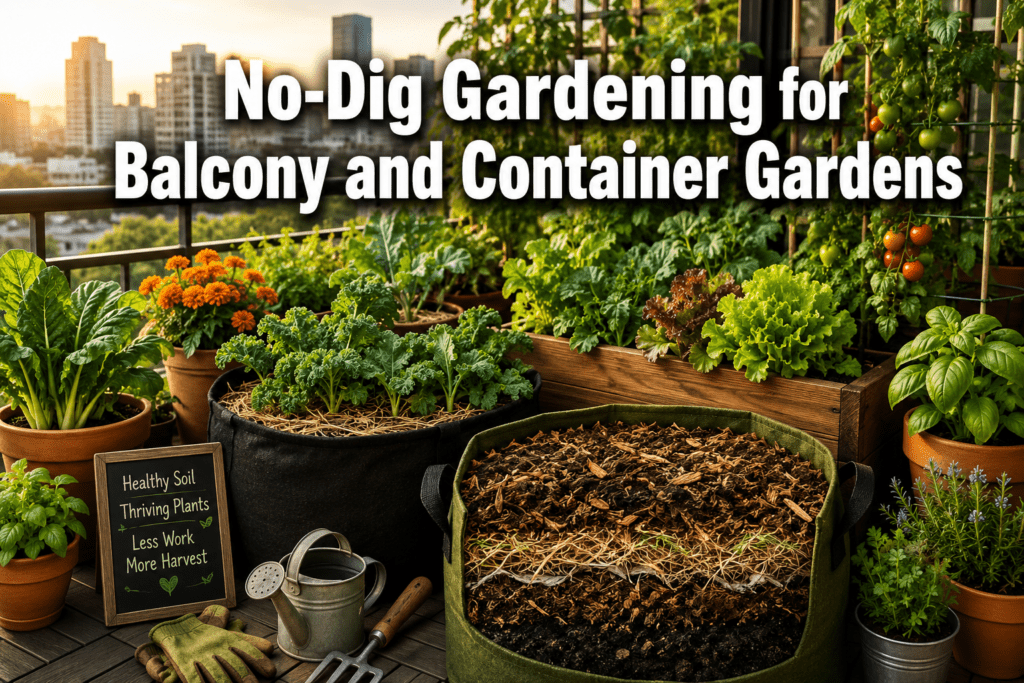
Quick Answer: No-dig gardening for balcony and container gardens means building layered growing environments inside pots, raised planters, or fabric bags without ever turning or tilling the soil. You add organic materials in sequence, let biology do the work, and grow vegetables, herbs, and flowers with less effort and better soil health than traditional container methods allow.
Key Takeaways
- No-dig gardening for balcony and container gardens skips tilling entirely, relying on layered compost, cardboard, and mulch to build fertile growing media
- Starter costs typically range from $30 to $120 depending on container size and material choices
- Fabric grow bags and deep wooden planters outperform standard plastic pots for this method
- Leafy greens, herbs, tomatoes, and root vegetables all perform well in no-dig containers
- The method is especially well-suited for people with back pain or limited mobility
- Common beginner mistakes include using too little compost depth and skipping the cardboard base layer
- Pest management in no-dig containers relies on companion planting and physical barriers rather than chemical sprays
- No-dig containers retain moisture better than conventionally filled pots, reducing watering frequency
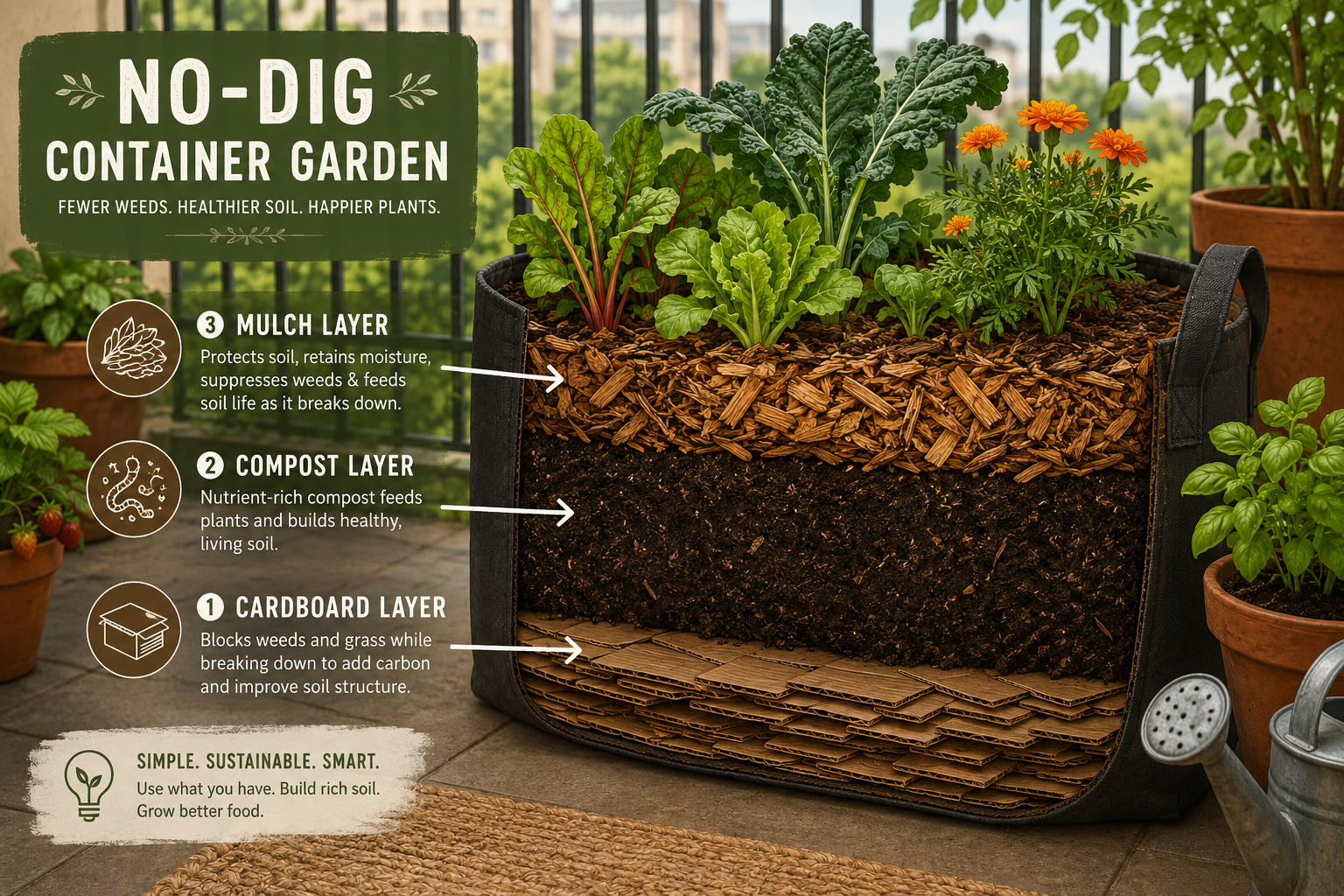
What Exactly Is No-Dig Gardening and How Does It Work?
No-dig gardening is a soil-building method that avoids digging or tilling. Instead of breaking up existing ground, you layer organic materials directly on top of a surface, letting worms, fungi, and microbes integrate everything naturally over time.
In a traditional in-ground context, no-dig means laying cardboard over grass or weeds, then piling compost on top. For balcony and container gardens, the same principle applies inside a pot or planter: you build layers rather than mixing a uniform growing medium. The cardboard suppresses any existing material at the base, the compost provides nutrients, and a mulch top layer retains moisture and regulates soil temperature.
How the layers work in a container:
- Base layer – A single sheet of plain cardboard (no glossy ink) placed at the container bottom. It breaks down within weeks, feeding soil life.
- Compost layer – At least 6 to 8 inches of high-quality compost forms the main growing zone.
- Mulch or top-dressing layer – A 1 to 2 inch layer of straw, wood chip, or additional compost covers the surface.
The biology in compost does the aeration work that a spade would otherwise do. Worm activity (even in containers) and fungal networks keep the medium loose and nutrient-rich without any physical disruption.
Why Choose No-Dig Over Regular Potting Soil?
Standard bagged potting mix works, but it degrades quickly. Most commercial potting soils lose structure within one growing season because they rely heavily on peat or coir with limited living biology. No-dig container media, built from layered compost, stays biologically active longer and improves with each season rather than compacting.
Key advantages over standard potting soil:
- Higher microbial diversity means nutrients are released more steadily
- Better moisture retention reduces watering frequency by an estimated 20 to 30 percent compared to peat-based mixes (based on general horticultural guidance from the Royal Horticultural Society)
- Lower long-term cost because you replenish with compost top-dressings rather than replacing all the soil each year
- Reduced need for synthetic fertilizers because the compost ecosystem cycles nutrients continuously
Choose no-dig if you plan to grow in the same containers for multiple seasons. Stick with standard potting mix if you need a quick, single-season setup with no interest in soil building.
Is No-Dig Gardening Better Than Traditional Container Gardening?
For most balcony growers, no-dig container gardening produces healthier plants over time and costs less to maintain year after year. It outperforms traditional container gardening specifically in soil longevity, plant resilience during dry spells, and overall yield consistency across multiple seasons.
That said, it is not universally “better” in every situation. If you need to plant immediately with minimal preparation, a quality bagged potting mix is faster to set up. No-dig containers need a few weeks to settle before planting if you are starting from scratch.
| Factor | No-Dig Container | Traditional Container |
|---|---|---|
| Setup time | 1 to 2 hours, then 2 to 4 weeks settling | 30 minutes, plant same day |
| Soil lifespan | 3 to 5+ years with top-dressing | 1 to 2 years before replacement |
| Watering frequency | Lower (better retention) | Higher (peat degrades fast) |
| Fertilizer need | Low to moderate | Moderate to high |
| Starter cost | $30 to $120 | $15 to $60 |
| Long-term cost | Lower | Higher |
What Containers Work Best for the No-Dig Method?
Deep containers with good drainage and breathable walls work best for no-dig gardening on a balcony. The method needs depth to accommodate layering, so containers shallower than 10 inches will limit your results.
Best container types:
- Fabric grow bags (7 to 25 gallon) – Air-prune roots, allow excellent drainage, and are lightweight enough for most balconies. These are the top choice for no-dig container gardening.
- Wooden planter boxes (12 inches deep or more) – Retain moisture well and insulate roots from temperature swings. Line with burlap, not plastic, to maintain breathability.
- Terracotta pots (12-inch diameter and larger) – Good airflow and aesthetics, but heavier and prone to drying out faster in summer.
- Recycled food-grade buckets (5 gallon) – Budget-friendly and effective for single plants like tomatoes or peppers.
Avoid glazed ceramic pots with poor drainage holes and standard window boxes shallower than 8 inches. These restrict the layer depth the no-dig method depends on.
What Soil Layers Do You Need for a Successful No-Dig Container Garden?
A successful no-dig container garden needs three distinct layers: a cardboard base, a deep compost middle, and a mulch top. Each layer serves a specific function and cannot simply be replaced with generic potting mix.
Layer breakdown:
- Cardboard base (1 layer thick): Removes any debris or old soil structure. Breaks down in 4 to 8 weeks, feeding worms and fungi. Remove staples and tape before use.
- Compost (6 to 10 inches): This is the primary growing medium. Use well-aged compost, not fresh green waste. Worm castings mixed in at a 20 percent ratio improve nutrient density noticeably.
- Mulch top-dressing (1 to 2 inches): Straw, shredded leaves, or fine wood chip. Keeps surface moisture stable and suppresses fungus gnats.
For containers under 12 inches deep, skip the cardboard and focus on maximizing compost depth. The cardboard layer matters most in larger planters where you are building over existing material.
What Vegetables Grow Best Using No-Dig Techniques in Containers?
Leafy greens, herbs, tomatoes, peppers, and shallow-rooted root vegetables all thrive in no-dig container setups. These crops benefit most from the consistent moisture and steady nutrient release that a layered compost system provides.
Top performers by category:
- Leafy greens: Lettuce, spinach, kale, Swiss chard (harvest repeatedly for months)
- Herbs: Basil, parsley, chives, cilantro, mint (keep mint in its own container)
- Fruiting crops: Cherry tomatoes, bush beans, peppers, cucumbers (need 15+ gallon containers)
- Root crops: Radishes, beets, small carrots like ‘Chantenay’ varieties (need 12-inch depth minimum)
Avoid large brassicas like full-size cabbage or sprawling squash varieties. These need more root volume than most balcony containers can provide, and their nutrient demands can exhaust even a well-built no-dig system quickly.
Can You Do No-Dig Gardening on a Small Balcony With Limited Space?
Yes. No-dig gardening for balcony and container gardens is one of the most space-efficient growing methods available to apartment dwellers. A single 15-gallon fabric grow bag takes up roughly 1.5 square feet of floor space and can produce a full season of cherry tomatoes or mixed greens.
Space-maximizing strategies:
- Stack smaller containers vertically using tiered shelving rated for outdoor use
- Use railing planters (confirm weight limits with your building manager first)
- Grow climbing crops like pole beans or small cucumbers up a trellis attached to the wall
- Prioritize high-yield-per-square-foot crops: lettuce, herbs, and radishes give the most return in tight spaces
Even a 6-foot by 3-foot balcony can support four to six fabric grow bags, producing a meaningful supplement to a household’s fresh vegetable supply throughout the growing season.
Is No-Dig Gardening Good for People With Back Problems or Limited Mobility?
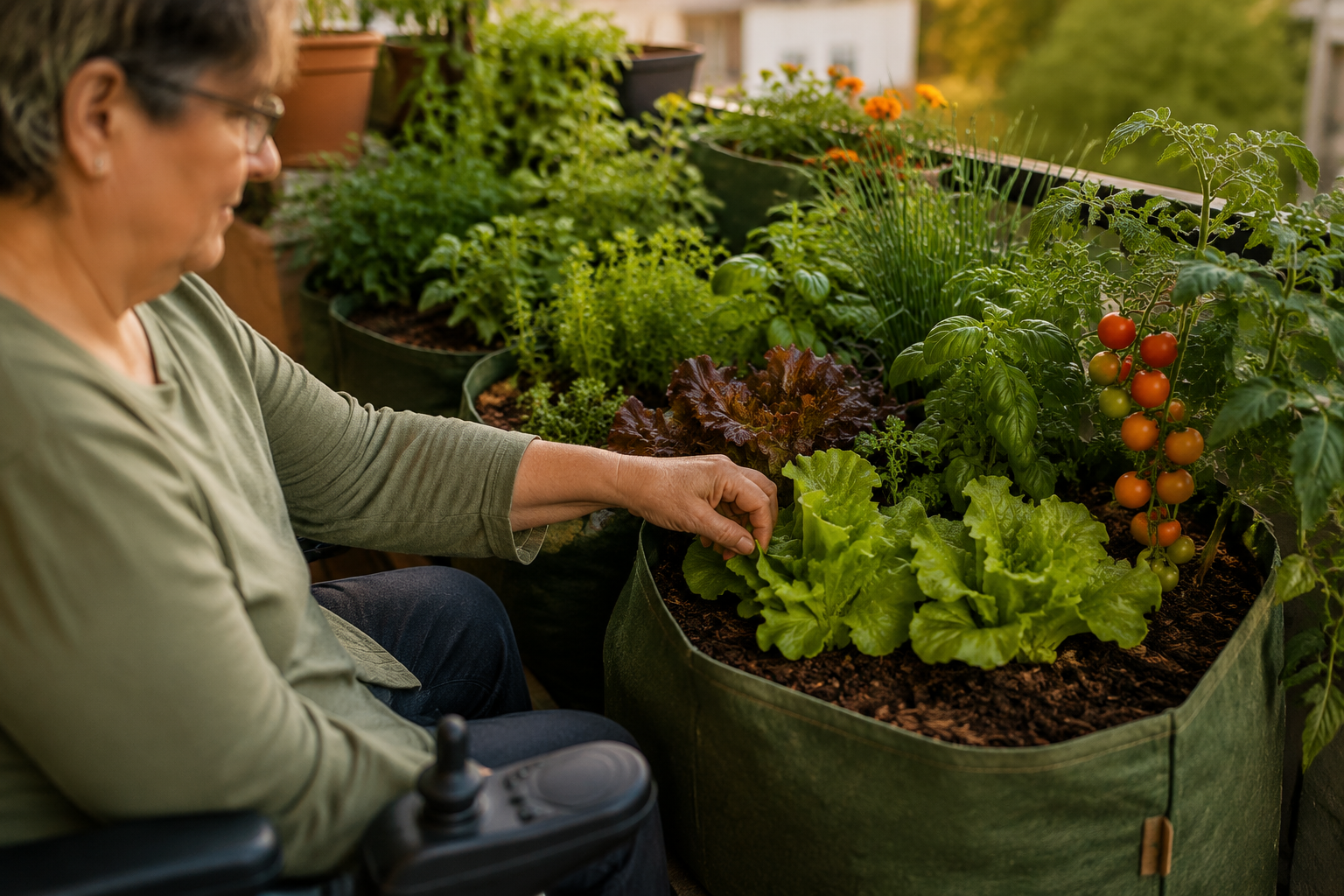
No-dig container gardening is one of the most accessible growing methods for people with back pain, arthritis, or limited mobility. Because there is no digging, kneeling, or heavy soil turning involved, the physical demands are minimal compared to traditional gardening.
Placing fabric grow bags on sturdy tables or elevated stands brings the growing surface to a comfortable working height. Watering cans with long spouts reduce bending. The compost-based medium is also lighter than dense garden soil, making containers easier to move when needed.
For anyone managing chronic pain or reduced strength, no-dig container gardening on a balcony removes most of the physical barriers that make traditional gardening difficult.
How Much Does It Cost to Start a No-Dig Garden on a Balcony?
A basic no-dig balcony garden setup costs between $30 and $120 for most beginners in 2026, depending on the number of containers and compost volume needed. This is a one-time investment that pays back over multiple seasons because the soil system regenerates rather than needing full replacement.
Estimated cost breakdown (3-container starter setup):
| Item | Estimated Cost |
|---|---|
| 3 x 10-gallon fabric grow bags | $15 to $25 |
| 2 cubic feet of quality compost | $12 to $20 |
| Straw or mulch (small bale) | $8 to $15 |
| Seeds or starter plants | $10 to $30 |
| Cardboard (often free from boxes) | $0 |
| Total | $45 to $90 |
Annual maintenance costs drop significantly after the first year. You will mainly need to top-dress with a few inches of fresh compost each spring, which costs $10 to $20 per container depending on size.
What Are Common Mistakes Beginners Make With No-Dig Container Gardening?
The most common beginner mistake is using too shallow a compost layer, which starves plant roots and leads to poor yields. A close second is planting too soon after building the layers, before the system has had time to settle and begin biological activity.
Other frequent errors:
- Using fresh, unfinished compost – This can burn roots and introduce weed seeds. Always use well-aged, dark, earthy-smelling compost.
- Skipping the mulch top layer – Exposed compost dries out fast and develops a hard crust that repels water.
- Overwatering – No-dig containers retain moisture well. Stick your finger 2 inches into the medium before watering. If it is still damp, wait.
- Choosing containers that are too small – Anything under 7 gallons limits root development for most vegetables.
- Not accounting for balcony weight limits – Compost is heavier than it looks. A 25-gallon fabric bag filled with moist compost can weigh 60 to 80 pounds. Check your building’s load specifications.
Are There Any Downsides to No-Dig Gardening for Apartment Dwellers?
No-dig gardening for balcony and container gardens has real limitations that apartment dwellers should weigh honestly. The main downsides are weight, setup time, and the learning curve around compost quality.
Honest limitations:
- Weight – Compost-filled containers are heavy. Balcony weight limits vary widely by building age and construction type. Always verify before loading up.
- Compost sourcing – Quality compost can be hard to find in urban areas. Poor-quality compost undermines the entire method.
- Slower start – Unlike potting mix you can plant into immediately, no-dig containers benefit from a 2 to 4 week settling period.
- Fungus gnats – Compost-rich containers attract fungus gnats if the surface stays too wet. A dry mulch top layer and careful watering largely prevent this.
None of these are deal-breakers, but they are worth planning for before you invest in materials.
How Do You Deal With Pests in a No-Dig Container Garden?
Pest management in no-dig container gardens relies primarily on prevention, companion planting, and physical barriers rather than pesticide sprays. The biologically active compost environment actually supports beneficial insects that prey on common pests, so chemical interventions can undermine the system.
Practical pest control strategies:
- Aphids: Spray with a diluted neem oil solution (1 teaspoon neem oil per quart of water). Plant basil or chives nearby as deterrents.
- Fungus gnats: Let the top inch of compost dry between waterings. Apply a thin layer of dry sand or fine bark mulch over the surface.
- Caterpillars and moths: Use fine mesh insect netting over containers during peak egg-laying periods in spring and early summer.
- Slugs: Place copper tape around container rims. Slugs are less common on elevated balconies but can arrive on purchased plants.
Inspect new plants carefully before adding them to your balcony garden. Most pest problems arrive on transplants from nurseries, not from the compost itself.
Frequently Asked Questions
Can I use cardboard from any box for the base layer?
Use plain brown cardboard only. Remove all tape, staples, and any boxes with heavy glossy printing or plastic coatings. Plain corrugated cardboard breaks down cleanly and feeds soil organisms.
How often do I need to add compost to a no-dig container?
Top-dress with 1 to 2 inches of fresh compost at the start of each growing season. For heavy-feeding crops like tomatoes, add a thin layer mid-season as well.
Does no-dig container gardening work year-round?
In mild climates (USDA zones 8 to 11), yes. In colder zones, the compost layer insulates roots better than standard potting mix, extending the season by several weeks on each end. Most balcony growers in colder climates grow cool-season crops in spring and fall, then overwinter the containers.
Can I mix potting soil with compost for a no-dig container?
You can, but it is not the standard approach. If you need to stretch your compost supply, mix at a ratio of no more than 30 percent potting mix to 70 percent compost. Higher potting mix ratios reduce the biological activity that makes no-dig effective.
How deep does my container need to be for root vegetables?
At least 12 inches for beets and short carrot varieties. Standard carrots need 14 to 16 inches. Radishes are the exception and grow well in as little as 8 inches.
Will no-dig containers attract rats or mice on a balcony?
Compost in sealed containers does not typically attract rodents. Avoid adding food scraps directly to your grow containers. If you compost separately, use a sealed bin.
How do I know if my compost is ready to use?
Finished compost is dark brown, crumbles easily, smells earthy (not sour or ammonia-like), and shows no recognizable food or plant material. If it still smells sharp or has visible chunks, let it cure longer before using.
Can I grow strawberries using the no-dig method in containers?
Yes. Strawberries are excellent candidates for no-dig containers. Use a 10-gallon or larger container, plant runners at the compost surface, and mulch around the crowns with straw to protect fruit and retain moisture.
Is no-dig gardening suitable for renters who cannot modify their balcony?
It is one of the best methods for renters precisely because it requires no permanent modifications. Fabric grow bags and freestanding planters leave no trace when you move.
What is the difference between no-dig and lasagna gardening?
They are closely related. Lasagna gardening refers specifically to alternating layers of “brown” (carbon-rich) and “green” (nitrogen-rich) materials, similar to composting in place. No-dig is the broader philosophy of avoiding soil disturbance. In containers, the two methods overlap almost entirely.
Conclusion
No-dig gardening for balcony and container gardens is a practical, low-cost, and physically accessible way to grow food and plants in limited urban spaces. The core idea is simple: build layers, feed the biology, and let the soil system do the heavy lifting.
Your next steps:
- Measure your balcony and check your building’s weight load specifications before buying containers.
- Source well-aged compost from a local garden center or municipal composting program.
- Start with two or three 10-gallon fabric grow bags and a selection of fast-growing crops like lettuce, radishes, and herbs.
- Build your layers, wait two to three weeks for the system to activate, then plant.
- Top-dress with fresh compost each season and observe how the soil improves year over year.
The method rewards patience. Your second season will outperform your first, and your third will be better still. That compounding improvement is what separates no-dig container gardening from the cycle of buying new potting soil every spring.
References
- Royal Horticultural Society. (2023). Composting and soil improvement. https://www.rhs.org.uk/soil-composts-mulches/composting
- Dowding, C. (2022). No Dig: Grow vegetables and flowers through no dig gardening. DK Publishing.
- University of California Cooperative Extension. (2021). Container vegetable gardening. https://ucanr.edu/sites/gardenweb/Container_Gardening/