Raised Bed Gardening vs Container Gardening: Which Is Better?
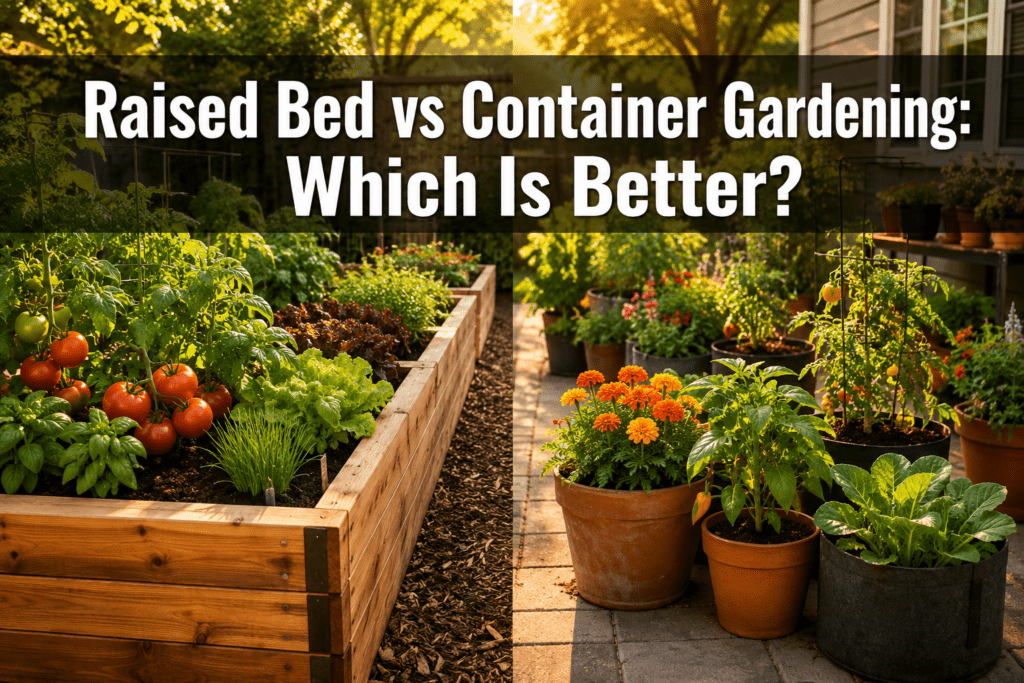
Quick Answer: Neither raised bed gardening nor container gardening is universally better — the right choice depends on your space, budget, physical ability, and what you want to grow. Raised beds offer more root space, better soil volume, and higher yields for most vegetables. Containers win on portability, low upfront cost, and flexibility for renters or small patios. Most experienced gardeners use both.
Key Takeaways
- Raised beds cost more upfront (typically $50–$300+ to build) but deliver higher yields and lower long-term maintenance than containers.
- Containers are ideal for renters, balconies, or anyone who needs to move plants to follow sunlight or protect them from frost.
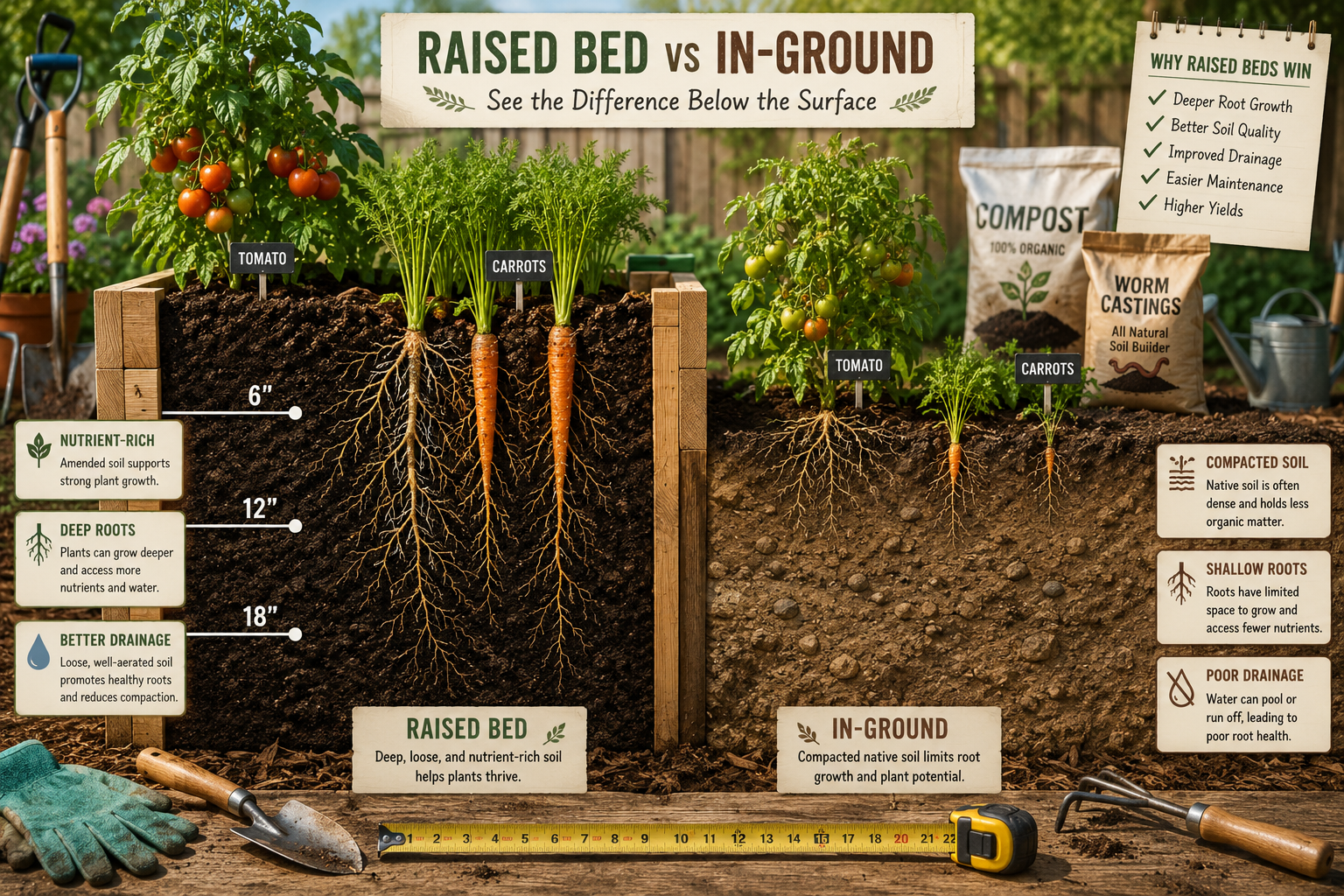
- Raised beds need at least 6 inches of depth for shallow-rooted crops; 12–18 inches for tomatoes, peppers, and root vegetables.
- Wooden raised beds are affordable and easy to build; galvanized metal beds last longer but cost more.
- Both methods outperform in-ground gardening when native soil is poor, compacted, or contaminated.
- Raised beds require less frequent watering than containers but need seasonal soil amendment.
- Gardeners with back pain or mobility issues benefit most from raised beds built 24–30 inches tall.
- Common beginner mistakes include using too-shallow beds, poor drainage in containers, and skipping soil quality.
What Exactly Is a Raised Garden Bed and How Does It Work
A raised garden bed is a contained growing area where soil is built up above the native ground level, usually enclosed by wood, metal, or stone walls. You fill it with a custom soil mix, which gives you direct control over drainage, nutrients, and soil structure — something in-ground gardening rarely allows.
The bed sits on top of existing ground (or a hard surface with a liner), and plant roots grow entirely within the amended soil you add. This is why raised beds consistently outperform native soil gardens in areas with clay-heavy, sandy, or contaminated ground.
How it differs from container gardening: A container is a fully enclosed vessel — pot, bucket, grow bag, or planter box — with no connection to the ground at all. Raised beds typically sit directly on soil, allowing some root extension and natural drainage downward.
How Much Does It Cost to Build a Raised Garden Bed
A basic raised garden bed costs between $50 and $300 to build, depending on size and materials. A simple 4×8-foot cedar frame with lumber and hardware runs roughly $80–$120. Filling it with quality soil mix (a blend of topsoil, compost, and perlite) adds another $50–$150 depending on depth and local prices.
Cost breakdown for a standard 4x8x12-inch cedar bed:
| Item | Estimated Cost |
|---|---|
| Cedar lumber (2×6 boards) | $40–$70 |
| Corner hardware/screws | $10–$20 |
| Weed barrier fabric | $10–$15 |
| Soil mix (approx. 8 cu. ft.) | $50–$120 |
| Total | $110–$225 |
Metal raised beds (galvanized steel) typically cost $80–$250 for the frame alone but last 10–20 years without rotting. Containers, by comparison, range from $5 for a basic plastic pot to $60+ for large fabric grow bags or decorative planters.
Choose raised beds if you plan to garden in the same spot for multiple years. The cost per harvest drops significantly after the first season.
Are Containers or Raised Beds Better for Small Spaces Like Patios
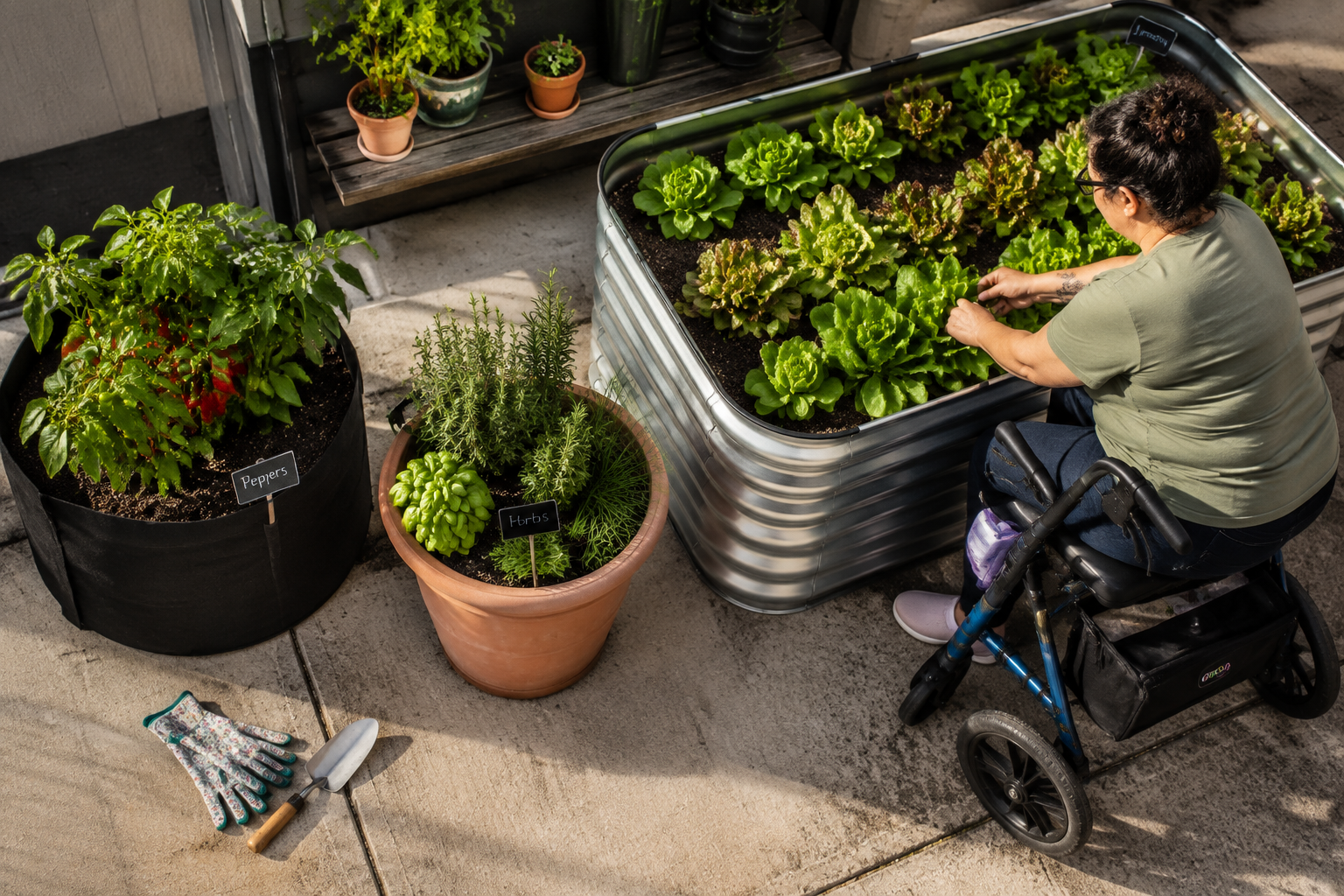
For balconies, patios, or rooftops, containers are often the more practical choice. They don’t require ground access, can be arranged and rearranged freely, and work well on weight-limited surfaces. However, compact raised bed planters (2×4 feet or smaller) also work well on patios and offer more soil volume per plant than most containers.
When containers win for small spaces:
- You rent and can’t alter the property
- Your patio has strict weight limits
- You need to move plants indoors seasonally
- You’re growing herbs, lettuce, or compact crops
When a small raised bed wins:
- You have a ground-level patio or deck with structural support
- You want to grow tomatoes, squash, or other large plants
- You prefer less frequent watering (larger soil volume retains moisture longer)
A 2×4-foot raised planter box on a patio can grow 8–12 lettuce heads, 2–3 pepper plants, or a full herb garden — more efficiently than the equivalent number of individual containers.
What Vegetables Grow Best in Raised Beds vs Containers
Most vegetables grow well in both settings, but some perform significantly better in one over the other.
Best for raised beds:
- Tomatoes, peppers, eggplant (need deep roots and consistent moisture)
- Squash, zucchini, cucumbers (sprawling plants benefit from more space)
- Carrots, parsnips, beets (need 12+ inches of loose, rock-free soil)
- Corn (needs multiple plants for pollination; impractical in containers)
Best for containers:
- Herbs (basil, parsley, chives, mint — especially mint, which spreads aggressively in beds)
- Lettuce, spinach, arugula (shallow roots; thrives in 8-inch-deep containers)
- Radishes, green onions, bush beans
- Dwarf or patio varieties of tomatoes and peppers (e.g., Tumbling Tom, Patio Pride)
The rule of thumb: If a plant’s mature root system exceeds 12 inches deep or 12 inches wide, a raised bed will outperform a standard container.
How Deep Do Raised Garden Beds Need to Be for Different Plants
Depth is one of the most commonly overlooked factors in raised bed gardening. A bed that’s too shallow stunts root growth and forces more frequent watering.
| Depth | Suitable Plants |
|---|---|
| 6 inches | Lettuce, spinach, herbs, radishes |
| 8–10 inches | Bush beans, peas, onions, strawberries |
| 12 inches | Tomatoes, peppers, cucumbers, most flowers |
| 18+ inches | Carrots, parsnips, potatoes, deep-rooted perennials |
For most vegetable gardens, 12 inches is the practical minimum. If you’re building on concrete or compacted ground with no drainage below, go to 18 inches to give roots room to breathe.
What Materials Should You Use to Build Raised Garden Beds That Last
Cedar and redwood are the top choices for wooden raised beds because both resist rot naturally without chemical treatment. Pine is cheaper but typically lasts only 3–5 years untreated. Avoid pressure-treated lumber labeled CCA (chromated copper arsenate) — older formulations contained arsenic. Modern ACQ-treated lumber is considered safer, but many gardeners still prefer untreated cedar to be cautious with edibles.
Pros and cons of common materials:
- Cedar wood: Affordable, easy to cut and assemble, naturally rot-resistant, lasts 7–15 years. Best all-around choice for beginners.
- Galvanized steel: Lasts 20+ years, no rotting, clean modern look. Costs more upfront; can heat up in direct sun (use a liner or choose thicker-gauge steel).
- Concrete blocks/brick: Extremely durable, great for permanent installations. Labor-intensive and expensive to install.
- Composite lumber (recycled plastic/wood): Long-lasting, low maintenance, no rot. Higher cost than cedar; quality varies by brand.
Common mistake: Buying the cheapest untreated pine to save money. It often rots within two seasons, meaning you’ll rebuild sooner than expected.
Wooden vs Metal Raised Garden Beds: Pros and Cons
The wooden vs metal debate comes down to budget, aesthetics, and how long you plan to garden in one spot.
Wooden beds feel warmer and more traditional, blend into most garden settings, and are easy to modify or expand with basic tools. The downside is eventual rot, especially at soil contact points.
Metal beds (galvanized steel or aluminum) are increasingly popular in 2026 because they’re durable, pest-resistant, and look sharp in modern garden designs. The main concern is heat absorption — in hot climates, the metal walls can raise soil temperature, which stresses cool-season crops. Using a food-safe liner or choosing thicker-gauge steel (16-gauge or heavier) helps manage this.
Choose wood if: You want a lower upfront cost, a natural aesthetic, or plan to DIY with basic carpentry skills.
Choose metal if: You want a long-term investment, live in a wet climate where wood rots quickly, or prefer a sleek modern look.
Is Raised Bed Gardening Good for Beginners or Too Complicated
Raised bed gardening is one of the best starting points for new gardeners. The main learning curve is understanding soil composition and watering frequency — both of which are more forgiving in a raised bed than in-ground or container gardening.
Beginners benefit from raised beds because:
- You build the soil from scratch, so poor native soil isn’t a problem
- Defined borders make weeding and spacing easier to manage
- Drainage is built in, reducing the risk of overwatering
- The contained space is less overwhelming than a large garden plot
The most common beginner mistake is filling a raised bed with straight topsoil or garden soil from a bag. These compact quickly. A better starting mix is roughly one-third compost, one-third topsoil, and one-third coarse material like perlite or aged wood chips.
How Raised Beds Compare to In-Ground Gardening for Soil Quality
Raised beds almost always outperform in-ground gardening for soil quality, especially in suburban and urban settings. Native soil in most residential yards is compacted, nutrient-poor, or contaminated with construction fill. A raised bed lets you bypass that entirely.
In-ground gardening requires years of soil amendment to reach the same fertility level you can create in a raised bed from day one. That said, in-ground beds have one advantage: they don’t dry out as fast, and established perennials can send roots deep into native soil for moisture and nutrients.
When in-ground gardening still makes sense: If you have naturally rich, loamy soil (common in rural or agricultural areas), in-ground beds are cost-effective and productive. For most urban and suburban gardeners, raised beds are the faster path to good harvests.
Can You Do Raised Bed Gardening With a Bad Back or Mobility Issues
Yes — and raised beds are often recommended specifically for gardeners with back pain, arthritis, or limited mobility. The key is building or buying beds at the right height.
A raised bed that sits 24–30 inches tall (roughly counter height) allows most adults to garden while standing or seated in a wheelchair without bending. Beds 12–18 inches tall still reduce bending compared to ground-level gardening but require more stooping than taller options.
Design tips for accessible raised beds:
- Keep bed width at 24–30 inches so you can reach the center from one side without stretching
- Add a flat-topped frame edge (4-inch-wide board) to use as a seat while working
- Use lightweight soil mixes with high perlite content to reduce compaction and make hand-digging easier
- Place beds on firm, level surfaces to allow stable footing or wheelchair access
How Much Maintenance Do Raised Beds Require Compared to Container Gardens
Raised beds require moderate seasonal maintenance; containers need more frequent attention year-round. The main difference is watering frequency and soil replenishment.
Raised beds:
- Water every 2–4 days in summer (depending on climate and plant density)
- Add 2–3 inches of compost each spring to replenish nutrients
- Weed every 1–2 weeks (far less than in-ground beds because weed seeds don’t blow in as easily)
- Check for pests weekly during growing season
Containers:
- Water daily or every other day in hot weather (small soil volume dries out fast)
- Fertilize every 2–4 weeks with liquid fertilizer (nutrients leach out with frequent watering)
- Repot or refresh soil annually
- Move indoors or to shelter in frost-prone areas
Bottom line: If you travel frequently or have limited time, raised beds are lower-maintenance than containers. If you grow only a few plants and can water daily, containers are manageable.
What Are the Biggest Mistakes People Make When Starting Raised Bed Gardening
The most common mistakes are avoidable with a bit of upfront planning.
- Building beds too shallow. Six inches feels like enough until your tomato roots hit the bottom. Start with 12 inches minimum for most vegetables.
- Using poor soil. Bagged “garden soil” compacts and drains poorly. Mix in compost and perlite before planting.
- Placing the bed in too much shade. Most vegetables need 6–8 hours of direct sun. Scope your yard through the day before choosing a location.
- Overplanting. Raised beds are productive, but crowded plants compete for water and nutrients. Follow spacing guidelines even when the bed looks sparse at first.
- Skipping a weed barrier. Grass and weeds push up from below within one season. A layer of cardboard or landscape fabric under the bed saves hours of work later.
- Not accounting for water access. If your raised bed is far from a hose or water source, you’ll water less consistently — and yields will suffer.
Raised Bed Gardening vs Container Gardening: Which Is Better for Your Situation
The honest answer is that the question of raised bed gardening vs container gardening is really a question of context. Here’s a direct decision guide:
Choose raised beds if:
- You own your home or have landlord permission to install permanent structures
- You want to grow tomatoes, root vegetables, or large plants
- You have a ground-level space with at least 6 hours of sun
- You want lower long-term maintenance and higher yields
Choose containers if:
- You rent, live in an apartment, or have only a balcony
- You need portability (moving plants seasonally or following sunlight)
- You’re starting small and want to test gardening before committing
- You’re growing herbs, lettuce, or compact crops
Use both if: You have a mix of ground space and patio space, or want to grow a wide variety of plants at different heights and locations. Most serious home gardeners end up doing exactly this.
FAQ
Q: Can I place a raised bed directly on concrete or pavers?
Yes. Place a weed barrier or liner at the base and build the bed at least 12–18 inches deep to compensate for the lack of drainage below. Ensure the bed has drainage holes or gaps if using a solid liner.
Q: How long do raised garden beds last?
Cedar beds typically last 7–15 years. Galvanized metal beds can last 20+ years. Pine beds without treatment may rot in 3–5 years.
Q: Do raised beds need to be watered more than in-ground gardens?
Yes, slightly. Raised beds drain faster than in-ground soil, so they dry out more quickly. However, they need far less water than containers.
Q: Can I grow fruit trees or perennials in raised beds?
Dwarf fruit trees and perennial herbs work well. Standard fruit trees need deeper root systems than most raised beds can provide and are better planted in-ground.
Q: What is the best soil mix for a raised garden bed?
A common starting mix is one-third compost, one-third topsoil, and one-third perlite or coarse material for drainage. This is sometimes called “Mel’s Mix” (based on Mel Bartholomew’s Square Foot Gardening method).
Q: Are fabric grow bags considered containers or raised beds?
Fabric grow bags are containers. They behave similarly to pots — they dry out quickly, need frequent watering and fertilizing, and don’t connect to the ground.
Q: How many plants can I fit in a 4×8-foot raised bed?
A 4×8-foot bed can support roughly 32 lettuce plants, 8 tomato plants, 16 pepper plants, or a mixed planting of herbs and greens. Use a square-foot gardening grid for spacing guidance.
Q: Is it safe to grow vegetables in galvanized metal raised beds?
Current research suggests galvanized steel is safe for vegetable gardening. The zinc coating that prevents rust leaches minimally into soil at levels well below food safety thresholds, according to most horticultural guidelines.
Q: Do I need to replace the soil in my raised bed every year?
Not entirely. Top-dress with 2–3 inches of compost each spring and mix it into the top layer. Full soil replacement is usually only needed every 5–7 years or if the bed develops persistent disease problems.
Q: Which is cheaper to start: raised beds or containers?
Containers are cheaper to start. A few pots and bags of potting mix can cost under $30. A basic raised bed setup typically costs $100–$225 to build and fill.
Conclusion
The raised bed gardening vs container gardening debate doesn’t have a single winner — but it does have clear answers for different situations. Raised beds are the better long-term investment for serious vegetable growers with ground-level space. Containers are the smarter starting point for renters, balcony gardeners, and anyone who needs flexibility.
Actionable next steps:
- Assess your space: Do you have ground access, or only a patio or balcony? That single factor narrows your choice immediately.
- Set a budget: Under $50? Start with containers. Have $150–$250 to invest? Build a 4×8-foot cedar raised bed.
- Pick your plants first, then choose your method based on root depth requirements.
- If mobility or back pain is a concern, prioritize a tall raised bed (24–30 inches) over containers on the ground.
- Start small, one bed or a few containers, and expand once you understand your watering and maintenance rhythm.
Both methods can produce abundant, healthy harvests. The best garden is the one you’ll actually tend.
References
- Bartholomew, Mel. All New Square Foot Gardening. Cool Springs Press, 2013.
- University of Minnesota Extension. “Raised Bed Gardening.” extension.umn.edu, 2021.
- Oregon State University Extension. “Raised Bed Gardening.” extension.oregonstate.edu, 2020.
- Cornell Cooperative Extension. “Container Vegetable Gardening.” gardening.cornell.edu, 2019.