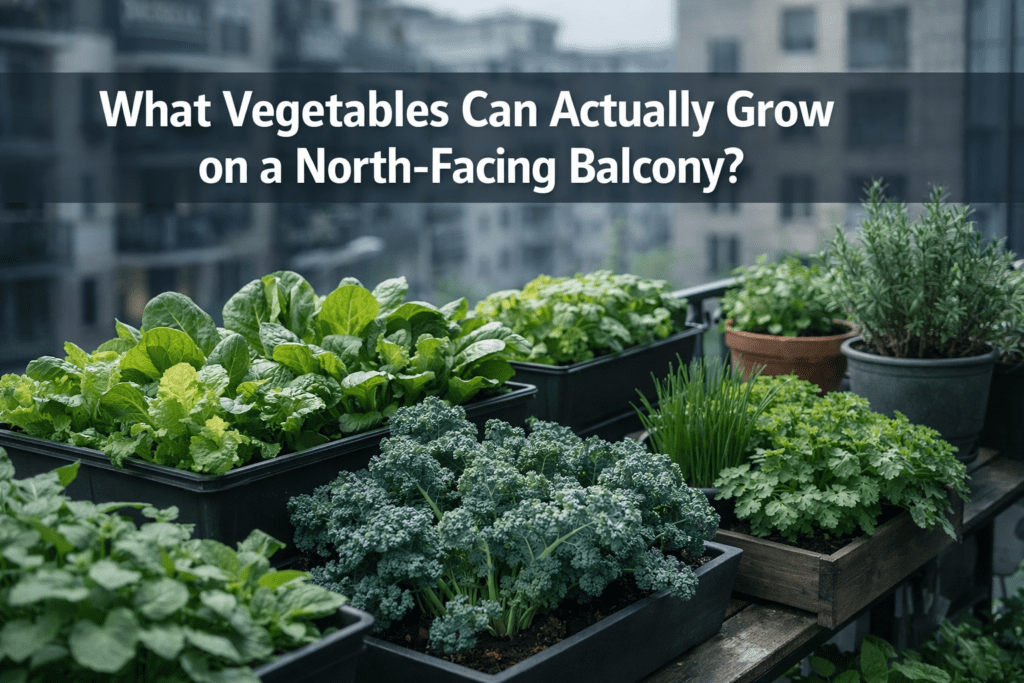
What vegetables can actually grow on a north-facing balcony?
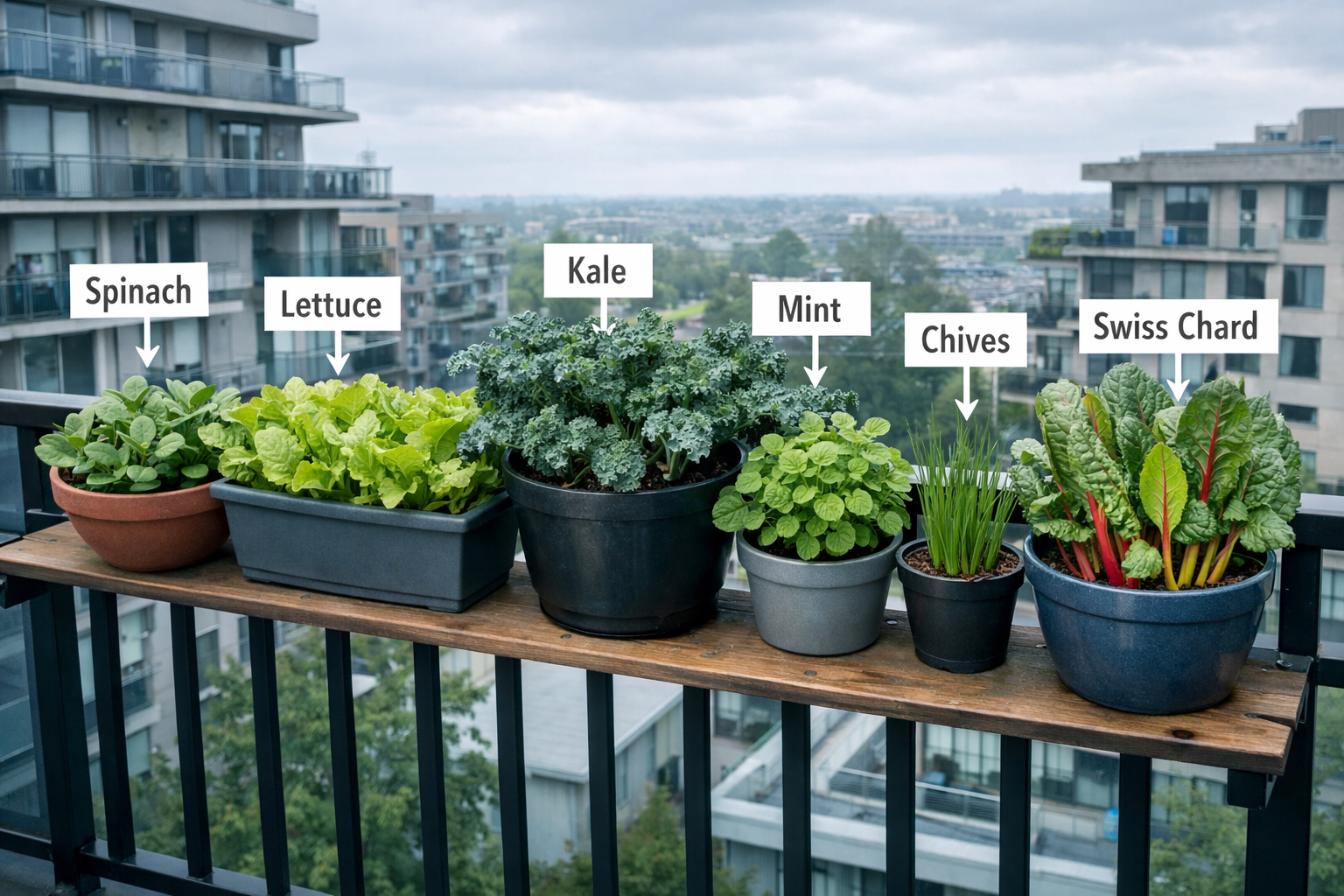
Quick Answer: North-facing balconies receive little to no direct sunlight, but a solid range of leafy greens, root vegetables, and herbs can still produce a real harvest there. The key is choosing crops that evolved in woodland or cool-climate conditions. Lettuce, spinach, kale, Swiss chard, arugula, mint, chives, and radishes are your most reliable options. Fruiting vegetables like tomatoes and peppers will not perform well without at least 6 hours of direct sun.
Key Takeaways 🌿
- North-facing balconies typically receive 0–3 hours of indirect light daily, which suits cool-season crops well.
- Leafy greens (lettuce, spinach, kale, arugula) are the top performers in low-light balcony conditions.
- Root vegetables like radishes and beets can work, though they grow more slowly than in full sun.
- Herbs such as mint, chives, parsley, and cilantro handle shade better than most edibles.
- Avoid fruiting crops: tomatoes, peppers, cucumbers, and squash need 6+ hours of direct sun to fruit reliably.
- Reflective surfaces (white walls, mirrors, aluminum panels) can meaningfully boost available light.
- Container choice matters: shallow-rooted greens do fine in 6–8 inch deep pots.
- Cooler, shadier conditions actually reduce bolting in lettuce and spinach, extending your harvest window.
- Supplemental grow lights can expand your options significantly if you’re willing to invest.
- Soil quality and consistent watering are even more critical in low-light growing than in sunny spots.
What Vegetables Can Actually Grow on a North-Facing Balcony? The Core List
The short answer: leafy greens, cool-season herbs, and some root vegetables. These are crops that naturally thrive in lower light because they don’t need to produce fruit or large seeds — they just need to grow leaves or roots, which requires far less solar energy.
Here’s a practical breakdown by category:
🥬 Leafy Greens (Best Performers)
🌿 Herbs That Handle Low Light
- Mint (grows aggressively even in shade — keep it contained)
- Chives (one of the most shade-tolerant edible plants)
- Parsley (slow to start, but manages 3–4 hours of indirect light)
- Cilantro (actually prefers cooler, shadier spots to avoid bolting)
- Lemon balm (thrives in shade and makes a great tea herb)
🥕 Root Vegetables Worth Trying
- Radishes — fastest option; harvest in 25–30 days even in low light
- Beets — slower in shade (expect 70–90 days vs. 50–60 in full sun), but they do produce
- Green onions/scallions — technically a bulb, but one of the easiest shade crops
“The cooler, shadier environment of a north-facing balcony is actually a feature, not a bug, for crops like lettuce and cilantro — it prevents the premature bolting that ruins harvests in sunny spots.”
Why Do Some Vegetables Fail on North-Facing Balconies?
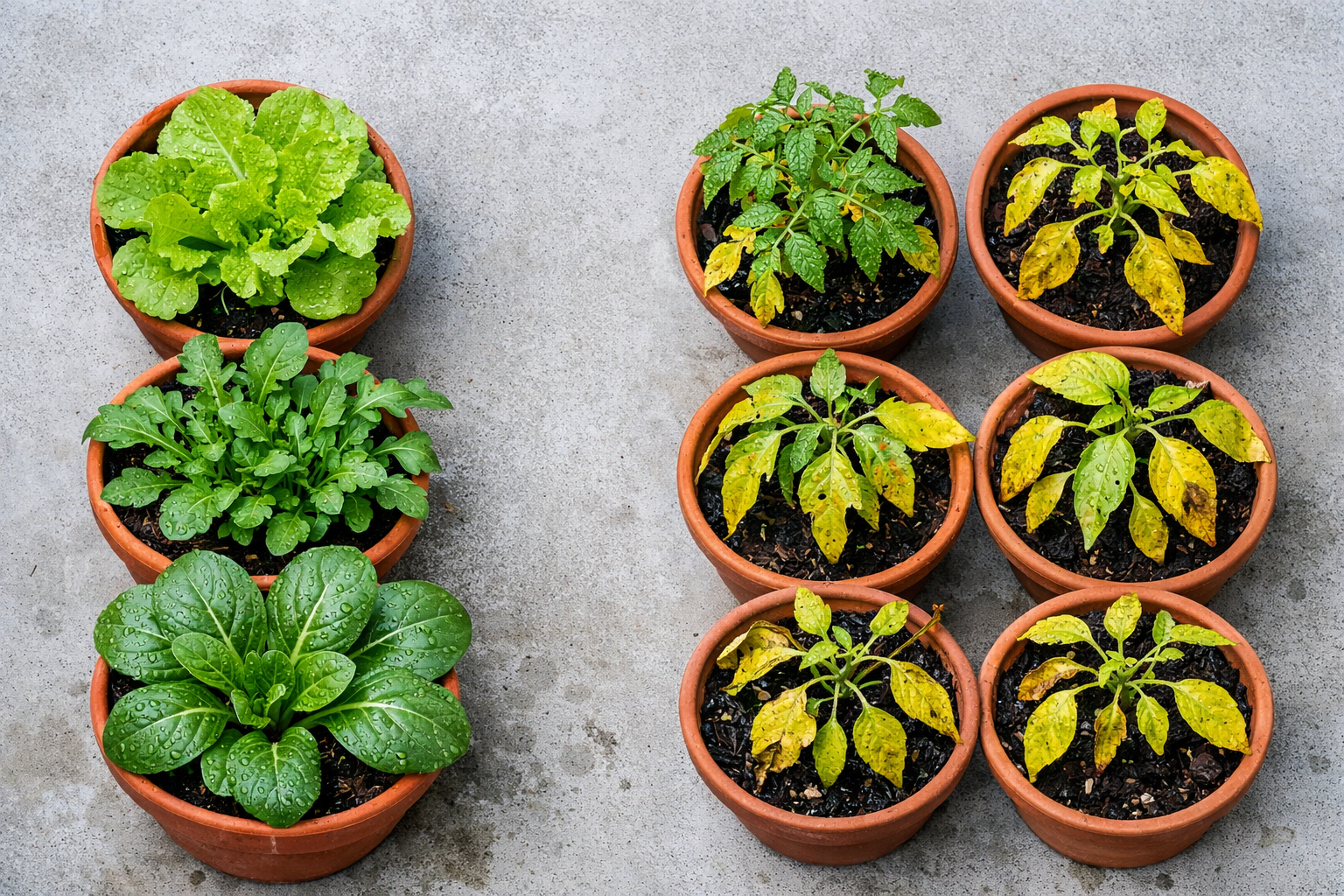
Fruiting vegetables fail on north-facing balconies because they need photosynthesis at a high rate to produce flowers, set fruit, and ripen. Without 6+ hours of direct sun, they simply don’t generate enough energy to complete that process.
Crops to avoid on a north-facing balcony:
- Tomatoes (need 6–8 hours direct sun)
- Peppers and chiles (same requirement)
- Cucumbers and zucchini (heavy feeders that need intense light)
- Eggplant (very sun-dependent)
- Corn (impractical even in full sun containers)
- Melons (need maximum sun and heat)
If you’ve tried tomatoes on a shaded balcony and got a few small, slow-ripening fruits, that tracks. The plants survive but rarely thrive. For fruiting crops, check out our guide to best vegetables to grow in pots in the USA and filter for full-sun options on a sunnier spot.
Common mistake: Buying a “patio tomato” variety and assuming it’ll work in shade. Dwarf size doesn’t mean lower light requirements — it just means a smaller plant that still needs full sun.
How Much Light Does a North-Facing Balcony Actually Get?
A north-facing balcony in the Northern Hemisphere receives no direct sunlight year-round. It gets reflected and diffused ambient light, which varies by season, surrounding buildings, and how open the sky view is.
Here’s a rough estimate of what to expect:
- Summer: 2–4 hours of bright indirect light (longer days mean more ambient brightness)
- Winter: 1–2 hours of weak indirect light (often too little for most edibles)
- Spring/Fall: 2–3 hours, which is the sweet spot for cool-season crops
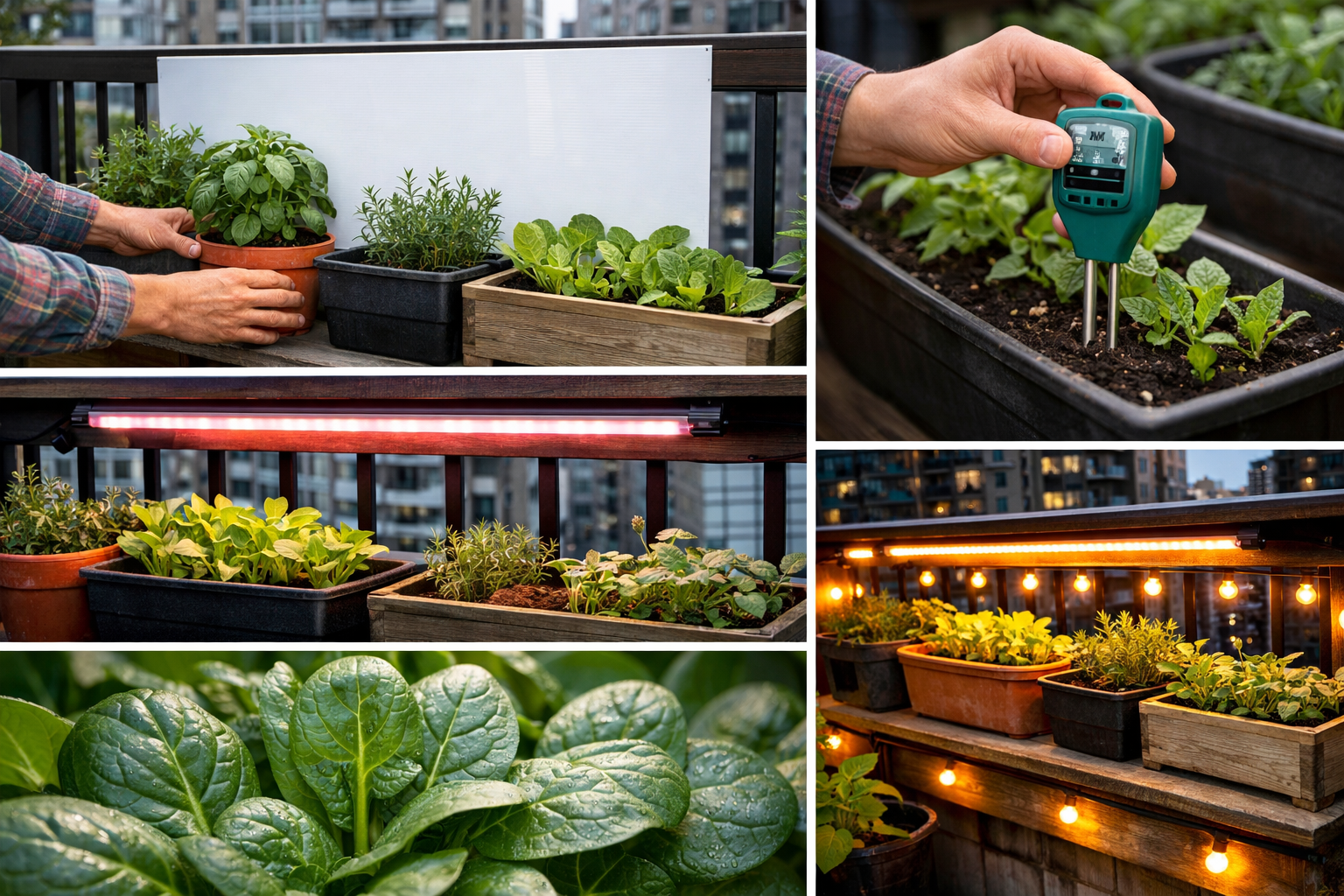
Edge case: If your north-facing balcony has a wide open sky view with no tall buildings blocking it, you may get more ambient light than average. Measure with a light meter app (several free ones exist for smartphones) to get a real reading before you plant.
For context on what partial shade actually means for vegetables, our article on vegetables that handle partial shade (4–6 hrs sun) is worth reading — it clarifies the difference between partial shade and deep shade.
What Vegetables Can Actually Grow on a North-Facing Balcony? Maximizing Your Yield
Even with limited light, you can meaningfully improve your harvest with a few practical strategies. The goal is to work with what you have, not fight it.
Step-by-Step: Setting Up a North-Facing Balcony Garden
Audit your light. Spend a full day observing where and when light hits your balcony. Note the brightest spots — usually near the railing or corners.
Add reflective surfaces. A sheet of white foam board, a white-painted wall, or even aluminum foil panels positioned behind your containers can bounce ambient light onto your plants. This is one of the most effective low-cost improvements you can make.
Choose the right containers. Leafy greens don’t need deep pots. A 6–8 inch depth works for lettuce, spinach, and herbs. For root vegetables like beets, go at least 10–12 inches deep. See our guide to growing big in small pots for container sizing details.
Use high-quality potting mix. In low light, plants grow slowly. Rich, well-draining soil ensures they’re not also fighting nutrient deficiency. Add a slow-release fertilizer at planting time.
Water consistently but don’t overwater. Shaded containers dry out more slowly than sunny ones. Overwatering is a more common problem on north-facing balconies than underwatering. Check soil moisture before watering. Our guide on how often to water container vegetables in summer covers this well.
Consider a grow light. A simple LED grow light strip (around $20–$50) mounted under a shelf or railing can supplement natural light and let you grow a wider range of crops. This is especially useful in winter.
Plant in succession. Because cool-season crops like lettuce and radishes mature quickly, you can do multiple rounds per season. Sow a new batch every 2–3 weeks for a continuous harvest.
Which Container Setup Works Best for a Shaded Balcony?
Shallow, wide containers work best for most north-facing balcony crops. Most of the top performers — lettuce, spinach, arugula, herbs — are shallow-rooted and do well in window boxes, troughs, or standard 6–8 inch pots.
Best container choices:
- Window boxes (great for lettuce mixes and herbs along railings)
- Fabric grow bags (good drainage, prevents overwatering)
- Stackable vertical planters (maximize space on a small balcony)
For a full breakdown of container options, see our best containers for growing vegetables in the USA guide.
Vertical gardening tip: A north-facing balcony is actually a good candidate for vertical growing structures because they let you position plants at different heights to catch varying levels of ambient light. Learn more in our balcony vertical gardening guide.
What Vegetables Can Actually Grow on a North-Facing Balcony in Winter?
In winter, a north-facing balcony in most U.S. climate zones becomes very challenging for outdoor growing. Ambient light drops significantly, and temperatures often make outdoor growing impractical north of Zone 8.
Options for winter growing:
- Cold-hardy greens outdoors (Zones 8–10): Kale, spinach, and mâche (corn salad) can handle light frost and continue growing in mild winters.
- Grow lights indoors or in a covered balcony: Move containers inside near a window and supplement with a grow light.
- Microgreens: These are one of the best options for low-light, cool-season indoor growing. They germinate and harvest in 7–14 days and need minimal light.
For gardeners in colder zones, check our guide on what to plant after spring vegetables to plan your seasonal transitions effectively.
FAQ: North-Facing Balcony Vegetable Gardening
Q: Can I grow tomatoes on a north-facing balcony? A: Not successfully. Tomatoes need 6–8 hours of direct sunlight to produce fruit. On a north-facing balcony, plants may survive but will produce little to no fruit.
Q: Is a north-facing balcony the worst orientation for growing vegetables? A: Yes, in the Northern Hemisphere, north-facing is the least favorable for most edibles. But it’s not hopeless — it’s simply best suited to shade-tolerant crops.
Q: Will lettuce bolt faster or slower in a shaded spot? A: Slower. Reduced light and cooler temperatures delay bolting, which actually extends your lettuce harvest compared to a sunny balcony in summer.
Q: How do I know if my balcony gets enough light for spinach? A: Spinach needs a minimum of about 3 hours of bright indirect light. Use a free light meter app on your phone to measure lux levels throughout the day. Readings above 2,000 lux for 3+ hours are generally workable for spinach.
Q: Can I use grow lights to supplement a north-facing balcony? A: Yes. A basic LED grow light (full-spectrum, 2,000–5,000 lux output) can compensate for low natural light and expand your crop options considerably, especially in winter.
Q: Are herbs easier to grow than vegetables in low light? A: Generally, yes. Mint, chives, parsley, and cilantro are among the most forgiving edible plants for shaded conditions.
Q: What’s the fastest crop I can grow on a north-facing balcony? A: Radishes. They can be ready to harvest in 25–30 days even in lower light. Microgreens are even faster at 7–14 days.
Q: Do I need special soil for a shaded balcony garden? A: No special soil, but use a quality potting mix with good drainage. In low light, plants grow slowly, so rich soil is important to avoid nutrient stress. Avoid heavy garden soil in containers.
Q: Can I grow vegetables year-round on a north-facing balcony? A: In Zones 9–10, yes — cool-season crops like kale and spinach can grow through mild winters. In colder zones, you’ll need grow lights or to move containers indoors.
Q: What’s the biggest mistake people make on a north-facing balcony garden? A: Choosing the wrong crops. Planting sun-loving vegetables like tomatoes or peppers and then wondering why they fail is by far the most common issue.
Conclusion: Making the Most of a North-Facing Balcony
A north-facing balcony is not a dead end for vegetable gardening — it’s a niche environment that rewards the right plant choices. Leafy greens like lettuce, spinach, kale, and arugula genuinely thrive in lower light. Herbs like mint, chives, and cilantro are almost foolproof. Radishes give you a fast win. The key is accepting what this space is good at and building your garden around that reality.
Your next steps:
- Test your light levels with a smartphone app before buying anything.
- Start with lettuce, spinach, or radishes — they’re forgiving and fast.
- Add a reflective panel behind your containers to boost ambient light.
- Use proper containers sized to your crops (6–8 inches for greens, 10–12 for roots).
- Consider a basic grow light if you want to grow through winter or expand your options.
For more inspiration on making small spaces productive, explore our small balcony vegetable garden ideas and our beginner’s guide to vegetable gardening. A shaded balcony can still feed you — it just takes the right game plan.
References
- University of Minnesota Extension. (2021). Vegetable gardening in containers. University of Minnesota. https://extension.umn.edu
- Relf, D., & Ball, A. (2009). Vegetable gardening in containers. Virginia Cooperative Extension, Publication 426-336.
- Pottorff, L. P. (2012). Vegetables for shade gardens. Colorado State University Extension.
- Royal Horticultural Society. (2023). Growing vegetables in shade. RHS. https://www.rhs.org.uk