Self-Watering Pots: Do They Actually Work for Small Gardens?
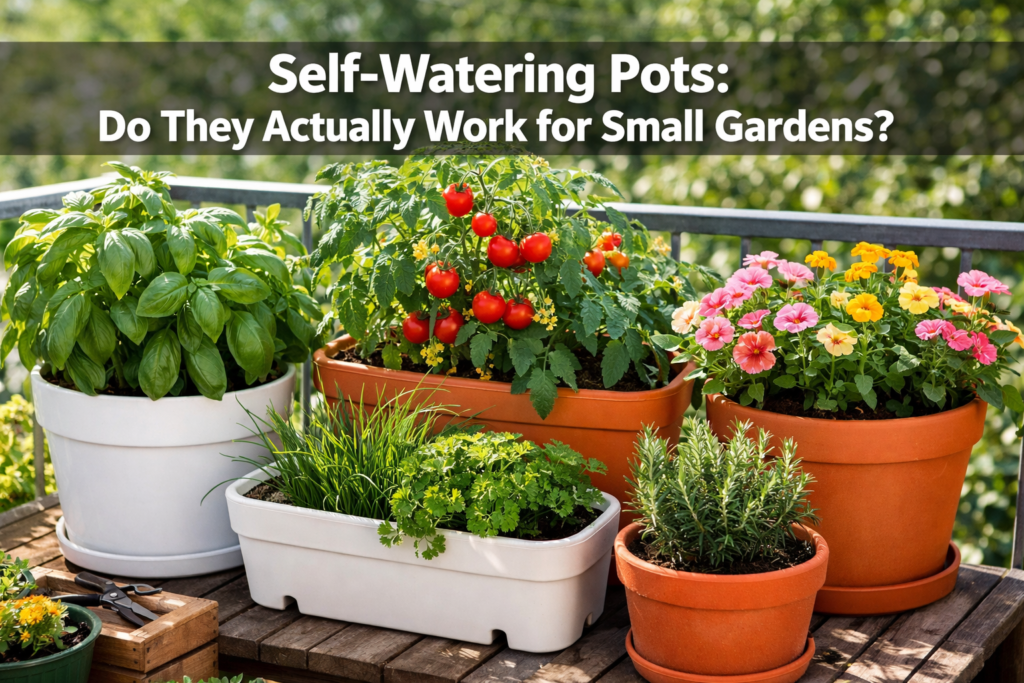
Quick Answer: Yes, self-watering pots genuinely work for small gardens, and they work especially well in confined spaces like balconies, patios, and windowsills. They use a sub-irrigation reservoir system that delivers moisture directly to plant roots on demand, reducing watering frequency and cutting water waste. For small-space gardeners who travel, work long hours, or simply struggle with inconsistent watering habits, these containers are a practical and proven solution.
Key Takeaways 🌿
- Self-watering pots use a bottom reservoir and wicking system to deliver water directly to roots, not the surface.
- They work best for herbs, leafy greens, tomatoes, peppers, and most flowering annuals.
- They are not ideal for succulents, cacti, or plants that need dry-out periods between waterings.
- A single reservoir fill can sustain plants for 1–2 weeks depending on pot size, plant type, and climate.
- They reduce overwatering mistakes, which is one of the most common watering errors in container gardening.
- Cost ranges from roughly $10–$15 for basic plastic models to $60–$120+ for large, decorative versions.
- They perform best when paired with a quality potting mix, not garden soil.
- For apartment and balcony gardeners, self-watering pots can be a genuine space and time saver.
How Do Self-Watering Pots Actually Work?
Self-watering pots use sub-irrigation: water sits in a reservoir at the base of the container, and the soil draws moisture upward through capillary action as the plant needs it. This is fundamentally different from top-watering, where you pour water onto the soil surface and hope it reaches the roots evenly.
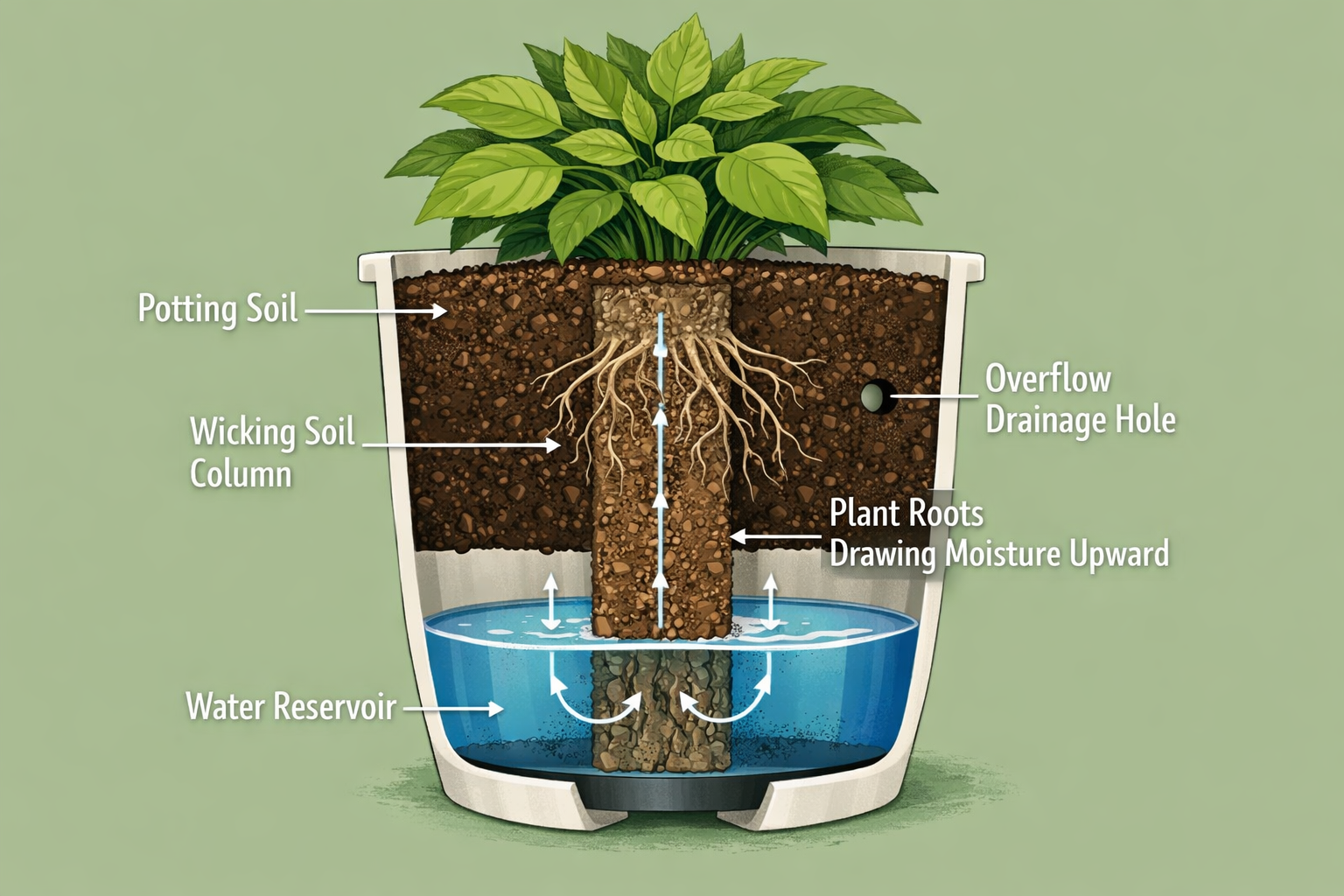
The basic anatomy of a self-watering pot includes:
- Water reservoir: A sealed chamber at the bottom that holds water for days or weeks.
- Wicking basket or column: A soil-filled insert that connects the growing medium to the reservoir.
- Overflow hole: Prevents the reservoir from overfilling and causing root rot.
- Fill tube or opening: Lets you top up the reservoir without disturbing the plant.
- Water level indicator: A float or window that shows how much water remains (on better models).
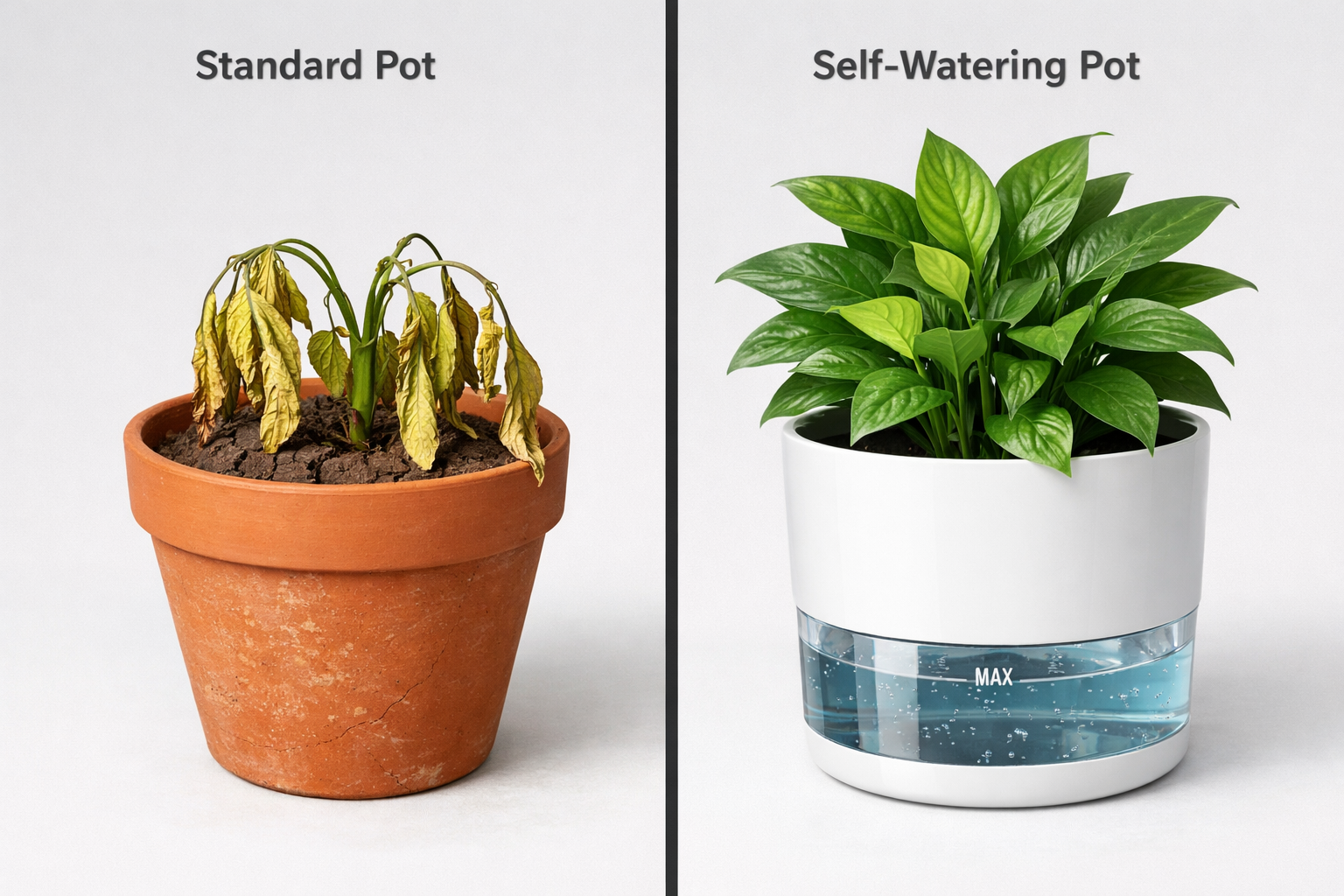
Because the roots draw water upward only as needed, the soil stays consistently moist but not waterlogged. This closely mimics how plants access moisture in the ground, which is why many gardeners see noticeably better growth compared to standard pots.
Self-Watering Pots: Do They Actually Work for Small Gardens Specifically?
For small gardens, the answer is a clear yes, with a few caveats. Small-space gardeners face a specific challenge: containers dry out faster than in-ground beds, especially on sunny balconies or south-facing windowsills. Standard pots on a hot balcony may need watering every day in summer. That’s a real burden. Self-watering containers cut that down significantly.
For more on managing water in tight spaces, see this guide on watering container plants in hot weather.
Where self-watering pots shine in small gardens:
- Balconies and patios: Less frequent watering means fewer trips with a watering can.
- Apartment windowsills: Controlled moisture reduces spills and mess indoors.
- Vacation or travel periods: A full reservoir can keep plants alive for a week or more without help.
- Beginners: Removes the guesswork from how often to water container plants.
Where they fall short:
- Very small pots (under 6 inches) often lack a meaningful reservoir, making the sub-irrigation benefit minimal.
- In cool, low-light indoor conditions, the reservoir can stay full for too long, increasing the risk of root rot for sensitive plants.
Which Plants Grow Best in Self-Watering Containers?
Most edible plants and many flowering annuals thrive in self-watering pots. Moisture-loving plants that prefer consistently damp (not wet) soil are the best candidates.
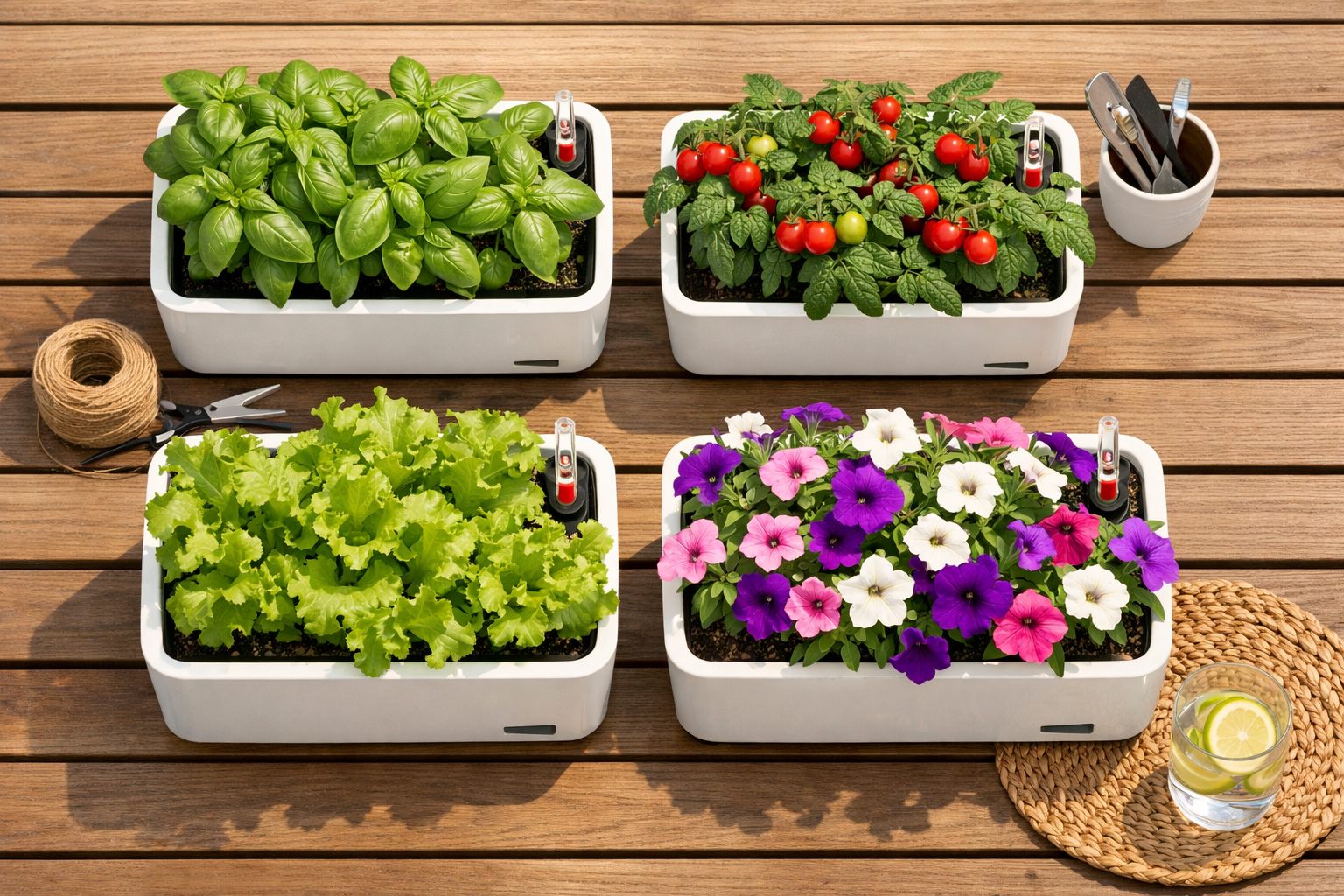
Best plants for self-watering pots:
| Plant Type | Examples | Works Well? |
|---|---|---|
| Leafy greens | Lettuce, spinach, kale | ✅ Excellent |
| Herbs | Basil, parsley, mint, chives | ✅ Excellent |
| Fruiting vegetables | Tomatoes, peppers, cucumbers | ✅ Very good |
| Flowers | Petunias, impatiens, marigolds | ✅ Very good |
| Root vegetables | Carrots, radishes | ⚠️ Mixed results |
| Succulents & cacti | All varieties | ❌ Not suitable |
| Lavender, rosemary | Mediterranean herbs | ❌ Prefer dry soil |
If you’re growing herbs, check out our guide on best herbs for small gardens to see which varieties pair particularly well with container growing.
For vegetables, our best vegetables to grow in pots guide covers which crops produce the best yields in container setups.
Are Self-Watering Pots Worth the Cost?
Self-watering pots cost more upfront than standard containers, but they often pay for themselves in reduced plant losses and saved time.
Typical price ranges in 2026:
- Small (6–10 inch): $10–$25
- Medium (12–16 inch): $25–$60
- Large (18 inch+): $60–$120+
- DIY versions: Under $10 using two nested buckets and basic materials
The real value calculation depends on what you’re growing. If you’re regularly losing herbs or vegetables to inconsistent watering, even a $20 self-watering planter quickly justifies itself. For decorative indoor plants, the higher-end models with ceramic or wood-look finishes can be genuinely attractive additions to a small space.
Choose a self-watering pot if:
- You travel or have an unpredictable schedule.
- You grow moisture-loving edibles like tomatoes or lettuce.
- You’re on a balcony where pots dry out fast.
Stick with standard pots if:
- You grow succulents, cacti, or drought-tolerant plants.
- You enjoy the ritual of daily watering and want full control.
- Budget is very tight and you can water consistently.
For more container options suited to small spaces, see our guide to the best pots for indoor plants.
Common Mistakes People Make With Self-Watering Pots
Even with a well-designed system, a few common errors can undermine the benefits.
Mistake 1: Using garden soil instead of potting mix
Garden soil compacts in containers and doesn’t wick moisture effectively. Always use a quality, well-aerated potting mix.
Mistake 2: Filling the reservoir before the plant is established
For the first 1–2 weeks after planting, water from the top to help roots grow downward toward the reservoir. Once roots reach the wicking zone, switch to filling the reservoir only.
Mistake 3: Never flushing the soil
Over time, mineral salts from fertilizers accumulate in the soil. Every 4–6 weeks, water heavily from the top to flush these out through the overflow hole.
Mistake 4: Ignoring the overflow hole
If the overflow hole gets blocked, the reservoir can overfill and drown roots. Check it periodically.
Mistake 5: Using them for the wrong plants
Succulents and Mediterranean herbs like rosemary and lavender need to dry out between waterings. A constantly moist reservoir will rot their roots.
For a broader look at watering pitfalls, our guide on how often to water container vegetables in summer covers seasonal adjustments worth knowing.
Self-Watering Pots: Do They Actually Work for Small Gardens Year-Round?
Performance varies by season, and understanding that variation helps you get the most out of these containers.
Summer: Self-watering pots perform at their best. High heat and sun mean plants drink more, so the reservoir empties at a useful pace, keeping soil consistently moist without sitting stagnant.
Winter (indoors): Slower plant growth means slower water uptake. The reservoir can stay full for weeks, which raises the risk of root rot for some plants. In winter, check the reservoir before refilling rather than topping it up on a fixed schedule.
Autumn/Spring: Generally ideal conditions. Moderate temperatures and active growth mean the reservoir cycles at a natural, healthy rate.
💡 Pro tip: In cooler months, let the reservoir empty completely before refilling. This gives roots a brief dry period and prevents anaerobic conditions at the bottom of the pot.
If you’re planning a small garden across seasons, our guide on small space garden hacks covers year-round strategies for maximizing limited growing areas.
FAQ: Self-Watering Pots for Small Gardens
Q: How long does a self-watering pot reservoir last before refilling?
A: Typically 1–2 weeks in warm weather, and up to 3–4 weeks in cool or low-light conditions. It depends on pot size, plant type, and temperature.
Q: Can I use self-watering pots indoors?
A: Yes. They work well indoors for herbs, leafy greens, and houseplants that prefer consistent moisture. Avoid them for succulents and cacti indoors.
Q: Do self-watering pots prevent overwatering?
A: They significantly reduce overwatering risk because the plant pulls water from the reservoir only as needed. However, keeping the reservoir full in winter for slow-growing plants can still cause problems.
Q: What soil should I use in a self-watering pot?
A: Use a lightweight, well-aerated potting mix. Avoid garden soil or heavy mixes that compact and block wicking. Some gardeners add perlite to improve drainage and airflow.
Q: Can I grow tomatoes in a self-watering pot?
A: Yes, and tomatoes are one of the best crops for this system. They need consistent moisture to prevent blossom end rot, which sub-irrigation handles well. Use a pot at least 14–16 inches in diameter.
Q: Are self-watering pots good for apartment balconies?
A: They’re one of the best container choices for balconies. They reduce daily watering chores, minimize water dripping onto neighbors below, and keep plants healthier during hot weather.
Q: Do I still need to fertilize plants in self-watering pots?
A: Yes. The reservoir delivers water, not nutrients. Feed your plants with a balanced liquid fertilizer every 2–4 weeks during the growing season.
Q: Can I make a DIY self-watering pot?
A: Absolutely. Two nested buckets or plastic containers, a wicking medium, and a fill tube are all you need. It’s a popular project for budget-conscious small-space gardeners.
Q: Why are my plants wilting even though the reservoir is full?
A: The roots may not have grown down to the wicking zone yet, or the wicking column may be blocked. Check that the soil in the wicking basket is in firm contact with the reservoir water.
Q: Are self-watering pots environmentally friendly?
A: They use significantly less water than top-watering methods because evaporation from the surface is reduced. For water-conscious gardeners, that’s a meaningful benefit.
Conclusion: Should You Use Self-Watering Pots in Your Small Garden?
Self-watering pots genuinely deliver on their core promise for most small-space gardeners. They reduce watering frequency, cut plant losses from inconsistent care, and perform especially well for edibles like tomatoes, lettuce, and herbs. They’re not magic, and they won’t fix every gardening challenge, but for balcony growers, apartment gardeners, and anyone with a busy schedule, they’re one of the most practical upgrades you can make.
Actionable next steps:
- Start with one medium-sized self-watering pot (12–14 inch) and grow basil or lettuce to test the system before committing to a full setup.
- Use quality potting mix, not garden soil, and add perlite if your mix feels heavy.
- Water from the top for the first two weeks, then switch to filling the reservoir only.
- Check the reservoir weekly rather than on a fixed schedule, especially in cooler months.
- Flush the soil monthly to prevent salt buildup from fertilizers.
For more ideas on building a productive small garden, explore our guides on DIY container gardening ideas for small spaces and growing vegetables faster in pots.
References
- Kratky, B.A. (2010). A Suspended Net-Pot, Non-Circulating Hydroponic Method for Commercial Production of Leafy, Romaine, and Semi-Head Lettuce. University of Hawaii at Manoa.
- Raviv, M., & Lieth, J.H. (Eds.). (2008). Soilless Culture: Theory and Practice. Elsevier.
- University of Maryland Extension. (2021). Container Vegetable Gardening. University of Maryland.
- Peet, M.M. (1992). Fruit cracking in tomato. HortTechnology, 2(2), 216–223.