Indoor Plants for Bathrooms with No Windows
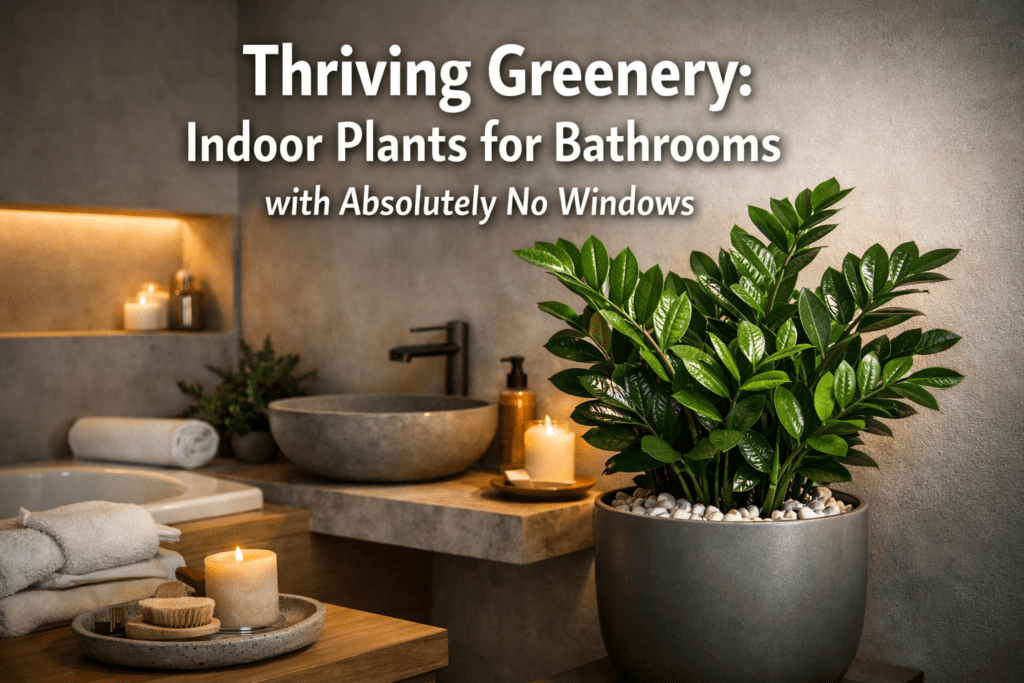
Quick Answer: Cultivating plants in bathrooms devoid of natural light is entirely possible by selecting specific resilient species and implementing strategic artificial lighting, creating a lush, spa-like environment where greenery can thrive despite the absence of windows. The key is understanding plant needs and providing consistent, controlled conditions.
Key Takeaways:
- Choose truly low-light tolerant plants like ZZ Plant, Snake Plant, and Pothos, which can survive with minimal or no natural light.
- Artificial grow lights are essential for almost all plants in windowless bathrooms, simulating natural light cycles.
- Humidity from showers can benefit many tropical plant species, but ensure adequate ventilation to prevent fungal issues.
- Select pots with drainage holes to prevent root rot, and use well-draining potting mix.
- Monitor watering carefully; plants in low light generally require less water than those in brighter conditions.
- Consider plant rotation, periodically moving plants to a brighter spot outside the bathroom for a few days if they show signs of struggle.
- Prioritize plant health over aesthetics when choosing species for these challenging conditions.
- Regular dusting and occasional leaf cleaning will help maximize light absorption from artificial sources.
Can Plants Really Thrive in a Bathroom with Absolutely No Windows?
Yes, plants can absolutely thrive in a bathroom with no windows, provided you choose the right species and supplement their environment with artificial light. While natural sunlight is ideal for most plants, several species are remarkably resilient and can adapt to very low light conditions, especially when supported by dedicated grow lights. The high humidity often present in bathrooms, however, can be a significant benefit for many tropical indoor plants, mimicking their natural habitats.
The success of indoor plants for bathrooms with absolutely no windows hinges on a few critical factors: plant selection, supplemental lighting, and diligent care. Species that naturally grow on forest floors, beneath canopies, or are known for extreme tolerance to dim conditions are excellent candidates. For specific guidance, you can explore our comprehensive guide on low light indoor plants. Without any natural light, artificial light becomes non-negotiable for the long-term health of nearly all plant species, even those labeled “low light.”

What Are the Best Indoor Plants for Bathrooms with Absolutely No Windows?
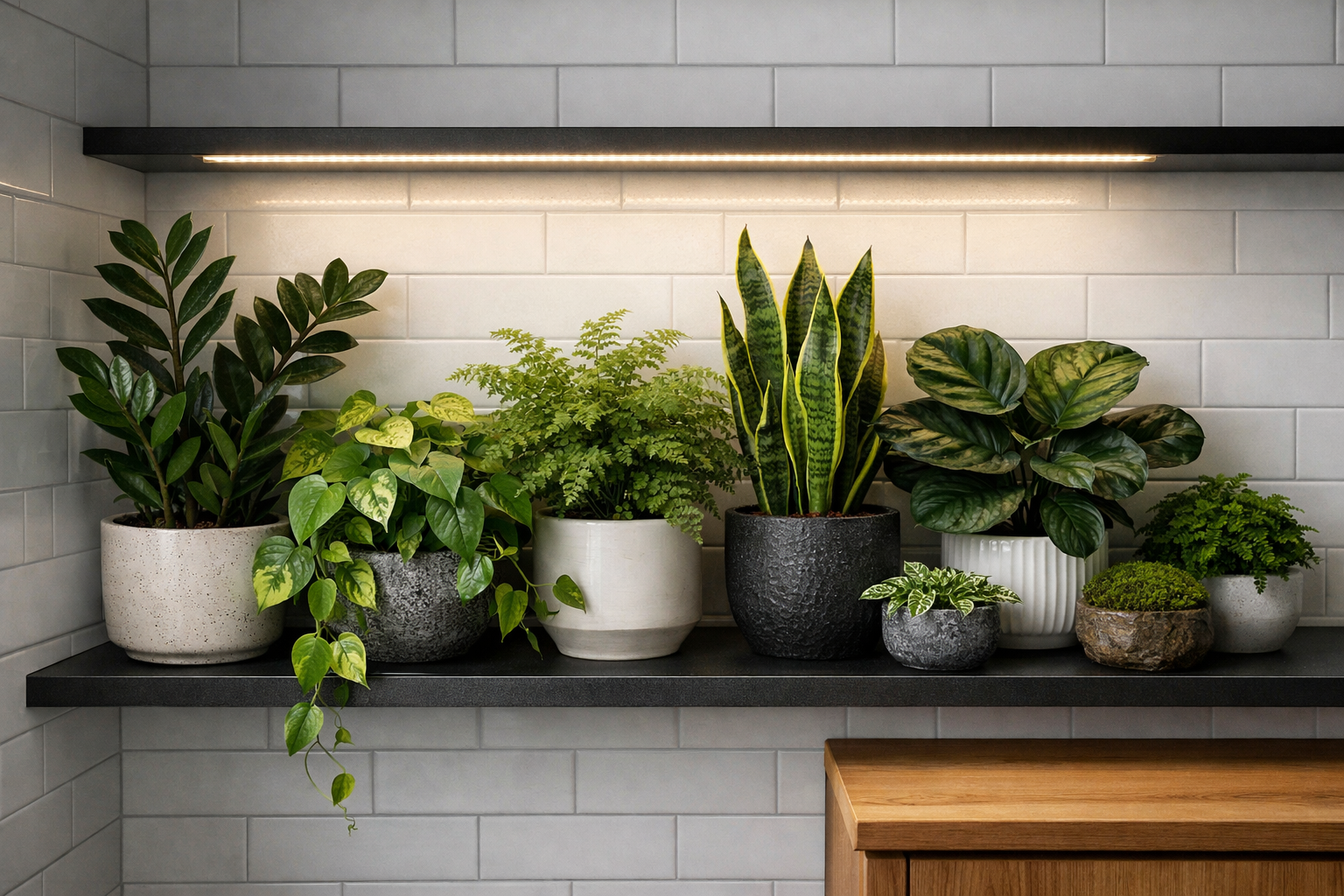
The best indoor plants for bathrooms with absolutely no windows are those with exceptional low-light tolerance combined with a preference for high humidity. These include classics like the ZZ Plant, Snake Plant, Pothos, and some varieties of ferns and peace lilies, which are well-suited to surviving entirely on artificial light.
Here’s a detailed list of top contenders:
- ZZ Plant (Zamioculcas zamiifolia): Known for its extreme resilience, the ZZ Plant tolerates very low light and infrequent watering. Its thick, waxy leaves store water, making it forgiving if you forget to water. It doesn’t require high humidity, but tolerates it well.
- Snake Plant (Sansevieria trifasciata): Similar to the ZZ Plant, the Snake Plant is incredibly hardy, drought-tolerant, and thrives on neglect. It can handle very low light and is not particular about humidity. It’s also an excellent air purifier. Learn more about air purifying indoor plants.
- Pothos (Epipremnum aureum): Various Pothos cultivars (e.g., Golden Pothos, Marble Queen) are highly adaptable to low light and enjoy moderate to high humidity. Their trailing vines can add a lush, cascading effect to shelves.
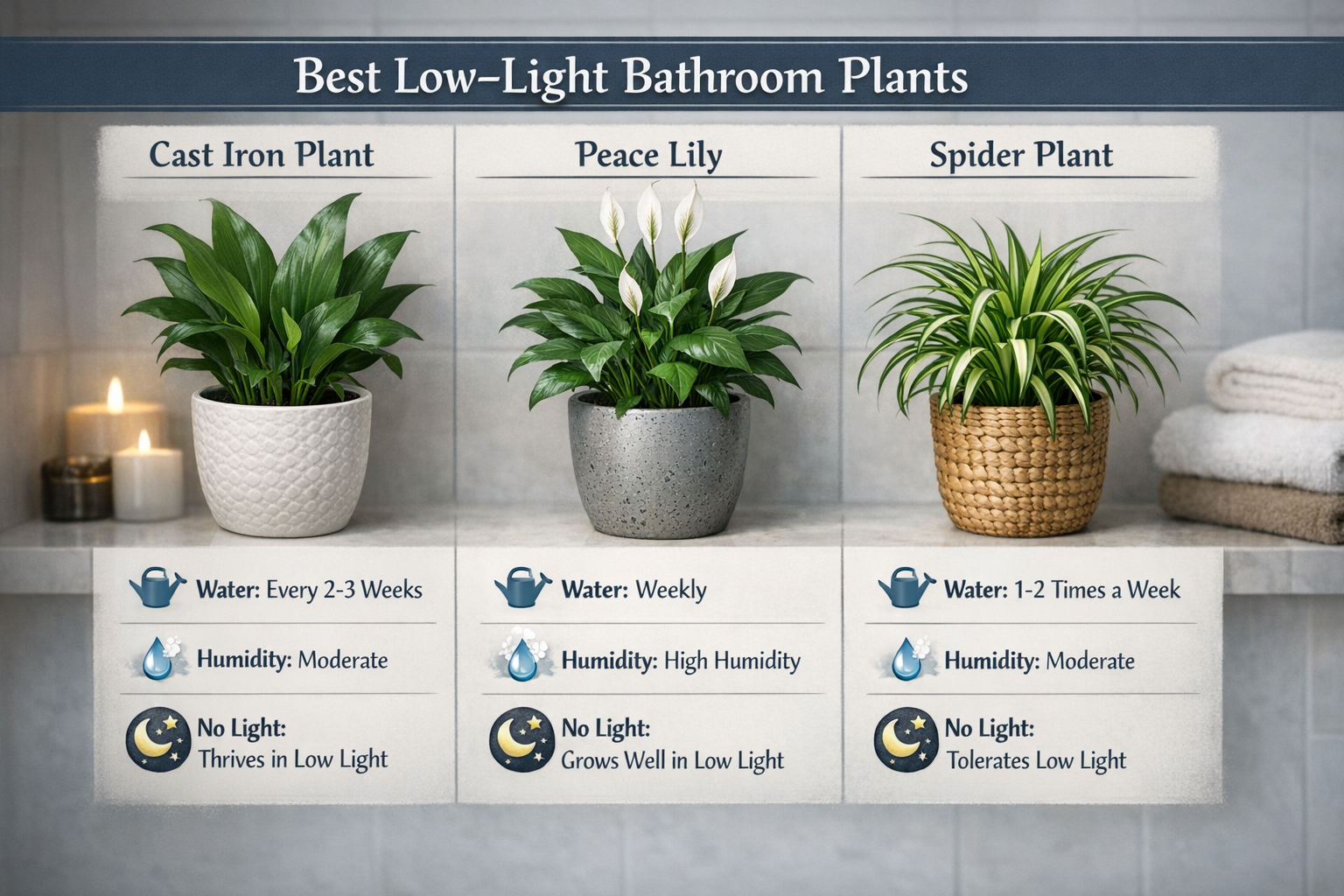
- Cast Iron Plant (Aspidistra elatior): As its name suggests, this plant is nearly indestructible. It tolerates deep shade, infrequent watering, and a wide range of temperatures and humidity levels, making it ideal for the most challenging bathroom conditions.
- Peace Lily (Spathiphyllum): While Peace Lilies appreciate some indirect light for flowering, they can survive and remain green in very low light. They love humidity and will often “tell” you they need water by drooping dramatically, making them easy to care for.
- Ferns (e.g., Boston Fern, Kimberly Queen Fern): Many ferns thrive in high humidity and indirect light, making them suitable if adequate artificial light is provided. They require consistent moisture in their soil.
- Prayer Plant (Maranta leuconeura): Known for its striking foliage and unique habit of folding its leaves at night, the Prayer Plant prefers indirect light and high humidity. It’s a great choice if you can provide consistent moisture and supplementary lighting.
Remember, even these “low-light” plants will benefit significantly from artificial light in a truly windowless environment. You can find more beginner-friendly options in our beginner-friendly plants guide.
How Do You Provide Light for Indoor Plants in a Windowless Bathroom?
To provide adequate light for indoor plants in a windowless bathroom, you must use artificial grow lights, as no plant can survive indefinitely without some form of light. The type, duration, and placement of these lights are crucial for mimicking natural light cycles and ensuring photosynthesis.
Types of Artificial Grow Lights:
- LED Grow Lights: These are the most energy-efficient and popular choice for indoor plant cultivation. They emit very little heat, come in various spectrums (full-spectrum is best for general plant growth), and have long lifespans. Many are compact and discreet, suitable for bathroom aesthetics.
- Fluorescent Lights (e.g., T5, T8): While less efficient than LEDs, fluorescent lights can also be effective. Full-spectrum fluorescent bulbs are recommended. They are good for smaller plants or as supplemental lighting.
Key Considerations for Lighting:
- Full-Spectrum Lighting: Choose bulbs that emit a full spectrum of light, as this mimics natural sunlight and supports all phases of plant growth. “White” light LEDs are often full-spectrum.
- Duration: Most indoor plants require 10-14 hours of artificial light per day. Using a timer can automate this, ensuring consistency and preventing over-exposure or under-exposure.
- Placement: Position the grow light directly above the plants, typically 6-12 inches away, depending on the plant’s light needs and the light’s intensity. Too close can scorch leaves; too far reduces effectiveness.
- Intensity (PPFD): For serious growers, understanding Photosynthetic Photon Flux Density (PPFD) can help you select lights that deliver the right amount of light intensity. For casual plant enthusiasts, choosing reputable full-spectrum grow lights designed for indoor plants is usually sufficient.
- Aesthetics: Many modern grow lights are designed to be aesthetically pleasing or discreet, blending into bathroom decor. Strip lights or small spotlight fixtures can be effective.
For more in-depth knowledge on growing plants without sunlight, refer to our guide on plants that grow without sunlight.
Watering and Humidity Management for Windowless Bathroom Plants
Managing watering and humidity is critical for indoor plants for bathrooms with absolutely no windows, as these conditions differ significantly from naturally lit environments. Plants in low light generally require less water, while the high humidity from showers can be a double-edged sword.
Watering Best Practices:
- Less is More: With reduced light, plants perform less photosynthesis, meaning they use less water. Overwatering is the most common killer of indoor plants, especially in low-light conditions.
- Check Soil Moisture: Always check the top 1-2 inches of soil before watering. Only water when the soil feels dry to the touch. A moisture meter can provide precise readings.
- Drainage is Crucial: Ensure all pots have drainage holes to prevent waterlogging and root rot. Pair them with saucers to catch excess water. Learn more about best pots for indoor plants 2026.
- Water Thoroughly: When you do water, water deeply until it drains from the bottom of the pot. Discard any standing water in the saucer.
Humidity Management:
- Natural Benefit: The high humidity from daily showers is often beneficial for tropical plants like ferns, peace lilies, and pothos, helping to prevent dry leaf edges.
- Ventilation: While humidity is good, stagnant, overly humid air can lead to fungal diseases. Ensure your bathroom has adequate ventilation (e.g., an exhaust fan) to circulate air, especially after showers. Run the fan for 30-60 minutes after a hot shower.
- Monitor for Issues: Watch for signs of fungal growth (e.g., mold on soil surface, powdery mildew on leaves) or pests, which can thrive in consistently damp environments.
- Pebble Trays/Humidifiers: If your bathroom isn’t consistently humid or your plants need more, you can place a pebble tray filled with water beneath the pot (ensuring the pot isn’t sitting directly in water) or use a small humidifier.
Proper watering is fundamental to plant health. For more detailed guidance, see our indoor watering guide.
Essential Care Tips for Indoor Plants in No-Window Bathrooms
Maintaining healthy indoor plants for bathrooms with absolutely no windows requires a few dedicated care practices to compensate for the challenging environment. Beyond light and water, considerations like potting mix, feeding, and cleanliness play a vital role.
Key Care Tips:
- Use Quality Potting Mix: A well-draining, aerated potting mix is essential to prevent root rot, especially in high-humidity, low-light settings where soil may take longer to dry. For specific recommendations, consult our guide on the best soil for indoor plants.
- Fertilize Sparingly: Plants in low light grow slower and thus require less fertilizer. Feed only during their active growing season (spring and summer) and at half the recommended strength to prevent nutrient burn. Over-fertilizing can be detrimental.
- Clean Leaves Regularly: Dust and mineral deposits can accumulate on plant leaves, hindering their ability to absorb light from your grow lamps. Gently wipe leaves with a damp cloth every few weeks. This also helps deter pests.
- Inspect for Pests: High humidity and stagnant air can sometimes create conditions favorable for pests like fungus gnats or spider mites. Regularly inspect your plants for any signs of infestation and address them promptly.
- Rotate Plants (If Possible): Even with grow lights, periodically rotating your plants to a brighter location (e.g., near a window in another room) for a few days can give them a boost. This is particularly useful if you notice signs of etiolation (stretching, pale growth).
- Pruning: Trim any yellowing or dead leaves to encourage new growth and maintain plant vigor. This also removes potential sites for fungal issues.
By following these tailored care tips, your windowless bathroom plants can not only survive but truly flourish, adding a touch of natural beauty to an otherwise enclosed space.
Troubleshooting Common Issues with No-Window Bathroom Plants
Even with careful planning, indoor plants for bathrooms with absolutely no windows can encounter issues. Recognizing and addressing these problems quickly is crucial for their survival and long-term health.
Common Problems and Solutions:
- Leggy or Pale Growth (Etiolation):
- Problem: Stretched stems with widely spaced, pale leaves indicate insufficient light.
- Solution: Increase the duration or intensity of your artificial grow light. Ensure the light is close enough to the plants.
- Yellowing Leaves:
- Problem: Often a sign of overwatering or nutrient deficiency. Older leaves yellowing can be normal; widespread yellowing is concerning.
- Solution: Check soil moisture. If wet, reduce watering frequency. Ensure proper drainage. If chronic, consider a very diluted dose of fertilizer during the growing season.
- Brown or Crispy Leaf Tips:
- Problem: Typically points to low humidity or inconsistent watering.
- Solution: While bathrooms are generally humid, ensure your plant isn’t drying out too quickly between waterings. For humidity, a pebble tray or small humidifier can help if the bathroom isn’t naturally humid enough.
- Mold on Soil Surface:
- Problem: Caused by consistently wet soil and poor air circulation.
- Solution: Reduce watering frequency. Ensure adequate air circulation (run exhaust fan). Carefully scrape off the mold layer and consider repotting with fresh, well-draining soil.
- Fungus Gnats:
- Problem: Small, mosquito-like flies that breed in moist topsoil. Annoying but generally harmless to plants.
- Solution: Let the top inch or two of soil dry out completely between waterings. Use sticky traps to catch adults. Beneficial nematodes or Bti (Bacillus thuringiensis israelensis) can be used for severe infestations.
- No New Growth:
- Problem: Plants in low light naturally grow slower, but a complete halt in growth can indicate issues.
- Solution: Review light, water, and nutrient schedules. Consider a temporary move to a brighter location to stimulate growth. Ensure the plant isn’t root-bound.
By staying vigilant and adjusting care based on your plant’s specific signals, you can overcome most challenges and ensure your windowless bathroom plants continue to thrive. For broader insights into common errors, our article on indoor gardening mistakes offers further guidance.
Conclusion
Transforming a windowless bathroom into a verdant sanctuary with thriving indoor plants is not just a dream but an achievable reality in 2026. By carefully selecting plants known for their resilience in low-light conditions—such as the indomitable ZZ Plant, the adaptable Snake Plant, and the versatile Pothos—and by committing to strategic artificial lighting, you can create a vibrant, spa-like atmosphere. The key lies in understanding that even the hardiest plants will require supplemental light in the complete absence of natural sun, along with meticulous attention to watering to prevent root rot in humid environments.
Embrace full-spectrum LED grow lights, ensure excellent drainage, and monitor your plants for any signs of stress, adjusting their care as needed. With these proactive measures, your indoor plants for bathrooms with absolutely no windows will not only survive but flourish, bringing life, color, and improved air quality to an otherwise neglected space.
FAQ
Q1: Can any plant survive in a bathroom with zero natural light?
A1: No, not any plant. Only specific species known for extreme low-light tolerance, like ZZ Plants and Snake Plants, can survive, and even they will greatly benefit from supplemental artificial grow lights.
Q2: How many hours of artificial light do bathroom plants need?
A2: Most indoor plants in a windowless bathroom will require 10-14 hours of full-spectrum artificial light per day to support photosynthesis and healthy growth.
Q3: Do I need a special grow light, or can I use a regular light bulb?
A3: You need a dedicated full-spectrum grow light. Regular household bulbs do not emit the correct light spectrum or intensity for plants to photosynthesize effectively.
Q4: Is the humidity from showers enough for tropical plants?
A4: Yes, the humidity from showers is often beneficial for tropical plants, but ensure good ventilation to prevent stagnant air, which can lead to fungal issues.
Q5: How often should I water plants in a windowless bathroom?
A5: Water less frequently than you would plants in brighter conditions. Always check the soil moisture (top 1-2 inches dry) before watering to prevent overwatering, which is common in low-light environments.
Q6: Can I use self-watering pots in a windowless bathroom?
A6: While convenient, self-watering pots might lead to overwatering in low-light, high-humidity conditions. It’s often safer to manually check soil moisture to avoid root rot.
Q7: What are the signs my plant isn’t getting enough light in the bathroom?
A7: Signs include leggy growth (stretched stems), small or pale leaves, lack of new growth, or the plant leaning significantly towards any light source (even if artificial).
Q8: Should I fertilize plants in a dark bathroom?
A8: Fertilize sparingly, and only during the active growing season (spring/summer). Use a diluted solution (half strength) as plants in low light grow slower and require fewer nutrients.
References
- Cornell University, Department of Horticulture. (2020). Houseplant Care: Lighting.
- University of Florida IFAS Extension. (2018). Foliage Plant Care.
- The Old Farmer’s Almanac. (2023). Growing Houseplants in Low-Light Conditions.