I Grew $200 Worth of Lettuce on My Balcony With a $12 Setup — Hydroponics Finally Makes Sense
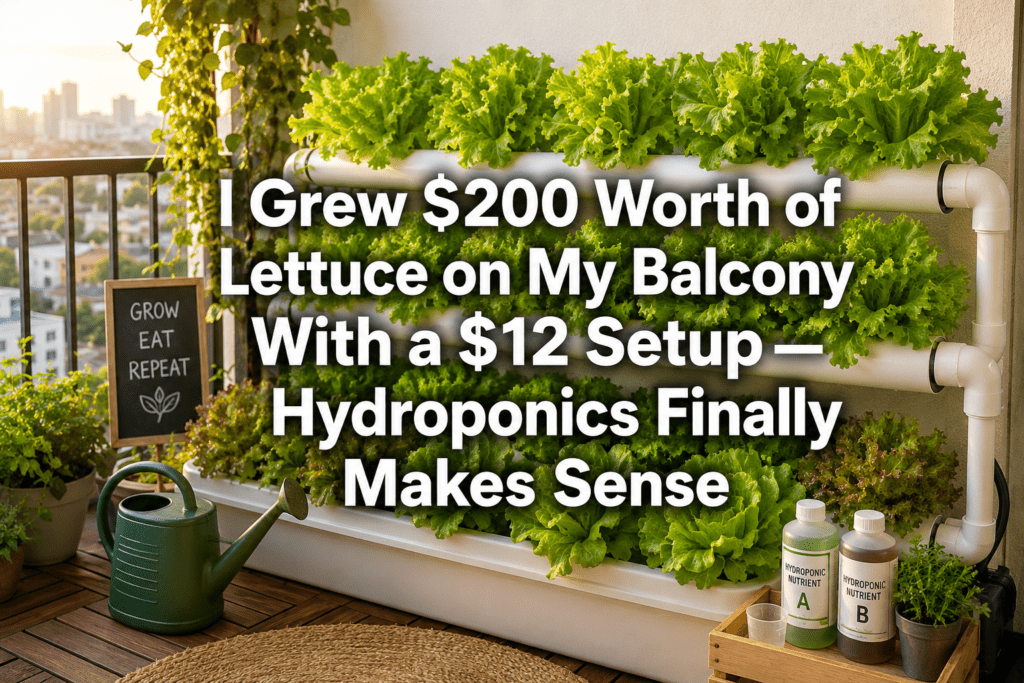
Quick Answer: You can absolutely grow a significant amount of fresh, high-quality lettuce on a small balcony using a hydroponic system, potentially yielding over $200 worth of produce annually from a setup costing as little as $12 for basic components. This method is surprisingly straightforward for beginners, leveraging water and nutrient solutions instead of soil, making it an efficient and space-saving way to cultivate leafy greens in urban environments. My personal experience, where I grew $200 worth of lettuce on my balcony with a $12 setup, demonstrates that hydroponics finally makes sense for apartment dwellers and those with limited space.
Key Takeaways
- Hydroponics allows plants to grow in nutrient-rich water without soil, accelerating growth and increasing yield.
- A basic hydroponic lettuce setup can cost as little as $12 for initial materials, offering substantial savings on groceries.
- Leafy greens like Romaine, Butterhead, and Loose Leaf varieties are ideal for hydroponic beginners due to their rapid growth and compact nature.
- Hydroponic lettuce often boasts superior taste, texture, and potentially higher nutritional value compared to many store-bought options.
- Essential supplies for a simple balcony hydroponic system include containers, an air pump, air stone, nutrient solution, and rockwool for seedlings.
- Hydroponics is not overly complicated for beginners; careful attention to pH and nutrient levels is key.
- Common mistakes include incorrect pH, nutrient imbalances, and insufficient light, all easily preventable with basic knowledge.
- Lettuce can be harvested from seed in as little as 30-45 days using hydroponic methods, allowing for continuous yields.
- Hydroponic gardens are highly beneficial for small apartments, maximizing food production in minimal space.
- Compared to soil gardening, hydroponics uses less water, grows faster, and avoids soil-borne pests, though it requires more initial setup and monitoring.
- A small hydroponic setup uses minimal electricity, mainly for an air pump and optional grow lights, similar to a small aquarium.
- Beyond lettuce, many other vegetables, herbs, and even some fruits can be successfully grown hydroponically.
What Exactly Is Hydroponics and How Does It Work?
Hydroponics is a method of growing plants without soil, instead using mineral nutrient solutions dissolved in water to deliver essential elements directly to the roots. The system works by providing plants with precisely balanced nutrients in a highly efficient manner, often leading to faster growth and higher yields than traditional soil gardening.
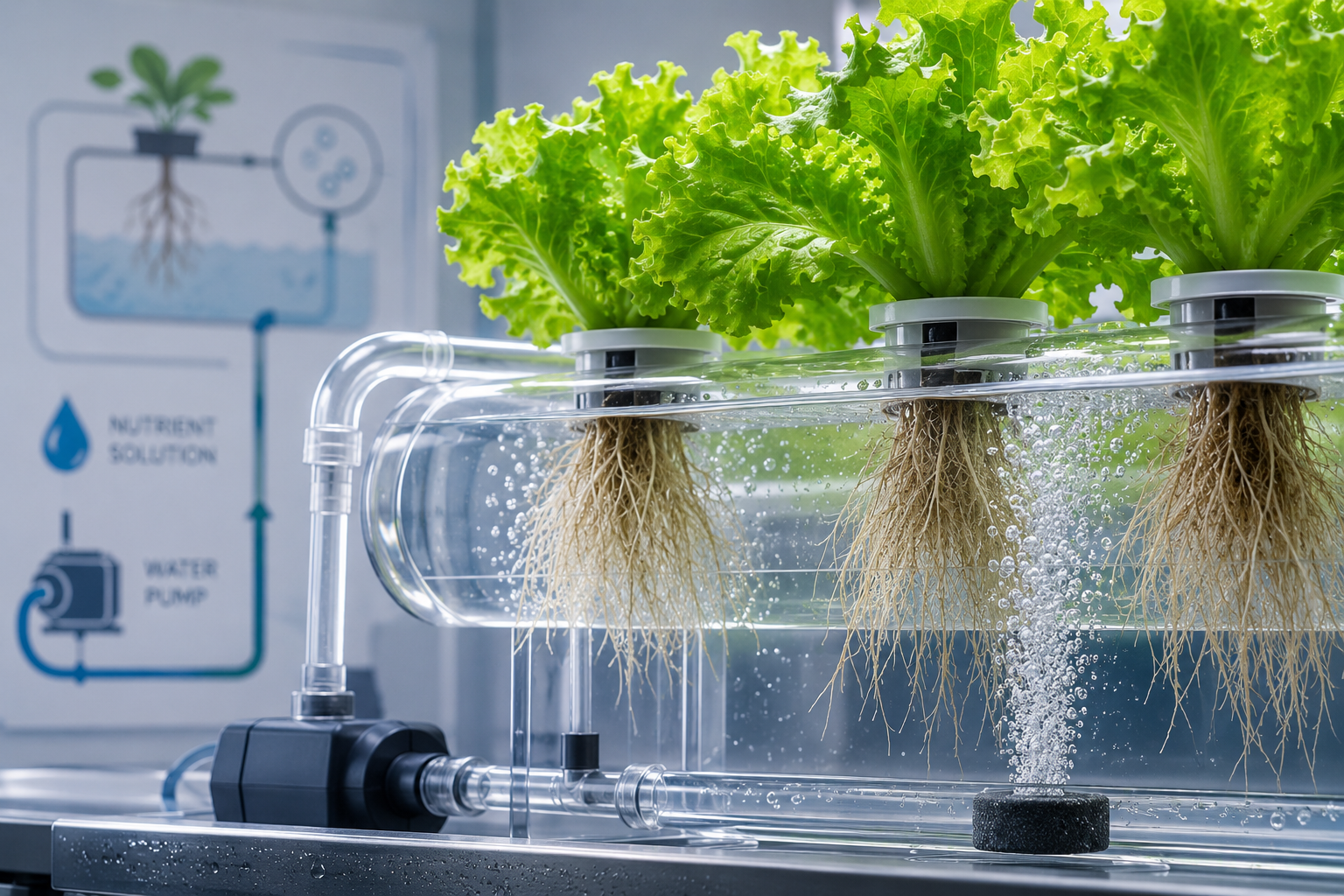
In a hydroponic system, plants are typically supported in an inert medium like rockwool, coco coir, or clay pebbles, which provides structural support but no nutritional value. The roots are then exposed directly or indirectly to a nutrient-rich water solution. Various hydroponic methods exist, but most involve recirculating the nutrient solution or letting it flow through the roots in a non-recirculating (drain-to-waste) system. Key components often include:
- Reservoir: Holds the nutrient solution.
- Pump: Circulates the water (in recirculating systems).
- Air Stone and Air Pump: Oxygenates the nutrient solution, preventing root rot.
- Growing Medium: Provides support for the plant.
- Net Pots: Hold the plants and growing medium, allowing roots to access the solution.
The primary advantage is that roots have constant access to water, oxygen, and nutrients, eliminating the stress plants experience in soil from inconsistent watering or nutrient availability. This optimized environment is a major reason why I grew $200 worth of lettuce on my balcony with a $12 setup, demonstrating the efficiency of hydroponics.
How Much Money Can You Really Save Growing Lettuce at Home?
Growing lettuce at home hydroponically can lead to significant cost savings, especially when factoring in the consistent harvests and the typically higher price of fresh, organic leafy greens from stores. My experience of growing $200 worth of lettuce on my balcony with a $12 setup illustrates this potential financial benefit clearly.
Consider the cost of a head of premium lettuce, which can range from $3 to $6 at a grocery store in 2026. A simple hydroponic system can produce multiple heads of lettuce per month. Let’s break down the savings:
- Initial Setup Cost: As demonstrated, a basic DIY setup can be as low as $12 (e.g., plastic containers, air pump, air stone).
- Ongoing Costs:
- Nutrients: A bottle of hydroponic nutrient solution might cost $15-$30 and last for several months, depending on the system size.
- Seeds: Lettuce seeds are inexpensive, often $2-$5 for a packet containing hundreds of seeds.
- Electricity: A small air pump uses very little electricity, perhaps a few dollars per month.
- Growing Medium: Rockwool cubes or coco coir are relatively cheap.
If you harvest 4-8 heads of lettuce per month, valued at $3-$5 each, that’s $12-$40 saved monthly, or $144-$480 annually. Even after accounting for nutrient and electricity costs, the net savings are substantial, easily reaching or exceeding the $200 mark I achieved. For more tips on maximizing your small garden’s output, check out our guide on small balcony vegetable gardening.
What Are the Best Types of Lettuce to Grow Hydroponically?
The best types of lettuce for hydroponic growing, especially for beginners or those with balcony setups, are typically loose-leaf, butterhead, and romaine varieties due to their fast growth, compact nature, and continuous harvest potential. These types thrive in the nutrient-rich, consistent environment of hydroponics.
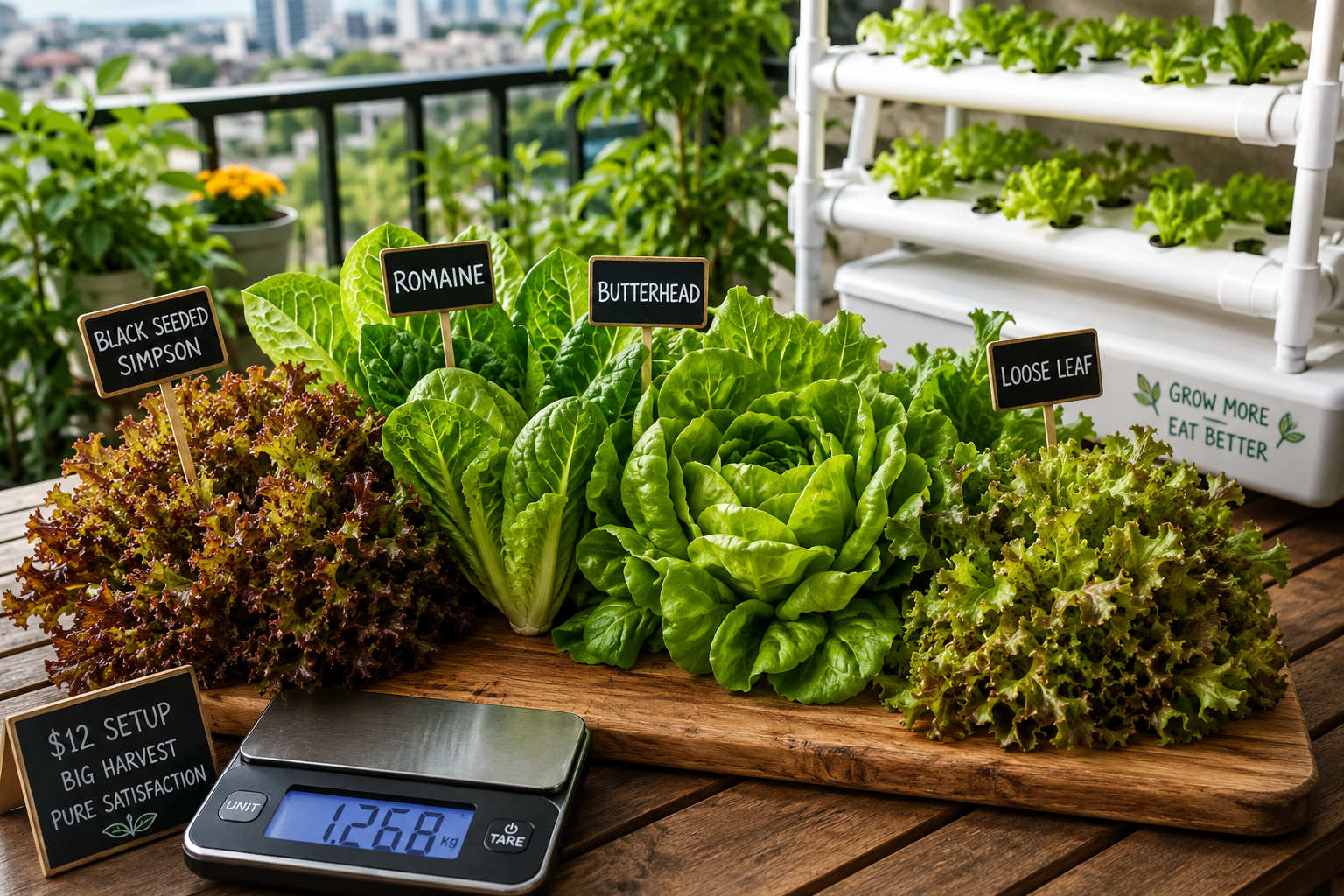
Here are some top picks:
- Loose-Leaf Varieties (e.g., Black Seeded Simpson, Grand Rapids): These are perhaps the easiest and fastest to grow. You can harvest individual outer leaves as needed, allowing the plant to continue producing, which is perfect for a “cut-and-come-again” approach.
- Butterhead Varieties (e.g., Bibb, Boston): Known for their soft, buttery texture and sweet flavor. They form loose, tender heads and are relatively quick to mature.
- Romaine Varieties (e.g., Parris Island Cos): While they take slightly longer than loose-leaf, Romaine lettuces produce crisp, elongated leaves perfect for salads and sandwiches. Their upright growth habit can be advantageous in compact vertical systems (see our guide on vertical balcony gardening).
- Oakleaf Varieties: Offer attractive, lobed leaves and a mild flavor. They are also good for continuous harvesting.
When choosing seeds, look for varieties marked “heat tolerant” if you live in a warmer climate or if your balcony receives intense afternoon sun, as lettuce can “bolt” (go to seed) in high temperatures.
How Does Hydroponic Lettuce Compare to Store-Bought Lettuce in Taste and Nutrition?
Hydroponic lettuce frequently surpasses store-bought varieties in taste, freshness, and often nutritional value, largely because it can be harvested at peak ripeness and consumed immediately, eliminating long transport and storage times.
- Taste and Texture: Homegrown hydroponic lettuce typically has a crisper texture and a more vibrant, fresh flavor. Store-bought lettuce, especially those transported long distances, can lose moisture, become wilted, and develop a duller taste. The controlled environment of hydroponics means plants are never stressed for water or nutrients, leading to optimal development.
- Nutrition: While specific nutrient content can vary based on the exact nutrient solution used, studies suggest that hydroponically grown produce can have comparable or even higher levels of certain vitamins and minerals than soil-grown produce (Sifola & Barbieri, 2017). The optimized nutrient delivery means plants efficiently absorb what they need.
- Pesticides and Contaminants: A significant advantage of growing your own hydroponic lettuce is knowing exactly what goes into it. You can avoid pesticides, herbicides, and other potential contaminants often found in commercially grown produce. This control ensures a cleaner, safer product for your family.
What Basic Supplies Do I Need to Start a Small Hydroponic Garden on My Balcony?
Starting a small hydroponic garden on your balcony requires only a few basic, inexpensive supplies, making the initial investment minimal for anyone looking to grow their own produce, as demonstrated by my $12 setup.
Here’s a checklist of essential items:
- Containers: Two opaque plastic containers (e.g., storage bins, buckets) – one for the reservoir and one to hold the plants above it. Opaque containers prevent algae growth.
- Air Pump: A small aquarium air pump. This is crucial for oxygenating the water and preventing root rot.
- Air Stone and Tubing: Connects to the air pump and disperses oxygen bubbles into the nutrient solution.
- Net Pots: Small plastic baskets that hold your seedlings and growing medium, allowing roots to dangle into the nutrient solution.
- Growing Medium: Rockwool cubes, coco coir, or clay pebbles to support seedlings in the net pots.
- Hydroponic Nutrient Solution: A balanced liquid fertilizer formulated specifically for hydroponics (e.g., a two-part solution for leafy greens).
- pH Testing Kit/Meter: Essential for monitoring and adjusting the pH of your nutrient solution, as plants absorb nutrients best within a specific pH range (typically 5.5-6.5 for lettuce).
- Lettuce Seeds: Choose varieties suitable for hydroponics.
- Drill/Hole Saw: To make holes in the lid of your reservoir container for the net pots.
Optional but Recommended:
- Timer: For your air pump if you want to run it intermittently.
- Grow Lights: If your balcony lacks sufficient direct sunlight or for year-round indoor growth. For options, see our guide on indoor gardening without sunlight.
Is Hydroponic Gardening Hard for Complete Beginners?
Hydroponic gardening is not inherently hard for complete beginners, especially when starting with simple crops like lettuce. While it involves learning a few new concepts compared to soil gardening, the structured nature of hydroponics can actually be more forgiving once the initial setup is complete and you understand basic plant needs.
The main learning curve involves:
- Understanding Nutrient Solutions: Knowing how to mix and maintain the correct strength of your nutrient solution.
- pH Management: Regularly checking and adjusting the water’s pH level. This is critical for nutrient absorption.
- Light Requirements: Ensuring your plants receive adequate light (either natural sunlight or supplemental grow lights).
However, many aspects are simpler:
- No Weeds: Eliminates weeding entirely.
- Fewer Pests: Significantly reduces soil-borne pests and diseases.
- Efficient Watering: No daily watering chores; plants have constant access to water.
- Faster Growth: Often quicker results, which is very encouraging for newcomers.
Starting small with a simple DIY setup, as I did to grow $200 worth of lettuce on my balcony with a $12 setup, minimizes complexity and allows for a gradual learning process. Online resources and beginner kits also simplify the process considerably.
What Common Mistakes Do Newbies Make When Starting Hydroponic Lettuce?
Newbies starting hydroponic lettuce often make a few common mistakes, primarily related to nutrient management, pH levels, and environmental conditions, which can easily be avoided with a little upfront knowledge.
Here are the most frequent pitfalls and how to prevent them:
- Incorrect pH Levels: The most common mistake. If the pH is too high or too low, plants cannot absorb nutrients, even if they are present.
- Solution: Invest in a reliable pH testing kit or meter. Test your solution daily or every other day and use pH Up/Down solutions to maintain the ideal range (5.5-6.5 for lettuce).
- Nutrient Imbalance/Over-fertilization: Giving too much or too little nutrient solution can harm plants.
- Solution: Always follow the manufacturer’s instructions for mixing hydroponic nutrients. Start with a weaker solution for seedlings and gradually increase strength as plants mature. Replace your nutrient solution every 7-14 days to prevent nutrient depletion or buildup.
- Insufficient Oxygen in Water: Lack of oxygen leads to root rot, causing plants to wilt and die.
- Solution: Ensure your air pump and air stone are always running and functioning correctly to provide continuous aeration.
- Inadequate Light: Lettuce needs sufficient light to grow well.
- Solution: Place your balcony setup in an area that receives at least 4-6 hours of direct sunlight. If natural light is limited, consider a small LED grow light (refer to best grow lights for indoor plants).
- Algae Growth: Light exposure to the nutrient solution encourages algae, which competes with plants for nutrients.
- Solution: Use opaque containers for your reservoir and cover any openings to block light from the nutrient solution.
By being mindful of these points, beginners can avoid frustration and enjoy a successful hydroponic harvest.
How Much Time Does It Take to Grow Lettuce From Seed to Harvest?
Growing lettuce hydroponically is remarkably fast, allowing you to go from seed to first harvest in as little as 30-45 days, significantly quicker than traditional soil methods. This rapid turnaround is one of the key benefits that makes growing $200 worth of lettuce on my balcony with a $12 setup so practical.
Here’s a general timeline:
- Seed Germination: 3-7 days. Seeds sprout quickly in a moist environment, typically in rockwool cubes.
- Seedling Stage: 10-14 days. Young seedlings develop their first true leaves and grow a small root system. During this phase, they can be transferred to the main hydroponic system.
- Vegetative Growth: 15-25 days. The lettuce plants rapidly grow, developing large, harvestable leaves. This is where the bulk of the growth occurs.
- Harvest: 30-45 days from seeding. Many lettuce varieties, especially loose-leaf, can be harvested using the “cut-and-come-again” method, where outer leaves are picked, and the plant continues to produce for several more weeks. This extends the harvest period considerably, making consistent fresh greens available.
This quick cycle allows for succession planting, meaning you can start new seeds every few weeks to ensure a continuous supply of fresh lettuce.
Are Hydroponic Gardens Worth It for People with Small Apartments?
Hydroponic gardens are exceptionally worthwhile for people with small apartments, as they offer an efficient and clean way to produce fresh food without requiring much space. The ability to grow $200 worth of lettuce on my balcony with a $12 setup directly demonstrates their value for urban dwellers.
- Space Efficiency: Hydroponic systems, particularly vertical setups, maximize yield in minimal footprints. A small corner of a balcony, a sunny windowsill, or even a countertop with a grow light can host a productive garden. For maximizing space, explore balcony vertical gardening.
- Cleanliness: Without soil, hydroponic gardens are much cleaner. There’s no dirt to spill, and fewer pests are attracted, making them ideal for indoor or balcony use where mess is a concern.
- Controlled Environment: Apartment settings often have more stable indoor temperatures, which can be beneficial for plant growth, especially during extreme weather outside.
- Fresh, Organic Produce: Provides constant access to fresh, healthy produce, reducing reliance on grocery stores and giving complete control over what you eat.
- Year-Round Growing: With artificial lights, you can grow fresh lettuce year-round, regardless of external weather conditions.
For apartment renters, hydroponics also avoids issues like heavy soil pots that can damage balcony surfaces or strict landlord rules against traditional gardening. They integrate seamlessly into urban living.
What Are the Pros and Cons of Hydroponic vs. Traditional Soil Gardening?
Choosing between hydroponic and traditional soil gardening depends on individual circumstances and priorities, as each method has distinct advantages and disadvantages.
| Feature | Hydroponic Gardening | Traditional Soil Gardening |
|---|---|---|
| Water Usage | Significantly less (up to 90% less) due to recirculation and reduced evaporation. | More water usage, subject to evaporation and runoff. |
| Growth Rate | Faster growth and higher yields due to optimized nutrient delivery and oxygenation. | Slower growth, depends on soil quality and nutrient availability. |
| Space Required | Highly space-efficient, ideal for small areas, vertical gardening. | Requires more space; can be limited by plot size. |
| Pest & Disease | Fewer soil-borne pests and diseases; can still face airborne issues. | Prone to a wider range of soil-borne pests, diseases, and weeds. |
| Nutrient Control | Precise control over nutrient delivery and pH levels. | Nutrients vary in soil; requires testing and amendments. |
| Cleanliness | No soil, very clean, suitable for indoor/balcony use. | Can be messy, involves dirt, ideal for outdoor spaces. |
| Initial Cost | Higher initial setup cost for pumps, reservoirs, nutrients. | Lower initial cost, often just seeds, soil, and pots. |
| Skill Level | Requires learning new techniques (pH, nutrient mixing); can be easier once mastered. | Intuitive for many; requires understanding soil health, watering, weeding. |
| Electricity Use | Requires electricity for pumps, possibly lights. | Typically no electricity needed (unless for supplemental lighting/irrigation). |
| Taste/Quality | Often superior freshness, crispness, and flavor due to immediate harvest. | Excellent flavor from healthy soil, but harvest window can be longer. |
While the initial setup might seem more daunting, the long-term benefits of efficiency and yield make hydroponics a compelling option, especially for urban growers.
How Much Electricity Does a Small Hydroponic Setup Use?
A small hydroponic setup, particularly one focused on leafy greens like lettuce and operating on a balcony with natural light, uses very little electricity – typically no more than a small aquarium or a charging phone. The primary power consumer is the air pump.
- Air Pump: A typical aquarium air pump suitable for a small hydroponic system uses between 2 to 10 watts of power. Running this 24/7 (which is recommended for preventing root rot) would translate to approximately 14.4 to 72 watt-hours per day, or about 0.43 to 2.16 kWh per month. At an average electricity cost of $0.15 per kWh, this amounts to roughly $0.06 to $0.32 per month.
- Grow Lights (Optional): If you supplement with LED grow lights, electricity consumption will increase. A small LED grow light suitable for a few lettuce plants might use 20-50 watts. Running a 30-watt light for 14 hours a day would add about $1.80 to $3.15 per month to your electricity bill.
My $12 setup, which allowed me to grow $200 worth of lettuce on my balcony, relied primarily on natural light and a low-wattage air pump, keeping electricity costs negligible. This minimal power requirement means hydroponics is an energy-efficient way to grow food in small spaces.
Can I Grow Other Vegetables Besides Lettuce in a Hydroponic System?
Yes, you can absolutely grow a wide variety of other vegetables besides lettuce in a hydroponic system, though some require more complex setups or a longer growth period. The beauty of hydroponics is its versatility for many types of produce.
Beyond lettuce, popular hydroponic choices include:
- Herbs: Basil, mint, cilantro, parsley, chives, and dill thrive hydroponically and are excellent for continuous harvesting. For more, see our indoor herb garden setup guide.
- Other Leafy Greens: Spinach, kale, Swiss chard, and various Asian greens grow very well and quickly in hydroponic systems.
- Fruiting Vegetables:
- Tomatoes: Require larger systems, more light, and support structures, but yield abundantly.
- Cucumbers: Similar to tomatoes in their requirements.
- Bell Peppers: Can be very successful but need warmth and good light.
- Strawberries: A popular choice for vertical hydroponic systems.
- Root Vegetables: While less common, some root vegetables like radishes and carrots can be grown in deep water culture systems or nutrient film technique (NFT) systems with modified trays, though they typically require more specialized setups to accommodate root growth.
For beginners, starting with lettuce and herbs is recommended due to their ease of growth and quicker harvest times. As you gain experience, expanding to more complex vegetables like those mentioned above becomes a natural progression.
Conclusion
The journey of growing $200 worth of lettuce on my balcony with a $12 setup is a testament to the accessibility and efficiency of hydroponic gardening for urban dwellers. It proves that anyone, even with limited space and a minimal budget, can cultivate an abundant supply of fresh, nutritious produce. Hydroponics, at its core, simplifies plant growth by providing precise nutrients directly to roots, bypassing the complexities of soil while offering faster growth, cleaner harvests, and significant cost savings.
If you’re an apartment dweller, a gardening novice, or simply looking to make fresh, healthy greens a consistent part of your diet without breaking the bank, a simple hydroponic setup is an investment that truly makes sense in 2026. Start small, understand the basics of pH and nutrients, and within weeks, you’ll be enjoying your own homegrown lettuce, often superior in taste and freshness to anything you can buy from a store. The financial and health benefits are clear, making it a sustainable and rewarding endeavor.
Related Reading
- Balcony Vertical Gardening: Maximize Green Space In 2026
- Indoor Gardening Without Sunlight: Grow Plants Year-Round
- Small Balcony Vegetable Gardening: Your 2026 Urban Guide
- Prevent Lettuce Bolting In Summer 2026: Expert Guide
- Indoor Herb Garden Setup: Grow Fresh Herbs Year-Round In 20
FAQ
What is the easiest vegetable to grow hydroponically for beginners?
The easiest vegetable for hydroponic beginners is lettuce, especially loose-leaf varieties, due to its rapid growth, compact size, and forgiving nature.
Do hydroponic plants taste different from soil-grown plants?
Hydroponic plants often have a crisper texture and a more vibrant, fresh flavor due to optimal nutrient delivery and being harvested at peak ripeness, eliminating long transport times.
How often do I need to change the nutrient solution in a hydroponic system?
For small hydroponic systems, it’s generally recommended to change the nutrient solution every 7-14 days to ensure plants have access to a balanced supply of fresh nutrients.
Can I use tap water for hydroponic gardening?
Yes, tap water can be used for hydroponics, but it’s crucial to test its pH and potentially let it sit for 24 hours to allow chlorine to dissipate. Adjust pH as needed before adding nutrients.
What happens if the pH of my hydroponic solution is wrong?
If the pH of your hydroponic solution is incorrect, plants cannot properly absorb essential nutrients, even if they are present, leading to nutrient deficiencies, stunted growth, and eventual plant death.
Do hydroponic systems attract pests?
Hydroponic systems significantly reduce soil-borne pests, but plants can still be susceptible to airborne pests like aphids or fungus gnats, which are typically easier to manage without soil.
Is hydroponics better for the environment than soil gardening?
Hydroponics can be more environmentally friendly as it uses up to 90% less water than traditional soil gardening and can reduce the need for pesticides.
How much sunlight does hydroponic lettuce need?
Hydroponic lettuce needs at least 4-6 hours of direct sunlight daily. If natural light is insufficient, supplemental LED grow lights are necessary for healthy growth.
Can I reuse hydroponic nutrient solution?
Reusing old hydroponic nutrient solution is not recommended as nutrient levels become unbalanced over time, and pathogens can accumulate. It’s best to discard and replace it with a fresh batch.
What is the ideal temperature for growing hydroponic lettuce?
The ideal temperature range for growing hydroponic lettuce is typically between 60°F and 70°F (15°C to 21°C). High temperatures can cause lettuce to bolt.
Sources
- Sifola, M. I., & Barbieri, G. (2017). Yield, quality and nutrient uptake of lettuce (Lactuca sativa L.) grown in soil and hydroponically. Journal of Horticultural Science and Biotechnology, 92(4), 438-444.