Can I adapt square foot gardening methods for a small balcony?
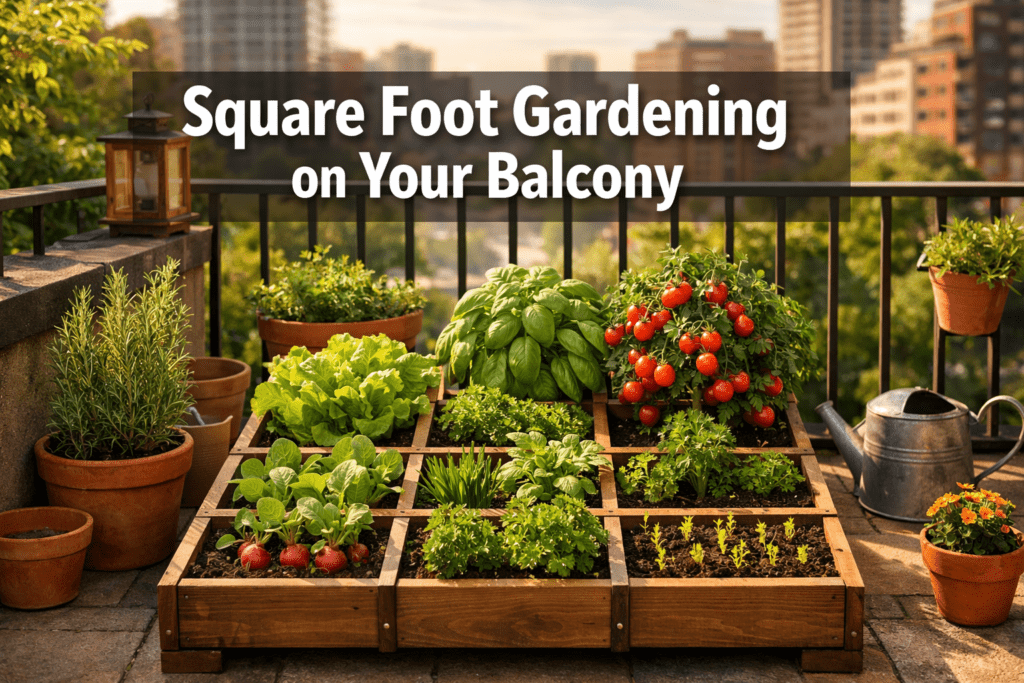
Quick Answer: Yes, you can absolutely adapt square foot gardening methods for a small balcony. The core principle — dividing growing space into 1-foot squares and assigning specific plant quantities to each — translates directly into container gardening on a balcony. The main adjustments involve using containers instead of raised beds, choosing compact plant varieties, and accounting for weight limits and sun exposure.
Key Takeaways
- Square foot gardening (SFG) works on balconies when you swap in-ground beds for containers or shallow raised planters.
- A single 2×4 ft container gives you 8 squares — enough to grow a meaningful mix of herbs, greens, and compact vegetables.
- Weight is a real concern: a filled planter can weigh 50–100+ lbs. Always check your balcony’s load rating before adding heavy containers.
- Compact and dwarf plant varieties are essential — full-size tomatoes and squash are poor choices for balcony SFG.
- Vertical space is your biggest untapped resource on a balcony; trellises and wall planters multiply your effective growing area.
- Soil mix matters more in containers than in ground beds — use a lightweight, well-draining mix, not standard garden soil.
- Watering frequency increases significantly in containers, especially in hot weather or full-sun balconies.
- Balcony SFG is ideal for renters, urban apartment dwellers, and anyone with under 50 sq ft of outdoor space.
What Is Square Foot Gardening, and Why Does It Work for Balconies?
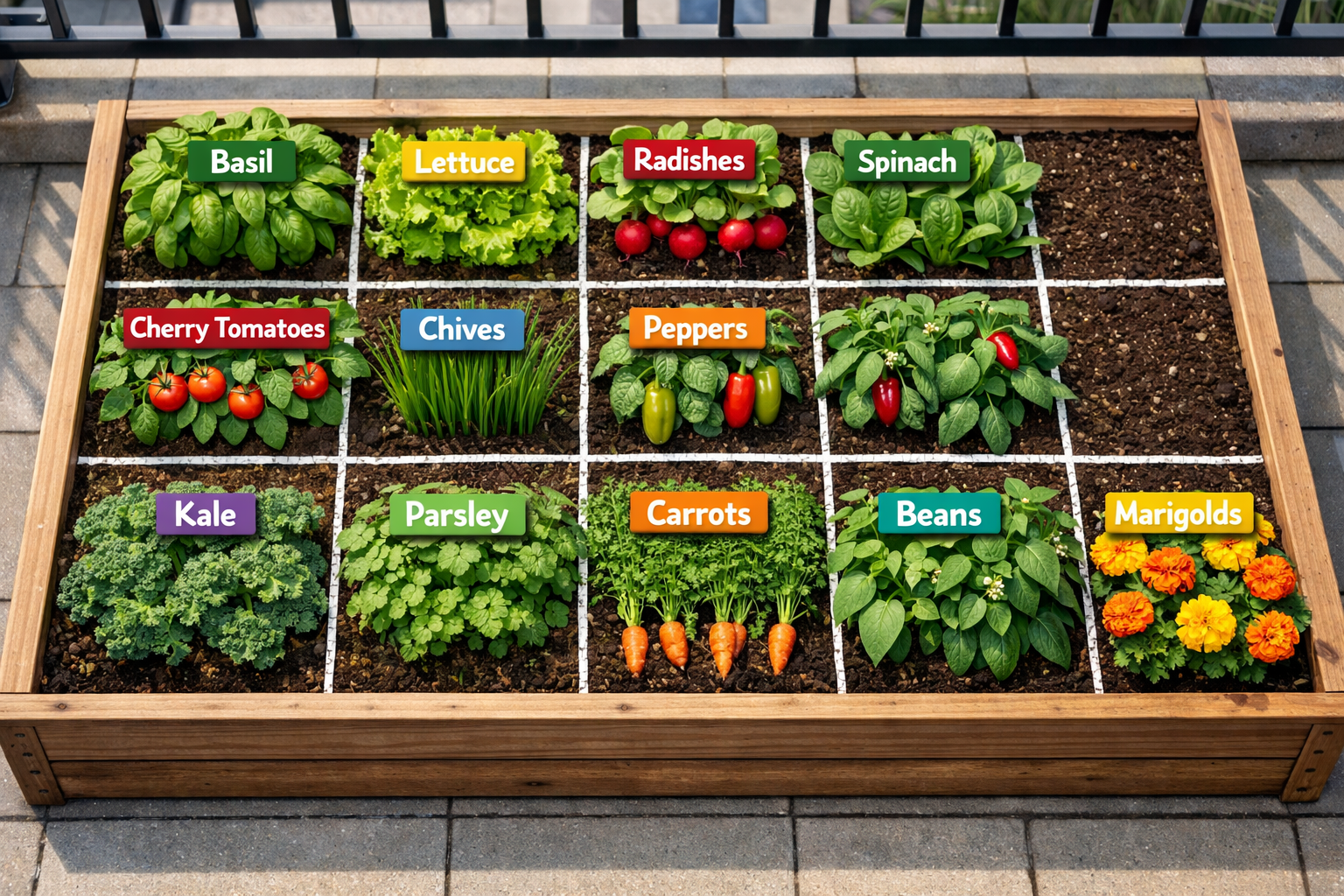
Square foot gardening is a planting method developed by Mel Bartholomew in the 1980s that divides a growing area into a grid of 1-foot squares. Each square holds a specific number of plants based on their size — 16 radishes, 9 spinach plants, 4 lettuce heads, or 1 tomato, for example. The method eliminates wasted space and makes intensive growing accessible to beginners.
For balcony gardeners, SFG is a natural fit because:
- It’s already designed for small, defined spaces
- It encourages high plant density, which maximizes yield per square foot
- The grid system makes planning and crop rotation straightforward
- It pairs well with container gardening, which is the default approach on any balcony
The method doesn’t require a backyard or raised bed. Any rectangular container can become a square foot garden with a simple bamboo or wooden grid laid on top of the soil.
Can I Adapt Square Foot Gardening Methods for a Small Balcony? (The Core Setup)
The short answer is yes — and the setup is simpler than most people expect. The key is replacing the traditional 4×4 ft raised bed with containers that fit your available space.
Here’s how to build your balcony SFG setup:
- Measure your balcony floor space. Note usable area after accounting for furniture, doors, and clearance for movement.
- Choose your container size. A 2×2 ft or 2×4 ft rectangular planter works well. Depth should be at least 6–8 inches for most vegetables (12 inches for root crops).
- Create your grid. Use bamboo stakes, wooden dowels, or twine to divide the container surface into 1-foot squares.
- Fill with the right mix. Use a lightweight potting mix — never dense garden soil. A blend of peat moss (or coco coir), compost, and perlite drains well and keeps weight manageable.
- Assign plants to squares. Follow standard SFG spacing guidelines based on plant size.
- Add vertical structure. Install a small trellis or wall-mounted planter to extend your growing area upward.
For a practical starting point, see our small balcony vegetable garden ideas for layout inspiration specific to US urban spaces.
Decision rule: Choose a 2×2 ft container if your balcony is under 30 sq ft. Go with a 2×4 ft planter if you have 40+ sq ft and can manage the weight.
What Plants Work Best in a Balcony Square Foot Garden?
Not every plant is suited for balcony SFG. The best choices are compact, fast-maturing, and productive in shallow soil.
Avoid on small balconies: Full-size pumpkins, zucchini, indeterminate tomatoes (without strong support), and corn. These need too much space or soil depth to perform well.
For herb-focused setups, our guide to the best herbs for small gardens covers which varieties stay compact and productive in containers.
How Do I Handle Weight and Structural Limits on My Balcony?
Weight is the most overlooked factor when adapting square foot gardening methods for a small balcony. A filled 2×4 ft planter with soil, water, and plants can easily weigh 80–120 lbs. Multiple containers compound this fast.
What to do:
- Check your lease or building specs. Most apartment balconies are rated for 40–60 lbs per square foot, but this varies significantly.
- Use lightweight soil. A coco coir and perlite blend weighs considerably less than standard potting mix.
- Choose lightweight containers. Fabric grow bags, fiberglass, or thin-walled plastic weigh far less than terracotta or wood.
- Distribute weight evenly. Place heavy containers near structural support points (walls, floor joists) rather than at the balcony’s outer edge.
- Use vertical planters. Wall-mounted pocket planters and rail planters shift weight to the wall structure rather than the floor.
Common mistake: Filling containers with garden soil from a bag labeled “topsoil.” It’s too heavy and compacts quickly in containers, suffocating roots. Always use a container-specific mix.
Our best potting soil for container gardening guide breaks down lightweight mix options by price and availability across the US.
How Do I Maximize Space When Adapting Square Foot Gardening for a Balcony?
Space is the defining constraint, so every inch counts. The good news is that balconies have vertical space most gardeners underuse.
Strategies that work:
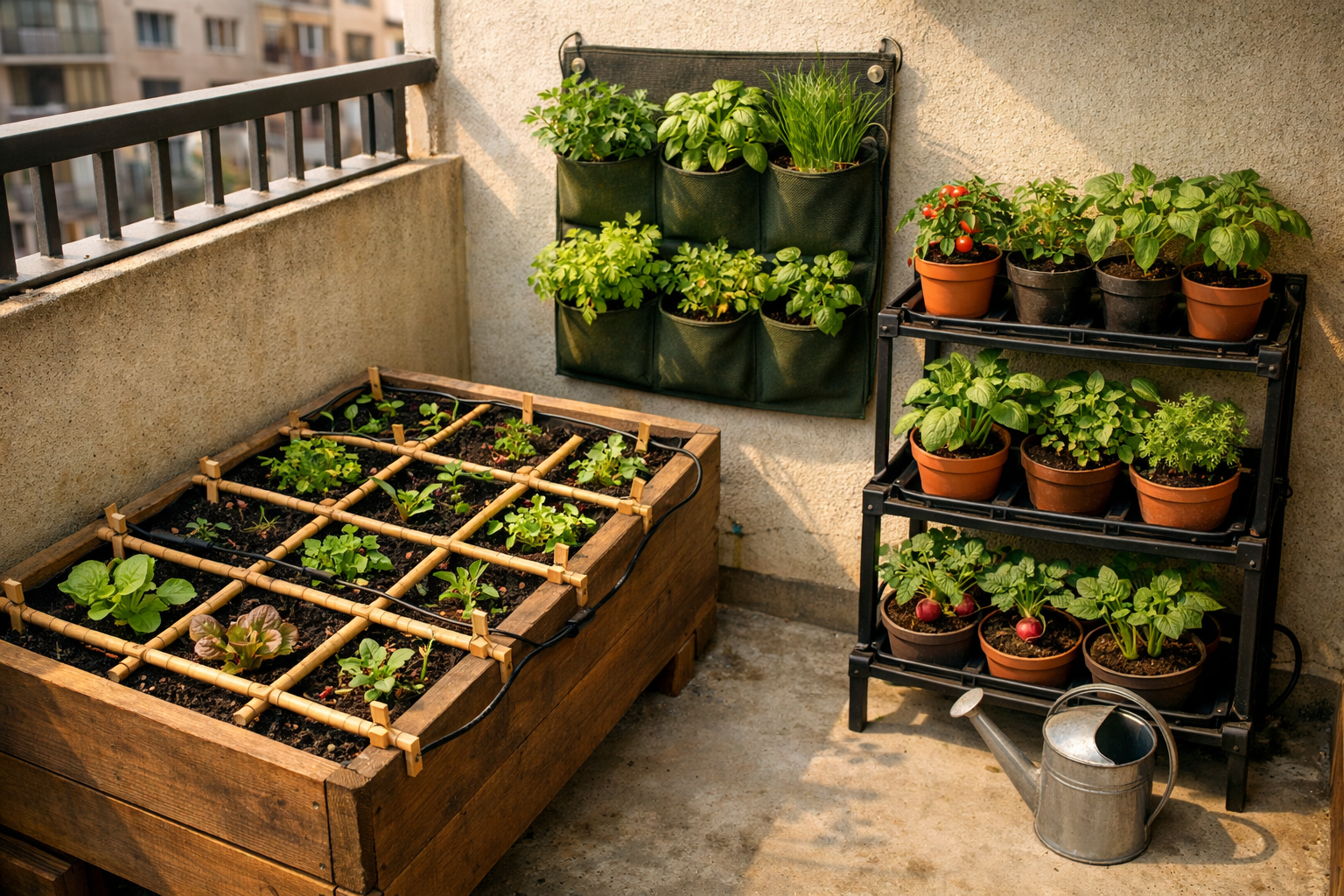
- Stack planters vertically. Tiered shelf planters let you run 3–4 rows of containers in the footprint of one.
- Use railing planters. Rail-mounted boxes add growing space without touching the floor.
- Train climbing plants upward. Beans, cucumbers (compact varieties), and peas grow vertically with minimal floor space.
- Combine SFG grids with wall pockets. Use floor containers for vegetables and wall-mounted felt pockets for herbs.
For a deeper look at vertical approaches, see our guide to balcony vertical gardening and our space-saving garden ideas for 2026.
Edge case: If your balcony gets less than 4 hours of direct sun, stick to shade-tolerant plants like lettuce, spinach, mint, and parsley. Full-sun crops like tomatoes and peppers won’t produce well in low light regardless of your SFG layout.
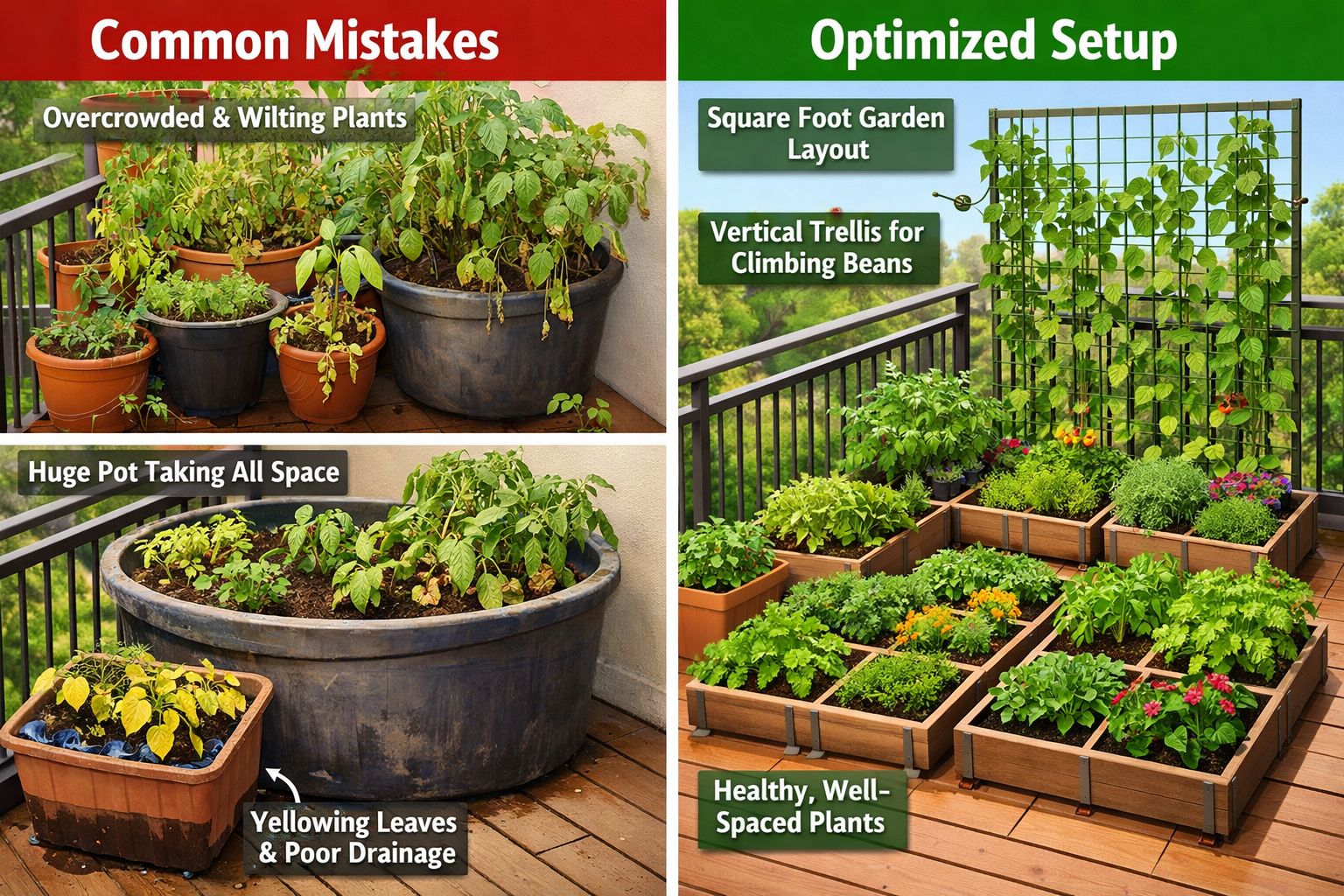
What Are the Most Common Mistakes When Adapting Square Foot Gardening to a Balcony?
Most balcony SFG failures come down to a handful of repeatable errors.
Top mistakes and how to avoid them:
- Using too few containers. One small pot isn’t a square foot garden. Commit to at least a 2×2 ft grid to see real results.
- Ignoring sun mapping. Track where sun falls on your balcony at different times of day before placing containers. Sun patterns shift seasonally.
- Underwatering (or overwatering). Containers dry out faster than ground beds. Check soil moisture daily in summer. See our guide on how often to water container plants for a practical schedule.
- Skipping succession planting. In SFG, when one square finishes, replant it immediately. Balcony gardeners often leave empty squares for weeks.
- Choosing the wrong varieties. Always look for “compact,” “bush,” “dwarf,” or “patio” on seed packets when buying for balcony SFG.
- Forgetting drainage. Every container needs drainage holes. Sitting water kills roots quickly.
For a full breakdown of pitfalls, our balcony gardening mistakes guide covers both beginner and intermediate errors worth avoiding.
How Do I Water and Feed a Balcony Square Foot Garden Efficiently?
Watering and feeding in a balcony SFG setup requires more attention than a traditional ground garden because containers lose moisture quickly and nutrients flush out with every watering.
Watering:
- Check soil moisture by pressing a finger 1 inch into the soil. Water when it feels dry at that depth.
- In summer heat, containers may need watering once or even twice daily.
- Drip irrigation or self-watering containers are worth the investment for busy gardeners.
Feeding:
- Use a slow-release granular fertilizer at planting, then supplement with liquid feed every 2–3 weeks during the growing season.
- Mel Bartholomew’s original SFG mix (compost, peat moss, vermiculite) is nutrient-rich at the start but needs replenishment after 4–6 weeks.
- Avoid over-fertilizing leafy greens — too much nitrogen produces lush leaves but poor flavor.
Quick example: A 2×4 ft balcony SFG container planted in May will likely need daily watering by July in most US climates, plus a liquid tomato feed every 2 weeks if you’re growing fruiting crops.
FAQ: Square Foot Gardening on a Small Balcony
Q: How much space do I need to start balcony square foot gardening?
A: You need a minimum of about 4 square feet of floor space — enough for a single 2×2 ft container. That gives you 4 growing squares and a meaningful starter garden.
Q: Can I use square foot gardening in a window box?
A: Yes. A standard 36-inch window box gives you roughly 3 squares. It’s ideal for herbs, lettuce, and radishes, though too shallow for root vegetables.
Q: Do I need to buy a special grid for balcony SFG?
A: No. Bamboo skewers, wooden chopsticks, or twine tied between small hooks work perfectly. The grid is just a visual guide — it doesn’t need to be permanent.
Q: How many plants can I realistically grow on a 50 sq ft balcony?
A: With a mix of floor containers and vertical planters, a 50 sq ft balcony can support 20–30 growing squares, which is enough for a meaningful mix of herbs, greens, and a few fruiting plants.
Q: Is balcony SFG suitable for renters?
A: Yes. Containers are fully removable and leave no permanent marks. Choose lightweight fabric grow bags for maximum portability. See our balcony gardening for renters guide for renter-specific tips.
Q: What’s the best container material for balcony SFG?
A: Fabric grow bags are lightest and promote healthy root structure. Fiberglass and thin-walled plastic are also good. Avoid terracotta for large containers — it’s heavy and dries out fast.
Q: How do I deal with wind on a high-rise balcony?
A: Choose stocky, low-growing plants and use heavier containers or anchor lightweight ones. Wind-resistant varieties and windbreak screens help significantly. Our windy balcony plants guide covers the best species for exposed positions.
Q: Can I do year-round balcony SFG?
A: In USDA zones 7 and warmer, yes — with the right seasonal crops. In colder zones, you can extend the season with row covers or move containers indoors. Cool-season crops like kale and spinach handle light frost well.
Conclusion: Start Small, Scale Smart
Adapting square foot gardening methods for a small balcony is not only possible — it’s one of the most efficient approaches to urban food growing available in 2026. The method’s built-in efficiency, clear plant spacing rules, and grid-based organization make it easier to manage than freeform container gardening.
Your actionable next steps:
- Measure your balcony and identify your sunniest area (track sun for one full day).
- Start with one 2×2 ft container filled with a lightweight potting mix and divided into 4 squares.
- Plant one fast crop (radishes or lettuce) to build confidence before scaling up.
- Add a vertical element — a wall pocket or railing planter — once your first container is established.
- Track what works — note which squares produced best and adjust plant choices each season.
For more inspiration on getting the most from a compact outdoor space, explore our small space garden hacks and our full container gardening for beginners guide.
The balcony you have right now is enough to grow real food. A grid, a container, and the right plants are all it takes to get started.
References
- Bartholomew, Mel. All New Square Foot Gardening. Cool Springs Press, 2013.
- University of Missouri Extension. “Container Gardening.” extension.missouri.edu, 2019.
- Cooperative Extension System. “Vegetable Gardening in Containers.” extension.org, 2021.