
Why Are Your Plant Leaf Tips Turning Brown? 5 Instant Fixes (2026)

Quick Answer: Brown leaf tips on houseplants are frequently a direct symptom of insufficient ambient humidity, a common issue in many indoor environments. To instantly mitigate this, increase local humidity around the affected plant using methods like misting, placing the plant on a pebble tray, or grouping plants together, while also assessing your watering schedule.
Quick Diagnosis: Crispy brown leaf tips are usually caused by low humidity, inconsistent watering, dry indoor air, or mineral buildup from tap water.
Top 5 Quick Fixes for Brown Leaf Tips
- Increase humidity around the plant
- Move plants away from heaters or AC vents
- Use filtered or distilled water
- Water consistently without overwatering
- Trim damaged brown tips carefully
Key Takeaways
- Low Humidity is a Primary Cause: Dry air, often from heating or air conditioning, is a leading reason for brown, crispy leaf tips on houseplants.
- Identify Correctly: Rule out overwatering, underwatering, nutrient deficiencies, or pest issues before attributing browning tips solely to low humidity.
- Immediate Solutions: Misting, pebble trays, and plant grouping offer quick, localized humidity boosts.
- Long-Term Strategies: Investing in a humidifier provides consistent, widespread humidity control for multiple plants.
- Water Quality Matters: Hard water or water with high mineral content can also contribute to leaf tip burn, even with adequate humidity.
- Plant-Specific Needs: Research your plant’s native environment; tropical plants generally require higher humidity.
- Monitor Humidity Levels: Use a hygrometer to accurately measure indoor humidity and adjust strategies accordingly.
- Prune Carefully: Trim only the brown, dead parts of the leaf with sharp, clean scissors to prevent further stress.
Brown Leaf Tips Diagnosis Chart
| Symptom | Most Likely Cause |
|---|---|
| Crispy brown tips | Low humidity |
| Brown tips + yellow leaves | Overwatering |
| Dry brown edges | Underwatering |
| White crust on soil | Mineral buildup |
| Brown spots after sunlight | Sunburn |
Most Common Causes of Brown Leaf Tips
- Low indoor humidity
- Inconsistent watering
- Dry air from heaters or AC
- Too much fertilizer
- Mineral buildup from tap water
- Root stress or root rot
- Excess direct sunlight
What Causes Brown Leaf Tips on Your Plants?
Brown leaf tips on houseplants are primarily caused by insufficient environmental humidity, where the air surrounding the plant is too dry, leading to rapid moisture loss from the leaf edges. While low humidity is a common culprit, other factors like inconsistent watering, nutrient imbalances, or even specific water quality can also contribute to this tell-tale sign of plant stress.
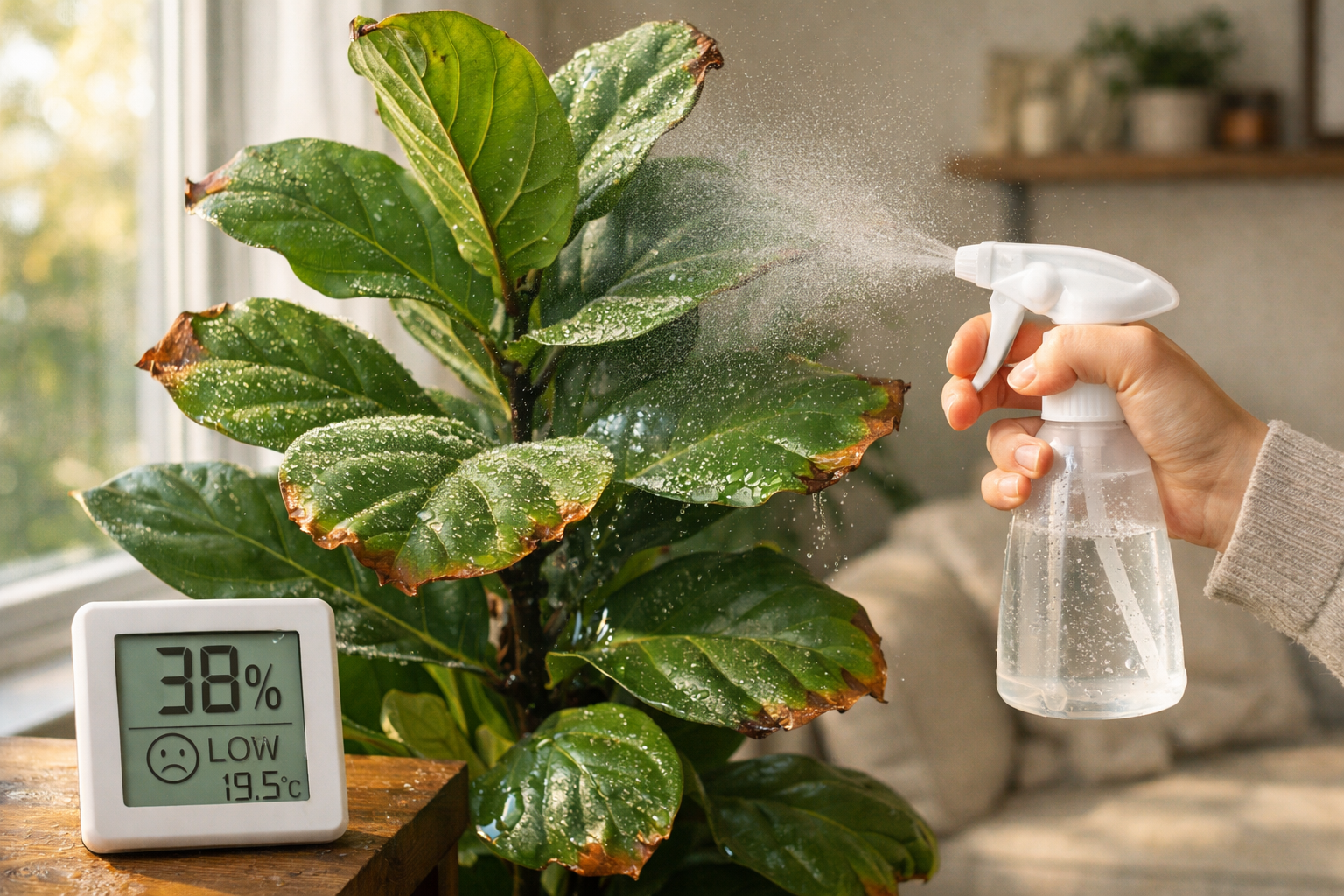
Many popular houseplants originate from tropical or subtropical regions where humidity levels are naturally high and consistent. When these plants are brought into typical indoor environments—especially during winter months with heating or in arid climates—the air can be significantly drier than their native habitat. This difference in humidity forces the plant to transpire (release water vapor) at an accelerated rate, often faster than its roots can absorb water. The leaf tips, being the furthest points from the water source, are usually the first to show symptoms of dehydration, turning brown and crispy. For a deeper dive into general plant care, consider our “Beginner Indoor Gardening Tips: 2026 Starter Guide” (https://minispacegarden.com/beginner-indoor-gardening-tips/).
Understanding Plant Transpiration and Humidity
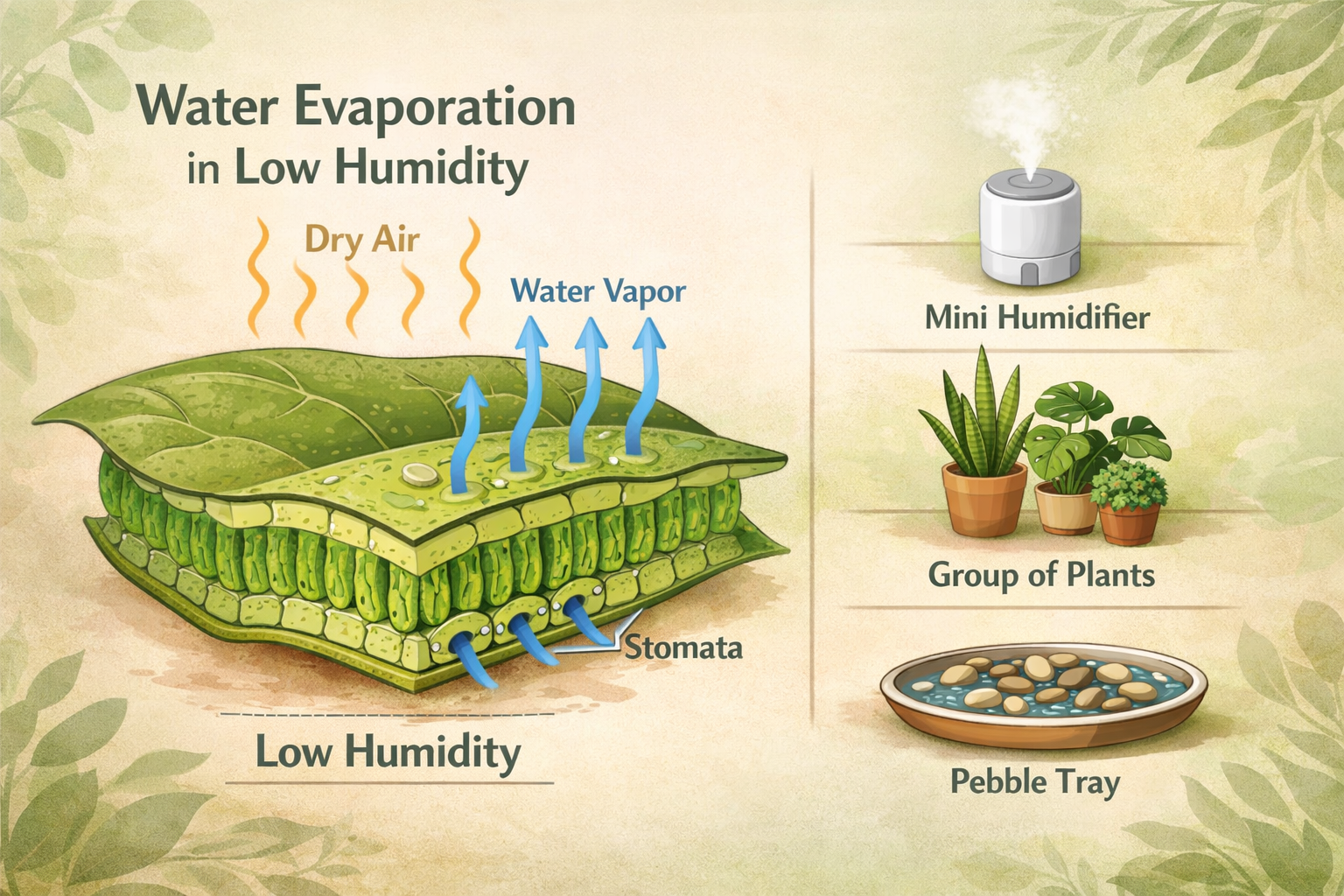
Plants release water vapor through tiny pores on their leaves called stomata in a process called transpiration. This process helps draw water and nutrients up from the roots. In high humidity, the air is already saturated with moisture, so the plant doesn’t lose water as quickly. Conversely, in low humidity, the air acts like a sponge, pulling moisture rapidly from the plant, which can stress it and lead to browning leaf tips.
Common Low Humidity Culprits in Your Home:
- Heating and Air Conditioning: Both systems significantly reduce indoor humidity, especially forced-air heating in winter.
- Drafty Windows/Doors: Constant air movement can dry out the air locally around plants.
- Arid Climates: Naturally dry regions make it harder to maintain adequate indoor humidity.
- Lack of Plant Grouping: Isolated plants have no microclimate to help retain moisture.
Instant Solutions to Combat Brown Leaf Tips from Low Humidity
To quickly address brown leaf tips caused by low humidity, implement strategies that immediately increase the moisture in the air directly around your plants. The most effective instant solutions include regular misting, utilizing pebble trays, and strategically grouping plants together to create a localized humid microclimate.
These immediate actions provide temporary relief and can halt further browning while you consider more consistent, long-term solutions. Consistency is key with all these methods to maintain a stable environment for your plants. For tips on managing other common plant issues, check out our guide on “Indoor Gardening Mistakes: Avoid Pitfalls & Grow Thriving P” (https://minispacegarden.com/indoor-gardening-mistakes/).
Quick Humidity Boosters
Misting:
- How it works: Lightly spray the foliage of your plants with distilled or filtered water several times a day. This raises the humidity temporarily directly around the leaves.
- Best for: Plants with smooth, non-fuzzy leaves (e.g., Monstera, Philodendron, Ferns). Avoid misting plants with fuzzy leaves (like African Violets) as water can get trapped and cause fungal issues.
- Consideration: Misting provides very short-lived humidity. It’s a quick fix, but not a sustained solution on its own.
Pebble Trays:
- How it works: Fill a shallow tray with pebbles and add water until it’s just below the top of the pebbles. Place your potted plant on top of the pebbles, ensuring the pot’s bottom does not sit directly in the water. As the water evaporates, it creates a localized zone of higher humidity around the plant.
- Best for: Almost all humidity-loving plants. It provides a more continuous source of moisture than misting.
- Tip: Regularly refill the water in the tray as it evaporates.
Grouping Plants:
- How it works: Plants naturally release moisture through transpiration. When you place several plants close together, the moisture they release collectively creates a small, humid microclimate around the group.
- Best for: Any collection of houseplants. This is a simple, effective, and visually appealing solution.
- Caution: Ensure good air circulation within the group to prevent fungal diseases. Don’t crowd them excessively.
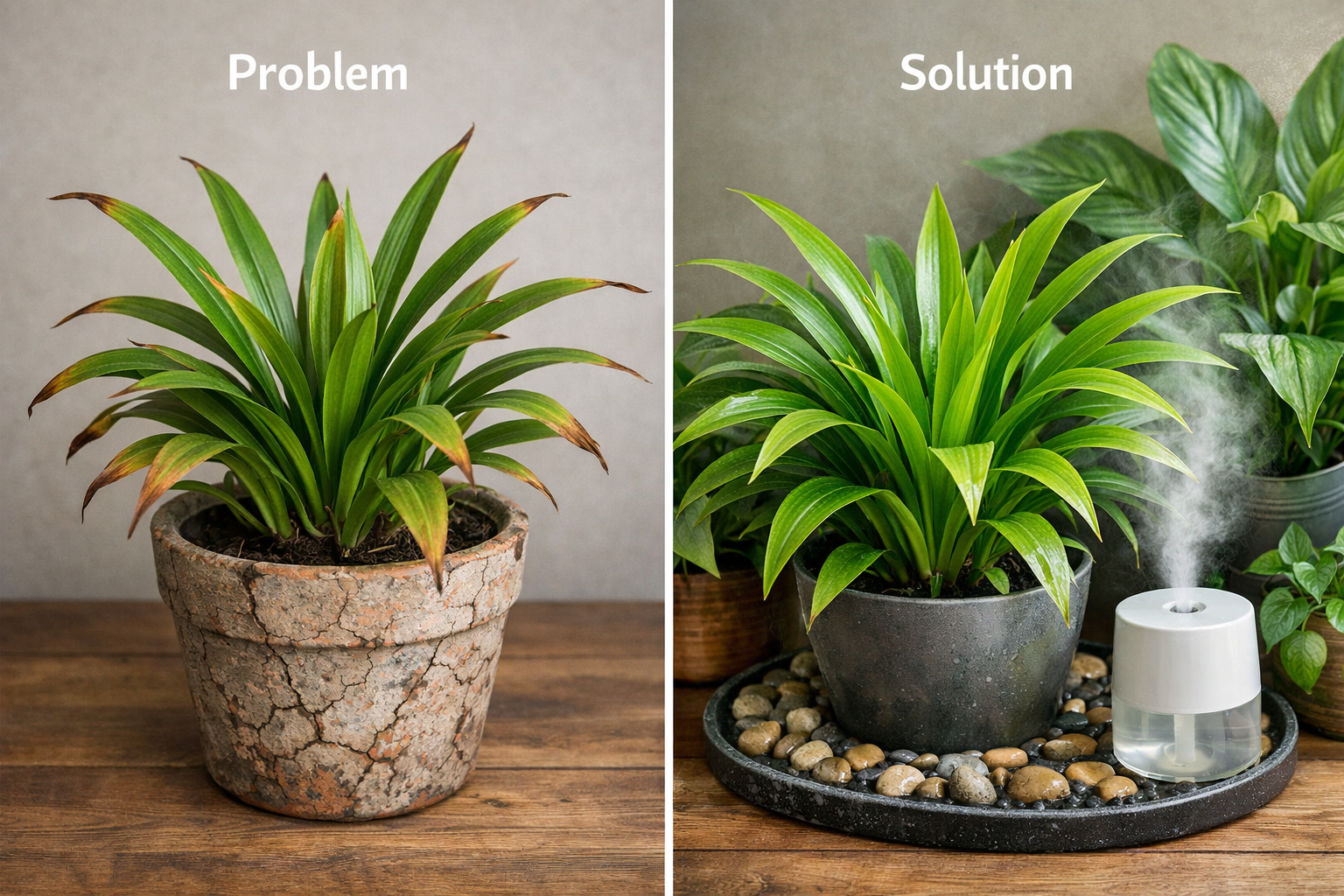
Instant Fix: Move humidity-loving plants away from heaters and AC vents, increase humidity with a pebble tray or humidifier, and trim damaged brown tips using clean scissors.
Long-Term Strategies for Optimal Humidity and Plant Health
For sustained plant health and to prevent future occurrences of brown leaf tips from low humidity, implementing long-term strategies that maintain consistent humidity levels is crucial. These solutions address the root cause of dry air rather than offering temporary fixes, leading to healthier, more resilient plants over time.
While instant solutions offer immediate relief, they often require frequent attention. Long-term strategies, though requiring an initial investment or setup, provide a more stable and less demanding environment for your humidity-loving plants. For optimizing the soil for your indoor plants, refer to our “Best Soil For Indoor Plants: Your 2026 Expert Guide” (https://minispacegarden.com/best-soil-for-indoor-plants/).
Sustainable Humidity Management
Humidifiers:
- How it works: A humidifier adds moisture directly to the air, increasing ambient humidity across a larger area.
- Types: Cool mist, warm mist, ultrasonic. Cool mist humidifiers are generally preferred for plants as they don’t add heat.
- Benefits: Provides the most consistent and effective humidity increase for multiple plants in a room. You can often set a target humidity level.
- Recommendation: Aim for 50-60% relative humidity for most tropical plants. A hygrometer can help monitor this accurately.
Location Adjustment:
- Avoid Vents: Keep plants away from heating, air conditioning, or dryer vents, which are sources of extremely dry air.
- Bathroom/Kitchen Placement: If suitable light is available, bathrooms and kitchens often have naturally higher humidity due due to water usage. Consider placing humidity-loving plants in these areas.
- Avoid Drafts: Cold drafts can also contribute to moisture loss.
Terrariums or Plant Domes (for specific plants):
- How it works: Enclosing a plant in a clear container creates a mini-greenhouse effect, trapping humidity around it.
- Best for: Small, highly humidity-sensitive plants like certain ferns, mosses, or carnivorous plants.
- Consideration: Requires careful monitoring of airflow and potential for mold, especially in closed terrariums.
Water Quality:
- Issue: Tap water often contains chlorine, fluoride, or dissolved salts that can accumulate in the soil and on leaf tips, causing browning, even if humidity is adequate.
- Solution: Use distilled water, rainwater, or allow tap water to sit out for 24 hours (to allow chlorine to dissipate) before watering.
- When to Consider: If you’ve addressed humidity and watering consistency but still see brown tips, water quality might be the next factor to investigate.
When to Prune Brown Tips
Once a leaf tip turns brown and crispy, it will not recover. You can prune these brown tips for aesthetic reasons or to prevent further browning from spreading (though this is rare unless the underlying issue persists).
- Tools: Use sharp, clean scissors or pruning shears.
- Method: Cut along the natural curve of the leaf, just outside the brown area, leaving a tiny margin of brown if you’re concerned about cutting into healthy tissue. Disinfect your tools between plants to prevent disease spread.
Troubleshooting and Other Potential Causes of Brown Leaf Tips
While low humidity is a frequent cause, brown leaf tips can also signal other issues, making accurate diagnosis crucial for effective treatment. Before assuming low humidity, rule out problems related to watering, nutrient availability, and root health, which often present with similar symptoms.
Overlooking these alternative causes can lead to continued plant stress, even if humidity levels are optimized. A holistic approach to plant care ensures all potential factors are considered and addressed. For specific advice on indoor watering, consult our “Indoor Watering Guide: Master Houseplant Hydration In 2026” (https://minispacegarden.com/indoor-watering-guide/).
Distinguishing Between Causes: A Quick Reference
| Symptom Pattern | Primary Suspect | Immediate Action | Long-Term Solution |
|---|---|---|---|
| Crispy, dry brown tips | Low Humidity | Misting, pebble tray, grouping plants | Humidifier, location adjustment, terrarium |
| Brown tips with yellowing edges | Underwatering | Check soil moisture deeply, water thoroughly | Consistent watering schedule based on plant needs |
| Soft, mushy brown tips/leaves | Overwatering / Root Rot | Allow soil to dry out, repot if root rot suspected | Improve drainage, correct watering frequency |
| Brown tips with slow growth | Nutrient Deficiency / Excess | Fertilize appropriately, consider flush | Balanced fertilization, regular soil checks |
| Brown tips, overall decline | Pest Infestation | Inspect for pests, treat with neem oil/insecticidal soap | Regular pest checks, good plant hygiene |
| White crust on soil/pot | Mineral Buildup (from water) | Flush soil, use distilled/filtered water | Switch to purified water, repot with fresh soil periodically |
| Burned appearance | Too much direct sun | Move plant away from direct sun | Place plant in appropriate light conditions |
Specific Considerations
- Overwatering vs. Underwatering:
- Underwatering: Often results in crispy, dry, light brown tips, and the soil will feel dry several inches down. The plant may also droop.
- Overwatering: Can also cause browning tips, but these are typically softer, darker brown or black, and often accompanied by yellowing leaves and a heavy, constantly damp soil. This leads to root rot, which inhibits water uptake.
- Nutrient Issues: Both too little and too much fertilizer can cause leaf tip burn. Excessive salts from fertilizer can accumulate at the leaf tips. If you suspect this, flush the soil with plenty of clean water.
- Root Bound Plants: A plant that has outgrown its pot may not be able to absorb enough water and nutrients, leading to stress and browning tips. Consider repotting to a slightly larger container. For choosing the right pot size, read our guide on “Choose Pot Size For Container Plants: 2026 Expert Guide” (https://minispacegarden.com/how-to-choose-the-right-pot-size/).
- Transplant Shock: Recently repotted plants may experience temporary stress, including brown tips, as they adjust to their new environment. Provide consistent care and humidity during this period.
Conclusion
Brown leaf tips are usually an early warning sign that your houseplant is stressed by dry air, watering issues, or mineral buildup. The good news is that most plants recover quickly once humidity levels and watering habits improve.
Simple changes like using a humidifier, grouping plants together, avoiding harsh drafts, and watering consistently can prevent brown tips from spreading. With the right care, your indoor plants can stay healthy, green, and vibrant throughout 2026.
Actionable Next Steps:
- Assess Your Environment: Use a hygrometer to measure your indoor humidity levels, especially near your affected plants.
- Start with Quick Fixes: Implement misting and pebble trays immediately around plants showing brown tips.
- Group Plants: Arrange your humidity-loving plants closer together to create beneficial microclimates.
- Consider a Humidifier: For widespread and consistent humidity control, especially during dry seasons, invest in a cool-mist humidifier.
- Review Watering & Water Quality: Ensure you’re watering correctly for your plant type and consider using distilled or filtered water if tap water is high in minerals.
- Monitor & Adjust: Observe your plants’ response to the changes and adjust your strategies as needed.
FAQ
Q1: Can low humidity really cause brown leaf tips?
Yes, absolutely. Low humidity is one of the most common reasons for brown, crispy leaf tips on houseplants, especially those native to tropical environments, as the dry air causes excessive moisture loss from the leaves.
Q2: How quickly can brown leaf tips appear due to low humidity?
Brown leaf tips can appear within days or a week of prolonged exposure to significantly dry air, especially if the plant is also experiencing other stressors like inconsistent watering.
Q3: Is misting enough to fix brown leaf tips from low humidity?
Misting provides a very temporary boost in local humidity, offering quick relief. However, for a sustained solution, it typically needs to be combined with other methods like pebble trays, grouping plants, or using a humidifier.
Q4: Will cutting off the brown tips help the plant?
Cutting off brown tips is mainly for aesthetic purposes, as the dead tissue won’t recover. It doesn’t inherently “heal” the plant but can prevent further browning if the underlying issue (low humidity) is also addressed.
Q5: What is the ideal humidity level for most houseplants?
Most tropical houseplants thrive in relative humidity levels between 50% and 60%, though some may prefer higher.
Q6: Can a pebble tray really make a difference?
Yes, a pebble tray can significantly increase localized humidity around a plant by creating a small zone of evaporating water directly beneath its foliage, making a noticeable difference over time.
Q7: What’s the difference between brown tips from low humidity and brown tips from overwatering?
Low humidity causes crispy, dry, light brown tips, often with healthy leaf tissue otherwise. Overwatering leads to darker, softer, sometimes mushy brown or black tips, often accompanied by yellowing leaves and consistently damp soil due to root rot.
Q8: Should I use tap water for misting?
It’s best to use distilled, filtered, or rainwater for misting to avoid leaving mineral deposits on leaves, which can sometimes clog stomata or lead to further leaf discoloration.
Q9: How can I measure my indoor humidity?
You can measure indoor humidity using a hygrometer, an inexpensive device available at most hardware or garden stores, sometimes combined with a thermometer.
Q10: Does grouping plants together actually increase humidity?
Yes, plants release moisture through transpiration. When grouped closely, this collective moisture release creates a microclimate with slightly higher humidity levels than the surrounding air.
Q11: Can strong drafts cause brown leaf tips?
Yes, strong drafts, especially from open windows or vents, can rapidly dry out the air around a plant and significantly increase transpiration rates, leading to brown leaf tips.
Q12: Are there plants that are less sensitive to low humidity?
Yes, succulents, cacti, snake plants (Sansevieria), and ZZ plants are generally more tolerant of lower humidity levels than tropical plants.
Q13: Should I cut off brown leaf tips?
Yes. Trimming brown leaf tips improves appearance and prevents the damaged tissue from spreading further. Use clean scissors and avoid cutting into healthy green areas.
Q14: Can brown leaf tips turn green again?
No. Brown leaf tissue is dead and will not turn green again, but healthy new growth can appear once the underlying problem is fixed.
Q15: Do humidifiers help houseplants?
Yes. Humidifiers are one of the best long-term solutions for tropical houseplants that struggle with dry indoor air and low humidity.