Vertical Balcony Garden Ideas: Maximize Your Green Space in Balcony
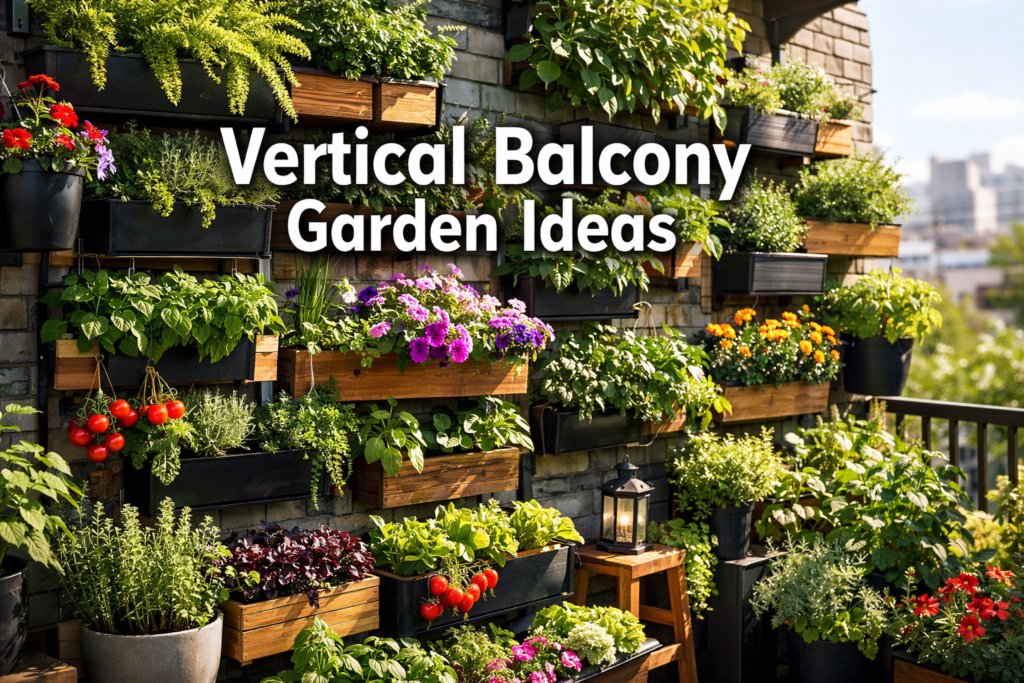
Balconies, no matter how small, offer a unique opportunity to cultivate a thriving garden using vertical space. Implementing vertical balcony garden ideas allows you to maximize your growing area without expanding your footprint, bringing lush greenery and even fresh produce right to your urban home. This comprehensive guide will equip you with the knowledge and inspiration to design and maintain your own beautiful and productive vertical garden in 2026.
Key Takeaways
- Vertical gardening on balconies significantly multiplies growing space, ideal for urban dwellers [2, 3].
- Popular vertical systems include wall-mounted planters, tiered stands, hanging baskets, and repurposed items [2].
- Choose plants carefully based on your balcony’s sunlight exposure, considering edibles, ornamentals, and privacy screens [2, 3].
- Modular and adjustable vertical systems are a growing trend in 2026, offering flexibility for expanding gardens [1].
- Proper watering, feeding, and sunlight assessment are crucial for vertical garden success [2].
- Vertical gardens can enhance privacy, improve air quality, and boost mental well-being [1, 4].
- Consider multi-purpose design principles, selecting plants that offer both beauty and function [3].
Quick Answer
Vertical balcony garden ideas leverage vertical space to create lush, productive gardens in compact urban environments. This involves using various structures like wall-mounted planters, tiered stands, and hanging systems to grow a diverse range of plants, from herbs and vegetables to flowers and privacy screens, effectively transforming a small balcony into a green oasis [2, 4].
What Are Vertical Balcony Garden Ideas and Why Are They Essential for Small Spaces?
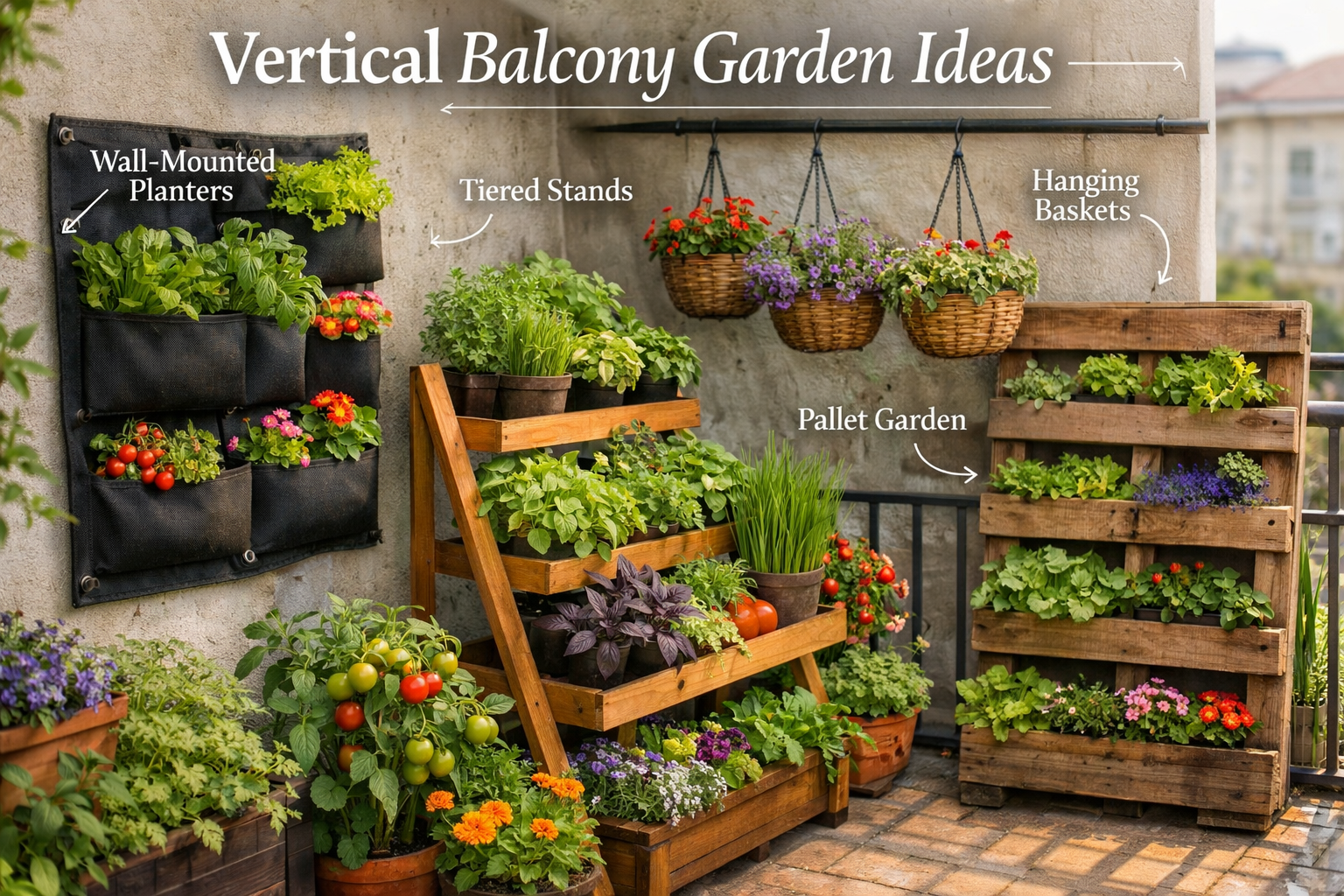
Vertical balcony garden ideas involve cultivating plants in an upward direction rather than horizontally, maximizing the growing area on confined balconies. This approach is essential for small spaces because it allows urban gardeners to significantly increase the number of plants they can grow without requiring additional floor space, making greenery accessible even in the most cramped urban settings [2, 3].
Traditional gardening methods often demand significant ground area, which is a luxury many apartment or condo dwellers simply don’t have. Vertical gardening overcomes this limitation by utilizing walls, railings, and ceilings. By extending upwards, you can create a vibrant garden that offers both aesthetic appeal and practical benefits, such as growing your own food or enhancing privacy [1, 4]. It’s not just about fitting more plants; it’s about transforming a previously underutilized dimension into a living, breathing part of your home.
Benefits of Vertical Balcony Gardens:
- Space Optimization: The most obvious benefit is the ability to grow more plants in a limited footprint. This is particularly valuable as urban living continues to increase and lot sizes shrink [3].
- Enhanced Aesthetics: Vertical gardens add dynamic visual interest, transforming bland walls or railings into vibrant displays of foliage and flowers, elevating the overall look of your balcony [1].
- Privacy & Screening: Taller vertical systems or climbing vines can create natural screens, offering increased privacy from neighbors [1].
- Improved Air Quality: Plants naturally filter air pollutants, contributing to a fresher, healthier environment around your balcony [4].
- Accessibility: Vertical gardens can be more ergonomic, reducing the need to bend or kneel, which can be beneficial for individuals with mobility challenges.
- Reduced Pests & Diseases: Elevated plants may experience fewer ground-dwelling pests and better air circulation, potentially reducing disease incidence.
- Increased Property Value: A well-designed and maintained vertical garden can be an attractive feature that adds value to your property.
When deciding if vertical gardening is right for your balcony, consider your available light and the structural integrity of your railings or walls. For those with limited floor space but ample vertical surfaces, a vertical balcony garden is an ideal solution. For a deeper dive into making the most of tiny outdoor areas, explore our Ultimate Guide to Small Space Gardening for Beginners 2026.
What Are the Best Types of Vertical Balcony Garden Systems for 2026?
The best types of vertical balcony garden systems for 2026 include modular wall-mounted planters, tiered plant stands, and hanging basket arrangements, each offering unique advantages for maximizing space and aesthetics on urban balconies. These systems are gaining prominence due to their adaptability, efficiency, and ability to cater to diverse plant needs and design preferences [1, 2].
Choosing the right system depends on your balcony’s structure, available sunlight, and the types of plants you wish to grow. Modular systems, in particular, are trending in 2026 because they allow for easy expansion and reconfiguration as your gardening aspirations evolve [1].
Popular Vertical Garden Systems:
Wall-Mounted Planters:
- Description: These systems attach directly to a balcony wall or railing, often consisting of pockets, shelves, or individual pots.
- Pros: Excellent for transforming blank walls, good for shallow-rooted plants like herbs and succulents, and many are self-watering.
- Cons: Requires sturdy wall attachment, can be heavy when filled, and might not be suitable for very deep-rooted plants.
- Choose if: You have a sturdy wall, desire a lush “living wall” effect, and want to maximize every inch of vertical surface. Some modular versions can even grow with your garden [1].
Tiered Plant Stands:
- Description: Freestanding structures with multiple levels or shelves, allowing plants to be arranged vertically.
- Pros: Portable, requires no wall attachment, great for showcasing a variety of plants, and easy to rearrange.
- Cons: Occupies some floor space, can be less stable in strong winds depending on design.
- Choose if: You prefer flexibility, want to display a diverse collection of plants, or have limited wall space.
Hanging Baskets & Railing Planters:
- Description: Baskets suspended from ceilings or hooks, or planters designed to hook directly onto balcony railings.
- Pros: Utilizes overhead or railing space, ideal for trailing plants, and adds a soft, cascading look.
- Cons: Can be challenging to water efficiently (especially hanging baskets), and railing planters may impact privacy if too low.
- Choose if: You want to add greenery without using floor or wall space, or for plants that naturally cascade.
Repurposed Pallet or Ladder Gardens:
- Description: DIY solutions using old wooden pallets or stepladders converted into vertical planters.
- Pros: Cost-effective, sustainable, and offers a rustic, charming aesthetic.
- Cons: Requires some DIY effort, may need waterproofing, and can be less durable than purpose-built systems.
- Choose if: You enjoy DIY projects, are on a budget, and want a unique, upcycled look.
Hydroponic/Aeroponic Vertical Systems:
- Description: Advanced systems that grow plants without soil, using nutrient-rich water solutions.
- Pros: Faster growth, less water usage, and no soil-borne pests.
- Cons: Higher initial cost, requires more technical knowledge, and can be sensitive to power outages.
- Choose if: You are an experienced gardener, interested in technology, and prioritize efficiency and rapid growth.
Decision Rule: For beginners, a tiered stand or a simple wall-mounted pocket system is often the easiest to start with. If privacy is a primary concern, look for taller wall-mounted panels or trellises that can support climbing vines [1]. When exploring options for your specific apartment, refer to our Complete Balcony Gardening Guide for Small Apartments 2026.
How Do I Choose the Right Plants for My Vertical Balcony Garden?
Choosing the right plants for your vertical balcony garden involves assessing your balcony’s sunlight exposure, considering the climate, and matching plant needs to your chosen vertical system. Successful plant selection ensures thriving greenery and maximizes the benefits of your compact growing space [2, 3].
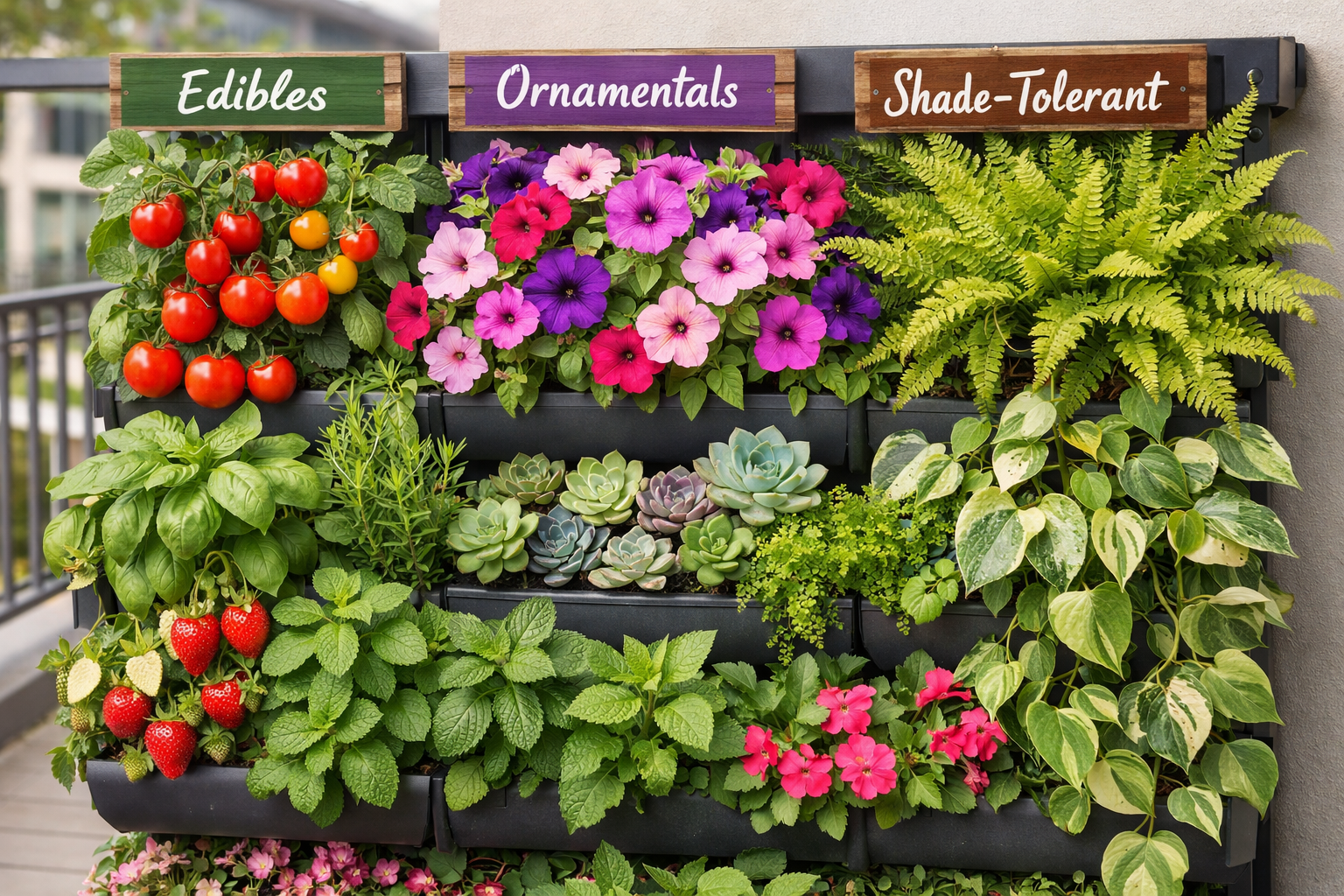
The primary factors influencing plant choice are sunlight and space. Most plants need at least 6 hours of direct sunlight to thrive, especially edibles. However, many ornamental and shade-tolerant options can flourish with less [2].
Key Considerations for Plant Selection:
Sunlight Exposure: This is the most critical factor.
- Full Sun (6+ hours direct sun): Ideal for most vegetables like tomatoes (cherry varieties do well vertically), peppers, herbs (basil, rosemary, thyme), strawberries, and many flowering annuals like petunias and marigolds [2].
- Partial Sun (3-6 hours direct sun): Good for leafy greens (lettuce, spinach, kale), some herbs (mint, cilantro), bush beans, and shade-tolerant ornamentals like impatiens, fuchsias, and begonias [2].
- Shade (less than 3 hours direct sun): Best for ferns, hostas, Japanese forest grass, some mosses, and certain low-light herbs like mint. Even with limited light, you can still create a lush green space [2].
Plant Size and Growth Habit:
- Compact Varieties: Look for “bush” or “dwarf” varieties of vegetables (e.g., bush cucumbers, dwarf tomatoes) that won’t outgrow their vertical containers.
- Trailing Plants: Ideal for hanging baskets or the top tiers of vertical systems, allowing them to cascade downwards (e.g., strawberries, nasturtiums, sweet potato vines).
- Climbing Plants: Vining plants like peas, pole beans, cucumbers, or morning glories are perfect for trellises or mesh vertical systems, especially if privacy is desired [1].
Water Needs:
- Group plants with similar water requirements together to simplify care. Some vertical systems can dry out faster, so choose plants that can tolerate these conditions or opt for self-watering systems.
Root Depth:
- Ensure the pockets or containers in your vertical system are deep enough for the plants’ root systems. Herbs and leafy greens generally have shallow roots, while some vegetables need more depth.
Multi-purpose Plants:
- In 2026, there’s a trend towards selecting plants that offer more than one benefit. For example, nasturtiums are both edible and ornamental, while tall herbs can also serve as delicate privacy screens [3].
Recommended Plants for Vertical Balcony Gardens:
| Plant Type | Examples | Sunlight Needs | Best Vertical System Fit |
|---|---|---|---|
| Edibles | Cherry Tomatoes, Strawberries, Lettuce, Spinach, Kale, Bush Beans, Peas | Full Sun to Partial Sun | Wall-mounted, Tiered Stands, Trellises |
| Herbs | Basil, Mint, Rosemary, Thyme, Chives, Oregano, Cilantro | Full Sun to Partial Sun | Wall-mounted, Hanging Baskets, Tiered |
| Ornamentals | Petunias, Impatiens, Begonias, Nasturtiums, Succulents, Ferns, Ivy, Fuchsias | Full Sun to Shade | All systems, especially Hanging |
| Privacy Screens | Climbing Roses (dwarf), Clematis, Morning Glories, Tall Herbs | Full Sun to Partial Sun | Trellises, Wall-mounted panels |
Common Mistake: Don’t overcrowd your vertical system. While it’s tempting to plant many things, giving each plant adequate space for air circulation and growth will lead to healthier, more productive results. If you’re struggling to choose, our article on Best Plants for Small Gardens 2026: The Complete List provides further guidance.
What Are Essential Design Principles for Vertical Balcony Garden Ideas?
Essential design principles for vertical balcony garden ideas focus on maximizing functionality and aesthetic appeal in limited spaces, emphasizing plant variety, structural integrity, and smart use of light and texture. Thoughtful design transforms a balcony into a cohesive and inviting outdoor retreat, rather than just a collection of pots [1, 3].
Effective vertical garden design goes beyond simply installing a system; it considers how the garden integrates with your lifestyle and the existing balcony environment. Key principles help create a harmonious space that is both beautiful and easy to maintain.
Key Design Principles:
Prioritize Functionality:
- Before aesthetics, consider the primary purpose of your garden. Is it for growing food, enhancing privacy, or simply for beauty? This will guide your plant and system choices.
- Multi-purpose design is a key trend in 2026, where plants and hardscaping are chosen for multiple functions [3]. For example, edible herbs can also be ornamental, and a tall vertical planter can double as a privacy screen.
Assess Sunlight and Shade Patterns:
- Map out how sunlight hits your balcony throughout the day. This dictates which plants can thrive where [2]. Place sun-loving plants on the sunniest tiers and shade-tolerant ones below or in shadier spots.
- Consider how your vertical structure itself might cast shadows on lower plants.
Vary Plant Heights, Textures, and Colors:
- To create visual interest, incorporate a mix of plants with different growth habits (upright, trailing, bushy), leaf textures (smooth, fuzzy, feathery), and flower colors. This creates depth and prevents a monotonous look.
- Combining plants with diverse foliage, such as broad-leafed ferns with delicate herbs, adds richness [1].
Incorporate Structural Elements:
- Don’t just think about plants. Consider the vertical system itself as part of the design. Trellises, decorative panels, or repurposed items like old ladders can add character [2].
- Ensure any chosen structure is sturdy and securely anchored, especially for heavier plants or in windy conditions.
Think About Accessibility and Maintenance:
- Design your garden so all plants are easily reachable for watering, pruning, and harvesting. This might mean placing frequently used herbs at eye level.
- Consider automated watering systems for larger vertical gardens to simplify daily tasks, especially if you travel frequently.
Integrate Lighting and Textural Elements:
- In 2026, combining plants with lighting and textural elements is emphasized to elevate the visual impact of small spaces [1]. Solar-powered fairy lights or small lanterns can create a magical ambiance in the evening.
- Introduce natural textures through stone, wood, or woven baskets to complement the greenery.
Consider Privacy Needs:
- If privacy is a concern, position taller vertical planters or use climbing vines on trellises along the edges of your balcony to create a natural screen [1]. For more privacy ideas, refer to our Balcony Gardening resources.
Edge Case: If your balcony has very strong winds, opt for heavier, more stable vertical systems or ensure all hanging elements are extremely secure. Plants should also be chosen for their resilience to wind. Using a sturdy, heavy-duty planter for the base of a tiered system can provide extra stability.
What Are the Best Plants for Vertical Balcony Garden Ideas for Privacy?
The best plants for vertical balcony garden ideas focused on privacy include fast-growing climbing vines like ivy and morning glories, tall and bushy herbs such as rosemary and lavender, and leafy vegetables like kale, especially when grown on trellises or dense vertical panels. These plants create a natural screen, offering seclusion without sacrificing greenery [1].
Privacy is a common concern for urban balcony dwellers. Vertical gardens provide an aesthetic and eco-friendly solution to block unwanted views from neighbors or passersby. When selecting plants, consider their mature size, density, and growth rate.
Top Plant Choices for Balcony Privacy:
Climbing Vines:
- Ivy (Hedera helix): A classic, hardy choice that provides dense, year-round coverage. Ensure your balcony structure can support its weight, and be mindful of its invasive potential if not contained.
- Morning Glory (Ipomoea purpurea): A fast-growing annual that produces beautiful trumpet-shaped flowers. It offers quick coverage during the growing season.
- Clematis: Offers stunning flowers and good coverage. Many varieties are suitable for containers and trellises.
- Climbing Roses (dwarf varieties): Can provide beautiful, fragrant privacy, but require more care and sunlight.
- Benefits: Excellent for covering large vertical areas quickly, offering a lush, natural barrier.
- Best System: Trellises, netting, or grid-like wall-mounted systems [2].
Tall and Bushy Herbs:
- Rosemary (Rosmarinus officinalis): Many varieties grow upright and bushy, offering fragrant, evergreen privacy.
- Lavender (Lavandula): While not as tall as some, dense lavender plants can create a visually appealing barrier and deter pests.
- Lemon Verbena (Aloysia citrodora): Can grow quite tall and bushy, providing a light, airy screen with a lovely citrus scent.
- Benefits: Dual-purpose—provides privacy and offers culinary or aromatic benefits.
- Best System: Deep wall-mounted planters, tiered stands, or large individual containers on a vertical rack.
Leafy Vegetables:
- Kale (Brassica oleracea): Certain varieties grow quite tall and leafy, creating a dense green screen while providing fresh greens for your kitchen.
- Swiss Chard (Beta vulgaris subsp. vulgaris): Similar to kale, it offers large, colorful leaves that can form an effective, temporary barrier.
- Benefits: Functional privacy that also yields edible crops.
- Best System: Wall-mounted pocket systems with adequate depth, or tiered planters.
Bamboo (Fargesia species – non-invasive clumping varieties):
- Benefits: Offers excellent, dense, year-round privacy with a minimalist aesthetic. Choose clumping varieties specifically (like Fargesia) to avoid invasive spreading.
- Best System: Large, deep containers or purpose-built vertical planters that can contain their root systems. Ensure the balcony can support the weight.
Ferns and Grasses:
- Japanese Forest Grass (Hakonechloa macra): Offers a soft, cascading effect that can provide light screening, especially if planted in dense groupings [2].
- Other Ornamental Grasses: Look for upright, clumping varieties that provide height and texture.
- Benefits: Adds texture and movement, creating a tranquil atmosphere.
- Best System: Wall-mounted planters, tiered stands, or hanging baskets.
Quick Example: If your balcony has an unsightly view of a neighbor’s window, a series of connected wall-mounted planters filled with dense English Ivy or tall rosemary bushes could create an effective and attractive privacy wall [1]. For a quicker solution during the warmer months, combine morning glories on a trellis with tiered planters of bushy kale.
How Can I Maintain My Vertical Balcony Garden Effectively in 2026?
Maintaining your vertical balcony garden effectively in 2026 requires consistent attention to watering, feeding, pest management, and regular pruning, tailored to the specific needs of plants in compact vertical systems. Proper maintenance ensures the health, vitality, and longevity of your balcony’s green oasis [2].
Vertical gardens, due to their smaller soil volumes and often increased exposure to sun and wind, typically require more frequent monitoring than traditional in-ground gardens. Staying proactive is key to preventing common issues.
Essential Maintenance Tips:
Watering Smartly:
- Frequency: Vertical gardens often dry out faster than traditional beds. Check soil moisture daily, especially during hot, sunny, or windy weather. Water when the top inch of soil feels dry.
- Method: Use a watering can with a fine rose or consider a drip irrigation system. For tiered systems, ensure water flows down to lower plants without oversaturating the top [2].
- Drainage: Ensure all containers have adequate drainage holes to prevent root rot. Catch any excess runoff to prevent staining your balcony or bothering neighbors below.
- Internal Link: For more guidance, see our How Often Should You Water Plants? Ultimate Guide 2026.
Nutrient Management:
- Fertilize Regularly: With limited soil volume, plants quickly deplete nutrients. Use a balanced liquid fertilizer at half strength every 2-4 weeks, especially for heavy feeders like vegetables and flowering plants.
- Compost: Incorporate slow-release granular organic fertilizers or compost into the potting mix at the beginning of the season to provide a steady supply of nutrients [2].
- Soil Choice: Start with a high-quality, well-draining potting mix specifically designed for containers. For more, read about Soil Basics for Container Gardening: 2026 Expert Guide.
Pest and Disease Control:
- Regular Inspection: Inspect your plants regularly for signs of pests (aphids, spider mites) or diseases. Early detection is crucial.
- Organic Solutions: Use organic pest control methods like neem oil spray or insecticidal soap for common pests. Introduce beneficial insects if possible.
- Good Air Circulation: Ensure plants aren’t too crowded to allow for good airflow, which helps prevent fungal diseases.
Pruning and Deadheading:
- Pruning: Regularly prune back leggy growth to encourage bushier plants and more blooms or harvests. Pinch back herbs to promote new growth.
- Deadheading: Remove spent flowers (deadheading) to encourage continuous blooming and prevent the plant from putting energy into seed production.
Sunlight Assessment:
- Monitor Changes: As the seasons change, the angle and intensity of sunlight on your balcony will shift. Be prepared to rotate portable vertical systems or adjust plant placement to ensure optimal light exposure for all plants.
Structural Integrity:
- Check Systems: Periodically check the stability of your vertical garden structure, especially wall-mounted or hanging systems. Ensure all fasteners are secure and that the weight is evenly distributed and within your balcony’s load limits.
Mistake to Avoid: Neglecting the plants at the very top or bottom of your vertical garden. These areas can be easily overlooked, leading to uneven growth or stressed plants. Make it a habit to examine every plant in your system during your daily checks.
What Are Common Mistakes to Avoid with Vertical Balcony Garden Ideas?
Common mistakes to avoid with vertical balcony garden ideas include improper plant selection for light conditions, insufficient watering, neglecting structural stability, and overcrowding plants. Avoiding these pitfalls is crucial for the success and longevity of your compact garden [2].
Many enthusiastic gardeners jump into vertical gardening without fully understanding the unique challenges and requirements. Being aware of these common errors can save time, effort, and plant life.
Mistakes to Avoid:
Ignoring Sunlight Requirements:
- Mistake: Planting sun-loving vegetables in a shady spot or shade-tolerant ornamentals in intense full sun.
- Consequence: Stunted growth, yellowing leaves, lack of blooms or fruit, and ultimately, plant death.
- Correction: Before buying any plants, carefully observe your balcony’s sunlight exposure throughout the day for at least a week. Choose plants that perfectly match those conditions [2]. For example, if your balcony is north-facing, focus on ferns, hostas, and certain herbs.
Under- or Over-Watering:
- Mistake: Assuming vertical gardens need the same watering as ground beds, leading to either dry, crispy plants or soggy roots. Vertical systems can dry out faster due to increased airflow and smaller soil volumes.
- Consequence: Root rot from overwatering; wilting, stress, and death from underwatering.
- Correction: Check soil moisture daily by sticking your finger an inch or two into the soil. Water thoroughly when the soil feels dry, but ensure good drainage. Consider self-watering planters or a drip irrigation system for consistency.
Neglecting Structural Stability:
- Mistake: Overloading a railing with too many heavy planters, using flimsy materials for DIY projects, or not securely anchoring wall-mounted systems.
- Consequence: Safety hazard (falling planters), damage to property, and loss of your garden.
- Correction: Always prioritize safety. Choose robust vertical systems, ensure they are securely fastened, and confirm your balcony can support the total weight of the plants, soil, and water.
Overcrowding Plants:
- Mistake: Planting too many individual plants in a single pocket or tier to maximize output.
- Consequence: Poor air circulation (leading to fungal diseases), competition for nutrients and light, stunted growth, and lower yields.
- Correction: Follow recommended spacing for each plant. If using pocket planters, often only one or two small plants per pocket is ideal. Allow enough space for mature growth.
Forgetting Fertilization:
- Mistake: Assuming the initial potting mix will provide enough nutrients for the entire growing season.
- Consequence: Nutrient deficiencies, weak plants, poor flowering, and reduced harvests.
- Correction: Container plants, especially in vertical systems, quickly use up soil nutrients. Supplement with a balanced liquid fertilizer every few weeks or use slow-release granular fertilizers [2].
Ignoring Plant Compatibility:
- Mistake: Placing plants with vastly different water or nutrient needs in the same section of a vertical garden.
- Consequence: Some plants thrive while others struggle, making uniform care difficult.
- Correction: Group plants with similar requirements together. For example, don’t put drought-loving succulents next to water-thirsty ferns.
Decision Rule: If you are a beginner, start with a simple, robust vertical system and a small selection of easy-to-grow, low-maintenance plants like herbs or leafy greens. This builds confidence before tackling more complex setups. For more common gardening missteps, check out our Beginner Mistakes in Small Space Gardening 2026.
What Are Some Creative and Budget-Friendly Vertical Balcony Garden Ideas?
Creative and budget-friendly vertical balcony garden ideas often involve repurposing everyday items like pallets, plastic bottles, or old ladders, combined with strategic plant choices and DIY skills. These innovative approaches allow you to build a thriving vertical garden without a significant financial investment, making gardening accessible to everyone in 2026.
Transforming discarded items into functional planters not only saves money but also promotes sustainability and adds a unique, personal touch to your balcony. The key is to look at everyday objects with a gardener’s eye.
Budget-Friendly & Creative Ideas:
Pallet Garden:
- Idea: Repurpose an old wooden pallet by turning it on its side, lining the gaps with landscape fabric, and filling them with soil.
- Benefits: Inexpensive (pallets are often free), creates ready-made planting pockets, and offers a rustic charm.
- Tips: Ensure the pallet is heat-treated (HT stamp) and not chemically treated (MB stamp). Sand rough edges and consider painting or sealing for durability. Great for herbs, strawberries, and small annuals.
Plastic Bottle Vertical Garden:
- Idea: Cut horizontal openings into large plastic bottles, attach them to a wooden frame or directly to a wall with string or zip ties, and plant herbs or small greens.
- Benefits: Upcycles waste, extremely low cost, and customizable.
- Tips: Ensure adequate drainage holes. You can arrange them in a cascading “self-watering” system where water from the top bottle drips down to the ones below.
Ladder Planter:
- Idea: Use an old stepladder as a tiered plant stand. Place pots or planters on each rung.
- Benefits: Free-standing, portable, and creates multiple levels for different plants. Adds a vintage, eclectic look.
- Tips: Ensure the ladder is stable. You can also attach small shelves to the rungs for more planting space.
Shoe Organizer Garden:
- Idea: Hang an over-the-door fabric shoe organizer on a sunny balcony wall. Each pocket becomes a planter.
- Benefits: Very affordable, easy to set up, and lightweight.
- Tips: Best for herbs, succulents, and very small plants. Line pockets with plastic if water retention is an issue. Ensure good drainage.
Tin Can Herb Garden:
- Idea: Decorate empty tin cans, punch drainage holes in the bottom, and attach them to a wooden board or hang them from a railing with wire or string.
- Benefits: Recycles household waste, highly customizable, and perfect for individual herbs.
- Tips: Use a can opener that leaves smooth edges for safety. Paint or wrap cans to prevent rust and add aesthetic appeal.
PVC Pipe Planter:
- Idea: Cut sections of large diameter PVC pipes in half lengthwise, cap the ends, and mount them horizontally on a wall or railing.
- Benefits: Durable, long-lasting, and ideal for rows of leafy greens.
- Tips: Drill drainage holes. Consider painting the pipes to reduce heat absorption and improve aesthetics.
Quick Example: To create a charming and functional herb garden, gather a few old tin cans, paint them in bright, contrasting colors, drill drainage holes, and then attach them to a rustic wooden board using strong adhesive or small screws. This board can then be leaned against a balcony wall or hung securely, instantly transforming a plain surface into a vibrant display of fresh herbs.
What Are the Best Practices for Watering and Fertilizing Vertical Balcony Gardens?
Best practices for watering and fertilizing vertical balcony gardens involve frequent, targeted watering, consistent nutrient supplementation, and careful monitoring of soil moisture and plant health. Due to their limited soil volume and exposure, vertical gardens require a more diligent and strategic approach to irrigation and feeding than traditional gardens [2].
The unique structure of vertical gardens often means smaller pockets of soil, which dry out quickly, especially when exposed to sun and wind. This necessitates a proactive and specific watering and fertilizing regimen.
Watering Best Practices:
Daily Soil Check:
- Action: Physically check the soil moisture daily, especially during warm weather or if your balcony receives intense sun. Stick your finger 1-2 inches into the soil; if it feels dry, it’s time to water [2].
- Why: Visual checks alone can be misleading. Soil in vertical planters can dry from the top down very rapidly.
Thorough but Gentle Watering:
- Action: Water slowly and deeply until you see water dripping from the bottom of the container. Use a watering can with a fine rose or a drip irrigation system to avoid splashing soil and compacting the roots.
- Why: Ensures water reaches all roots, prevents runoff, and helps maintain soil structure. Gentle watering prevents damage to delicate plants.
Consider Automatic Systems:
- Action: Invest in a drip irrigation system with a timer, particularly for larger vertical gardens or if you travel frequently.
- Why: Provides consistent, controlled watering, reduces water waste, and saves time. It’s an excellent solution for preventing both under and overwatering.
Account for Environmental Factors:
- Action: Adjust watering frequency based on temperature, humidity, wind exposure, and plant type. Some plants are thirstier than others.
- Why: High heat and wind increase evaporation, requiring more frequent watering.
Fertilizing Best Practices:
Start with Nutrient-Rich Potting Mix:
- Action: Begin your vertical garden with a high-quality, lightweight potting mix specifically formulated for containers. Many include slow-release fertilizers.
- Why: Provides a good base of nutrients and excellent drainage from the start.
Regular Liquid Feedings:
- Action: Supplement with a balanced liquid fertilizer (e.g., 5-10-5 or 10-10-10) at half strength every 2-4 weeks during the growing season [2].
- Why: Plants in small containers rapidly deplete soil nutrients. Liquid fertilizers provide quick access to essential elements. Always follow package directions and avoid over-fertilizing.
Slow-Release Options:
- Action: Alternatively, or in combination, incorporate a slow-release granular fertilizer into the soil at planting time. These typically last for several months.
- Why: Offers a steady, consistent supply of nutrients, reducing the need for frequent liquid feeding.
Watch for Deficiency Signs:
- Action: Monitor your plants for signs of nutrient deficiencies, such as yellowing leaves (nitrogen deficiency), stunted growth, or poor flowering/fruiting.
- Why: Early detection allows for timely intervention, such as adjusting your fertilization schedule or using a specific nutrient boost.
Avoid Over-Fertilizing:
- Action: More is not always better. Excessive fertilizer can burn plant roots and lead to salt buildup in the soil.
- Why: Over-fertilization can harm plants more than it helps, leading to stress or death. Always err on the side of less, increasing if needed.
Common Mistake: Using garden soil instead of potting mix. Garden soil compacts in containers, inhibits drainage, and can introduce pests and diseases. Always use a sterile, well-draining potting mix for vertical gardens. For additional insights on plant care, check out our Beginner’s Guide to Plant Care 2026: Grow Thriving Plants.
Conclusion
Vertical balcony garden ideas offer an inspiring and practical solution for urban dwellers eager to cultivate greenery in limited spaces in 2026. By strategically utilizing vertical dimensions, even the smallest balcony can be transformed into a vibrant and productive garden. From choosing the right modular systems and selecting plants tailored to your balcony’s specific conditions to implementing smart watering strategies and embracing creative, budget-friendly designs, the possibilities are extensive.
Successfully creating and maintaining a vertical balcony garden not only beautifies your living space but also provides fresh produce, enhances privacy, and fosters a deeper connection with nature. Remember that thoughtful planning, consistent care, and a willingness to learn are the cornerstones of a thriving vertical garden.
Actionable Next Steps:
- Assess Your Balcony: Determine the amount of direct sunlight your balcony receives throughout the day. This is critical for plant selection.
- Choose Your System: Select a vertical gardening system (wall-mounted, tiered, hanging, or DIY) that best suits your space, budget, and desired plant types.
- Select Your Plants: Based on your sunlight assessment, choose appropriate plants, prioritizing compact varieties, edibles, and those that offer multi-purpose benefits.
- Gather Supplies: Acquire high-quality potting mix, appropriate tools, and fertilizers.
- Start Planting: Follow best practices for planting, watering, and feeding.
- Observe and Adjust: Regularly monitor your garden’s health, adjusting watering, feeding, and pest control as needed.
Embrace the joy of gardening vertically and watch your balcony transform into a lush, green sanctuary in 2026.
FAQ
Q1: Can I grow vegetables in a vertical balcony garden?
A1: Yes, many compact and shallow-rooted vegetables like lettuce, spinach, kale, bush beans, cherry tomatoes, and strawberries are excellent choices for vertical balcony gardens [2].
Q2: How much sunlight does a vertical balcony garden need?
A2: Most edible plants and flowering annuals require at least 6 hours of direct sunlight per day, while many herbs and leafy greens can thrive with 3-6 hours. Shade-tolerant ornamentals need less than 3 hours [2].
Q3: What are the easiest vertical garden systems for beginners?
A3: Tiered plant stands and simple wall-mounted pocket planters are often the easiest to start with, as they are relatively straightforward to install and manage.
Q4: How often should I water my vertical balcony garden?
A4: Vertical gardens typically need more frequent watering than ground gardens due to smaller soil volumes and increased exposure. Check soil moisture daily and water when the top inch feels dry [2].
Q5: Can vertical gardens help with balcony privacy?
A5: Yes, tall vertical systems or climbing vines grown on trellises can create effective natural privacy screens, blocking unwanted views from neighbors [1].
Q6: Are there budget-friendly options for vertical balcony gardens?
A6: Absolutely! Repurposing items like wooden pallets, plastic bottles, old ladders, or shoe organizers are excellent, cost-effective ways to create a vertical garden.
Q7: What kind of soil should I use for a vertical balcony garden?
A7: Always use a high-quality, well-draining potting mix specifically designed for containers. Avoid heavy garden soil, which can compact and hinder drainage.
Q8: How do I prevent pests in my vertical balcony garden?
A8: Regular inspection, good air circulation (avoid overcrowding), and organic solutions like neem oil or insecticidal soap are effective for pest management.
Q9: Can I grow herbs in a vertical garden?
A9: Yes, herbs like basil, mint, rosemary, thyme, and chives are ideal for vertical gardens due to their compact size and relatively shallow root systems.
Q10: What is a modular vertical garden system?
A10: Modular systems are designed with stackable or adjustable panels that can be easily expanded or reconfigured, offering flexibility as your garden grows and evolves [1].
References
[1] Watch – https://www.youtube.com/watch?v=PG35IJqD7nE
[2] Vertical – https://www.gardendesign.com/vertical/
[3] Small Garden Ideas 2026 – https://www.decoronomics.com/small-garden-ideas-2026/
[4] Vertical Gardening For Small Spaces Transform Your Balcony Into A Green Oasis – https://gardensoulus.com/blogs/news/vertical-gardening-for-small-spaces-transform-your-balcony-into-a-green-oasis
[5] Vertical Balcony Garden Ideas Phbr1 Bpt 28359a 34 281 – https://www.houzz.com/photos/vertical-balcony-garden-ideas-phbr1-bp~t_28359~a_34-281
[6] Colorful Balcony Garden Plans – https://obliquenewyork.com/2026/01/16/colorful-balcony-garden-plans/