Hydroponics for Apartments: What Nobody Tells You Before You Start
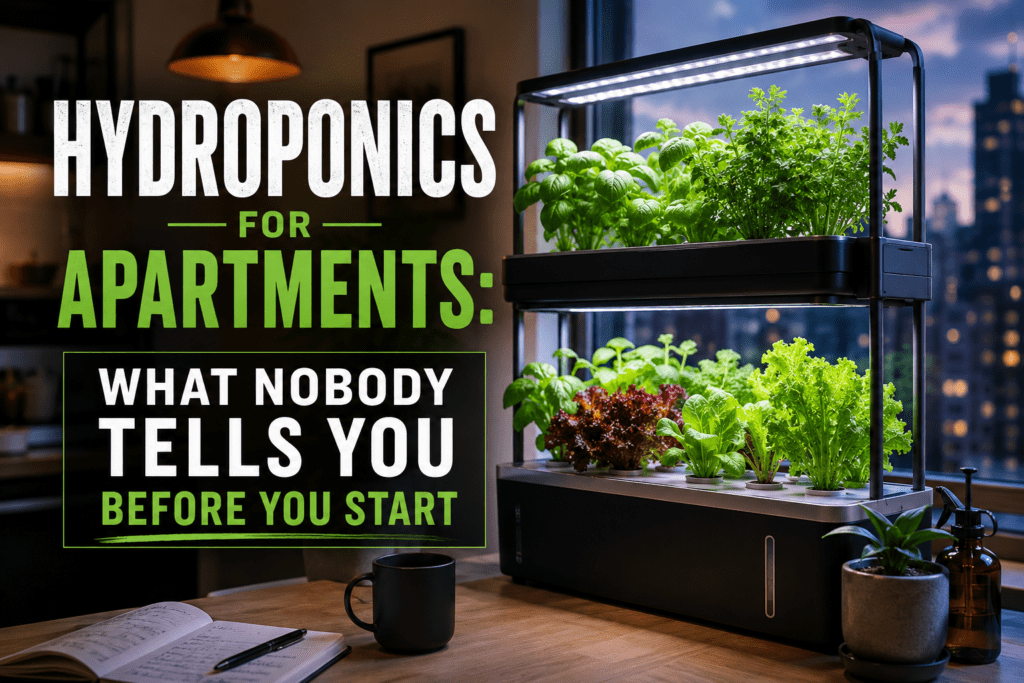
Quick Answer: Starting hydroponics in an apartment isn’t just about growing plants without soil; it’s about managing an indoor ecosystem that requires specific knowledge of nutrients, pH, lighting, and system maintenance. While often touted as low-maintenance, a successful apartment hydroponic setup demands consistent attention to detail to avoid common pitfalls like nutrient imbalances, algae growth, and pest infestations, which can quickly derail a beginner’s efforts.
Key Takeaways
- Hydroponics involves growing plants in nutrient-rich water instead of soil, ideal for small spaces.
- Initial setup costs can range from $50 for basic DIY systems to over $500 for advanced kits.
- Leafy greens, herbs, and some fruiting vegetables thrive in apartment hydroponic systems.
- Common beginner mistakes include neglecting pH, using incorrect nutrients, and insufficient lighting.
- While productive, achieving 80% homegrown food from a small apartment hydroponic garden is challenging.
- DWC and NFT systems are often best for beginners due to their relative simplicity.
- Daily time commitment for a small system is minimal, but weekly maintenance is crucial.
- Modern hydroponic systems are generally quiet and clean, but some components can generate low-level noise.
- Essential equipment includes a system, grow lights, nutrients, pH testing kit, and pump.
- Electricity usage varies but is manageable for small setups; LEDs are energy-efficient.
- Hydroponic systems can be made pet and child-safe with careful placement and non-toxic solutions.
- Hydroponics offers faster growth and less mess than soil gardening, but with higher initial complexity.
What Exactly Is Hydroponic Gardening and How Does It Work in Small Spaces?
Hydroponic gardening is a method of growing plants without soil, using mineral nutrient solutions dissolved in water. In small spaces like apartments, this translates to compact, vertical, or stackable systems that maximize limited square footage, allowing you to grow fresh produce indoors year-round. These systems circulate nutrient-rich water directly to the plant roots, eliminating the need for soil and often accelerating growth.
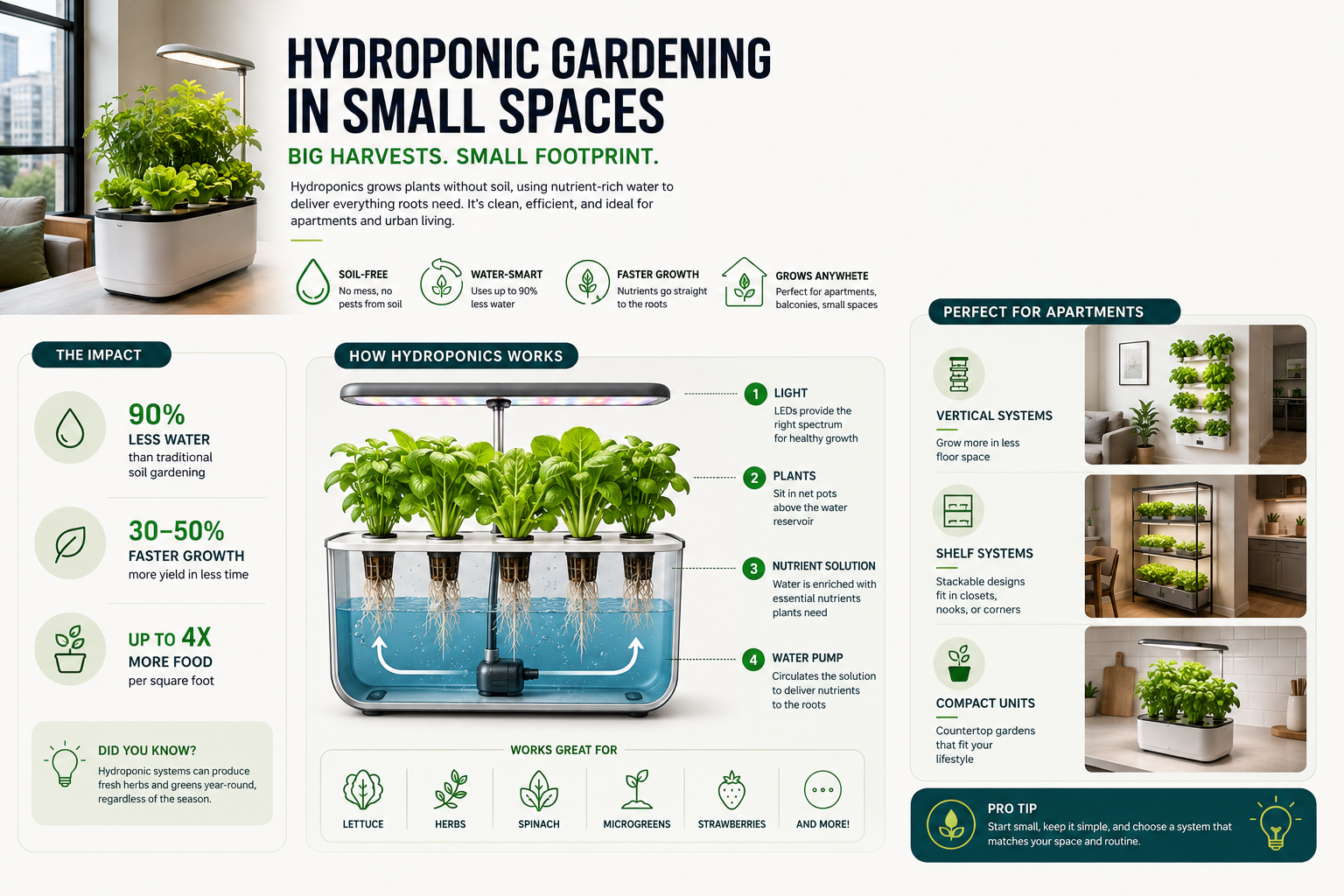
- Core Principle: Plants obtain all necessary nutrients directly from the water solution, which is carefully balanced for their specific needs. This direct delivery can lead to faster growth rates and higher yields compared to traditional soil gardening.
- System Types for Apartments:
- Deep Water Culture (DWC): Plants sit in net pots with roots submerged directly in a reservoir of nutrient solution. An air pump and air stone oxygenate the water. Simple and good for leafy greens.
- Nutrient Film Technique (NFT): A shallow stream of nutrient solution flows over the roots in a sloped channel, providing both water and oxygen. Efficient for linear spaces.
- Wick System: The simplest, most passive system, using a wick to draw nutrient solution from a reservoir up to the growing medium around the plant roots. Suitable for smaller plants and herbs, but less efficient for larger plants.
- Drip System: Nutrient solution is pumped through tubes and delivered directly to the base of each plant via drip emitters. Good for larger, long-growing plants.
- Vertical Towers: These systems stack plants vertically, making them incredibly space-efficient for apartments. They often use NFT or Drip techniques.
- Space Optimization: Hydroponics allows for vertical expansion, turning a small corner or even a bookshelf into a productive garden. Many systems are designed to be sleek and aesthetically pleasing, integrating into modern apartment decor. This method contrasts with container gardening where soil volume and pot size are significant considerations.
How Much Does It Cost to Set Up a Hydroponic System in My Apartment?
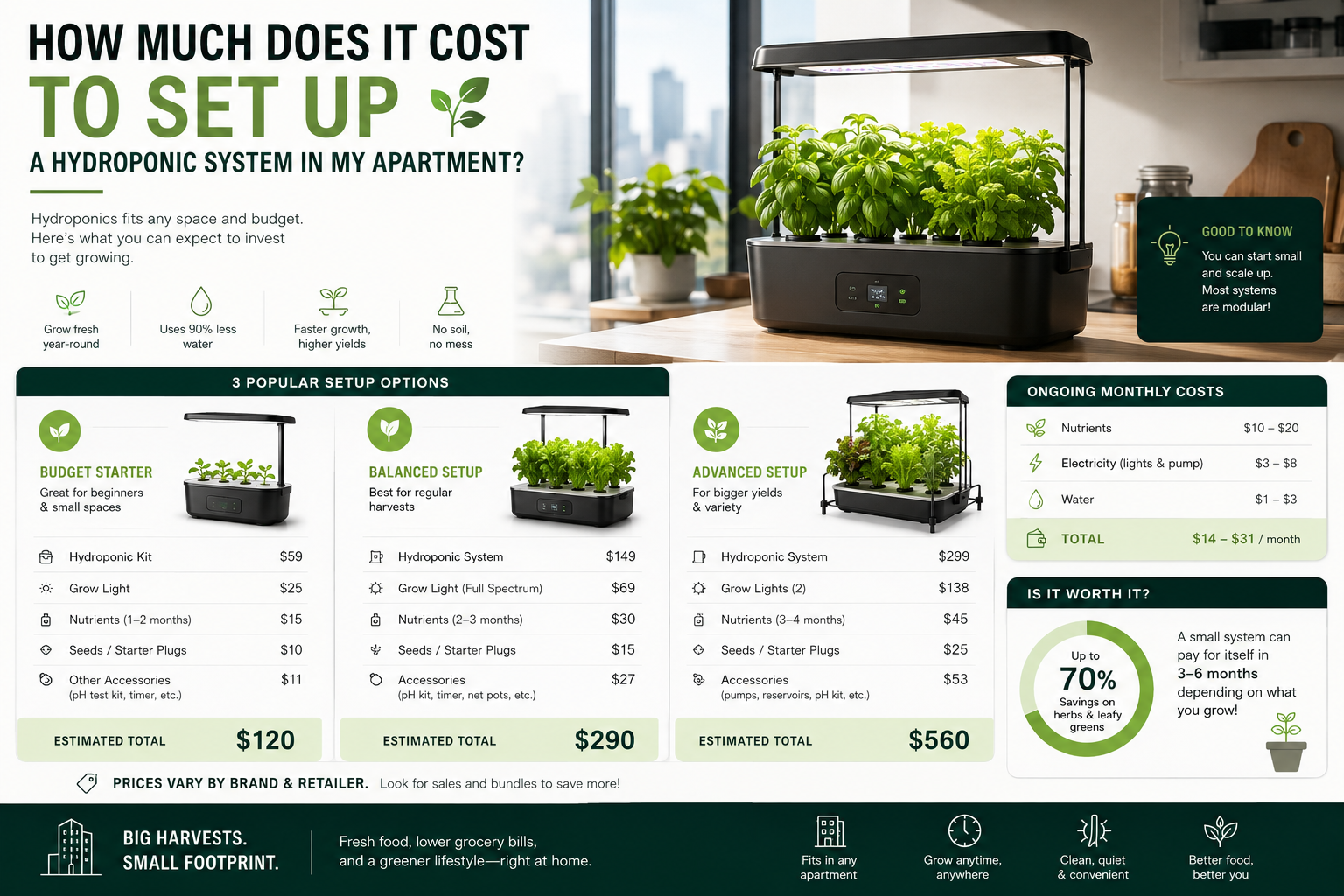
The cost to set up an apartment hydroponic system can vary significantly, ranging from as little as $50 for a basic DIY setup to over $500 for a pre-built, automated, and aesthetically pleasing unit. This initial investment depends on the system type, its size, the level of automation, and the quality of components like grow lights.
- Entry-Level (DIY or Basic Kits: $50 – $150):
- DIY DWC System: You can build a basic DWC system using readily available materials like storage totes, air pumps, air stones, net pots, and growing media (rockwool, coco coir). This option is the most budget-friendly.
- Small, Simple Kits: Some starter kits for herbs or single plants are available at this price point, often lacking advanced features or powerful grow lights.
- Mid-Range (Ready-to-Use Systems: $150 – $400):
- These often include compact vertical systems or multi-plant DWC/NFT setups with integrated LED grow lights and basic timers. Brands like AeroGarden or iDoo offer options in this range, providing a good balance of ease of use and performance.
- High-End (Automated & Advanced Systems: $400 – $1000+):
- These systems feature advanced automation (app control, automatic nutrient dosing), higher quality components, larger growing capacity, and often more sophisticated grow lights. They are designed for serious hobbyists looking for maximum convenience and yield.
- Ongoing Costs:
- Nutrients: $15 – $30 per month, depending on usage and plant type.
- Electricity: $5 – $20 per month, primarily for grow lights and pumps (discussed in detail below).
- Growing Media & Seeds: Minimal, perhaps $10 – $20 every few months.
- pH Testing & Adjustment: $10 – $20 for initial kit, refills are inexpensive.
What Are the Best Vegetables and Herbs to Grow Hydroponically in Limited Space?
The best vegetables and herbs to grow hydroponically in a limited apartment space are typically fast-growing, compact plants that don’t require deep root systems or extensive trellising, such as leafy greens, most herbs, and some smaller fruiting plants. These plants thrive in the consistent nutrient delivery and controlled environment of indoor hydroponics.
- Top Choices for Beginners:
- 🥬 Leafy Greens: Lettuce (especially loose-leaf varieties like butterhead, romaine), spinach, kale, Swiss chard. These are rapid growers and demand consistent, moderate light.
- 🌿 Herbs: Basil, mint, parsley, cilantro, chives, oregano, thyme. Most herbs flourish in hydroponics, offering a fresh supply for cooking. For more ideas, explore an indoor herb garden setup.
- Microgreens: While not typically grown in full hydroponic systems, they are a soil-less option that grows quickly in small trays, providing dense nutrition. Consider our guide on Microgreens Vs Sprouts.
- Moderate Difficulty (Small Fruiting Plants):
- 🌶️ Dwarf Peppers: Small bell peppers or chili varieties can do well, but require more light and a longer growing season.
- 🍓 Strawberries: Specific hydroponic varieties of strawberries can be highly productive.
- 🍅 Cherry Tomatoes: Dwarf or determinate varieties are manageable but need good light and sometimes light support. Growing tomatoes in small spaces is possible with the right approach.
- Plants to Avoid (for apartment beginners): Large root vegetables (carrots, potatoes), corn, melons, or squash due to their size, extensive light needs, and space requirements.
What Common Mistakes Do Beginners Make When Starting Hydroponic Gardening?
Beginners in apartment hydroponics frequently make mistakes related to nutrient management, pH levels, and environmental control, which can quickly lead to plant health issues or system failure. Overlooking these critical details is often what nobody tells you before you start.
- Neglecting pH Levels: The most common mistake. Plants can only absorb nutrients effectively within a specific pH range (typically 5.5-6.5 for most vegetables). Incorrect pH locks out nutrients, leading to deficiencies. Decision Rule: Test your water’s pH daily for the first week, then 2-3 times a week, and adjust as necessary using pH up/down solutions.
- Incorrect Nutrient Dosage: Using too much or too little nutrient solution can burn plants or cause deficiencies. Follow the manufacturer’s instructions carefully. Common Mistake: Mixing nutrients from different brands, which can lead to chemical imbalances.
- Insufficient Lighting: Many beginners underestimate the amount of light plants need. Standard room lighting is not enough for most edible plants. Edge Case: Leafy greens might tolerate less light than fruiting plants, but robust growth still requires dedicated grow lights. See our guide on Best Grow Lights For Indoor Plants In Small Spaces 2026.
- Ignoring Water Temperature: Cold water can shock roots and slow growth, while warm water encourages algae and root rot. Aim for reservoir temperatures between 65-72°F (18-22°C).
- Lack of System Cleaning: Algae and bacterial buildup can clog pumps and deprive roots of oxygen. Regular cleaning (every 1-2 weeks during nutrient changes) is essential.
- Overcrowding Plants: While tempting to maximize space, overcrowding reduces air circulation and light penetration, fostering disease and stunting growth. Allow adequate spacing.
Can I Really Grow Enough Food to Make This Worth My Time?
Yes, you can certainly grow enough food hydroponically in an apartment to make it worthwhile, especially for high-value items like fresh herbs and leafy greens, but it’s important to set realistic expectations; achieving near self-sufficiency is challenging for most small setups. The “worth” often comes from the consistent availability of fresh produce, the avoidance of pesticides, and the enjoyment of the gardening process itself.
- Realistic Yields:
- Herbs and Leafy Greens: A small vertical system can provide a continuous supply of lettuce, spinach, basil, and other herbs, often surpassing the needs of a small household for these specific items. Many people find this alone justifies the effort.
- Fruiting Plants: Growing enough tomatoes or peppers for daily consumption requires larger systems and significant light, which can be challenging in a typical apartment.
- Cost vs. Benefit: While fresh produce from your garden might save you money on certain items, the initial investment and ongoing costs might not make it cheaper than buying from a grocery store, especially for a small-scale setup. The true value often lies in:
- Freshness and Quality: Produce picked moments before consumption has superior flavor and nutrient content.
- Control Over What You Eat: No pesticides or unknown chemicals.
- Year-Round Availability: Grow regardless of outdoor seasons or weather.
- Educational and Therapeutic Value: Engaging in gardening can be a rewarding hobby.
- Comparison with Self-Sufficiency: It’s unlikely a typical apartment hydroponic system will make you 80% self-sufficient in food. That level of production usually requires a much larger dedicated space and significant investment, as explored in “Is 80% Homegrown Food From An Apartment Garden Realistic?”(https://minispacegarden.com/is-it-realistic-to-eat-80-homegrown-food-from-a-small-apartment-garden/).
Which Hydroponic System Is Best for Someone with Zero Gardening Experience?
For someone with zero gardening experience, the best hydroponic systems are typically Deep Water Culture (DWC) or small, pre-packaged “all-in-one” countertop units due to their relative simplicity, ease of setup, and minimal moving parts. These systems reduce common beginner complexities, allowing new gardeners to focus on the basics of plant care.
- Deep Water Culture (DWC):
- Why it’s good: Very simple to set up and operate. Plants sit in net pots with their roots submerged directly into an aerated nutrient solution. Fewer components mean less to troubleshoot.
- Ideal for: Leafy greens, herbs.
- Considerations: Requires monitoring pH and nutrient strength, and periodic water changes.
- Countertop “All-in-One” Systems (e.g., AeroGarden, iDoo):
- Why it’s good: These come as complete packages with integrated grow lights, pre-portioned nutrients, and often automated timers for lights and pumps. They offer a highly streamlined experience.
- Ideal for: Herbs, small leafy greens, some dwarf peppers.
- Considerations: Often more expensive per plant site, and proprietary seed/nutrient pods can increase long-term costs.
- Systems to Approach with Caution (for beginners):
- Drip Systems: Can be more complex to set up and troubleshoot emitters.
- NFT Systems: Require precise plumbing and a slight slope, which can be tricky for first-timers.
- Aeroponics: While highly efficient, these systems are advanced, misting roots with nutrient solution, and are prone to clogs if not maintained perfectly.
How Much Maintenance and Daily Time Will a Small Hydroponic Setup Actually Require?
A small hydroponic setup in an apartment will typically require minimal daily time—just a few minutes for quick checks—but necessitates dedicated weekly maintenance sessions of 15-30 minutes for tasks like pH adjustments, nutrient top-offs, and reservoir cleaning. This routine ensures plant health and system longevity.
- Daily (5 minutes or less):
- Visual Inspection: Check plants for signs of stress, pests, or deficiencies (yellowing leaves, wilting).
- Water Level Check: Ensure the reservoir has enough solution, especially in evaporation-prone systems. Top off with plain water if needed to prevent nutrient concentration from becoming too high.
- Weekly (15-30 minutes, or bi-weekly depending on system size and plants):
- pH Adjustment: Test the pH of the nutrient solution and adjust as necessary using pH Up or pH Down.
- Nutrient Top-Off/Change: For smaller systems, you might top off with fresh solution. For larger or older solutions, a full nutrient change is recommended every 1-2 weeks.
- Reservoir Cleaning: When changing the solution, empty and clean the reservoir to prevent algae and bacterial growth.
- System Check: Inspect pumps, air stones, and tubing for clogs or wear.
- Plant Pruning: Remove dead leaves or prune plants to encourage bushier growth and better yields.
- Monthly/Bi-Monthly (30-60 minutes):
- Deep Cleaning: A more thorough cleaning of all components, including grow lights and net pots.
- Component Inspection: Check for any signs of wear on pumps, tubing, or lighting components that might need replacement.
Are Hydroponic Systems Noisy or Messy for Apartment Living?
Modern hydroponic systems are generally designed to be quiet and significantly less messy than traditional soil gardening, making them well-suited for apartment living. While some components like air pumps or water pumps can produce a low hum, most systems are discreet, and the absence of soil eliminates common dirt-related messes.
- Noise Levels:
- Air Pumps: Small air pumps for DWC systems can produce a low, constant hum, similar to a fish tank pump. Higher quality pumps are quieter. Placing the pump on a soft mat or inside a cabinet can further reduce noise.
- Water Pumps: Submersible water pumps for NFT or Drip systems are usually very quiet, as the water dampens the sound. The sound of trickling water might be present but is often considered soothing rather than noisy.
- Fans: If ventilation or air circulation fans are used (especially for larger setups), these can add to the noise, but are often optional for small apartment systems.
- Mess Factor:
- No Soil: This is the biggest advantage for apartment dwellers. There’s no dirt to spill, track indoors, or attract fungus gnats.
- Water Management: The primary “mess” risk is water spills during reservoir changes or if there’s a leak. However, modern systems are designed to be sealed, and careful handling during maintenance minimizes spills.
- Algae: If not maintained, algae can grow in the reservoir or on wet surfaces, but it’s easily cleaned and not inherently messy in the way soil is.
- Overall: Most small, pre-built hydroponic systems are aesthetically pleasing and designed to fit into living spaces without being an eyesore or a source of disruptive noise.
What Equipment Do I Definitely Need Versus What’s Just Extra?
To start hydroponics in an apartment, you definitely need a core set of equipment including a growing system (reservoir, net pots), grow lights, hydroponic nutrients, a pH testing kit, and a water pump/air pump depending on the system type. Anything beyond these essentials, while potentially beneficial, is considered extra for a beginner.
- Definitely Needed (Essentials):
- Hydroponic System: This includes the reservoir (to hold water and nutrients), net pots (to hold plants), and a growing medium (rockwool, coco coir, clay pebbles) to support the plant.
- Grow Lights: Crucial for indoor growth. LED grow lights are energy-efficient and effective for small spaces. Ensure they provide a full spectrum. Our guide on Best Grow Lights For Indoor Plants In Small Spaces 2026 can help you choose.
- Hydroponic Nutrients: Specific formulations for hydroponic use, typically in two or three parts (grow, bloom, micro). Do not use regular garden fertilizers.
- pH Testing Kit & Adjusters: A liquid test kit or digital pH meter, plus pH Up and pH Down solutions are critical for managing water chemistry.
- Water Pump/Air Pump: Depending on your system (water pump for drip/NFT, air pump/air stone for DWC) to circulate and oxygenate the nutrient solution.
- Timer: For grow lights (24-hour digital timer is ideal).
- Helpful, but Not Essential (Extras for Beginners):
- TDS/EC Meter: Measures total dissolved solids (nutrient strength). Useful for advanced monitoring, but pH is more critical for beginners.
- Heater/Chiller: For maintaining optimal water temperature, especially in extreme ambient conditions.
- Fans: For air circulation and strengthening plant stems, but often not strictly necessary for small, open systems.
- Pruning Shears: Dedicated shears are nice to have, but any clean sharp scissors work.
- Automated Dosing System: Dispenses nutrients and pH adjusters automatically. A significant investment for convenience.
How Much Electricity Do These Systems Actually Use?
The electricity usage of an apartment hydroponic system is primarily driven by the grow lights and, to a lesser extent, the water or air pumps; for a typical small setup, the cost is manageable, often ranging from $5 to $20 per month. LED grow lights have made indoor gardening significantly more energy-efficient than older HPS or fluorescent options.
- Grow Lights (Main Energy Consumer):
- A common small LED grow light for a single shelf or small system might draw 50-100 watts.
- Running a 50-watt LED for 16 hours a day (a typical cycle for leafy greens) uses approximately 24 kWh per month. At a national average of $0.15/kWh, this is around $3.60/month.
- A 100-watt LED for the same duration would cost about $7.20/month.
- Larger systems or those growing fruiting plants needing more intense light will naturally use more.
- Pumps (Minimal Energy Consumption):
- Small air pumps (for DWC) or submersible water pumps (for NFT/drip) typically draw 5-15 watts.
- Running a 10-watt pump continuously for a month uses about 7.2 kWh, costing around $1.08/month.
- Total Estimation for a Small Setup:
- With one 75W LED grow light and one 10W pump running consistently, the total monthly electricity consumption could be around 38 kWh, costing approximately $5.70.
- This cost can increase with more powerful lights, additional pumps, or environmental controls like heaters/fans.
- Factors Influencing Usage:
- Light Intensity & Duration: Fruiting plants need more light (longer duration, higher intensity).
- System Size: More plants typically mean more lights and pumps.
- Type of Lights: LEDs are most efficient.
Are Hydroponic Gardens Safe If I Have Pets or Small Children?
Hydroponic gardens can be made safe for pets and small children with careful planning, mainly by choosing non-toxic plants, ensuring secure system components to prevent spills, and keeping concentrated nutrient solutions out of reach. The absence of soil often reduces the appeal for curious pets, but vigilance is still necessary.
- Plant Safety:
- Choose Non-Toxic Plants: Many common hydroponic plants like lettuce, basil, spinach, and most herbs are non-toxic. However, always verify for specific varieties if you have pets or children who might nibble. Avoid toxic plants like philodendrons or peace lilies if they are in reach. Consult lists of pet and kid-safe indoor plants.
- Prevent Access: Even non-toxic plants can cause digestive upset if consumed in large quantities. Position your system out of reach, use physical barriers, or consider enclosed grow tents for added security.
- System Safety:
- Nutrient Solutions: Concentrated hydroponic nutrients are not for consumption and should be stored securely, like any household chemical, out of reach of children and pets. Even diluted solutions, if ingested in large amounts, could cause issues.
- Water Reservoirs: Ensure reservoirs are covered to prevent drowning hazards for very small pets or children, and to deter pets from drinking the nutrient solution.
- Electrical Components: All electrical cords, pumps, and lights should be properly insulated, secured, and kept away from standing water. Use ground fault circuit interrupters (GFCIs) for outlets.
- Grow Lights: While LEDs are generally safe, avoid direct prolonged eye exposure, especially for children. Ensure lights are securely mounted so they cannot fall.
- Overall: With thoughtful placement, secure components, and a focus on non-toxic plants, an apartment hydroponic garden can coexist safely with pets and children.
What Are the Pros and Cons Compared to Traditional Soil Gardening?
Compared to traditional soil gardening, hydroponics offers benefits like faster growth and less mess but comes with higher initial costs and a steeper learning curve for managing nutrient and pH levels. Each method has distinct advantages and disadvantages that make them suitable for different gardeners and environments.
Pros of Hydroponics for Apartments:
- Faster Growth Rates: Plants often grow 25-50% faster due to direct access to nutrients and optimized growing conditions.
- Higher Yields: Can produce more crops in the same amount of space.
- Less Space Required: Vertical systems and compact designs maximize limited apartment square footage.
- No Soil, Less Mess: Eliminates issues with soil-borne pests, weeds, and indoor dirt.
- Water Efficiency: Uses significantly less water (up to 90% less) than traditional soil gardening because water is recirculated.
- Year-Round Growing: Not dependent on seasons or outdoor climate.
- Pest Control: Reduced risk of common soil pests.
Cons of Hydroponics for Apartments:
- Higher Initial Cost: Setting up a system can be more expensive than buying pots and soil.
- Steeper Learning Curve: Requires understanding nutrient ratios, pH balance, and water chemistry.
- Reliance on Electricity: Dependent on power for pumps and grow lights.
- Potential for Rapid Failure: Mistakes in nutrient or pH management can quickly harm plants, as there’s no soil buffer.
- Vulnerability to System Failure: A power outage or pump malfunction can be detrimental.
- Fewer Plant Options for Beginners: Large root vegetables or heavy fruiting plants are more challenging.
- Monitoring Required: Requires consistent attention to water levels, pH, and nutrient strength.
Conclusion
Embarking on “Hydroponics for Apartments: What Nobody Tells You Before You Start” reveals that while the concept of soil-less gardening is appealing for urban dwellers, it’s not without its hidden complexities. Success hinges on understanding the nuances of nutrient management, pH balance, and consistent monitoring, rather than simply assembling a kit. While the initial investment might be higher and the learning curve steeper than traditional soil gardening, the rewards of fresh, high-quality produce, reduced mess, and year-round harvests can make it a deeply satisfying endeavor. By approaching apartment hydroponics with informed expectations and a commitment to learning, you can transform a small corner of your home into a thriving indoor farm.
Related Reading:
- Indoor Vegetable Gardening 2026: Your Ultimate Guide
- Best Planters For Small Apartments: Your Ultimate Buyer’s Guide
- DIY Vertical Garden Ideas: Build Your Green Oasis In 2026
FAQ
Q: Can I use regular tap water for my hydroponic system?
A: Yes, you can use regular tap water, but it’s crucial to test its pH and hardness, and sometimes let it sit for 24 hours to allow chlorine to dissipate. Some advanced growers use filtered or RO water for more precise control.
Q: How often do I need to change the nutrient solution?
A: For most small apartment hydroponic systems, a full nutrient solution change is recommended every 1 to 2 weeks to prevent nutrient imbalances and pathogen buildup.
Q: Do hydroponic plants taste different from soil-grown plants?
A: Hydroponic plants often have a very clean, crisp taste. Some argue they taste better due to optimized nutrient delivery, while others might prefer the earthy flavor of soil-grown produce.
Q: What is the optimal temperature for hydroponic plant growth?
A: Most hydroponic plants thrive in air temperatures between 68-75°F (20-24°C) and water temperatures between 65-72°F (18-22°C).
Q: Can I grow flowers hydroponically in my apartment?
A: Yes, many flowering plants and ornamental varieties can be grown hydroponically, but the article focuses on edible plants. Some popular choices include petunias, orchids, and even roses.
Q: Are pests still a problem with hydroponics?
A: While soil-borne pests are eliminated, hydroponic systems can still attract flying pests like fungus gnats (if using certain growing media) or aphids and spider mites, especially in humid indoor environments. Integrated pest management strategies are still important.
Q: How do I know if my plants are getting enough nutrients?
A: Monitor your plants for signs of nutrient deficiency (e.g., yellowing leaves, stunted growth) or excess (e.g., burnt leaf tips). Regularly testing your nutrient solution’s EC/TDS level (nutrient strength) and pH is key to proactive management.
Q: Can I use organic nutrients in hydroponics?
A: Using traditional organic nutrients in hydroponics can be challenging because they often contain particulate matter that can clog pumps and harbor microbes. There are, however, specialized “hydro-organic” nutrient lines designed for hydroponic systems.
Q: Do I need a humidifier or dehumidifier for my apartment hydroponics?
A: Depending on your apartment’s climate, you might. If the air is too dry, a humidifier can help (especially for propagation). If too humid, a dehumidifier can prevent mold and fungal diseases.
Q: Is natural sunlight sufficient for hydroponics in an apartment?
A: Rarely. While plants benefit from any natural light, apartment windows typically don’t provide enough intensity or duration for robust growth of most edible hydroponic plants, especially during winter. Dedicated grow lights are almost always necessary.
Tags: Hydroponics for Apartments, urban gardening, indoor gardening, hydroponic setup, small space gardening, apartment living, grow lights, nutrient film technique, deep water culture, plant care, vertical gardening, beginner hydroponics