How long can vegetable seedlings stay in seed trays before transplanting?
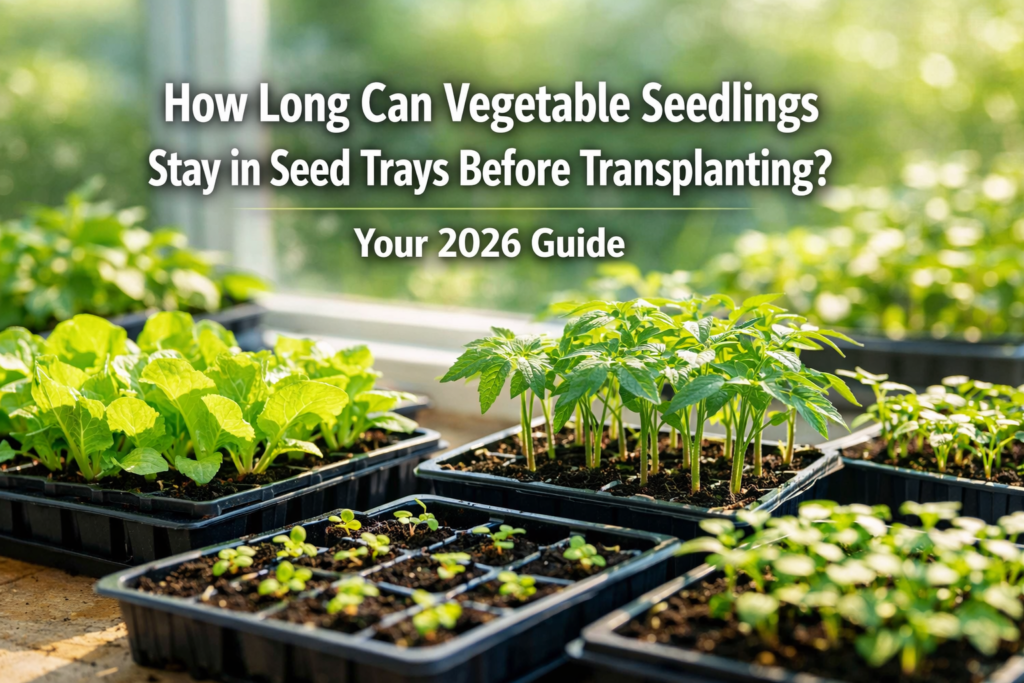
Successfully nurturing vegetable seedlings from tiny seeds to robust plants ready for the garden is a rewarding journey for any gardener. A crucial part of this process involves knowing precisely how long can vegetable seedlings stay in seed trays before transplanting? Misjudging this timeframe can lead to stunted growth, stress, and even the loss of your precious plants. In this comprehensive guide, we’ll delve into the ideal windows, warning signs, and best practices to ensure your seedlings thrive when they transition to their new home in 2026.
Key Takeaways
- Optimal Window: Most vegetable seedlings should be transplanted within 3-4 weeks of germination to prevent them from becoming root-bound or leggy.
- True Leaves are Key: The most reliable indicator for transplant readiness is the development of the second set of “true leaves” [1][7].
- Space Matters: Seedlings need at least 1.5 to 2 square inches of root growth space per cell before transplanting.
- Hardening Off is Crucial: Always harden off seedlings for 1-2 weeks before moving them outdoors permanently to acclimate them to external conditions [1].
- Avoid Overcrowding: Overcrowding in seed trays leads to competition for light, water, and nutrients, weakening seedlings.
- Timing is Everything: Transplant on mild, overcast days or during cooler parts of the day to minimize shock [1][2].
- Monitor Roots: Check for roots circling the bottom of the tray, a clear sign that seedlings are outgrowing their space.
- Species Variation: Larger varieties like squash and watermelon may be ready in as little as 4 weeks, while others might need 6-8 weeks [3].
How Long Can Vegetable Seedlings Stay in Seed Trays Before Transplanting?
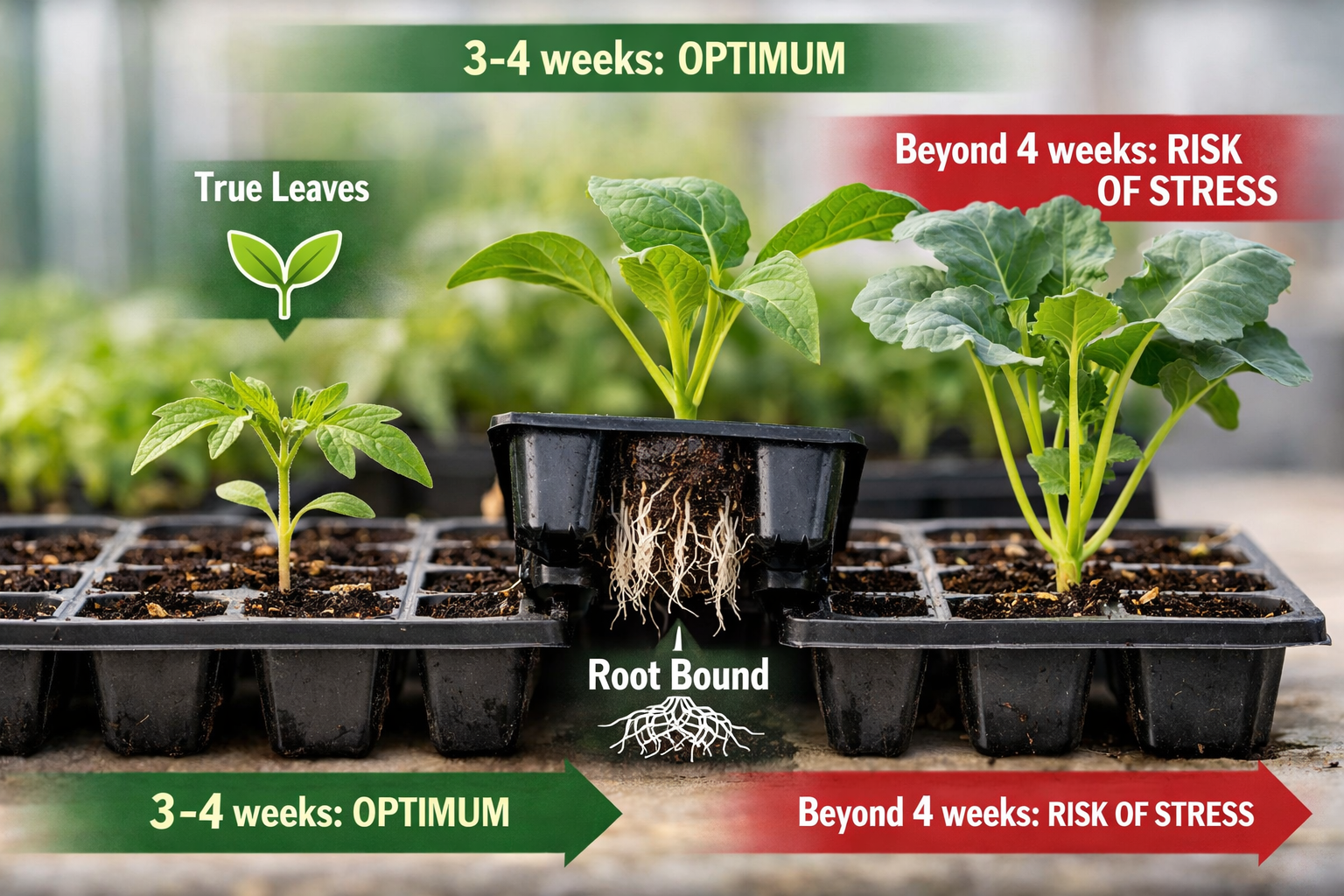
Most vegetable seedlings can stay in seed trays for approximately 3 to 4 weeks after germination before they need to be transplanted into larger containers or directly into the garden [2]. This timeframe, however, can vary significantly depending on the specific plant species, their growth rate, and the conditions they are grown in. The primary indicators for when seedlings are ready to move are the development of their “true leaves” and adequate root growth [1][7].
Delaying transplantation beyond this optimal window can lead to several problems, including seedlings becoming root-bound, leggy, or suffering from nutrient deficiencies. While 3-4 weeks is a general guideline, fast-growing plants like cucumbers, squash, and melons might be ready slightly sooner, sometimes in as little as 4 weeks, whereas slower-growing plants like peppers or eggplants might tolerate an extra week or two if properly cared for [3]. Always prioritize the seedling’s physical development—specifically the appearance of its true leaves—over a strict calendar date.
What Are the Key Signs Your Seedlings are Ready for Transplanting?
Identifying the right moment to transplant your vegetable seedlings is critical for their long-term health and productivity. The key signs your seedlings are ready for transplanting are the development of their “true leaves,” a strong root system, and appropriate plant height. Ignoring these indicators can lead to stressed or stunted plants, impacting your overall harvest in 2026.
Key Indicators for Transplant Readiness:
- True Leaves Development: This is the most reliable sign. After germinating, seedlings first produce two small, round, or oval leaves called cotyledons. These are embryonic leaves that provide initial nourishment. The actual leaves, which look like miniature versions of the mature plant’s leaves, are called “true leaves.” Your seedlings are generally ready to transplant once they have developed two sets of true leaves [1][7]. For example, a tomato seedling will show its first pair of serrated true leaves after the initial smooth cotyledons.
- Root System Development: Gently tip a seedling out of its cell or pot. If you see a robust network of white roots that hold the soil plug together, but are not yet tightly circling the pot, it’s a good sign. Roots that are densely packed and circling the bottom indicate the plant is becoming root-bound, which means it has stayed in the seed tray too long. Aim for roots that have filled the cell but still have room to expand once transplanted. Each seedling typically needs about 1.5 to 2 square inches of root space in its tray before transplanting [1].
- Appropriate Height and Robustness: While height varies by species, you generally want a sturdy, compact seedling rather than a tall, spindly one (leggy). Leggy seedlings indicate they haven’t received enough light and are stretching to find it. Healthy seedlings should be strong enough to handle the stress of transplanting. For example, a healthy pepper seedling might be 3-4 inches tall with several sets of true leaves, while an overgrown one could be twice that height with weak stems.
- Visible Roots in Drainage Holes: If you can clearly see roots protruding from the drainage holes at the bottom of the seed tray, it’s a strong signal that the seedling has outgrown its current container and needs more space immediately.
When to Consider Early or Later Transplanting:
- Early Transplanting (Potting Up): For very slow-growing plants or those you start very early, you might “pot up” seedlings into larger individual pots before their final outdoor transplant. This gives them more room to grow indoors without becoming root-bound.
- Later Transplanting (If Necessary): If weather conditions are still too cold or unfavorable outdoors, you can keep seedlings in their trays a bit longer, especially if you ensure they receive adequate light, water, and occasional dilute fertilizer. However, this increases the risk of stress and leggy growth. Monitor closely for signs of nutrient deficiency (yellowing leaves) or stunted growth.
By paying close attention to these visual cues, you can determine precisely when your vegetable seedlings are ready for their next big step, ensuring a smoother transition and stronger growth in your garden. For a complete guide to fostering healthy plants, check out our “Beginner’s Guide to Plant Care 2026: Grow Thriving Plants“.
What Happens if Seedlings Stay in Seed Trays Too Long?
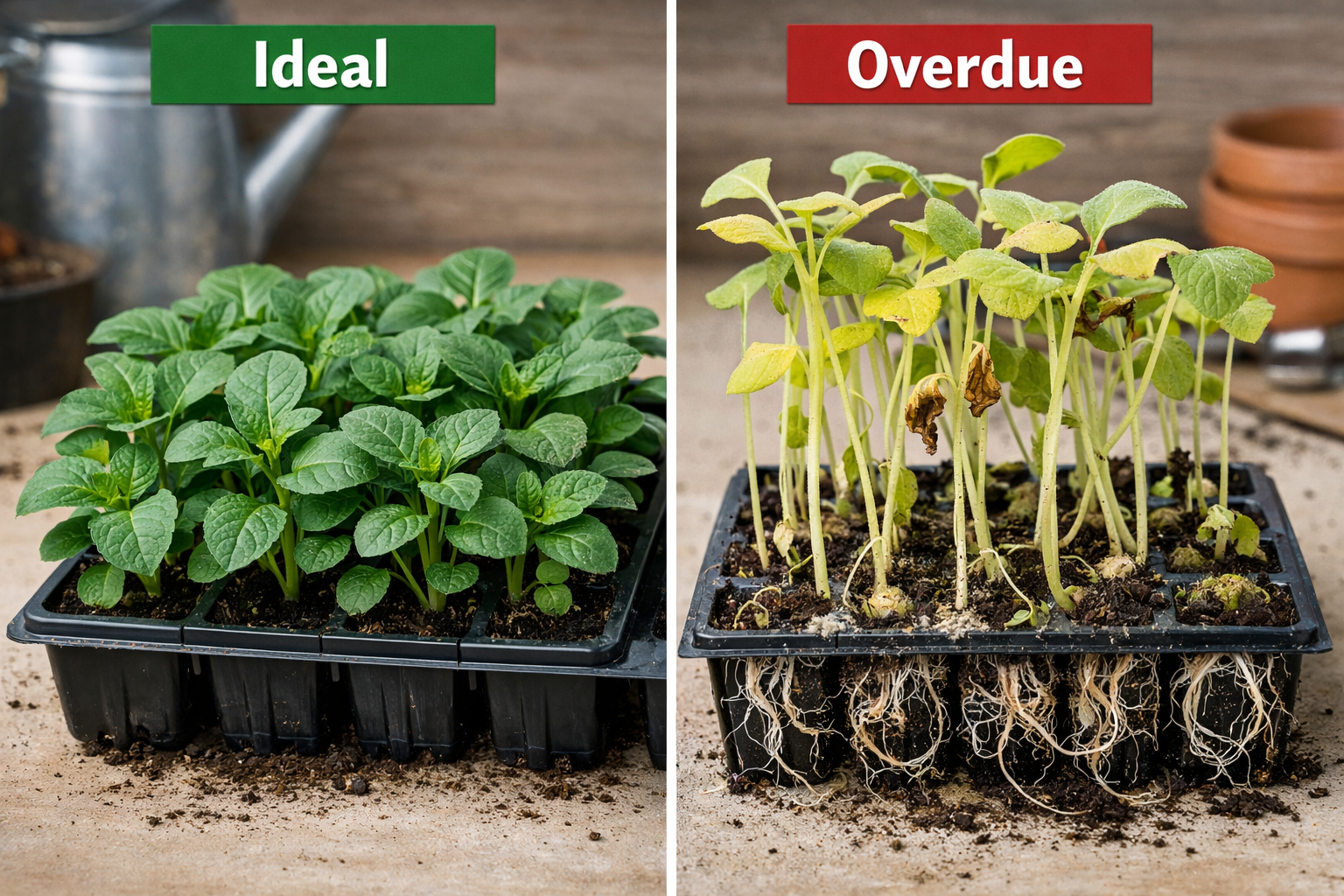
If vegetable seedlings remain in their seed trays for an extended period beyond their optimal transplant window, they will experience significant stress and can suffer from a range of issues that severely impede their growth and future yield. This can lead to weakened plants that are more susceptible to diseases and pests once planted in the garden.
Here are the primary consequences of delaying transplantation:
- Becoming Root-Bound: This is one of the most common and damaging issues. When roots run out of space, they begin to coil and intertwine around the inside of the seed tray cell [6]. A root-bound plant struggles to absorb water and nutrients efficiently, even when watered regularly. When transplanted, these roots may continue to grow in a circular pattern, restricting the plant’s ability to anchor itself and spread its roots into the surrounding soil.
- Leggy Growth: Seedlings kept too long in small trays often become leggy, meaning they develop tall, thin, and weak stems. This is often exacerbated by insufficient light and competition for resources in overcrowded trays. Leggy plants are prone to toppling over, especially after transplanting, and may never develop the sturdy framework needed to support heavy fruit production.
- Nutrient Deficiencies: The small amount of potting mix in seed trays can only hold a limited supply of nutrients. After a few weeks, these nutrients are depleted. Without access to fresh soil or supplemental feeding, seedlings will become starved, leading to yellowing leaves (chlorosis), stunted growth, and an overall unhealthy appearance [5].
- Stunted Growth: A combination of being root-bound, leggy, and nutrient-deficient results in stunted growth. These plants will be significantly smaller than their properly transplanted counterparts and may never catch up, leading to reduced yields or even failure to produce fruit.
- Increased Susceptibility to Stress and Disease: Stressed seedlings are weaker and less resilient. They are more vulnerable to environmental changes, pests, and diseases, making them harder to establish successfully in the garden [5]. The shock of transplanting is also more severe for already struggling plants.
- Damping-Off Disease: While less common in older seedlings, overcrowding and consistently wet conditions in seed trays can encourage fungal diseases like damping-off, which causes seedlings to rot at the soil line and collapse. This is particularly a risk if air circulation is poor among tightly packed, overgrown seedlings.
To avoid these problems, it’s essential to closely monitor your seedlings for the readiness signs discussed previously and act promptly. If you must delay transplanting, consider “potting up” seedlings into slightly larger containers temporarily to provide more space and fresh nutrients. For more information on common pitfalls, read our guide on “Beginner Mistakes in Small Space Gardening 2026“.
How to Prepare Seedlings for Successful Transplanting?
Preparing your vegetable seedlings for transplanting is a multi-step process that significantly increases their chances of survival and thriving in their new environment. The most critical step is “hardening off,” which gradually acclimates them to outdoor conditions.
Steps for Successful Transplant Preparation:
- Water Thoroughly Before Transplanting: Water your seedlings several hours before transplanting. This ensures the roots are well-hydrated and the soil around them is moist, which helps the soil cling to the roots, minimizing disturbance during removal [1].
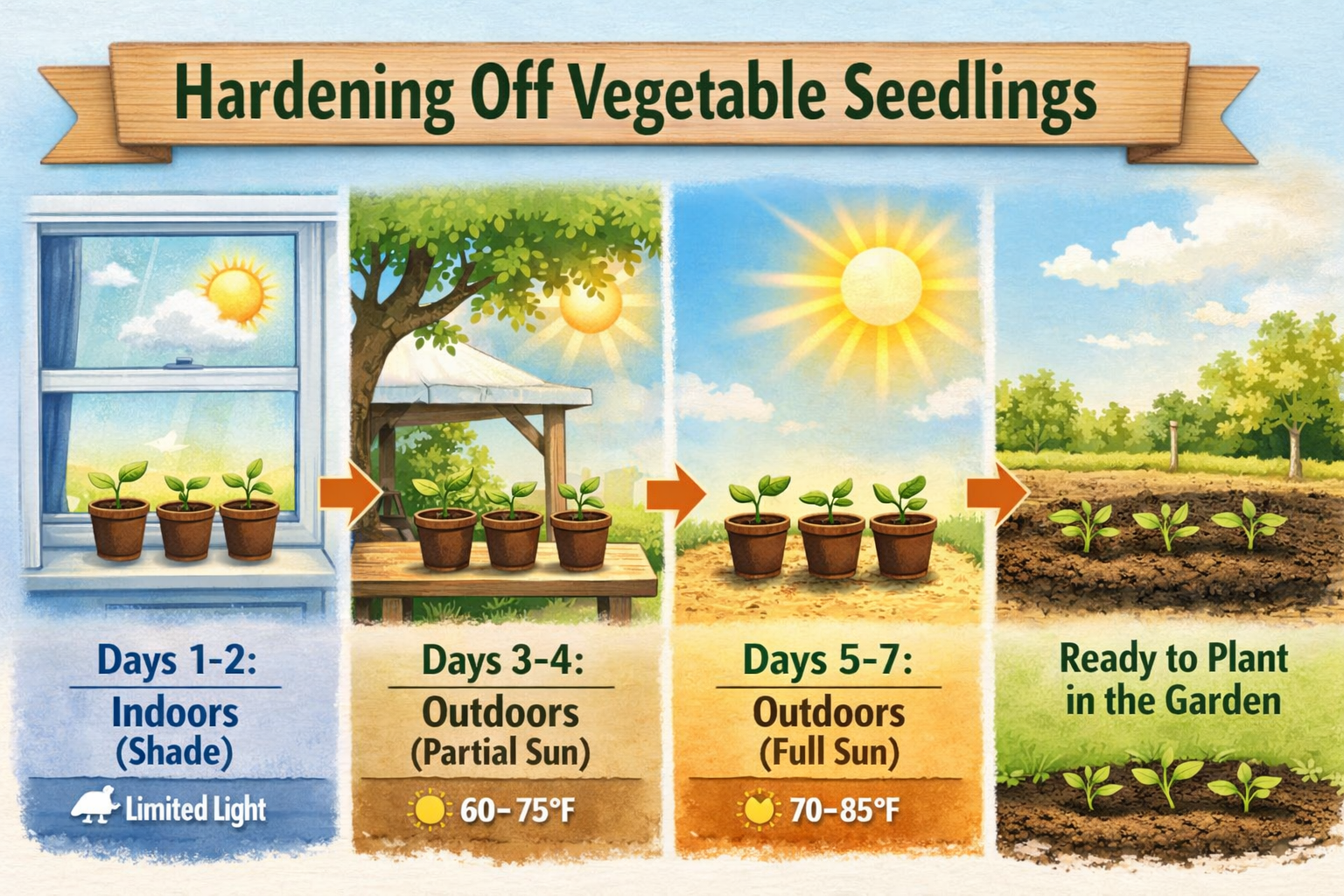
- Harden Off Your Seedlings: This is arguably the most crucial step. Hardening off is the process of gradually exposing indoor-grown seedlings to outdoor conditions—such as cooler temperatures, direct sunlight, and wind—over 1-2 weeks [1].
- Week 1: Start by placing seedlings in a sheltered, shady spot outdoors for a few hours each day, gradually increasing their time outside. Bring them in at night [4].
- Week 2: Move them to a location with partial sun for a few days, then gradually increase their exposure to full sun. Continue to bring them in if nighttime temperatures are too cold [4].
- Why it’s important: Hardening off toughens cell walls, reduces transplant shock, and prepares them for the harsher realities of outdoor life. Without it, delicate indoor-grown seedlings can suffer severe sunburn, wilting, or even death.
- Choose the Right Time of Day/Weather: Transplant on a mild, overcast day if possible. If sunny, aim for early morning or late afternoon when temperatures are cooler and the sun isn’t as intense [1][2]. This reduces heat stress and allows plants to adjust before the full heat of the day.
- Prepare the Garden Bed or Container: Ensure your garden bed or container is ready beforehand. This includes:
- Weeding the area.
- Amending the soil with compost or other organic matter to provide nutrients and improve drainage [3]. See our “Soil Basics for Container Gardening: 2026 Expert Guide” for details.
- Ensuring the soil temperature is appropriate for the specific vegetable you are planting [1]. Cold soil can shock warm-season plants.
- Dig Appropriate Holes: Dig holes that are slightly wider and deeper than the seedling’s root ball. This provides ample space for roots to spread out.
- Handle with Care: When removing seedlings from trays, be extremely gentle. Push from the bottom of the tray or use a spoon/trowel to carefully pry them out. Avoid pulling them by the stem, which can damage delicate tissues [1].
- Consider Fertilizing (Later): While you might be tempted to fertilize immediately, it’s generally best to wait 10-14 days after transplanting. This allows the roots to establish themselves in the new soil before being stimulated by fertilizers [3].
- Provide Initial Protection: For very tender seedlings or during periods of unseasonable weather, consider temporary protection like cloches or row covers for the first few days after transplanting.
By diligently following these preparation steps, you’ll set your seedlings up for a successful transition and a productive growing season.
Optimal Transplanting Schedule for Common Vegetable Seedlings in 2026
The optimal transplanting schedule for vegetable seedlings in 2026 depends on the specific crop, its growth rate, and your local climate, particularly the last frost date. While 3-4 weeks is a general guideline, some plants are more forgiving, while others demand precise timing.
Here’s a guide to common vegetable seedlings:
| Vegetable Type | Indoor Start Time (Weeks Before Last Frost) [3] | Optimal Weeks in Seed Tray Before Transplanting | Key Readiness Signs | Notes |
|---|---|---|---|---|
| Tomatoes | 6-8 weeks | 4-6 weeks | 2-3 sets of true leaves; sturdy, dark green stems; approx. 6-8 inches tall [7] | Can be planted deep; stems will root along their length. Indeterminate varieties may need more space sooner. |
| Peppers | 8-10 weeks | 6-8 weeks | 2-3 sets of true leaves; compact, bushy growth; not leggy | Slower growing than tomatoes; prefer warm soil. Don’t rush transplanting into cold ground. |
| Eggplants | 8-10 weeks | 6-8 weeks | 2-3 sets of true leaves; sturdy stem | Similar to peppers; heat-loving and sensitive to cold. |
| Cabbage Family | 4-6 weeks | 3-5 weeks | 2-3 sets of true leaves; thick stem; healthy root ball | Broccoli, cabbage, kale, kohlrabi. Can tolerate cooler temperatures but need proper hardening off. |
| Lettuce | 3-4 weeks | 2-4 weeks | 2-3 true leaves; small but established root system | Fast-growing. Can be transplanted when quite small. Can also be direct sown. |
| Squash/Zucchini | 2-4 weeks | 3-4 weeks (often less) | 1-2 true leaves; very fast growers, prone to becoming root-bound quickly | Transplant when very young; large seeds mean large initial growth. Sensitive to root disturbance [3]. |
| Cucumbers | 2-4 weeks | 3-4 weeks (often less) | 1-2 true leaves; fast growers, similar to squash | Also sensitive to root disturbance. Handle with extreme care. |
| Onions (from seed) | 8-12 weeks | 8-12 weeks (thicker than pencil) | Green tops are 4-6 inches tall and about pencil-thickness at the base; developed root system. | Can tolerate being in trays longer if trimmed. |
| Herbs | Varies (4-12 weeks) | 4-8 weeks | 2-3 true leaves, established root system | Basil, parsley, cilantro (fast). Rosemary, thyme (slow). |
Note: These are general guidelines. Always cross-reference with specific plant variety information and adjust based on your local last frost date and the observed health of your individual seedlings. Starting seeds indoors approximately 4-8 weeks before your outdoor planting date is a common recommendation [3].
Common Mistakes to Avoid When Transplanting Seedlings
Even with careful planning, common mistakes can jeopardize the health of your newly transplanted vegetable seedlings. Avoiding these pitfalls is as important as knowing how long can vegetable seedlings stay in seed trays before transplanting to ensure your garden thrives in 2026.
Here are some common errors and how to avoid them:
- Not Hardening Off Seedlings: This is arguably the biggest mistake. Transplanting tender indoor-grown seedlings directly into the harsh outdoor environment without acclimatization will almost certainly lead to severe transplant shock, characterized by wilting, sunburned leaves, and stunted growth or death [1].
- Solution: Always follow a gradual hardening off process over 1-2 weeks, slowly increasing exposure to sun, wind, and cooler temperatures.
- Transplanting Too Early (Before Last Frost): Planting warm-season crops like tomatoes, peppers, and squash before all danger of frost has passed will expose them to lethal temperatures. Cold soil can also stunt growth and lead to root rot.
- Solution: Know your local last frost date. Monitor weather forecasts closely and wait until soil temperatures are consistently warm enough for your specific crops [1].
- Transplanting Too Late (Root-Bound Seedlings): As discussed, letting seedlings become root-bound in their trays significantly stresses the plant and inhibits its ability to establish new roots efficiently after transplanting.
- Solution: Monitor seedlings for signs of readiness (true leaves, root development) and transplant within the optimal 3-4 week window when possible [2]. Pot up into larger containers if delays are unavoidable.
- Damaging Roots or Stems During Removal: Ripping seedlings out of trays or pulling them by their delicate stems can cause irreversible damage to the root system or main stem, leading to transplant shock or death [1].
- Solution: Gently push from the bottom of the cell or use a small tool to carefully lift the seedling by the root ball, supporting the leaves or soil.
- Not Watering Enough (or Too Much) After Transplanting: Newly transplanted seedlings need consistent moisture to help their roots establish in the new soil, but overwatering can lead to root rot.
- Solution: Water immediately after transplanting to settle the soil around the roots. For the first week, check daily and water as needed to keep the soil consistently moist but not waterlogged [3].
- Planting in Poorly Prepared Soil: Soil that is compacted, lacking nutrients, or has extreme pH can hinder root growth and nutrient uptake.
- Solution: Amend your garden beds with compost or other organic matter before planting. Ensure good drainage and test your soil if you suspect pH issues.
- Planting Too Shallow or Too Deep (for some plants): Most seedlings should be planted at the same depth they were in their trays. However, some, like tomatoes, benefit from deeper planting as their stems can root along their length [1].
- Solution: Research the specific planting depth requirements for each vegetable.
- Fertilizing Immediately After Transplanting: Applying strong fertilizers immediately can burn delicate new roots, as they are already under stress from the move [3].
- Solution: Wait 10-14 days after transplanting before applying a dilute, balanced liquid fertilizer to give roots time to establish [3].
By being mindful of these common mistakes, you can significantly improve the success rate of your seedling transplant efforts and cultivate a healthier, more productive garden. For general guidance on nurturing your plants, our “Beginner’s Guide to Plant Care 2026: Grow Thriving Plants” offers valuable insights.
Conclusion
Understanding how long can vegetable seedlings stay in seed trays before transplanting is a fundamental skill for any gardener aiming for a successful harvest. While a general timeframe of 3-4 weeks is a good starting point, the most reliable indicators remain the development of true leaves, a healthy root system, and the overall robustness of the plant. Overlooking these signs or rushing the process can lead to stunted growth, increased susceptibility to disease, and reduced yields.
Remember to prioritize a gradual hardening off period, prepare your garden bed thoroughly, and handle your young plants with care during the transition. By paying close attention to your seedlings’ needs and avoiding common transplanting mistakes, you’ll empower them to establish strongly in their new home, setting the stage for a thriving and bountiful garden in 2026. Happy gardening!
FAQ
Q1: Can all vegetable seedlings stay in seed trays for the same amount of time?
A1: No, the duration varies by plant species. Fast-growing plants like squash may need transplanting sooner (3-4 weeks), while slower growers like peppers or eggplants might tolerate 6-8 weeks if well-cared for [3].
Q2: What are “true leaves” and why are they important for transplanting?
A2: True leaves are the second set of leaves that emerge after the initial cotyledons (seed leaves). They are important because their presence indicates the seedling has begun photosynthesis and is strong enough to handle transplanting [1][7].
Q3: What happens if I transplant seedlings that are too small?
A3: Transplanting seedlings that are too small and have not developed enough true leaves or a robust root system can lead to transplant shock, making them more vulnerable to the outdoor environment and struggling to establish.
Q4: How can I tell if my seedlings are root-bound?
A4: Gently slide a seedling out of its cell. If the roots are tightly coiled around the soil plug, forming a dense ball, your seedling is root-bound and needs transplanting immediately [6].
Q5: Is it possible to keep seedlings in their trays longer if the weather isn’t good for transplanting?
A5: Yes, but with careful management. You may need to provide supplemental light, dilute liquid fertilizer, and ensure proper watering to prevent them from becoming leggy or nutrient-deficient. Consider “potting up” to a slightly larger container.
Q6: What is “hardening off” and how long does it take?
A6: Hardening off is the gradual process of exposing indoor-grown seedlings to outdoor conditions (sun, wind, temperature changes) over 1-2 weeks to prepare them for permanent transplanting [1].
Q7: Can I fertilize seedlings right after transplanting?
A7: It is generally recommended to wait 10-14 days after transplanting before applying fertilizer. This allows the roots time to establish themselves in the new soil without added stress [3].
Q8: What’s the best time of day to transplant seedlings?
A8: Transplanting on a mild, overcast day or during the cooler parts of the day, such as early morning or late afternoon, helps minimize transplant shock from intense sun and heat [1][2].
References
[1] Transplanting Seedlings How To Do It Correctly Zbcz1702 – https://www.motherearthnews.com/organic-gardening/transplanting-seedlings-how-to-do-it-correctly-zbcz1702/
[2] How To Transplant Seedlings To Your Raised Garden Bed – https://roostandroot.com/blog/how-to-transplant-seedlings-to-your-raised-garden-bed/
[3] Starting Transplants Indoors – https://gardeningsolutions.ifas.ufl.edu/care/planting/starting-transplants-indoors/
[4] How To Transplant Seedlings – https://www.parkseed.com/blogs/park-seed-blog/how-to-transplant-seedlings
[5] Care Vegetable Seedlings – https://extension.umd.edu/resource/care-vegetable-seedlings
[6] When To Transplant Seedlings – https://migardener.com/blogs/blog/when-to-transplant-seedlings
[7] How Big Should Seedlings Be Before Transplanting – https://www.bootstrapfarmer.com/blogs/how-to-grow-seedlings/how-big-should-seedlings-be-before-transplanting
Tags: