How can I do guerrilla gardening in urban areas as a beginner?
Quick Answer: Guerrilla gardening means planting in neglected public or private land without official permission, turning grey urban spaces into green ones. As a beginner, start small: pick a neglected spot near your home, use easy-to-grow native plants or seed bombs, and go out at dusk or dawn to minimize attention. You don’t need much money or experience — just seeds, a trowel, and some soil.
Key Takeaways
- 🌱 Start hyper-local: A neglected tree pit or roadside verge near your home is the perfect first target.
- 🗺️ Scout before you plant: Visit your chosen spot several times to check sunlight, soil quality, and foot traffic.
- 🌿 Native plants win: They need less water, survive neglect, and support local wildlife better than exotic varieties.
- 💰 Low cost to start: A basic guerrilla gardening kit costs under $20, including seeds, a hand trowel, and compost.
- ⚖️ Know the legal landscape: Planting on public land is a grey area in most US cities; planting on private land without permission can lead to fines.
- 🕐 Timing matters: Early morning or dusk reduces the chance of confrontation or removal.
- 🤝 Community support helps: Involving neighbors or local groups dramatically improves the long-term survival of your garden.
- 🌼 Seed bombs are beginner-friendly: They’re easy to make, require no digging, and can be tossed into hard-to-reach spots.
- 🔄 Maintain what you plant: A neglected guerrilla garden dies fast. Plan return visits to water and weed.
What Exactly Is Guerrilla Gardening and Is It Right for You?
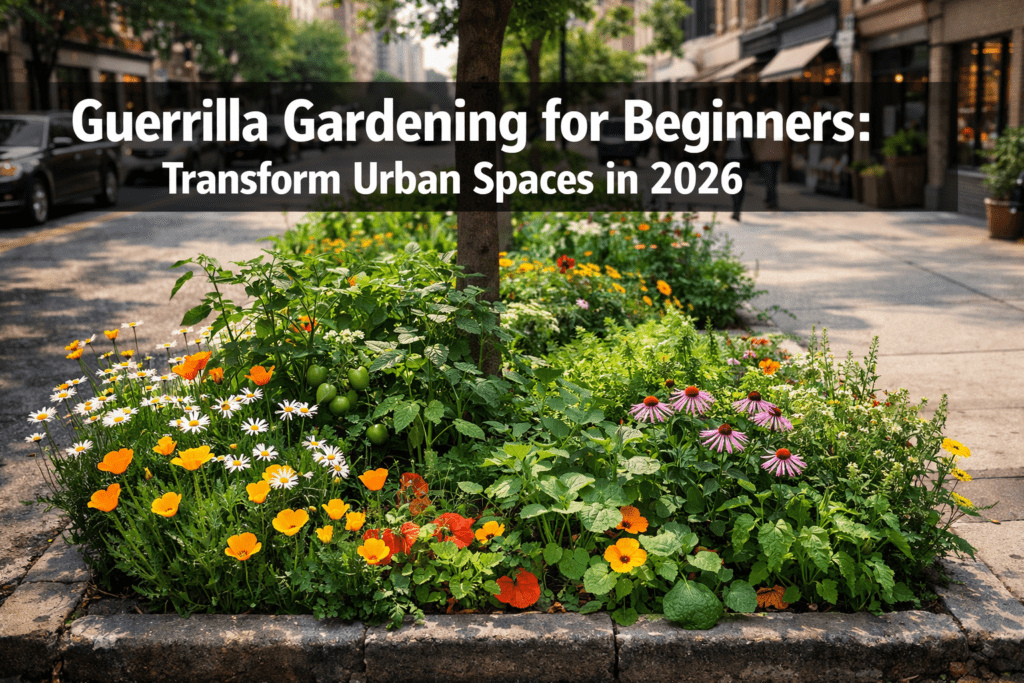
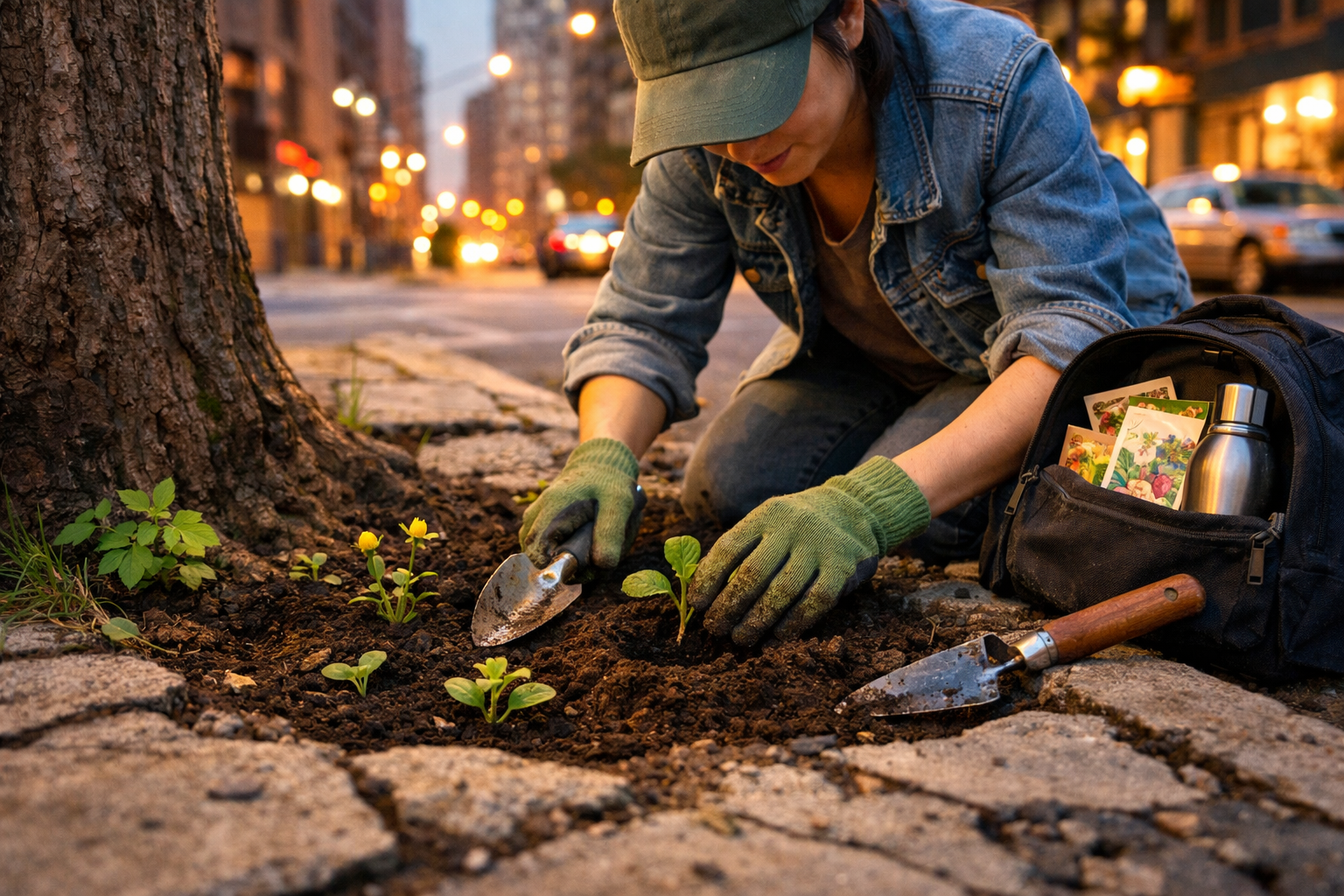
Guerrilla gardening is the act of cultivating plants on land you don’t own or have formal permission to use, typically in urban areas where soil sits bare and neglected. It’s right for you if you care about greening your city, have even a small amount of time each week, and don’t mind working in a legal grey zone.
The term was popularized by activist Richard Reynolds, who began planting in London’s traffic roundabouts in 2004 and documented the movement at guerrillagardening.org. Since then, the practice has spread to hundreds of cities worldwide, from New York to Los Angeles to Chicago.
Who it’s for:
- Urban residents with no private garden space
- People frustrated by neglected public land in their neighborhood
- Beginners who want to start gardening without committing to a formal plot
- Community-minded individuals who want visible, shared results
Who might want to pause:
- Anyone in a city with strict ordinances against unauthorized planting (check local rules first)
- People unwilling to maintain a planting site over time — abandoned guerrilla gardens often look worse than bare ground
If you’re new to growing things generally, it helps to build some basic skills first. Our guide to urban gardening ideas for small spaces covers the fundamentals that translate directly to outdoor guerrilla work.
How Can I Do Guerrilla Gardening in Urban Areas as a Beginner? (The Core Steps)
The short answer: find a neglected spot, assess its conditions, choose the right plants, plant them discreetly, and return to maintain them. Here’s how each step works in practice.
Step 1: Find Your Spot
Walk your neighborhood and look for:
- Tree pits (the square of soil around street trees)
- Road medians and verges
- Abandoned lots with no active use
- Fence lines along public paths
- Underused park corners
Take photos and note how much sun each spot gets. A south-facing median gets full sun; a shaded alley wall needs shade-tolerant plants.
Step 2: Test the Soil (Roughly)
Urban soil is often compacted and low in nutrients. Dig a small hole with a stick. If the soil is rock-hard clay or full of rubble, you’ll need to bring your own compost or use raised containers. For tips on soil quality, see our best soil mix for container gardening guide.
Step 3: Choose the Right Plants
Step 4: Plant Strategically
- Go out at dusk or early morning when foot traffic is lowest.
- Bring a small backpack with: trowel, compost, seeds or seedlings, and water.
- Loosen the soil, add compost, plant, water in.
- Keep it tidy — a messy planting gets removed faster than a neat one.
Step 5: Return and Maintain
Water during dry spells, pull aggressive weeds, and replace anything that dies. A guerrilla garden that looks cared-for is far less likely to be cleared by city workers.
What Tools and Supplies Do I Actually Need?
You don’t need much. A basic beginner kit costs $15–$25 and fits in a backpack.
Essential tools:
- Hand trowel (~$8)
- Small watering bottle or collapsible jug
- Compost or potting mix (a few cups per planting, in a zip-lock bag)
- Native wildflower seed mix or seed bombs (~$5–$10)
- Gardening gloves
Optional but useful:
- A kneeling pad
- A headlamp for early morning sessions
- Seedling pots (biodegradable ones you can plant directly)
For beginner-friendly plant choices that survive with minimal care, check out our beginner-friendly plants guide.
How Do I Make Seed Bombs and Why Are They So Useful?
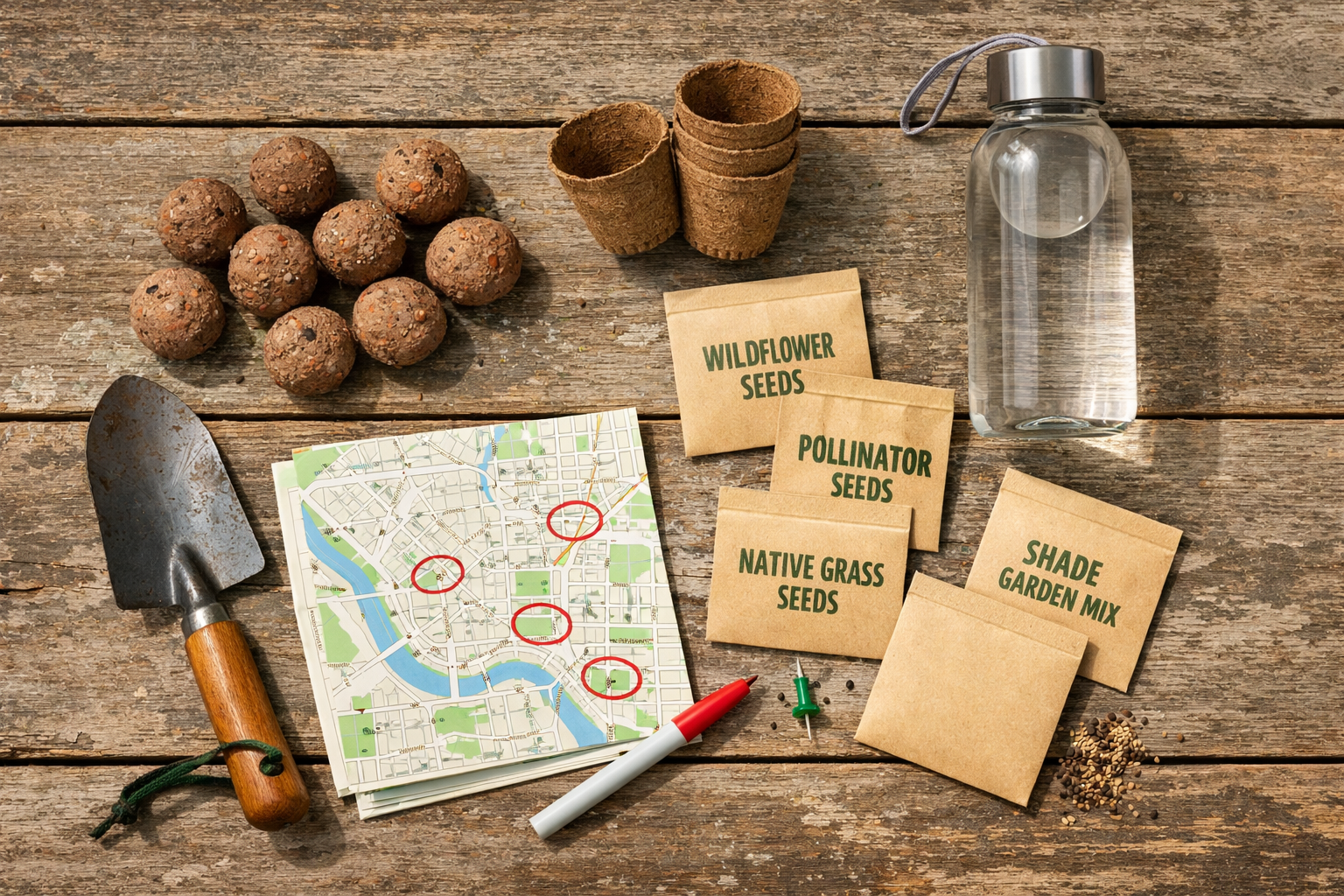
Seed bombs are small balls of clay, compost, and seeds that you can toss into hard-to-reach spots — no digging needed. They’re one of the most beginner-friendly guerrilla gardening tools available.
Basic seed bomb recipe:
- Mix 1 part native wildflower seeds with 3 parts dry compost.
- Add 5 parts powdered red clay (available at craft stores).
- Add water slowly until the mixture holds together like dough.
- Roll into marble-sized balls.
- Let dry for 24–48 hours before use.
Toss them into neglected spots in early spring or just before rain. The clay protects seeds from birds and drying out until conditions are right for germination.
Quick tip: Use native species seed mixes specific to your USDA hardiness zone. Native plants are adapted to local rainfall and temperature patterns, which means they need far less intervention after planting.
What Are the Legal Risks of Guerrilla Gardening in the US?
The legal status of guerrilla gardening in urban areas varies by city and state. In most US cities, planting on public land without a permit is technically unauthorized but rarely results in prosecution — the most common outcome is that your plants get removed.
Key distinctions:
- Public land (sidewalks, medians, parks): Usually a civil matter. Cities may remove plantings but rarely fine individuals.
- Private land without permission: This can constitute trespassing. Always get verbal or written permission from private landowners if possible.
- Community garden programs: Many US cities (including New York, LA, and Chicago) have formal programs that let residents adopt and maintain public plots legally. Check your city’s parks department website first — you may not need to go rogue at all.
Reduce your risk by:
- Planting native, non-invasive species only
- Keeping plantings tidy and well-maintained
- Introducing yourself to neighbors and getting informal community buy-in
- Avoiding any land with “No Trespassing” signs
How Can I Do Guerrilla Gardening in Urban Areas as a Beginner Without Getting Overwhelmed?
The biggest mistake beginners make is starting too big. One well-maintained tree pit beats five neglected ones.
A realistic first-month plan:
After one successful planting, you’ll have the confidence and knowledge to expand. Many experienced guerrilla gardeners started with a single tree pit and now maintain entire street corridors.
If you want to practice your plant care skills before heading outdoors, our beginner indoor gardening tips are a great low-stakes starting point.
How Do I Choose the Right Plants for Urban Guerrilla Gardening?
Choose plants based on three factors: sunlight at the site, how often you can return to water, and whether the species is native to your region.
Best plants for US urban guerrilla gardens in 2026:
- Full sun, low water: Black-eyed Susan, coneflower (Echinacea), wild bergamot
- Partial shade: Wild ginger, ferns, Virginia bluebells
- Compacted/poor soil: White clover, yarrow, creeping thyme
- Edible and low-maintenance: Kale, Swiss chard, mint (plant mint in a buried container to control spread)
Avoid invasive species like English ivy, kudzu, or Japanese knotweed — these can cause real ecological damage and may get you in legal trouble in some states.
For herbs specifically, our guide to beginner-friendly herbs to grow covers which varieties handle neglect best.
How Do I Build Community Support for My Guerrilla Garden?
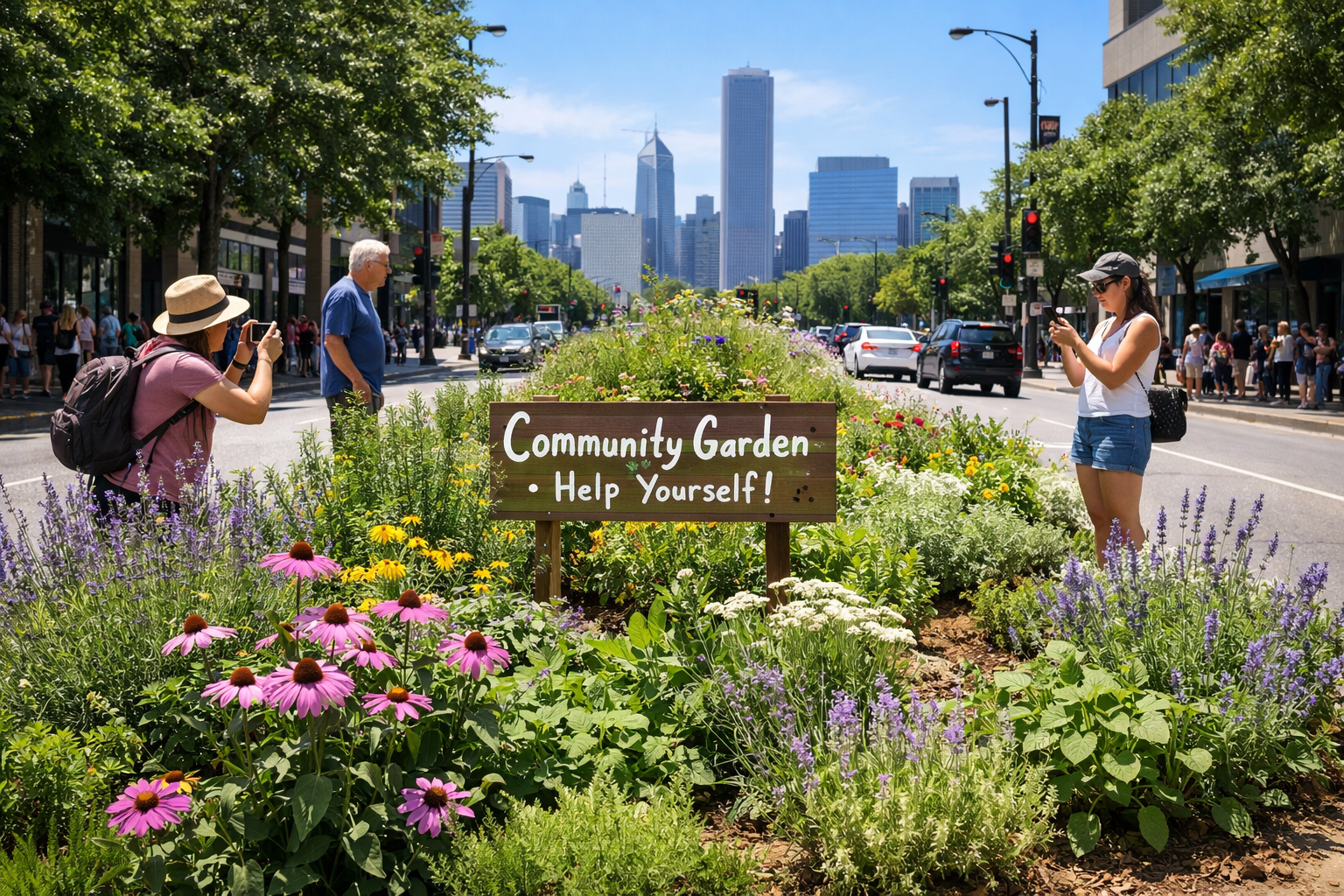
A guerrilla garden with community support lasts far longer than one planted in secret. Neighbors who know about and appreciate your work will water plants, report vandalism, and push back if the city tries to clear the space.
Practical ways to build support:
- Leave a small, handwritten sign with your contact info and what you’ve planted.
- Post in local neighborhood Facebook groups or Nextdoor before you plant.
- Invite one or two neighbors to join you on planting day.
- Share progress photos on social media with local hashtags.
Some of the most successful urban guerrilla gardens in the US — like those documented in cities like Detroit and Philadelphia — started as solo projects and grew into formal community gardens within a year or two, eventually receiving city support and funding.
For more ideas on how urban residents are transforming small spaces, see our urban gardening ideas for small spaces resource.
FAQ: Guerrilla Gardening for Urban Beginners
Q: Is guerrilla gardening illegal in the US?
It depends on the location. Planting on public land without a permit is technically unauthorized in most cities but rarely prosecuted. Planting on private land without permission can constitute trespassing.
Q: What’s the best time of year to start guerrilla gardening?
Spring is ideal — soil is workable and plants have the full growing season ahead. In mild climates (USDA zones 8–10), fall planting also works well for cool-season plants.
Q: How much does it cost to start guerrilla gardening?
A beginner kit — seeds, a trowel, compost, and gloves — costs roughly $15–$25. Seed bombs can be made for under $10 using bulk clay and wildflower seed mixes.
Q: What if the city removes my plants?
It happens. Document your planting with photos, replant if the spot still makes sense, and consider reaching out to your city’s parks department about formally adopting the space.
Q: Can I grow vegetables in a guerrilla garden?
Yes, but vegetables need more maintenance than wildflowers. Only grow edibles in spots you can visit at least twice a week to water, harvest, and manage pests.
Q: Do I need to amend urban soil?
Usually, yes. Urban soil is often compacted and nutrient-poor. Bring a few cups of compost to mix in when planting, especially for vegetables or herbs.
Q: What are seed bombs and do they actually work?
Seed bombs are clay-compost-seed balls you toss into neglected spots. They work best with native wildflower seeds in spots that get rain. Germination rates vary but are generally good for hardy native species.
Q: How do I find out if my city has a formal plot adoption program?
Search “[your city name] adopt a tree pit” or “[city name] community gardening program” online, or check your city’s parks and recreation department website directly.
Q: Should I water my guerrilla garden regularly?
Yes, especially in the first two to four weeks after planting. Once established, native plants typically need watering only during extended dry periods.
Q: Can I guerrilla garden in a small apartment neighborhood with no green space?
Yes. Tree pits, sidewalk cracks, and even vertical wall planters on public fences are all fair game. For ideas on maximizing tiny spaces, see our small space garden hacks guide.
Conclusion: Your First Guerrilla Garden Starts This Week
Guerrilla gardening doesn’t require a permit, a large budget, or years of experience. It requires observation, a handful of seeds, and the willingness to show up consistently. Start with one neglected tree pit or roadside strip near your home. Plant native species, keep the site tidy, and tell at least one neighbor what you’re doing.
Your actionable next steps:
- This week: Walk your block and photograph three neglected spots with potential.
- Next week: Research native plants for your USDA hardiness zone and order a seed mix or seed bomb kit online.
- Week three: Make your first planting during an early morning session. Bring compost, water, and your phone for before/after photos.
- Ongoing: Return every 7–10 days to water and weed. Share your progress online to build community support.
The grey concrete of most US cities has far more potential than it looks. One beginner with a trowel and a packet of wildflower seeds can change what a whole block looks like — and feels like — within a single growing season.
References
- Reynolds, Richard. On Guerrilla Gardening: A Handbook for Gardening Without Boundaries. Bloomsbury Publishing, 2008.
- GuerrillaGardening.org — Richard Reynolds’ ongoing documentation of urban guerrilla gardening projects worldwide. (Active site, original project launched 2004.)
- USDA Plant Hardiness Zone Map. United States Department of Agriculture, 2023. https://planthardiness.ars.usda.gov/
- NYC Parks Department. “GreenThumb Community Gardening Program.” City of New York, accessed 2024. https://www.nycgovparks.org/programs/gardening
- Chicago Park District. “Community Gardening.” City of Chicago, accessed 2024. https://www.chicagoparkdistrict.com/programs-activities/community-gardening