How do I hand pollinate vegetables indoors in my apartment?
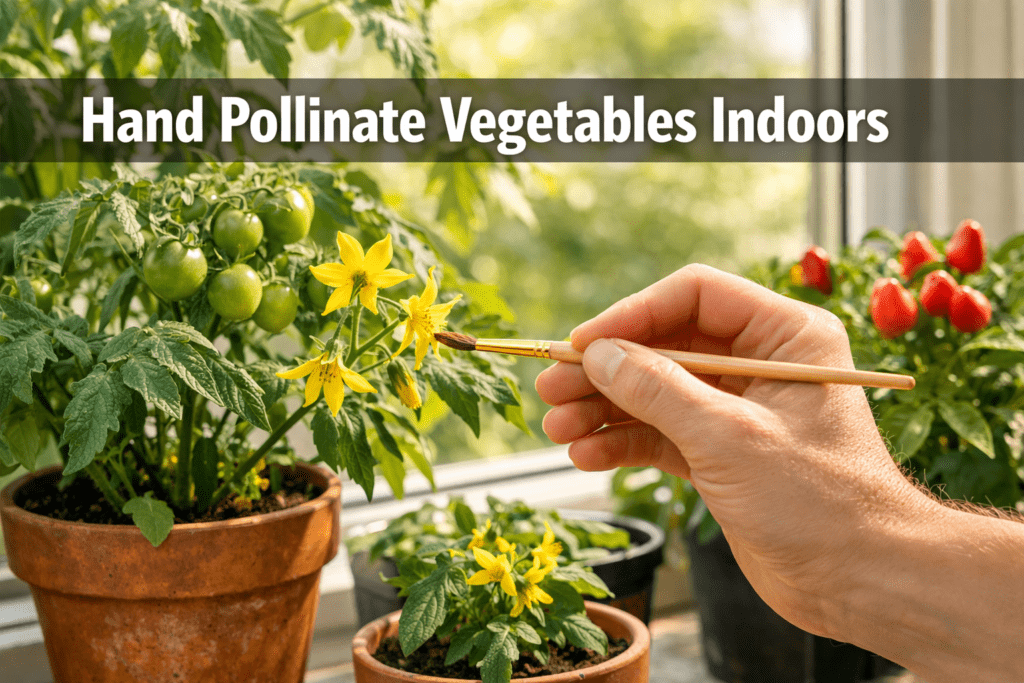
Quick Answer: Hand pollinate indoor vegetables by using a small paintbrush, cotton swab, or your fingertip to transfer pollen from a flower’s stamen (the pollen-producing part) to the stigma (the sticky center). Do this once per day when flowers are fully open, ideally in the morning. Most fruiting vegetables like tomatoes, peppers, and cucumbers need this when grown indoors because there are no bees or wind to do the job.
Key Takeaways
- 🌱 Indoor vegetables need hand pollination because apartments lack bees, wind, and other natural pollinators.
- 🖌️ A small paintbrush, cotton swab, or electric toothbrush are the best tools for the job.
- ⏰ Pollinate in the morning when flowers are fully open and pollen is most active.
- 🍅 Tomatoes, peppers, cucumbers, zucchini, and eggplant all benefit from hand pollination indoors.
- 🌸 Vibrating the stem gently (using an electric toothbrush) mimics how bumblebees pollinate tomatoes in the wild.
- ❌ Flowers that drop without fruiting are the clearest sign your plants need hand pollination.
- 💡 Grow lights and proper humidity (40–70%) improve pollination success alongside the manual technique.
- 🔁 Repeat every 1–3 days throughout the flowering period for the best fruit set.
Why Do Indoor Vegetables Need Hand Pollination?
Outdoor plants rely on bees, wind, and other insects to move pollen between flowers. Inside an apartment, none of those forces exist. Without pollination, fruiting vegetables like tomatoes and peppers will flower, then drop those flowers without ever producing fruit.
This is the single most common reason apartment gardeners get beautiful plants with zero harvest. If you’ve been asking yourself “how do I hand pollinate vegetables indoors in my apartment?” — you’re already ahead of most beginners.
Self-pollinating vs. cross-pollinating vegetables:
If you’re growing leafy greens or herbs, skip this process entirely. For a full breakdown of which vegetables work best in containers, see our guide to the best vegetables to grow in pots.
What Tools Do I Need to Hand Pollinate Vegetables Indoors in My Apartment?
You don’t need any special equipment. Most of the tools you need are already in your home.
Best tools for hand pollination:
- Small artist’s paintbrush (size 0 or 1): Gentle, precise, easy to clean between plants.
- Cotton swab (Q-tip): Disposable and effective for collecting and depositing pollen.
- Electric toothbrush: Excellent for tomatoes — vibrating the stem or base of the flower mimics buzz pollination, which is how bumblebees naturally pollinate tomatoes.
- Your fingertip: Works in a pinch. Tap the flower gently to shake loose pollen.
- Small fan: Running a fan near your plants for a few hours daily creates artificial airflow that can help move pollen on its own.
Common mistake: Using a brush that’s too large or too stiff. You risk damaging delicate flower parts. Stick to a soft, fine-tipped brush.
How Do I Hand Pollinate Vegetables Indoors in My Apartment, Step by Step?
Here’s the exact process, broken down by plant type.
For Tomatoes and Peppers (Self-Pollinating)
These are the easiest to hand pollinate because pollen just needs to be disturbed and moved within or between flowers on the same plant.
Steps:
- Wait until the flower is fully open. This usually happens 1–3 days after the bud appears.
- In the morning (when pollen is freshest), hold the stem just below the flower.
- Option A — Electric toothbrush: Press the back of a running electric toothbrush against the flower stem for 2–3 seconds. The vibration shakes pollen onto the stigma inside.
- Option B — Paintbrush/swab: Gently swirl the tip inside the flower to collect yellow pollen, then transfer it to the center of another flower on the same plant.
- Repeat every 1–2 days while flowers are open.

For Cucumbers, Zucchini, and Squash (Cross-Pollinating)
These plants produce separate male and female flowers. You must transfer pollen from a male flower to a female flower.
How to tell the difference:
- Male flowers appear first and grow on a straight stem.
- Female flowers have a tiny immature fruit (a mini cucumber or squash) at the base of the flower.
Steps:
- Identify an open male flower. Pick it or leave it on the plant.
- Peel back the petals to expose the stamen (the central column covered in yellow pollen).
- Gently dab or brush the stamen directly onto the stigma (the sticky center) of an open female flower.
- One male flower can pollinate 2–3 female flowers.
- Repeat on consecutive days since male and female flowers don’t always open at the same time.
Edge case: If you only have one or two plants and male and female flowers never open on the same day, try refrigerating a freshly picked male flower in a small sealed bag for up to 24 hours to use the next morning.
When Is the Best Time to Hand Pollinate Indoor Plants?
Morning is the best time, between 9 a.m. and noon. Pollen is most viable and abundant during this window, and flowers are typically fully open.
Avoid pollinating in the evening or when flowers look wilted or partially closed. Humidity also matters: pollen transfers poorly when the air is very dry (below 40% humidity) or very wet (above 80%). Most apartments run between 30–50% humidity, so you may want to mist the air lightly or use a small humidifier near your plants.
If your apartment runs dry from heating in winter, check our guide on indoor plants that tolerate dry winter air from heating radiators for tips on managing humidity year-round.
How Do I Know If Hand Pollination Worked?
Within 3–7 days of successful pollination, you’ll see the base of the flower begin to swell. That swelling is the fruit starting to develop. The flower petals will drop off naturally, and the small fruit will continue to grow.
Signs pollination failed:
- The flower drops off cleanly at the stem with no swelling at the base.
- The flower shrivels and turns brown without any fruit development.
- You see lots of flowers but zero fruit over 2–3 weeks.
If flowers keep dropping, the problem may not just be pollination. Check that your plant is getting enough light (most fruiting vegetables need 8–12 hours of direct or grow-light exposure), and that you’re not overwatering. For troubleshooting slow growth, see why are my vegetables growing slowly but not dying.

Which Vegetables Are Easiest to Hand Pollinate Indoors?
Best choices for apartment hand pollination:
- Cherry tomatoes: Compact, prolific, and very forgiving. The electric toothbrush method works exceptionally well.
- Peppers (sweet and hot): Self-pollinating and respond well to gentle tapping or brushing.
- Dwarf eggplant: Similar to peppers; just needs a gentle brush inside each flower.
- Bush cucumbers: Need male-to-female transfer, but compact varieties produce both flower types reliably.
More challenging options:
- Zucchini: Produces large fruit but needs more space and careful timing of male/female flowers.
- Melons: Possible but require consistent pollination and a lot of light to fruit well indoors.
For a broader look at what grows well in limited space, our indoor vegetable gardening guide covers variety selection in detail. You might also find our apartment gardening for beginners guide helpful if you’re just getting started.
What Else Affects Pollination Success Indoors?
Hand pollination technique matters, but it’s only one piece of the puzzle. Several environmental factors directly affect whether pollen is viable and whether fruit sets successfully.
Key factors:
- Light: Fruiting vegetables need 8–12 hours of bright light. Insufficient light reduces flower production and pollen quality. A full-spectrum grow light is often necessary in apartments. See our beginner indoor gardening tips for light setup advice.
- Temperature: Most vegetables pollinate best between 65°F and 85°F (18°C–29°C). Temperatures above 90°F or below 55°F can make pollen sterile.
- Humidity: Aim for 40–70%. Very dry air causes pollen to clump or fail to stick.
- Nutrition: Plants need adequate phosphorus and potassium during flowering. Avoid excess nitrogen, which pushes leafy growth at the expense of flowers.
- Container size: Roots that are too cramped stress the plant and reduce fruit set. Check our guide on the best containers for growing vegetables to make sure your pots are the right size.
Common mistake: Over-fertilizing with nitrogen-heavy fertilizer during the flowering stage. This produces lush green leaves but almost no flowers or fruit.
How Do I Hand Pollinate Vegetables Indoors in My Apartment Without Making Mistakes?
The technique itself is simple, but a few consistent errors trip up most beginners.
Mistakes to avoid:
- Pollinating too early: Flowers that aren’t fully open don’t have accessible pollen yet. Wait for the flower to open completely.
- Skipping days: Pollen viability is short. Pollinate every 1–2 days during the flowering period, not just once.
- Using a dirty brush: Cross-contaminating pollen between different plant species can cause problems. Rinse and dry your brush between plant types.
- Ignoring the environment: Great technique won’t overcome poor light, wrong temperature, or extreme dryness.
- Giving up too soon: It can take 7–14 days from pollination to see visible fruit development. Be patient.
For a broader list of pitfalls to avoid in apartment growing, see our article on indoor gardening mistakes.

FAQ: Hand Pollinating Vegetables Indoors
Q: Can I just shake my tomato plants instead of using a brush?
Yes. Gently shaking the stem or tapping the flower cluster works for tomatoes because they’re self-pollinating. It’s less precise than a brush but effective enough for casual growers.
Q: How often should I hand pollinate?
Every 1–2 days while flowers are open. Most flowers stay viable for 2–4 days, so daily attention during peak flowering gives the best results.
Q: Do herbs need hand pollination?
No. Herbs like basil, mint, and cilantro are grown for their leaves, not fruit. You don’t need to pollinate them. If they flower, you can let it happen naturally or pinch the flowers off to keep leaf production going.
Q: Why are my tomato flowers dropping even after I hand pollinate?
Flower drop despite pollination usually points to temperature stress (too hot or too cold), low light, or inconsistent watering. Check that nighttime temperatures aren’t dropping below 55°F.
Q: Can I use a regular fan instead of hand pollinating?
A fan helps with self-pollinating plants like tomatoes by mimicking wind. But it’s not reliable enough on its own, and it won’t work at all for cross-pollinating plants like cucumbers. Use it as a supplement, not a replacement.
Q: How long does it take to see fruit after hand pollination?
For tomatoes and peppers, you’ll typically see the fruit begin to swell within 3–7 days of successful pollination. Full ripeness takes several more weeks depending on the variety.
Q: Do I need a male and female plant for tomatoes?
No. Tomatoes have both male and female parts in the same flower. One plant is enough. Cucumbers and squash are different — they have separate male and female flowers on the same plant.
Q: What if I only have one cucumber plant?
One cucumber plant produces both male and female flowers, so you only need one plant. The challenge is timing — male flowers appear first, so wait for female flowers to open before transferring pollen.
Conclusion: Start Hand Pollinating and Watch Your Harvest Grow
Hand pollination is a small daily habit that makes the difference between a plant that flowers endlessly with no results and one that fills your kitchen with homegrown tomatoes, peppers, or cucumbers. The technique takes less than five minutes per plant, costs nothing beyond a cheap paintbrush or cotton swab, and works reliably once you understand the basics.
Your action plan for 2026:
- Identify which vegetables you’re growing and whether they’re self- or cross-pollinating.
- Get a small paintbrush or cotton swab ready before your plants start flowering.
- Pollinate every morning when flowers are fully open.
- Check your light, temperature, and humidity — technique alone won’t compensate for a poor environment.
- Watch for fruit development within a week of pollination.
If you’re building out your apartment garden beyond just pollination, our container vegetable gardening guide covers everything from soil choice to variety selection in one place.
References
- University of Minnesota Extension. (2021). Pollination of vegetables. https://extension.umn.edu/yard-and-garden/pollination-vegetables
- University of California Agriculture and Natural Resources. (2019). Tomato production in California. UC ANR Publication 7244.
- National Gardening Association. (2022). Indoor vegetable gardening. https://garden.org