Beginner Vegetable Gardening Plan 2026: Your Easy Guide
Embarking on your first vegetable garden journey can be incredibly rewarding, offering fresh produce and a connection to nature right at home. This comprehensive guide provides a clear, actionable Beginner Vegetable Gardening Plan designed to help new gardeners succeed in 2026, transforming a patch of soil or a few containers into a flourishing source of delicious, homegrown vegetables.
Key Takeaways
- Start your Beginner Vegetable Gardening Plan by assessing your space and sunlight, as these are critical factors for plant growth.
- Choose easy-to-grow, high-yield vegetables like leafy greens, radishes, bush beans, and cherry tomatoes for initial success.
- Prepare your soil by amending it with organic compost and conducting a soil test to understand its pH and nutrient needs.
- Plan your garden layout carefully, considering plant heights and sun exposure to prevent shading.
- Implement a consistent watering schedule and learn basic plant care techniques to ensure healthy growth.
- Utilize raised beds or containers for limited spaces, which offer better control over soil quality and drainage.
- Monitor your plants regularly for pests and diseases, addressing issues promptly to prevent widespread damage.
- Harvest vegetables at their peak to encourage further production and enjoy the freshest flavors.
Quick Answer
A successful Beginner Vegetable Gardening Plan for 2026 involves selecting an appropriate site with ample sunlight, choosing resilient and productive plants, preparing nutrient-rich soil, and establishing a consistent care routine. By focusing on fundamental gardening principles and starting with manageable goals, new gardeners can enjoy a rewarding harvest of fresh produce.
Where Should a Beginner Start Their Vegetable Gardening Plan?
A beginner should start their vegetable gardening plan by carefully selecting the garden site, prioritizing ample sunlight exposure. Most vegetables require at least 6-8 hours of direct sunlight daily to thrive [4]. Without sufficient sun, plants will produce fewer fruits and may become leggy or weak.
When choosing your location, consider these factors:
- Sunlight Assessment: Observe potential garden spots throughout the day. South-facing locations generally receive the most sun. Avoid areas heavily shaded by buildings, fences, or large trees.
- Water Access: Ensure your chosen spot is conveniently close to a water source. Dragging hoses long distances can become a deterrent to consistent watering. For guidance, check out our article on How Often Should You Water Plants? Ultimate Guide 2026.
- Soil Drainage: Good drainage is crucial. If your soil remains waterlogged after rain, it can lead to root rot. Raised beds or containers are excellent solutions for areas with poor natural drainage or problematic native soil [1].
- Accessibility: Choose a location that is easy to access for daily tasks like watering, weeding, and harvesting. If you have limited space, consider options like a Small Space Vegetable Gardening: 2026 Step-by-Step Guide.
Decision Rule: Choose a spot that consistently receives at least six hours of direct sunlight. If such a spot is unavailable, prioritize leafy greens and root vegetables over fruiting plants, as they tolerate slightly less sun.
What Vegetables Are Best for a Beginner Vegetable Gardening Plan?
For a beginner vegetable gardening plan, focus on easy-to-grow, high-yield vegetables that are relatively forgiving of novice mistakes and offer a quick return on effort. These plants are chosen for their resilience and straightforward care requirements, providing an encouraging first-time gardening experience.
Here are some top picks for beginners:
- Leafy Greens: Lettuce, spinach, kale, and Swiss chard are fast-growing and can be harvested repeatedly. They tolerate partial shade, making them versatile for various garden spots.
- Radishes: These are incredibly fast-growing, often ready to harvest in just 3-4 weeks. Their rapid growth offers quick gratification.
- Bush Beans: Unlike pole beans, bush beans don’t require trellising, simplifying their care. They are prolific producers and relatively pest-resistant.
- Cherry Tomatoes: While all tomatoes need full sun, cherry varieties are often more vigorous and productive than larger slicing tomatoes. They are excellent for container gardening too [1].
- Zucchini/Summer Squash: These plants are incredibly productive, often yielding more than a family can eat. Ensure they have plenty of space.
- Herbs: Basil, mint, parsley, and chives are very easy to grow, whether in the ground or in pots, and offer immediate culinary rewards.
Common Mistake: Many beginners try to grow challenging crops like corn or large pumpkins in their first year. Stick to simpler, more reliable options to build confidence. For more ideas on what to grow in containers, see our list of Best Vegetables for Small Space Gardening in 2026.
| Vegetable Type | Ease of Growth | Sunlight Needs | Space Required (Approx.) | Notes |
|---|---|---|---|---|
| Leafy Greens | Easy | Partial-Full | Small | Quick harvest, continuous picking |
| Radishes | Very Easy | Full-Partial | Very Small | Fastest growing, great for quick success |
| Bush Beans | Easy | Full | Medium | No trellis needed, high yield |
| Cherry Tomatoes | Medium | Full | Medium | Prolific, good for containers |
| Zucchini | Medium | Full | Large | Highly productive, watch for powdery mildew |
| Herbs (Basil) | Easy | Full-Partial | Small | Great for cooking, easy to maintain |
How Do You Prepare the Soil for a Beginner Vegetable Gardening Plan?
Preparing the soil is a foundational step in any beginner vegetable gardening plan, as healthy soil is the backbone of healthy plants. New gardeners should focus on amending the soil with organic matter to improve its structure, nutrient content, and water retention.
Follow these steps for optimal soil preparation:
- Clear the Area: Remove any weeds, rocks, or debris from your chosen garden site. If you’re starting a new bed in a grassy area, you might need to dig out the sod or use a smothering technique with cardboard and compost.
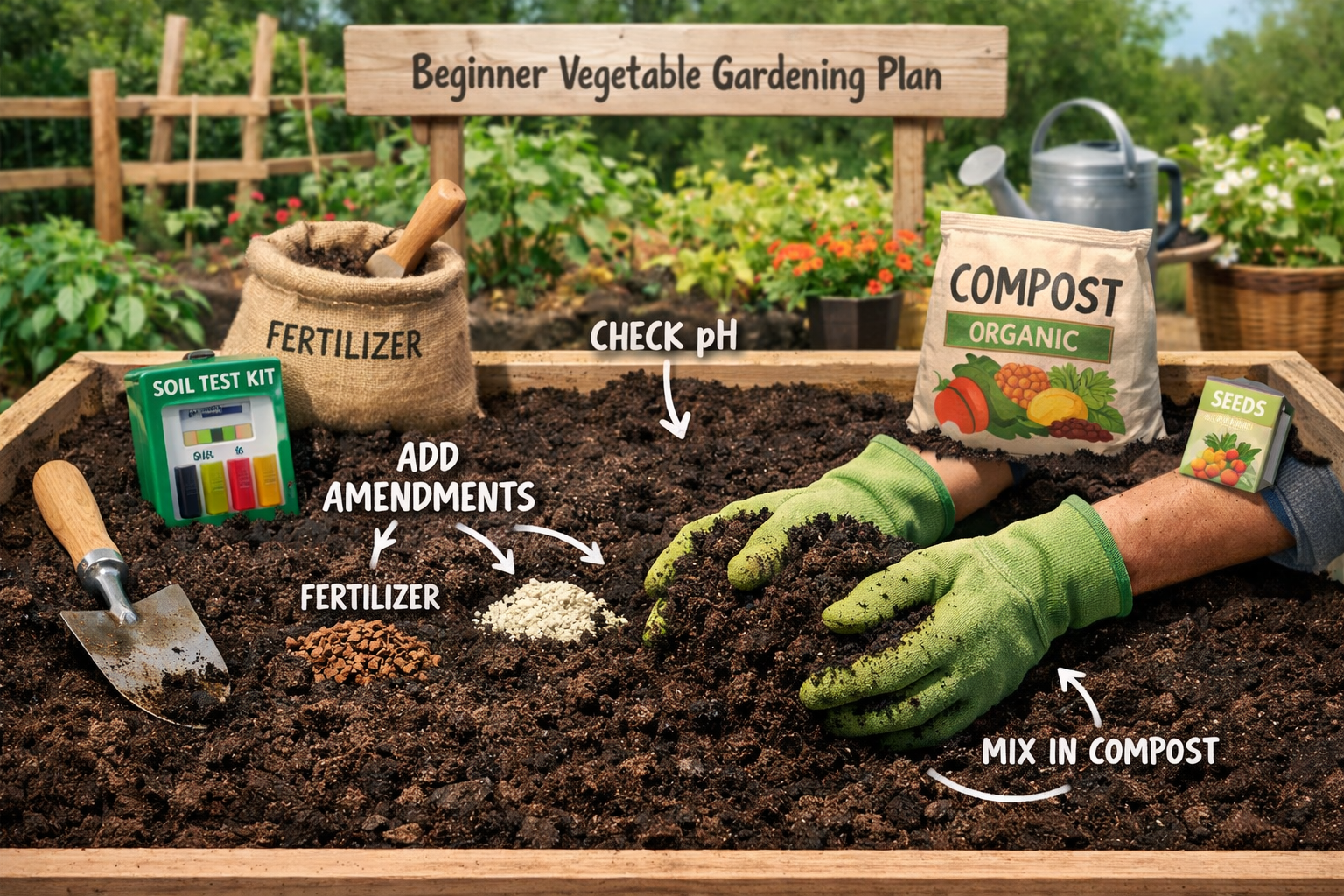
- Add Organic Material: The single most important amendment for most soils is organic material. Incorporate a generous layer (2-4 inches) of homemade compost or certified organic compost into the top 6-12 inches of existing soil [1]. This improves drainage in clay soils and water retention in sandy soils. For container gardens, use a mix of equal parts compost, shredded pine bark mulch, and vermiculite, avoiding heavy garden soil [1]. Discover more about Soil Basics for Container Gardening: 2026 Expert Guide.
- Perform a Soil Test: Before planting, submit a soil sample to your local Cooperative Extension center or a reputable lab. This test will reveal your soil’s pH level and existing nutrient content, providing specific recommendations for amendments [1]. Soil pH affects nutrient availability, with most vegetables preferring a pH between 6.0 and 7.0.
- Incorporate Amendments (if needed): Based on your soil test results, you might need to add lime to raise pH or sulfur to lower it. Avoid guessing; precise amendments are key.
- Light Tilling/Mixing: Gently mix the compost and any amendments into the top layer of soil using a garden fork or broadfork. Avoid over-tilling, which can disrupt beneficial soil microorganisms.
Edge Case: If you are using raised beds or containers, you have complete control over your soil mix. Fill them with a high-quality potting mix formulated for vegetables or create your own blend as described above.
What is an Effective Layout for a Beginner Vegetable Gardening Plan?
An effective layout for a beginner vegetable gardening plan maximizes sunlight, optimizes space, and simplifies maintenance, particularly important for small-scale gardens. Strategic placement of plants ensures they all receive adequate light and have room to grow without competing excessively.
Consider these layout strategies:
- Sunlight Orientation: For flat areas, orient your garden rows north-to-south to maximize sunlight exposure to all plants throughout the day [1]. If your garden is on a slope, run rows across the slope to reduce soil erosion [1].
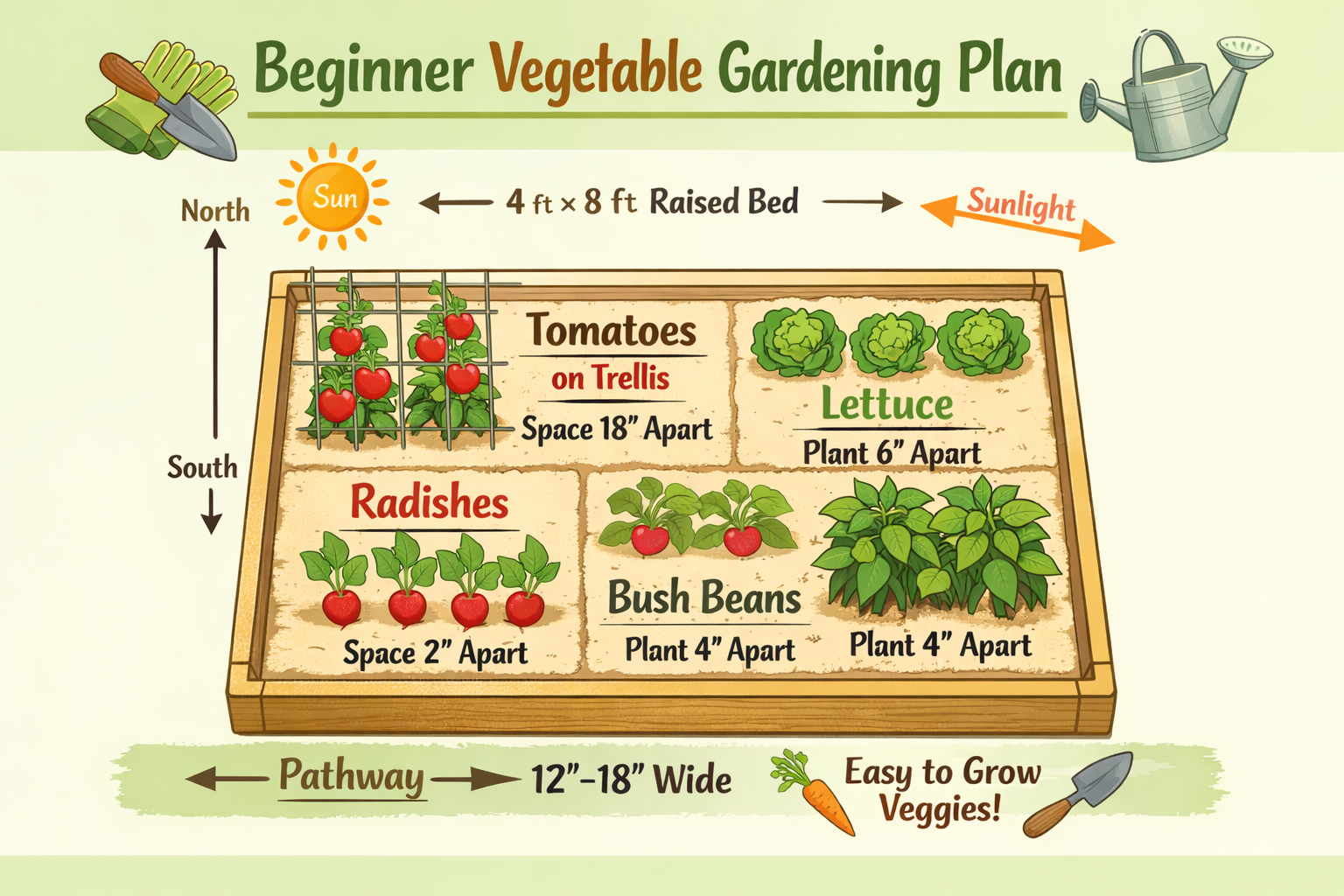
- Tall Plants to the North: Group tall crops and trellised vines (like pole beans or indeterminate tomatoes) on the north side of your garden bed. This prevents them from shading shorter plants to their south [1].
- Intensive Gardening: For limited spaces, consider intensive gardening techniques where plants are spaced closer together than traditional rows, forming blocks. This increases yield per square foot. Succession planting, staggering new plantings every one to two weeks, further optimizes space by ensuring continuous harvest [1]. Learn more about Small Space Vegetable Gardening: 2026 Step-by-Step Guide.
- Companion Planting: While not strictly a layout rule, consider companion planting (e.g., marigolds near tomatoes to deter pests) as it can benefit plant health and productivity.
- Pathways: Include clear pathways within your garden design, even in small spaces, to allow for easy access for weeding, watering, and harvesting without compacting the soil around your plants.
Quick Example: In a 4×8 foot raised bed, place pole beans on a trellis at the very north edge. Below them, plant cherry tomatoes, followed by bush beans, and finally, a block of lettuce and radishes on the south end. This ensures all plants receive their share of sunlight. A 4-foot by 8-foot raised bed can produce a significant amount of produce for one or two people when planned properly [1].
How Do You Care for Plants in a Beginner Vegetable Gardening Plan?
Caring for plants in a beginner vegetable gardening plan primarily involves consistent watering, attentive pest management, and providing adequate nutrients, which are critical for plant health and a bountiful harvest. Establishing a routine for these tasks helps prevent common issues and ensures plants thrive.
Here are the essential plant care steps:
- Watering: Consistent watering is key, especially during dry spells and for young plants. Water deeply and less frequently rather than shallowly and often, aiming to moisten the soil to root depth. Check soil moisture by sticking your finger about an inch or two into the soil; if it feels dry, it’s time to water [5]. Early morning watering is often best to allow foliage to dry before nightfall, reducing fungal disease risk. For detailed watering advice, consult our How Often Should You Water Plants? Ultimate Guide 2026.
- Weeding: Weeds compete with your vegetables for water, nutrients, and sunlight. Remove them regularly, ideally when they are small, either by hand or with a hoe. Mulching your garden beds with straw, shredded leaves, or wood chips can significantly suppress weeds and conserve soil moisture.
- Fertilizing (as needed): If your soil test indicated nutrient deficiencies or if plants show signs of nutrient stress (e.g., yellowing leaves), apply a balanced organic fertilizer. Compost tea or worm castings are excellent gentle options for continuous feeding. Always follow fertilizer package directions.
- Pest and Disease Management: Regularly inspect your plants for signs of pests or diseases. Catching issues early allows for easier control. Hand-picking larger pests, using insecticidal soap for smaller infestations, or encouraging beneficial insects can minimize damage. Crop rotation in subsequent seasons helps prevent disease buildup.
- Staking and Trellising: Provide support for vining plants like tomatoes, cucumbers, and pole beans. Stakes, cages, or trellises keep plants upright, improve air circulation, prevent disease, and make harvesting easier. Installing these supports when plants are young is ideal [2].
- Harvesting: Harvest vegetables at their peak ripeness. Regular harvesting encourages plants to produce more, especially for continuous producers like beans, zucchini, and leafy greens.
Common Mistake: Overwatering is a frequent beginner mistake, leading to root rot and fungal issues. Always check the soil before watering. Under-fertilizing (or not fertilizing at all in poor soil) is also common, leading to stunted plants and low yields.
Conclusion
Starting a vegetable garden in 2026 is an accessible and gratifying endeavor with the right Beginner Vegetable Gardening Plan. By carefully selecting your site, opting for easy-to-grow vegetables, enriching your soil, designing an efficient layout, and committing to consistent care, you’ll set yourself up for a season of fresh, homegrown produce. Don’t be discouraged by minor setbacks; every gardener learns through experience. Embrace the process, observe your plants, and enjoy the delicious fruits (and vegetables!) of your labor.
Actionable Next Steps:
- Assess Your Space: Spend a sunny day observing your yard or balcony to identify spots receiving at least 6-8 hours of direct sunlight.
- Plan Your First Crops: Choose 3-5 of the easy-to-grow vegetables listed above.
- Test Your Soil: Obtain a soil test kit or contact your local extension office to understand your soil’s current condition.
- Gather Supplies: Purchase seeds or starter plants, organic compost, and essential tools like a trowel, gloves, and a watering can. For tool recommendations, check our guide on Essential Tools for Small Space Gardening in 2026 – Mini Spa.
- Start Planting! Begin with cool-season crops in early spring or warm-season crops after the last frost, following your personalized Beginner Vegetable Gardening Plan.
FAQ
What are the absolute minimum requirements for a beginner vegetable garden?
The absolute minimum requirements for a beginner vegetable garden are a location with at least 6-8 hours of direct sunlight, basic soil amended with compost, a water source, and easy-to-grow plants like lettuce or radishes [4, 5].
Can I start a vegetable garden in containers?
Yes, you can absolutely start a vegetable garden in containers, which is excellent for small spaces like balconies or patios. Use pots with drainage holes and a high-quality potting mix, and select compact varieties of vegetables [1].
How much space do I need for a beginner vegetable garden?
You don’t need a lot of space. A 4×8 foot raised bed can supply a good portion of produce for one or two people [1]. Even a few large containers on a sunny balcony can yield a surprising harvest.
What are common mistakes beginners make?
Common beginner mistakes include overwatering, planting too early before the last frost, choosing plants that are too challenging, not amending the soil, and neglecting regular pest checks [5].
How do I know when to water my vegetables?
Check the soil moisture by sticking your finger about an inch or two into the soil near the plant. If it feels dry, it’s time to water deeply. Wilting leaves can also be a sign of thirst, but they can also indicate overwatering.
Should I fertilize my beginner vegetable garden?
Yes, especially if your soil test shows deficiencies. Start by amending with organic compost, which provides nutrients gradually. If plants show signs of nutrient stress, use a balanced organic fertilizer according to package directions.
What’s the best time of year to start a vegetable garden?
The best time depends on your climate and the specific vegetables. Generally, cool-season crops (like lettuce, spinach) can be planted in early spring, while warm-season crops (like tomatoes, beans) should be planted after the danger of the last frost has passed [2].
References
[1] Home Vegetable Gardening A Quick Reference Guide – https://content.ces.ncsu.edu/home-vegetable-gardening-a-quick-reference-guide
[2] What To Do In The Garden In 2026 Month By Month Checklist – https://www.gardenary.com/blog/what-to-do-in-the-garden-in-2026-month-by-month-checklist
[3] Watch – https://www.youtube.com/watch?v=bNjRjGzjMCk
[4] Beginner Basic Vegetable Garden Layout Guide – https://seedsheets.com/beginner-basic-vegetable-garden-layout-guide/
[5] Thinking About Starting A Garden Start Here – https://migardener.com/blogs/blog/thinking-about-starting-a-garden-start-here