Pot Size Guide for Vegetables 2026: Optimal Growth & Harves
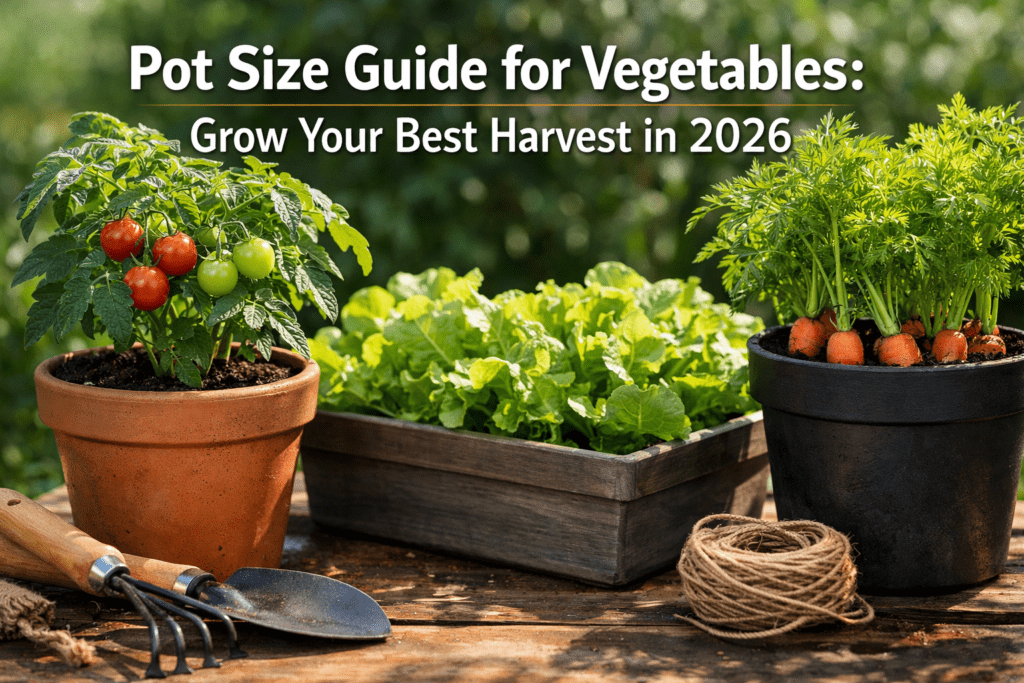
Selecting the correct pot size is fundamental to successful container vegetable gardening in 2026, directly impacting your plants’ health, yield, and overall vitality. Without adequate space, roots become restricted, leading to stunted growth, nutrient deficiencies, and increased susceptibility to stress and disease. This comprehensive Pot Size Guide for Vegetables will help you choose the ideal containers for a bountiful harvest, ensuring your plants have the room they need to thrive.
Key Takeaways
- Optimal Root Growth: The right pot size prevents root binding, allowing plants to absorb water and nutrients efficiently.
- Vegetable-Specific Needs: Different vegetables have varying root depths and spread, dictating their minimum pot size requirements.
- Leafy Greens: Thrive in shallow, wide containers (6-8 inches deep) due to their shallow root systems.
- Root Vegetables: Require deep pots (at least 12 inches) to allow taproots to grow without obstruction.
- Fruit-Bearing Plants: Tomatoes, peppers, and eggplants need medium to large pots (12-18 inches diameter, 5-gallon minimum) for ample root development and moisture retention.
- Large Vining Crops: Squash, cucumbers, and melons demand very large containers (5-7 gallons or more, 18-24 inches deep) to support extensive growth.
- When in Doubt, Go Larger: A slightly larger pot is almost always better than one too small, as it provides a buffer against drying out and root restrictions [4].
- Drainage is Crucial: Regardless of size, ensure all pots have adequate drainage holes to prevent waterlogging and root rot.
Quick Answer
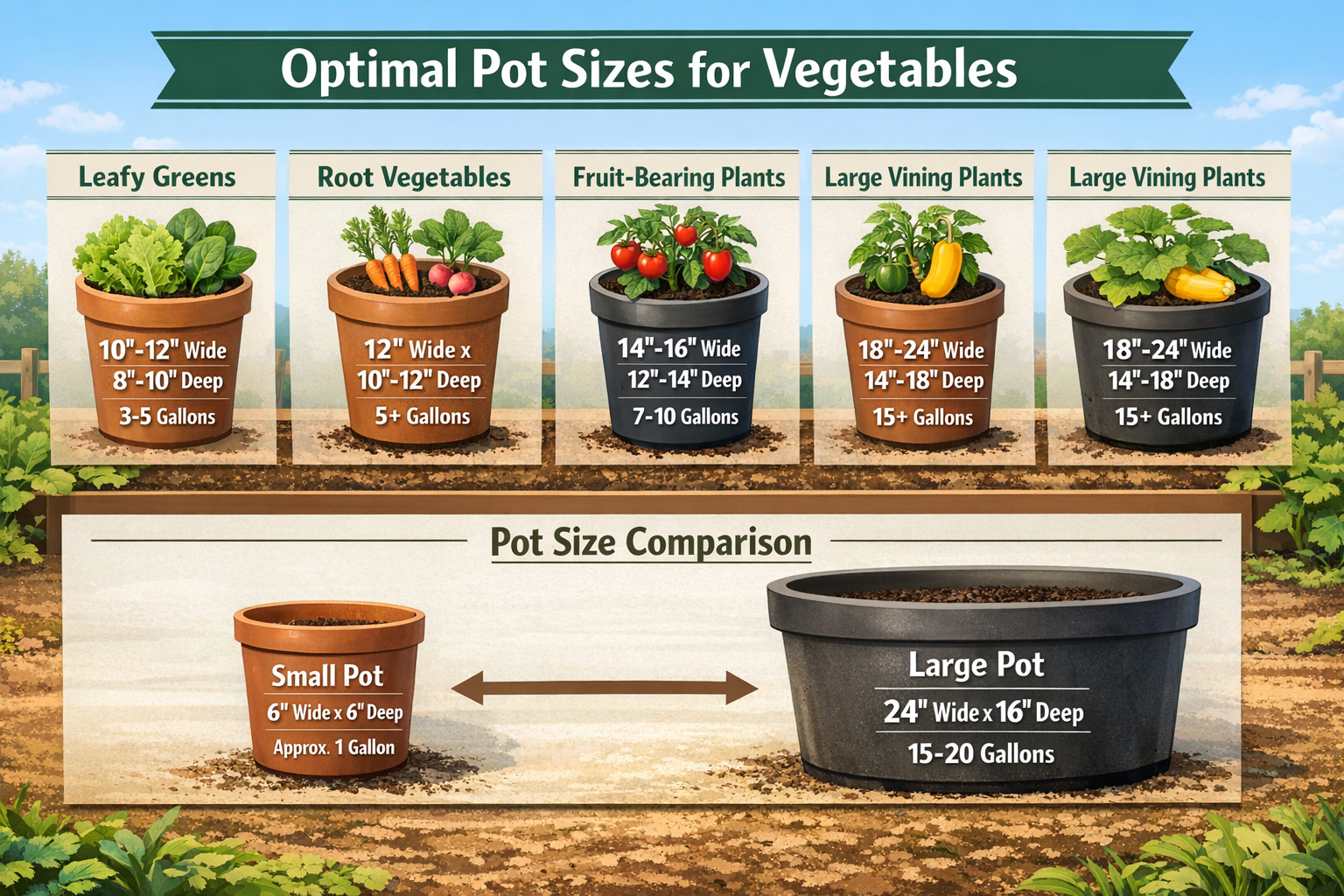
Choosing the right pot size for vegetables involves matching the container’s dimensions—especially depth and diameter—to the specific root system and growth habit of each plant type. Generally, leafy greens prefer shallow, wide pots (6-8 inches deep), root vegetables require deep pots (12+ inches deep), and fruit-bearing and large vining plants need substantial containers (5 gallons or more, 12-24 inches deep) to support extensive root growth and maximize yields [2, 5].
Why Pot Size Matters for Vegetable Growth
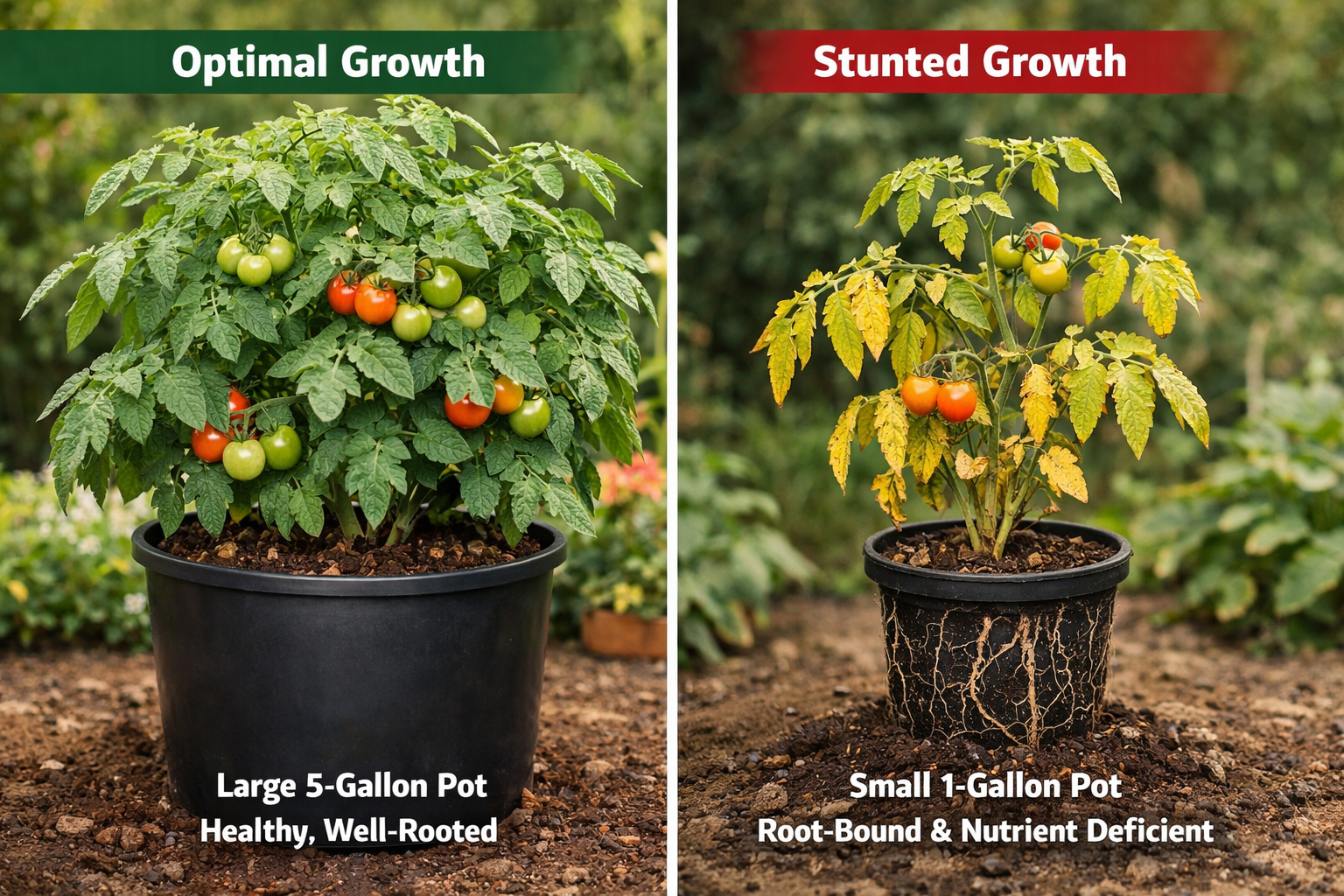
Choosing the correct pot size is critical because it directly influences root development, water retention, and nutrient availability, all essential factors for a healthy and productive vegetable plant. A pot that is too small restricts root growth, leading to root-bound conditions where roots circle the pot’s interior, hindering the plant’s ability to absorb water and nutrients, resulting in stunted growth and lower yields [1, 7]. Conversely, an excessively large pot can hold too much moisture, potentially leading to waterlogging and root rot, particularly in smaller plants [1].
Plants grow at their own pace, but their health is intrinsically linked to the space available for their root system. The root system is the lifeline of your plant, responsible for anchoring it and absorbing everything it needs from the soil. When roots are confined, plants experience stress, making them more vulnerable to pests and diseases. Larger containers, while taking up more space, generally hold more soil, which translates to better moisture retention and a more stable environment for root growth, reducing the need for frequent watering [5]. This is particularly beneficial for active growers or during hot weather.
Consider the example of a tomato plant: if grown in a pot that is too small, it will struggle to produce fruit, and any fruit it does manage will likely be small and lack flavor. In contrast, a tomato plant in a 5-gallon container or larger will have the room it needs to develop a robust root system, supporting vigorous foliage and a generous harvest [3, 6]. For beginners, understanding these foundational principles prevents common issues and sets the stage for success in small space vegetable gardening.
Pot Size Guide for Vegetables: Specific Plant Needs
Selecting the appropriate container size is tailored to the individual vegetable, considering its root depth, spread, and overall growth habit. Knowing these specific requirements ensures each plant receives optimal growing conditions and maximizes its yield.
[[PLANT_SIZE_CHART]]
Leafy Greens (Lettuce, Spinach, Kale, Arugula)
Leafy greens thrive in shallow containers with a wide surface area because they have relatively shallow root systems. For most varieties, pots that are 6-8 inches deep are sufficient, allowing ample space for their fibrous roots to spread horizontally [2].
- Recommended Size: 1-2 gallons per plant, or a rectangular planter at least 6-8 inches deep for multiple plants.
- Why it works: These dimensions accommodate their shallow, spreading roots and allow for good air circulation around the foliage.
- Decision Rule: Choose a wider pot over a deeper one if you plan to grow multiple leafy greens simultaneously. For example, a window box or a wide, shallow grow bag works perfectly.
- Common Mistake: Using excessively deep pots can lead to excess soil moisture at the bottom, potentially causing root rot for these shallow-rooted plants.
- Edge Case: Microgreens, being harvested very young, can grow in even shallower trays, often just 1-2 inches deep, as they do not need extensive root development.
Root Vegetables (Carrots, Beets, Radishes, Potatoes)
Root vegetables, as their name suggests, require significant depth to develop properly without becoming deformed or stunted. Pots need to be at least 12 inches deep for most root crops, with some, like longer carrot varieties, benefiting from up to 15-18 inches [2]. Potatoes require particularly large, deep containers or grow bags to allow for successive hilling.
- Recommended Size:
- Carrots, Beets, Radishes: Minimum 12 inches deep, preferably 15-18 inches for longer varieties. A 2-gallon pot can hold a few radishes, while carrots benefit from larger, communal space.
- Potatoes: At least 15-20 gallons per plant for grow bags, or a container that is 15-24 inches deep and wide [3].
- Why it works: Sufficient depth allows the taproots or tubers to grow straight down, preventing branching, forking, or malformation.
- Decision Rule: Always prioritize pot depth for root vegetables; width is secondary but still important for multiple plants.
- Common Mistake: Using shallow pots for carrots leads to short, stumpy, or forked roots, diminishing harvest quality.
- Example: For indeterminate potatoes, a 15-gallon grow bag allows you to continuously add soil as the plant grows, encouraging more tuber formation.
Fruit-Bearing Vegetables (Tomatoes, Peppers, Eggplant, Bush Beans)
These popular garden staples have more extensive root systems and require substantial pots to support their growth and fruit production. They are thirsty plants that benefit from greater soil volume to retain moisture.
- Recommended Size:
- Tomatoes (determinate varieties): Minimum 5 gallons (12-inch diameter, 12-18 inches deep) [3, 6].
- Tomatoes (indeterminate varieties): 10-15 gallons (18-24 inches deep) for best results.
- Peppers (bell, chili): Minimum 5 gallons (12-inch diameter, 18-24 inches deep) per plant [6].
- Eggplant: Minimum 5 gallons (12-inch diameter, 18-24 inches deep).
- Bush Beans: 2 gallons for 3 plants (ensure good spacing) [2].
- Pole Beans: 5 gallons for 2 plants.
- Why it works: Larger pots provide enough room for a robust root system to anchor the plant and support the weight of developing fruits, while also offering a larger water reservoir.
- Decision Rule: When in doubt, always choose a larger container for fruit-bearing vegetables to prevent water stress and improve yields [4]. For tomatoes and peppers, a 5-gallon bucket with drainage holes is a common and effective choice.
- Common Mistake: Under-sizing pots for tomatoes can lead to small, flavorless fruit, blossom end rot due to inconsistent watering, and plants that are prone to disease.
Large Vining or Bushy Vegetables (Cucumbers, Squash, Zucchini, Pumpkins)
These vegetables grow vigorously and produce large yields, requiring the largest containers to support their extensive root systems and heavy fruit.
- Recommended Size:
- Cucumbers (bush varieties): Minimum 5 gallons (12-inch diameter, 12-18 inches deep).
- Cucumbers (vining varieties): 7-10 gallons per plant.
- Zucchini, Summer Squash: 5-7 gallons (18-24 inches deep) per plant [1].
- Winter Squash, Pumpkins, Watermelons: 15-25 gallons per plant, or a half wine barrel [1].
- Why it works: These plants are heavy feeders and drinkers. Large pots provide the extensive root space needed for nutrient uptake and prevent the soil from drying out too quickly, which can stress the plant and reduce fruit production.
- Decision Rule: For very large vining plants like pumpkins, consider growing them in a dedicated large container or grow bag where they can sprawl, or provide a sturdy trellis.
- Common Mistake: Neglecting to provide a large enough container or adequate support (like a trellis) for vining plants can result in stunted growth and damaged stems or fruit. These plants also benefit from Vertical Gardening Guide for Small Spaces.
Pot Size Comparison Chart for Common Vegetables
This chart provides a quick reference for minimum pot sizes, helping you decide on the ideal container for your desired vegetables in 2026. Remember, these are minimums; going slightly larger is often beneficial.
| Vegetable Type | Minimum Pot Size (Gallons) | Minimum Pot Depth (Inches) | Best for Multiple Plants (Width) | Notes |
|---|---|---|---|---|
| Lettuce, Spinach | 1-2 per plant | 6-8 | Wide, shallow containers | Shallow roots, good for succession planting |
| Radishes | 1-2 per plant | 6-8 | 6-8 inch diameter | Fast-growing, shallow but require depth |
| Bush Beans | 2 for 3 plants | 8-12 | 8-12 inch diameter | Compact growth habit |
| Carrots, Beets | 2-3 per plant | 12-15 | 10-12 inch diameter | Needs depth for taproots |
| Peppers (Bell, Chili) | 5 per plant | 12-18 | 12-18 inch diameter | Requires consistent moisture, good drainage |
| Eggplant | 5 per plant | 12-18 | 12-18 inch diameter | Heavy feeder, needs stability |
| Tomatoes (Determinate) | 5 per plant | 12-18 | 12-18 inch diameter | Supports moderate fruit load |
| Cucumbers (Bush) | 5 per plant | 12-18 | 12-18 inch diameter | Trailing or compact varieties |
| Zucchini, Summer Squash | 5-7 per plant | 18-24 | 18-24 inch diameter | Vigorous growth, heavy feeders |
| Pole Beans | 5 for 2 plants | 12-18 | 12-18 inch diameter | Needs trellis for support |
| Tomatoes (Indeterminate) | 10-15 per plant | 18-24 | 18-24 inch diameter | Large plants, prolific fruiting |
| Potatoes | 15-20 per plant | 15-24 | Grow bags, half barrels | Requires hilling, needs considerable space |
| Winter Squash, Pumpkin | 15-25 per plant | 18-24+ | Large grow bags, barrels | Extensive vines, heavy fruit |
General Considerations for Pot Size Guide for Vegetables
Beyond specific plant needs, several overarching factors influence the best pot size for your vegetable garden in 2026. Understanding these general guidelines will help you make informed decisions, especially if you’re exploring container gardening for the first time.
Drainage is Non-Negotiable
Every single container, regardless of its size or the plant it holds, must have adequate drainage holes. Without them, water will accumulate at the bottom of the pot, suffocating the roots and leading to root rot, which is often fatal to plants [1].
- Rule of Thumb: Aim for at least 3-5 drainage holes, each about 0.5-1 inch in diameter, for standard pots. For larger containers, more holes or larger holes may be necessary.
- Preventing Blockage: Place a piece of mesh screen or coffee filter over the drainage holes before adding soil to prevent soil from washing out while allowing water to escape. Avoid using gravel at the bottom, as it can actually worsen drainage.
- Checking Drainage: After watering, ensure water drains freely from the bottom within a few minutes. If water pools or drains slowly, your drainage might be insufficient.
Material Matters
The material of your pot affects how quickly the soil dries out and how much insulation it provides.
- Terracotta/Clay: Porous and breathable, they allow excellent air exchange to roots but dry out quickly, especially in hot climates. They can also be heavy.
- Plastic: Lightweight, inexpensive, and retains moisture well. However, dark plastic pots can heat up excessively in direct sun, potentially cooking roots. Choose lighter colors or place them in partial shade during intense heat.
- Fabric Grow Bags: Excellent for aeration (“air pruning” roots) and drainage, preventing root circling. They also keep roots cooler in hot weather. They dry out faster than plastic, requiring more frequent watering. These are often recommended for potatoes and large root vegetables [8].
- Wood: Attractive and insulating, but can be heavy and may rot over time if not treated properly. Untreated wood is generally safe for edibles.
- Metal: Can get very hot in direct sunlight, potentially damaging roots. Not ideal for most vegetables unless heavily insulated.
Location and Climate
The environment where your containers are placed significantly impacts moisture retention and temperature.
- Sun Exposure: Pots in full sun will dry out much faster than those in partial shade. This means smaller pots in full sun will need daily, sometimes twice-daily, watering.
- Wind: Windy conditions increase evaporation from both the soil surface and plant leaves, leading to quicker drying.
- Hot Climates: In warm regions, larger pots are universally recommended as they hold more soil and therefore more moisture, reducing the frequency of watering and protecting roots from extreme temperature fluctuations [5]. This also helps with maintaining moisture for plants like tomatoes and peppers that need consistent watering.
Common Mistakes to Avoid with Vegetable Pot Sizes
Even with the best intentions, gardeners can make mistakes when selecting pot sizes, leading to suboptimal plant health and yields. Being aware of these common pitfalls can save you time, effort, and disappointment in your 2026 gardening season.
Too Small is the Biggest Problem
The most frequent and detrimental mistake is choosing pots that are too small for your plants’ mature size. While seemingly economical or space-saving, a small pot will inevitably restrict root growth.
- Consequences: Stunted growth, yellowing leaves, poor fruit set, increased susceptibility to disease, and rapid drying out of the soil [7].
- Why it happens: Gardeners often underestimate the mature size of a vegetable plant’s root system or prioritize aesthetic appeal over functional space.
- Prevention: Always err on the side of a larger pot. If you’re unsure, choose the next size up. A 5-gallon container is a good minimum for many popular fruit-bearing vegetables [3].
Neglecting Drainage Holes
As mentioned, lack of drainage is a silent killer for container plants. Without proper holes, roots sit in soggy soil, leading to rot.
- Consequences: Wilted plants despite adequate watering, foul-smelling soil, and ultimately, plant death.
- Why it happens: Sometimes decorative pots lack drainage holes, or existing holes become clogged.
- Prevention: Always inspect new pots for drainage and drill holes if necessary. Use pot feet or risers to ensure drainage holes don’t get blocked by the ground surface.
Not Considering the Plant’s Mature Size
It’s easy to pick a pot based on the size of a seedling, but vegetables grow rapidly. A tiny tomato seedling will quickly become a large, thirsty plant.
- Consequences: The plant outgrows its pot mid-season, leading to severe stress, reduced harvest, and the hassle of repotting a large, established plant.
- Why it happens: Lack of foresight or experience with specific vegetable varieties.
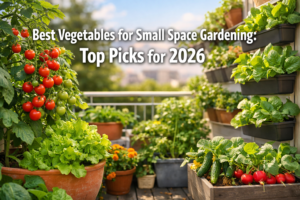
- Prevention: Research the mature size and growth habit of each vegetable you plan to grow. If it’s a vining plant, consider its need for a trellis or support in conjunction with pot size. Our guide to “Best Vegetables for Small Space Gardening in 2026” can help identify appropriate varieties.
Over-Sizing for Small Plants
While “bigger is better” is a good general rule, it’s possible to go too big, especially for very small seedlings.
- Consequences: An oversized pot can hold too much soil and thus too much moisture for a small root system to absorb, leading to waterlogged soil and root rot, particularly in cool or damp conditions [1].
- Why it happens: Misunderstanding the dynamics of soil moisture for small plants.
- Prevention: Start seedlings in smaller containers (e.g., 4-inch pots) and transplant them to their final, larger pot once they are established and growing vigorously. This approach helps manage moisture levels effectively.
Conclusion
Choosing the right pot size is a cornerstone of successful container vegetable gardening in 2026. It’s not just about providing a pretty home for your plants; it’s about creating an optimal environment where roots can flourish, water and nutrients are balanced, and your vegetables can reach their full potential. From the shallow, wide pots favored by leafy greens to the deep, voluminous containers required by root vegetables and large fruit-bearing plants, understanding each plant’s specific needs is key to a bountiful harvest.
Remember to prioritize drainage, consider your pot material and climate, and always err on the side of a slightly larger container when in doubt. By avoiding common mistakes like under-sizing or neglecting drainage, you’ll set your vegetable garden up for health, productivity, and enjoyment throughout the growing season. Happy gardening!
FAQ
Q1: What happens if a pot is too small for a vegetable plant?
A1: If a pot is too small, the vegetable plant’s roots become restricted (root-bound), leading to stunted growth, nutrient deficiencies, increased water stress, and a significantly reduced harvest [1, 7].
Q2: Can a pot be too large for a vegetable plant?
A2: Yes, a pot can be too large. An excessively large pot holds more soil and moisture than a small plant can utilize, which can lead to waterlogging and root rot, especially in cool conditions [1]. It also wastes potting mix.
Q3: What is the minimum pot size for tomatoes?
A3: For determinate (bush) tomato varieties, a minimum 5-gallon container (about 12-inch diameter and 12-18 inches deep) is recommended. Indeterminate (vining) varieties perform best in 10-15 gallon containers [3, 6].
Q4: How deep do pots need to be for carrots?
A4: Pots for carrots should be at least 12 inches deep, with 15-18 inches being ideal for longer varieties, to allow their taproots to grow straight without obstruction [2].
Q5: What type of pot is best for vegetables in hot climates?
A5: In hot climates, fabric grow bags or light-colored plastic pots are often preferred as they help keep roots cooler than dark plastic or terracotta, which can dry out quickly. Larger pots are also beneficial due to increased soil volume [5].
Q6: Do leafy greens need deep pots?
A6: No, leafy greens like lettuce and spinach have shallow root systems and thrive in containers that are 6-8 inches deep but wide enough to accommodate multiple plants [2].
Q7: How many drainage holes should a vegetable pot have?
A7: A typical vegetable pot should have at least 3-5 drainage holes, each about 0.5-1 inch in diameter, to ensure proper water runoff and prevent root rot.
Q8: Should I put gravel at the bottom of my pot for drainage?
A8: No, adding gravel or broken pot shards to the bottom of a container does not improve drainage; in fact, it can create a perched water table, which actually worsens drainage and can lead to root rot [8]. Just use potting mix.
References
[1] Vegetable Container Size Standards With Chart – https://ponicslife.com/vegetable-container-size-standards-with-chart/
[2] Choosing The Best Growing Containers By Plant Type A Guide For Optimal Growth – https://hc-companies.com/choosing-the-best-growing-containers-by-plant-type-a-guide-for-optimal-growth/
[3] Container Vegetable Gardening – https://lovelygreens.com/container-vegetable-gardening/
[4] Vegetable Container Size Chart – https://sandiegoseedcompany.com/container-garden/vegetable-container-size-chart/
[5] Vegetable Container Gardening – https://www.joyusgarden.com/vegetable-container-gardening/
[6] Container Gardening – https://extension.okstate.edu/fact-sheets/container-gardening.html
[7] What Is The Difference Between Container Sizes – https://naturehills.com/blogs/garden-blog/what-is-the-difference-between-container-sizes
[8] Growing Vegetables Containers Fact Sheet – https://extension.unh.edu/resource/growing-vegetables-containers-fact-sheet