Balcony Garden Maintenance Tips 2026: Ultimate Guide
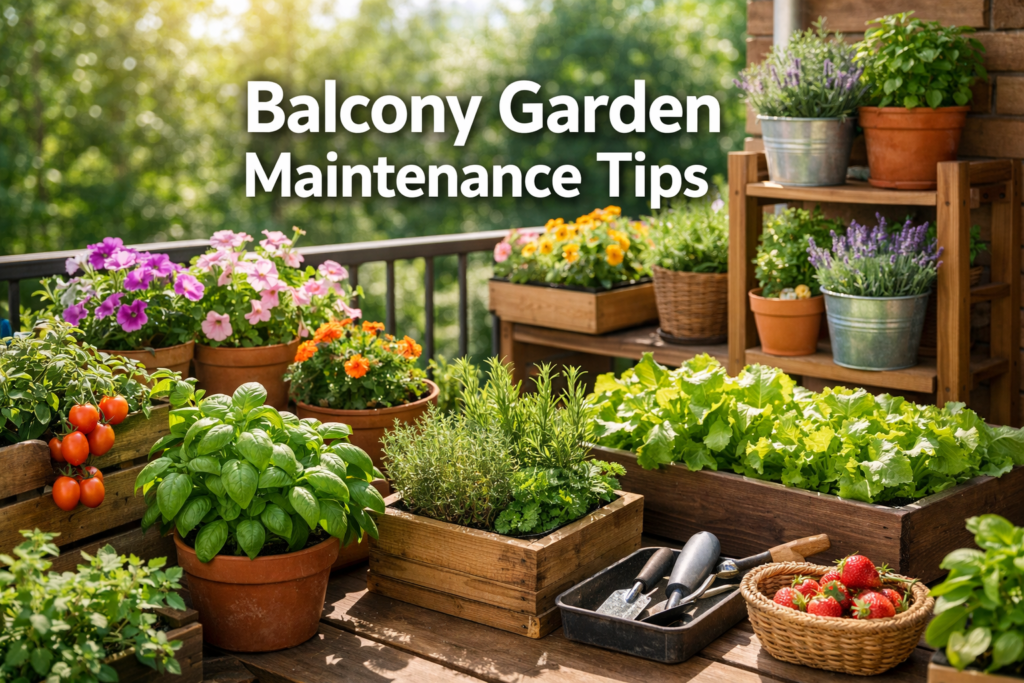
Cultivating a vibrant balcony garden offers a refreshing escape and a source of fresh produce right outside your door, even in the smallest urban spaces. However, the unique challenges of container gardening in an exposed environment mean consistent and informed maintenance is crucial for success. In 2026, many city dwellers are embracing balcony gardening as a sustainable hobby, making effective balcony garden maintenance tips more relevant than ever.
New to balcony gardening? Before diving into maintenance, start with our full balcony garden guide to get your space set up correctly from the beginning.
Key Takeaways
- Daily Soil Check: Containers dry out quickly; check soil moisture daily, especially during hot weather, and water when the top inch is dry [1, 3].
- Essential Drainage: Ensure all pots have adequate drainage holes and saucers to prevent waterlogging and root rot [1, 2, 3].
- Sunlight is Key: Most edible plants and flowers need 6-8 hours of direct sunlight daily to flourish [1, 5].
- Strategic Watering: Adjust watering frequency seasonally: weekly in spring/fall, more often in summer, less in winter [3].
- Fertilize Regularly: Feed your plants every few weeks with a balanced fertilizer, avoiding overfeeding [3].
- Prune for Health: Regularly remove dead or yellowing leaves and spent blooms to encourage new growth and air circulation [2, 3, 5].
- Pest Vigilance: Inspect plants frequently for pests and use natural control methods like companion planting or beneficial insects [1].
- Choose Lightweight Pots: Opt for plastic, fiberglass, or polystone containers to prevent structural overload on your balcony [1, 2].
- Maximize Vertical Space: Utilize shelves, hanging baskets, and wall planters to make the most of limited square footage [1, 2, 4].
- Mulch for Moisture: Apply a layer of mulch to container plants to help retain soil moisture and reduce weeds [4].
Quick Answer
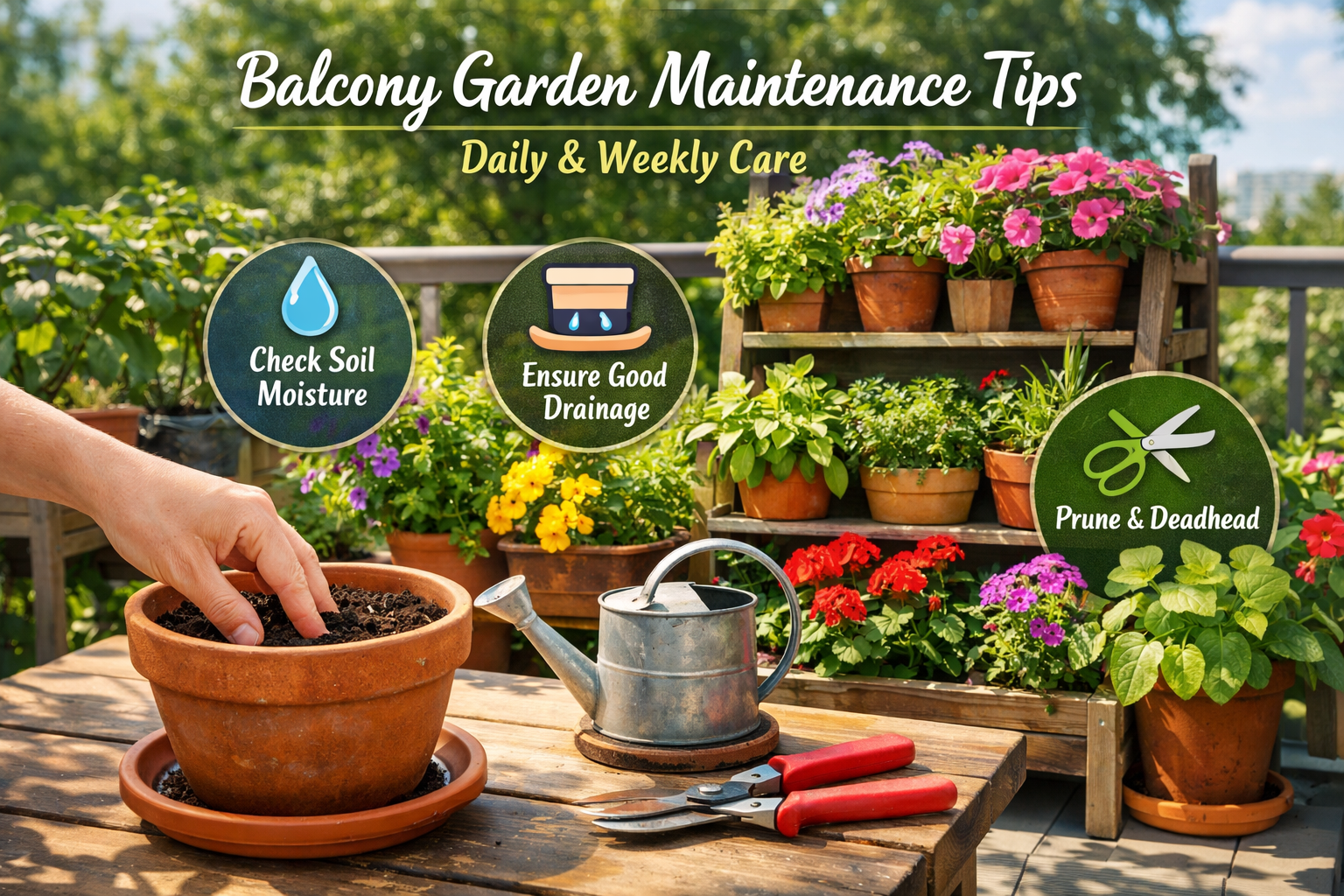
Maintaining a thriving balcony garden in 2026 involves consistent attention to watering, sunlight, nutrition, and pest control, tailored to the specific needs of container plants. Regular checks for soil moisture, proper drainage in all pots, and strategic pruning are fundamental practices to ensure your plants remain healthy and productive throughout the year [1, 3, 5].
What Are the Essential Daily and Weekly Balcony Garden Maintenance Tips?
Essential daily and weekly balcony garden maintenance tips primarily focus on consistent watering, checking for pests and diseases, and providing adequate plant nutrition to ensure vigorous growth in container environments. These routine tasks are critical because container gardens dry out faster and have limited nutrient reservoirs compared to in-ground beds.
Watering: The Cornerstone of Container Care
Container plants require more frequent watering than those in traditional garden beds due to limited soil volume and increased exposure to wind and sun.
- Monitor Soil Moisture Daily: The most crucial daily task is checking the soil moisture. Containers, especially smaller ones or those made of porous materials like terracotta, can dry out remarkably quickly, particularly during hot periods or on windy days. Water your plants when the top inch or two of soil feels dry to the touch [1, 3]. A simple finger test is often the most reliable method.
- Water Deeply and Slowly: When you water, do so thoroughly until water drains from the bottom of the pot. This ensures that the entire root ball is saturated, encouraging deep root growth. Avoid light, frequent sprinkles that only moisten the surface.
- Timing is Key: Water early in the morning or late in the evening to minimize evaporation. Watering during the hottest part of the day can lead to significant water loss before the plants can absorb it.
- Proper Drainage is Non-Negotiable: Every single pot in your balcony garden must have drainage holes at the bottom to prevent waterlogging. Standing water can quickly lead to root rot, a common killer of container plants [1, 2, 3]. Using saucers beneath pots is also important to catch excess water and protect your balcony surface, but ensure plants aren’t left sitting in standing water for extended periods.
Nutrition: Feeding Your Container Crops
With limited soil, container plants quickly deplete available nutrients, making regular fertilization a vital part of balcony garden maintenance.
- Regular Fertilization Schedule: Fertilize your plants every few weeks during their active growing season (spring and summer) with a balanced liquid fertilizer [3]. A balanced fertilizer contains nitrogen (N) for foliage growth, phosphorus (P) for root and flower development, and potassium (K) for overall plant health.
- Avoid Overfeeding: While crucial, too much fertilizer can burn plant roots or lead to excessive leafy growth at the expense of fruits or flowers. Always follow the product’s instructions for dilution and frequency. If you notice yellowing leaf tips or stunted growth, it might be a sign of over-fertilization.
- Compost Tea or Organic Options: For a more organic approach, consider using compost tea or slow-release organic fertilizers. These can provide a steady supply of nutrients and improve soil health over time.
- Soil Amendment: When repotting or refreshing your containers, use a high-quality potting mix specifically designed for containers, as it provides better drainage and aeration than garden soil. For more on this, check out our guide on Soil Basics for Container Gardening: 2026 Expert Guide.
Pest and Disease Management: Early Detection is Crucial
Balcony gardens, though often elevated, are not immune to pests and diseases. Regular inspection helps catch issues before they escalate.
- Weekly Plant Inspection: Dedicate time each week to carefully inspect your plants. Look under leaves, along stems, and at new growth for any signs of pests (like aphids, spider mites, or whiteflies) or disease (discoloration, spots, wilting).
- Natural Pest Control: For minor infestations, simple solutions often work best. A strong spray of water can dislodge many pests. For persistent issues, insecticidal soap or neem oil are effective and safer alternatives to chemical pesticides. Companion planting with aromatic herbs like basil, rosemary, or mint can also naturally deter pests [1].
- Encourage Beneficial Insects: Consider introducing beneficial insects like ladybugs, which are natural predators of aphids, if you have a significant pest problem [1].
- Remove Affected Parts: Promptly prune away any diseased or heavily infested leaves or stems to prevent spread [2, 3, 5]. Ensure your pruning shears are clean to avoid cross-contamination.
Pruning and Deadheading: Promoting Health and Yield
Regular pruning and deadheading are simple yet impactful tasks that promote healthier, more productive plants.
- Deadhead Spent Blooms: For flowering plants, regularly remove faded or spent flowers (deadheading). This redirects the plant’s energy from seed production to producing more blooms, extending the flowering season.
- Prune for Shape and Airflow: Remove any dead, yellowing, or damaged leaves and branches. This improves air circulation, which can prevent fungal diseases, and encourages the plant to put energy into new, healthy growth [2, 3, 5].
- Pinch Back for Bushiness: For herbs and many vegetables, pinching back the growing tips can encourage a bushier plant with more harvestable material rather than a tall, leggy one. For example, pinching basil above a leaf node will encourage two new stems to grow.
- Support for Vining Plants: For vining plants like tomatoes or cucumbers, provide stakes, trellises, or cages to support their growth. This keeps fruits and foliage off the balcony floor, improving air circulation and reducing disease risk. For more on maximizing space, explore our guide on Vertical Gardening Basics: Your 2026 Guide to Small Space Gardens.
Balcony Garden Maintenance Checklist: Daily & Weekly Tasks
| Task | Frequency | Details | Common Mistake to Avoid |
|---|---|---|---|
| Check Soil Moisture | Daily | Insert finger 1-2 inches into soil; water if dry to the touch [1, 3]. Lift pots to gauge weight—light pots usually need water. | Watering on a schedule rather than by actual plant need, leading to over or underwatering. |
| Water Plants | Daily/As needed | Water deeply until water drains from bottom. Avoid wetting foliage in direct sun. | Watering only the surface, which leads to shallow root development and increased stress. |
| Inspect for Pests/Diseases | Weekly | Check top and underside of leaves, stems, and new growth for signs of insects, spots, or discoloration. | Ignoring early signs, allowing infestations or diseases to spread rapidly and become harder to control. |
| Deadhead/Prune | Weekly | Remove spent flowers (deadheading) to encourage more blooms. Trim dead, yellow, or damaged leaves to improve airflow and plant health [2, 3, 5]. | Letting dead foliage remain, which can harbor pests or diseases and signals the plant to produce seeds instead of new growth. |
| Tidy Up Balcony | Weekly | Sweep away fallen leaves, soil, or debris. Clean saucers to prevent stagnant water. | Allowing debris to accumulate, which can attract pests and create an untidy appearance. |
| Rotate Plants | Weekly | If some plants are leaning towards the sun, rotate them to ensure even growth. | Not rotating plants, leading to lopsided growth and less uniform sun exposure for all parts of the plant. |
| Fertilize (if needed) | Every Few Weeks | Apply balanced liquid fertilizer according to product instructions, typically diluted to half strength [3]. Adjust frequency based on plant type and growth stage. | Over-fertilizing, which can cause nutrient burn, or under-fertilizing, leading to nutrient deficiencies and stunted growth. |
How Do Seasonal Changes Impact Balcony Garden Maintenance Tips?
Seasonal changes significantly dictate balcony garden maintenance tips, requiring adjustments to watering, fertilization, plant selection, and protection strategies throughout the year. Adapting your care routine to the distinct conditions of spring, summer, fall, and winter ensures your balcony garden remains healthy and productive, even as the weather shifts.
Spring: The Season of Renewal and Growth
Spring is the prime time for planting and setting up your balcony garden for the growing season.
- Planting and Repotting: As temperatures consistently rise, it’s time to sow seeds, transplant seedlings, and repot any plants that have outgrown their containers. Ensure you’re using fresh potting mix, as older soil can become compacted and depleted of nutrients. For help with initial setup, refer to our “Balcony Garden Setup Step-by-Step | 2026 Ultimate Guide” at https://minispacegarden.com/balcony-garden/.
- Gradual Acclimatization: If you’re bringing plants outdoors that have been indoors for winter, gradually expose them to outdoor conditions over a week or two. This “hardening off” process prevents shock.
- Increased Watering: As plants begin active growth and temperatures increase, you’ll need to start watering more frequently, typically once per week to start, depending on rainfall [3].
- Initiate Fertilization: Begin a regular fertilization schedule as new growth emerges, providing the necessary nutrients for robust development [3].
Summer: Peak Growth and Intense Care
Summer often brings the most vibrant growth, but also the most challenging conditions for balcony gardens due to heat and intense sunlight.
- Daily Watering is Common: During hot summer months, many container plants, especially those in smaller pots or exposed to full sun, may require daily watering, sometimes even twice a day [3]. Monitor soil moisture closely; do not rely on a fixed schedule.
- Protect from Extreme Heat: On exceptionally hot days, consider moving sensitive plants to shadier spots or providing temporary shade with umbrellas or shade cloth. Potted plants can absorb significant heat from their containers, which can damage roots.
- Continued Fertilization: Maintain a consistent fertilization schedule to support continuous fruiting and flowering [3].
- Pest and Disease Vigilance: Summer’s warmth can also accelerate pest and disease cycles. Increase your weekly plant inspections and act quickly at the first sign of trouble.
- Harvest Regularly: For edible plants, harvest frequently to encourage further production. Letting vegetables or herbs go to seed can signal the plant to stop producing.
Fall: Winding Down and Preparing for Winter
As temperatures drop and days shorten, fall is a time for transitioning your balcony garden.
- Reduced Watering: As growth slows down and evaporation decreases, reduce watering frequency. Overwatering in cooler temperatures can be detrimental, as the soil stays wet longer.
- Stop Fertilizing: Gradually cease fertilization as plants enter dormancy or slow their growth. Pushing new growth in fall can make plants more vulnerable to winter damage.
- Harvesting Last Crops: Harvest any remaining fruits, vegetables, or herbs before the first hard frost.
- Clean-Up: Remove spent annuals, dead foliage, and debris from containers. This helps prevent overwintering pests and diseases.
- Assess Winter Protection Needs: Identify which plants are cold-hardy and which will need protection. Tender plants may need to be brought indoors or provided with insulation. For plants that can withstand colder temperatures, consider grouping them together to create a microclimate or wrapping pots with burlap for insulation.
Winter: Dormancy and Protection
Winter is often the slowest period for balcony gardens, requiring minimal but crucial maintenance.
- Minimal Watering: Water very sparingly, only enough to prevent the soil from drying out completely. Many plants go dormant and require very little moisture [3].
- No Fertilization: Avoid fertilizing during winter dormancy.
- Frost Protection: For plants that remain outdoors, protect them from freezing temperatures. This can involve covering them with frost blankets, moving them against a sheltered wall, or bringing them indoors if possible.
- Bring Tender Plants Indoors: If you have non-hardy perennials or tropical plants, bring them indoors to a suitable spot where they can receive adequate light and warmth. Make sure to check them for pests before moving them inside.
- Container Care: Empty and clean any unused containers and store them to prevent damage from freezing and thawing cycles.
- Structural Considerations: Ensure that snow or ice accumulation on balcony structures is managed, especially if you have heavy permanent planters. Remember to use lightweight containers like plastic or fiberglass to avoid overloading balcony structures [1, 2].
Seasonal Balcony Garden Maintenance Guide
| Season | Key Maintenance Tasks | Impact on Watering | Impact on Fertilization | Plant Selection & Protection |
|---|---|---|---|---|
| Spring | Plant seeds/seedlings, repot, harden off plants, clean containers. | Increase | Begin | Plant cool-season vegetables (lettuce, spinach), early flowers. Prepare vertical structures [1, 2, 4]. Consider Best Plants for Small Gardens 2026: The Complete List. |
| Summer | Daily watering (possibly twice), regular harvesting, pest monitoring, provide shade during heatwaves. | Highest frequency | Continue regularly | Focus on warm-season vegetables (tomatoes, peppers, herbs) and heat-tolerant flowers. Use mulch to retain moisture [4]. |
| Fall | Reduce watering, stop fertilizing, final harvests, clean up dead foliage, assess winter protection. | Decrease | Stop | Plant cool-season crops for a second harvest (radishes, kale). Bring in tender plants or insulate pots. |
| Winter | Minimal watering, no fertilizing, protect from frost (covers, indoors), clean and store empty containers. | Lowest frequency | None | Hardy evergreens, succulents, or dormant perennials. Bring tender plants indoors. Focus on Indoor Gardening for Small Homes & Apartments: 2026 Guide. |
What Are Common Mistakes in Balcony Garden Maintenance Tips and How Can They Be Avoided?
Many common mistakes in balcony garden maintenance tips stem from misunderstanding container plant needs, leading to issues like root rot, nutrient deficiencies, or structural damage. By addressing drainage, choosing appropriate containers, and adapting to the unique balcony environment, gardeners can prevent these pitfalls and ensure their plants thrive. For more insights on general beginner mistakes, consider our article on “Beginner Mistakes in Small Space Gardening 2026.”
1. Inadequate Drainage
Mistake: Using pots without drainage holes or allowing saucers to remain filled with water. This is perhaps the most common and deadliest mistake for container plants.
Consequence: Waterlogging, leading to root rot and eventual plant death [1, 2, 3].
Avoidance:
- Always use pots with sufficient drainage holes. If a decorative pot lacks holes, use it as a cachepot and place a properly draining pot inside, ensuring there’s space for air circulation between the two.
- Empty saucers promptly after watering to prevent roots from sitting in standing water. Elevate pots slightly within saucers using gravel or pot feet if consistent drainage is a concern.
2. Improper Watering
Mistake: Watering too frequently or too little, or watering shallowly.
Consequence: Underwatering causes wilting and dehydration; overwatering leads to root rot; shallow watering encourages shallow root systems that are less resilient [3].
Avoidance:
- Feel the soil: Don’t water on a rigid schedule. Instead, check the top 1-2 inches of soil with your finger daily. Water only when it feels dry [1, 3].
- Water deeply: Water until it drains from the bottom. This ensures the entire root ball is moistened, promoting deep, healthy root growth.
- Consider self-watering planters: For busy gardeners or those with very thirsty plants, self-watering pots can provide a consistent moisture supply while reducing daily effort.
3. Neglecting Fertilization
Mistake: Assuming potting mix alone will sustain plants long-term, or over-fertilizing.
Consequence: Nutrient deficiencies (yellowing leaves, stunted growth, poor flowering/fruiting) or, conversely, nutrient burn from too much fertilizer [3].
Avoidance:
- Regular feeding: Container plants quickly deplete nutrients. Fertilize every few weeks during the growing season with a balanced liquid fertilizer, following label instructions carefully (often half-strength is sufficient) [3].
- Observe plant signs: Learn to recognize signs of nutrient deficiencies or excess. Yellowing between veins might indicate iron deficiency; burnt leaf tips could be over-fertilization.
4. Ignoring Sunlight Requirements
Mistake: Placing plants in spots that don’t match their light needs, or not understanding the changing sun patterns on your balcony.
Consequence: Plants become leggy (stretching for light), fail to flower or fruit, or suffer from sunburn [1, 5].
Avoidance:
- Assess your balcony’s sun exposure: Observe how many hours of direct sunlight different areas of your balcony receive throughout the day and across seasons. Most vegetables and herbs need 6-8 hours of direct sun [1, 5].
- Match plants to light: Choose plants appropriate for your balcony’s light conditions. Sun-loving plants for sunny spots, shade-tolerant plants for shadier areas.
- Rotate plants: If some plants are leaning towards the sun, rotate them weekly to ensure even growth.
5. Using Overly Heavy Containers
Mistake: Choosing large, heavy pots made of concrete or thick ceramic without considering the balcony’s weight capacity.
Consequence: Posing a structural risk to the balcony, especially when filled with wet soil and plants [1, 2].
Avoidance:
- Prioritize lightweight materials: Opt for containers made of plastic, fiberglass, polystone, or fabric grow bags [1, 2]. These are significantly lighter than traditional terracotta or concrete.
- Consult building regulations: If unsure, check with your building management about any weight restrictions for your balcony.
6. Overcrowding Pots
Mistake: Planting too many plants in one container to maximize space.
Consequence: Competition for water, nutrients, and light, leading to stunted growth, reduced yields, and increased susceptibility to pests and diseases due to poor air circulation.
Avoidance:
- Respect plant spacing: Give each plant adequate room to grow. Refer to plant tags or seed packets for recommended spacing.
- Utilize vertical space: Instead of wider containers, think upwards. Use vertical planters, hanging baskets, and tiered shelving to maximize your growing area without overcrowding individual pots [1, 2, 4]. Learn more with our “Vertical Gardening Guide for Small Spaces: Grow More in 2026” at https://minispacegarden.com/vertical-gardening-guide-for-small-spaces/.
7. Neglecting Pest and Disease Monitoring
Mistake: Only reacting to pest or disease problems once they’re severe.
Consequence: Rapid spread, significant plant damage, and more difficult treatment [1].
Avoidance:
- Weekly inspections: Make it a habit to check your plants thoroughly each week. Look under leaves, along stems, and at new growth for any early signs of pests or disease [1].
- Act quickly: At the first sign of an issue, address it using appropriate natural methods like hand-picking pests, washing them off with water, or applying insecticidal soap [1].
8. Choosing the Wrong Plants
Mistake: Selecting plants that are not suited to the local climate, sun exposure, or the limited space of a balcony garden.
Consequence: Constant struggle, poor performance, and disappointment.
Avoidance:
- Research before you plant: Choose plants that thrive in containers and are suitable for your specific balcony conditions (sun, wind, temperature range). Consider Low Maintenance Plants for Beginners: 7 Easy Picks (2026) or Best Vegetables for Small Space Gardening in 2026.
- Consider mature size: Be mindful of how large a plant will get. Even dwarf varieties can be substantial.
9. Lack of Mulch
Mistake: Leaving bare soil exposed in containers.
Consequence: Rapid moisture loss due to evaporation, leading to increased watering frequency and soil temperature fluctuations [4].
Avoidance:
- Apply a layer of mulch: Add 1-2 inches of organic mulch (e.g., coco coir, wood chips, shredded leaves) to the top of your container soil. This helps retain moisture, regulate soil temperature, and suppress weeds [4].
What Tools and Supplies Are Essential for Balcony Garden Maintenance Tips?
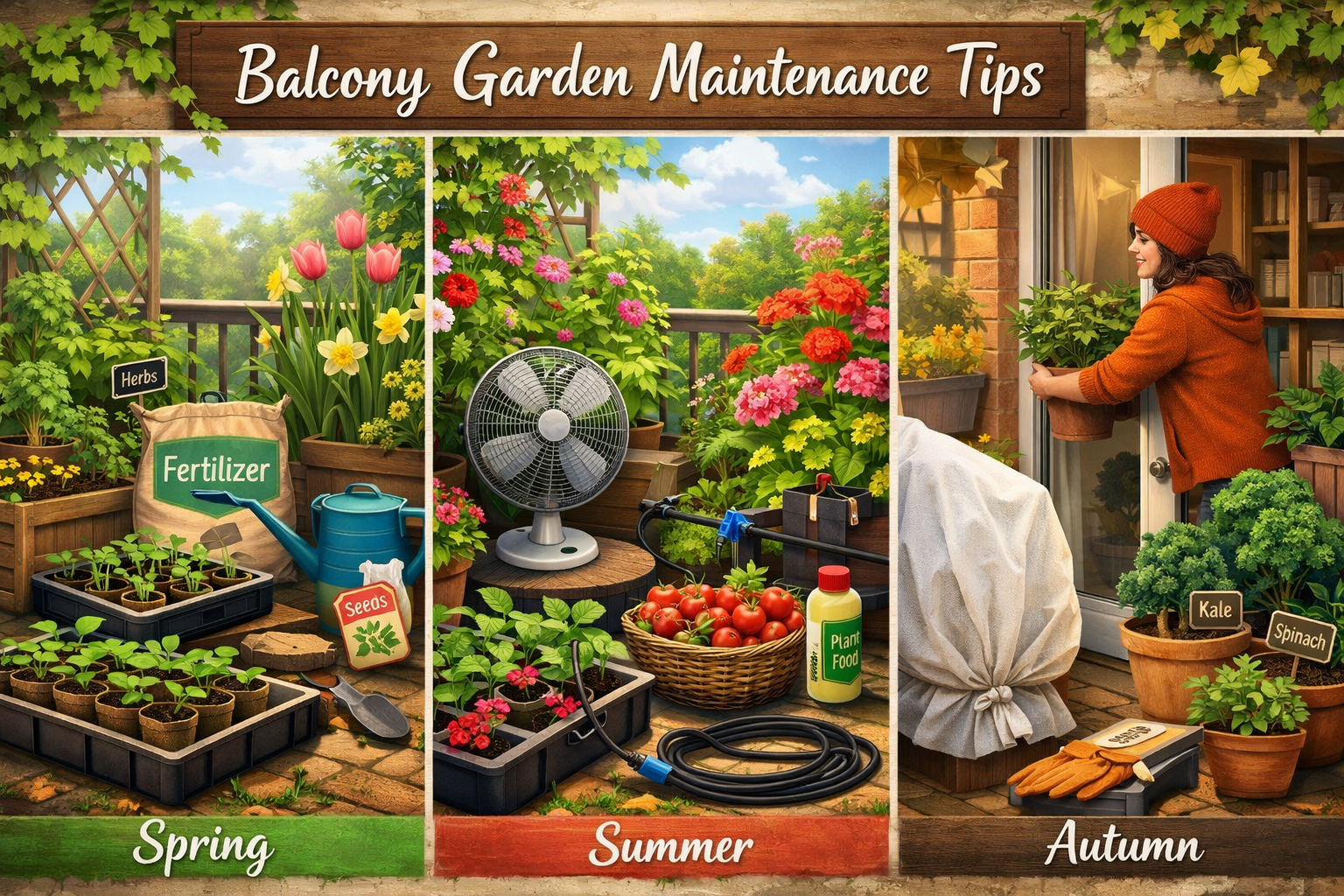
Having the right tools and supplies makes balcony garden maintenance tips much more efficient and enjoyable, ensuring you can tackle tasks from watering to pest control with ease. While a full garden shed isn’t necessary, a few key items are indispensable for the unique demands of container gardening. For a more comprehensive look at tools, see our article on “Essential Tools for Small Space Gardening in 2026 – Mini Spa.”
1. Watering Equipment
- Small Watering Can with a Fine Rose: Essential for precise, gentle watering, especially for seedlings or delicate plants. A long spout helps reach plants at the back of shelves.
- Hose with Adjustable Nozzle (if applicable): If your balcony has access to a water source, a lightweight hose with a multi-pattern nozzle can save time and effort, particularly for larger balcony gardens.
- Self-watering Planters or Drip Irrigation System: For larger setups or frequent travelers, these systems provide consistent moisture and reduce daily watering chores.
2. Pruning and Trimming Tools
- Hand Pruners (Secateurs): A good quality pair of bypass pruners is crucial for deadheading, removing dead branches, and shaping plants. Keep them clean and sharp to prevent disease spread.
- Small Snips or Herb Scissors: Ideal for delicate tasks like harvesting herbs or flowers, and precise trimming.
3. Cultivation and Planting Aids
- Hand Trowel: For planting, repotting, and digging small holes. Look for a sturdy one that won’t bend easily.
- Hand Fork/Cultivator: Useful for aerating compacted soil or mixing in amendments.
- Gloves: Protect your hands from soil, thorns, and potential irritants.
- Potting Mat or Tarp: A small, waterproof mat or tarp makes repotting and working with soil much cleaner, especially on a balcony.
4. Soil and Nutrients
- High-Quality Potting Mix: Always use a specialized potting mix designed for containers, not garden soil. It provides better drainage and aeration [1].
- Balanced Liquid Fertilizer: Essential for replenishing nutrients in containers [3]. Choose one suitable for your plants (e.g., all-purpose, bloom-boosting, or organic).
- Mulch Material: Coco coir, lightweight wood chips, or small pebbles can help retain soil moisture and suppress weeds [4].
- Compost or Worm Castings: Excellent organic amendments to enrich soil and provide slow-release nutrients.
5. Pest and Disease Management
- Spray Bottle: For applying water to dislodge pests, insecticidal soap, or neem oil.
- Insecticidal Soap/Neem Oil: Natural, effective treatments for common balcony garden pests [1].
- Rubbing Alcohol: For sterilizing pruning tools between uses to prevent disease transmission.
6. Plant Support and Structure
- Stakes, Cages, or Trellises: For supporting vining plants like tomatoes, cucumbers, or peas, helping them grow vertically and preventing fruits from touching the ground.
- Twine or Plant Ties: To secure plants to supports without damaging stems.
- Hanging Baskets, Vertical Planters, Shelving Units: These maximize space, allowing you to grow more plants in a limited footprint [1, 2, 4]. For ideas on maximizing small spaces, read our guide on “Balcony Gardening – Mini Space Garden | Small Space Gardening Ideas.”
7. Miscellaneous Items
- Small Broom and Dustpan: For quick clean-ups after gardening tasks.
- Buckets or Tubs: Useful for mixing soil, holding water, or collecting weeds.
- Labels/Plant Markers: To keep track of what you’ve planted, especially for seedlings or similar-looking herbs.
- Small Thermometer: To monitor air temperature, crucial for sensitive plants, especially during seasonal transitions.
Decision Rule: Choose tools that are multi-purpose, durable, and proportionate to your space. For example, a heavy-duty full-sized spade isn’t practical for a balcony, but a sturdy hand trowel is essential. Invest in quality for items like pruners, as they’ll last longer and perform better.
Conclusion
Mastering balcony garden maintenance tips is the key to transforming any small outdoor space into a thriving urban oasis. From the daily vigilance of checking soil moisture and ensuring proper drainage to the seasonal adjustments in watering and fertilization, consistent care is paramount for container plants. By implementing regular pruning, diligent pest monitoring, and strategic use of lightweight containers and vertical space, you can overcome common challenges and cultivate a productive and beautiful garden year-round in 2026. Remember, a successful balcony garden isn’t just about planting; it’s about the ongoing, thoughtful engagement with your green companions.
Actionable Next Steps:
- Assess Your Balcony’s Sunlight: Before starting or expanding, spend a day observing how many hours of direct sun your balcony receives. This will inform your plant choices.
- Invest in Proper Drainage: Double-check all your existing and new pots for drainage holes. Purchase saucers and empty them promptly.
- Start a Watering Routine (but be flexible): Commit to checking your soil moisture daily during the growing season. Adjust your watering frequency based on weather and plant needs, not just a schedule.
- Schedule Weekly Plant Health Checks: Dedicate 15-30 minutes each week to thoroughly inspect your plants for pests, diseases, or nutrient deficiencies. Early detection is a game-changer.
- Gather Essential Tools: Acquire a good pair of hand pruners, a small trowel, gardening gloves, and a high-quality watering can. These will make maintenance much easier.
- Plan Seasonal Adjustments: Review the seasonal maintenance guide and make notes on how you’ll adapt your care for spring, summer, fall, and winter.
By following these practical balcony garden maintenance tips, you’ll be well on your way to enjoying a flourishing garden that brings joy, fresh produce, and a touch of nature to your home.
FAQ
Q1: How often should I water my balcony garden plants?
A1: Water frequency depends on plant type, pot size, material, and weather, but generally, check the top 1-2 inches of soil daily during the growing season and water when it feels dry [1, 3].
Q2: What are the most important tools for balcony garden maintenance?
A2: Essential tools include a watering can, hand pruners, a hand trowel, gardening gloves, and a spray bottle for pest control.
Q3: How do I prevent root rot in my balcony garden?
A3: Ensure all pots have adequate drainage holes and empty saucers after watering so plants do not sit in standing water [1, 2, 3].
Q4: Can I use garden soil in my balcony containers?
A4: No, always use a high-quality potting mix specifically designed for containers, as it provides better drainage and aeration than dense garden soil [1].
Q5: How do I fertilize my container plants effectively?
A5: Fertilize every few weeks during the growing season with a balanced liquid fertilizer, following the product’s dilution instructions carefully to avoid overfeeding [3].
Q6: What’s the best way to deal with pests on my balcony plants?
A6: Regularly inspect plants for pests, use natural deterrents like companion planting, and treat early infestations with insecticidal soap or neem oil [1].
Q7: How can I maximize space in a small balcony garden?
A7: Utilize vertical gardening solutions such as hanging baskets, wall-mounted planters, and tiered shelving to grow more plants without taking up floor space [1, 2, 4].
Q8: Why is pruning important for balcony plants?
A8: Pruning encourages new growth, improves air circulation, removes dead or diseased parts, and can help shape the plant, leading to healthier, more productive specimens [2, 3, 5].
Q9: What types of pots are best for balcony gardens?
A9: Lightweight materials like plastic, fiberglass, or polystone are recommended to avoid overloading balcony structures, and they often retain moisture better than terracotta [1, 2].
Q10: How do I prepare my balcony garden for winter?
A10: Reduce watering, stop fertilizing, harvest final crops, clean up debris, and bring tender plants indoors or provide frost protection for hardier ones [3].
References
[1] Maximizing Small Spaces Gardening Tips For Balconies – https://dug.org/gardening-resources/maximizing-small-spaces-gardening-tips-for-balconies/
[2] Gardening Tips For Balcony Rooftop Gardens – https://www.bomagardencentre.co.uk/news/552/gardening-tips-for-balcony-rooftop-gardens
[3] Beginners Guide To Starting A Balcony Garden – https://growoya.com/blogs/news/begBalcony-gardeners-guide-to-starting-a-balcony-garden
[4] How To Grow A Balcony Garden – https://www.masterclass.com/articles/how-to-grow-a-balcony-garden
[5] 12 Tips For Starting Your Own Balcony Garden – https://www.scrimsflorist.com/blogs/taking-root-with-scrims/12-tips-for-starting-your-own-balcony-garden