Balcony Gardening Mistakes: Avoid These 2026 Pitfalls
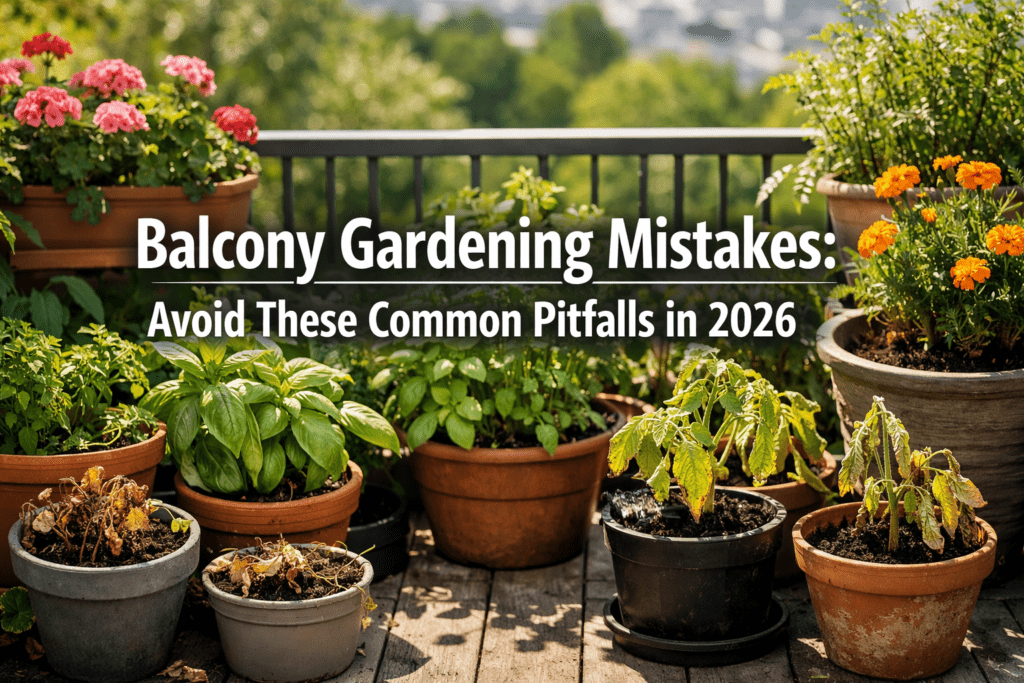
Balcony gardening offers a rewarding way to bring greenery and fresh produce into urban living, but it’s easy to fall into common traps. Avoiding typical balcony gardening mistakes is crucial for ensuring your plants thrive, maximizing your small space, and preventing unnecessary frustration. From selecting the wrong containers to overlooking essential plant care, understanding these pitfalls will set you up for success.
Key Takeaways
- Assess your balcony’s conditions (sunlight, wind, weight limits) before buying plants or materials.
- Choose appropriate containers with drainage holes and suitable materials to prevent waterlogging and balcony damage.
- Invest in high-quality potting mix specifically designed for containers, not dense garden soil, to ensure proper drainage and nutrients.
- Select plants suitable for your specific balcony environment, considering their light, water, and space requirements.
- Implement a consistent watering and fertilizing schedule, recognizing that potted plants dry out faster and deplete nutrients quickly.
- Avoid overcrowding in both individual pots and the overall balcony layout to allow for proper air circulation and growth.
- Address pests and diseases proactively, as early detection is key to preventing widespread issues in a confined space.
- Protect plants from harsh weather conditions like strong winds, heavy rain, and extreme temperatures.
- Consider vertical gardening solutions to maximize space without exceeding weight limits or blocking access.
- Start small and learn, gradually expanding your balcony garden as you gain experience and confidence.
Quick Answer
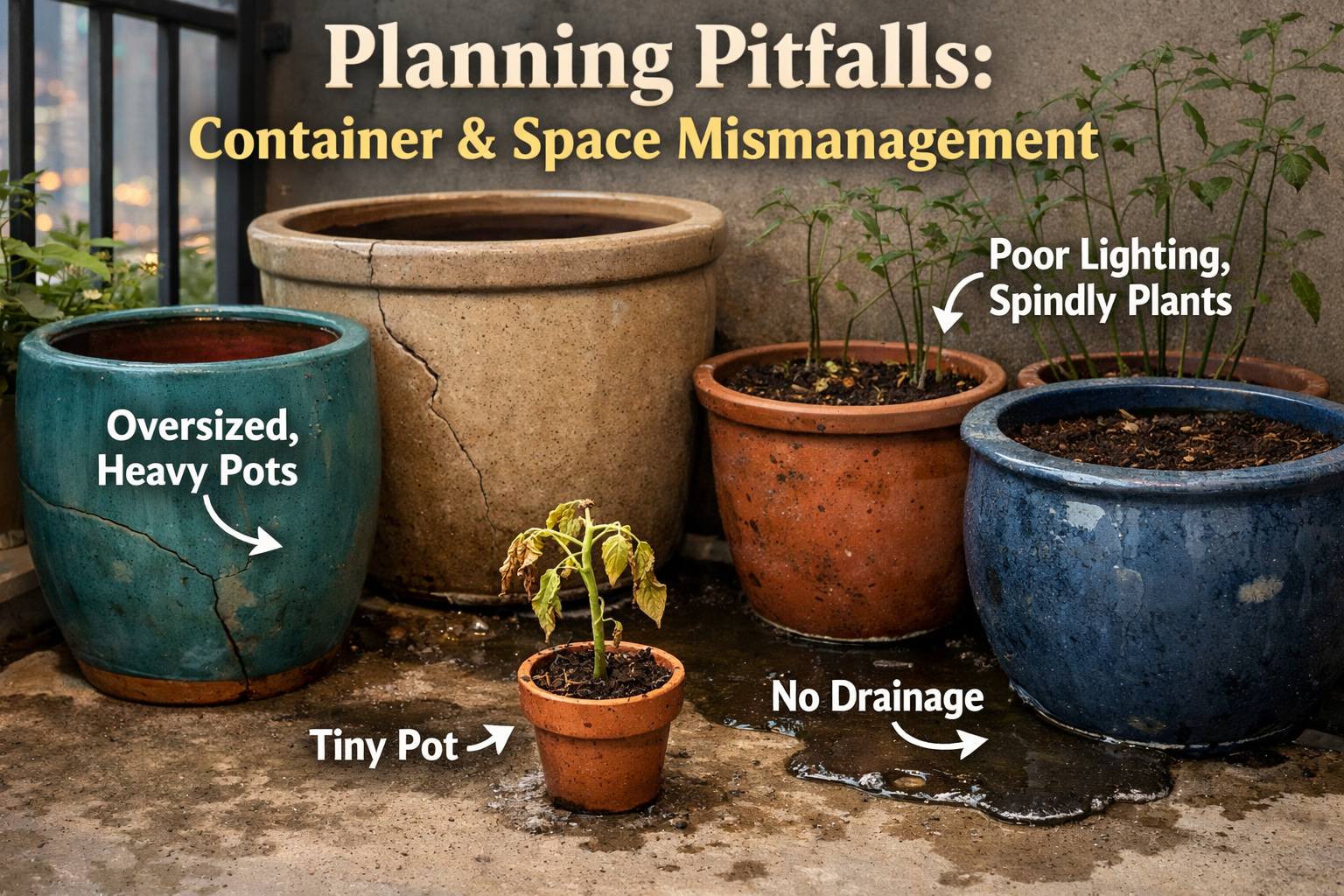
The most common balcony gardening mistakes stem from inadequate planning and improper plant care, including using the wrong containers or soil, overlooking drainage, selecting unsuitable plants for the available light and space, and neglecting consistent watering and fertilization routines. Addressing these fundamental issues from the outset significantly increases the likelihood of a successful and flourishing balcony garden.
What Are the Most Common Balcony Gardening Mistakes in Planning and Setup?
The most common balcony gardening mistakes during planning and setup involve misjudging container size, material, and drainage, along with underestimating the balcony’s environmental conditions and weight capacity. These foundational errors can lead to plant failure and even structural issues for your balcony.
Overlooking Balcony Load Limits and Structural Integrity
One of the most critical, yet often overlooked, initial planning errors is failing to consider the structural capacity of your balcony. Balconies, especially in older buildings, have specific weight limits, and exceeding these can lead to serious safety hazards.
- Consult your building management: Before adding heavy planters, soil, and water, inquire about your balcony’s maximum load-bearing capacity. This is especially crucial for larger or multiple containers.
- Choose lightweight materials: Opt for plastic, resin, or fabric grow bags instead of heavy ceramic, terracotta, or stone pots to reduce overall weight [3]. For example, a 50-liter grow bag is a practical choice, whereas a 300-liter bag would likely be too heavy and impractical for most balconies [2].
- Distribute weight evenly: Avoid concentrating all heavy items in one spot. Spread out your pots and gardening elements to distribute the load across the balcony floor.
Incorrect Container Selection: Size, Drainage, and Material
Choosing the wrong pots is a major source of balcony gardening mistakes. Containers impact plant health, ease of care, and even the safety of your balcony [1].
- Inadequate drainage is fatal: Pots must have drainage holes to prevent water stagnation, which suffocates roots and causes plant death [1]. Without proper drainage, water has nowhere to go, turning your pot into a mini swamp. If a pot lacks holes, drill them yourself or use it as a decorative cachepot with an inner, draining liner.
- Too small containers: Small pots restrict root growth, dry out quickly, and offer limited nutrient reserves, leading to stunted plants and constant watering [1]. Many plants need room to grow, and what seems sufficient initially will quickly become restrictive.
- Ignoring material suitability: While aesthetically pleasing, heavy ceramic or stone pots can exceed weight limits and are harder to move [3]. Plastic or fabric grow bags are lightweight, often more affordable, and provide excellent aeration for roots. Fabric grow bags are particularly beneficial as they prevent root circling by “air-pruning” roots.
- Choosing the best pots for small space gardening means balancing plant needs with balcony constraints. For more details on suitable options, see our guide on Best Pots for Small Space Gardening in 2026 – Maximize Your.
Using the Wrong Soil Type
The soil is the foundation of your plant’s health, and selecting the wrong type is a critical balcony gardening mistake [2]. Balcony containers require different soil than garden beds.
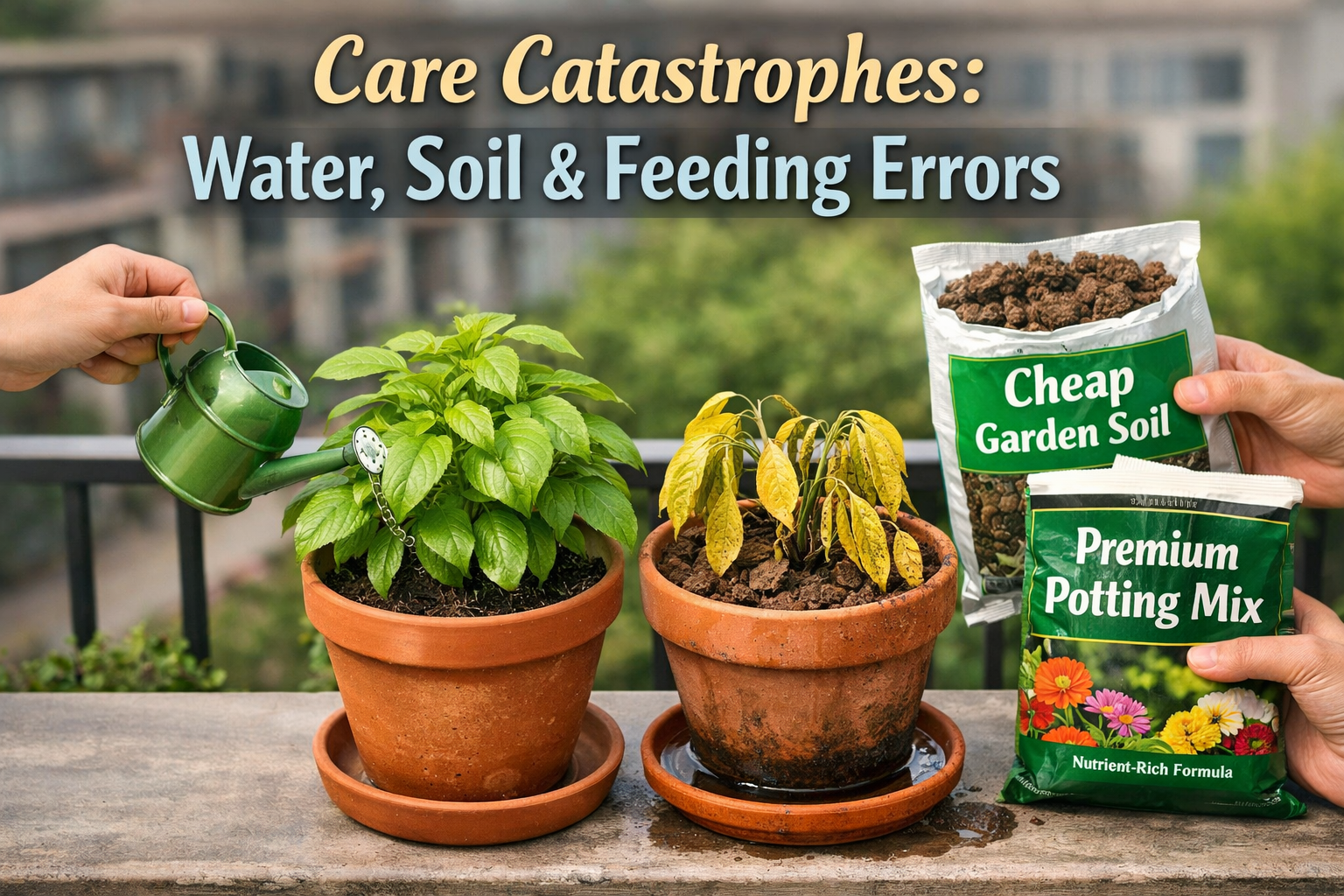
- Avoid garden soil: Dense garden soil compacts easily in pots, impeding drainage and aeration, leading to root rot and poor nutrient uptake [2]. It also often contains weed seeds and pests.
- Invest in high-quality potting mix: Use a sterile, lightweight potting mix specifically formulated for containers. These mixes typically contain peat moss, coco coir, perlite, and vermiculite, providing excellent drainage, aeration, and moisture retention [3]. Adding organic compost can further enrich the mix with nutrients [2]. Our article on Soil Basics for Container Gardening: 2026 Expert Guide offers more in-depth information.
- Don’t reuse old potting mix indefinitely: Potting mix degrades over time, losing structure and nutrients. While some can be refreshed with compost, completely replacing it every one to two seasons is often best for healthy growth.
Overcrowding Your Balcony or Pots
While the desire to grow many plants is understandable, overcrowding is a common balcony gardening mistake that stifles growth and invites problems.
- Inadequate spacing between plants: When plants are too close, they compete fiercely for light, water, and nutrients, resulting in weak, leggy growth [1][2]. Proper spacing also ensures good air circulation, reducing the risk of fungal diseases.
- Too many pots on the balcony: A cluttered balcony can restrict movement, block light for some plants, and make routine care difficult. It also adds significant weight, potentially exceeding structural limits.
- Solution: Go vertical! Vertical gardening systems are excellent for maximizing space without overcrowding the floor. They allow you to grow more plants using wall space. Explore our Vertical Gardening Basics: Your 2026 Guide to Small Space Gardens for inspiration.
| Planning Aspect | Common Mistake | Best Practice |
|---|---|---|
| Balcony Structure | Ignoring weight limits | Consult building codes; choose lightweight materials. |
| Container Choice | No drainage holes, too small, heavy materials | Drainage is essential; use appropriate sizes; prefer plastic/fabric. |
| Soil Selection | Using garden soil or old, depleted mix | High-quality potting mix with compost for aeration and nutrients. |
| Layout | Overcrowding plants or pots | Space adequately; use vertical gardening; prioritize access. |
What Balcony Gardening Mistakes Pertain to Plant Selection and Care?
Balcony gardening mistakes related to plant selection and ongoing care often involve choosing plants unsuited to the specific environment, neglecting proper watering and fertilization, and failing to protect plants from pests and harsh weather. These operational errors can quickly lead to plant stress and disease.
Choosing the Wrong Plants for Your Balcony’s Environment
Selecting plants without considering your balcony’s unique microclimate is a fundamental balcony gardening mistake [1]. Not all plants thrive in all conditions.
- Sunlight assessment is key: Observe your balcony throughout the day to determine how many hours of direct sunlight it receives.
- Full sun (6+ hours): Ideal for most vegetables like tomatoes, peppers, and herbs, as well as sun-loving flowers [1].
- Partial sun (3-6 hours): Good for leafy greens, some herbs, and many flowering plants that prefer morning sun and afternoon shade.
- Shade (less than 3 hours): Suitable for plants like ferns, impatiens, and some herbs like mint.
- Wind exposure: High-rise balconies often experience strong winds, which can desiccate plants, break stems, and knock over pots [3]. Choose compact, sturdy plants or provide windbreaks.
- Temperature fluctuations: Balconies can heat up significantly in summer and cool down rapidly at night. Select plants known to tolerate these variations in your climate zone.
- Research plant needs: Always check the specific light, water, and space requirements for each plant before purchasing. For advice on what grows well, refer to our Best Plants for Small Gardens 2026: The Complete List.
Inconsistent or Incorrect Watering Practices
Watering is perhaps the most frequent source of balcony gardening mistakes, leading to either parched or waterlogged plants [3]. Potted plants dry out much faster than garden beds.
- Underwatering: The most common issue, especially during hot summer months. Potted plants in direct sun may need watering once or even twice daily [3]. Signs include wilting leaves, dry, crusty soil, and stunted growth.
- Overwatering: While less common than underwatering, this is equally detrimental. It deprives roots of oxygen, leading to root rot. Signs include yellowing leaves, mushy stems, and a foul odor from the soil. Always check the soil moisture before watering. Stick your finger about an inch or two into the soil; if it feels dry, it’s time to water.
- Deep watering is crucial: Water thoroughly until it drains from the bottom of the pot. This encourages roots to grow deeper and stronger. Shallow watering only wets the topsoil.
- Consider self-watering planters: For busy gardeners or those prone to forgetting, self-watering containers can be a game-changer, providing a consistent moisture supply.
- Timely Watering: Water early in the morning or late in the evening to reduce evaporation, especially in hot climates.
Neglecting Fertilization and Nutrient Replenishment
Unlike in-ground gardens where nutrients are replenished naturally, potted plants quickly exhaust the limited nutrients in their containers, making fertilization vital [1][2]. This oversight is a significant balcony gardening mistake.
- Potting mix has limited nutrients: While fresh potting mix contains some starter nutrients, these are depleted within a few weeks to months.
- Regular feeding is essential: Most potted plants, especially heavy feeders like vegetables and flowering annuals, require regular fertilization throughout their growing season.
- Choose the right fertilizer:
- Balanced liquid fertilizers: Easy to apply and quickly absorbed.
- Slow-release granular fertilizers: Offer sustained nutrient release over several months, reducing the frequency of application.
- Organic options: Compost tea, worm castings, or fish emulsion can also provide a gentle, nutrient-rich boost.
- Follow package directions: Over-fertilizing can burn roots and harm plants. Always dilute liquid fertilizers according to instructions.
Ignoring Pest Control and Disease Prevention
A small, confined balcony garden can quickly become a haven for pests if not managed proactively, making this another critical balcony gardening mistake [3].
- Inspect plants regularly: Daily or weekly checks for signs of pests (sticky residue, chewed leaves, visible insects) or diseases (spots, discoloration, mold) can prevent widespread infestations.
- Identify and act quickly: Early detection is key. For common pests like aphids, spider mites, or whiteflies, a strong spray of water or an application of insecticidal soap is often effective.
- Good hygiene: Remove dead leaves and debris from pots, as they can harbor pests and diseases. Sterilize tools between plants to prevent disease spread.
- Promote beneficial insects: While harder on a small balcony, attracting beneficial insects can help control pest populations naturally.
- Consider companion planting: Some plants can deter pests. For example, marigolds are known to repel certain insects.
Lack of Protection from Harsh Weather Conditions
Balcony plants are exposed to the elements more directly than ground gardens, and failure to protect them from extreme weather is a common oversight [3].
- Wind damage: Strong winds can physically damage plants, cause pots to tip over, and rapidly dry out soil [3].
- Solutions: Use heavier pots for taller plants, create windbreaks with trellises or screens, or temporarily move sensitive plants to a more sheltered spot.
- Excessive rain: While rain is generally good, prolonged heavy rain can waterlog pots, especially if drainage is poor.
- Solutions: Ensure excellent drainage, and if possible, move pots under an overhang during extended downpours.
- Extreme temperatures: Both scorching sun and sudden cold snaps can stress or kill plants.
- Solutions: Provide shade during peak summer heat, use mulch to insulate soil, and bring tender plants indoors or cover them if frost is expected.
“Many beginner gardeners underestimate the specific needs of container plants compared to in-ground gardens. The limited soil volume means every aspect of care—from watering frequency to nutrient replenishment—becomes more critical and less forgiving. Addressing these details is paramount for success.”
Ignoring Plant Support
Many plants, especially vegetables like tomatoes, cucumbers, or even climbing flowers, require support as they grow. Failing to provide this can lead to broken stems and reduced yields.
- Staking and trellising: Install stakes, cages, or trellises early, when plants are small, to avoid damaging roots later. This is particularly important for vegetable gardening in small spaces.
- Vertical growth: Support encourages vertical growth, which is ideal for maximizing space on a balcony and keeping foliage off the wet soil, reducing disease risk. For a complete guide, consider our Complete Balcony Gardening Guide for Small Apartments 2026.
FAQ
Q1: Can I use regular garden soil in my balcony pots?
A1: No, regular garden soil is too dense for containers and will compact, leading to poor drainage and suffocated roots. Always use a high-quality, lightweight potting mix [2][3].
Q2: How often should I water my balcony plants?
A2: Watering frequency varies depending on plant type, pot size, weather, and soil. During peak summer, balcony containers may need watering once or twice daily [3]. Always check the soil moisture by feeling it an inch or two deep; water when it feels dry.
Q3: Why are my balcony plants looking yellow or wilting?
A3: Yellowing or wilting can be signs of either overwatering (too much moisture, root rot) or underwatering (not enough water). It’s crucial to check the soil moisture to determine the cause and adjust your watering schedule accordingly [1].
Q4: How do I know if my balcony can handle the weight of my garden?
A4: Consult your building management or a structural engineer to determine your balcony’s load capacity. Generally, using lightweight pots (plastic, fabric) and distributing weight evenly helps mitigate risk [3].
Q5: Do balcony plants need fertilizer?
A5: Yes, potted plants deplete soil nutrients quickly and require regular fertilization to thrive, unlike in-ground gardens where nutrients replenish naturally [1][2].
Q6: What’s the best way to deal with pests on a balcony garden?
A6: Regularly inspect plants, remove infected parts, and use organic pest control methods like insecticidal soap or neem oil for common pests. Maintaining good air circulation and plant hygiene also helps [3].
Q7: What are some good plants for a sunny balcony?
A7: For sunny balconies receiving 6+ hours of direct sun, consider growing vegetables like tomatoes, peppers, herbs (basil, rosemary), strawberries, and sun-loving flowers like petunias or geraniums [1].
Q8: Can I grow vegetables in small pots on my balcony?
A8: While some small vegetables like radishes, lettuce, and many herbs can grow in smaller pots, most vegetables require adequate space for their roots to develop. Opt for larger containers (e.g., 5-gallon equivalent) for plants like tomatoes or peppers. Our guide on Small Space Vegetable Gardening: 2026 Step-by-Step Guide has more details.
Q9: How can I protect my balcony plants from strong winds?
A9: Use sturdy, heavier pots for taller plants, install windbreaks using trellises or screens, or position more sensitive plants behind sturdier ones to offer some shelter [3].
Q10: Is it better to plant seeds directly or use seedlings for balcony gardening?
A10: Starting seeds indoors before the growing season can give you a head start and more control over varieties [2]. However, purchasing seedlings is a quicker option, especially for beginners.
Q11: How do I maximize space on a small balcony?
A11: Utilize vertical gardening systems, hanging baskets, railing planters, and tiered shelves. These solutions allow you to grow more plants without taking up valuable floor space [3]. Check out our Balcony Garden Setup Step-by-Step | 2026 Ultimate Guide for design ideas.
Conclusion
Successfully cultivating a vibrant balcony garden in 2026 hinges on understanding and proactively avoiding common balcony gardening mistakes. From the initial planning stages, which involve assessing your balcony’s structural limits and choosing the right containers and soil, to the ongoing care practices like consistent watering, fertilization, and pest management, each step is critical. By carefully selecting plants suited to your specific environment and making the most of your limited space through smart design choices, you can transform your balcony into a flourishing green oasis. Don’t be discouraged by initial setbacks; every gardener, especially in confined spaces, learns through experience. Start with a few well-chosen plants, observe their needs, and gradually expand your green haven.
Actionable Next Steps:
- Perform a Balcony Audit: Spend a day observing your balcony’s sun exposure (morning, afternoon, duration), wind patterns, and any potential drainage issues.
- Research Container Options: Look into fabric grow bags or lightweight plastic pots with proper drainage. Ensure they are appropriate for the size of plants you wish to grow.
- Invest in Quality Potting Mix: Purchase a premium, sterile potting mix specifically designed for containers.
- Create a Plant List: Based on your balcony’s conditions, research plants that will thrive there. Prioritize those suitable for your light levels and climate zone.
- Plan Your Layout: Sketch a simple layout that maximizes space, ensures good air circulation, and respects your balcony’s weight limits. Consider vertical elements from our Vertical Gardening Guide for Small Spaces: Grow More in 2026.
References
[1] Balcony Garden Mistakes – https://www.idealhome.co.uk/garden/garden-advice/balcony-garden-mistakes
[2] Watch – https://www.youtube.com/watch?v=R25MZLmkLUE
[3] Urban Balcony Gardening Tips And Questions Answered For Small Spaces India – https://www.urbanplant.in/a/blog/post/urban-balcony-gardening-tips-and-questions-answered-for-small-spaces-india
[4] 10 Container Gardening Mistakes Avoid – https://www.provenwinners.com/learn/top-ten-lists/10-container-gardening-mistakes-avoid