Why Urban Apartment Dwellers Are Turning to Japanese Garden Philosophy Right Now
Quick Answer: Urban apartment dwellers are increasingly adopting Japanese garden philosophy in 2026 as a practical and profound solution to mitigate city stress and connect with nature within limited spaces. This ancient wisdom, emphasizing harmony, simplicity, and mindfulness, offers a powerful antidote to the fast-paced, often overwhelming reality of urban living, transforming small areas into serene sanctuaries.
Key Takeaways:
- Japanese garden philosophy, rooted in Zen Buddhism, promotes peace and reflection through nature.
- Even tiny apartment spaces can be transformed into tranquil Zen gardens using specific principles.
- These practices offer significant psychological benefits, reducing stress and improving focus.
- Minimalist design and careful plant selection are key for successful urban Japanese gardens.
- Cost-effective approaches make creating a mini Zen space accessible to most budgets.
- Common mistakes include overcrowding and neglecting the philosophical intent behind the design.
- Japanese garden techniques can benefit mental health by fostering mindfulness and connection to natural cycles.
- Online resources and specific apartment-friendly styles make learning and implementation straightforward.
What Exactly Is Japanese Garden Philosophy?
Japanese garden philosophy is a profound artistic and spiritual tradition that seeks to capture the essence of nature in a miniaturized, idealized form, often rooted in Zen Buddhist principles. It’s not just about plants and stones; it’s about creating a space for contemplation, promoting tranquility, and embodying concepts like wabi-sabi (beauty in imperfection), kanso (simplicity), and shakkei (borrowed scenery). This philosophy emphasizes natural elements like water, rocks, and carefully selected plants arranged to evoke natural landscapes, fostering a deep connection to the environment even in confined urban settings.
The core tenets extend beyond aesthetics, aiming to cultivate inner peace and a sense of harmony. For instance, the deliberate placement of elements guides the viewer’s eye, encouraging a meditative state. It often involves asymmetrical balance, which feels more natural than perfect symmetry, and a strong emphasis on negative space, allowing elements to breathe.
Key Principles of Japanese Garden Design
- Wabi-Sabi: Finding beauty in imperfection, transience, and natural aging. A moss-covered stone or an irregularly shaped branch can embody this.
- Kanso (Simplicity): Eliminating clutter and focusing on essential elements to create a clear, uncluttered space that encourages contemplation.
- Shakkei (Borrowed Scenery): Incorporating distant views or existing elements outside the garden into the design, making a small space feel larger and more integrated with its surroundings. For an apartment, this might mean framing a view of the sky or a distant tree.
- Seijaku (Stillness/Tranquility): Creating an atmosphere of calm and quiet, often achieved through sound elements like trickling water or wind chimes, and visual stillness.
- Yugen (Profound Grace): A subtle, mysterious beauty that is suggested rather than overtly displayed, inviting deeper thought.
 image illustrating the core elements of Japanese garden philosophy adapted for small urban spaces. A clean,](https://zsxkvszxbhpwnvzxdydv.supabase.co/storage/v1/object/public/generated-images/kie/4d819d11-7e71-4cc4-bf6f-46d4d64c8b60/slot-1-1779724027609.png) )
)
How Do Zen Gardens Help With City Stress?
Zen gardens, even in miniature apartment forms, significantly alleviate city stress by providing a dedicated space for mindfulness and sensory relief from urban overstimulation. The act of tending to a Zen garden, such as raking sand or observing the growth of a small plant, serves as a meditative practice that slows the mind, reduces anxiety, and encourages a focus on the present moment. This deliberate engagement with natural elements acts as a direct counterpoint to the hurried, artificial environment of city life.
The minimalist design inherently promotes calm. By stripping away excess, a Zen garden removes visual clutter that contributes to mental fatigue. The repetitive, rhythmic actions involved in maintaining one can be deeply therapeutic, shifting focus from external stressors to internal peace.
Urban Stress Relief Mechanisms:
- Mindful Engagement: Raking sand or pruning a small plant requires focus, pulling attention away from worries.
- Sensory Retreat: Visual simplicity, the quiet rustle of leaves, or the gentle sound of water can calm overloaded senses.
- Connection to Nature: Even a tiny bit of greenery or natural elements can reduce feelings of isolation and re-establish a primal connection to the natural world.
- Personal Sanctuary: Creating a dedicated peaceful zone offers an escape valve from the constant demands of city living.
Can I Create a Small Japanese Garden in My Tiny Apartment?
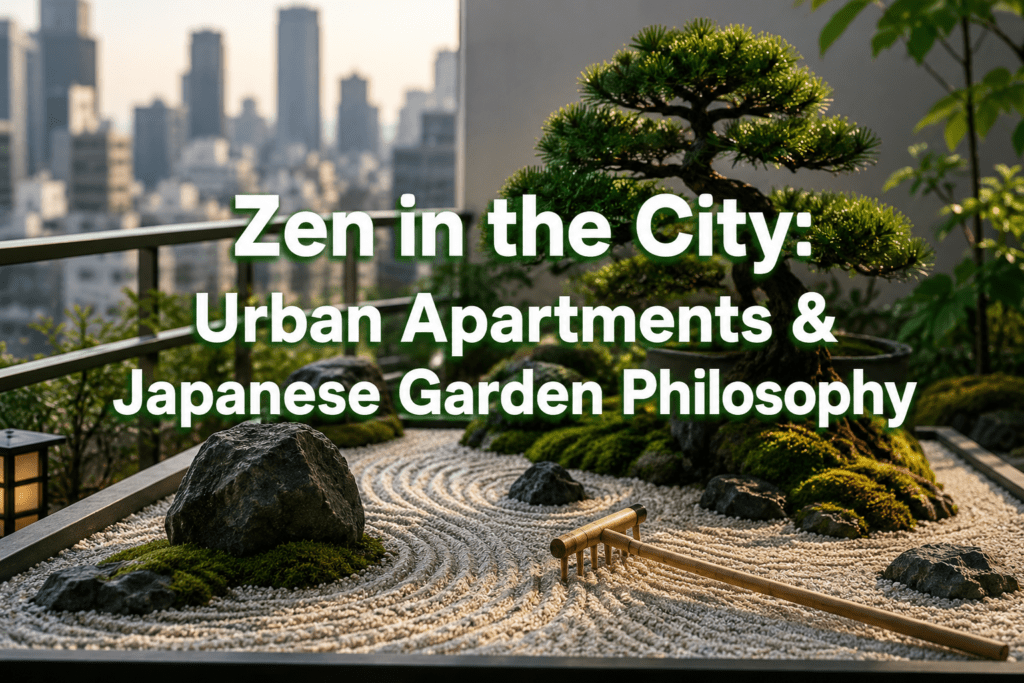
Yes, absolutely, you can create a small Japanese garden in a tiny apartment, often with remarkable results, by focusing on miniature elements, verticality, and thoughtful design choices. The essence of Japanese garden philosophy is not about vast acreage but about capturing nature’s spirit within any given space, making it perfectly suited for apartment living. This might involve a small rock garden on a tabletop, a vertical moss garden, or a strategically arranged collection of potted plants on a balcony.
The key is to embrace the principles of kanso (simplicity) and shakkei (borrowed scenery) to make the most of limited square footage. For example, a clear view through a window can become “borrowed scenery” for a small indoor arrangement. Utilizing vertical space with shelves or wall planters can also maximize your green footprint without taking up floor space. Check out our guide on Best Planters For Small Apartments for ideas.
Tips for Tiny Apartment Zen Gardens:
- Tabletop Zen Garden: A shallow tray with fine sand, a few smooth stones, and a miniature rake. Simple, effective, and portable.
- Bonsai or Kokedama: A single, meticulously cared-for bonsai tree or a moss ball (kokedama) can serve as a focal point.
- Vertical Green Walls: Use wall-mounted planters for moss, ferns, or small trailing plants to create a green backdrop without sacrificing floor space. Learn more about Vertical Balcony Gardening.
- Minimalist Balcony Oasis: Choose a few carefully selected drought-resistant plants, a small stone element, and perhaps a bamboo screen for privacy. For more balcony inspiration, see Balcony Garden Decor Ideas 2026.
- Water Feature: A small, self-contained tabletop fountain can add the soothing sound of water without requiring extensive plumbing.
How Much Does It Cost to Design a Mini Zen Space?
The cost to design a mini Zen space in an apartment can range from very affordable (under $50) for a basic tabletop setup to a few hundred dollars for more elaborate balcony installations, depending on the materials chosen and the size of the project. The beauty of Japanese garden philosophy for apartments is its emphasis on simplicity and natural elements, which often translates to lower costs compared to traditional landscaping.
For a true budget option, you can start with items you might already have or find cheaply, such as smooth river stones collected from nature, sand from a local hardware store, and a simple wooden tray. For example, a small desktop Zen garden kit might cost $20-$40. If you aim for a balcony setup, costs will increase for planters, specific plants like bonsai or mosses, and potentially a small water feature or lighting.
Cost Breakdown Examples:
| Item Type | Budget-Friendly ($) | Mid-Range ($) | Premium ($) |
|---|---|---|---|
| Sand/Gravel | $5 – $15 | $15 – $30 | $30 – $60 |
| Rocks/Stones | $0 (found) – $10 | $10 – $40 | $40 – $100+ |
| Miniature Rake | $5 – $10 | $10 – $25 | $25 – $50 |
| Tray/Container | $10 – $20 (DIY) | $20 – $50 | $50 – $150 |
| Plants (Bonsai/Moss) | $10 – $30 | $30 – $100 | $100 – $500+ |
| Water Feature (Mini) | N/A | $40 – $100 | $100 – $300 |
| TOTAL ESTIMATE | $30 – $85 | $125 – $345 | $345 – $1160+ |
Note: Prices are estimates for 2026 and can vary widely based on location and supplier.
Are Japanese Garden Techniques Good for People with Mental Health Challenges?
Japanese garden techniques are profoundly beneficial for individuals facing mental health challenges, offering structured therapeutic engagement, fostering a sense of control, and providing a calming environment that reduces anxiety and promotes emotional well-being. The principles of mindfulness, simplicity, and connection to nature inherent in Japanese garden philosophy translate directly into practices that can alleviate symptoms of stress, depression, and anxiety.
The meticulous care required for a bonsai, the repetitive motion of raking a sand garden, or the observation of a plant’s growth can become powerful forms of active meditation. This allows individuals to shift focus from internal struggles to an external, calming activity, grounding them in the present moment. Moreover, cultivating a beautiful space provides a sense of achievement and purpose.
Mental Health Benefits:
- Stress Reduction: Engaging with natural elements and performing repetitive, calming tasks can lower cortisol levels.
- Mindfulness Practice: The focus required for design and maintenance encourages present-moment awareness, a key component of mindfulness.
- Sense of Control and Accomplishment: Successfully nurturing a small garden provides a sense of mastery and positive self-efficacy.
- Improved Focus and Concentration: The intricate details and peaceful environment can help improve attention span.
- Emotional Regulation: Connecting with the cycles of nature (growth, decay, renewal) can offer perspective on personal challenges.
- Biophilia Effect: Humans have an innate tendency to connect with nature, and even small natural elements can improve mood and cognitive function (Soga et al., 2017).
What Plants Work Best for Urban Japanese Garden Design?
The best plants for urban Japanese garden design are typically slow-growing, resilient, and can thrive in containers or limited light conditions, embodying the principles of simplicity and natural aesthetics. Native Japanese plants are ideal, but suitable alternatives that evoke a similar minimalist, serene atmosphere can be found. The goal is to select plants that contribute to the overall composition without overwhelming the small space.
Key considerations include growth habit (bonsai forms are excellent), texture, and color, often favoring greens and subtle variations over vibrant blooms to maintain a peaceful palette. Drought-resistant plants are also a smart choice for urban gardeners. For more on selecting plants for small spaces, refer to our guide on Best Plants For Small Gardens 2026.
Recommended Plants for Apartment Zen Gardens:
- Bonsai (e.g., Juniper, Ficus, Pine): Iconic for Japanese gardens, offering a living sculpture. Requires specific care.
- Moss (e.g., Sheet Moss, Sphagnum Moss): Creates a lush, green carpet, especially for kokedama or small ground cover. Thrives in humid conditions.
- Ferns (e.g., Maidenhair Fern, Boston Fern): Delicate foliage, often shade-loving, adding texture and a natural feel.
- Bamboo (Dwarf varieties, or Lucky Bamboo): Offers verticality and a distinctive Asian aesthetic. Ensure it’s a non-invasive, clumping variety for containers.
- Snake Plant (Sansevieria): Extremely low maintenance, architectural form, tolerant of various light conditions.
- Peace Lily (Spathiphyllum): Elegant, air-purifying, with white flowers, suitable for indirect light.
- Small Azaleas or Rhododendrons: If balcony conditions permit, they offer seasonal blooms with traditional Japanese garden appeal.
Common Mistakes People Make When Trying Zen Gardening
A common mistake people make when trying Zen gardening in an urban apartment is overcomplicating the design or neglecting the underlying philosophical principles, leading to cluttered or inauthentic spaces. Many assume more elements equal more beauty, which directly contradicts the kanso (simplicity) principle. Another frequent error is not considering the specific light, humidity, and space constraints of an apartment, resulting in plants that struggle or arrangements that feel forced.
Ignoring maintenance is another pitfall; a Zen garden, however small, requires regular attention to maintain its tranquility and order. This includes raking sand, pruning plants, and cleaning elements. Failing to do so can quickly turn a peaceful sanctuary into an unkempt corner.
Pitfalls to Avoid:
- Overcrowding: Too many plants, stones, or decorative items disrupt the minimalist aesthetic. Remember kanso.
- Ignoring Scale: Using elements that are too large for the space makes the garden feel cramped, not expansive.
- Lack of Purpose: Placing elements randomly without considering their symbolic meaning or contribution to the overall sense of peace.
- Poor Plant Selection: Choosing plants that won’t thrive in indoor apartment conditions (e.g., too much sun, too little humidity).
- Neglecting Maintenance: A Zen garden is not “set it and forget it.” Regular care is essential for its meditative quality.
- Forcing Symmetry: Japanese gardens often use asymmetrical balance, which feels more natural. Striving for perfect symmetry can feel rigid.
- Inadequate Lighting: Most plants need light, even low-light tolerant ones. Assess your apartment’s natural light or consider grow lights.
- Not Embracing Imperfection: Striving for sterile perfection goes against wabi-sabi. Embrace the natural character of materials.
Is Japanese Garden Design Only for People with Lots of Space?
No, Japanese garden design is absolutely not only for people with lots of space; in fact, its core philosophies of miniaturization, abstraction, and the creation of intimate, contemplative spaces make it exceptionally well-suited for urban apartments and small areas. The principles can be applied to a tiny windowsill, a tabletop, a small balcony, or even just a corner of a room. The essence lies in the careful selection and arrangement of elements to evoke a natural landscape, not in the sheer size of the physical footprint.
Historically, Japanese gardens often feature techniques like shakkei (borrowed scenery) and creating “dry landscapes” (karensansui) using rocks and sand, which intrinsically adapt to limited environments. These designs are about mental spaciousness and spiritual connection, which can be achieved regardless of physical dimensions.
Adapting to Small Spaces:
- Miniaturization: Focus on small-scale elements like bonsai, miniature rakes, and small, smooth stones.
- Verticality: Utilize wall space with shelves or hanging planters to create visual depth without consuming floor area. Consider Vertical Garden Ideas for inspiration.
- Single Focal Point: Instead of many elements, choose one impactful element (e.g., a striking bonsai, a unique rock) to draw the eye.
- Illusion of Depth: Strategic placement of elements, varying heights, and “borrowed scenery” can make a small space feel larger.
- Portability: Many apartment Zen gardens can be created in trays or small containers, allowing them to be moved as needed.
How Is a Japanese Garden Different From Regular Houseplant Decor?
A Japanese garden, even a miniature one, differs from regular houseplant decor primarily in its philosophical depth, intentional design principles, and its role as a space for contemplation rather than mere aesthetic appeal. While both involve plants, a Japanese garden is not just about placing greenery; it’s a carefully curated microcosm of nature, embodying specific spiritual and aesthetic concepts like wabi-sabi and kanso.
Regular houseplant decor typically focuses on aesthetics, air purification, or simply adding “greenery” to a room. There’s often less emphasis on the arrangement of elements as a whole or the deeper meaning behind each choice. A Japanese garden, conversely, views each stone, plant, and space as part of a larger symbolic narrative, designed to evoke tranquility and encourage introspection.
Key Distinctions:
- Philosophical Intent: Japanese gardens are designed with spiritual and contemplative goals; houseplant decor is generally for aesthetics or practical benefits.
- Composition & Balance: Japanese gardens follow strict artistic principles (asymmetrical balance, negative space); houseplants are often arranged for visual appeal without a deeper framework.
- Symbolism: Every element in a Japanese garden carries symbolic meaning (e.g., rocks as mountains, sand as water); houseplants are usually chosen for their appearance or ease of care.
- Maintenance as Practice: Tending a Japanese garden is a meditative act; caring for houseplants is often a routine chore.
- Materials: Japanese gardens frequently incorporate non-living elements like sand, rocks, and water features as central components, not just decorative accents.
- “Borrowed Scenery”: Actively integrating the outside environment into the garden’s design is unique to Japanese gardens.
What Psychological Benefits Do Japanese Garden Principles Offer?
Japanese garden principles offer a range of significant psychological benefits, primarily by fostering mindfulness, reducing cognitive load, and providing a restorative environment that combats the mental fatigue of urban life. The deliberate simplicity, natural elements, and emphasis on quiet contemplation create a mental refuge that can improve focus, decrease anxiety, and promote overall emotional balance. These benefits stem from both passive observation and active engagement with the garden.
By designing a space that embodies concepts like kanso (simplicity) and seijaku (stillness), individuals are naturally encouraged to slow down and connect with the present moment. This can interrupt negative thought patterns and provide a sense of groundedness.
Psychological Advantages:
- Reduced Stress and Anxiety: Exposure to nature, even in miniature, has been shown to lower physiological stress markers (Park et al., 2010).
- Enhanced Mindfulness: The intentionality of design and maintenance encourages a focus on the present.
- Improved Cognitive Function: Restorative environments, like a peaceful garden, can replenish attention and improve problem-solving abilities.
- Emotional Regulation: The calm aesthetic and rhythmic activities can help stabilize mood and reduce irritability.
- Sense of Order and Control: Creating and maintaining a tidy, harmonious space can instill a feeling of control, especially valuable in chaotic urban environments.
- Biophilia Connection: Satisfying the innate human need to connect with other forms of life and nature, leading to increased well-being.
Where Can I Learn Japanese Garden Design Techniques Online?
You can learn Japanese garden design techniques online through a variety of platforms, including specialized courses, YouTube tutorials, and dedicated websites and blogs. Many resources offer both theoretical insights into the philosophy and practical, step-by-step guides for creating different types of gardens, including those suitable for apartments. Some university extension programs or botanical gardens also offer online workshops.
When choosing online resources, look for those that emphasize the philosophical underpinnings as much as the practical skills, as understanding the “why” is crucial for authentic Japanese garden design. Search for terms like “bonsai care,” “kokedama tutorial,” “Zen garden principles,” and “miniature Japanese garden design.”
Online Learning Resources:
- YouTube Channels: Many bonsai enthusiasts, garden designers, and DIY creators share detailed tutorials on specific techniques, plant care, and small-scale designs.
- Online Course Platforms (e.g., Coursera, Skillshare, Udemy): Look for courses on Japanese garden design, bonsai artistry, or mindfulness through gardening.
- Specialized Websites/Blogs: Sites dedicated to Japanese culture, gardening, or Zen Buddhism often have articles and guides.
- Botanical Garden Websites: Some offer online educational content, especially if they have Japanese gardens.
- Books and E-books: Many classic and contemporary books on Japanese garden design are available digitally and can be a rich source of information.
Are There Specific Japanese Garden Styles for Apartments?
Yes, there are several specific Japanese garden styles that are particularly well-suited for apartments, focusing on compactness, portability, and indoor adaptability. These styles emphasize the core principles of minimalism and natural abstraction within a confined space. The most common apartment-friendly styles include tabletop Zen gardens, bonsai displays, kokedama arrangements, and small balcony renditions of tea gardens or karensansui (dry landscape) elements.
These styles leverage small containers, vertical surfaces, and carefully chosen plants and elements to create a sense of peace and natural beauty without requiring significant space. The goal is to create a powerful impression with minimal elements, which is ideal for urban living.
Apartment-Friendly Japanese Garden Styles:
- Tabletop Zen Garden (Karesansui): A miniature dry landscape garden in a shallow tray, using sand or fine gravel, a few rocks, and perhaps a small moss or bonsai element. The sand is raked to represent water.
- Bonsai Display: Centering on a single, meticulously cultivated bonsai tree as the primary natural element, often accompanied by a small stone or moss.
- Kokedama Garden: Collections of plants grown in moss balls, which can be hung or placed on stands, creating a floating or organic aesthetic.
- Miniature Tea Garden Elements: Incorporating a small stone lantern, a bamboo water spout (tsukubai, non-functional for indoors), or stepping stones (non-functional) in a small balcony or patio space.
- Moss Garden (Kokedera-style): Focusing entirely on various types of moss arranged in a container or on a small wall panel, emphasizing lush green texture and tranquility.
- Vertical or Wall Garden: Using vertical planters to create a “green wall” of ferns, moss, or small shade-loving plants, mimicking a natural cliff or forest edge.
Do I Need Special Tools or Can I Start with Basic Household Items?
You can absolutely start creating a Japanese garden in your apartment with basic household items and minimal specialized tools, especially for beginner projects. While certain specialized tools exist for bonsai pruning or detailed sand raking, many initial steps can be managed with everyday items. The focus is on embracing simplicity and resourcefulness, which aligns with the philosophical roots of Japanese gardening.
For example, a small fork or even your fingers can be used to rake sand in a miniature Zen garden. Old ceramic dishes or wooden boxes can serve as containers. Pruning small plants can be done with sharp kitchen scissors. As you become more experienced and if you delve into more advanced techniques like bonsai, then investing in specific tools might become worthwhile.
Essential Tools vs. Household Alternatives:
| Tool | Basic Household Alternative | Purpose |
|---|---|---|
| Miniature Rake | Fork, chopstick, comb, or even fingers | Creating patterns in sand/gravel |
| Small Trowel | Large spoon, old butter knife | Moving soil, planting small items |
| Pruning Shears | Sharp kitchen scissors, nail clippers | Trimming plants, shaping bonsai |
| Watering Can (Small) | Small cup, spray bottle, plastic squeeze bottle | Precise watering for delicate plants |
| Container/Tray | Ceramic dish, wooden box, serving tray | Holding sand, rocks, and plants |
| Sieve/Strainer | Kitchen sieve | Sifting sand or small gravel |
| Tweezers/Forceps | Eyebrow tweezers | Placing small stones or adjusting moss |
Conclusion
The growing appeal of Japanese garden philosophy among urban apartment dwellers in 2026 is a testament to its timeless wisdom and remarkable adaptability. In a world increasingly dominated by screens and concrete, these miniature green oases offer a much-needed sanctuary for mental well-being, stress reduction, and a profound reconnection with nature. By embracing principles of simplicity, mindfulness, and thoughtful design, anyone can transform even the smallest corner of an apartment into a restorative Zen space. The journey is not just about creating a beautiful garden; it’s about cultivating inner peace and a more balanced way of living.
Actionable Next Steps:
- Start Small: Begin with a simple tabletop Zen garden to understand the principles and practice mindfulness.
- Research Plant Options: Identify resilient, apartment-friendly plants that thrive in your specific light conditions.
- Embrace Simplicity: Resist the urge to overcrowd your space. Less is often more in Japanese garden design.
- Dedicate Time: Commit to regular, mindful maintenance of your garden as a form of meditation.
- Explore Online Resources: Utilize tutorials and guides to deepen your understanding of techniques and philosophy.
References
- Park, S. H., Mattson, R. H., & Eijck, T. (2010). The Role of Perceived Authenticity in Affective Responses to Urban Streetscapes. Journal of Environmental Psychology, 30(4), 433–443.
- Soga, M., Gaston, K. J., & Yamaura, Y. (2017). Effects of urban green spaces on brain activity. Landscape and Urban Planning, 166, 1-7.