Regenerative Gardening for Small Spaces
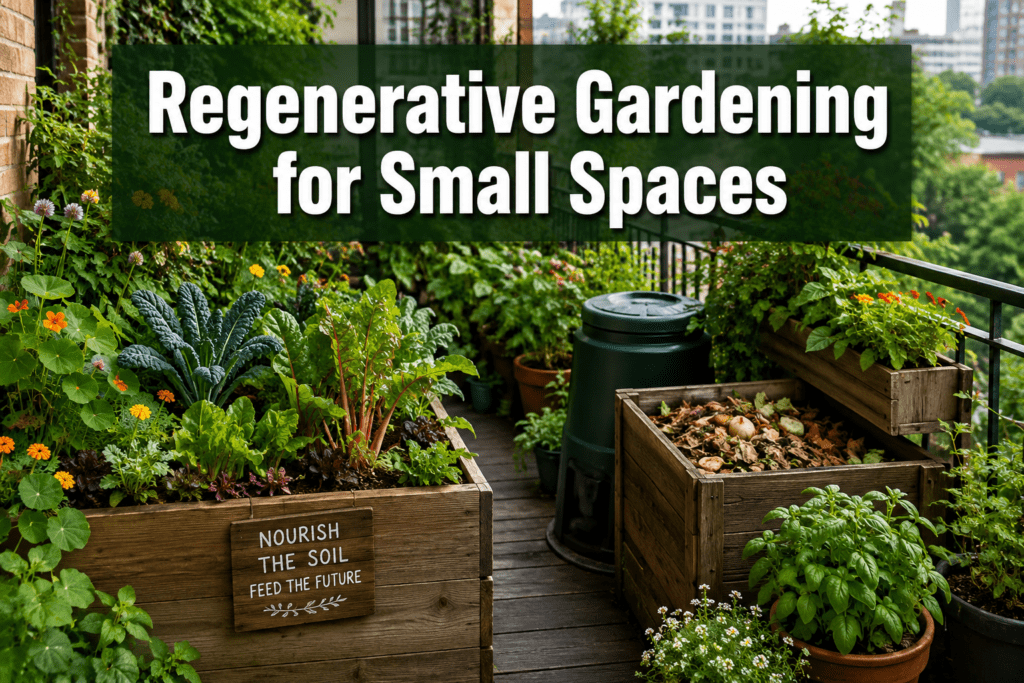
Quick Answer: Regenerative gardening for small spaces applies soil-building, biodiversity-focused techniques — like no-dig layering, composting, and companion planting — to compact areas such as balconies, patios, and tiny backyards. It goes beyond growing food by actively restoring soil health and supporting local ecosystems. Even a 4×4-foot raised bed or a cluster of containers can become a functioning regenerative garden with the right approach.
Key Takeaways
- Regenerative gardening focuses on building soil health and biodiversity, not just producing crops
- Small spaces — including apartment balconies and patio containers — are fully compatible with regenerative methods
- No-dig layering (lasagna composting) is the single most beginner-friendly technique for compact plots
- Startup costs range from roughly $50 to $300 depending on container size, soil amendments, and tools
- Companion planting and insectary plants replace most chemical pest control in small regenerative gardens
- The biggest beginner mistake is treating regenerative gardening like conventional container gardening with better soil
- A well-managed 4×8-foot regenerative bed can realistically supply a significant portion of a household’s fresh herbs and salad greens year-round
- Worm composting (vermicomposting) is the most practical soil amendment system for apartment-based regenerative gardening
What Exactly Is Regenerative Gardening?
Regenerative gardening is a soil-first approach to growing plants that prioritizes restoring and maintaining living soil ecosystems rather than simply feeding plants with external inputs. Unlike conventional gardening, which often depletes soil over time, regenerative methods aim to leave the soil more biologically active each season than it was before.
The core principles include:
- Minimal soil disturbance (no tilling or digging)
- Continuous soil coverage (mulch, cover crops, or living ground cover)
- Maximizing plant diversity to support soil biology
- Closing nutrient loops through composting and organic matter return
- Supporting above- and below-ground biodiversity (insects, fungi, worms)
Regenerative gardening draws from permaculture, agroecology, and organic farming research. It is not a single method but a philosophy applied through a cluster of practices.
How Is Regenerative Gardening Different from Regular Organic Gardening?
Organic gardening avoids synthetic chemicals. Regenerative gardening goes further by actively building soil biology and ecosystem function. An organic garden can still till the soil, use monoculture planting, and rely heavily on bagged amendments — all of which can degrade soil structure over time.
| Feature | Organic Gardening | Regenerative Gardening |
|---|---|---|
| Synthetic chemicals | Not used | Not used |
| Soil tilling | Common | Avoided or minimized |
| Biodiversity focus | Optional | Central practice |
| Nutrient sourcing | External inputs allowed | Prioritizes on-site cycling |
| Ecosystem goal | Produce crops cleanly | Restore living soil systems |
The practical difference for small-space gardeners: regenerative methods tend to reduce ongoing input costs because healthy soil biology does more of the work over time.
How Do Regenerative Techniques Work in a Tiny Backyard or Balcony?
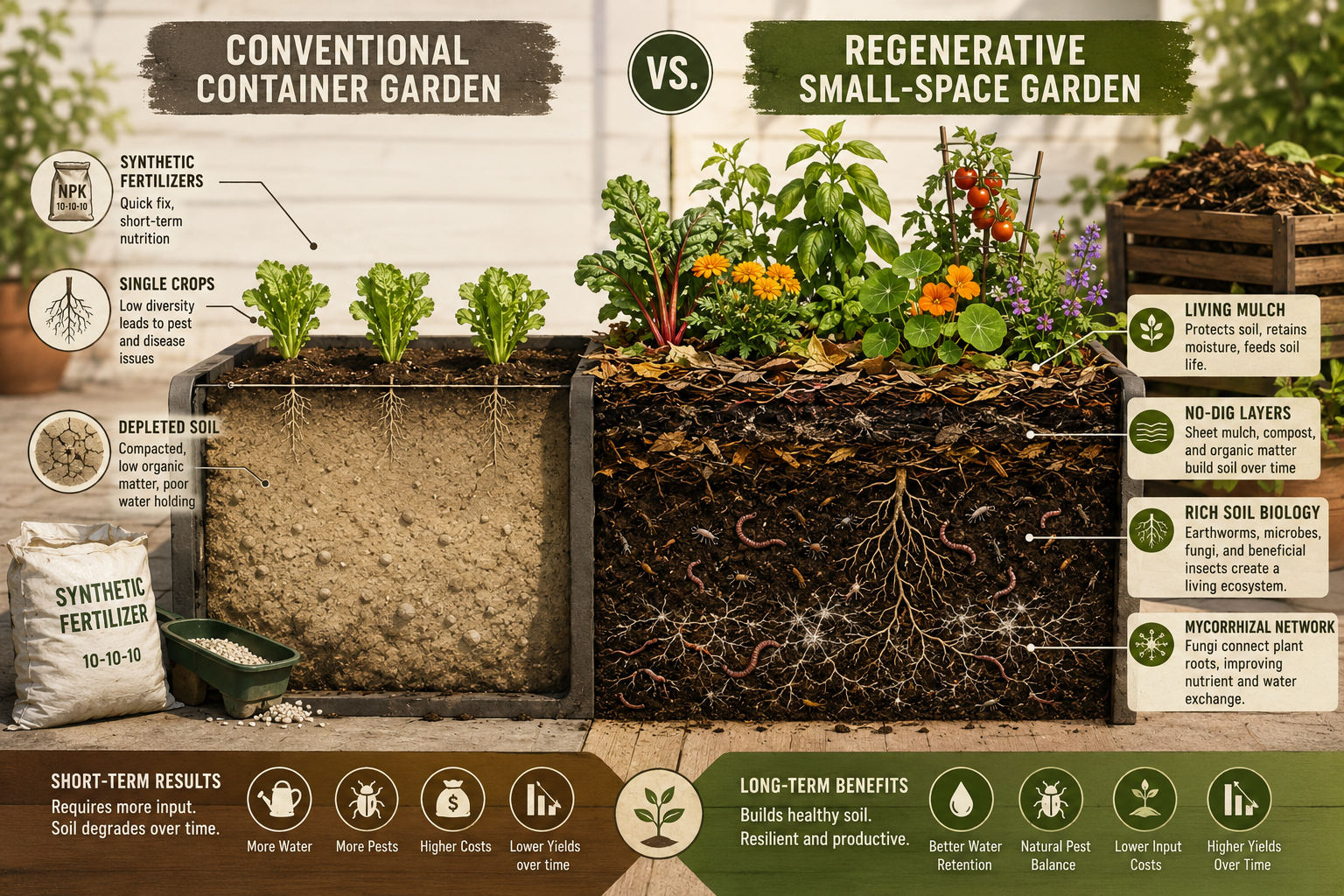
Regenerative techniques scale down effectively because they work at the level of soil biology, not acreage. A 10-square-foot raised bed or a grouping of containers can host the same layered soil structure, fungal networks, and companion planting relationships as a large farm plot.
Key adaptations for small spaces:
- No-dig layering: Build soil in place by layering cardboard, compost, and organic matter. No need to excavate or till existing ground.
- Companion planting: Grow nitrogen-fixing plants (like clover or beans) alongside heavy feeders to reduce the need for added fertilizer.
- Chop-and-drop mulching: Cut back spent plants and leave the material on the soil surface rather than removing it.
- Vermicomposting: A worm bin fits under a kitchen sink and produces high-quality castings for container soil.
- Polyculture planting: Mix herbs, vegetables, and flowers in the same container or bed to mimic natural plant communities.
The key shift is moving from “what do I add to this soil?” to “how do I feed the organisms already living in it?”
Can I Do Regenerative Gardening If I Live in an Apartment?
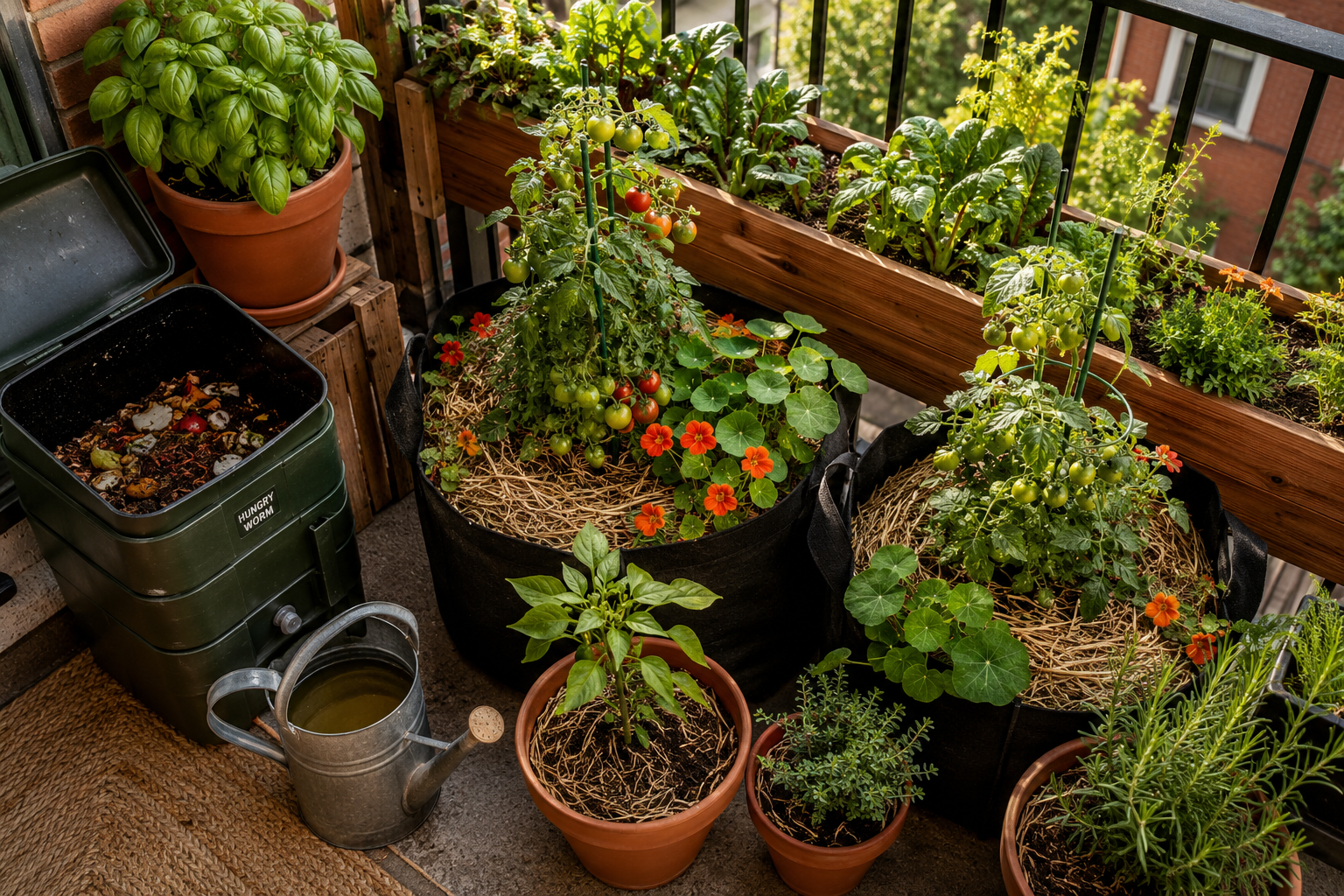
Yes. Apartment-based regenerative gardening for small spaces is entirely achievable using containers, grow bags, and a worm bin. The main limitation is scale, not method.
Practical apartment setup:
- Use fabric grow bags (5–15 gallon) for vegetables and deep-rooted herbs
- Start a small vermicompost bin (a 10-gallon bin handles most kitchen scraps from a 1–2 person household)
- Add insectary plants like nasturtiums or sweet alyssum to attract beneficial insects even on a balcony
- Layer containers with compost, aged wood chips, and worm castings instead of commercial potting mix alone
- Rotate crops seasonally to prevent nutrient depletion in individual containers
One practical note: apartment balconies often have weight limits. Fabric grow bags filled with a lightweight mix of compost, coir, and perlite are significantly lighter than traditional ceramic pots filled with garden soil.
Are There Regenerative Gardening Techniques for People with No Yard?
For gardeners with no outdoor space at all, indoor regenerative gardening is limited but still possible. The focus shifts to soil health in containers and supporting indoor biodiversity through plant diversity.
Options for no-yard situations:
- Windowsill herb gardens using living soil mixes with worm castings
- Community garden plots where regenerative methods can be applied to a shared raised bed
- Indoor grow setups with living soil (a no-till approach adapted from cannabis cultivation that works well for greens and herbs)
- Sprouting and microgreens as a soil-free but nutrient-dense complement
Community gardens are often the best path for no-yard gardeners who want to apply the full range of regenerative techniques, including no-dig bed building and cover cropping.
How Much Does It Cost to Start a Regenerative Garden in a Small Space?
Starting costs for a small regenerative garden typically range from $50 to $300, depending on whether you already have containers and how much you source locally versus buying new.
Estimated startup costs (2026):
| Item | Budget Option | Mid-Range |
|---|---|---|
| Containers or raised bed | $0 (repurposed) – $40 | $80–$150 |
| Compost / worm castings | $0 (homemade) – $20 | $25–$50 |
| Seeds and starter plants | $10–$20 | $30–$50 |
| Mulch (straw or wood chips) | $0 (free local sources) – $10 | $15–$25 |
| Worm bin (optional) | $20 (DIY) | $50–$80 |
| Basic tools | $15–$30 | $40–$60 |
Regenerative methods tend to reduce ongoing costs over time. Once soil biology is established, you need fewer purchased amendments each season. Many gardeners find their second-year costs drop by 40–60% compared to conventional container gardening.
What Are the Best Plants for Regenerative Gardening in Limited Areas?
The best plants for small regenerative gardens serve multiple functions: they feed the gardener, support soil biology, attract beneficial insects, or fix nitrogen.
Top picks for compact regenerative spaces:
- Nasturtiums — edible, attract aphids away from vegetables, feed pollinators
- Dwarf French beans — nitrogen-fixing, productive in containers
- Comfrey (dwarf variety) — deep roots mine nutrients, leaves make excellent chop-and-drop mulch
- Calendula — attracts predatory insects, edible flowers
- Alpine strawberries — low-growing ground cover, fruit production, minimal space
- Chives and garlic chives — pest-deterrent, perennial, minimal care
- Lettuce and spinach — fast-cycling crops that can be cut-and-come-again without removing roots
- Sweet alyssum — living mulch, attracts hoverflies that control aphids
Choose plants that earn their space in more than one way. A plant that only produces food but requires significant inputs is less valuable in a regenerative small-space system than one that also contributes to soil or pest management.
What Tools Do I Need for Regenerative Gardening in a Small Space?
The tool list for small-space regenerative gardening is deliberately short. Avoiding tillage means you don’t need a tiller, fork, or rototiller.
Essential tools:
- Hand trowel (for transplanting only, not digging)
- Watering can or gentle-spray hose attachment
- Compost bin or worm bin
- Cardboard (free from any retailer) for no-dig bed building
- Scissors or snips for chop-and-drop mulching
Optional but useful:
- Soil moisture meter (prevents overwatering in containers)
- Broadfork (for occasional aeration without inverting soil layers)
- Liquid seaweed or fish emulsion for quick nutrient support during establishment
Avoid rotary cultivators, electric tillers, and anything designed to turn or invert soil. These tools destroy the fungal networks and soil structure that regenerative methods are designed to build.
What Soil Amendments Work Best for Compact Regenerative Garden Plots?
The best amendments for small regenerative spaces are biologically active, not just chemically nutritious. Worm castings, compost, and biochar are the most effective options for compact plots.
- Worm castings: The highest-quality amendment for containers. Rich in beneficial microbes, plant-available nutrients, and growth hormones. Use as 20–30% of container mix.
- Mature compost: Builds soil structure and feeds soil biology. Source locally or make your own.
- Biochar: Improves water retention and provides long-term habitat for soil microbes. Charge it with compost before use.
- Aged wood chips: Excellent surface mulch that feeds fungal networks as it breaks down. Do not mix into soil — apply on top.
- Kelp meal: Slow-release trace minerals and growth stimulants. Use sparingly (a tablespoon per container per season).
Avoid peat moss as a primary amendment. It is not a renewable resource and contributes to carbon release when harvested at scale. Coir (coconut fiber) is a more sustainable alternative for improving drainage.
Which Regenerative Gardening Methods Are Easiest for Complete Beginners?
No-dig bed building and vermicomposting are the easiest entry points for beginners. Both require minimal skill, low upfront cost, and deliver visible results within one growing season.
Beginner-friendly starting sequence:
- Set up a worm bin with kitchen scraps and start producing castings
- Build one no-dig bed or container using the lasagna layering method (cardboard, compost, mulch)
- Plant a polyculture mix of 3–5 companion plants in the first bed
- Practice chop-and-drop with spent plant material instead of removing it
- Observe and adjust based on plant health and soil texture after one season
Most beginners see measurable improvement in soil texture and plant health within 8–12 weeks of starting a no-dig system.
What Common Mistakes Do Beginners Make with Small-Space Regenerative Gardening?
The most common mistake is applying regenerative labels to conventional practices — buying organic fertilizer, skipping pesticides, but still tilling, monocropping, and removing all plant debris. That is organic gardening, not regenerative gardening.
Other frequent errors:
- Overwatering containers because the soil looks dry on top (use a moisture meter or finger test 2 inches deep)
- Removing all “weeds” — some self-seeded plants are valuable insectary or ground-cover species
- Starting too large and losing momentum; one well-managed 4×4 bed beats three neglected ones
- Using fresh wood chips directly in soil, which temporarily locks up nitrogen during decomposition
- Expecting immediate results — soil biology takes one to two full seasons to establish meaningfully
How to Manage Pests in a Small Regenerative Garden Without Chemicals
In a well-designed regenerative small-space garden, pest pressure is managed primarily through plant diversity and habitat for beneficial insects. Chemical intervention is rarely needed once the system matures.
Practical no-chemical pest management:
- Plant insectary flowers (calendula, sweet alyssum, phacelia) to attract predatory wasps and hoverflies
- Use nasturtiums as trap crops to draw aphids away from vegetables
- Apply a diluted neem oil spray as a last resort for severe infestations — it is biodegradable and does not persist in soil
- Hand-pick caterpillars and slugs in the early morning when they are most active
- Maintain soil moisture consistently — stressed plants attract more pests than healthy ones
Companion planting is the most effective long-term strategy. Mixing aromatic herbs like basil, chives, and rosemary among vegetables confuses and deters many common pest species.
How Much Food Can I Actually Produce in a Small Regenerative Garden?
A well-managed 4×8-foot regenerative bed can realistically supply most of a household’s fresh salad greens and herbs from spring through fall, and potentially year-round in mild climates. Estimates for a single 32-square-foot bed include roughly 30–50 pounds of mixed greens and vegetables per season, based on typical cut-and-come-again yields for lettuce, spinach, kale, and herbs.
Production depends on:
- Crop selection (leafy greens yield far more calories per square foot than root vegetables in small spaces)
- Succession planting (replanting every 2–3 weeks extends harvest windows)
- Soil quality (regenerative beds with established biology consistently outperform depleted container soil)
- Light availability (minimum 6 hours of direct sun for most vegetables)
Manage expectations in year one. Soil biology needs time to establish. Most regenerative gardeners report noticeably higher yields in year two and three compared to their first season.
Frequently Asked Questions
What is the single most important principle of regenerative gardening?
Keep the soil covered and undisturbed at all times. Bare, tilled soil loses biology, moisture, and structure. Mulch, cover crops, or living ground cover protect the microbial communities that make regenerative systems work.
Can regenerative gardening work in containers?
Yes. Use a living soil mix with worm castings and compost, avoid synthetic fertilizers, and apply chop-and-drop mulching on the container surface. Containers require more frequent moisture monitoring than in-ground beds.
How long does it take to see results from regenerative methods?
Most gardeners notice improved soil texture and plant health within one growing season. Full soil biology establishment typically takes two to three seasons.
Do I need to buy special seeds for a regenerative garden?
No. Open-pollinated or heirloom seeds are preferred because they can be saved and replanted, which supports seed diversity. However, any non-GMO seed will work in a regenerative system.
Is regenerative gardening the same as permaculture?
They overlap but are not identical. Permaculture is a broader design system for human habitats. Regenerative gardening is specifically focused on soil health and ecosystem restoration through growing practices.
Can I use store-bought compost in a regenerative garden?
Yes, as a starting amendment. Over time, the goal is to produce your own compost or vermicompost on-site to close the nutrient loop and reduce dependence on purchased inputs.
What is lasagna gardening and how does it relate to regenerative methods?
Lasagna gardening is a no-dig bed-building technique that layers cardboard, compost, and organic matter to build soil in place without tilling. It is one of the most practical regenerative techniques for small spaces.
How do I start if I have only a windowsill?
Start with a small worm bin for compost production and a few containers of herbs in living soil. Focus on soil health and plant diversity at whatever scale you have available.
Is regenerative gardening more work than conventional gardening?
In year one, setup requires more thought and planning. From year two onward, most regenerative gardeners find it requires less work because healthy soil biology handles more of the nutrient cycling and pest management.
Can children participate in small regenerative gardens?
Yes. Worm bins, seed saving, and planting companion flowers are particularly engaging activities for children and require no tools or chemicals.
Conclusion
Regenerative gardening for small spaces is not a compromise version of large-scale regenerative agriculture. It is a fully functional approach that any gardener can apply to a balcony, patio, or tiny backyard starting today.
The practical next steps are straightforward:
- Start a worm bin this week using a repurposed container and kitchen scraps
- Build one no-dig bed or container using the lasagna layering method before your next planting season
- Choose five plants that serve multiple functions: at least one nitrogen-fixer, one insectary flower, and two to three food crops
- Stop removing plant debris and start practicing chop-and-drop mulching
- Observe your soil at the end of one full season and adjust based on texture, plant health, and pest pressure
The goal in 2026 and beyond is not perfection. It is consistent, incremental improvement in soil biology and ecosystem function. Even a single container managed regeneratively contributes to healthier urban biodiversity and reduces your household’s dependence on external inputs over time. Start small, stay consistent, and let the soil do the work.
References
- Gabe Brown. Dirt to Soil: One Family’s Journey into Regenerative Agriculture. Chelsea Green Publishing, 2018.
- Rodale Institute. “Regenerative Organic Agriculture and Climate Change.” Rodale Institute White Paper, 2014. https://rodaleinstitute.org
- Charles Dowding. No Dig: Nurture Your Soil to Grow Better Veg with Less Work. DK Publishing, 2022.
- David Wolfe and Eliot Coleman. Referenced in USDA Sustainable Agriculture Research & Education (SARE) program publications. https://www.sare.org
- Garden Organic (UK). “Principles of Organic and Regenerative Growing.” gardenorganic.org.uk, 2021.