
How do I fix drainage problems in vertical planters on my balcony?
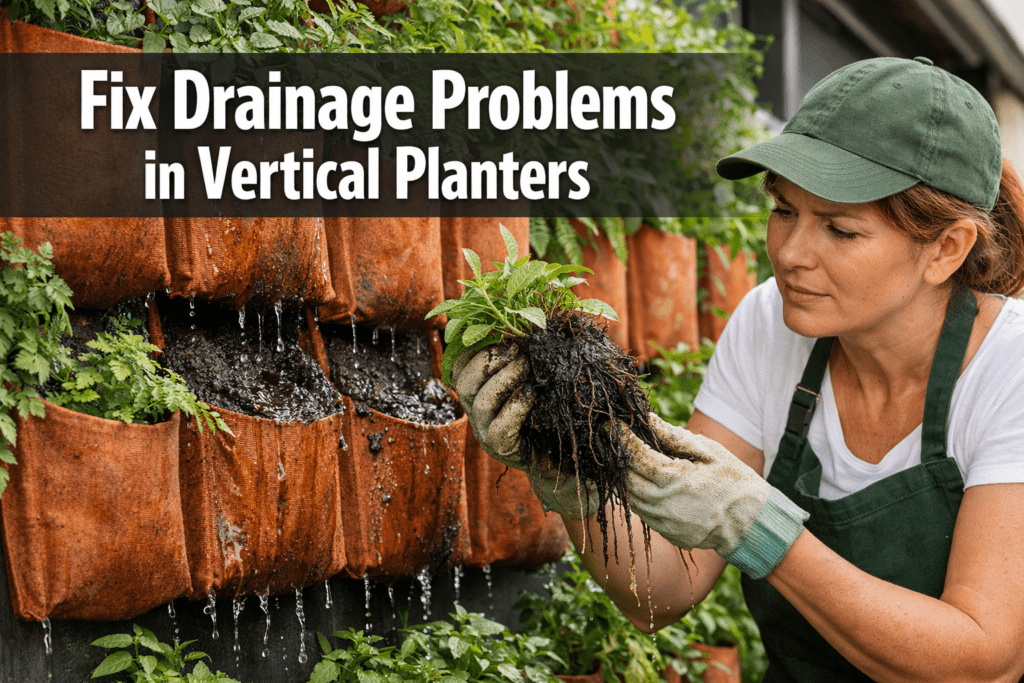
Quick Answer: To fix drainage problems in vertical planters on your balcony, start by checking for blocked drainage holes, compacted soil, and overwatering habits. The most effective fixes include drilling additional holes, replacing dense potting mix with a fast-draining blend (adding perlite or coarse sand), installing a catch-tray system, and adjusting your watering schedule. Most drainage issues can be resolved in under an hour with basic tools.
Key Takeaways
- Blocked or absent drainage holes are the single most common cause of waterlogged vertical planters.
- Standard potting soil compacts quickly in vertical pockets — always amend it with 20–30% perlite or coarse sand.
- Fabric pocket planters drain better than hard plastic ones by design, but they dry out faster and need more frequent watering.
- Overwatering is often mistaken for a drainage problem — check soil moisture 2 inches deep before watering again.
- A simple PVC pipe or drip-channel system can redirect runoff away from your balcony floor and neighbors below.
- Tiered vertical planters need drainage management at every level, not just the bottom.
- Yellow, wilting leaves are often the first visible sign of root rot caused by poor drainage — act quickly.
- Lining planters with landscape fabric (not plastic) allows excess water to escape while retaining soil.
Why Do Vertical Planters on Balconies Have Drainage Problems?
Vertical planters drain poorly for a handful of predictable reasons. Understanding the root cause saves you from applying the wrong fix.
The most common culprits are:
- No drainage holes or holes that are too small for the planter volume
- Compacted soil that water can’t move through quickly
- Overwatering, especially in shaded or low-airflow balcony spots
- Pocket design that traps water in sealed fabric or plastic compartments
- Tiered overflow where water from upper pockets saturates lower ones with no exit path
Balcony environments make this worse. Limited airflow, shade from overhead units, and the inability to let pots “breathe” on the ground all slow evaporation. If you’re seeing soggy soil, wilting despite regular watering, or green algae on your planter surface, drainage is almost certainly the issue.
For a broader look at what goes wrong in vertical setups, see this guide on avoiding vertical gardening mistakes.

How Do I Fix Drainage Problems in Vertical Planters on My Balcony? (Step-by-Step)
Here’s a direct, practical fix sequence you can follow this weekend.
Step 1: Diagnose Before You Act
Stick your finger 2 inches into the soil. If it’s wet 24–48 hours after watering, you have a drainage problem. If it’s dry but the plant looks wilted, you may actually be underwatering — a common mix-up.
Step 2: Check and Clear Drainage Holes
Remove the planter from the wall if possible. Look at every drainage hole:
- Are holes present? (Some decorative planters have none.)
- Are they blocked by roots, soil crust, or debris?
- Are they large enough? Holes smaller than 1/4 inch clog easily.
Fix: Use a skewer or thin screwdriver to clear blockages. For planters with no holes, use a 1/4-inch drill bit to add 3–5 holes per pocket. For hard plastic planters, this takes about two minutes per pocket.
Step 3: Amend or Replace the Soil
Dense potting mix is the second most common cause of drainage failure. A standard all-purpose potting soil compacts over time, especially in small vertical pockets.
Best drainage-friendly soil mix for vertical planters:
If replacing soil mid-season isn’t practical, top-dress each pocket with a 1-inch layer of perlite and water it in. This improves surface drainage immediately.
For more on soil selection, our soil basics for container gardening guide covers the key options.
Step 4: Add a Drainage Layer (Optional but Helpful)
Place a 1-inch layer of small gravel or broken terracotta at the bottom of each pocket before adding soil. This creates a reservoir space so water doesn’t pool directly around roots.
Note: The “gravel myth” — that gravel always improves drainage — is partly true for vertical pockets but less effective in deep containers. In shallow vertical pockets (under 6 inches deep), a thin gravel layer does help.
Step 5: Manage Runoff from Your Balcony
This is the part most guides skip. Fixing drainage inside the planter means water has to go somewhere — and on a balcony, that often means your floor, your neighbor’s unit below, or a stained wall.
Runoff solutions:
- Catch trays: Place a tray at the base of the vertical structure to collect runoff. Empty it after each watering.
- PVC drip channel: Attach a half-pipe or gutter section horizontally at the base of the planter wall to direct water to a single collection point.
- Self-watering reservoirs: Some vertical planter systems include built-in reservoirs. These recirculate water and eliminate runoff entirely.
What Soil Mix Prevents Drainage Problems in Vertical Balcony Planters?
The right soil mix is your best long-term defense. Standard potting soil alone is too dense for most vertical planter pockets.
Choose a mix that drains within 30–60 seconds after watering. If water pools on the surface for longer than that, the mix is too dense.
Choose perlite-heavy mixes if: your balcony is shaded or has low airflow, you tend to overwater, or you’re growing succulents and herbs.
Choose a more moisture-retentive mix if: your balcony gets full afternoon sun, you travel frequently, or you’re growing leafy greens that need consistent moisture.
For plant selection that matches your drainage setup, see best plants for vertical gardens — some plants are far more forgiving of drainage inconsistencies than others.
How Do I Fix Drainage Problems in Vertical Planters on My Balcony When Using Fabric Pockets?
Fabric pocket planters are popular because they naturally air-prune roots and drain faster than hard plastic. But they come with their own drainage challenges.
Common fabric pocket issues:
- The fabric itself can become hydrophobic (water-repellent) if it dries out completely between waterings
- Pockets can develop mold or algae on the outer surface if airflow is poor
- Lower pockets receive runoff from upper ones, leading to overwatering at the bottom
Fixes specific to fabric planters:
- Re-wet hydrophobic fabric by soaking the entire panel in water for 10–15 minutes, then resuming normal watering.
- Rotate which pockets you water if lower ones are consistently wetter — skip them every other watering cycle.
- Add a wicking layer inside each pocket using a strip of coconut coir to distribute moisture more evenly.
- Increase wall spacing by 2–3 inches from the balcony wall to improve airflow behind the fabric.

How Can I Tell If My Vertical Planter Has Root Rot from Poor Drainage?
Root rot is the most serious consequence of sustained drainage failure. Catching it early makes a real difference.
Signs of root rot in vertical planters:
- Leaves turn yellow, starting from the bottom of the plant (see our guide on why plant leaves turn yellow for a full breakdown)
- Stems feel soft or mushy near the soil line
- A sour or sulfur-like smell from the soil
- Roots appear brown or black instead of white when you pull a plant out
What to do:
- Remove the affected plant from its pocket.
- Trim all brown, mushy roots with clean scissors.
- Let the roots air-dry for 30 minutes.
- Repot in fresh, well-draining soil with improved drainage holes.
- Hold off watering for 3–5 days to let the plant stabilize.
Not every yellowing leaf means root rot — overwatering and root rot are related but not identical. Root rot requires intervention; overwatering can often be corrected just by adjusting your schedule.
What Are the Best Vertical Planter Systems for Balcony Drainage?
If you’re starting fresh or replacing a failing system, choosing the right planter design from the start saves a lot of trouble.
For budget-friendly options, cheap vertical gardening ideas covers DIY builds that can be designed with drainage in mind from the start.
How Do I Prevent Drainage Problems from Coming Back?
Fixing drainage once is straightforward. Keeping it fixed takes a few consistent habits.
Prevention checklist:
- ✅ Check drainage holes every 4–6 weeks for root or soil blockage
- ✅ Water in the morning so excess moisture evaporates during the day
- ✅ Use a moisture meter or the finger-test before every watering session
- ✅ Refresh the top inch of soil each season to prevent surface crusting
- ✅ Repot plants into fresh soil mix annually
- ✅ Clear catch trays within 24 hours of watering to prevent mosquito breeding
Adjusting your watering schedule is often the simplest fix. Our guide on how often to water container plants gives a clear framework based on plant type, pot size, and season.
Also, if you’re expanding your balcony garden, balcony vertical gardening covers the full setup process with drainage built into the planning stage.

FAQ: Fixing Drainage Problems in Vertical Balcony Planters
Q: Can I use rocks instead of perlite for drainage in vertical planters?
A: Small gravel works in shallow pockets as a bottom layer, but perlite is better throughout the soil mix because it’s lighter and won’t shift or compact over time.
Q: My balcony landlord won’t let me drill into walls. What are my options?
A: Use freestanding vertical planter frames, railing-mounted pocket systems, or leaning ladder planters — all of which can be set up without drilling and still managed for drainage.
Q: How deep should drainage holes be drilled in plastic vertical planters?
A: You’re drilling through the planter wall, not into soil. Use a 1/4-inch bit and drill at the lowest point of each pocket at a slight downward angle so water exits fully.
Q: Is it normal for water to drip from my vertical planter for a long time after watering?
A: Some dripping is normal and healthy — it means water is moving through. If it drips for more than 10–15 minutes, you may be overwatering or the soil is too loose.
Q: Can I use cactus mix for all my vertical planter plants?
A: Cactus mix drains very fast, which is great for succulents and herbs but too dry for most vegetables and flowering plants. Blend it 50/50 with standard potting mix for a middle-ground option.
Q: Why does only the bottom row of my vertical planter stay wet?
A: Upper pockets drain into lower ones. If the bottom row has no exit point, water accumulates there. Add drainage holes to the very bottom of the structure and place a catch tray below.
Q: How do I water a vertical planter without creating runoff on my neighbor’s balcony?
A: Water slowly at the top and let it absorb between passes. Install a catch tray or drip channel at the base. Self-watering systems with closed reservoirs eliminate runoff entirely.
Q: Does the type of plant affect drainage needs?
A: Yes, significantly. Succulents and Mediterranean herbs need fast-draining soil. Leafy greens and vegetables prefer consistent moisture. Match your soil mix and watering frequency to the plant, not just the planter.
Conclusion: Take Action on Drainage This Week
Drainage problems in vertical balcony planters are fixable — and in most cases, the solution costs very little and takes less than an afternoon. Start by checking your drainage holes and soil mix, because those two factors cause the majority of waterlogging issues. Then set up a simple runoff management system so you’re not fighting the same problem every season.
Your next steps:
- Do the finger-test on your current planters today to confirm whether drainage is actually the issue.
- Drill or clear drainage holes on any pocket that stays wet longer than 48 hours.
- Amend your soil with 20–25% perlite at the next repotting opportunity.
- Set up a catch tray or drip channel to manage balcony runoff.
- Adjust your watering schedule to morning-only and check moisture before each session.
Healthy drainage is the foundation of a productive balcony garden. Get that right, and everything else — plant health, pest resistance, yield — improves naturally.
References
- University of Illinois Extension. (2020). Container Gardening. https://extension.illinois.edu/
- Chalker-Scott, L. (2007). The Myth of the Drainage Layer. Washington State University Extension. https://pubs.extension.wsu.edu/
- Royal Horticultural Society. (2022). Improving Drainage in Containers. https://www.rhs.org.uk/